
Ghost Pepper Explained: Scoville Heat, Flavor, Uses & What Makes It So Hot

There are hot peppers, and then there are peppers that change the way people think about heat.
The Ghost Pepper did exactly that.
Long before Carolina Reaper and Pepper X pushed the Scoville scale even higher, a wrinkled chile from Northeast India crossed a threshold that once seemed almost absurd. In controlled testing published in 2007, Bhut Jolokia averaged 1,001,304 Scoville Heat Units—the first scientifically tested chile pepper reported above the million-SHU mark. The finding propelled Bhut Jolokia to international attention, and Guinness World Records subsequently recognized it as the hottest chile pepper in the world.
Suddenly, one million had a flavor.
But the number quickly overshadowed the pepper. Ghost Pepper became famous just as extreme heat was becoming entertainment. Superhot sauces gained attention, chile-head culture expanded, and eventually internet challenges turned eating extreme peppers into something people watched other people attempt. Somewhere among the records, challenges and pursuit of the next world’s-hottest pepper, the actual chile became harder to see.
Bhut Jolokia existed long before any of that. In Northeast India, extremely hot chiles had been cultivated and used for generations. Before Ghost Pepper was a record holder or an edible dare, it was a crop, an ingredient and part of a regional food culture.
And beneath all that famous heat is an actual flavor. A ripe Ghost Pepper can bring fruity, floral, aromatic and slightly sweet qualities before its extraordinary pungency takes over. Those qualities give us a much better way to understand Bhut Jolokia than simply asking whether we could tolerate eating one.
Its world record has long since fallen, but that may make the pepper easier to appreciate for what it actually is. What does Ghost Pepper taste like? Why can its heat vary so dramatically? How did a chile from Northeast India become famous around the world? How does something this hot function as an ingredient rather than a stunt? And what happens inside the fruit that allows it to cross one million Scoville Heat Units?
Those questions reveal a chile considerably more interesting than its reputation.
THE GHOST PEPPER BECAME FAMOUS FOR BREAKING THE MILLION-SCOVILLE BARRIER. ITS REAL STORY BEGINS WHEN WE LOOK PAST THE NUMBER.
If you’re exploring that larger world of chile peppers, our Chile Pepper Guide: Flavor, Heat, Uses & Individual Peppers Explained follows peppers from familiar everyday varieties through regional chiles and into the extraordinary world of superhots. Ghost Pepper occupies a pivotal place in that story because it helped redefine what people believed a chile pepper could be.
To understand why, we need to meet Bhut Jolokia before the rest of the world turned it into the Ghost Pepper.
Ghost Pepper Snapshot
Common Name: Ghost Pepper
Traditional/Regional Name: Bhut Jolokia / Bhoot Jolokia
Species: Capsicum chinense
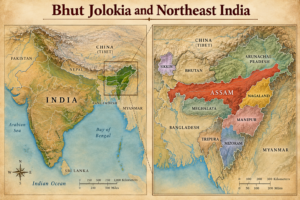
Strongest Association: Northeast India, particularly Assam and surrounding regions
Scoville Heat: Commonly associated with roughly 800,000–1,000,000+ SHU, with substantial natural variation
Historic Benchmark: 1,001,304 SHU in the replicated research that helped establish its world-record reputation
Flavor: Fruity, floral, slightly sweet and aromatic beneath the extreme heat
Color: Commonly green when immature, ripening to red; other cultivated color forms also exist
Appearance: Elongated to somewhat tapered fruit, often with thin walls and a wrinkled or uneven surface
Best Uses: Hot sauces, chutneys, curries, pickles, dried chile powders, infused preparations and dishes where very small amounts of intense chile heat are appropriate
Common Forms: Fresh, dried, powdered, fermented, pickled and incorporated into hot sauces
Closest Familiar Comparison: Habanero provides a more approachable reference point for its fruity Capsicum chinense character, although Ghost Pepper can be several times hotter
What Makes It Special: Bhut Jolokia combines extreme capsaicinoid concentration with genuine chile flavor and became the pepper that famously carried scientifically measured chile heat beyond one million Scoville Heat Units.
Quick Guide
How hot is a Ghost Pepper?
Ghost Peppers generally reach roughly 800,000 to more than 1,000,000 Scoville Heat Units (SHU), although individual peppers can vary considerably.
Is the Ghost Pepper still the hottest pepper in the world?
No. Ghost Pepper once held the world record, but hotter peppers have since surpassed it, including the current Guinness record holder, Pepper X.
What does a Ghost Pepper taste like?
Ghost Pepper has fruity, floral, slightly sweet and aromatic chile flavors beneath its extreme heat. Those subtler qualities can become difficult to notice once the intense burn develops.
Why is the Ghost Pepper so hot?
Ghost Peppers produce exceptionally high concentrations of capsaicinoids, the compounds responsible for chile heat. Genetics, growing conditions and fruit development can influence their final pungency.
Where does the Ghost Pepper come from?
Bhut Jolokia is strongly associated with Northeast India, particularly Assam and surrounding regions, where extremely hot chiles have long been cultivated and used.
What is Ghost Pepper used for?
Ghost Pepper is used in hot sauces, chutneys, curries, pickles, powders and other intensely spicy preparations. Because of its extreme heat, very small amounts can influence an entire dish.
What Is a Ghost Pepper—and What Does It Actually Taste Like?
Imagine cutting open a pepper carrying roughly the heat of more than one hundred jalapeños packed into a single fruit. You would be forgiven for assuming flavor no longer matters.
At a certain point on the Scoville scale, peppers begin to be discussed differently. Serranos are ingredients. Poblanos are ingredients. Cayenne is an ingredient. But after research established Bhut Jolokia at an average of 1,001,304 SHU, the Ghost Pepper became something else.
Ghost Pepper became an event.
That reputation isn’t difficult to understand. Jalapeños occupy only a few thousand Scoville Heat Units, while even habaneros—legitimately very hot peppers themselves—live far below the hottest Bhut Jolokia. Once a pepper crosses into seven-digit territory, sheer intensity naturally becomes the headline. But heat isn’t flavor, and Bhut Jolokia has both.
Approach a ripe Ghost Pepper and one of the first surprises can be its aroma. Beneath its intimidating reputation are fruity, floral and slightly sweet characteristics associated with the highly aromatic world of Capsicum chinense peppers. Those qualities don’t disappear when the pepper becomes hot; they simply become harder to perceive as the capsaicinoids begin commanding more of our sensory attention.
That makes proportion enormously important. Use too much Ghost Pepper and the burn can overwhelm both the chile’s subtler qualities and the ingredients surrounding it. Use a tiny amount intelligently, however, and its aromatic, fruity character can become part of a sauce, chutney, curry or marinade rather than simply dominating it with heat.
Preparation changes the experience as well. Drying makes the pepper easier to distribute in tiny amounts, while fermentation places its heat and flavor inside an entirely different aromatic environment. A small amount simmered through an entire pot behaves very differently from a piece of raw Ghost Pepper eaten by itself.
That’s the more useful way to understand Bhut Jolokia. It isn’t an industrial capsule of capsaicin wrapped in red skin. It’s a chile with its own aroma, fruitiness and culinary character—and how it’s prepared determines what kind of ingredient that extraordinary heat becomes.
How Hot Is a Ghost Pepper—and Why Can Its Heat Vary So Much?
Even the famous million-Scoville number requires some context. Research examining Bhut Jolokia has shown that pungency can vary dramatically. Published measurements have ranged from roughly 191,000 to more than 1.15 million SHU among different accessions, while studies of plants grown under different conditions have also found substantial differences in heat. Genetics matter enormously, but temperature, water, environment, maturity and other growing factors can influence what develops inside the fruit.
“One million Scoville” is part of the Ghost Pepper story, not a guarantee stamped onto every fruit.
That variability doesn’t diminish Bhut Jolokia’s reputation. It makes the pepper more interesting because extreme heat is being produced by a living plant, not manufactured to an exact specification. A Ghost Pepper growing in one field will not necessarily be identical to one growing somewhere else, and two fruits carrying the same familiar name can produce noticeably different experiences.
The million-SHU milestone remains extraordinary, but it is better understood as a landmark in the Ghost Pepper’s history than as its entire identity. Bhut Jolokia is a chile shaped by genetics, growing conditions and chemistry—and those variables help explain why its famous heat can differ so much from one pepper to another.
GHOST PEPPER ISN’T CAPSAICIN WITH A STEM. BENEATH ITS EXTREME HEAT IS A REAL CHILE WITH FRUITINESS, AROMA AND A CULINARY IDENTITY OF ITS OWN.
 🌶️ Professor Pepper Says…
With superhot peppers, more isn’t automatically better. Start with an extremely small amount and let the Ghost Pepper become part of the food rather than allowing its heat to erase everything else on the plate.
🌶️ Explore the Superhot Side of Pepper Flavor
Ghost Pepper is a dramatic reminder that hot sauces aren’t differentiated by heat alone. The chile underneath the burn can contribute fruitiness, smoke, earthiness, freshness or aroma, while the other ingredients determine how that pepper behaves with food.
Explore our hot sauces when you’re ready to taste how different peppers—from approachable everyday chiles to extreme superhots—can create very different kinds of heat.
From Northeast India to the Million-Scoville Record: The Story of Bhut Jolokia
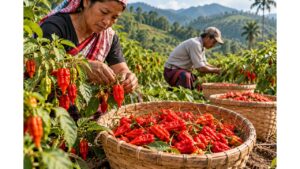
Long before Ghost Pepper challenges and world records, extraordinarily hot chiles were already part of the agricultural landscape of Northeast India. Bhut Jolokia emerged from a region of hills, river valleys, heavy seasonal rainfall and remarkable biological diversity, where peppers were cultivated because people used them—not because anyone was trying to break a record.
Assam sits at the center of much of the modern Bhut Jolokia story, but calling Ghost Pepper simply an “Assam pepper” makes its history neater than the reality. Extremely pungent chiles have long been grown across Northeast India, and the names associated with them vary by language, community and location.
Bhut Jolokia, Bhoot Jolokia, Bih Jolokia, Naga Jolokia and other names appear in agricultural records and popular accounts. Sometimes they refer to the pepper now widely known as Ghost Pepper; in other cases, they reflect a more complicated family of closely related regional superhot chiles.
🌶️ Professor Pepper Says…
You may see Ghost Pepper called Bhut Jolokia, Bhoot Jolokia or Naga Jolokia. Bhut and Bhoot are alternate English spellings of the same name, while Naga Jolokia is a regional name often associated with Ghost Pepper but can be less precise because Northeast India has several closely related superhot chile names and landraces. We’ll use Bhut Jolokia throughout this guide for consistency.
That complexity matters because modern pepper names suggest a botanical precision that traditional agriculture didn’t necessarily require. Farmers growing locally recognized chiles did not need laboratory genetic profiles or internationally standardized cultivar names to know what they were planting, harvesting and eating. Seeds were selected and saved within communities over generations, allowing distinctive local peppers to persist while also creating variation between populations.
When scientists later began collecting, comparing and testing these peppers, they encountered a naming landscape considerably messier than the tidy labels eventually adopted by seed catalogs and hot sauce companies.
For the people growing them, extraordinary pungency wasn’t an abstract number measured in Scoville Heat Units. Bhut Jolokia was an intensely powerful ingredient used in small amounts in chutneys, pickles and cooked foods, with fresh, dried and preserved forms extending its usefulness beyond the harvest.
Indian agricultural research reflects those deep roots. Researchers have described Bhoot Jolokia as traditionally cultivated in Northeast India, with local cultivation preceding the scientific attention that eventually surrounded it. The Ghost Pepper’s international fame is surprisingly recent compared with the agricultural history behind it.
The world didn’t suddenly acquire a million-Scoville pepper in the early 2000s. Scientists began measuring and documenting a pepper that people in Northeast India already knew.
The turning point came when researchers began trying to establish exactly how hot Bhut Jolokia really was. That was more difficult than simply picking a pepper and reading a number. Chile pungency varies with genetics, environment and the fruit being tested, while reliable comparisons require controlled growing conditions and analytical methods. Earlier reports had already suggested extraordinary heat, but Bhut Jolokia’s international reputation changed dramatically when researchers at New Mexico State University’s Chile Pepper Institute grew and evaluated the pepper under controlled conditions.
The work by Paul Bosland and Jit Baral, published in HortScience in 2007, reported an average pungency of 1,001,304 Scoville Heat Units. That number was historic. Until then, the familiar upper end of the chile world had been represented by peppers such as habaneros measured in the hundreds of thousands of Scoville units. Bhut Jolokia didn’t merely move the scale upward—it crossed the psychological barrier of one million SHU.
For people who followed hot peppers, that changed the conversation. A chile from Northeast India was suddenly being discussed internationally as the hottest known pepper in the world. Guinness World Records recognition amplified the story. Seed growers wanted it, hot sauce makers wanted to bottle it, gardeners wanted to grow it, and chile enthusiasts wanted to discover what eating something above one million Scoville Heat Units actually felt like. The regional name Bhut Jolokia increasingly shared space with a much more marketable English identity: Ghost Pepper.
The transformation was remarkable. A pepper rooted in the agricultural traditions of Northeast India became an international symbol of extreme heat. Ghost Pepper appeared on hot sauce labels, restaurant menus and eventually in the growing culture of extreme-pepper challenges. Its name became shorthand for extraordinary heat long before many consumers knew anything about Bhut Jolokia’s origin or flavor. That fame also flattened its story. The scientific measurement documented something extraordinary about the pepper, but it didn’t create the pepper, its agricultural heritage or the knowledge required to grow and use it.
The record eventually fell as peppers such as the Trinidad Moruga Scorpion and Carolina Reaper pushed measured heat still higher. Today, Ghost Pepper is no longer the world’s hottest chile. But being surpassed doesn’t make Bhut Jolokia historically less important.
Before Ghost Pepper, one million Scoville Heat Units sounded almost theoretical to people who knew hot peppers primarily through jalapeños, cayenne and habaneros. After Ghost Pepper, one million became a recognizable category of chile heat. Bhut Jolokia helped introduce the modern world to the idea of the superhot.
That is why Ghost Pepper remains important even without the record. Its place in pepper history isn’t simply that it was once the hottest—it was the pepper that made one million Scoville Heat Units part of the modern chile vocabulary.
BHUT JOLOKIA DIDN’T BEGIN AS A WORLD-RECORD PEPPER. IT BECAME ONE WHEN MODERN PEPPER SCIENCE FINALLY PUT A NUMBER ON HEAT NORTHEAST INDIA ALREADY KNEW.
What Makes a Ghost Pepper So Hot?
A Ghost Pepper does not become extraordinarily hot simply because it contains capsaicin. Jalapeños, serranos, habaneros and thousands of other pungent peppers contain the same family of heat-producing compounds. What separates Bhut Jolokia is how much of those compounds the fruit can produce—and, even more interestingly, where within the pepper that production can occur.
The compounds responsible for chile pepper heat are known collectively as capsaicinoids. Capsaicin is the best known, but it is only one member of the family. In pungent peppers, capsaicin and dihydrocapsaicin generally account for most of the burn. Bhut Jolokia can produce exceptionally high concentrations of both, helping explain how the pepper pushed measured heat beyond the million-Scoville threshold.
That chemistry also helps correct one of the most persistent pepper myths: the seeds are not the primary source of the heat. In most hot peppers, capsaicinoids are produced primarily in specialized tissue associated with the placenta—the pale internal structure to which the seeds are attached. Seeds can become coated with capsaicinoids from surrounding tissue, which is why biting into them can seem hot, but they are not the little heat factories they are often assumed to be.
Bhut Jolokia takes that anatomy a remarkable step further. Researchers studying superhot peppers have found capsaicinoid-producing structures extending onto the inner fruit wall, or pericarp, in varieties including Bhut Jolokia. In one study, capsaicinoid-containing vesicles covered substantial portions of its inner pericarp, while comparable structures were not detected on the fruit walls of the jalapeño examined. This ability to produce capsaicinoids beyond the more typical placental region appears to be an important feature associated with exceptionally pungent peppers.
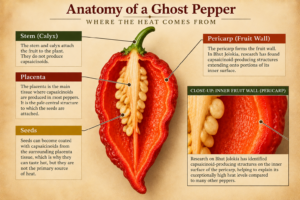
Think about what that means when you cut one open. With a conventional hot pepper, much of the pungency is concentrated around the internal placental tissue. With Bhut Jolokia, the machinery responsible for extreme heat can extend much farther across the inside of the fruit.
THE GHOST PEPPER ISN’T JUST HOTTER BECAUSE IT MAKES MORE CAPSAICINOIDS. ITS FRUIT IS BUILT TO PRODUCE EXTREME HEAT ACROSS MORE OF ITS INTERNAL SURFACE.
Even then, no two Ghost Peppers are guaranteed to deliver precisely the same experience. Genetics, fruit development and growing conditions can all influence capsaicinoid production, creating meaningful variation from one pepper to another. That is why a Scoville rating is best understood as a useful description of a pepper’s expected heat range—not an exact promise about every individual fruit.
How Ghost Peppers Are Actually Used in Cooking
For much of the world, Ghost Pepper arrived as a dare. In Northeast India, it was food first.
Bhut Jolokia was grown as a regional chile and used as a powerful seasoning long before anyone measured it on the Scoville scale. Fresh and dried peppers could be incorporated into foods or preserved in preparations such as pickles, and agricultural research from Northeast India continues to document those traditional uses.
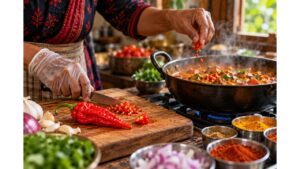
The enormous heat changes how the pepper functions in a dish. A jalapeño can become a substantial physical ingredient—sliced across tacos, chopped into salsa or scattered over nachos. Bhut Jolokia usually works differently. A very small quantity can season a much larger preparation, allowing the pepper to contribute tremendous heat without making the chile itself the centerpiece of every bite.
That is also where its flavor has a chance to matter. Beneath the heat, ripe Ghost Pepper has a distinctive aromatic character, and research into Bhut Jolokia’s volatile compounds supports what growers and cooks have long recognized: this is not a flavorless vehicle for capsaicin. Used with restraint, its aroma and fruitiness can become part of the dish rather than disappearing behind the burn.
Preservation expands those possibilities. Drying extends the life of ripe Ghost Peppers and allows them to be used gradually as seasoning, while dried pods can be ground into an exceptionally potent powder that disperses easily through larger preparations. Modern hot sauce applies the same principle in another form. Combined thoughtfully with vinegar, fruit, garlic, onions, spices or other peppers, Bhut Jolokia can contribute both flavor and a long, powerful burn.
The key is balance. With a chile this potent, it is much easier to add heat than remove it. Start with substantially less than you think you need, distribute it through the dish and build cautiously from there.
THE BEST USE OF GHOST PEPPER ISN’T PROVING HOW MUCH HEAT YOU CAN SURVIVE. IT’S USING JUST ENOUGH TO LET AN EXTRAORDINARY CHILE CHANGE THE DISH.
How to Handle and Store Ghost Peppers Safely
Cooking with Ghost Pepper requires a different mindset than cooking with most everyday chiles. With a jalapeño or poblano, you might slice first and decide how much to use as the dish develops. With Bhut Jolokia, it is better to decide how the pepper will be used before you cut it open.
Fresh Ghost Peppers are thin-walled, relatively lightweight fruits with a naturally wrinkled or uneven surface. Familiar red varieties typically mature from green through orange toward red, although cultivated varieties can produce other ripe colors. A good fresh pepper should feel reasonably firm rather than collapsed or excessively soft. Wrinkling is normal; leaking, deterioration or obvious mold is not.
Once you begin cutting one, treat it with considerably more care than an ordinary kitchen chile. Disposable gloves are a sensible precaution, particularly when handling several peppers. Avoid touching your eyes, nose or face, and thoroughly wash knives, cutting boards and other surfaces afterward. Capsaicinoid residue can remain on hands and kitchen equipment long after the pepper itself has disappeared into the dish. Good ventilation also matters, especially when frying, roasting or processing larger quantities that can release irritating material into the air.
Portioning may be the most important skill of all. Rather than asking, “How many Ghost Peppers should I add?” it is often better to ask, “How little Ghost Pepper will accomplish what I want?” A small piece of fresh pepper, a pinch of powder or a measured amount of Ghost Pepper sauce can influence an entire pot of chili, curry, stew or sauce. Add a little, allow it to distribute through the food and then decide whether the dish genuinely needs more.
Removing the placenta and seeds can reduce some of the pungent material carried into a preparation, but it does not turn a Ghost Pepper into a mild chile. As we saw in its anatomy, Bhut Jolokia can carry capsaicinoids beyond the central placental tissue and onto portions of the inner fruit wall. Treat the entire cut pepper accordingly.
Fresh Ghost Peppers can be refrigerated for short-term use, while longer storage generally calls for freezing, drying or preserving them. Dried pods and powders are particularly convenient because very small quantities can be measured into a dish without cutting a fresh superhot pepper each time.
Finally, cooking with Ghost Pepper is very different from eating an entire raw pepper as a challenge. Distributed through a larger preparation, Bhut Jolokia can function as a powerful seasoning rather than a test of personal tolerance.
🌶️ Professor Pepper Says…
With Ghost Pepper, your best measuring tool isn’t bravery—it’s restraint. Start extremely small, let the heat distribute through the food and add more only after you’ve tasted the result.
GHOST PEPPER REWARDS PRECISION MORE THAN COURAGE. HANDLE IT CAREFULLY, USE IT DELIBERATELY AND LET THE PEPPER SERVE THE FOOD—NOT THE OTHER WAY AROUND.
Ghost Pepper vs. Habanero vs. Carolina Reaper
A million Scoville Heat Units is difficult to imagine without something familiar for comparison. Two peppers provide useful reference points: the Habanero below Ghost Pepper on the heat spectrum and the Carolina Reaper above it.
Habanero is perhaps the better culinary comparison. Both peppers belong to Capsicum chinense and can bring distinctly aromatic, fruity qualities to food, but their heat levels occupy very different territory. A typical Habanero falls around 100,000–350,000 Scoville Heat Units, while Bhut Jolokia became famous for reaching roughly 800,000 to more than 1,000,000 SHU. In the kitchen, moving from Habanero to Ghost Pepper can mean working with several times the pungency.
Carolina Reaper moves in the opposite direction. It emerged after Ghost Pepper had already transformed expectations about how hot a chile could become and subsequently pushed measured heat substantially higher. As with Ghost Pepper, however, actual pungency varies among individual peppers and growing conditions.
That places Ghost Pepper at an important point in the modern history of extreme chile heat. Habanero represents the intensely hot Capsicum chinense peppers many cooks already knew; Ghost Pepper carried that experience across the million-Scoville threshold; and later superhots such as Carolina Reaper pushed the scale higher still.
- Habanero — roughly 100,000–350,000 SHU: An extremely hot culinary chile known for its fruity, aromatic character, but considerably milder than Ghost Pepper.
- Ghost Pepper / Bhut Jolokia — roughly 800,000–1,000,000+ SHU: The historic superhot that helped make the million-Scoville threshold famous, combining extreme heat with distinctive fruity and aromatic qualities.
- Carolina Reaper — roughly 1,500,000–2,000,000+ SHU: A later-generation superhot capable of substantially greater pungency than Ghost Pepper.
GHOST PEPPER NO LONGER HOLDS THE HEAT RECORD, BUT ITS PLACE IN PEPPER HISTORY WAS NEVER JUST ABOUT BEING NUMBER ONE. IT WAS THE CHILE THAT MADE ONE MILLION SCOVILLE UNITS REAL.
Readers interested in the two superhots specifically can continue with Carolina Reaper vs Ghost Pepper: The Brutal Heat War That Destroys Tastebuds, where the differences in heat, flavor and character can be explored in greater detail.
🌶️ Ghost Pepper Product Pairing Quick Guide
You don’t have to eat a raw Bhut Jolokia to experience what makes Ghost Pepper interesting. A well-made Ghost Pepper hot sauce can spread that extreme heat through a larger dish while surrounding it with vinegar, fruit, spices and other ingredients that allow the pepper to contribute flavor as well as fire.
For people who already enjoy very hot sauces, that intensity can be surprisingly useful. A few drops of Ghost Pepper sauce may provide the heat you want without adding enough sauce to change the character of the food.
Hot sauce is only one way to explore Bhut Jolokia. Finished sauces, concentrated Ghost Pepper powder and even growing the pepper yourself each offer a different way to experience the flavor, heat and character of this legendary chile.
- For a versatile Ghost Pepper hot sauce: Peppers of Key West Ghost Pepper Hot Sauce on wings, tacos, burgers, pizza, eggs and grilled meats.
- For another extreme Ghost Pepper sauce experience: Satan’s Ghost – Ghost Pepper Hot Sauce gives serious chileheads another way to explore Bhut Jolokia heat.
- For cooking and seasoning: Magic Plant Farm’s Ghost Pepper Powder can be measured in extremely small amounts into chili, BBQ rubs, marinades, sauces, soups and other recipes.
- For growing the actual pepper: The Challenge Ghost Chili Pepper Growing Kit takes the experience beyond the bottle and gives pepper enthusiasts the opportunity to grow Bhut Jolokia at home.
Peppers of Key West Ghost Pepper Hot Sauce
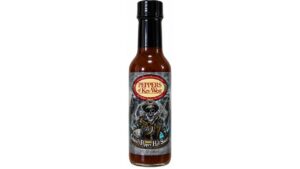
Peppers of Key West Ghost Pepper Hot Sauce
For readers who want to experience Bhut Jolokia through a finished sauce, this is the natural starting point. Rather than handling a raw superhot pepper, you can add the sauce a few drops at a time and control how much Ghost Pepper heat reaches the food.
Try it sparingly on chicken wings, tacos, burgers, pizza, eggs and grilled meats, or stir a small amount into chili, soups and sauces when you want the heat distributed throughout the dish.
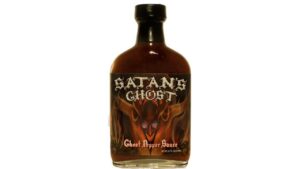
Satan’s Ghost – Ghost Pepper Hot Sauce
For chileheads who already know they enjoy extreme heat, Satan’s Ghost – Ghost Pepper Hot Sauce offers another expression of the pepper that made the million-Scoville threshold famous.
This is the kind of sauce to approach deliberately rather than pour casually. Use small amounts with wings, burgers, tacos, BBQ and other substantial foods where intense Ghost Pepper heat can become part of a larger combination of flavors.
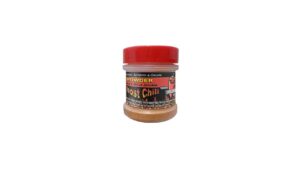
Magic Plant Farm’s Ghost Pepper Powder
Magic Plant Farm’s Ghost Pepper Powder connects directly to one of Bhut Jolokia’s most practical culinary forms: the dried pepper.
The powder makes it possible to introduce Ghost Pepper into a recipe without cutting a fresh superhot chile, and an extremely small amount can season considerably more food. Use it cautiously in chili, BBQ rubs, spice blends, marinades, soups, stews and homemade hot sauces. Measure first rather than shaking directly over the food—you can always add more.
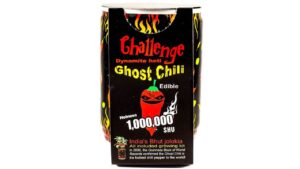
The Challenge Ghost Chili Pepper Growing Kit
For some pepper enthusiasts, tasting Bhut Jolokia is only part of the experience. The Challenge Ghost Chili Pepper Growing Kit offers the opportunity to grow the legendary pepper and watch the story we’ve explored throughout this guide unfold from plant to ripe fruit.
It’s a particularly natural choice for pepper gardeners, chile collectors and anyone curious about growing superhot peppers at home. If the plants produce fresh Ghost Peppers, remember that the same handling precautions discussed earlier in this guide apply when harvesting and preparing the fruit.
TASTE IT, COOK WITH IT OR GROW IT—BHUT JOLOKIA OFFERS MORE THAN ONE WAY TO EXPERIENCE THE PEPPER THAT HELPED DEFINE THE MODERN SUPERHOT ERA.
Ghost Pepper Is More Than a Million-Scoville Legend
Ghost Pepper will probably always be associated with one number: one million Scoville Heat Units.
That milestone changed the pepper world. When Bhut Jolokia became the first scientifically tested chile reported above the million-SHU threshold, it introduced a much wider audience to a level of pungency that had seemed almost unimaginable. The records eventually moved on, but Ghost Pepper had already earned its place in chile history.
Yet focusing only on that number misses what makes the pepper worth understanding. Bhut Jolokia emerged from the chile-growing traditions of Northeast India long before it became an international symbol of extreme heat. Beneath that heat is an aromatic chile with fruity and floral qualities, unusual capsaicinoid-producing anatomy and a long history as an actual ingredient.
Perhaps most importantly, Ghost Pepper demonstrates that extreme heat and culinary value do not have to be opposites. Used carelessly, Bhut Jolokia can overwhelm almost anything around it. Used with restraint, a remarkably small amount can influence an entire dish while still allowing the food—and the pepper’s own character—to come through.
That is a much more interesting legacy than an internet challenge.
GHOST PEPPER MADE ONE MILLION SCOVILLE UNITS FAMOUS. BHUT JOLOKIA’S FLAVOR, HISTORY AND CULINARY IDENTITY ARE WHAT MAKE IT WORTH REMEMBERING.
Frequently Asked Questions About Ghost Peppers
Why is it called a Ghost Pepper?
Ghost Pepper is the widely used English name for Bhut Jolokia, a chile strongly associated with Northeast India. The regional naming history is more complicated than simply translating bhut as “ghost,” which is why Bhut Jolokia is the more useful name throughout this guide.
Are Bhut Jolokia and Ghost Pepper the same pepper?
Yes. Bhut Jolokia is the regional name most commonly associated with the pepper known internationally as Ghost Pepper. You may also encounter spellings and names such as Bhoot Jolokia and Naga Jolokia.
Are Ghost Pepper seeds hotter than the pepper itself?
No. The seeds are not the primary producers of capsaicinoids. Much of the heat originates in placental tissue and, in superhot peppers such as Bhut Jolokia, capsaicinoid-producing structures can also occur along portions of the inner fruit wall.
Can removing the seeds make a Ghost Pepper mild?
No. Removing the seeds and placenta may remove some capsaicinoid-rich material, but a Ghost Pepper remains extraordinarily hot. Bhut Jolokia can carry pungency across more of its internal fruit tissue than many ordinary peppers.
Can you freeze Ghost Peppers?
Yes. Freezing is a practical way to preserve fresh Ghost Peppers for later cooking, although their texture will soften after thawing. That generally matters less when they are destined for sauces, soups, chili or other cooked dishes.
Can Ghost Peppers be dried?
Yes. Ghost Peppers can be dried and stored as whole pods, crushed into flakes or ground into powder. Dried Bhut Jolokia remains extremely potent, so very small quantities are usually sufficient.
Do Ghost Peppers get hotter when they turn red?
Ghost Peppers change as they mature, and capsaicinoid development is influenced by fruit maturity along with genetics and growing conditions. Color alone, however, cannot tell you the exact Scoville heat of an individual pepper.
Can you grow Ghost Peppers at home?
Yes. Bhut Jolokia can be grown by home gardeners, although it requires a sufficiently long, warm growing season to mature successfully. Gardeners in cooler climates commonly start superhot pepper plants indoors well before outdoor planting.
What should you do after handling a Ghost Pepper?
Avoid touching your eyes, nose or face, and thoroughly wash your hands, knives, cutting boards and other surfaces that contacted the pepper. Wearing disposable gloves while cutting fresh Ghost Peppers is a sensible precaution.
How much Ghost Pepper should you use when cooking?
There is no universal amount because peppers and personal heat tolerance vary considerably. Start with an extremely small quantity, distribute it throughout the dish and add more only after tasting carefully.
🌶️ Continue Your Pepper Journey
🌶️ More Individual Peppers Worth Exploring
- Habanero Pepper Explained: Flavor, Scoville Heat, Uses & What Makes It So Hot
- Serrano Pepper Explained: Flavor, Heat, Uses & Why It Gives Mexican Salsa Its Signature Bite
- Jalapeño Pepper Explained: Flavor, Heat, Uses & Why It’s America’s Favorite Chile
- Datil Pepper Explained: Flavor, Heat, Uses & Why This Pepper Is a Florida Favorite
See More Keywords: Ghost chile, Ghost chili, Bhut Jolokia pepper, Indian Ghost Pepper, Assam chile pepper, Northeast India peppers, Northeast India chile, Indian superhot pepper, million Scoville pepper, million SHU pepper, world record hot pepper, former hottest pepper in the world, extreme heat peppers, extremely hot chile peppers, superhot chile varieties, hottest chile peppers, Ghost Pepper history, Bhut Jolokia history, Ghost Pepper India, Ghost Pepper Assam, Ghost Pepper Nagaland, Ghost Pepper growing kit, Ghost Pepper seasoning, crushed Ghost Pepper, Ghost Pepper chile powder, Ghost Pepper cooking powder, Ghost Pepper culinary uses, Ghost Pepper food pairings, Ghost Pepper ripening, ripe Ghost Pepper, red Ghost Pepper, green Ghost Pepper, Ghost Pepper pericarp, Ghost Pepper placenta, capsaicinoid-producing tissue, Ghost Pepper fruit wall, capsaicin heat, chile pepper pungency, Scoville Heat Units, SHU pepper scale
