
Cayenne Pepper Explained: Flavor, Heat, Uses & How It Becomes Cayenne Powder
Cayenne pepper is everywhere. It sits in spice cabinets beside paprika and black pepper, disappears into barbecue rubs, hot sauces, soups, stews, marinades and seasoning blends, and brings warmth to everything from eggs and roasted vegetables to seafood and grilled meats. For many cooks, the familiar container of finely ground red powder is simply part of the kitchen.
But cayenne did not begin as a powder. Before it became one of the world’s most recognizable ground spices, cayenne was a chile pepper—a long, slender fruit that ripens from green to brilliant red and carries considerably more heat than its familiar powdered form might suggest. Fresh cayenne has the bright, direct character of a hot chile picked from the plant; drying removes its moisture and transforms that fruit into an ingredient that can be stored, crushed, ground and distributed through food in ways the fresh pepper cannot.
That transformation is a large part of what made cayenne so useful. Unlike a sliced jalapeño or roasted poblano, ground cayenne doesn’t need to remain a recognizable piece of pepper on the plate. A pinch can sharpen a sauce, wake up a pot of beans or stew, add heat to a seasoning blend, or spread warmth across a dry rub without substantially changing the texture or dominant flavor of the food. Increase the amount and cayenne can become unmistakably hot, but used with restraint, it often works quietly behind everything else.
The pepper itself is more versatile than the spice jar suggests. Cayenne can be eaten fresh, dried whole, crushed into flakes, ground into powder or transformed into hot sauce. Its relatively thin walls make it particularly well suited to drying, while its assertive heat means a comparatively small amount can influence a much larger dish. Those characteristics helped turn an individual chile into something much bigger: one of the world’s most familiar ways of adding heat to food.
To understand cayenne, then, we need to put the powder back together and look at the pepper that made it possible.
If you’re exploring that larger world of chile peppers, our Chile Pepper Guide: Flavor, Heat, Uses & Individual Peppers Explained connects cayenne to the much broader family of fresh, dried, smoked, regional and superhot peppers.
CAYENNE ISN’T JUST A RED POWDER—IT’S A CHILE WHOSE NATURAL CHARACTERISTICS HELPED MAKE IT ONE OF THE WORLD’S MOST USEFUL SOURCES OF HEAT.
🌶️ Cayenne Pepper Snapshot
Common name: Cayenne pepper
Botanical species: Capsicum annuum
Typical heat: Approximately 30,000–50,000 Scoville Heat Units (SHU)
Heat level: Hot
Flavor: Bright, slightly fruity chile flavor with a clean, assertive heat
Appearance: Long, slender peppers that typically ripen from green to red
Common forms: Fresh, dried whole, crushed, powdered and made into hot sauce
Best known for: Ground cayenne pepper
Common uses: Hot sauce, spice blends, dry rubs, marinades, soups, stews, sauces, seafood, meats and vegetables
Cayenne belongs to Capsicum annuum, the same domesticated species that includes jalapeños, serranos, poblanos, anaheims and many other familiar peppers. Its slender fruit, relatively thin walls and considerably hotter personality, however, have given cayenne a very different culinary role.
🌶️ Cayenne Pepper Quick Guide
What is a cayenne pepper?
Cayenne is a long, slender hot chile in the Capsicum annuum species, best known for being dried and ground into cayenne powder.
How hot is cayenne pepper?
Cayenne typically ranges from about 30,000–50,000 Scoville Heat Units (SHU), making it considerably hotter than a typical jalapeño.
What does cayenne pepper taste like?
Cayenne has a bright, slightly fruity chile flavor with a clean, assertive heat.
Is cayenne pepper the same as cayenne powder?
Cayenne pepper is the chile itself. Cayenne powder is made by drying ripe peppers and grinding them into a fine seasoning.
Can you eat fresh cayenne peppers?
Yes. Fresh cayenne peppers can be used in sauces, salsas, marinades and other dishes where substantial chile heat is welcome.
Why is cayenne commonly used as a powder?
Its relatively thin walls make cayenne well suited to drying, and grinding allows its heat to disperse easily throughout food.
From Fresh Chile to Famous Red Powder
For many peppers, the fresh fruit defines their identity. We picture the thick green walls of a poblano, the compact shape of a jalapeño or the wrinkled, lantern-like form of a habanero. Cayenne presents almost the opposite situation: its processed form became so familiar that many people know the powder far better than the pepper from which it came.
A ripe cayenne pepper is generally long and narrow, with relatively thin flesh compared with peppers grown primarily for stuffing, roasting or eating in substantial pieces. Those physical characteristics become particularly valuable after harvest. Removing moisture from a thin-walled pepper is considerably easier than drying a thick, fleshy fruit, and once cayenne has been thoroughly dried, it becomes light, brittle and well suited to crushing or grinding.
Drying does more than make the pepper easier to store. Fresh cayenne contains water, texture and the volatile characteristics of fresh chile, all of which contribute to how we experience it when we bite into the fruit. As moisture disappears, the balance changes. What remains is a much drier and more concentrated ingredient that can be stored for longer periods, transported easily and ground into particles small enough to disappear almost completely into food.
That last transformation changes the cayenne experience in an especially important way. Bite into a piece of fresh chile and its flavor and heat arrive at a particular place in the mouth along with the pepper’s flesh and moisture. Finely ground cayenne can behave very differently. Thousands of tiny particles can spread through a sauce, soup, seasoning blend or dry rub, distributing the pepper across far more of the food.
The chemistry responsible for the burn has not suddenly changed. Cayenne’s heat comes from capsaicin and related capsaicinoids, compounds that activate heat-sensitive receptors in the mouth rather than actually raising the temperature of the food. Grinding doesn’t create more of those compounds. What it can change dramatically is their distribution. Instead of encountering the pepper primarily in a visible bite, we can encounter small amounts of cayenne again and again throughout the dish.
That helps explain why cayenne is so effective as background heat. A recipe can contain enough to create noticeable warmth without tasting as though pieces of hot pepper have been added to every bite. Salt, garlic, herbs, paprika, smoke or other spices can remain at the front of the flavor profile while cayenne quietly establishes how much heat sits underneath them.
It also explains why the powder shouldn’t overshadow the pepper itself. Cayenne became such a successful seasoning because the fruit was unusually well suited to becoming one: slender, relatively thin-walled, sufficiently hot to remain effective in small quantities, and capable of carrying its influence through food once dried and ground.
The spice jar may be how most of us meet cayenne, but the pepper came first.
THE POWDER DIDN’T MAKE CAYENNE USEFUL. THE PEPPER’S NATURAL CHARACTERISTICS MADE THE POWDER POSSIBLE.
What Does Cayenne Pepper Taste Like?
Cayenne is so closely associated with heat that its actual flavor can be easy to overlook. Ask someone what cayenne tastes like and the first answer will probably be “hot,” but heat is a sensation rather than a flavor, and there is more happening in the pepper than its Scoville rating suggests.
Fresh cayenne has a relatively bright, direct chile character with subtle fruitiness and a light natural sweetness that becomes more noticeable as the pepper fully ripens. It doesn’t have the pronounced tropical fruitiness of a habanero, the deep earthiness of a poblano, or the grassy character commonly associated with a green jalapeño. Instead, cayenne’s flavor is comparatively clean and straightforward, which is one reason it works so easily with other ingredients rather than competing with them.
The experience changes considerably when cayenne is dried. Removing water reduces the fresh, juicy qualities of the fruit while concentrating what remains, producing a deeper and more focused chile character. Drying also makes cayenne useful in forms that behave very differently in food. A whole dried pepper can contribute gradually to a simmering dish, crushed cayenne provides visible pieces and occasional concentrated bursts, while finely ground cayenne can disappear almost completely into a recipe.
That versatility is part of cayenne’s culinary strength. Garlic, cumin, oregano, paprika, black pepper, citrus, vinegar and countless other ingredients can remain recognizable alongside it because cayenne doesn’t require the center of the flavor stage. It can provide a controlled layer of heat beneath barbecue rubs, soups, sauces, seafood, meats and vegetables while allowing the primary flavors of the dish to remain intact.
There is also an important difference between tasting cayenne as a fresh pepper and tasting it as a seasoning. With fresh cayenne, the fruit’s aroma, moisture, texture and flavor arrive along with the burn. With finely ground cayenne, there may be very little texture to announce that a chile pepper is present at all. The first impression can come from the food itself, followed by a warmth that begins to establish itself across the mouth.
That sequence helps explain why cayenne can sometimes feel more like heat woven into food than a separate pepper added to it.
 🌶️ Professor Pepper Says…
Cayenne doesn’t have to dominate a dish to change it. Sometimes its best work happens when you notice the warmth before you notice the pepper.
How Hot Is Cayenne Pepper?
Cayenne peppers are generally associated with about 30,000–50,000 Scoville Heat Units, placing them well above the heat commonly encountered in jalapeños and below much hotter peppers such as habaneros and the superhot varieties.
That range is useful, but it shouldn’t be interpreted as a promise that every cayenne pepper will deliver exactly the same experience. Individual fruits can vary because genetics, growing conditions, maturity and other factors influence capsaicinoid production. Scoville ranges are therefore better understood as a useful description of a pepper’s typical territory than as a precise measurement of every fruit.
For someone accustomed to jalapeños, cayenne can represent a meaningful jump. A typical cayenne may carry several times the pungency associated with a jalapeño, and because cayenne is frequently dried and ground, it is often consumed in a form capable of spreading that heat widely through food. At the same time, cayenne remains far removed from the extraordinary concentrations found in peppers such as Ghost and Carolina Reaper peppers.
That middle position has contributed to cayenne’s usefulness. It is hot enough that relatively small quantities can noticeably change a dish, but cooks can still use it as a practical seasoning rather than treating every encounter with it like a superhot-pepper event.
The character of the heat matters too. Cayenne is often experienced as a fairly direct, assertive warmth rather than a flavor dominated by unusual fruitiness or sweetness. When finely powdered cayenne is distributed throughout food, that sensation can become especially even because the pepper is no longer confined to individual slices or pieces.
This is where the science of tasting cayenne becomes particularly useful. Capsaicin doesn’t make food physically hot in the way a flame or hot pan does. Instead, it activates TRPV1 receptors, part of the sensory system involved in detecting potentially harmful heat. The nervous system interprets that activation as burning even though cayenne has not actually raised the temperature of your mouth.
With a fresh pepper, much of that experience can arrive during particular bites. With powdered cayenne, tiny particles can be dispersed across a much larger surface area of the food and consequently across more of the mouth as you eat. The amount of capsaicin hasn’t magically increased simply because the pepper was ground; its delivery has changed.
That distinction helps explain why two dishes containing chile peppers with comparable heat potential can produce noticeably different eating experiences. Pepper variety matters, but so do preparation, particle size, concentration, fat, moisture and how thoroughly the chile has been distributed through the food.
Cayenne’s familiar powder is therefore more than a convenient form of storage. It changes the way one of the pepper’s defining characteristics reaches us.
CAYENNE’S HEAT ISN’T JUST ABOUT HOW MUCH CAPSAICIN IT CONTAINS—HOW THE PEPPER IS PREPARED AND DISTRIBUTED HELPS DETERMINE HOW THAT HEAT IS EXPERIENCED.
🌶️ Bring Cayenne Heat to Your Kitchen
Cayenne’s clean, versatile heat is one reason it has been a natural foundation for hot sauce for generations. If you enjoy that kind of straightforward chile warmth, explore our hot sauces to find everything from approachable everyday heat to considerably hotter bottles.
Where Cayenne Pepper Comes From
Cayenne is so familiar today that it can seem almost placeless. The powder appears in kitchens around the world, and the pepper itself has become associated with cuisines far beyond the region where chile peppers first evolved. Like every member of the Capsicum genus, however, cayenne ultimately belongs to a much older American story.
Chile peppers were domesticated in the Americas thousands of years before they reached Europe, Africa or Asia. Cayenne belongs to Capsicum annuum, the enormously diverse domesticated species that also includes jalapeños, serranos, poblanos, Anaheims, bell peppers and many other familiar varieties. That botanical relationship helps explain how peppers that look, taste and behave so differently can still belong to the same species.
The word cayenne adds another layer to the story. It became closely associated with Cayenne, the capital of French Guiana on the northeastern coast of South America, and over time the name became attached not only to particular hot peppers but also to the dried red seasoning made from them. As cayenne traveled, however, the meaning of the word became less precise. Today, “cayenne pepper” can refer to the fresh or dried chile, while in everyday cooking it often means the familiar ground red spice.
That distinction is worth remembering because cayenne isn’t always a single, perfectly standardized pepper variety. The name is commonly applied to a group of long, slender, relatively thin-walled hot peppers sharing similar characteristics. Cultivars can differ in length, shape, productivity and exact heat, which helps explain why descriptions of “the cayenne pepper” don’t always match one another perfectly.
What ties them together is a recognizable culinary pattern: narrow fruits, substantial heat, good drying characteristics and an ability to become an intensely useful dried seasoning. Those traits allowed cayenne-type peppers to travel exceptionally well in culinary terms. Once dried, peppers become lighter, more stable and easier to transport than fresh fruit, while their concentrated heat means relatively little is needed to influence a dish.
That portability mattered as chile peppers moved far beyond the Americas. Following the Columbian Exchange, Capsicum peppers spread rapidly through European trade networks into Africa and Asia, where cooks incorporated them into existing cuisines so thoroughly that today it can be difficult to imagine many of those food traditions without chiles. Cayenne became part of that global movement, eventually finding uses in spice mixtures, sauces, marinades and everyday cooking across very different culinary cultures.
The result is an interesting contradiction. Cayenne has geographic roots, but its modern identity is remarkably international. A pepper whose ancestors originated in the Americas became a spice that no longer seems to belong to any one cuisine.
CAYENNE BEGAN AS AN AMERICAN CHILE, BUT DRYING, TRADE AND CENTURIES OF COOKING TURNED IT INTO A GLOBAL INGREDIENT.
Fresh Cayenne, Dried Cayenne & Cayenne Powder
The three most familiar forms of cayenne begin with the same basic ingredient, yet they don’t behave interchangeably in the kitchen. Fresh cayenne brings moisture, texture and fresh chile aroma along with its heat. Dried cayenne loses that moisture and becomes more concentrated and shelf-stable. Grind the dried fruit into powder and its physical presence nearly disappears, allowing the pepper to spread through food in a completely different way.
Fresh ripe cayenne is the form that most clearly reminds us that we’re dealing with a fruit rather than a seasoning. Its thin flesh can be sliced into sauces and salsas, chopped into marinades or cooked directly into dishes. Because the pepper carries substantial heat, it generally takes less fresh cayenne to influence a recipe than it would a much milder pepper, but using it fresh preserves characteristics that inevitably change during drying.
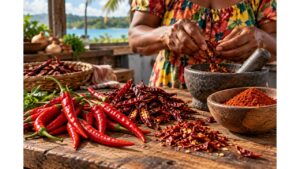
Whole dried cayenne offers a different kind of control. The peppers can be stored for extended periods and used whole, broken apart, crushed or ground as needed. Depending on the preparation, a dried pepper can contribute gradually while simmering in a dish or become much more assertive when crushed into smaller pieces. Toasting or cooking dried chile also changes its aromatic expression, giving cooks another way to shape how the pepper appears in the finished food.
Crushed cayenne occupies useful territory between whole peppers and powder. Visible pieces of dried chile create uneven distribution by design: one bite may contain relatively little while another catches a fragment of pepper and delivers a more concentrated burst. That is a fundamentally different eating experience from finely ground cayenne, even when both started with similar peppers.
Powder takes distribution furthest. Because the particles are so small, cayenne can be incorporated into flour coatings, spice rubs, seasoning blends, soups, sauces and marinades with remarkable uniformity. That is one reason a small measured amount can change an entire recipe without adding meaningful texture or moisture.
There is an important labeling complication, though. A container labeled cayenne pepper generally refers to ground dried cayenne-type chile, while products labeled chili powder may be seasoning blends containing several ingredients such as ground chiles, cumin, garlic or oregano. The two names can sound interchangeable to someone standing in the spice aisle, but substituting one for the other can change both the flavor and heat of a recipe considerably.
Understanding the form therefore matters almost as much as understanding the pepper. Fresh, whole dried, crushed and powdered cayenne aren’t competing versions of the ingredient. They are different culinary tools created from the same chile, each offering a different balance of texture, concentration, distribution and control.
THE PEPPER MAY BE THE SAME, BUT FRESH, DRIED, CRUSHED AND POWDERED CAYENNE EACH CHANGE HOW ITS FLAVOR AND HEAT REACH THE FOOD.
How Cayenne Pepper Is Used Around the World
Cayenne’s transformation into a dried spice helped it travel far beyond the cuisines that first cultivated chile peppers in the Americas. Once peppers could be dried, stored and transported without the short life of fresh fruit, they became remarkably portable ingredients. Cayenne-type peppers fit that pattern especially well, and today their heat appears in cooking traditions across the Americas, Caribbean, Africa, Europe and Asia.
That global reach doesn’t mean every red chile powder used around the world is cayenne. Far from it. Different cuisines developed around their own pepper varieties, growing conditions and culinary traditions, and the broad category of dried red chile can include peppers with dramatically different flavors and heat levels. Cayenne’s importance lies instead in how naturally its characteristics fit a role that cooks everywhere need: adding significant heat without requiring a large quantity of pepper.
In Louisiana and broader Southern cooking, cayenne is familiar in dishes and seasoning traditions where chile heat works alongside ingredients such as paprika, garlic, onion, black pepper and herbs. Creole and Cajun cooking are frequently associated with cayenne, although reducing either cuisine to a single spice would miss the complexity of their seasoning traditions. Cayenne works particularly well there because it can contribute heat while leaving room for the rest of the seasoning profile.
Across parts of the Caribbean, South America and Africa, hot peppers take many forms, and cayenne-type chiles became part of a much larger landscape of pungent ingredients. Fresh peppers can enter sauces and cooked dishes, while dried and ground forms make heat easy to preserve and incorporate into seasoning mixtures. In each case, the surrounding cuisine determines what happens next: acid, aromatics, herbs, fruit, smoke and other spices can take the same basic chile heat in completely different directions.
Cayenne also became deeply familiar in European and North American spice cabinets precisely because the powder is so easy to use. It requires no chopping, roasting or rehydrating. A cook can add a fraction of a teaspoon, taste the food and add more if needed. That simplicity helped cayenne become something unusual in the pepper world: both a distinct chile and an almost universal culinary shorthand for adding heat.
Yet that convenience can obscure the diversity behind the name. Cayenne isn’t the only pepper capable of being dried and ground, and a bright red powder shouldn’t automatically be assumed to be cayenne. Paprika, ground ancho, chile de árbol and numerous other dried peppers can occupy the same visual territory while bringing very different combinations of sweetness, earthiness, smoke, fruit and heat.
Understanding cayenne therefore means recognizing both sides of its global identity. It is a particular kind of hot chile with characteristics that make it exceptionally useful, but it is also part of the much larger human story of drying peppers and turning them into portable seasonings.
CAYENNE TRAVELED WELL BECAUSE IT SOLVED A SIMPLE CULINARY PROBLEM: HOW TO PRESERVE SERIOUS CHILE HEAT AND USE IT ALMOST ANYWHERE.
Cooking with Cayenne Pepper
Cayenne’s greatest strength in the kitchen may be control. Because the pepper is relatively hot and its powdered form disperses so efficiently, cooks can change the heat of an entire dish without adding much volume, moisture or texture. That makes cayenne particularly useful when the food already has the flavor and consistency you want but needs another layer of warmth.
In soups, stews, beans and sauces, cayenne can disappear into the liquid and spread throughout the dish. In dry rubs and seasoning blends, it mixes easily with salt, paprika, garlic, onion, herbs and other spices. It can sharpen roasted vegetables, eggs and potatoes, bring additional heat to seafood and chicken, or sit beneath sweeter and smokier flavors in barbecue preparations. The goal isn’t always to make the finished food taste distinctly of cayenne; often the pepper’s job is simply to make everything around it feel more alive.
That makes restraint particularly useful. It is much easier to add another pinch of cayenne than to remove one after the pepper has been distributed through the food. Starting with a small amount, allowing it to disperse and then tasting gives the cook considerably more control than adding a large quantity at once. This becomes even more important in dishes that reduce during cooking, because removing water can intensify the overall concentration of seasonings.
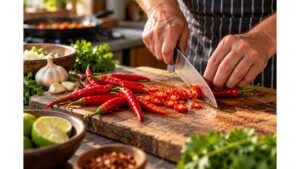
Fresh cayenne asks for a somewhat different approach. Sliced or chopped peppers bring their own texture and fresh chile character, making them useful when the pepper itself is intended to remain part of the dish. They can be incorporated into sauces, marinades and cooked preparations or used as the starting point for homemade hot sauce. Handling them deserves some care: the capsaicinoids responsible for cayenne’s heat can transfer from the interior of the pepper to fingers, cutting boards and utensils, and touching the eyes after preparing hot chiles can be decidedly unpleasant.
Dried whole cayenne offers another set of possibilities. A whole pepper can flavor a simmering dish and later be removed, while broken or crushed dried peppers release their influence more directly. Grinding dried cayenne at home provides yet another option, allowing cooks to control how coarse or fine the finished seasoning becomes.
And then there is hot sauce, one of cayenne’s most natural destinations. Cayenne-type peppers provide enough heat to create an assertive sauce while still leaving room for vinegar, salt, garlic and other ingredients to shape the finished flavor. That combination of dependable heat and relative versatility is one reason cayenne and similar long red chiles have played such an enduring role in the world of pepper sauces.
The best way to cook with cayenne, then, depends less on finding one ideal recipe than on deciding what job you want the pepper to perform. Fresh cayenne can remain an ingredient you see and taste. Dried cayenne can slowly build depth and heat. Crushed cayenne can create intermittent bursts. Powder can disappear almost completely while spreading warmth throughout the dish.
Same pepper. Very different tools.
CAYENNE WORKS BEST WHEN YOU CHOOSE ITS FORM FOR THE JOB—FRESH FOR PRESENCE, DRIED FOR DEPTH, CRUSHED FOR BURSTS AND POWDERED FOR EVEN HEAT.

Why Cayenne Works So Well in Hot Sauce
Cayenne’s relationship with hot sauce is more than a matter of heat. Plenty of peppers are hot enough to make sauce, but cayenne brings a combination of characteristics that makes it particularly useful: substantial but manageable pungency, a relatively straightforward chile flavor, thin flesh and enough versatility to work with vinegar, salt, garlic and other ingredients without demanding that every sauce taste primarily of the pepper itself.
That balance matters. A strongly flavored chile can define nearly everything around it. Habanero, for example, can bring pronounced fruity and floral qualities along with its heat, while smoked peppers can immediately push a sauce toward deeper, smoky territory. Cayenne is comparatively adaptable. Its chile character remains present, but it can provide a dependable foundation of heat while acidity, aromatics, sweetness or additional peppers shape the sauce’s larger personality.
Vinegar is an especially natural partner. Acidity provides brightness and preservation while cutting through richer foods, and cayenne supplies the heat that turns a simple acidic pepper mixture into something capable of changing an entire meal with a few shakes. Salt sharpens the flavors around it, while garlic and other aromatics can add complexity without fighting the pepper. The result can be remarkably simple in composition while still feeling complete on the plate.
Fresh and dried cayenne can also lead a sauce in different directions. Fresh peppers retain more of their immediate chile character and moisture, while dried cayenne can contribute a more concentrated quality. Fermentation introduces another possibility altogether, allowing microorganisms, time and salt to transform the peppers before they are blended and finished. Cayenne doesn’t require any one of these methods to make a good sauce; its usefulness comes partly from how many approaches it can accommodate.
This is also where cayenne’s moderate position within the larger world of hot peppers becomes valuable. At roughly 30,000–50,000 SHU, the raw pepper carries serious heat, but a finished sauce contains more than peppers alone. Vinegar, water, salt, vegetables, fruit and other ingredients can all affect the concentration of capsaicinoids in each serving. A cayenne-based hot sauce can therefore deliver noticeable, useful heat without automatically entering the extreme territory associated with sauces built around superhot peppers.
That doesn’t mean every cayenne sauce will taste or burn the same. Pepper concentration, preparation method, fermentation, acidity, additional ingredients and serving size all influence the final experience. Two bottles can both be described as cayenne hot sauce and still behave very differently on food.
What cayenne provides is a remarkably flexible starting point: enough heat to matter, enough flavor to contribute, and enough restraint to let the rest of the sauce develop around it.
CAYENNE BECAME A HOT-SAUCE CLASSIC BECAUSE IT CAN PROVIDE THE FIRE WITHOUT INSISTING ON BEING THE ENTIRE FLAVOR.
Growing, Harvesting & Drying Cayenne Peppers
Cayenne’s usefulness doesn’t begin after harvest. The same characteristics that make it valuable in the kitchen also make it an appealing pepper for gardeners who want a crop that can move easily from fresh cooking into preservation.
Like other Capsicum annuum peppers, cayenne grows best with warmth, sunlight and a sufficiently long growing season. The plants produce elongated fruits that typically begin green and mature toward red, although the exact appearance and growth habit depend on the cultivar. Gardeners can harvest cayenne while green, but allowing the peppers to reach their mature color gives the fruit time to develop the characteristics associated with ripe cayenne and prepares it for the form most commonly used for drying.
The pepper’s relatively thin walls become particularly advantageous at this stage. Thick, fleshy peppers hold substantial moisture and require more careful dehydration, while slender cayenne peppers can lose water more readily. That doesn’t mean they should simply be left anywhere to dry. Successful preservation depends on removing moisture thoroughly enough to discourage spoilage, and environmental conditions such as humidity and airflow matter.
Once fully dried, cayenne should feel brittle rather than soft or leathery. The peppers can then be stored whole, broken into pieces, crushed into flakes or ground into powder. Keeping them whole until needed can help preserve quality because grinding exposes considerably more surface area to air. Once cayenne has been powdered, careful storage away from excessive heat, light, moisture and air helps protect its flavor and color.
That gradual journey—from green fruit on the plant to ripe red pepper, dried pod and finally ground seasoning—is one of the clearest examples of how preservation can expand rather than merely extend an ingredient’s usefulness. Drying doesn’t simply allow cayenne to last longer. It gives cooks entirely new ways to use it.
A gardener can pick one pepper for a fresh sauce, leave another to ripen fully for drying, crush the dried harvest into flakes and grind part of it into the spice that will remain in the kitchen long after the growing season has ended.
Few peppers demonstrate the connection between growing, preservation and everyday seasoning quite as clearly.
CAYENNE’S THIN-WALLED FRUIT DOESN’T JUST MAKE IT EASY TO DRY—IT HELPS TURN A SEASONAL HARVEST INTO A YEAR-ROUND KITCHEN INGREDIENT.
Is Cayenne Pepper Good for You?
Cayenne is often discussed as though its heat gives it almost medicinal powers. That reputation has some basis in the chemistry of chile peppers, but it is useful to separate what cayenne actually contains from the much larger claims sometimes made about eating it.
Like other red chile peppers, cayenne contains naturally occurring plant compounds, including carotenoids and capsaicinoids. Capsaicin is the best known because it is responsible for much of the pepper’s pungency, but it has also attracted considerable scientific attention for the way it interacts with the body’s sensory and physiological systems.
When we eat cayenne, capsaicin activates TRPV1 receptors—the same receptors involved in detecting potentially damaging heat. That interaction helps explain the familiar burning sensation, along with responses such as warmth, sweating or a runny nose. The pepper hasn’t physically raised the temperature inside the mouth; the nervous system is responding to a chemical signal that resembles one produced by heat.
Research into capsaicin extends well beyond that sensory response. Scientists have investigated its relationships with metabolism, appetite, cardiovascular health, inflammation and pain. Some of that research is promising, but results from laboratory experiments, concentrated capsaicin preparations or observational studies should not automatically be translated into claims that sprinkling cayenne on dinner will prevent or treat disease.
There is also an important distinction between eating cayenne as food and using capsaicin in a standardized medical product. Capsaicin has established topical uses in certain pain-relief products, where concentration and delivery can be carefully controlled. That is very different from the amount and manner in which cayenne is normally consumed in a meal.
From a culinary perspective, perhaps the most useful way to think about cayenne is much simpler. It is a strongly flavored plant ingredient that can add considerable intensity with very little sugar, fat or sodium of its own. A small amount can make vegetables, beans, lean proteins, soups and other foods more interesting without requiring a heavy sauce or large quantity of another ingredient.
Tolerance matters, however. Cayenne can be uncomfortable for people who are sensitive to spicy foods, and more is not necessarily better. The same capsaicin that makes the pepper interesting can produce an unpleasant burning sensation when the quantity exceeds what an individual enjoys or tolerates.
Cayenne does not need exaggerated health claims to justify a place in the kitchen. Its value as food is already substantial: a small amount can contribute color, chile character and significant heat while helping cooks build bold flavor.
CAYENNE MAY CONTAIN INTERESTING COMPOUNDS, BUT ITS MOST RELIABLE BENEFIT IS SIMPLE: IT CAN MAKE GOOD FOOD MORE EXCITING.
Cayenne Pepper Substitutes
The best substitute for cayenne depends on what the cayenne was supposed to accomplish. If a recipe uses it primarily for heat, several other ground chiles can work. If cayenne is contributing both heat and a particular balance of flavor, color and concentration, the choice becomes more important.
Crushed red pepper is one of the easiest alternatives when texture isn’t a problem. It can provide substantial chile heat, but the larger flakes distribute differently from finely ground cayenne. Instead of creating uniform background warmth, crushed pepper is more likely to produce noticeable bursts of heat from one bite to another.
Other ground hot chiles can come closer to cayenne’s behavior, although their flavors may differ. Ground chile de árbol, for example, can provide considerable heat and a distinct dried-chile character. Hot paprika may work when a recipe needs red-pepper flavor and moderate warmth, but paprika varies enormously—from sweet and mild to genuinely hot—so the label matters.
For cooks tempted to reach for ordinary “chili powder,” there is another complication. In many American kitchens, chili powder is a seasoning blend rather than simply powdered chile. It may contain cumin, garlic, oregano, salt or other spices. Substituting it directly for cayenne can therefore change the entire seasoning profile of the dish rather than simply adjusting its heat.
Fresh peppers require a different calculation. A serrano can provide meaningful heat when a recipe can accommodate fresh chile flavor and texture, while hotter peppers can supply even more pungency in much smaller amounts. None behaves exactly like powdered cayenne because adding fresh fruit also introduces moisture, flesh and fresh-pepper flavor.
The useful question isn’t simply, “What pepper is closest to cayenne?” It is “What is cayenne doing in this particular recipe?” Once that is clear, choosing a substitute becomes much easier.
MATCH THE JOB, NOT JUST THE HEAT: THE BEST CAYENNE SUBSTITUTE DEPENDS ON WHETHER THE RECIPE NEEDS WARMTH, FLAVOR, COLOR OR ALL THREE.
How to Store Cayenne Pepper
Cayenne’s usefulness as a pantry ingredient depends partly on how well it is stored. Fresh peppers, whole dried chiles and ground cayenne are the same ingredient at different stages, but each responds differently to moisture, air, light and time.
Fresh cayenne should be treated much like other fresh chile peppers. Peppers that are firm, brightly colored and free from soft or damaged areas can be refrigerated until needed. Keeping them dry is important because excess surface moisture can encourage deterioration. If the harvest is larger than you can reasonably use fresh, cayenne’s thin walls make drying one of the most natural preservation choices.
Whole dried cayenne is considerably more stable, provided the peppers have been dried thoroughly. Any remaining moisture can create conditions for spoilage during storage, so properly dried peppers should feel dry and brittle rather than soft or flexible. Once dried, they are best kept in an airtight container away from heat, humidity and direct light.
Ground cayenne deserves even more protection. Grinding dramatically increases the amount of pepper exposed to air, which helps explain why powdered spices gradually lose aroma, flavor and color. The powder may remain usable long after it has stopped tasting particularly vibrant, so storage quality is not simply a question of whether the spice has technically “gone bad.”
A tightly sealed container kept in a cool, dark, dry cabinet is generally a better home than a jar sitting beside a hot stove or in direct sunlight. Buying quantities that match how quickly you actually cook with cayenne also makes sense. An enormous container may look economical, but not if most of the powder spends years slowly fading in the pantry.
For homegrown cayenne, storing some peppers whole and grinding smaller amounts as needed can preserve more of the dried chile’s character. It also gives the cook options: a whole dried pepper can be simmered in a dish, broken into pieces, crushed into flakes or turned into powder depending on what the recipe requires.
Cayenne became valuable partly because drying gave a seasonal fruit an extraordinarily long culinary life. Good storage simply protects that advantage.
DRYING MAKES CAYENNE LAST; PROTECTING IT FROM AIR, LIGHT, HEAT AND MOISTURE HELPS KEEP THAT STORED PEPPER WORTH USING.
🌶️ Recommended Peppers of Key West Products for Cayenne Pepper Fans
Understanding cayenne is one thing. Tasting how that straightforward red-chile heat works in a finished sauce is another.
Product Pairing Quick Guide
Wings, Pizza, Eggs & Everyday Meals → Peppers of Key West Cayenne Pepper Hot Sauce
Burgers, Sandwiches & Grilled Meats → Cheap Thrill Cayenne Hot Sauce
Chicken, Seafood & Caribbean-Inspired Dishes → Iguana Red Cayenne Pepper Hot Sauce
Pork, Ribs, Chops & Dry-Rubbed Meats → Porky Pig Pork Seasoning
Exploring Cayenne Alongside Other Chile Peppers → 5 Sauce Complete Hot Sauce Collection
The lesson is one cayenne has been teaching us throughout this guide: the pepper doesn’t have to dominate a dish to matter. Whether it becomes hot sauce, disappears into a seasoning blend or works beneath other flavors, cayenne is exceptionally good at putting heat exactly where the cook wants it.
Best Peppers of Key West Products for Cayenne Pepper Lovers
Classic cayenne heat makes this a natural everyday sauce for wings, pizza, eggs, sandwiches and almost anything that needs a clean, familiar pepper kick.
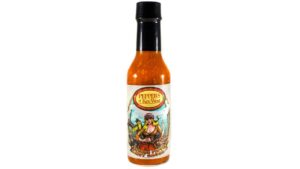
Peppers of Key West Cayenne Pepper Hot Sauce
If this guide has made you curious about tasting cayenne rather than simply sprinkling it from a spice jar, this is the natural place to start. Cayenne remains at the center of the experience, delivering straightforward chile heat that can complement food without overwhelming everything around it.
A different expression of cayenne heat brings bold spice to burgers, sandwiches, grilled meats and other foods that can stand up to a more assertive hot sauce.
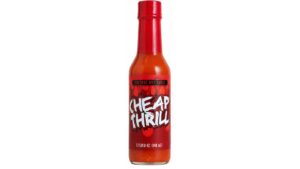
Cheap Thrill Cayenne Hot Sauce
Cheap Thrill demonstrates how the same basic pepper can take on a different personality once it becomes part of a finished sauce. Try it where browned, grilled or savory flavors give cayenne’s heat something substantial to work against.
Cayenne takes on a fuller Caribbean-inspired personality here, making this an interesting choice for chicken, seafood, rice dishes and foods where heat can work alongside sweeter and more complex flavors.
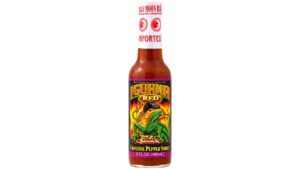
Iguana Red Cayenne Pepper Hot Sauce
Iguana Red helps demonstrate an important point about cayenne-based sauces: identifying the pepper doesn’t tell you everything about the finished bottle. The ingredients surrounding cayenne can change how its heat and flavor are experienced, giving the same chile a very different culinary role.
Ground cayenne shows exactly why it became such a useful seasoning ingredient, adding background warmth to pork without requiring the pepper to become the dominant flavor.

Porky Pig brings the article’s fresh-to-powder story directly into the spice cabinet. Here cayenne isn’t the headline ingredient—it works as part of a larger seasoning blend, contributing heat alongside the other flavors. That makes it a natural match for pork chops, ribs, tenderloin, pulled pork and other meats where seasoning needs to complement the food rather than overwhelm it.
Taste cayenne alongside jalapeño, habanero, Ghost Pepper and Carolina Reaper to experience how dramatically pepper flavor and heat can change even when the food underneath stays the same.

5 Sauce Complete Hot Sauce Collection
Five distinct pepper sauces turn the same wings, tacos or grilled foods into an easy side-by-side lesson in how chile personality changes a meal.
Cayenne Pepper: The Pepper Behind the Powder
Cayenne’s greatest achievement may also be the reason the pepper itself is so easily overlooked. It became so successful as a dried seasoning that generations of cooks came to know the powder without ever needing to think much about the fruit that produced it.
Put the pepper back into the story, however, and the familiar red spice begins to make much more sense.
Cayenne is long and slender rather than thick and fleshy. Its walls lend themselves naturally to drying. Its heat is strong enough that relatively small quantities can change a much larger dish, yet it doesn’t carry the overwhelming intensity of a superhot. Once dried, it can remain whole, become crushed pepper or be ground finely enough to disappear almost completely into food.
Each transformation gives the cook something different.
Fresh cayenne brings the chile itself to the meal. Dried cayenne makes that pepper storable and portable. Crushed cayenne creates intermittent bursts of flavor and heat. Ground cayenne spreads warmth through rubs, sauces, soups, stews and seasoning blends without substantially changing their texture.
That adaptability helped cayenne move far beyond any single cuisine. It became a hot-sauce pepper, a spice-cabinet staple, a component of seasoning blends and one of the most recognizable ways cooks around the world add heat without rebuilding the rest of a dish around the chile.
And perhaps that is the most useful way to understand cayenne.
It isn’t famous because it is the hottest pepper. It isn’t famous because it has the most exotic flavor or the most unusual appearance. Cayenne became famous because it is useful—easy to dry, easy to preserve, easy to grind, easy to blend and remarkably easy to cook with.
The little jar of red powder in the spice cabinet is simply the final chapter of a much more interesting pepper story.
CAYENNE BECAME A GLOBAL SPICE NOT BY BEING THE MOST EXTREME CHILE, BUT BY BECOMING ONE OF THE MOST USEFUL.
Frequently Asked Questions About Cayenne Pepper
Is cayenne pepper hotter than jalapeño?
Yes. Cayenne peppers typically fall around 30,000–50,000 SHU, while jalapeños are generally much milder. That difference is substantial enough that cayenne should not usually be substituted for jalapeño in equal quantities when heat matters.
Is cayenne pepper hotter than serrano?
Usually, yes. Serrano peppers occupy a hotter range than jalapeños, but cayenne generally climbs higher. The peppers also behave differently in cooking: fresh serrano contributes noticeable green-chile flavor and texture, while ground cayenne can distribute heat almost invisibly throughout a dish.
Is cayenne pepper hotter than habanero?
No. Habanero peppers typically reach considerably higher Scoville levels than cayenne and bring a much more pronounced fruity and aromatic chile character. Cayenne’s more straightforward heat is one reason it works so easily in seasoning blends and everyday cooking.
Are cayenne peppers and red peppers the same thing?
Not necessarily. “Red pepper” can describe several different products, including dried or ground red chiles. Cayenne is a specific type of hot red chile, so a product labeled simply red pepper should not automatically be assumed to contain only cayenne.
Is cayenne pepper the same as chili powder?
Usually not. Ground cayenne is generally dried cayenne-type chile ground into powder, while American-style chili powder is commonly a seasoning blend that may include ground chile, cumin, garlic, oregano and other ingredients.
Is cayenne pepper the same as paprika?
No. Both can be made from dried Capsicum annuum peppers, but paprika encompasses peppers and powders with very different flavor and heat characteristics. Many paprikas are dramatically milder than cayenne, although genuinely hot varieties also exist.
Can I substitute cayenne pepper for crushed red pepper?
Often, but the result will be different. Finely ground cayenne disperses more uniformly, while crushed red pepper creates more concentrated bursts of chile flavor and heat. Start cautiously when substituting and adjust according to taste.
Can you eat green cayenne peppers?
Yes. Cayenne can be harvested and eaten while green, although allowing the fruit to ripen to red changes its flavor and gives it the mature form most strongly associated with drying and ground cayenne.
Should you remove cayenne pepper seeds to make it less hot?
Removing the seeds alone doesn’t remove most of the pepper’s heat. Much of the capsaicin is concentrated in the internal placental tissue surrounding the seeds, so removing that pale inner tissue along with the seeds can reduce pungency more effectively.
Does cooking cayenne make it less spicy?
Cooking can change how cayenne’s heat is experienced, but it doesn’t simply switch the capsaicin off. Dilution, fat, moisture, cooking method and how thoroughly the pepper becomes distributed through the food can all affect the perceived intensity.
How much cayenne pepper should I use in a recipe?
Start small, particularly if you don’t know how hot the cayenne is or how sensitive your diners are to chile heat. Ground cayenne disperses efficiently, so even a modest amount can influence an entire pot of soup, sauce or stew.
How long does ground cayenne pepper stay good?
Properly stored ground cayenne can remain usable for a considerable time, but its flavor, aroma and color gradually decline. Keeping it tightly sealed in a cool, dark, dry location helps preserve its quality longer than storing it near heat, moisture or direct light.
🌶️ Continue Your Cayenne Pepper Journey
More Individual Peppers Worth Exploring
- Jalapeño Pepper Explained: Flavor, Heat, Uses & Why It’s America’s Favorite Chile
- Serrano Pepper Explained: Flavor, Heat, Uses & Why It Gives Mexican Salsa Its Signature Bite
- Habanero Pepper Explained: Flavor, Scoville Heat, Uses & What Makes It So Hot
- Ghost Pepper Explained: Scoville Heat, Flavor, Uses & What Makes It So Hot
- Poblano Pepper Explained: Flavor, Heat, Uses & Why It’s the Chile Behind Chiles Rellenos
The more peppers you explore, the clearer the lesson becomes: heat is only one part of a chile’s identity. Cayenne earned its place in kitchens around the world not simply because it is hot, but because its particular combination of flavor, form and versatility made that heat extraordinarily useful.
See More Keywords: red cayenne pepper, cayenne chile, cayenne chili pepper, cayenne spice, cayenne seasoning, cayenne pepper powder, crushed cayenne pepper, dried red chile, hot red pepper, cayenne pepper plant, green cayenne pepper, ripe cayenne pepper, cayenne pepper seeds, cayenne pepper recipes, cayenne pepper sauce, cayenne pepper substitute, cayenne vs jalapeño, cayenne vs serrano, cayenne vs habanero, cayenne vs paprika, cayenne vs chili powder, cayenne vs crushed red pepper, capsaicin in cayenne pepper, cayenne pepper TRPV1, thin-walled chile peppers, drying cayenne peppers, grinding cayenne peppers, storing ground cayenne, growing cayenne peppers, cayenne pepper seasoning blends, cayenne pepper dry rub, cayenne pepper for cooking, cayenne pepper origin, cayenne pepper history, Capsicum annuum peppers
