
Datil Pepper Explained: Flavor, Heat, Uses & Why This Pepper Is a Florida Favorite
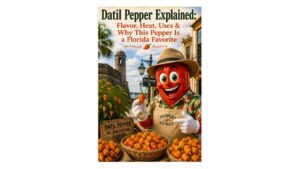
Florida has alligators, hurricanes, key lime pie, questionable decisions involving flip-flops—and one seriously underrated hot pepper.
The datil pepper is small, golden-orange, fruity, surprisingly sweet, and hot enough to make a jalapeño seem like it forgot why it came to the party. Around St. Augustine and Northeast Florida, generations of cooks have turned datils into hot sauces, seafood condiments, mustards, jellies, relishes, barbecue sauces, and the unmistakable heat behind Minorcan-style clam chowder.
But the datil is more than Florida’s answer to the habanero. Its mysterious history, distinctive sweet heat, and unusually strong relationship with one corner of America have made it something much more interesting.
A pepper with a hometown.
Stand in St. Augustine long enough and eventually somebody will introduce you to a datil pepper.
It may not happen at a produce stand. More likely, the introduction arrives at the table, perhaps in an orange pepper sauce beside fried shrimp or in a tomato-red bowl of Minorcan-style clam chowder carrying considerably more heat than its appearance suggests. At local markets and shops, the same pepper turns up in mustard, jelly, relish, salsa, barbecue sauce, marinades, and bottles of hot sauce.
Ask what gives those foods their distinctive heat and one unfamiliar word keeps appearing:
Datil.
Spend a little more time around St. Augustine and something else becomes apparent. Locals don’t treat the datil as though it were simply another hot pepper that happens to grow well in Florida. It belongs to the food culture of the place—to family gardens, local sauces, seafood, Minorcan-style clam chowder, preserves, and recipes passed from one generation to the next.
That sense of ownership tells us more about the datil than a Scoville chart ever could.
Chile peppers are among the great travelers of the food world. After their domestication in the Americas, they moved through trade, migration, colonization, agriculture, and cooking until peppers with American ancestry became indispensable ingredients in cuisines thousands of miles away. Today it is difficult to imagine Sichuan cooking without chiles, Thai food without fiery peppers, or Hungarian cooking without paprika, even though none of those places is where Capsicum originated.
The datil traveled too.
We just don’t know exactly how it reached Florida.
That uncertainty has created one of the more intriguing origin stories in American pepper culture. The datil has long been associated with St. Augustine’s Minorcan-descended community, whose roots trace back to Mediterranean settlers—including people from the Spanish island of Minorca—who arrived in Florida during the eighteenth century and later established a lasting community in St. Augustine. Local tradition frequently connects those settlers with the datil pepper, although the historical evidence does not conclusively prove that they brought it to Florida. Other theories point toward later introductions or movement through the Caribbean and elsewhere.
The surviving historical evidence does not give us enough certainty to declare exactly who carried the first datil into Florida or when it happened. What we know much more clearly is what happened afterward.
Northeast Floridians planted datils in their gardens, saved seeds from successful plants, cooked the peppers into family recipes, and passed both the seeds and those recipes from one generation to the next. Over time, those ordinary acts gave the datil something its uncertain origin story could not: a permanent place in the food culture of St. Augustine.
Over generations, this relatively small member of Capsicum chinense became so closely associated with St. Augustine and the surrounding region that its uncertain arrival became less important than the culinary tradition that developed around it.
That tradition is what makes the datil unusual.
A ripe datil is typically small and elongated, ripening from green toward yellow-orange or orange. Its appearance gives little warning of the amount of capsaicin waiting inside. Datils are commonly placed in roughly the 100,000–300,000 Scoville Heat Unit range, which puts them firmly into serious hot-pepper territory and naturally invites comparison with their better-known Capsicum chinense relative, the habanero.
But heat alone would never have created this kind of regional following.
The datil also brings sweetness, fruitiness, and an aromatic chile character that gives cooks something to work with. Combine that flavor with substantial heat and the pepper becomes particularly comfortable in foods built around contrast: sweet against hot, vinegar against fruit, smoke against brightness, or rich seafood against a sharp chile bite.
That helps explain why datils found natural homes in pepper sauces, tomato-rich chowders, mustards, fruit preserves, barbecue sauces, marinades, and seafood condiments. These preparations don’t merely tolerate the pepper’s heat. They give its flavor somewhere to go.
And that is the datil we are going to explore.
Not simply a Florida curiosity or a habanero substitute with a different name, but a case study in something much more interesting: how an ingredient becomes part of a regional identity.
If you’re exploring that larger world of chile peppers, our Chile Pepper Guide: Flavor, Heat, Uses & Individual Peppers Explained explores the distinctive flavors, heat levels, culinary uses, and identities of peppers from familiar everyday chiles to dried Mexican varieties, regional favorites, and extreme superhots. The datil occupies a particularly interesting place in that story because its importance comes not from global fame, but from the depth of its relationship with one small part of Florida.
To understand the datil, then, we have to understand both the pepper and the place that made it its own.
THE DATIL MAY BELONG TO A GLOBAL FAMILY OF HOT CHILES, BUT GENERATIONS OF FLORIDA COOKING GAVE IT A HOME OF ITS OWN.
Datil Pepper Snapshot
- Pronunciation: DAY-tuhl
- Species: Capsicum chinense
- Strongest Association: St. Augustine and Northeast Florida
- Scoville Heat: Commonly cited around 100,000–300,000 SHU, with substantial natural variation
- Flavor: Fruity, sweet, aromatic, and intensely hot
- Color: Green when immature; generally ripens toward yellow-orange or orange
- Best Uses: Hot sauce, seafood, Minorcan-style clam chowder, mustard, barbecue sauce, jelly, relish, salsa, marinades, soups, and condiments
- Common Forms: Fresh, cooked into sauces and condiments, preserved, and dried
- Closest Familiar Comparison: Habanero is useful for understanding its general heat family, but the datil has its own flavor and regional identity
- What Makes It Special: Few American chile peppers are as closely identified with one city and regional food culture as the datil is with St. Augustine.
Quick Guide
What does a datil pepper taste like?
Datils combine substantial heat with a fruity, sweet, aromatic chile flavor. That balance makes them especially useful in sauces and condiments containing vinegar, tomato, mustard, fruit, citrus, or other ingredients that can play against their sweetness and heat.
How hot is a datil pepper?
Datils are commonly cited around 100,000–300,000 Scoville Heat Units, placing them in approximately the same broad heat territory as habaneros. Individual peppers can vary considerably according to genetics, maturity, and growing conditions.
Where do datil peppers come from?
Their precise historical origin and route into Florida remain uncertain. What is firmly established is their generations-deep association with St. Augustine and Northeast Florida, particularly with the region’s Minorcan-descended food culture.
Are datil peppers the same as habaneros?
No. Datils and habaneros both belong to Capsicum chinense and can occupy similar heat territory, but they are distinct peppers with different flavor characteristics and culinary histories.
Why are datil peppers famous in Florida?
Generations of cultivation and cooking around St. Augustine turned the datil into a regional ingredient. It became associated with family gardens, pepper sauces, seafood, Minorcan-style clam chowder, mustards, jellies, relishes, barbecue sauces, and other Northeast Florida foods.
What is the best way to use datil peppers?
Datils shine when their natural fruitiness has another strong flavor to work against. Vinegar, tomato, mustard, citrus, seafood, smoky meats, and sweetness are particularly natural partners.
What Is a Datil Pepper—and Why Does It Taste So Different?
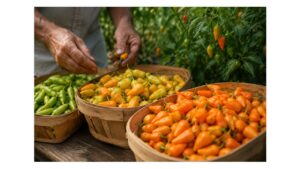
Hold a ripe datil in your hand and there is nothing particularly menacing about it. The pepper is relatively small, with an elongated shape and skin that ripens toward warm shades of yellow-orange and orange. It looks considerably less intimidating than the wrinkled, twisted superhot peppers that have become visual shorthand for extreme chile heat.
Cut into one, however, and its family becomes easier to understand.
The datil belongs to Capsicum chinense, the same species that includes habaneros, scotch bonnets, and many of the intensely aromatic hot peppers associated with the Caribbean and tropical Americas. Members of the species vary enormously in shape, color, flavor, and heat, but many share an important characteristic: underneath their capsaicin is a pronounced aroma and flavor.
That distinction matters because chile heat and chile flavor are not the same thing.
A pepper can taste grassy and fresh, earthy and dark, smoky, citrusy, floral, sweet, or intensely fruity. Capsaicin determines the sensation of heat, but a Scoville number cannot tell you what surrounds that heat when the pepper reaches your mouth.
The datil demonstrates the difference particularly well. Its burn can be formidable, especially for someone accustomed to jalapeños or milder everyday chiles, but underneath that intensity is a fruity sweetness that makes the pepper far more useful in cooking than its heat rating alone would suggest.
That becomes easier to understand when datils are turned into sauce. Vinegar gives the pepper acidity and direction. Sugar or fruit can emphasize its natural sweetness while softening the perception of heat. Mustard contributes pungency and tang. Tomato provides acidity, sweetness, and savory depth. Citrus complements the pepper’s brighter characteristics, while seafood provides a relatively delicate canvas on which even a modest amount of datil becomes noticeable. With grilled or smoked meats, the same pepper moves in another direction, where its sweetness and heat can work against fat, smoke, char, and caramelization.
Suddenly, the collection of foods associated with datils around Northeast Florida doesn’t seem random at all.
They are different expressions of the same culinary idea: balance the heat without erasing the pepper.
Ripeness adds another dimension. Datils begin green and mature toward their characteristic yellow-orange and orange colors, and that progression affects more than appearance. As with many chiles, maturity can influence sweetness, aroma, texture, and heat. University of Florida research examining Northeast Florida datils has demonstrated substantial differences in measured heat between immature green and fully ripe orange fruit, although those individual measurements should not be treated as a universal formula for every datil pepper. Genetics, weather, plant stress, growing conditions, and the individual fruit can all affect capsaicin development.
The larger lesson is more useful than any single Scoville number.
A pepper changes.
A green jalapeño and a fully ripened red jalapeño come from the same plant but offer different culinary experiences. Smoke and dry that ripe jalapeño and it becomes chipotle, transforming its flavor and uses even further. A green poblano can ripen toward red and, when dried, become the dark, fruity chile we know as ancho.
The datil doesn’t acquire another famous name as it matures, but the principle remains the same. Ripeness matters. So does preparation. And so do the ingredients surrounding it.
This is why the best introduction to the datil isn’t a Scoville number. It is the progression you experience when you actually taste one in a well-made sauce: first the fruitiness and sweetness, then the distinctive aromatic chile flavor, and finally the heat building behind them.
You taste something good before you realize just how hot it is.
THE DATIL’S HEAT GETS YOUR ATTENTION, BUT ITS FRUITY SWEETNESS IS WHAT GIVES A COOK SOMETHING TO WORK WITH.
 🌶️ Professor Pepper Says…
When comparing peppers, use the Scoville scale as a heat guide—not a flavor guide. Datils and habaneros can occupy similar heat territory, but sweetness, aroma, ripeness, and preparation determine how each pepper actually behaves in food.
🌶️ Explore the Flavor Side of Heat
The datil is a good reminder that great hot sauce isn’t simply about making food hotter. Fruitiness, acidity, smoke, sweetness, garlic, and chile flavor all influence what happens on the plate. Explore Peppers of Key West hot sauces when you’re ready to put those same flavor-pairing ideas to work in your own kitchen.
How St. Augustine Made the Datil Pepper a Florida Tradition
Now leave the pepper in your hand and follow its story to St. Augustine.
This is a city where history doesn’t stay neatly behind museum doors. Spanish colonial architecture shares streets with restaurants and shops, the Matanzas River runs beside the old city, and the food of Northeast Florida reflects centuries of interaction among Spanish, British, Mediterranean, African, Southern, coastal, and Floridian influences.
It is an appropriate home for a pepper with a disputed passport.
The datil’s association with St. Augustine is sometimes presented as a simple origin story: Minorcan settlers brought the pepper to Florida during the eighteenth century, their descendants continued growing it, and the datil became a regional tradition.
The cultural connection in that story is important. The historical certainty is where we need to be careful.
In 1768, Scottish physician Andrew Turnbull established the New Smyrna colony south of St. Augustine during Florida’s British period. The settlers recruited for the colony included large numbers of Mediterranean people, particularly Minorcans, as well as Greeks, Italians, Corsicans, and others. Conditions deteriorated terribly. Disease, hunger, exploitation, and conflict devastated the settlement, and in 1777 hundreds of survivors left New Smyrna and made their way to St. Augustine.
There they stayed, and their descendants became an enduring part of the city’s culture. Over generations, the term Minorcan developed a meaning in St. Augustine that reached beyond the Mediterranean island itself, becoming associated with local families whose fishing, gardening, cooking, and community traditions helped shape Northeast Florida.
The datil eventually became deeply entwined with that culture. What historians cannot establish with the same confidence is that those original eighteenth-century settlers carried the pepper into Florida themselves. Various theories have attempted to explain the datil’s arrival, including Minorcan migration, connections through the Caribbean or Africa, and later introductions. The surviving historical record has never completely settled the question.
That uncertainty doesn’t diminish the story. It helps us distinguish between two things that food history frequently confuses: where an ingredient originated and where an ingredient became culturally important.
Tomatoes originated in the Americas, yet generations of Italian cooks made them inseparable from Italian food. Chiles originated in the Americas and later became fundamental to cuisines across Asia. Potatoes traveled from the Andes and became deeply embedded in food traditions thousands of miles away.
Ingredients travel. Communities decide what happens next.
Whatever route first brought the datil to Northeast Florida, people around St. Augustine gave the pepper continuity. They planted datils in gardens, saved seeds from successful plants, cooked the peppers into family recipes, and passed both the seeds and those recipes from one generation to the next.
Over time, those ordinary acts mattered more than any single dramatic moment of arrival. A datil plant in a garden became peppers in a kitchen. Those peppers became sauce. Someone saved seeds from a particularly good plant or handed a few to a neighbor. Recipes were adjusted, remembered, and passed down. Restaurants eventually served foods reflecting traditions that had already existed in local homes for generations.
That is how regional food identity usually develops—not because somebody declares an ingredient important, but because people keep finding reasons to use it.
One of the clearest places to taste that history is Minorcan-style clam chowder.
Anyone expecting something resembling creamy New England clam chowder is in for a surprise. St. Augustine’s Minorcan-style version is tomato-based, bringing together clams, vegetables, tomato, and datil pepper in a combination that tastes distinctly at home on Florida’s northeastern coast.
The datil doesn’t need to dominate the bowl to matter. Tomato contributes acidity, sweetness, and savory depth; clams bring salinity and the flavor of the coast; vegetables build the broth. The pepper adds a warm, fruity chile bite underneath it all.
It is a combination that feels particularly at home in Northeast Florida. Seafood reflects the surrounding coast, tomato gives the chowder its distinctive base, and generations of St. Augustine cooks made the datil the ingredient that gives the dish its unmistakable local character.
The pepper naturally migrated into other foods around it. Fried shrimp and fish welcomed datil sauces. Mustard gave the chile another acidic partner. Jelly emphasized the contrast between sweetness and heat. Relishes, marinades, barbecue sauces, and homemade pepper sauces gave cooks different ways to preserve a harvest and put datil flavor on the table throughout the year.
Backyard gardening was important to that continuity as well. A commercially purchased ingredient belongs to whoever buys it; a garden pepper can become part of a family. Seeds are saved because a particular plant performs well. Someone gives a seedling to a neighbor. A sauce becomes associated with the person who makes it. Recipes acquire the wonderfully imprecise measurements that family recipes often do: enough vinegar, some sugar, a little mustard, and however many datils experience says the batch needs.
That kind of food culture rarely leaves historians a perfectly organized paper trail.
What it leaves instead is continuity.
The relationship eventually became official enough that St. Johns County recognized the datil pepper as its official plant in 2013 and designated the first Saturday in October as Datil Pepper Day. The proclamation didn’t make the datil important; it recognized something local cooks and gardeners had already accomplished over generations. They had taken a chile of uncertain arrival and made it unmistakably Floridian.
That is also why calling the datil merely “Florida’s habanero” sells it short. Botanically, comparing the two helps us understand the datil’s species, heat, and general character. Culturally, the comparison tells us almost nothing about why this particular pepper matters.
The datil’s defining story is not that it resembles another hot pepper, but that generations of people around one of America’s oldest cities kept finding reasons to plant it, cook with it, preserve it, and pass it along.
The precise journey of the first datil into St. Augustine may never be known.
The journey afterward is written all over the food.
WE MAY NEVER KNOW EXACTLY WHO BROUGHT THE FIRST DATIL TO FLORIDA—BUT ST. AUGUSTINE IS WHERE GENERATIONS OF COOKS TURNED IT INTO A TRADITION.
🌶️ Professor Pepper Says…
Food history doesn’t always give us a clean origin story. With the datil, separate what tradition remembers from what surviving evidence can prove. Its exact arrival in Florida remains debated; its generations-deep relationship with St. Augustine and Northeast Florida does not.
How Florida Cooks Use Datil Peppers
The easiest way to understand why the datil survived for generations around St. Augustine is to stop thinking about it as a botanical curiosity and start treating it as a kitchen ingredient.
A pepper earns a permanent place in a regional cuisine because cooks keep discovering jobs for it. The datil happens to be unusually good at that. Its combination of fruitiness, sweetness, aroma, and substantial heat allows it to move between seafood, soups, sauces, preserves, mustard, grilled meats, and condiments without tasting exactly the same in every preparation.
Minorcan-style clam chowder is probably the most culturally distinctive example. As we saw earlier, this is not the creamy New England chowder many visitors expect when they see the word chowder. The St. Augustine tradition is tomato-based, with clams and vegetables supported by the heat and flavor of datil pepper. The chile belongs there not simply because Northeast Florida cooks wanted a hotter bowl of soup, but because its fruity heat works naturally against tomato acidity and the briny sweetness of clams.
That relationship with seafood extends well beyond chowder. Northeast Florida’s coastal cooking gives the datil plenty of opportunities to accompany shrimp, fish, crab, oysters, and other seafood, particularly when the pepper is incorporated into a sauce rather than scattered over a dish simply for heat. Vinegar-based datil sauces can cut through fried seafood, while sweeter preparations work well with grilled shrimp or fish. Citrus adds another natural bridge, giving the pepper’s fruitier characteristics something bright to play against.
Hot sauce may be the most obvious modern expression of the datil, and it is also one of the best ways to understand the pepper’s versatility. A simple datil sauce can lean heavily on vinegar and chile, but the pepper also works with tomato, garlic, onion, citrus, fruit, sugar, or mustard. Change those supporting ingredients and the same datil can move from sharp and acidic to sweet, savory, smoky, or tangy.
If that range of flavor is what interests you most about chiles, the Peppers of Key West hot sauce collection offers another way to explore how different peppers, acidity levels, sweetness, garlic, and other ingredients change the character of a finished sauce.
Mustard is an especially natural partner. Its acidity and pungency can stand up to the datil without burying its aroma, which helps explain the popularity of datil pepper mustards and mustard-based sauces around Northeast Florida. The combination is particularly comfortable beside pork, sausages, sandwiches, grilled foods, and seafood.
Then there is the sweeter side of the pepper.
Datil jelly can initially sound like a novelty to someone who thinks of chile peppers only as instruments of heat. In practice, the combination makes considerable culinary sense. Sugar emphasizes the datil’s natural fruitiness while creating contrast with its capsaicin. The result can work with crackers and cheese, glazed meats, sandwiches, appetizers, or anywhere a sweet-hot condiment would normally fit.
The same principle carries into barbecue sauce. Tomato, sugar or molasses, vinegar, smoke, and chile already form a familiar flavor structure in American barbecue. Datil pepper simply gives that structure a distinctly Florida accent. Its fruitier heat can complement pork and chicken especially well, but it can also work with grilled shrimp, fish, burgers, and vegetables.
What ties these preparations together is not a single traditional recipe, but the way cooks surround the datil with ingredients that allow both sides of the pepper to show. Acidity keeps its sweetness lively, while sweetness helps round the perception of heat. Salt can make the pepper’s fruitiness more noticeable, and fat helps soften the intensity of capsaicin. Smoke provides a darker backdrop for the datil’s brighter character, while relatively delicate foods such as seafood leave enough room for its distinctive aroma and flavor to remain recognizable.
Once you understand those relationships, cooking with datils becomes much easier because you stop asking, What recipe calls for a datil? and start asking, Where would fruity heat make this food better?
That question opens a much larger kitchen.
A finely minced datil can wake up a salsa or relish. A small amount can add warmth to a marinade for chicken, pork, shrimp, or fish. Datil sauce can be brushed over grilled food, stirred into a dipping sauce, added to a sandwich, mixed into mayonnaise, or used a few drops at a time to sharpen soups and stews.
The pepper can even work in places where obvious chile flavor isn’t the objective. A little datil in a fruit glaze, for example, can provide enough heat to keep sweetness from becoming monotonous. Mixed with honey, citrus, or preserves, it creates the kind of sweet-hot contrast that works particularly well with grilled meat and seafood.
The important word in many of these applications is little.
Datils are hot enough that restraint gives the cook more control. You can always add another piece of pepper or another spoonful of sauce. Removing capsaicin from a finished dish is considerably more difficult.
That is especially important when cooking for people with different heat tolerances. Instead of making an entire pot aggressively hot, datil pepper sauce can be served at the table, allowing each person to decide how much Florida heat belongs on the plate.
For a regional pepper with such a concentrated geographic identity, the datil has an impressively broad culinary vocabulary.
THE BEST DATIL DISHES DON’T TRY TO HIDE THE PEPPER’S HEAT—THEY GIVE ITS SWEET, FRUITY CHARACTER SOMETHING DELICIOUS TO WORK AGAINST.
🌶️ Professor Pepper Says…
When you’re cooking with a very hot pepper, balance is usually more useful than bravery. Datils respond especially well to acidity, sweetness, salt, and fat because those elements create room for you to taste the pepper instead of experiencing only its heat.
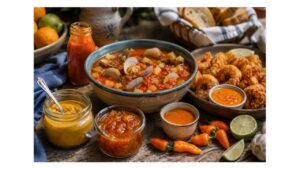
Cooking with Datil Peppers at Home
You don’t have to live in St. Augustine to understand why generations of Florida cooks kept datils around, but cooking with them successfully does require respecting what kind of pepper you’re handling.
Start with the heat.
A datil belongs to a very different category from a bell pepper, poblano, or even the average jalapeño. When working with fresh datils, avoid touching your eyes or face, consider wearing disposable gloves when cutting several peppers, and thoroughly wash knives, cutting boards, countertops, and anything else that comes into contact with the cut fruit. Capsaicin can remain on surfaces long after the pepper itself has disappeared into dinner.
Then taste cautiously.
The commonly cited Scoville range gives you a useful warning, but it cannot tell you exactly how hot the peppers sitting on your cutting board will be. Individual datils vary, and maturity and growing conditions can influence their intensity. If you are unfamiliar with a particular batch, beginning conservatively is much easier than trying to rescue a dish that has become overwhelmingly hot.
Removing the pale interior ribs and seeds can alter the experience, although the common idea that chile heat resides primarily in the seeds is misleading. Much of the capsaicin is concentrated in the placental tissue—the pale material inside the pepper to which the seeds are attached. Removing that tissue can reduce the amount of heat entering a dish, but a cleaned datil is still a hot pepper and should be treated accordingly.
Once that practical issue is handled, think about the ingredients surrounding it.
For seafood, try datil with lime or other citrus, vinegar, garlic, tomato, butter, or a touch of sweetness. Shrimp and firm fish are particularly forgiving places to begin because you can add the pepper through a sauce or marinade and control the quantity easily.
For chicken and pork, datil works especially well when sweetness and browning are part of the equation. Honey, brown sugar, fruit preserves, barbecue sauce, mustard, citrus, and smoke all give the pepper useful counterpoints.
For soups and stews, the datil can disappear physically while remaining very noticeable in the finished broth. Add conservatively and allow the pepper time to cook before deciding the pot needs more. Heat that seems moderate immediately after adding a chile can become much more integrated—and sometimes much more apparent—as the dish cooks.
For salsas and fresh condiments, datil can replace some or all of another hot chile when its fruitier character fits the recipe. Tomato, onion, cilantro, citrus, tropical fruit, and vinegar are natural companions, but substitution should be based on both flavor and heat rather than assuming one datil equals one jalapeño or one habanero.
That same caution applies when a recipe calls specifically for datil and none are available.
Habanero is usually the most obvious substitute because it belongs to the same species and occupies broadly similar heat territory. But it should be treated as a practical substitute rather than an identical replacement. Habaneros have their own aroma and flavor profile, and varieties differ considerably. Scotch bonnet can sometimes make sense for the same reason, particularly in dishes where fruity chile character is important, although it too brings a distinct identity.
For cooks trying to reproduce a St. Augustine dish, there is ultimately no perfect substitute for the pepper that helped define it.
That is particularly true with something like Minorcan-style clam chowder. You can certainly make a hot tomato-based clam chowder with another chile, and it may be excellent. But if the goal is to understand the flavor tradition rather than merely reproduce the heat, the datil matters.
Fresh datils can also be preserved in several ways, which helps explain how a seasonal garden harvest became useful throughout the year. Turning peppers into vinegar-based sauce, jelly, relish, or other preserves extends their life while simultaneously creating some of the preparations in which their flavor works best. Datils can also be dried for longer storage, although drying changes the character of the pepper and therefore the way it behaves in recipes.
Fresh peppers should generally be kept dry and refrigerated if they will not be used immediately. For longer storage, freezing is a practical option when texture after thawing is not important, particularly if the peppers are destined for cooked sauces, soups, marinades, or other preparations where crispness is irrelevant.
Buying them can be the greater challenge.
Unlike jalapeños or habaneros, datils are not a routine supermarket pepper across most of the United States. Their strongest availability remains around Northeast Florida, where local growers, markets, festivals, specialty producers, and backyard gardeners keep the tradition alive. Outside the region, cooks may have better luck with specialty chile growers, seasonal online sources, preserved datil products, or growing the plants themselves.
That relative scarcity is part of what has protected the pepper’s regional identity. The datil never became an anonymous commodity available in every produce department in America. For many people, encountering one still means encountering a little piece of St. Augustine.
Perhaps that is also the best way to approach the datil at home. Don’t use it merely because you want dinner to be hotter. Use it when its combination of fruitiness, sweetness, aroma, and serious heat can make the food more interesting—the same reason Northeast Florida cooks have kept finding a place for the pepper in their kitchens for generations.
COOK WITH THE DATIL FOR ITS FLAVOR, RESPECT IT FOR ITS HEAT, AND YOU BEGIN TO UNDERSTAND WHY ST. AUGUSTINE NEVER LET THIS PEPPER DISAPPEAR.

🌶️ Recommended Peppers of Key West Products for Datil Pepper Lovers
The datil’s story gives us a useful way to think about hot sauce: the best pepper sauces aren’t simply exercises in heat. They balance the chile with acidity, sweetness, garlic, fruit, smoke, or other flavors that determine how the sauce behaves once it reaches food.
That’s also a good way to choose a hot sauce at Peppers of Key West. Instead of asking only How hot is it?, think about what you’re putting it on and what you want the sauce to contribute.
Product Pairing Quick Guide
- Fried shrimp, fish, and seafood → Gator Hammock Gator Sauce
- Grilled chicken, pork, and barbecue → Dat’l Do It Hot Sauce
- Sandwiches, burgers, eggs, and everyday meals → Dat’l Do It Devil Drops Hot Sauce
- Hot sauce lovers who want the full Peppers of Key West experience → 5 Sauce Complete Hot Sauce Collection
🌶️ Best Peppers of Key West Pairings for Datil Pepper Lovers
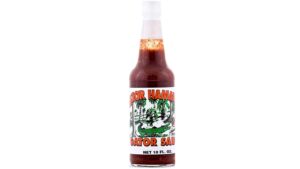
Gator Hammock Gator Sauce
Gator Hammock Gator Sauce is my pick for fried shrimp, fish, and seafood, where its savory pepper heat cuts through crispy coatings and rich seafood without overpowering the flavors underneath.
Best With: Fried shrimp, fried fish, grilled fish, fish sandwiches, seafood baskets, crab cakes, and other coastal favorites.
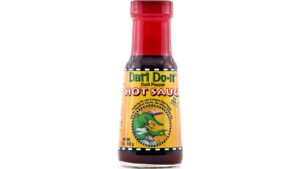
Dat’l Do It Hot Sauce
Dat’l Do It Hot Sauce is a natural choice for grilled chicken, pork, and barbecue, where its fruity datil pepper heat works especially well alongside smoke, char, sweetness, and savory flavors.
Best With: Grilled chicken, pulled pork, pork chops, ribs, barbecue sandwiches, smoked meats, and grilled shrimp.
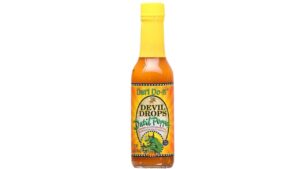
Dat’l Do It Devil Drops Hot Sauce
Dat’l Do It Devil Drops Hot Sauce is my hotter everyday pick, bringing serious datil pepper heat to sandwiches, burgers, and eggs while still contributing distinctive chile flavor rather than heat alone.
Best With: Burgers, breakfast sandwiches, eggs, omelets, chicken sandwiches, tacos, pizza, and other everyday favorites.

5 Sauce Complete Hot Sauce Collection
The 5 Sauce Complete Hot Sauce Collection is my pick for anyone who wants to explore how different chile peppers change both flavor and heat, moving through five distinct pepper personalities side by side.
Best With: Hot sauce tastings, wings, tacos, burgers, eggs, grilled meats, seafood, and anyone exploring different chile pepper heat levels.
Why the Datil Pepper Is a Florida Favorite
Some peppers become famous because they are extraordinarily hot. Others become famous because they are grown almost everywhere. The datil followed a different path.
Its precise journey into Florida remains uncertain, and it never became a supermarket staple across the United States. Instead, its story narrowed geographically while deepening culturally. Around St. Augustine and Northeast Florida, generations of gardeners continued growing it while cooks kept finding places for its distinctive combination of fruitiness, sweetness, aroma, and substantial heat.
They put datils into pepper sauce and mustard, paired them with seafood, stirred them into tomato-based Minorcan-style clam chowder, preserved them as jelly and relish, and incorporated them into the everyday cooking of a community.
That continuity matters more than a perfectly documented origin story.
The datil also reminds us why understanding chile peppers requires more than memorizing Scoville Heat Units. Its commonly cited heat range may help explain what happens when you bite into one, but it cannot explain why the pepper tastes so natural beside clams, shrimp, tomato, citrus, mustard, vinegar, sweetness, or smoke.
Flavor explains that.
Place explains the rest.
St. Augustine didn’t need to invent the datil pepper for the pepper to become part of St. Augustine. What mattered was what generations of people did with it after it arrived: planting seeds, tending plants, preserving harvests, adapting recipes, sharing sauces, and teaching another generation that this particular little orange pepper belonged in the kitchen.
That is how ingredients become traditions.
And it is why someone encountering a datil for the first time isn’t simply discovering another member of Capsicum chinense. They’re getting a taste of one of America’s most distinctive regional pepper cultures.
The precise journey of the first datil into St. Augustine may never be known.
The journey afterward is written all over the food.
THE DATIL ISN’T A FLORIDA FAVORITE BECAUSE IT IS THE HOTTEST PEPPER OR THE MOST FAMOUS—IT IS A FLORIDA FAVORITE BECAUSE GENERATIONS OF COOKS MADE IT THEIR OWN.
Datil Pepper FAQ
How hot is a datil pepper on the Scoville scale?
Datil peppers are commonly cited at approximately 100,000–300,000 Scoville Heat Units, placing them in serious hot-pepper territory. Actual heat varies among individual peppers according to genetics, maturity, environmental conditions, and other growing factors.
Are datil peppers hotter than habaneros?
Their heat ranges can overlap considerably, so it isn’t useful to say that every datil is hotter or milder than every habanero. Both belong to Capsicum chinense and can be intensely hot, but their individual flavor characteristics are also important.
What does a datil pepper taste like?
Datils are known for combining strong heat with fruity sweetness and an aromatic chile character. That flavor makes them particularly well suited to preparations combining heat with vinegar, tomato, mustard, citrus, fruit, seafood, or sweetness.
Are datil peppers and habaneros the same pepper?
No. Datils and habaneros belong to the same species, Capsicum chinense, and share some broad characteristics, but they are distinct peppers with their own flavor profiles and culinary histories.
Where did the datil pepper originate?
The datil’s precise origin and route into Florida remain uncertain. Tradition strongly associates the pepper with St. Augustine’s Minorcan-descended community, but surviving historical evidence does not conclusively establish who first brought datils to Florida or exactly when they arrived.
What does Minorcan mean in St. Augustine?
St. Augustine’s Minorcan heritage traces largely to Mediterranean settlers recruited for Andrew Turnbull’s New Smyrna colony beginning in 1768. After that colony failed, hundreds of survivors—including many people from Minorca as well as other Mediterranean communities—relocated to St. Augustine in 1777. Their descendants became an enduring part of the city’s culture and food traditions.
Why is St. Augustine famous for datil peppers?
Generations of local cultivation and cooking made the datil part of Northeast Florida’s regional food identity. The pepper became associated with home gardens, pepper sauces, seafood, Minorcan-style clam chowder, mustard, preserves, barbecue sauces, and other local foods.
What is Minorcan-style clam chowder?
Minorcan-style clam chowder is a St. Augustine specialty built around a tomato-based broth rather than the creamy base associated with New England clam chowder. Clams, vegetables, tomato, and datil pepper create a combination closely associated with the city’s Minorcan-influenced culinary tradition.
What foods go well with datil peppers?
Seafood is one of the most natural pairings, particularly shrimp, fish, and clams. Datils also work well with chicken, pork, grilled foods, tomato, citrus, mustard, vinegar, garlic, fruit, honey, preserves, barbecue sauce, soups, salsas, and marinades.
What can I substitute for a datil pepper?
Habanero is generally the most practical substitute because it belongs to the same species and can provide comparable heat and fruitiness. Scotch bonnet may also work in some recipes. Neither is an exact flavor replacement, particularly when recreating traditional St. Augustine dishes.
Can you grow datil peppers at home?
Yes. Datils can be grown by home gardeners where the climate and growing season provide sufficient warmth. They are particularly associated with Northeast Florida, where backyard cultivation and seed saving helped preserve the pepper’s regional tradition.
Why are datil peppers difficult to find outside Florida?
Datils never became a commodity pepper on the scale of jalapeños or habaneros, and their strongest cultivation and commercial identity remain concentrated around Northeast Florida. Outside the region, fresh datils are more likely to come from specialty growers, seasonal online sellers, or home gardens.
Continue Your Pepper Journey
The datil demonstrates something important about chile peppers: heat is only the beginning of the story. Geography, migration, agriculture, preservation, and generations of cooking can turn one variety into something much larger than its place on the Scoville scale.
🌶️ Start with the Complete Pepper Guide
🌶️ Explore More Individual Peppers
- Habanero Pepper Explained: Flavor, Scoville Heat, Uses & What Makes It So Hot
- Jalapeño Pepper Explained: Flavor, Heat, Uses & Why It’s America’s Favorite Chile
- Poblano Pepper Explained: Flavor, Heat, Uses & Why It’s the Chile Behind Chiles Rellenos
- Chile de Árbol Explained: Flavor, Heat, Uses & Why This Mexican Chile Packs a Fiery Punch
See More Keywords
Capsicum chinense, Florida hot peppers, St. Augustine food, St. Augustine Florida food, Northeast Florida cuisine, Minorcan food, Minorcan cuisine, Minorcan clam chowder, Florida pepper sauce, Florida hot sauce, fruity hot peppers, orange hot peppers, habanero pepper, Scotch bonnet pepper, hot pepper varieties, chile pepper guide, Scoville scale, Scoville Heat Units, cooking with hot peppers, seafood hot sauce, hot sauce for shrimp, hot sauce for fish, pepper jelly, hot pepper jelly, datil pepper mustard, datil barbecue sauce, Florida seafood, St. Johns County datil pepper, Datil Pepper Day
