
Scoville Scale Explained: How Pepper Heat Is Measured in Scoville Heat Units

Few numbers in the chile pepper world carry as much weight as a Scoville rating.
A jalapeño might fall somewhere around 2,500–8,000 Scoville Heat Units. Cayenne peppers climb considerably higher. Habaneros move into six figures, while Ghost Peppers and other superhots can cross the million-SHU threshold. Those numbers have become a kind of shorthand for answering one deceptively simple question:
How hot is this pepper?
But the Scoville scale is more interesting—and more complicated—than a ranking from mild to painfully hot.
Scoville Heat Units, usually abbreviated SHU, describe the pungency associated with capsaicinoids, the compounds responsible for the burning sensation produced by hot chile peppers. The system traces back to American pharmacist Wilbur Scoville and a sensory test he developed in 1912, when pepper heat was evaluated through dilution and human taste rather than laboratory instruments.
More than a century later, the way pepper heat is measured has changed dramatically. Modern laboratories can measure capsaicinoids using analytical equipment rather than relying on someone’s tongue. Yet the chile world still communicates those results using the familiar language of Scoville Heat Units.
That history matters because an SHU number isn’t quite as simple as it looks.
Peppers of the same variety can have different heat levels. Two peppers with similar Scoville ratings can produce noticeably different eating experiences. A hot sauce made with a million-SHU pepper does not automatically become a million-SHU hot sauce. And the number itself tells us virtually nothing about whether a pepper is fruity, grassy, smoky, sweet or worth eating in the first place.
Understanding the Scoville scale therefore means understanding more than the numbers. It means understanding what pepper heat is, what SHU actually represents, how that heat was originally measured, how laboratories measure it today and why our perception of heat doesn’t always line up perfectly with a number.
Once those pieces come together, the Scoville scale becomes much more useful—not just for comparing peppers, but for choosing hot sauces, cooking with chiles and deciding how much heat you actually want on your plate.
🌶️ Scoville Scale at a Glance
- Scoville Heat Units (SHU): The numerical units used to express the pungency of chile peppers and pepper products.
- What SHU reflects: Heat associated with capsaicinoids, the naturally occurring compounds responsible for the characteristic burn of hot peppers.
- The starting point: Sweet bell peppers sit at essentially 0 SHU, while the hottest chile peppers can reach well beyond 1 million SHU.
- Named for: American pharmacist Wilbur Lincoln Scoville, who developed his original pepper-heat test in 1912.
- Original measurement: The Scoville Organoleptic Test relied on progressively diluting pepper extract and using human tasters to determine when its pungency could no longer be detected.
- Modern measurement: Laboratories can use analytical methods such as high-performance liquid chromatography (HPLC) to measure capsaicinoids much more objectively.
- Why peppers have ranges: A variety does not produce exactly the same heat in every fruit. Genetics, environment, maturity, growing conditions and natural variation can all influence pungency.
- What SHU doesn’t tell you: Flavor, aroma, sweetness, smokiness, culinary usefulness—or whether you’ll actually enjoy the pepper.
THE SCOVILLE SCALE GIVES PEPPER HEAT A NUMBER—NOT A COMPLETE DESCRIPTION OF THE PEPPER.
The Scoville scale we use today therefore connects two very different eras of pepper science. The unit still carries the name of the pharmacist who devised a human taste test more than a century ago, while modern ratings can be based on precise laboratory measurements of the compounds responsible for pepper heat.
So how did a pharmacist working in the early 1900s turn something as subjective as “that pepper is hot” into a number?
That’s where the Scoville story really begins.
🌶️ Want to Explore Pepper Heat for Yourself?
From approachable everyday heat to some of the hottest peppers on Earth, our Hot Sauces let you explore how different chile peppers bring their own combination of heat and flavor to the bottle.
Wilbur Scoville and the Test That Gave Pepper Heat a Number
Today, it seems perfectly normal to describe a jalapeño as having a few thousand Scoville Heat Units or a superhot pepper as reaching more than a million. In 1912, however, there was no modern laboratory instrument waiting to produce those familiar numbers. The challenge was much more fundamental: how do you measure a sensation?
Pepper heat isn’t a flavor in the traditional sense. Capsaicinoids interact with sensory receptors involved in detecting potentially damaging heat, producing the familiar burning sensation even though the pepper isn’t actually raising the temperature of your mouth. People could obviously tell that some peppers were hotter than others, but turning that experience into a consistent measurement was considerably more difficult.
The person whose name became permanently attached to the solution was Wilbur Lincoln Scoville, an American pharmacist born in 1865. While working in pharmaceutical chemistry, Scoville developed a sensory method in 1912 that became known as the Scoville Organoleptic Test. His basic idea was remarkably practical: if a pepper extract was hot, dilute it. If the heat could still be detected, dilute it further. Continue until a panel of tasters could no longer perceive the pungency, and the amount of dilution required provided a way to express how powerful the original sample had been.
A relatively mild pepper required comparatively little dilution before its heat became undetectable, while a much hotter pepper required far more. In simplified terms, a sample requiring dilution on the order of one part pepper extract to 1,000 parts solution before its pungency disappeared would correspond to roughly 1,000 Scoville Heat Units. A much more pungent sample might remain detectable through tens or hundreds of thousands of dilutions, resulting in a correspondingly higher Scoville rating. This transformed an otherwise subjective observation—this pepper feels hotter than that one—into a numerical system that could be used to compare pungency.
It was an ingenious solution for its time because Scoville didn’t need to directly measure the individual chemical compounds responsible for the burn. Instead, the human sensory system served as the detector. Pepper material was extracted, progressively diluted into a sweetened solution and presented to tasters until the characteristic pungency could no longer be detected. The dilution necessary to reach that threshold formed the basis of the rating, giving researchers a practical framework for assigning numbers to something people had previously experienced primarily as a sensation.
The strength of the method, however, was also its weakness. The measuring instrument was a person. Human beings don’t experience capsaicin identically. One person’s pleasant warmth can be another person’s uncomfortable burn, and sensitivity can change with repeated exposure. Tasters can also experience sensory fatigue after evaluating multiple pungent samples, making the point at which heat becomes “undetectable” inherently less precise than a modern chemical measurement. The Organoleptic Test could provide a useful comparison, but its dependence on human perception introduced variability that couldn’t be completely eliminated.
That limitation eventually became increasingly important as analytical chemistry advanced. Scientists no longer had to infer the strength of a pepper solely by asking people whether they could still feel its burn. They could begin measuring the compounds responsible for that sensation directly, producing results with far greater consistency and precision.
THE ORIGINAL SCOVILLE TEST MEASURED PEPPER HEAT THROUGH HUMAN PERCEPTION; MODERN TESTING MEASURES THE COMPOUNDS RESPONSIBLE FOR THAT PERCEPTION.
The remarkable part is that the measurement method changed while Scoville’s language survived. More than a century after Wilbur Scoville developed his taste-based test, peppers and hot sauces are still discussed in Scoville Heat Units. The familiar SHU remains the bridge between Scoville’s original sensory experiment and the much more sophisticated analytical methods used to study pepper pungency today.
To understand how modern laboratories can turn chemical measurements back into those familiar Scoville numbers, however, we first need to understand exactly what inside a chile pepper is being measured.

What Does the Scoville Scale Actually Measure?
When we say that a pepper measures 50,000 Scoville Heat Units, it is tempting to imagine that an instrument has somehow measured 50,000 units of “hot.” That isn’t what the number means. The Scoville scale is a way of expressing pungency—the burning sensation associated primarily with a family of compounds called capsaicinoids. The greater the concentration of these pungent compounds in a pepper sample, the higher its potential Scoville rating.
Capsaicin is the best-known member of that family, which is why pepper heat and capsaicin are often treated as though they mean exactly the same thing. But a chile pepper contains several related capsaicinoids. Capsaicin and dihydrocapsaicin are usually the two major contributors, together accounting for most of the pungency in many hot peppers, while compounds such as nordihydrocapsaicin, homocapsaicin and homodihydrocapsaicin can contribute smaller amounts. The precise capsaicinoid profile can differ among peppers, giving modern laboratories something much more specific to measure than simply whether a sample tastes hot.
This also explains why Scoville Heat Units are not a direct measurement of temperature. A chile pepper at 100,000 SHU is not physically hotter than a bell pepper sitting beside it. Capsaicinoids trigger sensory pathways that our nervous system associates with potentially damaging heat, creating the unmistakable sensation of burning without actually making the food reach a higher temperature. SHU gives us a standardized way to describe the chemical potential behind that sensation; it does not measure degrees Fahrenheit or Celsius.
That distinction becomes especially important when comparing peppers. If a cayenne pepper is rated at 40,000 SHU and a jalapeño at 4,000 SHU, the numbers tell us that the tested samples occupy very different levels of pungency. They do not mean that eating the cayenne will feel precisely ten times hotter. Human perception doesn’t operate like a simple numerical dial, and the experience of eating a chile is influenced by more than its laboratory measurement.
Where those pungent compounds occur inside the pepper matters as well. Capsaicinoids are produced and concentrated primarily in the placental tissue—the pale internal tissue to which the seeds are attached. That’s why the familiar claim that all of a pepper’s heat is “in the seeds” is misleading. Seeds can become coated with capsaicinoids because they sit in close contact with that tissue, but they are not the primary source of the pepper’s pungency.
For the Scoville scale, however, the most important point is simpler: scientists have identifiable chemical compounds they can measure. Once analytical methods could separate and quantify those capsaicinoids, pepper-heat testing no longer had to depend entirely on asking human tasters when the burn disappeared.
SCOVILLE HEAT UNITS EXPRESS PUNGENCY; THE CHEMISTRY BEHIND THAT PUNGENCY COMES FROM CAPSAICINOIDS.
That gives us the bridge from Wilbur Scoville’s original taste test to modern pepper science. Instead of repeatedly diluting a sample until people stop feeling the burn, a laboratory can analyze the pepper itself and determine how much of its heat-producing chemistry is actually present.
The tool that made that approach practical is high-performance liquid chromatography, or HPLC—and it fundamentally changed how pepper heat could be measured.
How Modern Laboratories Measure Pepper Heat with HPLC
Wilbur Scoville’s original test answered the question of pepper heat indirectly: how much dilution does it take before people stop feeling the burn? Modern analytical testing approaches the same problem from the opposite direction. Instead of asking people how hot a sample feels, scientists can determine how much of the heat-producing chemistry is actually present.
One of the established methods for doing that is high-performance liquid chromatography, or HPLC. The name sounds intimidating, but the basic idea is straightforward. A prepared pepper sample contains many different chemical compounds mixed together. HPLC passes that sample through a specialized system that separates compounds so they can be identified and quantified. For pepper pungency, this allows analysts to measure important capsaicinoids—including capsaicin and dihydrocapsaicin—rather than depending on a panel of people to decide when a diluted sample has stopped burning. HPLC-based methods are used for determining pungency in chile peppers and pepper products, and modern standardized methods specify the preparation, analysis and calculation needed to produce those measurements.
The important word here is separate. Capsaicin doesn’t exist alone inside a chile pepper, and neither does dihydrocapsaicin. They’re part of a much more complicated chemical mixture. Chromatography allows those compounds to move through the analytical system differently, producing signals that can be used to identify and quantify them. Research using HPLC has successfully separated and measured both the major capsaicinoids and smaller contributors to pepper pungency.
This is also where our earlier discussion of capsaicinoids becomes useful. A laboratory doesn’t simply press a button labeled HOT and receive a Scoville number. It measures the concentrations of relevant pungent compounds in the sample. Those analytical results can then be converted into the familiar Scoville Heat Units consumers recognize. Published analytical methods, for example, calculate pungency from measured capsaicinoid concentrations using conversion factors that reflect the relative pungency of the compounds being measured.
That means the modern Scoville number and Wilbur Scoville’s original number arrive at a similar destination by very different routes. Scoville began with human perception and determined how much dilution was necessary to make the sensation disappear. HPLC begins with the pepper’s chemistry, measures the compounds responsible for that sensation and translates those analytical measurements into an SHU value. NIST describes modern HPLC testing as more reproducible and less subjective than relying on trained human tasters.

Does HPLC Really Measure Scoville Heat Units?
This distinction is worth making because it clears up a common misunderstanding. HPLC does not directly detect something called a “Scoville Heat Unit.” It measures chemical compounds. SHU is the familiar scale into which the resulting pungency measurement can be converted.
You may sometimes see a shortcut stating that capsaicinoid concentration in parts per million can simply be multiplied by approximately 15 or 16 to obtain SHU. That can be useful for understanding the relationship, but the actual analytical calculation can be more nuanced because individual capsaicinoids do not necessarily contribute identical pungency. Published methods have used compound-specific factors when calculating total Scoville heat from measured capsaicin, dihydrocapsaicin and other capsaicinoids.
There is another reason not to present the conversion as an eternal one-number formula: the analytical methods themselves continue to be refined. In 2026, the American Spice Trade Association published an updated HPLC pungency method incorporating corrected capsaicin response factors, with a phased implementation period. The science behind the familiar SHU number is therefore more sophisticated—and still more actively standardized—than a simple “ppm × 16” rule might suggest.
For the person choosing a pepper or bottle of hot sauce, none of this means Scoville Heat Units have become obsolete. Quite the opposite. SHU survives because it gives growers, researchers, manufacturers, cooks and chile lovers a common language for discussing pungency. What changed was our ability to determine the chemistry behind the number with far greater precision.
WILBUR SCOVILLE GAVE PEPPER HEAT A SCALE; MODERN CHROMATOGRAPHY GAVE THAT SCALE A MORE OBJECTIVE WAY TO MEASURE IT.
But even precise laboratory equipment cannot turn every jalapeño, habanero or Ghost Pepper into one fixed number. Test several fruits of the same variety and the results can differ—sometimes substantially.
That brings us to one of the most important things to understand when reading any Scoville rating: why peppers have ranges instead of one guaranteed heat level.
Why Peppers Have Scoville Ranges Instead of One Heat Number
One of the easiest mistakes to make with the Scoville scale is treating a pepper variety as though it has one permanent number. A jalapeño isn’t simply “5,000 SHU,” and a habanero isn’t automatically “250,000 SHU.” Those numbers may be useful reference points, but chile peppers are living fruit, and their pungency naturally varies. That’s why reputable pepper references usually describe varieties with Scoville ranges rather than a single guaranteed rating.
Some of that variation begins with genetics. Different cultivars within what consumers think of as the same general pepper type can have different tendencies for capsaicinoid production, and individual plants and fruits don’t necessarily express those traits identically. A jalapeño bred for relatively mild heat and another selected for greater pungency can both legitimately be called jalapeños while producing very different experiences. The name on the pepper therefore tells us what general heat neighborhood to expect, not the precise SHU of the fruit in our hand.
Growing conditions add another layer. Temperature, water availability and other environmental stresses can influence capsaicinoid production as the fruit develops. Research has found that environmental conditions and genotype can interact in complex ways, which helps explain why the same pepper variety grown in different places—or even under different conditions in the same growing region—doesn’t necessarily produce identical pungency.
Maturity matters as well. Capsaicinoid concentrations change as peppers develop and ripen, although the pattern isn’t identical for every cultivar. Depending on the pepper and growing conditions, pungency may increase during development and later stabilize or decline. That means even fruit from the same plant can differ depending on when it was harvested.
Then there is ordinary fruit-to-fruit variation. Anyone who has eaten enough jalapeños has probably encountered this firsthand: one barely registers, while the next delivers considerably more heat than expected. The Scoville scale isn’t failing when that happens. The individual peppers simply didn’t contain exactly the same concentration and mixture of capsaicinoids.
Sampling can influence a reported number too. A laboratory measurement describes the sample that was actually analyzed. Testing one fruit, a composite of several fruits, dried material or a prepared pepper product can produce results that need to be interpreted in the context of how the sample was collected and prepared. Moisture is particularly important when comparing fresh and dried peppers because removing water concentrates the remaining material by weight. A dried pepper measurement and a fresh pepper measurement therefore aren’t automatically an apples-to-apples comparison.
This is why a familiar range such as 2,500–8,000 SHU for jalapeños should be treated as a useful guide rather than a promise. It tells us that jalapeños generally occupy a particular region of the Scoville scale. It does not guarantee that every jalapeño grown everywhere will land neatly inside the same numerical boundaries, nor does it tell us exactly how hot tonight’s jalapeño will taste.
The same principle becomes even more important with extremely hot peppers. When SHU values reach hundreds of thousands or millions, differences in genetics, growing environment, fruit selection and laboratory sampling can produce substantial numerical variation. A record-setting test result or exceptionally hot individual sample should not automatically be interpreted as the exact heat of every fruit carrying that variety’s name.
A SCOVILLE RANGE DESCRIBES WHAT A PEPPER CAN TYPICALLY DO—NOT WHAT EVERY INDIVIDUAL PEPPER MUST DO.
That distinction makes the Scoville scale more useful, not less. Instead of expecting an impossible level of precision from a piece of fruit, we can use SHU ranges for what they’re best at: understanding the general heat territory occupied by different peppers and recognizing the enormous differences between mild, medium, hot and superhot varieties.
And those differences become much easier to understand when we stop looking at isolated numbers and put familiar peppers next to one another on the scale.
 🌶️ Professor Pepper Says…
Think of a pepper’s Scoville range as a neighborhood, not a street address. The variety tells you roughly where the heat lives, but an individual pepper can still surprise you.
From Bell Pepper to Superhot: Understanding the Scoville Scale
A Scoville rating becomes much easier to understand when we stop looking at isolated numbers and instead move through the scale from one familiar pepper to the next. The progression is enormous. A sweet bell pepper begins at essentially zero, everyday cooking chiles occupy the thousands and tens of thousands, habanero-type peppers move into six figures, and the superhots eventually cross into seven.
At the bottom sits the bell pepper at 0 SHU. Bell peppers belong to the same broader Capsicum world as hot chiles, but they do not produce the pungency we associate with jalapeños, cayennes or habaneros. That makes zero more than simply the first number on the scale—it establishes what the Scoville scale is actually tracking. A pepper can have plenty of sweetness, aroma and recognizable pepper flavor while registering essentially no capsaicinoid heat.
Move into the low thousands and peppers begin to produce noticeable warmth. Poblanos commonly occupy roughly the 1,000–2,000 SHU neighborhood, while the familiar jalapeño is generally placed around 2,500–8,000 SHU. These aren’t insignificant differences, but both remain in a range where the pepper itself can easily play a substantial role in a dish rather than functioning only as a source of heat.
The serrano, around 10,000–23,000 SHU, provides the next useful reference point. At this level the increase becomes obvious to most eaters, yet serranos remain everyday culinary peppers used generously in salsas, sauces and other preparations. From there, cayenne at roughly 30,000–50,000 SHU demonstrates another important feature of the scale: a pepper doesn’t have to be a novelty superhot to deliver serious pungency. Cayenne’s combination of substantial heat, relatively thin flesh and easy drying helped make it one of the world’s most familiar chile powders and a natural ingredient for hot sauces.
Then the scale begins to stretch much more dramatically. Habanero peppers are commonly placed around 100,000–350,000 SHU, putting even the lower end of their familiar range well above most everyday jalapeños and serranos. But heat alone doesn’t explain why habaneros matter. Their fruity, aromatic character is part of what makes them so useful in hot sauces and cooking—a reminder that moving upward on the Scoville scale does not mean leaving flavor behind.
Beyond the habanero lies the territory that transformed public expectations of just how hot a chile pepper could become. Bhut Jolokia, better known as the Ghost Pepper, reaches roughly the million-SHU neighborhood, and peppers such as the Trinidad Moruga Scorpion have been measured around 2 million SHU. At these levels, the Scoville scale is no longer describing a modest increase from one culinary chile to another. It is describing concentrations of pungent compounds capable of producing an extraordinarily intense sensory experience.
The Carolina Reaper occupies similarly extreme territory, with commonly cited measurements extending from roughly 1.5 million into the 2-million-plus SHU range. At that point, comparing the pepper to a jalapeño becomes almost misleading because the difference isn’t merely “very hot versus somewhat hot.” They occupy radically different regions of the scale.
The Scoville scale is not a ladder of culinary quality. A Ghost Pepper isn’t “better” than a habanero because its number is higher, and a habanero isn’t superior to a jalapeño for the same reason. Each pepper brings its own combination of heat, flavor, aroma, texture and culinary usefulness. SHU tells us about one of those characteristics.
That is why the scale works best as a map rather than a scoreboard. It helps us understand the general heat territory we’re entering. A poblano tells us to expect mild warmth; a serrano signals a meaningful increase; a habanero announces serious heat; and a million-SHU superhot tells us we’re entering an entirely different level of pungency.
THE SCOVILLE SCALE TELLS US HOW FAR UP THE HEAT MAP WE’VE TRAVELED—NOT WHICH PEPPER IS BEST.
And even that map has an important limitation. Two peppers can occupy similar positions on the Scoville scale and still produce burns that seem surprisingly different.
That’s because measured heat and perceived heat are related, but they aren’t exactly the same thing.
Why the Same Scoville Rating Can Feel Different
If laboratory testing can measure capsaicinoids with considerable precision, it would be reasonable to expect two foods with the same Scoville rating to produce roughly the same experience. In practice, chile heat isn’t quite that predictable.
The reason goes back to something fundamental about pungency: Scoville Heat Units describe the chemical potential for heat, while your nervous system determines how that heat is experienced. Capsaicin activates TRPV1 receptors involved in sensing potentially damaging heat. The resulting burn is therefore a biological response to the compounds in the food rather than a direct reading of an SHU number.
Individual sensitivity is one obvious source of variation. People don’t experience capsaicin identically, and regular exposure to spicy foods can change how intensely that stimulation is perceived. Someone accustomed to eating hot peppers several times a week may find a particular sauce pleasantly warm while another person experiences the same amount as overwhelmingly hot. The chemistry of the sauce hasn’t changed; the people experiencing it have.
But the eater is only part of the equation. How capsaicin reaches the mouth matters too. A bite of fresh pepper, a spoonful of salsa and a few drops of concentrated hot sauce can deliver pungent compounds very differently. The amount consumed, how widely the food spreads across the mouth and how long it remains in contact with sensitive tissue can all influence the experience.
The rest of the food matters as well. Capsaicin is poorly soluble in water and interacts differently with fats and other components of food, which helps explain why pepper heat can behave differently depending on what carries it. This is also why simply drinking water after an especially hot bite often provides disappointing relief. The burn isn’t being caused by something that water can simply wash away.
Temperature can further complicate perception. TRPV1 receptors respond not only to capsaicin but also to physical heat, which helps explain why a steaming bowl of chile can produce a different sensory experience from the same food served cooler. The capsaicinoid content may be unchanged, but physical temperature adds another source of stimulation to the overall experience. Acidity, sweetness, texture and other sensory characteristics can also influence how we perceive the food even when they haven’t removed the capsaicin responsible for its pungency.
Then there is the character of the burn itself. Chile enthusiasts often describe some peppers as producing a sharp, immediate sting and others as building more slowly or lingering longer. Those descriptions shouldn’t be mistaken for separate Scoville measurements—the scale still describes pungency—but different capsaicinoid profiles, concentrations and delivery can contribute to sensory experiences that don’t seem identical simply because two samples carry similar SHU numbers.
This helps explain why comparing peppers strictly by arithmetic can be misleading. A pepper rated at 100,000 SHU should not automatically be expected to feel exactly twice as hot as one rated at 50,000 SHU. Scoville numbers are enormously useful for locating peppers within broad heat territory, but human perception doesn’t operate as a perfectly linear numerical scale.
The same distinction becomes particularly important with superhot peppers. Once capsaicinoid concentrations become extreme, increasingly large SHU differences may be chemically measurable without producing an equally tidy difference in how a person describes the experience. At those levels, the number remains useful for comparison, but it shouldn’t be interpreted as a precise prediction of what the next bite will feel like.
SCOVILLE HEAT CAN BE MEASURED IN A LAB; THE BURN STILL HAPPENS IN A PERSON.
That is why SHU works best as a guide to relative pungency rather than a promise about exactly how hot something will feel. It tells us a great deal about the concentration of heat-producing compounds, but the final experience depends on the pepper, the food carrying it, the amount consumed and the person eating it.
And nowhere does that distinction create more confusion than on a bottle of hot sauce. A sauce made with a million-SHU pepper is not automatically a million-SHU hot sauce—because once that pepper becomes one ingredient in a recipe, the Scoville calculation changes considerably.
Peppers vs. Hot Sauce: Why SHU Gets More Complicated in a Bottle
A Ghost Pepper can exceed one million Scoville Heat Units. That does not mean a bottle of hot sauce made with Ghost Peppers is a million-SHU hot sauce.
The distinction sounds obvious once it is pointed out, but it is one of the most common ways Scoville numbers become confusing. A pepper’s SHU describes the pungency of the pepper sample being measured. A finished hot sauce is an entirely different product containing that pepper alongside some combination of vinegar, water, fruit, vegetables, salt, sugar, spices and other ingredients. Once those ingredients are combined, the concentration of capsaicinoids in the finished sauce can be dramatically different from the concentration in the original pepper.
Imagine a very hot pepper being blended into a large batch of tomato, vinegar and seasonings. The capsaicin hasn’t disappeared, but it has been distributed throughout a much larger volume of food. Use more peppers and the resulting sauce can become hotter. Use fewer peppers—or more non-pepper ingredients—and the concentration of pungent compounds in each spoonful generally becomes lower.
This is why the phrase “made with Carolina Reaper” tells you something useful about a sauce’s ingredients but does not, by itself, tell you the sauce’s Scoville rating. The same is true for Ghost Pepper, Trinidad Moruga Scorpion, habanero or any other chile. Knowing the heat range of the pepper establishes its potential contribution to the recipe; determining the pungency of the finished sauce requires considering the finished product itself.
The percentage of pepper in the recipe matters, but so does what form of pepper is being used. A sauce made primarily with fresh chiles is different from one incorporating dried pepper powder, concentrated pepper mash, oleoresin or chile extract. Removing water from peppers concentrates their solids by weight, while concentrated extracts can deliver very large amounts of capsaicinoids without requiring an equally large amount of pepper material. Two sauces carrying the same pepper name on the label can therefore occupy very different parts of the heat spectrum.
This becomes especially important when extremely high Scoville numbers appear in hot-sauce marketing. Sometimes the number being discussed belongs to the pepper or extract used as an ingredient, rather than to a laboratory measurement of the finished sauce. A sauce containing a pepper rated above one million SHU should not automatically inherit that pepper’s rating. To make a meaningful claim about the finished sauce’s pungency, the relevant measurement is the finished sauce itself.
The distinction also helps explain why two habanero sauces—or two Ghost Pepper sauces—can taste dramatically different in heat. One producer may build the recipe around a substantial quantity of peppers, while another may use the same variety more sparingly alongside fruit, vegetables or other ingredients. Both can truthfully identify the pepper they contain without producing remotely identical heat levels.
Even an accurately measured SHU number still doesn’t tell us everything about the sauce. A bright vinegar-forward cayenne sauce, a sweet fruit-based habanero sauce and a thick roasted-pepper sauce may deliver their heat differently because the recipes themselves are different. As we’ve already seen, the concentration of capsaicinoids can be measured, but the eating experience involves considerably more than that single number.
THE SCOVILLE RATING OF A PEPPER IS NOT AUTOMATICALLY THE SCOVILLE RATING OF A SAUCE MADE WITH THAT PEPPER.
For hot-sauce lovers, that makes SHU most useful when we know exactly what the number describes. Is it the rating of the pepper? The heat of an extract used in the recipe? An estimated rating for the sauce? Or a measurement performed on the finished product? Those are not interchangeable claims.
And that brings the Scoville scale back to its most practical purpose. After all the chemistry, laboratory testing and million-SHU peppers, the question most people really want answered is much simpler:
How should I actually use Scoville Heat Units when choosing peppers and hot sauces?
🌶️ Professor Pepper Says…
A million-SHU pepper doesn’t make every sauce containing it a million-SHU sauce. When comparing hot sauces, make sure you know whether the number describes the pepper or the finished bottle.
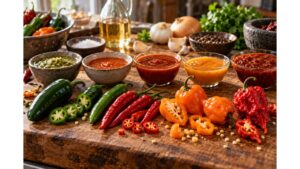
How to Actually Use the Scoville Scale
After all the chemistry, laboratory testing and enormous numbers, the Scoville scale is most valuable when it helps answer a practical question: How much heat am I getting myself into?
The simplest way to use SHU is as a relative guide. If you already know that jalapeños generally fall around 2,500–8,000 SHU, that familiar pepper becomes a useful reference point. Moving to a serrano means stepping into a noticeably hotter range. Cayenne moves higher again, while habaneros represent a much larger jump. Once peppers reach the hundreds of thousands or millions of SHU, you’re entering an entirely different level of pungency.
That makes the scale particularly useful when trying an unfamiliar pepper. You don’t need to memorize hundreds of Scoville ratings. Find a pepper you already understand and compare the unfamiliar one with it. If you enjoy jalapeños but find habaneros uncomfortable, a pepper somewhere between those ranges may be a much more useful experiment than jumping directly to a superhot.
The same principle works in cooking, with one important addition: start with less than you think you need. You can always add another slice of serrano, another pinch of cayenne or another spoonful of hot sauce. Removing capsaicin after it has been distributed throughout an entire dish is considerably more difficult. New Mexico State University gives essentially the same practical advice for cooking with chile: a little can go a long way, so begin with a small amount.
Scoville ranges can also help when making substitutions, but they should never be the only consideration. Replacing a jalapeño with a serrano may increase the heat without radically changing the character of a fresh salsa. Replacing it with a habanero changes much more than pungency because the peppers have different flavors, aromas, textures and culinary personalities. A similar SHU does not make two peppers interchangeable.
For hot sauce, the scale requires even more context. If the SHU figure describes a tested finished sauce, it can provide a useful benchmark against other measured sauces. If the only number being advertised belongs to the pepper used in the recipe, treat it as information about an ingredient rather than a precise measurement of what is in the bottle.
There is also no reason to chase a higher number simply because it exists. A mild chile can be exactly right for a dish where its flavor needs room to breathe, while a superhot can be useful when enormous pungency is wanted from a very small amount of pepper. The purpose of the Scoville scale isn’t to tell us which pepper is superior. It helps us choose the appropriate level of heat for what we’re cooking and for the people who will be eating it.
That may ultimately be the most useful way to think about SHU: not as a challenge, but as information.
USE THE SCOVILLE SCALE TO CHOOSE YOUR HEAT—THEN CHOOSE THE PEPPER FOR ITS FLAVOR.
And that brings us back to something the numbers alone can never tell us. Jalapeño, cayenne, habanero, Ghost Pepper and Trinidad Moruga Scorpion aren’t simply stops on a heat scale. Each is an ingredient with its own flavor, aroma and culinary identity.
The best pepper isn’t the one with the biggest Scoville number.
It’s the one that gives the food the heat and flavor you wanted.
🌶️ Explore the Scoville Scale with Peppers of Key West Hot Sauces
The Scoville scale becomes a lot more interesting when you can taste your way through it. Our hot sauces offer a practical journey from the approachable warmth of jalapeño through cayenne, habanero and serrano, before climbing into the much more intense territory of Ghost Pepper, Carolina Reaper and Black Caesar.
As you move through the lineup, pay attention to more than which sauce feels hottest. Notice how the flavor of the pepper changes along with the heat—from fresh and bright to fruity, earthy and intensely pungent. And remember that the Scoville range of the pepper itself isn’t necessarily the SHU of the finished sauce. Each bottle combines that pepper with other ingredients to create its own balance of heat, flavor and food-friendly character.
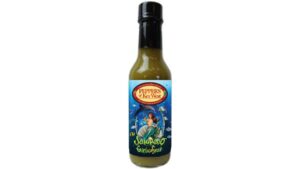
Peppers of Key West Jalapeño Garlic Sauce
Fresh jalapeño character and plenty of garlic make this the approachable starting point—an everyday sauce that demonstrates how pepper flavor can remain prominent before serious heat takes over.
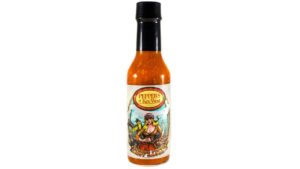
Peppers of Key West Cayenne Pepper Hot Sauce
Cayenne moves the journey into classic hot-sauce territory, bringing a more noticeable chile kick while remaining versatile enough for the foods where traditional pepper sauce feels right at home.
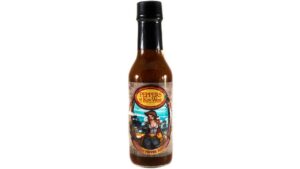
Peppers of Key West Habanero Pepper Hot Sauce
Habanero introduces a different kind of pepper experience, combining a substantial increase in heat with the naturally fruity character that makes habaneros as interesting for flavor as they are for fire.
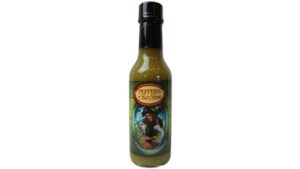
Peppers of Key West Serrano Pepper Hot Sauce
Our Serrano sauce pushes the heat beyond our Habanero, with a clean, green pepper character and a deliberately simple recipe built around serrano peppers, vinegar, garlic and seasonings.
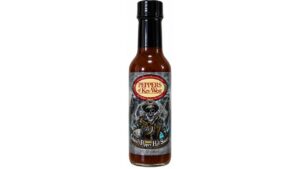
Peppers of Key West Ghost Pepper Hot Sauce
Ghost Pepper marks the move into genuinely extreme territory, where superhot chile intensity becomes a major part of the experience while the finished sauce remains about more than simply chasing an enormous number.
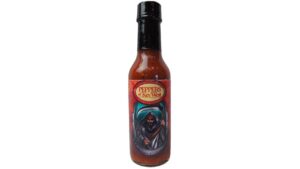
Peppers of Key West Carolina Reaper Pepper Hot Sauce
Carolina Reaper takes the progression another step, pairing extreme pepper heat with tomatoes, onions and garlic in a finished sauce designed for experienced heat lovers who still want flavor behind the burn.
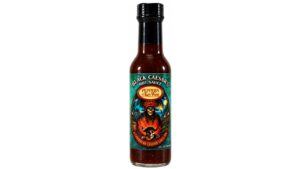
Peppers of Key West Black Caesar’s Weapon’s Grade Hot Sauce
Black Caesar takes the Scoville journey into extreme, extract-enhanced heat. Made with Ghost Peppers and pepper extract, this is a sauce for experienced chile lovers—a very small amount goes a very long way.
Product Pairing Quick Guide
- Eggs, chicken, seafood, sandwiches & guacamole: Jalapeño
- Wings & everyday hot-sauce foods: Cayenne
- Seafood & tropical dishes: Habanero
- Fresh salsas, tacos, burritos & grilled meats: Serrano
- Burgers, chili & grilled meats: Ghost
- BBQ & hearty grilled foods: Carolina Reaper
- Extreme extract-enhanced heat for experienced chile lovers only; use with extreme caution and very sparingly: Black Caesar
A Number for Heat, Not a Number for Flavor
More than a century after Wilbur Scoville developed his original taste-based experiment, his name remains the language we use to describe chile pepper heat. The method has changed dramatically—from progressively diluted pepper extracts and human tasters to laboratory analysis of capsaicinoids—but the basic goal remains remarkably similar: give pepper pungency a number people can understand and compare.
That number is enormously useful. Scoville Heat Units help us recognize the difference between the gentle warmth of a poblano, the familiar bite of a jalapeño, the considerably stronger heat of cayenne and habanero, and the extraordinary pungency of Ghost Peppers, Carolina Reapers and other superhots. They give growers, researchers, sauce makers, cooks and chile lovers a common reference point for talking about something that would otherwise be described simply as mild, hot or extremely hot.
But we’ve also seen why that number has limits. Pepper varieties naturally produce ranges rather than identical SHU values. Growing conditions and maturity can influence pungency. Laboratory measurements describe the samples actually tested. Finished hot sauces can be far less concentrated than the peppers used to make them—or, when concentrated extracts enter the recipe, capable of delivering a very different kind of heat experience.
Most importantly, Scoville Heat Units measure pungency, not personality.
They cannot tell you that a jalapeño has the fresh green character you want in a salsa. They cannot describe the fruity aroma of a habanero, the familiar punch of cayenne or the distinctive character hiding underneath the formidable heat of a Ghost Pepper. Two peppers can occupy similar territory on the Scoville scale and still behave very differently in the kitchen.
That is why the Scoville scale works best when we treat it as one piece of information rather than the final judgment on a pepper. Use SHU to understand the heat you’re dealing with. Use flavor, aroma, texture and the food you’re preparing to decide whether that pepper actually belongs in the dish.
Wilbur Scoville gave us a remarkably durable way to talk about chile heat. Modern science gave us better tools for measuring the chemistry behind it. More than 100 years later, the scale bearing his name still helps answer the question that started this entire discussion:
How hot is this pepper?
Just remember that there’s another question worth asking immediately afterward:
What does it taste like?
THE SCOVILLE SCALE CAN TELL YOU HOW HOT A PEPPER IS. IT CAN’T TELL YOU WHETHER YOU’LL LOVE EATING IT.
Frequently Asked Questions About the Scoville Scale
What does SHU stand for?
SHU stands for Scoville Heat Units, the units used to express the pungency of chile peppers and pepper products. Higher SHU generally indicates a greater concentration of the capsaicinoids responsible for chile pepper heat.
What does the Scoville scale actually measure?
The Scoville scale describes pungency, or the heat associated with capsaicinoids such as capsaicin and dihydrocapsaicin. Modern laboratory methods can measure these compounds and express the resulting pungency in familiar Scoville Heat Units.
Is the Scoville scale accurate?
Modern analytical testing can measure capsaicinoids much more objectively than Wilbur Scoville’s original sensory test. However, an SHU result applies to the sample tested, and naturally occurring peppers can vary considerably from fruit to fruit.
How are Scoville Heat Units measured today?
Modern laboratories can use high-performance liquid chromatography (HPLC) to separate and quantify the capsaicinoids in a pepper or pepper product. Those analytical measurements can then be converted into Scoville Heat Units.
What pepper has 0 Scoville Heat Units?
Sweet bell peppers are generally considered 0 SHU because they lack the capsaicinoid pungency associated with hot chile peppers. They can still have plenty of pepper flavor without producing the characteristic capsaicin burn.
Is 10,000 Scoville Heat Units hot?
For many people, 10,000 SHU represents noticeable chile heat. It sits above the typical jalapeño range and around the lower territory associated with peppers such as serranos, although individual heat tolerance varies substantially.
Why does the same type of pepper have different Scoville ratings?
Pepper pungency can vary because of genetics, growing conditions, maturity, environmental stress and natural fruit-to-fruit differences. That’s why pepper varieties are generally described with an SHU range rather than one exact number.
Can two peppers with the same SHU feel different?
Yes. SHU describes pungency, but perceived heat is affected by the amount eaten, capsaicinoid profile, food carrying the pepper and individual sensitivity. Similar laboratory measurements don’t guarantee identical eating experiences.
Does cooking a pepper remove its Scoville heat?
Ordinary cooking doesn’t simply make capsaicin disappear. Cooking can change how a pepper is distributed through a dish and alter the overall eating experience, but a cooked hot pepper can still contribute substantial pungency.
Are dried peppers hotter than fresh peppers?
Drying removes water, which can make capsaicinoids more concentrated relative to the pepper’s weight. That doesn’t mean drying magically creates additional capsaicin, so comparisons between fresh and dried peppers need to account for moisture and serving amount.
Does a hot sauce have the same Scoville rating as the pepper used to make it?
No. A million-SHU pepper does not automatically create a million-SHU hot sauce. Vinegar, water, fruit, vegetables and other ingredients change the concentration of capsaicinoids in the finished sauce.
Can you tell exactly how hot a hot sauce is from its ingredients?
Not reliably. Knowing the peppers used can suggest the sauce’s potential heat, but pepper quantity, concentration, extracts and the rest of the formulation matter. Testing the finished sauce provides much more meaningful information.
Why doesn’t drinking water stop capsaicin burn very well?
Capsaicin doesn’t dissolve readily in water, so water isn’t especially effective at carrying it away from receptors in the mouth. That’s one reason a glass of water can provide surprisingly little relief after an especially hot bite.
Is a higher Scoville rating always a better pepper?
No. SHU measures pungency, not flavor or culinary quality. A lower-heat jalapeño may be a much better ingredient than a superhot pepper when its fresh green flavor and manageable heat are what the dish needs.
What is the most important thing to remember about the Scoville scale?
Treat SHU as a heat guide, not a complete description of a pepper. It can tell you approximately where a pepper sits on the pungency spectrum, but flavor, aroma and culinary usefulness require looking beyond the number.
Continue Your Scoville Scale Journey
More Pepper Science Worth Exploring
- What is the Difference Between Capsaicin and Dihydrocapsaicin: One burns, the other burns a bit more politely!
- What Is Capsaicin – The Natural Compound Behind Every Spicy Bite
- What is Homocapsaicin: The sneaky heat that lingers!
- What is a Capsaicinoid: The chemical that makes your tongue scream!
- What is Homodihydrocapsaicin: The quiet burner that sneaks up on you!
- Confused about Capsaicin, Dihydrocapsaicin, Nordihydrocapsaicin, Homocapsaicin, and Homodihydrocapsaicin – So am I! Too many peppers, too little brain space!
- TRPV1 Receptors – Understanding Pepper Heat, Capsaicin, and Hot Sauce | Peppers of Key West
Explore Peppers Across the Scoville Scale
- Jalapeño Pepper Explained: Flavor, Heat, Uses & Why It’s America’s Favorite Chile
- Serrano Pepper Explained: Flavor, Heat, Uses & Why It Gives Mexican Salsa Its Signature Bite
- Cayenne Pepper Explained: Flavor, Heat, Uses & How It Becomes Cayenne Powder
- Habanero Pepper Explained: Flavor, Scoville Heat, Uses & What Makes It So Hot
- Ghost Pepper Explained: Scoville Heat, Flavor, Uses & What Makes It So Hot
See More Keywords:
Scoville rating, Scoville units, Scoville chart, pepper heat levels, pepper heat ratings, chile heat scale, chili pepper heat scale, hot pepper Scoville scale, hot pepper SHU, pepper pungency, chile pepper pungency, capsaicin heat, capsaicin measurement, capsaicin concentration, dihydrocapsaicin, homodihydrocapsaicin, TRPV1 receptors, high-performance liquid chromatography, chromatography pepper testing, modern Scoville testing, Scoville dilution test, pepper heat testing, hot sauce Scoville rating, jalapeño Scoville units, serrano Scoville units, cayenne Scoville units, habanero Scoville units, Ghost Pepper Scoville units, Carolina Reaper Scoville units, superhot pepper Scoville scale, mild to superhot peppers, pepper heat comparison
