
Ghost Pepper vs. Carolina Reaper: Scoville Heat, Flavor & Which Is Hotter?

Few pepper comparisons capture the imagination quite like the Ghost Pepper versus the Carolina Reaper. Both belong to the superhot world. Both became famous for Scoville ratings measured above one million units. Both helped push extremely hot chile peppers from the relatively specialized world of growers and chile enthusiasts into hot sauces, restaurant challenges and popular culture. And both developed reputations capable of making even experienced spicy-food fans approach them with respect.
But the Ghost Pepper and the Carolina Reaper are not simply two versions of the same extremely hot pepper. The Ghost Pepper—Bhut Jolokia—emerged from the chile-growing traditions of Northeast India, where it existed as a regional pepper long before international attention turned it into a symbol of extreme heat. Its rise to fame came when scientific testing helped establish it as the first widely recognized chile to cross the million-Scoville threshold.
The Carolina Reaper has a very different story. Developed in South Carolina by pepper breeder Ed Currie, it belongs to the modern generation of superhots deliberately selected for extraordinary pungency. When Guinness World Records recognized it in 2013, the Reaper pushed the record substantially beyond the territory the Ghost Pepper had helped make famous. That history creates the obvious question: Which is hotter? The Carolina Reaper is generally hotter. The Ghost Pepper is commonly associated with a range extending beyond one million Scoville Heat Units, while the Carolina Reaper averages roughly 1.6 million SHU and individual peppers can climb considerably higher.
But stopping there would miss what makes this comparison useful. The peppers differ in appearance, flavor, origin, breeding history and the way cooks can use them. Their heat can also be experienced differently, and natural variation means that comparing two individual pods is not quite as simple as comparing two numbers on a chart.
Understanding the Ghost Pepper versus the Carolina Reaper therefore isn’t just about deciding which pepper wins a Scoville contest. It’s about understanding what separates two peppers that helped define different moments in the history of extreme chile heat.
THE CAROLINA REAPER IS GENERALLY HOTTER. BUT THAT ISN’T THE ONLY DIFFERENCE BETWEEN THESE TWO LEGENDARY SUPERHOT PEPPERS.
If you’re exploring how individual chile peppers compare in flavor, heat and culinary use, our Chile Pepper Guide: Flavor, Heat, Uses & Individual Peppers Explained is the larger reference library for discovering the peppers behind these comparisons.
Ghost Pepper vs. Carolina Reaper Snapshot
Ghost Pepper (Bhut Jolokia)
- Species: Capsicum chinense
- Heat Level: Superhot
- Typical Scoville Range: Approximately 855,000–1,041,427 SHU
- Origin: Northeast India
- Flavor: Fruity, floral and aromatic
- Appearance: Elongated, wrinkled pods that generally taper toward the end
- Most Familiar Color: Red when ripe
- Known For: Helping usher in the million-Scoville era
- Common Uses: Hot sauces, chutneys, powders and extremely hot cooking
Carolina Reaper
- Species: Capsicum chinense
- Heat Level: Extreme / Superhot
- Typical Scoville Range: Approximately 1.5–2.3 million SHU
- Origin: South Carolina, United States
- Flavor: Fruity, somewhat sweet and aromatic
- Appearance: Compact, heavily wrinkled and irregular, often with a pointed tail or “stinger”
- Most Familiar Color: Bright red when ripe
- Known For: Former Guinness world’s hottest pepper
- Common Uses: Hot sauces, powders, flakes, marinades and extremely hot cooking
The Biggest Difference: Carolina Reaper is generally substantially hotter than Ghost Pepper.
Ghost Pepper vs. Carolina Reaper Quick Guide
Which is hotter: Ghost Pepper or Carolina Reaper?
The Carolina Reaper is generally hotter. The Ghost Pepper famously reaches around the million-SHU level, while the Carolina Reaper averages roughly 1.6 million Scoville Heat Units and can reach substantially higher levels.
How much hotter is a Carolina Reaper than a Ghost Pepper?
There isn’t one fixed multiplier because individual peppers vary, but their established ranges overlap little enough that Carolina Reaper generally occupies a substantially hotter part of the superhot spectrum.
Do Ghost Pepper and Carolina Reaper taste the same?
No. Both can have the fruity and aromatic qualities associated with Capsicum chinense, but the Ghost Pepper and Carolina Reaper have distinct flavor profiles. Their extraordinary pungency can make those differences difficult to appreciate when too much pepper is used.
Are Ghost Peppers and Carolina Reapers the same species?
They are generally classified within Capsicum chinense, but they are distinct peppers with different histories, physical characteristics and genetic backgrounds.
Which pepper is better for cooking?
That depends on the food and the amount of heat you want. Both can be used successfully in sauces, powders and other preparations, but the Carolina Reaper’s greater pungency usually means even smaller quantities are needed.
Which one should you try first?
For someone already comfortable with superhot peppers, the Ghost Pepper generally provides a less extreme starting point than the Carolina Reaper. Neither should be treated casually simply because one is lower on the Scoville scale.
🌶️ Explore Superhot Sauces from Peppers of Key West
Reading about the difference between the Ghost Pepper and the Carolina Reaper is one thing. Tasting how those peppers behave in finished sauces makes the comparison considerably more tangible. Explore our hot sauce collection to experience how Ghost Pepper, Carolina Reaper and other chile varieties translate their distinctive heat and flavor from the pepper into the bottle.
Ghost Pepper vs. Carolina Reaper: The Difference Starts Before the Scoville Scale
Put a ripe Ghost Pepper and Carolina Reaper beside each other and the differences begin before anyone takes a bite.
The Ghost Pepper has roots in Northeast India, where the Bhut Jolokia was grown and used long before the international chile world became fascinated with its Scoville rating. Its eventual scientific testing and record recognition transformed a regional pepper into an international superhot celebrity. For many people, the Ghost Pepper was the chile that made a million Scoville Heat Units seem possible.
The Carolina Reaper represents a different chapter in that story. Rather than becoming famous after emerging from a longstanding regional chile tradition, it was developed through selective breeding by Ed Currie in South Carolina during the modern pursuit of increasingly pungent peppers. Its eventual Guinness record pushed the recognized limits of chile heat significantly beyond the benchmark the Ghost Pepper had helped establish.
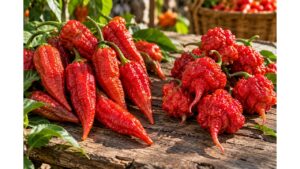
Their appearance reflects their separate identities as well. Ghost Peppers are generally more elongated and tapered, with the thin, wrinkled surfaces characteristic of the pepper. Carolina Reapers tend to be more compact and irregular, with deeply textured surfaces and the distinctive pointed tail or “stinger” that has become closely associated with the variety.
Yet the two peppers also share an important botanical connection. Both sit within the Capsicum chinense branch of the pepper family, a species known for peppers capable of combining substantial pungency with pronounced fruity and aromatic qualities.
That shared botanical neighborhood helps explain why comparing them only by heat leaves so much of the story untold.
The Ghost Pepper and the Carolina Reaper helped define two different stages in the modern superhot era. The Ghost Pepper helped introduce the world to the million-Scoville threshold. The Carolina Reaper showed just how much farther beyond that threshold pepper breeding could go.
GHOST PEPPER HELPED OPEN THE MILLION-SCOVILLE DOOR. CAROLINA REAPER PUSHED THE SUPERHOT WORLD FARTHER THROUGH IT.
Which Is Hotter: The Ghost Pepper or the Carolina Reaper?
The simplest answer is the Carolina Reaper. Both peppers occupy the superhot end of the Scoville scale, but their established heat ranges put them in noticeably different territory. The Ghost Pepper is commonly placed at approximately 855,000 to 1,041,427 Scoville Heat Units, while the Carolina Reaper is generally placed around 1.5 million to 2.3 million SHU. Guinness World Records reported an average of 1,569,300 SHU when recognizing the Carolina Reaper as the world’s hottest chile in 2013.
Those numbers make the difference look straightforward, but they should not be treated as fixed specifications for every pepper. A Scoville range describes measured pungency across peppers and samples, not a guarantee that every Ghost Pepper or every Carolina Reaper will produce exactly the same result. Growing conditions and other biological and environmental factors can influence capsaicinoid production, which is one reason individual pods from the same variety can vary in heat. Research summarized by the Chile Pepper Institute specifically notes that environment can have a significant effect on pungency.
Even with that natural variation, the overall comparison remains clear. The upper end of the commonly cited Ghost Pepper range sits only a little above one million SHU, while the lower end of the Carolina Reaper range begins around 1.5 million. That is a substantial separation, and it is why the Carolina Reaper generally occupies a higher level of the superhot spectrum rather than simply being a slightly hotter version of the Ghost Pepper.
The numbers also help explain the historical importance of both peppers. The Ghost Pepper became famous for bringing the million-Scoville threshold into widespread attention, while the Carolina Reaper later pushed recognized superhot heat considerably farther. The Reaper itself no longer holds the world record—Pepper X replaced it in 2023—but that does not change the comparison between these two peppers.
 🌶️ Professor Pepper Says…
The Scoville scale makes this comparison look simple: the Carolina Reaper is hotter. But once peppers this extreme reach the kitchen, how much you use matters every bit as much as which pepper you choose.
For a deeper explanation of what Scoville Heat Units actually measure and why pepper heat varies, our Scoville Scale Explained: How Pepper Heat Is Measured in Scoville Heat Units guide explores the science behind those numbers. Here, the important point is much simpler.
THE GHOST PEPPER HELPED DEFINE THE MILLION-SCOVILLE ERA. THE CAROLINA REAPER PUSHED WELL BEYOND IT.
How the Heat Feels: Does the Ghost Pepper Burn Differently from the Carolina Reaper?
Scoville numbers tell us how much pungency a pepper can contain, but they do not completely describe what eating that pepper feels like. The experience of extreme heat depends on more than the number attached to the variety. The amount consumed, where the capsaicinoids are concentrated in the piece being eaten, the food surrounding the pepper and individual sensitivity can all influence how intense the burn seems and how long it remains noticeable.
That makes descriptions of the Ghost Pepper and the Carolina Reaper as having completely different types of burn worth treating carefully. People often describe one superhot as building slowly, another as striking more quickly, or one as lingering longer than another, but those experiences are subjective and can change dramatically with preparation and dose. A concentrated hot sauce, a tiny piece of fresh pepper and a dish containing a carefully measured amount of the same chile are three very different experiences.
What can be said more confidently is that the Carolina Reaper generally contains substantially more capsaicinoids than the Ghost Pepper, so comparable amounts have the potential to produce a more intense experience. That difference also affects cooking. Because such a small amount of either pepper can influence an entire recipe, cooks rarely need enough of the fresh chile for its physical size to tell them much about the heat being added. With the Carolina Reaper in particular, a seemingly minor increase in quantity can represent a significant increase in pungency.
This is where understanding the difference between measured heat and perceived heat becomes useful. The Scoville scale gives us a way to compare pungency, while the nervous system determines how that pungency is experienced. Rather than turning this comparison into another lesson on capsaicin and heat receptors, our supporting guides on how capsaicin works and how the Scoville scale measures pepper heat explore that science in greater detail.
For this comparison, the practical lesson is simpler: the Ghost Pepper and the Carolina Reaper are both capable of producing extreme heat, but the Carolina Reaper generally starts from a substantially higher level of pungency. Personal descriptions of exactly how that burn arrives or develops are useful observations, not fixed characteristics that every person will experience the same way.
SCOVILLE UNITS MEASURE PUNGENCY. YOUR NERVOUS SYSTEM DETERMINES HOW THAT PUNGENCY FEELS.
Ghost Pepper vs. Carolina Reaper Appearance: How Can You Tell Them Apart?
The difference between the Ghost Pepper and the Carolina Reaper becomes much easier to see when ripe pods are placed side by side. Both can develop the wrinkled, uneven surfaces commonly associated with superhot Capsicum chinense peppers, and both are most familiar in their red ripe forms, but their overall shapes are usually quite different.
The Ghost Pepper generally has a longer, more elongated body. Its pod often narrows gradually toward the bottom, creating a tapered shape that can appear almost stretched compared with the more compact Carolina Reaper. The surface may be heavily wrinkled or somewhat rough, but the pepper typically retains that recognizable elongated form. Individual pods naturally vary, so not every Ghost Pepper will look exactly alike.
The Carolina Reaper is generally shorter, broader and more irregular. Its surface can be deeply wrinkled and contorted, giving many pods a compact, heavily textured appearance. Its most recognizable feature is the pointed tail commonly described as a stinger, which can extend from the bottom of the fruit and has become closely associated with the Reaper’s appearance. Not every Carolina Reaper develops an equally dramatic tail, however, so the stinger alone should not be treated as a perfect identification test.
Color is less useful for distinguishing the two. The classic versions of both peppers mature to red, although color can change considerably during ripening and different cultivated variants can produce other mature colors. Shape and surface texture therefore provide better visual clues than simply looking for a red superhot pepper.
Those physical differences also reflect something important about pepper identification in general. A photograph can provide useful clues, but pod shape varies naturally from plant to plant and even among fruits growing on the same plant. When identification truly matters, appearance is best considered alongside the known variety, plant source and other characteristics rather than relying on one unusually shaped pod.
THE GHOST PEPPER IS GENERALLY LONGER AND MORE TAPERED. THE CAROLINA REAPER IS MORE COMPACT, HEAVILY TEXTURED AND FAMOUS FOR ITS STINGER.
Cooking with the Ghost Pepper vs. the Carolina Reaper
Once these peppers move from comparison into the kitchen, the difference in heat becomes a practical difference in how they are used. Both the Ghost Pepper and the Carolina Reaper can bring extraordinary pungency to hot sauces, marinades, seasonings and cooked dishes, but neither requires much pepper to influence an entire recipe. The Carolina Reaper’s greater pungency generally means an even smaller amount may be needed to achieve a similar level of heat.
The Ghost Pepper has a long culinary history in Northeast India, where it was used as food well before becoming internationally famous as a superhot. Its fruity, aromatic character can work particularly well in sauces, chutneys and other preparations where the pepper is distributed throughout the dish rather than eaten as a large piece. Drying the Ghost Pepper also makes it useful for powders and seasoning blends, allowing very small quantities to be incorporated more evenly into food.
The Carolina Reaper is similarly versatile as an ingredient, particularly in hot sauces, pepper powders, flakes and intensely spicy marinades. Its extreme pungency, however, makes proportion especially important. Adding more does not necessarily make a dish better; it can simply push the heat high enough to overwhelm the other ingredients. When the Reaper is used successfully, its fruitiness becomes part of the recipe while its extraordinary heat remains controlled rather than becoming the entire point of the food.
That makes the choice between them less about finding a universally better cooking pepper and more about deciding what role the pepper needs to play. The Ghost Pepper can deliver superhot intensity while contributing its own aromatic character, while the Carolina Reaper can produce even greater pungency from a very small quantity. In either case, the surrounding ingredients matter. Fruit, vinegar, garlic, spices, sweetness and other chile peppers can all shape how the finished dish or sauce expresses the pepper.
Fresh superhots also deserve careful handling in the kitchen. Capsaicinoids can transfer from cut peppers to fingers, utensils and surfaces and then accidentally reach the eyes or other sensitive areas. Gloves, clean utensils and careful cleanup are sensible precautions when preparing either pepper, and touching the face while working with them should be avoided.
🌶️ Professor Pepper Says…
Superhot peppers don’t need to prove anything. A tiny amount can bring enormous heat, so start small—you can always add more, but you can’t take it back out.
Ultimately, neither pepper needs to be treated as a stunt ingredient. Used deliberately and in appropriately small amounts, both can contribute flavor as well as heat.
THE BEST USE OF A SUPERHOT PEPPER ISN’T THE ONE THAT ADDS THE MOST HEAT. IT’S THE ONE THAT ADDS THE RIGHT AMOUNT.

From Regional Tradition to the Modern Superhot Era
The history of the Ghost Pepper and the Carolina Reaper may be the clearest example of how different these two peppers really are. Although both eventually became international symbols of extreme heat, they arrived at that status through very different paths.
The Ghost Pepper belongs to the chile-growing traditions of Northeast India, where Bhut Jolokia was cultivated and used long before Scoville records made it famous elsewhere. Its history includes culinary uses as well as regional traditions and folklore surrounding its extraordinary pungency. Stories have even connected the pepper with Naga warriors, including accounts that warriors ate intensely hot chiles for strength before battle. Those stories are better understood as part of the cultural tradition surrounding the pepper than as firmly documented military history, but they illustrate how deeply the Ghost Pepper’s identity reaches beyond its modern reputation as a superhot.
International attention eventually transformed that regional pepper into something very different. Scientific testing demonstrated just how pungent Bhut Jolokia could be, and its association with the million-Scoville threshold made the Ghost Pepper one of the peppers that helped ignite worldwide fascination with superhots. Suddenly, a chile with a much older regional history was appearing in record books, hot sauces, spicy-food challenges and conversations among pepper growers around the world.
The Carolina Reaper represents almost the reverse journey. It did not become famous after generations of regional culinary use. It emerged from the modern world of deliberate pepper breeding, developed by Ed Currie in South Carolina through selection for extreme pungency and other desirable characteristics. Its recognition as the world’s hottest pepper in 2013 made it an international name, and for roughly a decade the Carolina Reaper became one of the most recognizable symbols of extreme chile heat before Pepper X eventually surpassed it.
That difference in history matters because it changes how the two peppers fit into the larger pepper story. The Ghost Pepper is an old regional chile that became a modern superhot celebrity. The Carolina Reaper is a product of the modern superhot era itself. One demonstrates how an existing pepper tradition could capture worldwide attention once its extraordinary pungency was measured; the other demonstrates how breeders began deliberately pushing chile peppers farther into extreme-heat territory.
THE GHOST PEPPER BECAME A SUPERHOT ICON AFTER GENERATIONS OF REGIONAL USE. THE CAROLINA REAPER WAS BORN FROM THE MODERN PURSUIT OF EXTREME HEAT.
Are the Ghost Pepper and the Carolina Reaper Related?
The Ghost Pepper and the Carolina Reaper share an important botanical connection: both are generally classified as Capsicum chinense. That places them in the same species as several other famously pungent peppers, including the Habanero and Scotch Bonnet. But belonging to the same species does not make the Ghost Pepper and the Carolina Reaper versions of the same pepper. They are distinct varieties with different histories, appearances, flavor characteristics and levels of pungency.
Capsicum chinense is particularly important to the superhot world because many of the hottest peppers known today belong primarily to this species. These peppers often combine intense pungency with pronounced fruity and aromatic qualities, which helps explain why flavor remains part of the conversation even when Scoville ratings reach extraordinary levels. The Ghost Pepper and the Carolina Reaper both demonstrate that combination, although each expresses it differently.
Their shared species also does not mean that the Carolina Reaper simply descended from the Ghost Pepper. The history of superhot breeding is considerably more complicated, with related Capsicum chinense peppers being selected and crossed across generations. The Carolina Reaper emerged from that modern breeding world, while the Ghost Pepper had already developed its identity within Northeast India long before the Reaper appeared.
There is an additional wrinkle that makes the Ghost Pepper especially interesting botanically. Research into Bhut Jolokia has found evidence of genetic material associated with Capsicum frutescens as well as Capsicum chinense, reflecting the complicated ancestry that can exist within cultivated chile peppers. That does not require us to turn this comparison into a genetics lesson, but it is a useful reminder that familiar species labels can simplify a much more complicated biological history.
For readers who want to understand how chile species, varieties and breeding relationships fit together, that subject belongs in the broader Chile Pepper Basics Explained: Heat, Capsaicin, Scoville & How Peppers Work. Here, the important distinction is straightforward: the Ghost Pepper and the Carolina Reaper occupy the same broad botanical neighborhood, but they arrived there through different histories.
THE GHOST PEPPER AND THE CAROLINA REAPER SHARE A SPECIES. THEY DO NOT SHARE THE SAME STORY.
Growing the Ghost Pepper vs. the Carolina Reaper
For gardeners, the Ghost Pepper and the Carolina Reaper have more in common than their finished pods might suggest. Both are warm-season Capsicum chinense peppers that perform best with plenty of heat, a long growing season and enough time for their fruit to fully ripen. Neither behaves quite like a quick-producing everyday chile such as the Jalapeño, and growers in cooler climates often start plants indoors well before outdoor temperatures are suitable.
Warm soil and consistently warm conditions are particularly important during the early stages of growth. Superhot pepper seeds can be slower and less predictable to germinate than many familiar garden peppers, and young plants benefit from patience rather than excessive watering or constant intervention. Once established outdoors, both varieties need the same fundamentals that support healthy pepper plants generally: adequate sunlight, well-drained soil, consistent moisture and protection from temperature extremes.
The more noticeable differences appear when the plants begin producing fruit. Ghost Pepper plants develop the elongated, tapered pods associated with Bhut Jolokia, while Carolina Reaper plants produce the shorter, heavily textured fruits for which the variety is known. Ripening also gives growers one of the best opportunities to see how much individual pods can vary. Even peppers growing on the same plant may differ somewhat in size, shape, surface texture and—in the case of the Carolina Reaper—the prominence of the characteristic stinger.
Growing either pepper at home also provides a useful perspective on Scoville ratings. Planting a Carolina Reaper seed does not mean every ripe pepper harvested from that plant will contain exactly 1.6 million Scoville Heat Units, just as every Ghost Pepper will not measure exactly one million. Genetics establish the variety’s potential, while growing conditions and natural biological variation help determine how individual fruits develop.
For most readers, that is as far as we need to take cultivation in this comparison. A complete guide to germination temperatures, transplanting, fertilizing, container sizes, flowering and harvesting would turn this into a pepper-growing article rather than a comparison of two superhots.
YOU CAN GROW THE GHOST PEPPER AND THE CAROLINA REAPER UNDER SIMILAR CONDITIONS. WHAT GROWS ON THOSE PLANTS REMAINS DISTINCTLY DIFFERENT.

Which Pepper Is More Practical to Use?
Once heat, flavor, appearance, history and growing are considered together, the difference between the Ghost Pepper and the Carolina Reaper becomes less about which pepper is more extreme and more about what each one can contribute. Both are extraordinarily hot, both can be used in many of the same kinds of foods, and both require considerable restraint. But the amount of pepper needed and the balance between flavor and pungency can make them behave differently in a finished recipe.
The Ghost Pepper occupies an interesting position in the superhot world because it delivers enormous heat without reaching quite as far into the extreme range as the Carolina Reaper. That still makes it far hotter than most culinary chiles, but its somewhat lower pungency can provide a little more room for its fruity, floral and aromatic character to become part of a sauce or dish. This does not make the Ghost Pepper mild or forgiving; it simply means the cook is working with a different level of superhot intensity.
The Carolina Reaper pushes that balance farther toward pungency. Its fruity character can absolutely contribute to a recipe, but the quantity needed to create substantial heat can be remarkably small. That can be useful when the goal is to build an extremely hot sauce without adding a large amount of pepper material, but it also means careful measurement becomes especially important. A small change in the amount used can have an outsized effect on the finished food.
This is one reason comparing the peppers by asking which is “better” does not tell us much. A Ghost Pepper sauce and a Carolina Reaper sauce can both be excellent while delivering very different experiences. The recipe, supporting ingredients and intended heat level ultimately determine whether either pepper works well. For most cooking applications, control matters more than chasing the highest possible Scoville number.
That same principle applies to powders, flakes and dried peppers. Removing water concentrates the pepper into a form that is easy to distribute through food, but it also makes casual measurement particularly unwise with superhots. Whether working with the Ghost Pepper or the Carolina Reaper, small, deliberate additions provide far more control than trying to correct a dish after too much has been added.
THE GHOST PEPPER AND THE CAROLINA REAPER AREN’T COMPETING FOR THE SAME JOB. THE RIGHT PEPPER DEPENDS ON THE FLAVOR AND HEAT THE RECIPE NEEDS.
🌶️ Recommended Peppers of Key West Products for Ghost Pepper vs. Carolina Reaper
Reading about the differences between the Ghost Pepper and the Carolina Reaper explains how these two superhots compare, but tasting, cooking with or even growing them provides another way to experience those differences. Whether you want a finished hot sauce, dried pepper flakes or the challenge of growing your own plants, these products let you explore both sides of the comparison.
Product Pairing Quick Guide
- Everyday Ghost Pepper Heat → Peppers of Key West Ghost Pepper Hot Sauce
- Exploring Another Ghost Pepper Hot Sauce → Satan’s Ghost – Ghost Pepper Sauce
- Everyday Carolina Reaper Heat → Peppers of Key West Carolina Reaper Pepper Hot Sauce
- Exploring a Creamy Carolina Reaper Sauce → Bitcoin Hellfire Hashrate Creamy Carolina Reaper Hot Sauce
- Pizza, Pasta, Chili & Ghost Pepper Seasoning → Magic Plant Farms Ghost Pepper Flakes
- Pizza, Pasta, Chili & Carolina Reaper Seasoning → Magic Plant Farm Carolina Reaper Pepper Flakes
- Growing Ghost Peppers at Home → The Challenge Ghost Chili Pepper Growing Kit
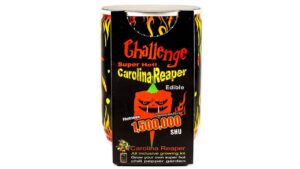
- Growing Carolina Reapers at Home → The Challenge Carolina Reaper Growing Kit
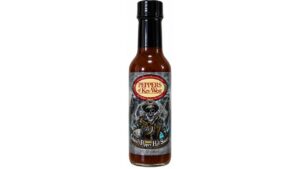
Peppers of Key West Ghost Pepper Hot Sauce
Peppers of Key West Ghost Pepper Hot Sauce gives readers a natural place to begin on the Ghost Pepper side of the comparison. Rather than experiencing the pepper as a raw superhot, a finished sauce lets its enormous pungency become part of something designed to be used with food.
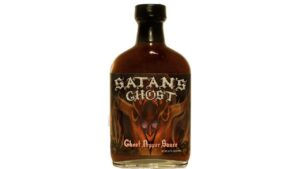
Satan’s Ghost – Ghost Pepper Sauce
For another interpretation of Bhut Jolokia, Satan’s Ghost – Ghost Pepper Sauce provides a second way to explore the Ghost Pepper in a finished sauce. Comparing two Ghost Pepper sauces is also a useful reminder that the pepper is only one part of the equation—the complete recipe determines how its heat and flavor ultimately reach the plate.
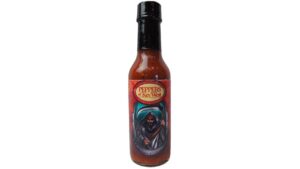
Peppers of Key West Carolina Reaper Pepper Hot Sauce
On the Reaper side, Peppers of Key West Carolina Reaper Pepper Hot Sauce brings the Carolina Reaper into a form meant for actual food rather than a superhot challenge. It provides a direct counterpart to our Ghost Pepper sauce for anyone interested in experiencing how the two peppers translate into finished hot sauces.
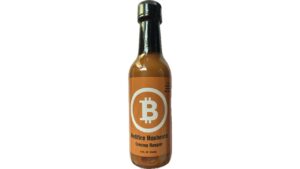
Bitcoin Hellfire Hashrate Creamy Carolina Reaper Hot Sauce
Bitcoin Hellfire Hashrate Creamy Carolina Reaper Hot Sauce gives us a distinctly different Carolina Reaper option. Its creamy format also demonstrates an important point from this comparison: the same superhot pepper can produce a very different eating experience depending on the recipe surrounding it.
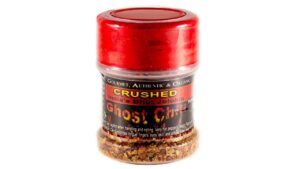
🌱 Grow It or Cook With It
Hot sauce isn’t the only way to explore the Ghost Pepper and the Carolina Reaper. Dried flakes allow extremely small quantities of either pepper to be distributed through food, while growing kits let pepper enthusiasts experience the differences between the plants and pods themselves.
For cooking, Magic Plant Farms Ghost Pepper Flakes and Magic Plant Farm Carolina Reaper Pepper Flakes provide concentrated forms that can be added carefully to pizza, pasta, chili, sauces and other dishes where controlled superhot heat is wanted.
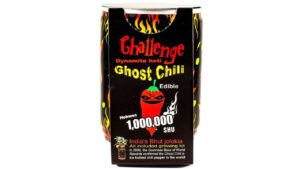
For growers, The Challenge Ghost Chili Pepper Growing Kit and The Challenge Carolina Reaper Growing Kit turn the comparison into a growing project. Raising the two varieties provides an opportunity to see firsthand how their plants develop and how dramatically their mature pods differ in shape and appearance.
WHETHER YOU TASTE THEM, COOK WITH THEM OR GROW THEM, THE GHOST PEPPER AND THE CAROLINA REAPER OFFER TWO DISTINCT WAYS TO EXPERIENCE THE SUPERHOT WORLD.
Ghost Pepper vs. Carolina Reaper: Which One Should You Choose?
After comparing heat, flavor, appearance, history and culinary uses, the choice between the Ghost Pepper and the Carolina Reaper depends less on finding a universally “better” pepper and more on deciding what you want the pepper to contribute. Both belong firmly in superhot territory, and neither should be treated as an ordinary cooking chile. The meaningful differences are found in how much heat they provide, the flavors beneath that heat and how much control a cook has when incorporating them into food.
For someone looking for enormous heat while still leaving a little more room to work with the pepper’s fruity, floral and aromatic qualities, the Ghost Pepper occupies a useful position. It can exceed one million Scoville Heat Units, so there is nothing moderate about it, but it generally sits substantially below the Carolina Reaper. That difference can matter in sauces and recipes because slightly more pepper can sometimes be used before the heat becomes completely dominant.
The Carolina Reaper makes more sense when extreme pungency itself is an important part of the goal. Its substantially higher typical heat means very small quantities can transform an entire sauce or dish. Beneath that intensity is a fruity character of its own, but careful proportion becomes especially important if the goal is to preserve the flavors surrounding the pepper rather than allowing its heat to overwhelm them.
There is also no reason the choice has to end with fresh peppers. Hot sauces provide a controlled way to explore how each chile behaves as part of a finished recipe, flakes make it possible to distribute tiny quantities throughout food, and growing the peppers provides an entirely different perspective on their plants and distinctive pods. Each form reveals something different about the Ghost Pepper and the Carolina Reaper beyond the numbers that made them famous.
Ultimately, their greatest difference may be the roles they occupy in the superhot story. The Ghost Pepper brought worldwide attention to a regional chile with a history extending far beyond modern heat records. The Carolina Reaper emerged from the modern breeding era and pushed recognized superhot pungency considerably farther. One helped establish the million-Scoville benchmark in popular consciousness; the other helped redefine how far beyond that benchmark a pepper could go.
THE GHOST PEPPER AND THE CAROLINA REAPER SHARE THE SUPERHOT STAGE, BUT THEY EARNED THEIR PLACES THERE IN VERY DIFFERENT WAYS.
Conclusion: Two Peppers That Changed the Superhot World
The Ghost Pepper and the Carolina Reaper are often placed side by side because of their extraordinary Scoville ratings, but their differences extend far beyond which one produces more heat. The Carolina Reaper is generally the hotter pepper, reaching well beyond the million-Scoville territory that helped make the Ghost Pepper famous. Yet heat alone does not explain why either chile became so important.
The Ghost Pepper carries the history of Bhut Jolokia and the chile traditions of Northeast India into the modern superhot world. Its fruity, floral character, elongated appearance and remarkable pungency made it internationally famous, but those qualities existed long before the pepper became associated with records and spicy-food challenges. The Carolina Reaper followed a very different path, emerging from deliberate breeding in South Carolina and becoming one of the defining peppers of the modern pursuit of extreme heat.
In the kitchen, those differences continue to matter. Both peppers can contribute flavor as well as extraordinary pungency, whether they are used fresh, dried, powdered or incorporated into hot sauce. The Ghost Pepper generally provides more room between ordinary chile heat and the most extreme end of the spectrum, while the Carolina Reaper can produce tremendous intensity from an exceptionally small amount. Neither needs to be reduced to a dare or a test of endurance to be interesting.
Perhaps that is the most useful lesson from comparing them. Scoville ratings give us an important measurement, but they cannot tell the entire story of a pepper. Origin, flavor, appearance, culinary tradition and the choices of growers and breeders all help explain why two peppers occupying the same superhot category can remain so distinctly different.
The Ghost Pepper helped introduce millions of people to the idea of a chile exceeding one million Scoville Heat Units. The Carolina Reaper helped show how much farther the superhot world could go.
THE CAROLINA REAPER MAY BE HOTTER, BUT THE GHOST PEPPER AND THE CAROLINA REAPER EACH CHANGED THE WAY THE WORLD THINKS ABOUT EXTREME CHILE HEAT.
Frequently Asked Questions About Ghost Pepper vs. Carolina Reaper
Is the Carolina Reaper hotter than the Ghost Pepper?
Yes. The Carolina Reaper is generally substantially hotter than the Ghost Pepper. The Ghost Pepper typically reaches roughly 855,000 to just over one million Scoville Heat Units, while the Carolina Reaper is commonly associated with roughly 1.5 to 2.3 million SHU.
How much hotter is the Carolina Reaper than the Ghost Pepper?
There is no single multiplier that applies to every pepper because natural pungency varies from pod to pod. Their established ranges nevertheless place the Carolina Reaper considerably higher on the Scoville scale, with its lower range beginning well above the typical upper range of the Ghost Pepper.
Which came first, the Ghost Pepper or the Carolina Reaper?
The Ghost Pepper came first by a considerable margin. Bhut Jolokia has a much older history in Northeast India, while the Carolina Reaper was developed by Ed Currie in South Carolina during the modern era of superhot pepper breeding.
Do the Ghost Pepper and the Carolina Reaper taste the same?
No. Both can have the fruity and aromatic characteristics associated with Capsicum chinense, but the Ghost Pepper is often described as fruity and floral, while the Carolina Reaper can have a fruity, somewhat sweeter character. With either pepper, excessive heat can make those subtler flavors difficult to perceive.
Are the Ghost Pepper and the Carolina Reaper the same species?
Both are generally classified as Capsicum chinense, although they are distinct peppers with different histories, genetics, appearances and levels of pungency. The Ghost Pepper also has a particularly interesting genetic history that shows evidence of ancestry associated with Capsicum frutescens.
Can you tell a Ghost Pepper from a Carolina Reaper by looking at it?
Usually, although individual pods vary. The Ghost Pepper is generally longer and more tapered, while the Carolina Reaper tends to be shorter, more irregular and heavily textured. Many Carolina Reapers also develop the distinctive pointed tail commonly called a stinger.
Which is better for making hot sauce?
Both can make excellent hot sauce, but they produce different results. The Ghost Pepper offers enormous heat with fruity, aromatic qualities, while the Carolina Reaper provides substantially greater pungency from a very small amount. The complete sauce recipe ultimately determines how each pepper’s flavor and heat are expressed.
Can you cook with fresh Ghost Peppers and Carolina Reapers?
Yes, but both require careful handling and extremely small quantities. Gloves are sensible when cutting either pepper, and hands, utensils and preparation surfaces should be cleaned carefully afterward to prevent accidental transfer of capsaicinoids to the eyes or other sensitive areas.
Can you grow Ghost Peppers and Carolina Reapers at home?
Yes. Both are warm-season peppers that benefit from plenty of heat and a long growing season. Gardeners in cooler climates commonly start superhot peppers indoors so the plants have enough time to mature and produce ripe fruit.
Is the Carolina Reaper still the world’s hottest pepper?
No. The Carolina Reaper held the Guinness world record for roughly a decade, but Pepper X surpassed it in 2023. That change does not affect the comparison with the Ghost Pepper—the Carolina Reaper remains substantially hotter based on their established Scoville ranges.
Is the Ghost Pepper still considered a superhot pepper?
Absolutely. Losing a heat record does not make a pepper less pungent. The Ghost Pepper remains firmly within the superhot category and can exceed one million Scoville Heat Units, placing it far beyond familiar culinary peppers such as the Jalapeño, Serrano and Habanero.
Which pepper is more dangerous to handle?
Both deserve the same careful handling practices. The Carolina Reaper generally contains greater concentrations of capsaicinoids, but either pepper can cause intense burning if pepper residue reaches the eyes, nose or other sensitive tissue. The practical approach is to treat both as extremely potent ingredients rather than assuming the Ghost Pepper requires less care simply because its Scoville rating is lower.
🌶️ Continue Your Pepper Journey
🔥 Explore the Peppers in This Comparison
- Ghost Pepper Explained: Scoville Heat, Flavor, Uses & What Makes It So Hot
- Carolina Reaper Explained: Scoville Heat, Flavor, Uses & What Makes It So Extreme
🌶️ More Individual Peppers Worth Exploring
- Habanero Pepper Explained: Flavor, Scoville Heat, Uses & What Makes It So Hot
- Cayenne Pepper Explained: Flavor, Heat, Uses & How It Becomes Cayenne Powder
- Chile de Árbol Explained: Flavor, Heat, Uses & Why This Mexican Chile Packs a Fiery Punch
- Datil Pepper Explained: Flavor, Heat, Uses & Why This Pepper Is a Florida Favorite
- Jalapeño Pepper Explained: Flavor, Heat, Uses & Why It’s America’s Favorite Chile
🧪 Understand the Science Behind the Heat
- Chile Pepper Basics Explained: Heat, Capsaicin, Scoville & How Peppers Work
- Scoville Scale Explained: How Pepper Heat Is Measured in Scoville Heat Units
- What Is Capsaicin – The Natural Compound Behind Every Spicy Bite
See More Keywords:
Bhut Jolokia vs Carolina Reaper, Ghost Chili vs Carolina Reaper, Ghost Pepper SHU, Carolina Reaper SHU, million Scoville pepper, extreme hot peppers, superhot chile peppers, hottest chile peppers, Ghost Pepper flavor, Carolina Reaper flavor, Ghost Pepper uses, Carolina Reaper uses, Ghost Pepper origin, Carolina Reaper origin, Ghost Pepper history, Carolina Reaper history, Ed Currie Carolina Reaper, Northeast India Ghost Pepper, Naga Ghost Pepper, Ghost Pepper hot sauce, Carolina Reaper hot sauce, Ghost Pepper flakes, Carolina Reaper flakes, Ghost Pepper growing kit, Carolina Reaper growing kit, growing superhot peppers, cooking with superhot peppers, Ghost Pepper appearance, Carolina Reaper stinger, Carolina Reaper world record, Pepper X vs Carolina Reaper, Capsicum chinense superhot peppers
