
Chile Pepper Guide: Flavor, Heat, Uses & Individual Peppers Explained
Chile peppers are easy to recognize and surprisingly difficult to understand.
A jalapeño, poblano, habanero, guajillo, chipotle, and Carolina Reaper may all belong to the same enormous culinary family, but knowing that tells you very little about how they actually behave in the kitchen. Some taste bright and grassy. Others are fruity, earthy, smoky, sweet, nutty, or rich with dried-fruit character. Some barely register as hot, while others can overwhelm a dish with a remarkably small amount.
Then there is another complication: the pepper you see today may become a very different ingredient tomorrow. A green jalapeño can ripen red and develop greater sweetness. Smoke and dry that ripe jalapeño and it becomes chipotle. A poblano can be roasted and eaten fresh, or allowed to ripen and dry into the dark, richly flavored chile we know as ancho.
That is why understanding chile peppers requires more than memorizing names and Scoville numbers.
This Chile Pepper Guide is the individual-pepper reference library within our larger Pepper Encyclopedia Explained: Flavor, Heat, Uses & the Complete Guide to Chile Peppers. The Encyclopedia explores the broader world of peppers; here, we take that knowledge deeper by examining individual chiles and the characteristics that make each one distinctive.
You’ll find familiar everyday peppers alongside Mexican dried chiles, Caribbean favorites, Asian varieties, regional American peppers, and some of the world’s most intensely hot varieties. Each guide explores what actually matters when choosing and cooking with a pepper: flavor, heat, culinary uses, preparation, history, and the qualities that give the chile its individual identity.
Because the best way to understand peppers isn’t simply from mildest to hottest.
IT’S TO UNDERSTAND WHAT MAKES EACH PEPPER DIFFERENT.
🌶️ Chile Pepper Quick Guide
What is a chile pepper?
Chile peppers are fruits of plants in the Capsicum genus, ranging from varieties with virtually no heat to intensely hot superhots.
Are all chile peppers hot?
No. Chile peppers range from essentially heat-free varieties to some of the hottest foods we eat.
What makes chile peppers hot?
Capsaicin and related capsaicinoids create chile pepper heat, with much of it concentrated in the pale internal tissue surrounding the seeds.
Does a hotter pepper have more flavor?
No. Heat and flavor are separate characteristics, and mild peppers can be every bit as flavorful as hot ones.
Why do some fresh peppers have different names when dried?
Ripening and drying can dramatically change a pepper’s flavor and culinary role. Poblano becomes ancho, while a smoked and dried ripe jalapeño becomes chipotle.
How should I choose a chile pepper for cooking?
Choose for flavor first, then consider heat, texture, preparation method, and the role the pepper will play in the dish.
The Five Domesticated Capsicum Species Behind the Peppers We Eat
Although the Capsicum genus contains dozens of species, most of the chile peppers people grow, cook with, and recognize today come from just five domesticated species: Capsicum annuum, Capsicum chinense, Capsicum frutescens, Capsicum baccatum, and Capsicum pubescens.
Of those, Capsicum annuum contains many of the peppers most familiar to American and Mexican cooks, including jalapeños, serranos, poblanos, cayenne peppers, Anaheims, and bell peppers. The name annuum can be misleading because plants in this species are not necessarily annuals; under suitable growing conditions, they can survive for more than one season.
Capsicum chinense takes us into a different branch of the family and includes many peppers known for combining significant heat with pronounced fruity or floral flavors. Habaneros, Scotch Bonnets, Datils, Ghost Peppers, and several modern superhot varieties belong here. Despite the name chinense, the species did not originate in China—the name reflects an early botanical classification rather than the pepper’s actual geographic origin.
The other three domesticated species broaden the chile world even further. Capsicum frutescens includes the Tabasco pepper and closely related types; Capsicum baccatum includes many South American ají peppers, including Aji Amarillo; and Capsicum pubescens includes distinctive peppers such as the Rocoto and Manzano.
You don’t need to memorize those Latin names to understand chile peppers, but knowing that these five species exist helps explain something important about this guide. Jalapeños, habaneros, Aji Amarillos, and Rocotos aren’t simply different heat levels of the same basic pepper. They come from different branches of the domesticated Capsicum family, each with its own characteristics, history, and culinary traditions.
THE WORLD OF CHILE PEPPERS IS MUCH BIGGER THAN A SINGLE HEAT SCALE.
Chile Peppers Are More Than a Heat Scale
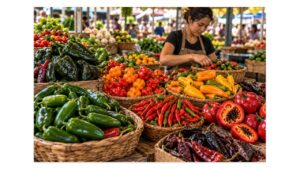
One of the easiest mistakes to make when learning about chile peppers is treating them as points on a thermometer. Poblano is relatively mild. Jalapeño brings more heat. Serrano usually climbs higher. Habanero enters another territory altogether, while peppers such as the Ghost Pepper and Carolina Reaper occupy the extreme end of the spectrum. That progression is useful for understanding how much heat a pepper might bring to a dish, but it tells only a small part of the story.
Choosing peppers by heat alone would be a little like choosing wine only by alcohol percentage. The number tells you something important, but it doesn’t tell you what the ingredient tastes like, how it behaves in food, or why a cook might choose one variety instead of another. Chile peppers have individual flavor identities, and those differences often matter more in cooking than their exact position on the Scoville scale.
A poblano, for example, offers mild heat alongside an earthy character and substantial flesh that makes it especially useful for roasting and stuffing. Jalapeños tend toward a brighter, greener chile flavor, while serranos bring a sharper heat and fresh character that works particularly well in salsa and other uncooked preparations. Move into habaneros and the flavor changes again: the heat becomes considerably more intense, but it arrives alongside pronounced fruity and sometimes floral qualities that distinguish a habanero from peppers that are simply hot.
Dried chiles expand that flavor vocabulary even further. Ancho can contribute gentle warmth with sweet, earthy, dried-fruit character. Guajillo offers another combination of fruitiness, earthiness, and moderate heat. Chipotle brings smoke into the equation because it isn’t simply a dried chile—it is a ripe jalapeño that has been smoked and dried, transforming an already familiar pepper into an ingredient with a different culinary personality.
Scoville ratings still matter. They help us anticipate heat, compare peppers, and avoid using an intensely hot chile as casually as we might use a poblano. But once you’re actually cooking, a better question emerges than simply How hot is this pepper?
What does this pepper bring to the food besides heat?
🌶️ Professor Pepper Says…
A hotter pepper isn’t automatically a better pepper. Choose the flavor the dish needs, then decide how much heat you want to bring along with it.
That principle runs throughout this guide. As we explore individual peppers, we’ll look beyond heat to understand their flavor, texture, traditional uses, common preparations, and the cuisines that have learned to make the most of them.
HEAT TELLS YOU HOW A PEPPER BURNS. FLAVOR TELLS YOU WHY YOU’D WANT TO EAT IT.

Fresh, Ripe, Dried & Smoked: How a Pepper Changes Identity
Walk through a market filled with fresh and dried chiles and it can initially seem as though you’re looking at dozens of unrelated ingredients. A large fresh green poblano and a dark, wrinkled ancho look so different that someone encountering them for the first time could reasonably assume they came from entirely different plants.
They don’t. An ancho is the dried form of a ripe poblano.
That relationship illustrates something fundamental about chile peppers: they are not static ingredients. Their flavor, appearance, texture, and culinary purpose can change as they mature and as people roast, dry, smoke, pickle, grind, or otherwise preserve them. In some culinary traditions—particularly Mexican cooking—those transformations are significant enough that the transformed pepper is known by a different name.
Jalapeños provide one of the clearest examples. The green jalapeño familiar from salsas, nachos, pickles, and countless other dishes is typically harvested before full ripeness. Leave the fruit on the plant and it can mature to red, bringing changes in color and flavor. Smoke and dry those ripe jalapeños and they become chipotles, preserving the identity of the original pepper while adding concentrated, smoky characteristics that allow the finished ingredient to play a very different role in cooking.
Poblanos tell a similar story. Fresh poblanos are fleshy peppers commonly roasted, stuffed, sliced, or incorporated into sauces and other dishes. When allowed to mature and then dried, they become anchos—dark, flexible dried chiles valued for a deeper profile that can suggest dried fruit, earthiness, and gentle sweetness. The plant hasn’t changed, but the ingredient has.
Ripening changes peppers. Drying changes them. Smoking changes them. Roasting changes them.
Understanding those transformations is especially important when we reach Mexican dried chiles, because learning their names without learning their relationships can make the subject unnecessarily confusing. Once you recognize that fresh and dried peppers can represent different stages of the same ingredient, the larger chile family begins to make much more sense.
It also changes how we approach individual pepper profiles. We aren’t merely cataloging appearance, Scoville range, and geographic origin. Whenever it matters, we’ll follow a pepper through the transformations that define how people actually cook with it—from green to ripe, fresh to dried, or raw to roasted, smoked, pickled, powdered, or made into sauce.
🌶️ Professor Pepper Says…
When two chile names seem unrelated, look for the family connection. You may be meeting the same pepper at a different stage of its culinary life.
This is one of the ideas that makes the world of chile peppers so fascinating. The variety matters, but so does what happens after the pepper leaves the plant. Sometimes that transformation is subtle. Sometimes it produces an ingredient so distinctive that generations of cooks have given it another name.
WITH CHILE PEPPERS, HOW AN INGREDIENT CHANGES CAN MATTER AS MUCH AS WHERE IT STARTED.
How to Choose the Right Chile Pepper
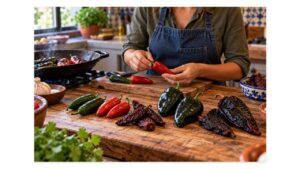
Once you stop treating chile peppers as a simple ladder from mild to hot, choosing the right one becomes much easier. Heat still matters, but it is only one part of the decision. The better starting point is to ask what you want the pepper to contribute to the finished food.
Sometimes that answer is freshness. Jalapeños and serranos can bring the bright, green chile character that works naturally in fresh salsas, relishes, garnishes, and sauces. Other dishes call for a pepper with enough size and substantial flesh to become part of the meal itself, which is one reason poblanos work so well for roasting and stuffing. In still other cases, the goal may be fruitiness, smoke, earthiness, sweetness, or the concentrated depth that comes from a dried chile.
Heat then becomes part of that flavor decision rather than the entire decision. Two peppers can occupy relatively similar territory on a heat scale and still produce very different results in a dish. Conversely, a cook may choose between peppers with dramatically different heat levels because they share a flavor characteristic that works with the food. Understanding those distinctions gives you much more control than simply reaching for whichever pepper seems closest to the heat level you want.
Form matters just as much. Fresh peppers contribute moisture, texture, and fresh chile flavor, while dried peppers tend to offer more concentrated characteristics and can be toasted, rehydrated, ground, or blended into sauces and pastes. Smoked peppers add another dimension, and powders make it possible to distribute chile flavor throughout a dish without adding the texture of the whole pepper. Even the same pepper can therefore solve very different cooking problems depending on how it has been preserved or prepared.
Cooking method changes the equation again. Roasting can soften a pepper’s texture while developing deeper flavors. Toasting a dried chile can awaken aromatic qualities before it is rehydrated. Pickling introduces acidity. Smoking adds an entirely new flavor layer. Grinding turns a whole chile into a seasoning that can be incorporated throughout a dish. The question isn’t simply Which pepper should I use? but often Which version of that pepper works best for what I’m making?
This is where individual pepper knowledge becomes genuinely useful. Instead of memorizing dozens of names, you begin building a culinary vocabulary. You learn which peppers are particularly good fresh, which are commonly roasted, which dried chiles build the foundation of sauces, which varieties contribute fruitiness alongside substantial heat, and which peppers should be approached cautiously because a small amount can dominate everything around them.
There will rarely be one universally “best” chile pepper. There is, however, often a pepper whose combination of flavor, heat, form, texture, and traditional use makes it especially well suited to the food in front of you.
CHOOSE THE PEPPER FOR THE FLAVOR YOU WANT—THEN DECIDE HOW MUCH HEAT YOU WANT TO COME WITH IT.
Meet the Chile Peppers
This is where the larger chile family becomes a collection of individual ingredients.
The profiles that follow are designed to be explored rather than memorized. Each one takes a closer look at an individual pepper—what it tastes like, how hot it is, where it comes from, how cooks traditionally use it, and what distinguishes it from peppers that may appear similar.
Some of these relationships will already be familiar. Jalapeño leads naturally to serrano when you want to understand two of the most recognizable fresh Mexican chiles. Poblano connects directly to ancho because one becomes the other through ripening and drying. Habanero opens the door to Scotch Bonnet and Datil, peppers that share botanical relationships while developing distinct culinary identities of their own. Chipotle demonstrates what smoke can do to a jalapeño, while Aji Amarillo, Tabasco, Rocoto, and other peppers take us into entirely different regional traditions.
There is no requirement to begin with the mildest pepper and work your way toward the hottest. Follow the ingredient that interests you, the pepper you’ve encountered in a recipe, or the chile sitting in front of you that you’d simply like to understand better.
EVERY PEPPER HAS A STORY BEYOND ITS SCOVILLE NUMBER.
Exploring the Individual Chile Pepper Guides
The chile pepper world becomes much easier to understand once individual peppers stop feeling like isolated names and begin connecting to one another. Some belong to the same botanical species. Others share a regional cooking tradition, similar heat level, or preparation method. Some are literally different forms of the same pepper.
That is how we recommend exploring this library.
If Mexican cooking is your starting point, jalapeño, serrano, and poblano provide an excellent introduction to how fresh chiles can differ in heat, flavor, texture, and culinary role. Follow poblano into its dried form and you arrive at ancho, opening the door to the much larger world of Mexican dried chiles. Cayenne offers another kind of transformation: a slender fresh chile whose thin walls make it particularly well suited to drying and grinding, helping turn the pepper into one of the world’s most familiar ground spices.
That dried and smoked chile family takes those relationships further. Ancho begins as poblano, while chipotle begins as a ripe jalapeño transformed through smoking and drying. Guajillo, pasilla, morita, cascabel, and chile de árbol expand that vocabulary with their own combinations of fruitiness, earthiness, smoke, sweetness, and heat.
Other paths lead well beyond Mexico. Habanero, Scotch Bonnet, Datil, and Jamaican Mushroom peppers introduce a group of intensely aromatic chiles with important connections to Caribbean and Florida cooking. Aji Amarillo and Aji Charapita take us into South America, while Bird’s Eye, Thai chiles, Piri Piri, Tabasco, and other peppers reveal how different regions built their own cooking traditions around the Capsicum plants that reached them.
And then there are the peppers grown specifically at the extremes. Ghost Pepper, Carolina Reaper, Pepper X, and other superhot varieties attract attention because of extraordinary Scoville ratings, but even here heat isn’t the entire story. Their individual profiles let us separate the fascination with extreme heat from the flavor, botanical relationships, breeding history, and practical realities of using exceptionally hot peppers.
As this library grows, you don’t need to follow it in any particular order. Start with a pepper you already know, follow a fresh pepper into its dried form, explore a regional family, compare peppers with similar culinary roles, or simply choose the chile you’ve always wondered about.
The individual guides below are where those journeys begin.
CHOOSE A PEPPER, FOLLOW ITS CONNECTIONS, AND THE LARGER CHILE WORLD STARTS TO COME TOGETHER.
Individual Chile Pepper Guides
🌶️ Fresh & Everyday Chile Peppers
These are the peppers many cooks encounter first—the chiles found fresh in produce departments, farmers markets, home gardens, sandwiches, salsas, pickles, and everyday recipes. Some are mild enough to use generously, while others bring enough heat to change a dish quickly. Together, they are a useful starting point for learning how much flavor variation can exist even among familiar peppers.
- Jalapeño Pepper Explained: Flavor, Heat, Uses & Why It’s America’s Favorite Chile
- Poblano Pepper Explained: Flavor, Heat, Uses & Why It’s the Chile Behind Chiles Rellenos
- Serrano Pepper Explained: Flavor, Heat, Uses & Why It Gives Mexican Salsa Its Signature Bite
- Cayenne Pepper Explained: Flavor, Heat, Uses & How It Becomes Cayenne Powder
🌮 Mexican Dried & Smoked Chiles
Drying a chile does much more than preserve it. As moisture disappears, flavors become concentrated and can move toward fruit, earth, nuts, herbs, or deeper savory notes. Smoking adds another transformation, creating ingredients that may taste dramatically different from the fresh peppers from which they began.
This family is especially important in Mexican cooking, where dried chiles form the flavor foundation of countless sauces, marinades, salsas, stews, and moles. Learning them also reveals some of the most interesting relationships in the pepper world: poblano becomes ancho, while a ripe jalapeño can become chipotle through smoking and drying.
- Chile de Árbol Explained: Flavor, Heat, Uses & Why This Mexican Chile Packs a Fiery Punch
- Chipotle Pepper Explained: Flavor, Heat, Uses & How Smoked Jalapeños Become Chipotle
🌎 Fruity, Tropical & Regional Hot Peppers
Beyond the familiar fresh and dried Mexican chiles lies an enormous range of peppers shaped by the cuisines and growing traditions of the Caribbean, South America, Africa, Asia, Florida, and other regions. Many are particularly interesting because their heat arrives alongside pronounced fruitiness, sweetness, floral aromas, or other flavors that give them strong regional identities.
This is also where the diversity of the Capsicum family becomes especially visible. These peppers don’t all belong to the same species or culinary tradition, and they aren’t grouped here because they taste alike. They are an invitation to explore how communities around the world have made very different chile peppers their own.
- Datil Pepper Explained: Flavor, Heat, Uses & Why This Pepper Is a Florida Favorite
- Habanero Pepper Explained: Flavor, Scoville Heat, Uses & What Makes It So Hot
- Scotch Bonnet Pepper Explained: Flavor, Scoville Heat, Uses & Why It’s Essential to Caribbean Cooking
🔥 Superhot Peppers
At the extreme end of the chile world are peppers bred and celebrated for extraordinary levels of heat. Their Scoville ratings attract much of the attention, but these peppers still have individual histories, flavors, botanical relationships, and culinary characteristics worth understanding beyond the numbers.
- Ghost Pepper Explained: Scoville Heat, Flavor, Uses & What Makes It So Hot
- Trinidad Moruga Scorpion Pepper Explained: Scoville Heat, Flavor, Uses & What Makes It So Extreme
- Carolina Reaper Explained: Scoville Heat, Flavor, Uses & What Makes It So Extreme
Why There Is No Single “Best” Chile Pepper
After exploring this many peppers, it is tempting to look for a winner: the best pepper for salsa, the best dried chile, the most flavorful hot pepper, or the one variety every cook should keep in the kitchen. Chile peppers don’t work particularly well that way.
A serrano can be exactly what a fresh salsa needs, while its sharper heat may be completely wrong for a dish built around the mild, substantial flesh of a poblano. Ancho can provide sweetness and depth without demanding much attention from the heat-sensitive diner, while chile de árbol can bring a much more assertive bite. Habanero can contribute an unmistakable fruity character, but using it simply because you want something hotter can change far more than the heat of the finished dish.
The same principle applies beyond individual varieties. Fresh peppers and dried peppers perform different jobs. A pepper chosen for stuffing needs different physical characteristics from one destined for a blender. A chile that works beautifully roasted may not be the flavor you want in a fresh garnish. Even two peppers commonly described with similar flavor words can behave differently once they meet heat, acid, smoke, or other ingredients.
That is why this guide focuses so heavily on flavor, heat, uses, and transformation. Those characteristics give you a much more useful way to understand peppers than trying to rank them from best to worst. The goal isn’t to find one chile that can do everything. It’s to recognize what each pepper does particularly well.
As you explore the individual guides, pay attention to the relationships between them. Follow jalapeño into chipotle, poblano into ancho, or a familiar mild pepper toward something hotter. Compare peppers from the same region, notice how different cultures use similar levels of heat, and watch how ripening, drying, smoking, roasting, and pickling can change what a chile contributes to food.
Eventually, names that once seemed like an intimidating vocabulary begin to describe something much more intuitive: a collection of ingredients with different personalities and different jobs in the kitchen.
THE BEST CHILE PEPPER IS THE ONE THAT BRINGS THE FLAVOR, HEAT, AND CHARACTER YOUR FOOD NEEDS.
Conclusion: Start with One Pepper and Follow the Flavor
You don’t need to learn every chile pepper at once.
Start with the pepper already in your kitchen, the one called for in a recipe, or simply the chile that makes you curious. Learn what it tastes like, how much heat it carries, how people traditionally use it, and what happens when it ripens or is roasted, dried, smoked, pickled, or ground.
Then follow the connections.
A jalapeño can lead you to serrano and Fresno—or forward to the smoked world of chipotle. Poblano can lead to ancho and from there into the larger family of Mexican dried chiles. Habanero can introduce Scotch Bonnet and Datil. Aji Amarillo can open an entirely different window into South American chile traditions.
That is what this Chile Pepper Guide is designed to make possible. It isn’t a list you need to memorize from beginning to end. It is a place to begin exploring, one pepper at a time.
PICK A PEPPER. LEARN ITS STORY. THEN SEE WHERE IT TAKES YOU.
Frequently Asked Questions About Chile Peppers
What is the difference between a chile pepper and a chili pepper?
Both spellings are widely used. Chile is especially common when referring to the pepper itself and is the spelling we generally use throughout the Pepper Encyclopedia, while chili frequently appears in names of dishes, preparations, and established pepper names.
Are all chile peppers part of the same species?
No. The peppers people cook with belong to several species within the Capsicum genus. Most cultivated chile peppers come from five domesticated species: Capsicum annuum, Capsicum chinense, Capsicum frutescens, Capsicum baccatum, and Capsicum pubescens.
What makes one chile pepper hotter than another?
The burning sensation comes primarily from capsaicin and related capsaicinoids. Genetics play a major role in how much a pepper can produce, while growing conditions and individual fruit variation can also affect perceived heat.
Are the seeds the hottest part of a chile pepper?
Not exactly. Much of a pepper’s capsaicin is produced in the pale internal tissue surrounding and supporting the seeds rather than in the seeds themselves. Seeds can become coated with capsaicin through contact with that tissue.
Does a higher Scoville rating mean a pepper has more flavor?
No. The Scoville scale describes pungency, not overall flavor. A hotter pepper isn’t automatically more flavorful, which is why choosing peppers by taste and culinary role is often more useful than choosing by heat alone.
Why do some chile peppers change names when they are dried?
Drying can transform a pepper’s flavor, texture, appearance, and culinary role so significantly that some peppers are traditionally known by different names after drying. A ripe poblano becomes ancho, while a smoked and dried ripe jalapeño becomes chipotle.
Are red chile peppers always hotter than green ones?
No. Color alone doesn’t determine heat. Many peppers change from green to red or another mature color as they ripen, but the relationship between ripeness and heat varies by pepper.
Can I substitute one chile pepper for another?
Often, but consider more than heat. A useful substitute should account for flavor, texture, moisture, size, and how the pepper will be prepared as well as its approximate heat level.
What’s the best chile pepper for someone who doesn’t like much heat?
Milder peppers such as poblano, Anaheim, Cubanelle, shishito, banana pepper, and pepperoncini can provide chile flavor without extreme heat. The best choice depends on what you’re cooking and whether you need the pepper fresh, roasted, pickled, stuffed, or prepared another way.
What is the best way to choose a chile pepper for a recipe?
Start with the flavor and role you want the pepper to play, then consider heat. Also think about whether the recipe needs a fresh, dried, smoked, roasted, pickled, or powdered chile because preparation can dramatically change the final result.
Are dried chile peppers hotter than fresh peppers?
Not necessarily. Drying removes moisture and concentrates flavor, but that doesn’t mean every dried chile will taste hotter than every fresh one. The original pepper variety and how it is used still matter.
Where should I start if I want to learn more about chile peppers?
Start with a pepper you already recognize. Jalapeño, serrano, poblano, habanero, or chipotle can each provide an excellent starting point, and following their relationships to other peppers makes the larger chile family much easier to understand.
🌶️ Continue Your Pepper Journey
See More key words
Capsicum, Capsicum annuum, Capsicum chinense, Capsicum frutescens, Capsicum baccatum, Capsicum pubescens, capsaicin, Scoville scale, Scoville heat units, SHU, pepper heat, pepper flavor, pepper anatomy, fresh peppers, dried chiles, smoked chiles, ripe peppers, green chiles, red chiles, Mexican chiles, jalapeño, serrano, poblano, ancho, guajillo, chipotle, habanero, Scotch Bonnet, Datil pepper, cayenne pepper, chile de árbol, Aji Amarillo, Tabasco pepper, Ghost Pepper, Carolina Reaper, Pepper X
