
Sweet Mexican Empanadas Explained: The Bakery Pastries Filled with Fruit, Cajeta & Pumpkin
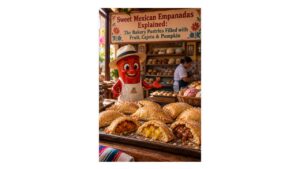
Mexican bakeries have a wonderfully persuasive way of making you buy more pastry than you intended.
You walk in thinking one sweet bread with coffee sounds reasonable. Then you see the conchas. The orejas make a compelling argument. Something covered in sugar gets added to the tray for reasons that are difficult to explain afterward.
And then you find the empanadas.
They look deceptively manageable: a folded pastry, usually shaped like a half-moon, with the filling safely hidden inside. No towering frosting. No elaborate decoration. Nothing suggesting that your carefully negotiated bakery order is about to become larger. Then someone mentions pumpkin. Or pineapple. Or cajeta.
Your tray has a new passenger.
Sweet Mexican empanadas occupy an interesting place in the enormous world of Mexican baked goods. Their basic idea is wonderfully simple: dough wrapped around something sweet, sealed along the edge and baked until the pastry and filling become one portable dessert. But that simplicity leaves tremendous room for variation. The dough can change. The filling can change. The texture can change. Even what someone expects when they hear empanada can change depending on where the pastry is being made, which makes these pastries worth understanding as much more than simply “sweet turnovers.”
Introduction: The Mexican Empanada Is a Pastry with Something to Hide
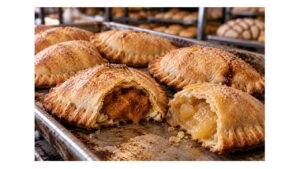
Break open a freshly baked sweet empanada and the outside finally explains what it has been protecting.
A fruit filling may appear first—pineapple cooked until thick and jammy, guava with its distinctive tropical perfume, apple darkened with cinnamon or another fruit preserved into something concentrated enough to remain inside the pastry as it bakes. Elsewhere, pumpkin becomes the filling, particularly in northern Mexican traditions where empanadas de calabaza have become a deeply familiar baked sweet. And then there is cajeta, the caramel-like Mexican confection traditionally made by slowly cooking goat’s milk with sugar until it becomes thick, brown and intensely flavored.
The filling matters, but so does everything surrounding it. Unlike an American fruit pie, the filling has been divided into individual portions and enclosed before baking. Unlike many elaborate pastries, an empanada does not need icing, layers or decoration to announce what it is. The folded dough creates its own package: filling on the inside, pastry on the outside, and a crimped or sealed curved edge holding the two together.
That construction also makes the empanada unusually adaptable. Change the dough and the experience changes. A tender, crumbly bakery pastry behaves differently from a softer bread-like dough. Change the filling from pumpkin to cajeta and sweetness, moisture and texture shift with it. Move from one region or bakery to another and the same familiar half-moon form can carry a different local interpretation.
Even the boundary between bakery pastry and home baking can become wonderfully blurry. Sweet empanadas belong comfortably in the display cases of Mexican panaderías, but they also belong to family kitchens, holiday baking and regional traditions. A bakery can make trays of them for customers choosing their morning or afternoon breads, while a family can make a batch around a filling remembered from childhood.
That dual identity connects sweet empanadas naturally to the larger world explored in Mexican Street Food Beyond Tacos: Elote, Tortas, Tamales & More. Mexican everyday food culture doesn’t end at the taquería. It extends into mercados, cafés, street stands, neighborhood bakeries and the panadería tray filled with breads and pastries intended to travel home in a paper bag.
Sweet empanadas are especially useful for understanding that bakery world because their identity isn’t determined by one famous topping or one mandatory filling.
The form stays recognizable while the possibilities inside keep changing.
That is the central idea worth following through this article. Mexican sweet empanadas aren’t one pastry with one definitive recipe. They are a pastry format—a folded, filled piece of baking that Mexican cooks and bakers have adapted to local ingredients, regional tastes and family traditions. To understand the empanada, we therefore have to look at both sides of that relationship: what the baker puts inside and what kind of pastry is built around it.
A SWEET MEXICAN EMPANADA MAY LOOK SIMPLE FROM THE BAKERY CASE, BUT THAT FOLDED HALF-MOON IS REALLY A FRAMEWORK FOR REGIONAL FLAVORS, DIFFERENT DOUGHS AND GENERATIONS OF MEXICAN BAKING TRADITION.
⚡ Quick Guide to Sweet Mexican Empanadas
What is a sweet Mexican empanada?
A sweet Mexican empanada is a filled pastry made by enclosing a sweet filling inside dough, sealing it—often into a half-moon shape—and baking it. Fruit preserves, pumpkin and cajeta are among the fillings associated with Mexican sweet empanadas, although recipes and bakery traditions vary considerably by region.
What are Mexican sweet empanadas filled with?
Fillings can include pumpkin (calabaza), pineapple (piña), guava (guayaba), apple (manzana), cajeta and other fruits, preserves or sweet preparations. There is no single filling that defines every Mexican empanada.
What is cajeta?
Cajeta is a traditional Mexican milk confection most closely associated with goat’s milk slowly cooked with sugar until thick, caramelized and deeply flavored. It can be used in pastries and desserts, including sweet empanadas.
Are Mexican empanadas always sweet?
No. Empanada describes a broader family of filled pastries rather than a dessert alone. Savory versions exist throughout Mexico and the wider Spanish-speaking world, while this article focuses specifically on the sweet bakery-style empanadas found in Mexican baking traditions.
Are Mexican empanadas fried or baked?
Both preparations exist within the larger world of empanadas, but many of the sweet Mexican bakery empanadas we’re exploring here are baked. Dough, filling and preparation vary by region and recipe, so empanada should not be understood as one universal pastry formula.
Are sweet empanadas the same throughout Mexico?
No. Doughs, fillings, sweetness, texture and preparation can vary by region, bakery and family. Pumpkin may be especially meaningful in one tradition while fruit preserves or cajeta dominate another. That variation is part of the story rather than an exception to it.
Why “Empanada” Describes the Form Better Than the Recipe
One of the easiest mistakes to make with empanadas is assuming the name tells you exactly what you’re about to eat. It doesn’t. The word empanada comes from the Spanish verb empanar, a term connected with enclosing or covering food with bread or dough. That gets us surprisingly close to the essential logic of the pastry: place something inside dough, enclose or fold it, seal the edges and cook it. That basic construction allowed empanadas to develop in remarkably different directions across Spain, Latin America and beyond, and Mexico made the format its own.
That distinction matters when you’re standing in front of a Mexican bakery case because two pastries labeled empanadas can share their folded form while being quite different once you bite into them. One may have a relatively delicate, crumbly crust surrounding thick pineapple filling. Another may use a sturdier dough around spiced pumpkin. A cajeta empanada introduces an entirely different texture and sweetness, while a regional or family recipe may use a dough that resembles none of them exactly.
The filling cannot be too careless, either. A spoonful of ordinary fresh fruit enclosed in dough behaves very differently in an oven from fruit that has already been cooked down into a thick preserve. Water becomes an engineering problem. Too much moisture can soften the pastry, escape through the seam or turn a neatly sealed empanada into a small bakery emergency. That helps explain why thick fruit preparations work so naturally inside the form. Cooking fruit concentrates its flavor while reducing and controlling some of its moisture. Pumpkin can likewise be cooked and seasoned into a filling substantial enough to remain where the baker put it, while cajeta arrives with its own concentrated texture and sweetness.
The pastry therefore isn’t merely a shell around something delicious.
The dough and filling have to cooperate.
The dough must be strong enough to hold the filling but pleasant enough to eat on its own. The filling must remain moist enough to contrast with the pastry without becoming so loose that it destroys it. The sealed edge needs to survive baking. And because every bite contains a different ratio of crust to center, the baker has to think about sweetness and texture across the entire pastry rather than only at its middle.
That is where the apparent simplicity of an empanada becomes interesting. There may be only two major components—dough and filling—but changing either one can produce a substantially different pastry. It also explains why searching for the authentic Mexican sweet empanada recipe quickly becomes frustrating. There isn’t one universal formula. There are Mexican empanadas, plural: regional versions, bakery versions, home recipes and family traditions connected by the basic idea of enclosing a filling inside dough.
The useful question isn’t which recipe won the right to represent all of them.
It’s what did this particular baker put inside—and what kind of pastry did they build around it?
 🌶️ Professor Pepper Says…
When trying a Mexican empanada for the first time, pay attention to the dough before deciding whether you like the filling. A great empanada isn’t simply a delivery system for something sweet. The texture and flavor of the pastry are half of what makes the filling work.
That way of thinking places sweet empanadas comfortably within the larger tradition explored in Mexican Panaderías Explained: Why Every Neighborhood Bakery Is the Heart of Mexican Morning Culture. A Mexican bakery case makes more sense when you stop expecting every item with the same name to emerge from one standardized national recipe. Bakers work within recognizable traditions while regional preferences, available ingredients and individual recipes continue creating variation.
Sweet empanadas demonstrate that principle particularly well because their familiar shape survives so many changes inside it.
THE EMPANADA ISN’T DEFINED BY PUMPKIN, PINEAPPLE, CAJETA OR ANY OTHER SINGLE FILLING. ITS GENIUS IS THE FOLDED PASTRY ITSELF—A SIMPLE FORM THAT GIVES MEXICAN BAKERS ALMOST ENDLESS ROOM TO CHANGE WHAT COMES NEXT.
How Empanadas Became Part of Mexican Baking
The empanada may feel completely at home beside conchas, orejas and other breads in a Mexican panadería, but the basic idea of enclosing food inside dough did not begin in Mexico. Versions of filled pastries existed for centuries across Europe, the Mediterranean and the Middle East, and Spain developed its own traditions long before Spanish colonization brought European wheat, livestock, baking techniques and pastry traditions across the Atlantic.
What happened afterward is more interesting than simply saying that Spain brought empanadas to Mexico.
Mexico changed the ingredients available to the baker, the flavors people wanted inside the pastry and the cultural settings in which empanadas were made and eaten. European wheat-based baking encountered an enormous existing food culture built around corn, squash, fruits, chiles, cacao and other ingredients with much deeper histories in the Americas. Colonial-era kitchens also gained dairy products and new forms of sugar production, while regional agriculture continued determining what cooks actually had available. Over generations, the imported pastry concept became increasingly difficult to separate from the Mexican ingredients and traditions that reshaped it.
Pumpkin offers one of the clearest examples. Squash was cultivated in the Americas thousands of years before Europeans arrived, so enclosing a sweetened pumpkin preparation inside wheat pastry brings together ingredients and techniques with very different histories. The resulting empanada de calabaza is not particularly useful to understand as either purely European or purely Indigenous. It belongs to the long process through which Mexican cooking repeatedly took introduced ingredients and techniques and made something locally meaningful from them.
The same process helps explain why trying to trace every Mexican sweet empanada back to one national origin story misses what makes the pastry interesting. Mexico is too large, its regional food traditions too varied and the empanada format too adaptable for one filling or dough to tell the whole story. Bakers and home cooks could use what grew nearby, what preserved well, what families enjoyed and what suited the occasion. Over time, pumpkin, fruits, preserves and milk-based sweets could all find their way inside that familiar folded dough.
The panadería eventually gave these pastries another kind of permanence. As Mexican bakery culture developed, sweet empanadas could sit naturally among a much broader assortment of pan dulce rather than existing as a completely separate dessert category. A customer choosing breads could add an empanada to the same tray or basket as conchas and other pastries, take everything to the counter and carry the assortment home for breakfast, merienda, coffee or whenever the bag mysteriously became lighter on the trip home.
That everyday bakery setting matters. It helps explain why Mexican sweet empanadas can simultaneously feel traditional without being standardized. A pastry does not need one nationally prescribed filling to become culturally familiar. It needs generations of bakers and customers who recognize the form, continue making it and keep finding reasons to put it on the tray.
This is one reason the broader tradition explored in Pan Dulce Explained: Mexico’s Sweet Bread Tradition Beyond the Famous Concha is so useful here. Mexican sweet baking is not a museum collection of recipes frozen at a particular moment. It is the result of ingredients, techniques, regions and generations repeatedly meeting one another in the bakery.
Sweet empanadas fit beautifully into that story because their history is visible in their construction. Wheat dough may tell one part of it. Pumpkin can tell another. Cajeta introduces Mexico’s dairy traditions. Regional fruits tell still more. Fold those ingredients together and the pastry becomes a small example of something Mexican food does extraordinarily well: absorb influences without losing the ability to become distinctly its own.
MEXICO DIDN’T SIMPLY RECEIVE THE EMPANADA AND PRESERVE IT. MEXICAN BAKERS AND HOME COOKS FILLED THAT FAMILIAR PASTRY FORM WITH LOCAL INGREDIENTS, REGIONAL PREFERENCES AND THEIR OWN BAKING TRADITIONS UNTIL IT BECAME PART OF THE COUNTRY’S FOOD CULTURE.
🌶️ Discover the Sweeter Side of Peppers
Sweet Mexican baking also gives us a useful reminder that chile flavor doesn’t have to mean turning dessert into a heat challenge. Fruit, caramel, chocolate and warming spices can all work with carefully chosen pepper flavors when sweetness, acidity and heat remain in balance.
Explore Peppers of Key West sauces when you’re ready to experiment with the sweeter, fruit-forward side of chile flavor.
Pumpkin, Pineapple, Cajeta & the Fillings That Give Mexican Empanadas Their Personality
If the folded pastry gives an empanada its recognizable form, the filling gives it personality.
Walk into different Mexican bakeries and that is where the fun begins. One tray may hold empanadas de calabaza, their pumpkin filling darkened with sugar and warming spice. Another may offer pineapple cooked into a thick, bright preserve. Guava can provide an intensely aromatic fruit center. Apple brings a more familiar combination of cooked fruit and cinnamon. Other bakeries and family kitchens may use additional fruits or preserves according to regional preference, season and tradition.
Then there is cajeta.
Cajeta changes the experience because it is not a fruit preserve at all. Traditionally made by slowly cooking goat’s milk with sugar until the mixture concentrates and browns, cajeta develops a deep caramelized flavor while retaining a distinctly dairy character. Put it inside pastry and the contrast is different from pumpkin or pineapple: crisp or tender dough on the outside gives way to a rich, sticky, intensely sweet center.
That difference helps explain why listing empanada fillings without discussing them doesn’t tell us very much. Pumpkin, pineapple and cajeta aren’t simply three interchangeable flavors waiting to be spooned into identical pastry shells. Each asks something different of the baker.
Pumpkin can carry warming spices beautifully, but its moisture must be controlled so the filling remains substantial rather than watery. Pineapple has acidity as well as sweetness, and cooking it down concentrates the fruit while producing the thick consistency needed inside pastry. Cajeta is already concentrated, but its richness means the dough surrounding it becomes especially important; a pastry that is excessively sweet on its own can leave very little contrast once the cajeta arrives.
The filling changes what the dough needs to do.
That relationship is one of the reasons recipes for sweet Mexican empanadas can differ so dramatically. Some doughs are relatively tender and crumbly. Others are firmer or more bread-like. Bakers may use different fats, amounts of sugar, leavening or liquids according to the result they want and the filling the dough must contain. There is no requirement that an empanada filled with pumpkin behave exactly like one filled with cajeta.
Regional preference complicates the picture even further. Pumpkin empanadas are particularly associated with northern Mexico and communities whose baking traditions carried empanadas de calabaza across generations. Elsewhere, tropical and orchard fruits can take greater prominence. What appears in the bakery case therefore tells us something not only about pastry, but potentially about place, agriculture and the customers a bakery has learned to serve.
That also means the sweetest-looking empanada isn’t necessarily the most interesting one. The best versions depend on contrast. A tart fruit filling can make a rich pastry seem lighter. A less-sweet dough can give cajeta room to provide the sweetness. Cinnamon and other warming spices can deepen pumpkin without making it taste like candy. A slightly browned crust contributes toasted flavors that would disappear if the pastry were merely a neutral container.
The empanada’s adaptability isn’t simply the ability to put different fillings inside the same dough. It is the ability to adjust the entire pastry around what is inside it.
A baker choosing pumpkin, pineapple or cajeta isn’t merely selecting a flavor from a menu.
The baker is deciding what kind of empanada to build.
🌶️ Professor Pepper Says…
When comparing sweet empanadas, don’t judge them by how much filling they contain. More isn’t automatically better. A good empanada leaves enough pastry around the filling for the two textures and flavors to work together—the same reason an overfilled empanada can be harder to seal and less pleasant to eat.
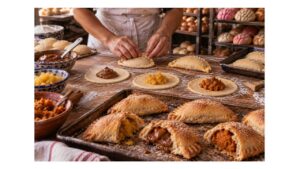
That lesson is easy to see on a bakery worktable. A modest spoonful of filling placed near the center of a dough round may not look extravagant before the pastry is folded, but the baker is leaving room for the dough to close, for the edges to seal and for the filling to expand or soften as it heats. The empty-looking border around the filling isn’t wasted space; it’s part of the design.
And once the empanada comes out of the oven, that proportion becomes part of every bite: browned pastry first, sweet filling immediately behind it, then pastry again as the half-moon disappears.
PUMPKIN, PINEAPPLE, CAJETA AND FRUIT PRESERVES GIVE SWEET MEXICAN EMPANADAS THEIR DIFFERENT PERSONALITIES, BUT THE BEST VERSIONS AREN’T BUILT BY SIMPLY ADDING MORE FILLING. THEY’RE BUILT BY MAKING THE DOUGH AND FILLING TASTE AS THOUGH THEY WERE ALWAYS SUPPOSED TO BE TOGETHER.
How Mexican Bakers Shape, Seal & Bake Sweet Empanadas
Watch a baker make empanadas and the finished half-moon suddenly seems less inevitable.
The process begins with a round of dough and what can look like a surprisingly modest amount of filling. Pumpkin, pineapple, cajeta or another sweet preparation is placed toward the center, leaving a generous border of exposed dough around it. That empty space is essential. The dough still needs to fold without forcing filling toward the edges, and those edges need to meet cleanly enough to form a seal that can survive the oven.
Fold the round over and the empanada begins to take its familiar shape. The baker presses the edges together, sometimes using the tines of a fork and sometimes creating a more decorative crimp by hand. The exact finish can vary, but the purpose underneath the decoration remains practical: the filling belongs inside the pastry.
That sounds obvious until heat gets involved. As an empanada bakes, the dough changes structure while moisture inside the filling heats and produces steam. A poorly sealed edge can separate. An overfilled pastry can leak. A filling that is too loose can find the smallest opening and turn a neat half-moon into a sticky baking-sheet casualty. A little leakage around one handmade empanada isn’t necessarily a disaster—sometimes the caramelized fruit or cajeta at the edge is one of the best bites—but a tray full of ruptured pastries tells the baker that the relationship between dough, filling and seal needs attention.
The surface receives attention too. Depending on the recipe, an empanada may be brushed before baking to encourage browning, sprinkled with sugar, coated after baking or left comparatively plain. Some emerge deeply golden and glossy; others remain lighter and more rustic. Those differences are another reason the phrase Mexican sweet empanada describes a family of pastries rather than one standardized bakery product.
What matters is that the finished crust does more than contain the center. Browning creates toasted flavors and aroma. A slightly crisp exterior can contrast with a softer interior crumb. Sugar on the surface changes the first impression before the filling is ever reached. Even the thickness of the rolled dough influences whether the empanada feels delicate, substantial, crumbly or bread-like.
This is where handmade empanadas reveal themselves. The crescents on a bakery tray may not all have precisely the same curve. One crimp may be slightly deeper than another. A little filling may have escaped from one seam and caramelized against the pan. Those small differences don’t automatically signal poor workmanship; in the right context, they are evidence that somebody actually folded and sealed the pastries rather than manufacturing perfect copies of one another.
THE HALF-MOON SHAPE MAY BE THE MOST RECOGNIZABLE PART OF A MEXICAN EMPANADA, BUT GOOD SHAPING ISN’T ABOUT MAKING EVERY PASTRY LOOK IDENTICAL. IT’S ABOUT GIVING THE DOUGH ENOUGH ROOM TO HOLD ITS FILLING, SEAL PROPERLY AND BECOME THE PASTRY THE BAKER INTENDED.
From Panadería Tray to Coffee Table: How Sweet Empanadas Are Eaten in Mexico
The final stage of an empanada’s journey isn’t the oven.
It’s the tray.
Walk into a traditional Mexican panadería and the experience can be very different from approaching a bakery counter where every pastry is ordered individually from an employee. In many self-service panaderías, customers take a tray and tongs and move among racks or cases of breads, choosing what they want before bringing the assortment to the counter. The system turns buying bread into a small act of exploration: you don’t necessarily need to know the name of everything before deciding that it belongs on your tray.
That is a particularly natural environment for an empanada. Its filling may be identified by a label, its appearance or simply familiarity with what that bakery makes, but the outside still keeps a little mystery. A pineapple empanada and a pumpkin empanada can look remarkably similar until the first bite exposes what the pastry has been carrying.
Sweet empanadas also don’t require an elaborate dessert occasion. They can accompany coffee or hot chocolate, appear at breakfast or during an afternoon merienda, travel home with an assortment of pan dulce, or simply become the pastry somebody reaches for because the bakery made a fresh batch that day. That everyday flexibility is part of their cultural strength. A food does not need ceremonial importance to become deeply familiar; sometimes it becomes important precisely because people keep finding ordinary reasons to eat it.
The setting also changes how we understand the pastry. Seen by itself on a plate, an empanada can look like a self-contained dessert. Seen on a bakery tray beside conchas, orejas and other Mexican breads, it becomes part of a larger rhythm of choosing, sharing and eating baked sweets. That experience is one reason Mexican Panaderías matter more than the breads themselves. The panadería is not simply where these foods are manufactured. It is part of how people encounter them.
And the assortment matters. A family does not necessarily leave with six copies of the same pastry. One person wants a concha. Someone else spots an empanada de piña. Pumpkin goes onto the tray because somebody always gets pumpkin. Another pastry is selected despite nobody being entirely certain what it is.
That one is called research.
The result is a paper bag or bakery box filled with different textures and flavors that can be passed around a table with coffee. Sweet empanadas fit naturally into that experience because variety is already built into their identity. The same folded pastry can provide several completely different reasons to choose one.
That variety can also become personal. Customers learn which filling a particular panadería makes especially well. Families develop favorites. Seasonal batches create expectations. A pastry that appears ordinary to a visitor may carry years of familiarity for the person standing beside them with the tongs—something a definition like “fruit-filled turnover” could never capture.
An empanada is certainly a filled pastry. But inside a Mexican panadería, it is also a choice on the tray, something to bring home, something to split open beside coffee and sometimes something whose filling you recognize before anyone has to tell you what it is.
MEXICAN SWEET EMPANADAS BELONG TO THE PANADERÍA NOT ONLY BECAUSE BAKERS MAKE THEM THERE, BUT BECAUSE THE BAKERY GIVES THEM A PLACE IN THE EVERYDAY RITUAL OF CHOOSING, SHARING AND BRINGING SWEET BREAD HOME.
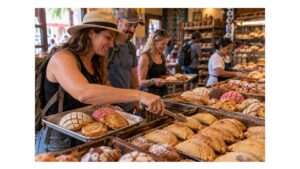
Are Sweet Mexican Empanadas Seasonal?
Some empanadas are everyday bakery pleasures. Others become especially meaningful when the calendar, harvest or family tradition brings a particular filling back into focus.
Pumpkin provides the clearest example. Empanadas de calabaza have strong associations with northern Mexican and Mexican-American baking traditions, and their combination of cooked pumpkin, brown sugar or piloncillo and warming spices makes them especially natural during autumn and cooler-weather celebrations. Recipes vary considerably, but cinnamon is a frequent companion, while some preparations introduce additional spices or flavorings according to family tradition.
That seasonality should not be confused with a rule that pumpkin empanadas only exist during one holiday. A bakery can make them whenever customers want them and ingredients are available. What changes seasonally is often their cultural visibility: certain foods simply feel more appropriate when weather, celebrations and family routines give people another reason to make them.
Fruit fillings can follow a different logic. Fresh fruit has a harvest season, but preserves loosen that connection to the calendar. Once pineapple, guava or another fruit has been cooked with sugar into a thick filling, the baker is no longer limited to the brief moment when perfectly ripe fruit is coming from the field. Preservation extends flavor beyond harvest, which is particularly useful for a pastry whose filling benefits from being concentrated rather than watery in the first place.
That creates an interesting overlap between practicality and pleasure. The same process that makes fruit easier to preserve also makes it better behaved inside dough.
Seasonal traditions therefore add another layer to the central idea of the empanada. The form can stay familiar while what goes inside responds to harvests, holidays, family habits and regional preference. A pumpkin empanada in autumn and a pineapple empanada beside coffee may occupy very different moments, yet both make sense because the pastry was designed to accommodate change.
THE EMPANADA’S GREATEST TRADITION MAY BE ITS ABILITY TO ADAPT: THE SAME FOLDED PASTRY CAN FOLLOW THE SEASONS, PRESERVE A FAVORITE FRUIT OR RETURN YEAR AFTER YEAR WITH A FILLING A FAMILY ALREADY KNOWS BY HEART.
How to Choose a Great Sweet Empanada at a Mexican Panadería
A bakery case can tell you quite a bit about an empanada before you ever taste it.
Start with the pastry itself. A well-made sweet empanada should look properly baked rather than pale and unfinished, although the exact degree of browning depends on the dough and bakery style. The surface may be glossy, matte, dusted with sugar or almost completely plain. Handmade edges may not be perfectly symmetrical, and they do not need to be. What matters more is whether the pastry looks intact, properly sealed and substantial enough to contain its filling without appearing heavy or soggy.
Then look at the seam. A small streak of caramelized fruit escaping from an edge can be extremely inviting; half the filling deposited onto the baking sheet is less encouraging. Sweet fillings contain moisture and sugar, both of which become more troublesome as they heat. The crimp around an empanada is therefore not merely decorative. It is evidence of one of the baker’s most practical jobs: persuading something sticky and delicious to remain where it belongs.
Freshness matters too, but not every empanada needs to be eaten seconds after leaving the oven. In fact, fillings such as cajeta or thick fruit preserves can be dangerously enthusiastic when extremely hot. A pastry allowed to cool slightly gives its filling time to settle while its aroma and texture remain inviting. Later in the day, the ideal texture will depend partly on the dough. Some empanadas remain tender; others become firmer or more crumbly as they sit.
If the bakery labels its fillings, choosing is easy. If it doesn’t, asking is entirely reasonable. ¿De qué es la empanada?—“What is the empanada filled with?”—is considerably more useful than attempting to identify pumpkin, pineapple and cajeta through pastry clairvoyance.
And if several fillings sound good, the solution is already waiting beside you.
The tray is bigger than one empanada.
Choose two or three and compare them. Notice how the dough behaves with each filling. Does pineapple provide acidity against a rich crust? Does pumpkin feel softer and more warmly spiced? Does cajeta make the same style of pastry seem richer? Tasting them side by side turns a bakery stop into exactly the kind of informal food education Mexican panaderías make so enjoyable.
CHOOSING A GREAT SWEET EMPANADA ISN’T ABOUT FINDING THE MOST PERFECT HALF-MOON IN THE CASE. LOOK FOR A WELL-BAKED PASTRY, A SOUND SEAL AND A FILLING YOU ACTUALLY WANT TO DISCOVER—THEN LET THE FIRST BITE TELL YOU WHETHER THE BAKER GOT THE RELATIONSHIP RIGHT.
How to Make Better Sweet Mexican Empanadas at Home
Home baking exposes every decision the bakery case conveniently hides.
The first is the dough. Because Mexican sweet empanadas do not follow one universal formula, a home cook should resist the temptation to treat dough choice as an afterthought. A tender pastry dough may be wonderful around fruit preserves, while another recipe may intentionally produce something sturdier or more bread-like. Rather than asking which dough is universally authentic, start with the style of empanada you are trying to reproduce and use a recipe developed for that result.
The filling deserves the same attention. Fruit should generally be thick enough to stay inside the pastry rather than behaving like syrup once heated. Pumpkin should be cooked into a substantial filling rather than spooned in as a watery purée. Cajeta needs enough surrounding dough to contain it as it warms. Whatever the filling, cooling it before assembly can make the pastry easier to handle and reduce the temptation to compensate for a loose mixture by adding more dough or flour where it does not belong.
Portioning may be the most psychologically difficult lesson because an unbaked dough round can make a sensible spoonful of filling look disappointingly small. Adding another spoonful feels generous.
The oven may disagree.
Overfilling makes the dough harder to fold, pushes filling toward the seam and increases the likelihood of leakage. Leave a clean border around the filling, fold without stretching the dough aggressively and press out obvious trapped air before sealing. The goal is not to create the empanada with the highest filling-to-pastry ratio. It is to create one that survives baking and still gives you both components in the same bite.
Sealing deserves patience. If filling or grease has contaminated the edge of the dough, getting the two sides to adhere can become difficult. A clean border makes pressing and crimping considerably easier. Once sealed, a fork can create the familiar ridged edge found on many homemade versions, while other recipes use hand crimping or their own finishing method.
Temperature matters after baking as well. That beautifully browned empanada may contain fruit, pumpkin or cajeta considerably hotter than the pastry suggests. Give freshly baked empanadas enough time to cool before biting into one, particularly when the filling is thick and sugar-rich.
Then pay attention to the result rather than merely asking whether the recipe “worked.” If filling leaked, was the pastry overfilled, poorly sealed or was the filling too loose? If the crust overwhelmed the center, was the dough too thick? If the empanada tasted relentlessly sweet, could the dough or filling use more contrast? Those observations teach more than blindly repeating the same measurements on the next batch.
A home baker does not need to master every regional style of Mexican empanada. Learn one dough, understand how much filling it can comfortably hold and discover how that dough responds to different centers. Once those relationships make sense, experimentation becomes much easier.
🌶️ Professor Pepper Says…
The empty border around your filling isn’t wasted dough. It’s the part that lets the empanada close. If you have to stretch the pastry aggressively to get the edges together, you’ve probably already answered the question of whether you added too much filling.
GOOD HOMEMADE EMPANADAS AREN’T BUILT BY PACKING THE MOST FILLING INTO THE LEAST POSSIBLE DOUGH. THEY COME FROM LEARNING HOW DOUGH, MOISTURE, HEAT AND PROPORTION WORK TOGETHER—AND KNOWING WHEN TO PUT THE SPOON DOWN.
What Sweet Empanadas Teach Us About Mexican Baking
It would be easy to finish with the fillings. Pumpkin tells us something about regional and seasonal tradition. Pineapple and other fruits demonstrate the importance of preserves and concentrated flavor. Cajeta brings Mexico’s dairy traditions into the pastry case. Each deserves attention, and each can make an empanada memorable, but none explains the pastry by itself.
Sweet empanadas become more revealing when we look at what remains constant while everything else changes. A baker begins with dough, adds a filling, encloses it and creates something portable enough for a bakery tray, a paper bag and eventually a table with coffee. Within that straightforward format, there is room for different fruits, different textures, different doughs and different regional expectations.
That combination of continuity and adaptation appears throughout Mexican baking. The country’s panaderías contain foods shaped by Indigenous ingredients, Spanish colonial influence, later European baking traditions, regional agriculture and generations of Mexican bakers who transformed all of those influences through everyday repetition. The result is not a bakery culture that can be reduced to one origin or one style. The empanada makes that complexity unusually easy to hold in your hand: its shape provides continuity, its filling provides change, and the baker decides how the two should meet.
That is also why the search for one definitive “authentic Mexican empanada” is less interesting than learning why different authentic versions exist. Authenticity does not require every bakery in Mexico to make the same pastry. A regional pumpkin empanada can be meaningful because of the tradition surrounding it. A fruit-filled bakery empanada can be equally meaningful somewhere else. A family recipe can preserve details that never become national standards at all.
Understanding that makes the bakery case more interesting, not less. Instead of asking which empanada is the real one, you can start asking better questions: What is inside this one? What kind of dough surrounds it? Is this filling particularly important here? Does this bakery make it differently from another one down the street?
And perhaps the most useful question of all:
Which one should go on the tray?
THE SWEET MEXICAN EMPANADA ISN’T ONE RECIPE WAITING TO BE DEFINED. IT IS A BAKING TRADITION BUILT AROUND A SIMPLE, ADAPTABLE IDEA—FOLD SOMETHING DELICIOUS INSIDE DOUGH, MAKE THE TWO BELONG TOGETHER AND LEAVE ENOUGH ROOM FOR THE NEXT BAKER TO MAKE IT THEIR OWN.
🌶️ Recommended Peppers of Key West Products for Sweet Mexican Empanadas
Sweet empanadas may not seem like the most obvious place to reach for something from Peppers of Key West, and that is precisely why the pairing deserves a little restraint.
The goal is not to make every empanada hot. Pumpkin, pineapple, cajeta and fruit preserves already have their own sweetness, acidity, spice and richness. A good pairing should contribute something those flavors can actually use—a darker fruit note beside pumpkin, tropical fruit beside pineapple, a little smoky berry contrast with cajeta or enough chile heat to make a deliberately sweet-and-spicy version interesting.
That gives us a much better question than Which hot sauce goes with dessert?
What does this particular empanada need?
Product Pairing Quick Guide
- Pumpkin Empanadas → Peppers of Key West Cherry Pomegranate Grilling Sauce
- Pineapple Empanadas → Terrapin Ridge Farm’s Tropical Tequila Sauce
- Cajeta Empanadas → Terrapin Ridge Farm’s Blackberry Chipotle Sauce
- Guava & Tropical-Fruit Empanadas → Peppers of Key West Tropical Rum, Pineapple & Raisin Hot Sauce
- Sweet-and-Hot Fruit Empanadas → Catch a Fire’s Mangolian Sweet Heat Pepper Sauce
The important word in that table is pairing. These sauces are not ingredients every traditional Mexican empanada needs, nor are they meant to replace the filling. Think of them as optional finishing accents: a small drizzle on the plate, a tiny amount tasted with a bite or something brought out when several different empanadas are being shared.
That restraint matters particularly with cajeta. A rich milk caramel does not need to be buried under another sweet sauce. A small amount of blackberry and smoky chipotle can create contrast; enough to cover the pastry simply replaces the flavor we were supposed to be enjoying. The same principle applies to pumpkin and Cherry Pomegranate. The appeal is the meeting of spiced squash with tart dark fruit, not turning an empanada de calabaza into a delivery system for grilling sauce.
Pineapple gives us more room to play. Terrapin Ridge Farm’s Tropical Tequila Sauce extends a flavor already inside an empanada de piña, so the relationship is complementary rather than contrasting. Its mild heat also makes considerably more sense here than reaching automatically for the hottest bottle on the shelf.
And if heat really is the point, Catch a Fire’s Mangolian Sweet Heat Pepper Sauce gives us a different lane altogether. Mango keeps one foot firmly in tropical fruit while the hotter pepper profile creates a genuinely sweet-and-spicy pairing. That’s a deliberate choice rather than something I would recommend for every pastry on the tray.
The larger lesson is the same one the empanada itself has been teaching us all along: different fillings need different partners.
Best Peppers of Key West Sauces for Sweet Mexican Empanadas
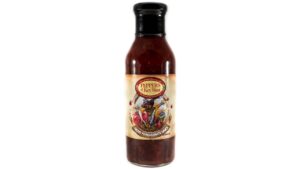
Peppers of Key West Cherry Pomegranate Grilling Sauce
Pumpkin and warming spice benefit from contrast. Peppers of Key West Cherry Pomegranate Grilling Sauce brings ripe cherry sweetness, tart pomegranate and mild chile heat that can brighten a rich pumpkin filling without competing with the pastry.
Best for: Pumpkin Empanadas
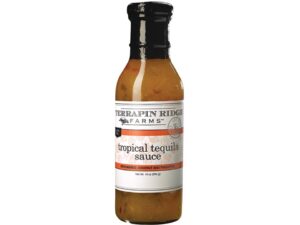
Terrapin Ridge Farm’s Tropical Tequila Sauce
Pineapple meeting pineapple might sound redundant until the supporting flavors enter the picture. Tequila notes and gentle pepper warmth give the fruit another dimension while keeping the pairing mild enough that the empanada de piña remains the star.
Best for: Pineapple Empanadas
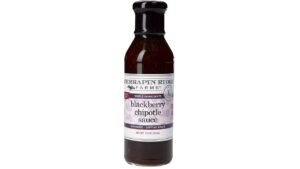
Terrapin Ridge Farm’s Blackberry Chipotle Sauce
Rich cajeta calls for something capable of cutting through concentrated milk caramel rather than simply adding more sugar. Blackberry supplies fruit acidity and depth, while chipotle introduces a smoky warmth that makes this the most contrast-driven pairing of the group.
Best for: Cajeta Empanadas
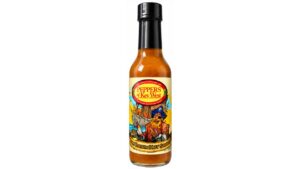
Peppers of Key West Tropical Rum, Pineapple & Raisin Hot Sauce
Guava and other tropical fruit fillings give Peppers of Key West Tropical Rum, Pineapple & Raisin Hot Sauce a natural place at the table. Pineapple reinforces the fruit, while rum and raisin contribute darker, rounder flavors that can make a simple preserve-filled pastry more complex.
Best for: Tropical-Fruit Empanadas
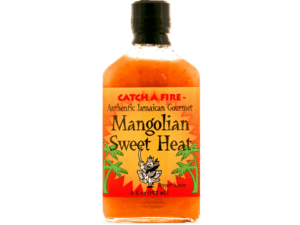
Catch a Fire’s Mangolian Sweet Heat Pepper Sauce
This is the bottle for the person who thinks dessert has been suspiciously comfortable so far. Mango provides the sweetness needed to make sense beside fruit-filled pastry, while its hotter chile character creates a pairing in which the heat is intentionally part of the experience.
Best for: Sweet-and-Hot Empanadas
THE BEST SAUCE FOR A SWEET EMPANADA ISN’T THE ONE THAT MAKES DESSERT THE HOTTEST. IT’S THE ONE THAT FINDS SOMETHING ALREADY HAPPENING INSIDE THE PASTRY—FRUIT, SPICE, CARAMEL OR ACIDITY—AND GIVES IT SOMETHING INTERESTING TO PLAY AGAINST.
Conclusion: The Best Part of an Empanada Is What You Don’t See Yet
We began at the bakery tray with a pastry that didn’t seem particularly demanding.
That was the empanada’s first trick.
Its half-moon shape tells you almost everything about how it was constructed and remarkably little about what eating it will be like. The dough might be tender or substantial. The filling might be pumpkin warmed with spice, pineapple cooked into a bright preserve, deeply caramelized cajeta or another fruit important to a particular bakery, region or family. Only the first bite settles the matter.
That hidden center is what makes sweet Mexican empanadas such a useful way to understand Mexican baking. Their history reflects adaptation rather than one untouched recipe. Their dough changes according to what the baker wants it to accomplish. Their fillings follow ingredients, regions, seasons and family preferences. Even their familiar crimped edges tell us something practical about the relationship between pastry and filling.
Yet through all that variation, the basic idea survives: fold something delicious inside dough, seal it, bake it and put it on the tray.
Perhaps that’s why the empanada feels equally comfortable in a neighborhood panadería and a family kitchen. It provides enough tradition to be recognizable and enough flexibility for another baker, another region or another generation to make it slightly differently.
So the next time a bakery tray starts acquiring more pastries than originally planned, the empanada deserves a place on it.
Pumpkin, pineapple or cajeta?
Now that is a problem worth having.
Frequently Asked Questions About Sweet Mexican Empanadas
What is a sweet Mexican empanada?
A sweet Mexican empanada is a folded pastry filled with ingredients such as pumpkin, pineapple, cajeta or fruit preserves. Doughs and fillings vary by bakery, region and family tradition.
What are Mexican sweet empanadas filled with?
Common fillings include pumpkin, pineapple, cajeta, guava, apple and other fruit preserves. The choices vary considerably across bakeries, regions and family recipes.
What is cajeta?
Cajeta is a traditional Mexican confection made by slowly cooking goat’s milk with sugar until thick and caramelized. It is used in many Mexican sweets and pastries, including empanadas.
Are Mexican empanadas always sweet?
No. Mexican empanadas can be sweet or savory. Sweet bakery versions commonly feature fruit, pumpkin or cajeta, while savory versions may contain meat, cheese or vegetables.
Are Mexican empanadas baked or fried?
Both. Many sweet empanadas found in Mexican panaderías are baked, but fried versions also exist depending on the recipe and regional tradition.
What is the difference between a Mexican empanada and a turnover?
Both can consist of filling enclosed in folded dough, but Mexican empanadas belong to distinct culinary traditions with their own doughs, fillings and regional variations. “Turnover” is a broader English-language pastry term.
What are pumpkin empanadas?
Pumpkin empanadas, or empanadas de calabaza, are filled with cooked, sweetened pumpkin or squash, often flavored with warming spices. They are particularly associated with northern Mexican and Mexican-American baking traditions.
What are pineapple empanadas?
Pineapple empanadas, or empanadas de piña, contain a thick pineapple filling or preserve. The fruit’s sweetness and acidity make it especially well suited to rich pastry dough.
Why does empanada filling need to be thick?
Thick fillings are easier for the dough to contain during baking. Too much liquid can soften the pastry, weaken the seam and cause the filling to leak.
How do you keep sweet empanadas from leaking?
Avoid overfilling, leave a clean border around the filling and seal the edges securely. Using a sufficiently thick filling also helps prevent leaks during baking.
Do sweet Mexican empanadas need to be refrigerated?
It depends on the dough and filling. Follow the storage instructions for the specific recipe, especially when the empanadas contain dairy or other perishable ingredients.
What should I order with a sweet empanada at a Mexican panadería?
Coffee or Mexican hot chocolate are natural companions. If several fillings are available, try two or three different empanadas and share them so you can compare the flavors.
🌮 Continue Your Mexican Street Food Journey
🌯 More Mexican Street Foods Worth Trying
- Pan Dulce Explained: Mexico’s Sweet Bread Tradition Beyond the Famous Concha
- Mexican Panaderías Explained: Why Every Neighborhood Bakery Is the Heart of Mexican Morning Culture
- Bolillos Explained: The Crispy Bread That Built Mexico’s Favorite Sandwiches
- Molletes Explained: Mexico’s Open-Faced Bean & Cheese Sandwich That Makes Breakfast Better
- Chilaquiles Explained: Mexico’s Crispy Tortilla Breakfast Covered in Salsa, Crema & Cheese
- Tamales Explained: The Ancient Mexican Comfort Food That Still Dominates Street Food Culture
- Pozole Explained: Mexico’s Ancient Hominy Stew Built on Corn, Chiles & Tradition
- What Is Masa? The Ancient Corn Dough Behind Authentic Mexican Street Food
🌶️ Expand Your Mexican Food Journey
- Poblano Pepper Explained: Flavor, Heat, Uses & Why It’s the Chile Behind Chiles Rellenos
- Datil Pepper Explained: Flavor, Heat, Uses & Why This Pepper Is a Florida Favorite
- Hot Sauce Heat Level Guide So You Stop Guessing and Start Handling Real Heat Like a Pro
- Best Hot Sauce for Breakfast Tacos: Wake Up Your Eggs with Heat
See More Keywords
Mexican bakery, Mexican baked goods, Mexican desserts, panadería pastries, Mexican fruit pastries, cajeta desserts, cajeta pastries, empanada fillings, sweet empanada dough, baked empanadas, fried empanadas, fruit filled pastries, guava empanadas, apple empanadas, empanadas dulces, empanadas de cajeta, Mexican baking traditions, traditional Mexican baking, Mexican bakery culture, Mexican pastry traditions, Mexican pan dulce, panadería mexicana
