
Molletes Explained: Mexico’s Open-Faced Bean & Cheese Sandwich That Makes Breakfast Better
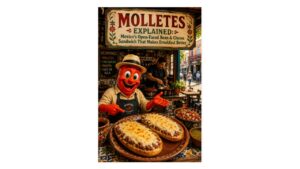
A mollete is what happens when Mexico looks at toast and decides it needs considerably more ambition.
Start with a bolillo. Split it lengthwise. Spread the cut sides generously with refried beans, cover those beans with cheese, then introduce the whole thing to enough heat that the bread begins to toast while the cheese melts across the surface. Bring it to the table hot, preferably with pico de gallo or salsa nearby, and suddenly four extremely ordinary ingredients have become breakfast.
A very good breakfast.
That simplicity is exactly what makes molletes worth understanding. There is no elaborate folding technique, no complicated filling hidden inside and no sauce-soaked transformation like the one that defines a pambazo. Everything is right there in front of you: bread, beans and melted cheese, usually accompanied by something fresh and acidic.
There is nowhere for a bad ingredient—or a bad decision—to hide.
Introduction: Breakfast Doesn’t Have to Be Complicated
Walk into the right Mexican café in the morning and breakfast can become an exercise in difficult decisions. There are eggs to consider. Chilaquiles demand attention. Plates arrive with beans, tortillas, salsa and crema. Somewhere coffee is being poured, bread is being toasted and somebody has already decided that adding chorizo before noon is entirely reasonable.
Then there are molletes.
They can look almost suspiciously simple beside everything else. A bolillo is split lengthwise into two broad halves. Refried beans are spread across the cut surfaces, cheese goes over the beans, and the bread is heated until its edges begin to toast while the cheese softens, melts and sometimes develops those browned spots that make waiting for breakfast considerably more difficult. Pico de gallo often arrives on top or alongside, introducing tomato, onion, chile and freshness to an otherwise warm, rich combination.
That is essentially the entire idea, and it works beautifully.
A classic Mexican mollete is an open-faced bread preparation built around bolillo, refried beans and melted cheese, particularly familiar as a breakfast food. The basic architecture is remarkably straightforward, which is part of what makes the dish so useful for understanding how Mexican cooks build flavor. There isn’t an elaborate filling hidden inside or a complicated technique waiting to be revealed. Everything important is sitting in plain sight.
But describing molletes as Mexican beans and cheese on toast gets us only so far. The bread matters, the beans matter and the cheese matters, but the relationship among them matters most.
The bolillo provides a sturdy wheat-bread foundation with a crust that can become crisp while the interior remains substantial enough to carry the toppings. Refried beans do much more than add protein and flavor. Spread across the cut bread, they create a soft, savory layer that connects the bread beneath them to the cheese above. The cheese brings richness and salt, but heat changes its role: once melted, it settles across the beans rather than simply sitting on top of them.
Then pico de gallo changes the direction of the bite. Warm becomes fresh and rich becomes acidic as soft beans and melted cheese meet raw tomato, onion and chile. Instead of adding more weight to an already substantial combination, the fresh topping gives all that richness somewhere to go.
That balance is one reason something that looks almost too simple to require explanation can be so satisfying. Molletes demonstrate one of the recurring strengths of Mexican cooking: ordinary ingredients don’t have to remain ordinary when each one has a clear job to do. Bread provides structure. Beans provide substance. Cheese provides richness. Fresh salsa provides contrast. Nothing needs to compete for attention because every component contributes something the others do not.
Molletes also belong naturally in the much larger family explored throughout our Mexican Street Food Beyond Tacos: Elote, Tortas, Tamales & More collection. Mexican handheld and everyday foods aren’t built exclusively around tortillas. Wheat breads—including bolillos—became important foundations for foods that developed their own identities in cafés, homes, markets and everyday meals.
Molletes take that bread tradition in perhaps its simplest possible direction: don’t close the sandwich. Leave it open and let every layer do its job.
That open construction isn’t merely a presentation choice. It determines how the bread toasts, how the cheese melts, how the beans stay connected to both and, ultimately, why such a short ingredient list can become a complete breakfast.
A MOLLETE DOESN’T NEED TO HIDE ITS INGREDIENTS. ITS GENIUS IS THAT YOU CAN SEE THE ENTIRE BREAKFAST BEFORE YOU TAKE THE FIRST BITE.
🔥 Molletes Quick Guide
What are molletes?
Molletes are a popular Mexican open-faced bread dish commonly made by splitting a bolillo lengthwise, spreading the halves with refried beans, covering them with cheese and heating them until the bread is toasted and the cheese melts. Pico de gallo or salsa is commonly served with them.
Are molletes a breakfast food?
Yes. Molletes are strongly associated with breakfast in Mexico, although their simplicity also makes them suitable for a light lunch, dinner or snack. The combination of bread, beans and cheese makes them inexpensive, filling and quick to prepare.
What kind of bread is used for molletes?
Bolillos are a classic choice. Their elongated shape makes them easy to split into open-faced halves, while their crust and substantial crumb give the beans and melted cheese a sturdy foundation.
What kind of beans go on molletes?
Refried beans are the defining choice in the familiar savory Mexican version. They should be spreadable enough to cover the bread evenly without making it excessively wet.
What cheese is used for molletes?
A good melting cheese is important because the cheese needs to soften and spread across the beans as the bread heats. Mexican preparations vary in the particular cheese used; Larousse Cocina, for example, specifies a Manchego-style cheese in its Mexico City molletes recipe.
What goes on top of molletes?
Pico de gallo is one of the most recognizable accompaniments, bringing tomato, onion, chile and freshness to the warm bread, beans and cheese. Chorizo and other additions are also common, but the basic mollete doesn’t need much more than its core ingredients to work.
What Is a Mollete? Start with the Open Bread
A sandwich usually asks you to look inside. A mollete has already shown you everything.
That distinction seems trivial until you watch what happens when the bread is left open. Splitting a bolillo lengthwise creates two broad surfaces rather than a top and bottom waiting to be reunited. The beans can be spread from edge to edge, the cheese can cover them rather than being trapped between slices, and heat can reach the cheese directly while simultaneously toasting the bread underneath. The open face changes the cooking.
Start with the bolillo. Good mollete bread needs enough structure to support a substantial layer of beans without collapsing beneath it, but structure alone isn’t enough. The cut surface should also toast pleasantly so the finished mollete doesn’t become soft bread carrying two equally soft toppings. That contrast between a lightly crisped foundation and the softer ingredients above it is one of the small details that makes such a simple preparation work.
Then come the refried beans, which are easy to underestimate because they are so familiar. Structurally, however, they may be the smartest ingredient in the entire dish. Whole beans would roll and tumble from an open piece of bread; refried beans become spreadable, settling into the irregular surface of the crumb and creating an almost continuous savory layer. They provide flavor and substance, certainly, but they also connect the architecture of the mollete: bread underneath, cheese above and beans holding the two together.
Heat completes that relationship. As the cheese warms, it changes from a separate topping into a softer layer that settles across the beans. At the same time, exposed portions of the bolillo toast and become crisper while the beans underneath grow hot. Instead of three ingredients merely being stacked together, heat begins integrating them. That is the moment a piece of bread with toppings becomes a mollete.
A fresh salsa such as pico de gallo then provides exactly the contrast that warm foundation needs. Beans and cheese are comforting but relatively rich, while toasted wheat bread contributes another warm, roasted flavor. Tomato, onion, cilantro, chile and acidity move the bite in the opposite direction, bringing freshness rather than additional weight.
This is why a classic mollete doesn’t need an enormous ingredient list. Its complexity comes from contrast rather than quantity. Bread provides structure, beans provide substance, cheese provides richness and pico de gallo provides freshness and acidity. Each ingredient has a different responsibility, which is also why adding more toppings isn’t automatically an improvement.
Chorizo can be excellent. Ham can work. Avocado, additional salsa and other toppings can all take the basic idea somewhere new. But every addition enters a dish whose original logic is already remarkably complete. The question isn’t simply whether another ingredient tastes good; it’s whether it contributes something that the bread, beans, cheese and fresh salsa aren’t already providing.
That familiar contemporary mollete is strongly associated with Mexican breakfast culture, particularly in Mexico City and central Mexico, where it belongs comfortably alongside many of the dishes explored in Mexican Street Food Breakfast Favorites Worth Waking Up Early For. But its history is more complicated than imagining that someone simply put beans and cheese on a bolillo centuries ago. The word mollete has a much older history connected to bread, while earlier foods carrying the name looked quite different from the savory breakfast most diners recognize today. The now-familiar combination of bread, refried beans, melted cheese and pico de gallo emerged much later.
That older story deserves its own chapter. For now, the most important lesson is sitting directly in front of us: a mollete is simple because it has been reduced to ingredients that know exactly what they’re supposed to do.
THE OPEN BREAD ISN’T JUST HOW A MOLLETE IS SERVED. IT’S WHAT ALLOWS BREAD, BEANS, CHEESE AND HEAT TO BECOME ONE DISH.

 🌶️ Professor Pepper Says…
When you’re making molletes, don’t treat the beans as just another topping. They are the bridge between crisp bread and melted cheese. Spread them evenly enough that most bites get all three layers, and suddenly one of Mexico’s simplest breakfasts starts making considerably more sense.
Explore Peppers of Key West hot sauces when you want to experiment with that same balance of rich breakfast food, chile flavor and finishing heat at your own table.
Mollete History: The Name Is Much Older Than the Breakfast
The mollete sitting on a café table today can look so straightforward that it is tempting to give it an equally straightforward history. Bread was available. Beans were available. Cheese was available. Surely somebody put them together long ago and the mollete simply carried on from there.
The historical record tells a more interesting story.
The word mollete is considerably older than the familiar Mexican combination of bolillo, refried beans and melted cheese. In the eighteenth century, the Diccionario de Autoridades, an early dictionary published by the Royal Spanish Academy, defined mollete as a small, generally white, round bread. Mexican cookbooks continued using the word for bread during the nineteenth century.
In other words, if we walked into a nineteenth-century Mexican café and ordered a mollete, we shouldn’t assume that a bolillo covered with refried beans and bubbling cheese would appear. The name came first. The breakfast came later. What eventually became one of Mexico’s most recognizable combinations of bread, beans and melted cheese was still waiting for its modern form to emerge.
The name came first. The breakfast came later.
That distinction matters because foods often keep old names while changing underneath them. Bread traditions evolve, ingredients move into new settings and café culture creates combinations that eventually become so familiar that the newer version begins to feel timeless. Molletes appear to have followed exactly that kind of path.
There were molletes involving beans before the modern breakfast became established, but even those shouldn’t be mistaken for what we eat today. An 1874 recipe identified by food researcher Alberto Peralta de Legarreta as Molletes de frijol blanco included ingredients such as white beans, cinnamon, pepper, lard, egg and wine. Molletes in the early twentieth century could still refer to sweeter bread preparations rather than the savory bean-and-cheese combination now associated with the name.
The recognizable modern mollete appears much later. Peralta’s research, as reported by El Financiero, places the emergence and popularization of molletes with refried beans, gratinated cheese and pico de gallo around the 1960s and 1970s, in a Mexican café culture where inexpensive, filling breakfasts made considerable practical sense. The exact individual or restaurant responsible is much harder to establish, and colorful family stories about who “invented” the dish should therefore be treated as stories rather than settled culinary history.
That relatively recent development doesn’t make molletes less Mexican or less traditional. If anything, it gives us a better example of how food traditions actually form. A dish doesn’t need an ancient origin story to become deeply embedded in everyday eating. Sometimes familiarity develops within living memory because a food solves ordinary problems exceptionally well.
Molletes certainly do that. Bolillos are inexpensive and easy to portion. Refried beans turn a staple ingredient into something spreadable and substantial. Cheese supplies richness and makes the dish feel complete, while pico de gallo or salsa brings freshness and chile back into the equation. The entire breakfast can be prepared quickly from ingredients that already belong comfortably in a Mexican kitchen.
And there is another reason to be careful about treating the modern café mollete as the only meaning of the word. Mexico still has other foods called mollete. Larousse’s Diccionario enciclopédico de la Gastronomía Mexicana, for example, records an Oaxacan wheat bread containing piloncillo, anise and sesame under the same name.
Same word. Different food tradition.
That should sound familiar by now. Mexican culinary vocabulary doesn’t always cooperate with neat definitions, particularly when old bread names travel across centuries and regions. What matters for our story is recognizing that the mollete most people now picture—open bolillo, refried beans, melted cheese and salsa—is a modern expression of a much older word rather than an unchanged centuries-old recipe.
🌶️ Professor Pepper Says…
Be suspicious when a wonderfully simple food is given an overly perfect invention story. The word mollete has centuries of history, but the bean-and-cheese breakfast we recognize today is much younger. A newer tradition is still a tradition—and sometimes knowing that makes the food more interesting, not less.
MOLLETES DIDN’T TRAVEL UNCHANGED THROUGH CENTURIES OF MEXICAN COOKING. AN OLD BREAD NAME FOUND A NEW LIFE IN THE MODERN MEXICAN CAFÉ.
Why the Bolillo Is More Than a Convenient Piece of Bread
Once we return to the modern mollete, the historical question gives way to a practical one: why does the bolillo work so well?
The shape itself is part of the answer, something that becomes much clearer in Bolillos Explained: The Crispy Bread That Built Mexico’s Favorite Sandwiches. One roll is already portioned almost perfectly for the job: split lengthwise, it becomes two broad open surfaces with enough room for beans and cheese while remaining manageable enough to pick up and eat.
But shape alone doesn’t explain the relationship.
The useful contrast is between crust and crumb. A bolillo has enough exterior structure to survive being split, topped and heated, while the interior provides a porous surface capable of accepting the beans. When that cut surface is toasted, the bread gains another layer of protection against everything being placed on top of it.
That matters because a mollete contains an unusual concentration of soft ingredients. Refried beans are soft. Melted cheese is soft. Pico de gallo contributes moisture. Put all three onto completely soft bread and the dish loses much of its textural definition.
Toasting changes the equation.
The goal isn’t to turn the bolillo into a hard cracker beneath the beans. It is to create enough firmness and toasted flavor that the bread remains recognizable beneath two rich toppings. The bite should move from lightly crisp or chewy bread into soft beans and melted cheese rather than becoming one uninterrupted soft texture.
This is also why the connection between molletes and Mexico’s larger bread tradition deserves attention. The bolillo isn’t simply a substitute for a tortilla. It creates a completely different eating experience. Mexican cooking developed an enormous vocabulary around corn and masa, but wheat bread established its own equally recognizable roles—from tortas and pambazos to the deceptively simple mollete.
The same ingredient can behave differently in each one. A torta asks bread to surround its fillings. A pambazo can ask bread to absorb chile sauce before returning to the griddle. A mollete opens the bread completely so that heat and toppings can work directly across its surface.
Three bread-based foods. Three different pieces of culinary engineering.
And because the mollete leaves that surface exposed, the bread doesn’t disappear behind the filling. You can see the toasted edges around the beans. You can feel the crust underneath the melted cheese. The foundation remains part of every bite.
That is why replacing the bolillo with any available slice of bread can produce perfectly good beans and cheese on toast without necessarily reproducing the same experience. The bread isn’t important because there is only one legally acceptable shape for a mollete. It is important because structure, crumb and toasting determine whether the toppings sit on the bread or become integrated with it.
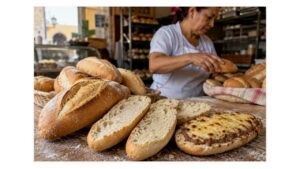
A MOLLETE MAY BE COVERED WITH BEANS AND CHEESE, BUT THE BOLILLO ISN’T JUST HOLDING BREAKFAST. IT IS BUILDING THE TEXTURE THAT MAKES THE BREAKFAST WORK.
Why Beans, Cheese and Pico de Gallo Balance Each Other
If the bolillo creates the structure, the ingredients above it create a remarkably efficient lesson in balance.
Start with the beans. Refried beans are rich enough to give the mollete substance but mild enough to carry other flavors. Their spreadable texture matters just as much as their taste: they cover the irregular surface of the bread, filling small spaces in the crumb and creating a continuous savory layer rather than a collection of loose ingredients.
Then cheese adds a different kind of richness. Larousse’s Mexico City preparation uses a Manchego-style melting cheese, while its broader gastronomic definition simply describes cheese added over refried beans and gratinated in the oven. That distinction is useful because molletes are better understood through what the cheese needs to do than through the idea that every Mexican cook must use one mandatory variety. It needs to melt well, provide salt and dairy richness, and form a warm upper layer over the beans.
At this point, the dish has become delicious but heavily weighted in one direction. Toasted wheat, beans and melted cheese are all warm, savory and comforting, which is precisely where pico de gallo earns its place.
Tomato contributes freshness and moisture, onion brings sharpness, and chile introduces flavor and heat, while cilantro and acidity make the entire combination feel brighter. Larousse notes that diners may add salsa mexicana, chile strips or another salsa according to preference, reinforcing an important point: the fresh component doesn’t merely decorate the cheese. It provides the contrast that the warm foundation needs.
The chile is especially interesting because molletes don’t require tremendous heat. A relatively mild pico de gallo can do its job beautifully as long as the fresh topping cuts through the beans and cheese rather than disappearing beneath them. For the same reason, hotter isn’t automatically better when choosing a salsa for a mollete. If enough chile is added to overwhelm the toasted bread, beans and cheese, we’ve traded balance for intensity. A better salsa lets you taste the foundation first and then gives it lift.
Variations make sense when they respect that balance. Chorizo contributes pork, spice and additional richness. Ham moves the dish toward a familiar café breakfast combination, while rajas, or strips of roasted poblano chile, can introduce another dimension of chile flavor without abandoning the basic structure. Larousse’s gastronomic dictionary records all three among variations found in central Mexico, while describing the basic mollete as particularly common in the central states and in Mexico City cafés.
None of those additions changes the lesson contained in the original. A mollete works because its ingredients aren’t trying to perform the same job. The bread provides structure, the beans provide substance, the cheese brings richness and the salsa restores freshness and contrast. Once those responsibilities are covered, additional toppings can change the personality of the mollete, but they aren’t required to make it complete.
THE BEST MOLLETE ISN’T THE ONE WITH THE MOST TOPPINGS. IT’S THE ONE WHERE TOASTED BREAD, SAVORY BEANS, MELTED CHEESE AND FRESH SALSA STILL TASTE LIKE THEY BELONG TOGETHER.
How Molletes Move from Simple Breakfast to a Meal of Their Own
Once the basic mollete makes sense, the variations become much easier to understand. They are not attempts to repair an incomplete breakfast. Bread, beans, melted cheese and fresh salsa already provide structure, substance, richness and contrast. The variations simply decide what direction to take that foundation.
Chorizo is one of the most natural additions because it brings something the basic mollete does not: deeply seasoned meat, rendered fat and the chile-and-spice character associated with Mexican chorizo. Crumbled across the beans before the cheese melts—or scattered over the finished mollete—it turns a relatively gentle breakfast into something considerably more assertive. The important thing is restraint. Enough chorizo should change the personality of the dish without burying the beans, bread and cheese underneath it.
That relationship also creates a natural connection to Chorizo Tacos That Bring Smoky Heat, Crispy Texture & Aggressive Street Taco Flavor. Chorizo behaves differently when tucked into a tortilla, but the same qualities that make it effective in tacos explain why it works so well on a mollete: a relatively small amount can contribute an enormous amount of savory flavor.
Ham takes the breakfast in another direction. Instead of adding chile and spice, it contributes saltiness and familiar café comfort. Rajas can bring the flavor of roasted poblano into the equation, while avocado introduces coolness and creaminess that works particularly well against a hot mollete topped with fresh salsa. None of these additions requires rebuilding the dish. They work because the original combination of bread, beans and cheese remains recognizable underneath them.
That distinction becomes especially useful when making molletes at home. It is easy to look through the refrigerator and begin treating the open bolillo as a platform for everything available, but eventually there is a point where the mollete’s identity becomes harder to taste. A few deliberate additions can create a variation. An uncontrolled pile of toppings can obscure the very simplicity that made the dish appealing in the first place.
The better question is not “What else can I put on this?” It is “What is this ingredient adding?”
Chorizo adds seasoned richness. Rajas—strips of roasted poblano chile—add a deeper, gently smoky chile flavor. Avocado adds cool creaminess, while a hotter salsa increases chile intensity and acidity. Each makes sense because it contributes something identifiable rather than simply making the mollete larger.
That is a useful rule well beyond breakfast: when the foundation of a dish already works, additions should create contrast or deepen flavor rather than compete with it.
🌶️ Professor Pepper Says…
Build the classic mollete first before you start raiding the refrigerator. Once bread, beans, cheese and salsa are balanced, adding chorizo, rajas or avocado becomes a choice instead of a rescue mission. The best variation still lets you taste the mollete underneath it.
THE BEST MOLLETE VARIATIONS DON’T REPLACE THE ORIGINAL IDEA. THEY GIVE THAT IDEA SOMEWHERE NEW TO GO.
From the Café Table to the Home Kitchen
Molletes feel perfectly at home in a café because nearly everything about them suits breakfast service. Bread can be split quickly, beans can be kept warm, cheese melts in minutes and salsa can be prepared ahead. There is no complicated assembly and no long cooking process between ordering breakfast and watching it arrive.
But the same efficiency that works behind a café counter makes molletes unusually forgiving at home.
Start with the bread. A fresh bolillo is ideal because its shape, crust and crumb are naturally suited to the job, but freshness does not mean the bread should remain completely soft. Giving the cut surface some heat before or during assembly helps establish the textural contrast we have been following throughout this article. The goal is not aggressive crunch. It is simply enough toasting that the bread can remain a distinct layer beneath warm beans and melting cheese.
The beans should be spreadable rather than dry or stiff. If they sit on the bread as a heavy mound, individual bites can become disproportionately bean-heavy and the cheese has difficulty forming that continuous upper layer. Spread them across most of the cut surface instead. That gives each bite a better chance of containing bread, beans and cheese together.
Then give the cheese enough heat to actually change. Merely warming grated cheese leaves the ingredients feeling assembled rather than integrated. A properly heated mollete should have cheese that has softened and spread across the beans, ideally with a few browned areas where direct heat has intensified its flavor. Those small toasted spots are not mandatory, but they are rarely unwelcome.
Fresh toppings should generally arrive afterward. Pico de gallo is at its best when its tomato, onion, chile and cilantro still provide a cool, lively counterpoint to everything underneath. Heating it along with the mollete sacrifices much of the contrast that makes it valuable in the first place.
This is also where hot sauce becomes particularly interesting.
A mollete doesn’t need hot sauce to become complete, and treating heat as mandatory would miss what the dish teaches us about balance. But once the warm foundation is finished, a few drops of the right hot sauce can emphasize chile flavor, sharpen the beans and cheese with acidity, or move an otherwise mild breakfast toward a more assertive finish.
A bright jalapeño or serrano-style sauce can reinforce the fresh chile character of pico de gallo. A deeper sauce can stand up to chorizo or roasted poblanos. More aggressive heat can work too, but only if that is genuinely what the eater wants. The goal remains the same one we established with salsa: let the chile participate in the mollete rather than erase it.

What makes this kind of breakfast particularly satisfying is that almost none of the technique announces itself. Nobody needs to explain the structural importance of spreadable beans while you are eating. You do not need to analyze the relationship between toasted crumb and melted cheese or calculate whether tomato acidity is balancing dairy richness.
You simply take a bite and it works.
That is usually a sign that the cooks who developed and popularized a food have already done the complicated thinking for us.
A GREAT MOLLETE DOESN’T TASTE LIKE A TECHNIQUE EXERCISE. IT TASTES LIKE SOMEBODY FIGURED OUT EXACTLY HOW MUCH BREAKFAST A PIECE OF BREAD COULD HOLD.
Why Molletes Deserve a Place in the Mexican Street Food Story
Molletes also help correct one of the easiest misconceptions to develop when exploring Mexican food from outside Mexico: the idea that tortillas explain almost everything.
Corn and masa are foundational to Mexican cooking, but they are not the entire story. Wheat breads developed their own enormous vocabulary of everyday foods, particularly in bakeries, cafés, markets and urban eating. Understanding that side of the cuisine is one reason Mexican Tortillas, Masa & Breads Explained: The Complete Guide to How Mexican Street Food Is Built matters so much. A bolillo is not a tortilla substitute. It creates possibilities that a tortilla does not.
A torta encloses ingredients between bread. A pambazo changes its bread by introducing sauce and the griddle. A mollete does something almost comically straightforward: it splits the bread and refuses to put it back together.
Yet that small decision changes everything.
Leaving the bolillo open exposes the toppings directly to heat and creates a broad surface for beans and cheese. It also places the finished food somewhere between sandwich, toast and plated breakfast without fitting perfectly into any of those categories. That is part of what makes Mexican everyday food so rewarding to explore. Familiar ingredients repeatedly appear in unfamiliar relationships.
The café setting matters here too. Mexico’s everyday food culture does not exist exclusively at street stands. Neighborhood bakeries, fondas, markets and cafés all contribute dishes and techniques to the larger story, and breakfast may be one of the best times to see those worlds overlap. Bread from the panadería, beans from the everyday kitchen, melting cheese and freshly prepared salsa can all meet on one plate without requiring ceremony.
Molletes are therefore not spectacular in the way that a towering torta or a chile-soaked pambazo can be spectacular. Their appeal is quieter. They show what happens when familiar ingredients are arranged intelligently and cooked just enough to change their relationship with one another.
That may also explain their staying power. Breakfast foods become beloved not merely because they are delicious once, but because people can imagine eating them repeatedly. Molletes are affordable, adaptable, filling and quick enough for an ordinary morning. They can remain simple when the day calls for simple, or accept chorizo, rajas, avocado or a favorite salsa when breakfast needs a little more ambition.
They don’t need to become complicated to become memorable.
How to Order and Eat Molletes in Mexico
By the time molletes reach the table, there is very little mystery about what they are. The bread is open, the beans and cheese are visible, and whatever salsa, pico de gallo or additional toppings the kitchen has chosen are sitting directly in front of you. What can be less obvious to a visitor is where molletes fit into the rhythm of a Mexican morning.
This is not usually a breakfast built around ceremony. Molletes make sense in the everyday environments where people want something warm and substantial without turning breakfast into an event: neighborhood cafés, casual restaurants, fondas and other places serving familiar morning foods. That accessibility is part of their identity. They can share a menu with eggs, chilaquiles and other more elaborate plates without needing to compete with them.
Ordering them is correspondingly uncomplicated. A classic order generally means the familiar foundation of split bolillo, refried beans and melted cheese, often accompanied by pico de gallo or another salsa. Depending on the restaurant, additional versions may bring chorizo, ham, rajas—strips of roasted poblano chile—or other toppings into the equation. Those variations are worth exploring, but a first-time visitor has a good reason to begin with the basic version: the classic mollete makes it much easier to understand why the dish works before deciding what else you want from it.
There is no complicated etiquette once the plate arrives, either. Molletes are often manageable enough to pick up by hand, although a heavily topped version can quickly make a knife and fork seem like excellent technology. Pico de gallo can arrive already spooned over the cheese or alongside so each diner can add as much as desired. Salsa and hot sauce can be treated similarly, allowing heat to increase bite by bite rather than overwhelming the entire breakfast from the beginning.
That last point is especially useful for travelers learning their way around Mexican chile heat. A salsa placed beside the plate is an invitation to taste, not a challenge that has to be conquered. Try a little first. Notice whether it is primarily fresh and acidic, roasted and earthy, or genuinely hot, then decide how much belongs on the next bite.
The same approach is useful far beyond molletes. Mexican Street Food Markets Explained: How to Order Like a Local and Find the Best Food Fast explores the broader habit of watching how a place serves its food, understanding what is already provided and using salsa and condiments to finish a dish rather than automatically changing it before tasting.
Molletes make that lesson particularly easy because the starting point is so transparent. Take a bite while the cheese is still warm. Taste the toasted bolillo, beans and cheese together. Add some pico de gallo. Try the salsa. Then decide whether you want more chile, more acidity or nothing else at all.
You aren’t searching for the “correct” amount of salsa.
You’re finding the balance you like.
THE BEST WAY TO UNDERSTAND A MOLLETE IS ALSO ONE OF THE BEST WAYS TO UNDERSTAND MEXICAN SALSA: TASTE THE FOOD FIRST, THEN LET THE CHILE TAKE IT WHERE YOU WANT TO GO.
Molletes, Tortas and Other Mexican Bread-Based Foods
Once molletes enter the larger Mexican food conversation, an obvious question appears: are they basically open-faced tortas?
Not quite.
The comparison is useful because both begin with Mexican wheat bread, particularly the bolillo, but they ask that bread to perform very different jobs. A torta uses the roll as a container. It surrounds meats, cheese, beans, avocado, chiles and other fillings, creating a sandwich whose ingredients are compressed between two pieces of bread. The enormous range explored in Tortas Loaded with Meat, Melted Cheese & Street Food Flavor That Hits Hard demonstrates just how many directions that basic sandwich construction can take.
A mollete deliberately abandons the enclosure. Once the bolillo is split, the halves remain separate, creating exposed surfaces that can be covered with beans and cheese and placed directly beneath heat. The difference is not merely whether somebody remembered to put the top back on. Opening the bread changes the way the food cooks.
That makes molletes useful for understanding other Mexican bread-based foods as well. Consider the pambazo. Its identity depends partly on what happens to the bread before the sandwich is finished: chile sauce changes the exterior, and contact with the griddle changes it again. A torta ahogada takes another route, allowing sauce to become such an important part of the sandwich that Guadalajara’s famous version is defined by being “drowned.”
Molletes need neither transformation. Their bolillo remains recognizable as bread throughout the process. What changes is the cut surface, where toasting, beans and melting cheese create the dish.
This is why lumping all of these foods together as “Mexican sandwiches” misses much of what makes them interesting. Mexican bread cookery isn’t simply a collection of different fillings placed into similar rolls. The bread itself can be enclosed, toasted, soaked, sauced or left open, and each decision produces a different eating experience.
That broader bread tradition is explored in Mexican Tortillas, Masa & Breads Explained: The Complete Guide to How Mexican Street Food Is Built, where wheat breads sit alongside the corn and masa foundations that are more immediately associated with Mexican food. Molletes give us one of the clearest examples of why that distinction matters. Replace the bolillo with a tortilla and you haven’t merely changed the carbohydrate. You have changed how the entire dish is built, cooked and eaten.
The comparison also helps explain why molletes deserve their own identity rather than being treated as unfinished tortas. A torta becomes complete when the sandwich is assembled and closed. A mollete becomes complete precisely because it stays open.
🌶️ Professor Pepper Says…
When two Mexican foods use the same bread, don’t assume the bread is doing the same job. A torta encloses, a pambazo absorbs and returns to the griddle, and a mollete stays open to the heat. Sometimes the technique tells you more about a dish than the ingredient list does.
MEXICO’S BREAD-BASED FOODS AREN’T DIFFERENT JUST BECAUSE OF WHAT GOES ON THE BREAD. THEY’RE DIFFERENT BECAUSE OF WHAT COOKS DO WITH THE BREAD ITSELF.
🌶️ Recommended Peppers of Key West Products for Molletes
Molletes don’t need extreme heat, which makes them particularly good partners for hot sauces chosen for flavor first. The basic breakfast already has plenty of richness from refried beans and melted cheese, so the most useful sauces bring chile character, acidity or another contrasting flavor rather than simply trying to overpower the plate.
That also means the best choice can change with the mollete. A classic bean-and-cheese version benefits from a different finishing sauce than one covered with chorizo, roasted poblanos or avocado.
Product Pairing Quick Guide
- Classic Bean & Cheese Molletes → Peppers of Key West Jalapeño Garlic Hot Sauce
- Chorizo Molletes → Peppers of Key West Cayenne Pepper Hot Sauce
- Molletes with Rajas → Peppers of Key West Serrano Hot Sauce
- Molletes with Avocado → Peppers of Key West Habanero Hot Sauce
- Breakfast for a Crowd → Peppers of Key West 5 Sauce Heat Collection
The advantage of serving hot sauce at the table is choice. The cook can build the mollete around bread, beans and cheese, keep the pico de gallo fresh and balanced, and allow everyone eating breakfast to decide how much additional chile belongs on top.
Best Peppers of Key West Hot Sauces for Molletes
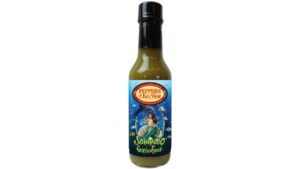
Peppers of Key West Jalapeño Garlic Sauce
For a classic mollete, Jalapeño Garlic is the natural starting point. Its jalapeño character adds approachable chile flavor while garlic gives the refried beans another savory dimension. It brings more personality to the melted cheese without turning a beautifully simple breakfast into a heat challenge.
Best With: Classic bean & cheese molletes, pico de gallo, eggs, avocado
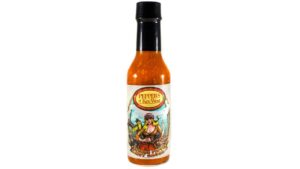
Peppers of Key West Cayenne Pepper Hot Sauce
Chorizo already brings plenty of seasoning and richness, so Cayenne Pepper Hot Sauce works best as a bright finishing accent. A few drops cut through the melted cheese and seasoned pork while adding enough pepper heat to make the chorizo stand out without overwhelming the toasted bolillo underneath.
Best With: Chorizo molletes, breakfast potatoes, eggs, refried beans
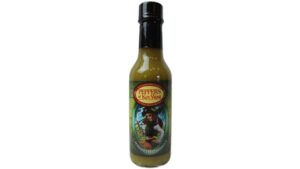
Peppers of Key West Serrano Pepper Hot Sauce
Molletes topped with rajas already have the deeper flavor of roasted poblano chile. Serrano Pepper Hot Sauce continues that chile story with a livelier, more assertive pepper finish, creating contrast between the roasted poblano, creamy beans and melted cheese rather than introducing an unrelated flavor.
Best With: Molletes with poblano rajas, grilled peppers, beans, melted cheese
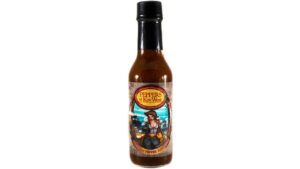
Peppers of Key West Habanero Pepper Hot Sauce
Avocado gives us room to turn up the heat. Its cool, creamy richness provides a natural counterpoint to habanero, while the beans and melted cheese give the hotter sauce plenty of substance to work against. Start with a few drops and let the heat build without losing the mollete underneath.
Best With: Avocado molletes, pico de gallo, eggs, breakfast sandwiches

Peppers of Key West 5 Sauce Heat Collection
A platter of molletes is made for experimenting, and the 5 Sauce Heat Collection lets everyone decide how far to take the chile. The collection moves through Cayenne, Jalapeño, Habanero, Ghost and Carolina Reaper, making it particularly useful when breakfast includes different toppings—or diners with very different definitions of “hot.”
Best With: Mollete breakfast platters, brunch, family-style breakfasts, hot sauce tasting
A GOOD HOT SAUCE SHOULDN’T MAKE YOU FORGET YOU’RE EATING A MOLLETE. IT SHOULD MAKE THE NEXT BITE TASTE EVEN MORE LIKE ONE.
Conclusion: Simple Breakfast, Smarter Than It Looks
Molletes never needed a dramatic reveal. From the beginning, everything that makes the dish work has been sitting in plain sight.
The bolillo provides structure and develops toasted contrast beneath the softer toppings. Refried beans spread across that bread rather than simply resting on it, creating both substance and the connection between bread and cheese. Heat melts the cheese into the beans, while pico de gallo introduces the freshness, acidity and chile character that keep all that warmth and richness from becoming monotonous.
Even the history follows a similar lesson about looking more closely. Mollete is an old word, but the familiar Mexican breakfast attached to it is considerably younger than the name. Rather than diminishing the tradition, that evolution shows how everyday foods actually become traditions: ingredients, techniques and eating habits come together in a form useful enough and delicious enough that people keep ordering it.
Molletes also give us another reason to look beyond tortillas when exploring Mexican food. Bolillos, panaderías, cafés and other wheat-bread traditions belong to the story too, and an open-faced breakfast of beans and cheese may be one of the simplest places to see why.
Perhaps that simplicity is ultimately the point. Molletes don’t become memorable because somebody kept adding ingredients until breakfast became impressive. They become memorable because bread, beans, cheese and salsa were given different jobs and allowed to do them well.
SOMETIMES THE SMARTEST BREAKFAST IS THE ONE THAT KNOWS WHEN IT ALREADY HAS ENOUGH.
Frequently Asked Questions About Molletes
What are Mexican molletes?
Mexican molletes are open-faced bolillo halves traditionally spread with refried beans, covered with cheese and heated until the cheese melts. Pico de gallo or another fresh salsa commonly accompanies them, particularly in the familiar central Mexican café-style preparation.
Are molletes eaten for breakfast in Mexico?
Yes. Molletes are strongly associated with breakfast and casual café eating, especially in Mexico City and central Mexico. Their combination of bread, beans and cheese makes them substantial enough for breakfast without requiring an elaborate preparation.
Are molletes the same as tortas?
No. Both can use bolillo-style bread, but their construction is fundamentally different. A torta encloses fillings between bread, while a mollete leaves the split bread open so beans and cheese can be heated directly on its surface.
What kind of bread is used for molletes?
Bolillo is the bread most closely associated with the classic Mexican mollete. Its crisp crust, sturdy shape and relatively airy crumb make it particularly well suited to supporting beans and melted cheese without disappearing underneath them.
What kind of beans are used for molletes?
Refried beans are traditional. Black or pinto beans can work depending on regional and household preference, but texture is particularly important: the beans should be soft and spreadable enough to form an even layer across the bread.
What cheese is traditionally used on molletes?
There isn’t one cheese that every Mexican mollete must use. Melting cheeses are the important category, and Manchego-style cheese is one documented choice in Mexico. The cheese should melt readily over the beans and ideally develop a few lightly browned areas under direct heat.
What is served on top of molletes?
Pico de gallo—tomato, onion, chile and usually cilantro—is one of the most familiar accompaniments. Other salsas can also be served alongside, while variations may include chorizo, ham, avocado or rajas, strips of roasted poblano chile.
Are molletes spicy?
Not necessarily. The basic combination of bolillo, refried beans and melted cheese is mild. Most of the chile heat comes from pico de gallo, salsa, rajas or hot sauce, which means diners can usually control how spicy the finished breakfast becomes.
Can you make molletes without bolillos?
Yes, although the result will change depending on the bread. A sturdy roll with a crispable crust and open crumb can reproduce some of the same characteristics, but bolillo contributes an important part of the traditional texture and Mexican bread identity.
What’s the difference between a mollete and beans and cheese on toast?
At the broadest level, they are certainly related ideas. What distinguishes the familiar Mexican mollete is its culinary context and recognizable construction: Mexican bolillo bread, refried beans, melting cheese and typically a fresh salsa such as pico de gallo. Calling it simply beans and cheese on toast describes the ingredients without explaining the food tradition.
Where did molletes originate?
The answer depends on what we mean by mollete. The word has centuries of history as a name associated with bread, while older Mexican preparations called molletes were quite different from today’s breakfast. The familiar savory combination of bolillo, refried beans, melted cheese and pico de gallo appears to have become widely established much later, particularly during the twentieth century. Claims assigning the modern dish to one definitive inventor should therefore be treated cautiously.
Can molletes be a full meal?
Absolutely. Even the classic version combines bread, beans and cheese into a substantial breakfast, while additions such as chorizo, ham, avocado or roasted poblano can make it considerably more filling. A pair of bolillo halves with salsa and coffee can easily function as the main event rather than a side dish.
🌮 Continue Your Mexican Street Food Journey
🌯 More Mexican Street Foods Worth Trying
- Tortas Loaded with Meat, Melted Cheese & Street Food Flavor That Hits Hard
- Bolillos Explained: The Crispy Bread That Built Mexico’s Favorite Sandwiches
- Mexican Panaderías Explained: Why Every Neighborhood Bakery Is the Heart of Mexican Morning Culture
- Mexican Street Food Breakfast Favorites Worth Waking Up Early For
- Pambazos Explained: Mexico’s Salsa-Soaked Sandwich That Eats Like a Full Meal
- Tortas Ahogadas Explained: Guadalajara’s Famous Drowned Sandwich That Every Food Lover Should Try
- Conchas Explained: Mexico’s Most Famous Sweet Bread and the Bakery Tradition Behind It
- Pan Dulce Explained: Mexico’s Sweet Bread Tradition Beyond the Famous Concha
🌶️ Expand Your Mexican Food Journey
- Hot Sauce Heat Level Guide So You Stop Guessing and Start Handling Real Heat Like a Pro
- Best Taco Sauce vs Hot Sauce Guide (Differences, Uses, Heat Levels & Which Is Better?)
- Best Hot Sauce for Breakfast Tacos: Wake Up Your Eggs with Heat
See More Keywords
Mexican breakfast dishes, traditional Mexican breakfast foods, Mexico City breakfast, central Mexico breakfast, Mexican café breakfast, Mexican bread dishes, Mexican bread breakfast, open-faced Mexican sandwich, Mexican beans on toast, refried bean breakfast, bolillo breakfast, toasted bolillo, bolillo with beans and cheese, melted cheese breakfast, pico de gallo breakfast, salsa mexicana, Mexican breakfast salsa, chorizo molletes, molletes with chorizo, molletes with avocado, molletes with rajas, roasted poblano rajas, Mexican melting cheese, Mexican panadería bread, Mexican wheat bread, traditional bolillo bread, savory Mexican breakfast, hot sauce for Mexican breakfast
