
Cuernitos Explained: Mexico’s Buttery Bakery Favorite That Makes Every Breakfast Better
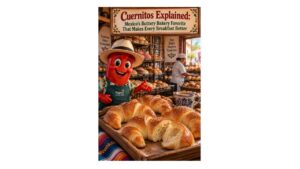
There are certain decisions you should never make while hungry.
Walking into a Mexican panadería and promising yourself you’ll buy only one thing is one of them.
The conchas get your attention first. An oreja looks suspiciously good beside a cup of coffee. Maybe there are empanadas nearby, still hiding pumpkin, pineapple or cajeta beneath their browned crusts.
And then you notice the cuernitos.
Golden, curved and tucked into neat rows, they look familiar enough that you might think you already know what you’re looking at.
A croissant.
Close.
But don’t hand France the bakery tray just yet.
The Mexican cuernito may owe part of its story to European crescent-shaped pastries, but generations of Mexican bakers have turned that familiar horn into something distinctly their own. Depending on the bakery, a cuernito can be soft and bread-like, rich and buttery, delicately flaky or substantial enough to split and fill. Different bakers may use different doughs, fats and techniques, which means the familiar horn shape doesn’t always predict the pastry waiting inside.
That makes the cuernito a perfect next stop on our Mexican bakery tray.
Because this isn’t really a story about Mexico copying the croissant.
It’s a story about what happens after Mexico gets hold of an idea.
Introduction: The Cuernito Looks Familiar Until You Take a Bite
The name gives away the shape. Cuerno means horn in Spanish, while cuernito gives us the affectionate diminutive—essentially a little horn. Curve the ends of a rolled piece of dough toward one another and the name suddenly requires very little explanation. The shape can also create the wrong expectation, however, because a cuernito that looks remarkably like a croissant from across the bakery case doesn’t necessarily behave like one when you tear it open.
A classic French croissant is built around lamination, with repeated layers of dough and butter folded and rolled so that the oven transforms them into an airy interior surrounded by crisp, delicate layers. Break a good croissant open and that internal structure is part of the experience. Pick up something labeled cuernito in a Mexican panadería, however, and you shouldn’t automatically expect the same pastry simply because the silhouette looks familiar.
Mexican bakery versions can vary considerably. Some are flaky and clearly show their European ancestry, while others are softer, denser or more bread-like. Some emphasize butter; others traditionally use different fats. Mexican culinary references describe several kinds of cuerno, including versions made with dough resembling puff pastry, cuernos de manteca prepared with lard, and other variations made with nuts, cookie-like doughs or regional bread doughs. That variation isn’t a problem we need to solve; it’s the lesson. Mexican bakery names don’t always point toward one nationally standardized formula. They can describe a recognizable shape or family of pastries while individual bakeries preserve their own doughs, fats, techniques and traditions.
The cuernito gives us the horn. The baker decides what kind of horn it will be.
That flexibility makes the cuernito part of a much larger Mexican food story. As we explore in Mexican Street Food Beyond Tacos: Elote, Tortas, Tamales & More, some of Mexico’s most revealing everyday foods aren’t defined by one rigid recipe so much as by what generations of cooks and bakers have done with an adaptable idea. The bakery case offers an especially good example because recognizable shapes can survive even while the dough, texture and way a bread is eaten continue to evolve.
That idea runs throughout Pan Dulce Explained: Mexico’s Sweet Bread Tradition Beyond the Famous Concha. Mexican pan dulce isn’t a collection of identical recipes produced from one national bakery manual. It is a living assortment of breads and pastries shaped by European baking traditions, Mexican ingredients, regional preferences and generations of neighborhood bakers. The cuernito belongs comfortably within that world: recognizable enough that you can spot it across the bakery, but flexible enough that two bakeries may give you noticeably different experiences beneath that familiar curved exterior.
Few pieces on the tray demonstrate that adaptability as neatly as the little horn sitting beside your coffee.
THE CUERNITO MAY HAVE INHERITED ITS CRESCENT SHAPE FROM EUROPEAN BAKING, BUT MEXICAN PANADERÍAS TURNED THAT SHAPE INTO A FAMILY OF PASTRIES WITH THEIR OWN TEXTURES, INGREDIENTS AND EVERYDAY PLACE AT THE BREAKFAST TABLE.
⚡ Quick Guide: Mexican Cuernitos at a Glance
What is a Mexican cuernito?
A cuernito is a horn- or crescent-shaped Mexican bakery bread or pastry. Depending on the bakery and regional tradition, it may be soft and bread-like, rich and buttery, or considerably more flaky.
What does cuernito mean?
Cuernito means “little horn” in Spanish, a reference to the curved shape that gives the pastry its recognizable appearance.
Is a Mexican cuernito the same as a French croissant?
Not necessarily. Some cuernitos clearly reflect European laminated-pastry traditions, but Mexican versions can use different doughs, fats and techniques and may be softer, denser or more bread-like than a classic French croissant.
Are cuernitos sweet?
Many bakery cuernitos are mildly sweet rather than intensely sugary. That restrained sweetness is part of their versatility, allowing them to work with coffee at breakfast or with both sweet and savory fillings.
How are cuernitos eaten in Mexico?
They can be eaten plain with coffee or hot chocolate, enjoyed with something sweet, or sliced and filled. More substantial versions work particularly well with savory fillings such as ham and cheese.
Why are cuernitos popular for breakfast?
They occupy a useful middle ground: buttery and satisfying without necessarily being dessert-sweet. A cuernito can be a simple bread beside coffee or become a more substantial breakfast once it is filled.
Why a Cuernito Isn’t Just a Mexican Croissant
Put a cuernito and a croissant beside each other and your eyes will notice the family resemblance before your mouth notices the difference. Both can be rolled into a curved horn, both can carry buttery richness, and both seem perfectly comfortable beside a cup of coffee. But judging them entirely by silhouette misses what happened when crescent-shaped European baking traditions entered the much broader world of Mexican panadería culture.
The classic croissant developed around a very particular technical achievement: lamination. Butter is physically arranged between repeated layers of dough so that, during baking, steam helps separate those layers and creates the airy interior and crisp exterior associated with the pastry. The structure isn’t incidental to the croissant. It is one of the things that defines it.
The Mexican cuernito doesn’t always operate under such narrow rules. Some versions use laminated or laminated-style dough and produce the flaky texture a croissant eater might expect. Others move toward richer bread doughs and emerge softer, tighter and more substantial. Different fats can change both flavor and texture, while the intended use of the finished bread can influence what kind of dough makes sense in the first place. A cuernito meant to accompany coffee doesn’t necessarily need to behave exactly like one destined to be sliced open and filled.
That difference becomes obvious at the table. A highly laminated pastry rewards delicacy: its exterior flakes, its layers separate and enthusiastic squeezing can leave half the evidence on your shirt. A softer cuernito can be much more forgiving. It can be pulled apart and dipped into coffee, spread with something sweet or sliced through the middle to hold a savory filling without immediately collapsing into buttery confetti.
 🌶️ Professor Pepper Says…
Don’t judge a cuernito by how many flaky layers you can count. Mexican bakeries make different styles, and a softer, tighter crumb isn’t necessarily a failed croissant. It may be exactly the cuernito that baker intended to make.
Once we stop asking whether every cuernito measures up to the technical definition of a French croissant, a much more interesting set of questions appears. What did this baker want the dough to accomplish? Should it flake delicately or remain soft? Should it disappear beside coffee or provide enough substance for breakfast? Should it be eaten plain, spread with something sweet or sturdy enough to become a sandwich?
Those choices reveal why the cuernito deserves to be understood on its own terms. The crescent may tell us where part of the story began, but it doesn’t tell us where Mexican bakers took it.
A CUERNITO AND A CROISSANT MAY SHARE A SILHOUETTE, BUT THEY DON’T HAVE TO SHARE THE SAME RULES. THE MEXICAN CUERNITO BECAME ITS OWN BAKERY FAVORITE BECAUSE BAKERS COULD CHANGE WHAT HAPPENED INSIDE THE DOUGH WHILE KEEPING THE LITTLE HORN RECOGNIZABLE.
How the Cuernito Became Part of the Mexican Panadería
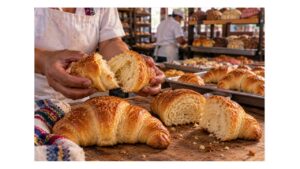
The cuernito’s European ancestry matters, but only because it gives us a starting point. Mexican culinary references connect the cuerno directly to the French croissant, yet the version found in Mexican bakeries didn’t remain confined to one imported formula. Once the curved pastry became part of the Mexican panadería, bakers began doing something Mexican baking does remarkably well: preserving a recognizable form while changing what could happen inside it.
That transformation makes more sense when the cuernito is viewed as part of Mexico’s larger bread tradition rather than as an isolated pastry. Wheat itself arrived with Spanish colonization, and later European baking influences contributed additional techniques, equipment and pastry traditions. Over generations, those influences were absorbed into a bakery culture that developed an extraordinary vocabulary of shapes, names and doughs. As we explore in Mexican Panaderías Explained: Why Every Neighborhood Bakery Is the Heart of Mexican Morning Culture, the neighborhood panadería became a place where breads from different historical origins could settle into everyday Mexican life.
The cuernito fits beautifully into that process because its most recognizable characteristic is also its easiest one to preserve: the horn.
A baker can change the richness of the dough, the type of fat, the degree of layering or even the intended use of the finished bread and still curve the ends into a shape customers recognize. Larousse describes the cuerno as one of the commonly used forms in Mexican baking and notes that it appears in different styles throughout the country’s bakeries. The most common version uses a dough similar to hojaldre, but that is only the beginning of the family.
That helps explain something important about the bakery case. Two breads can share a name without being identical, just as two bakeries can preserve the same tradition without producing exactly the same pastry.
THE CUERNITO DIDN’T BECOME MEXICAN BECAUSE BAKERS FORGOT HOW A CROISSANT WAS SUPPOSED TO BE MADE. IT BECAME MEXICAN BECAUSE THE HORN SHAPE WAS FLEXIBLE ENOUGH FOR BAKERS TO MAKE IT THEIR OWN.
🌶️ Add a Little Sweet Heat to the Breakfast Table
Cuernitos don’t need hot sauce to be delicious, but their buttery richness creates plenty of room for sweet heat when breakfast calls for it. Explore Peppers of Key West hot sauces for everything from fruit-forward pairings with bakery breads to brighter chile heat for ham, cheese and egg-filled breakfasts.
Butter, Manteca and Why the Dough Changes the Cuernito
The title of this article calls the cuernito buttery, and many versions certainly deliver that rich bakery flavor. But if we want to understand Mexican cuernitos rather than force every one of them into a croissant-shaped box, we need to make room for another important word: manteca.
In Spanish, the terminology surrounding fats can vary by place and context, but in traditional Mexican baking manteca de cerdo means lard. Larousse specifically documents cuernos de manteca in Mexican towns and provincial communities where the dough is prepared with pork lard rather than relying exclusively on butter. Mexican pan de manteca more broadly belongs to an extensive tradition of breads made with lard-based doughs, with cuernos among the many shapes produced from them.
Changing the fat changes more than the ingredient list. Butter contributes its characteristic dairy flavor and behaves in particular ways when incorporated into dough or arranged between layers. Lard has different physical properties and produces its own texture and richness. A baker working with one isn’t simply making a cheaper or more expensive version of something designed for the other; the choice can become part of a distinct bread tradition.
The same flexibility appears in the Mexican use of hojaldre. The word often brings puff pastry to mind, but Mexican culinary terminology is broader than a single textbook definition. Larousse describes hojaldre as a layered wheat-flour dough used widely in Mexico while also noting regional versions that can be softer and spongier or substitute pork or vegetable fat for butter. That is particularly useful context for the cuernito because the most common Mexican cuerno is described as being made with a dough similar to hojaldre, rather than requiring one universally standardized laminated dough.
This is where the bakery case becomes more interesting than a recipe chart. The glossy golden horn in front of you might have a noticeably layered interior. The next bakery’s version may be softer and more bread-like. Somewhere else, the richness may come partly from lard. All three can still participate in the broader cuernito tradition because the Mexican bakery has historically allowed multiple dough systems to arrive at that recognizable shape.
That doesn’t mean technique stops mattering.
It means the technique has to serve the cuernito the baker is trying to make.
How Bakers Turn Dough into the Familiar Little Horn
Whatever dough a bakery chooses, shaping is where the name finally becomes visible. A portion of dough is rolled and formed so that its ends create the curved silhouette associated with a horn. That shape is simple enough to recognize from across the bakery but useful enough to accommodate remarkably different doughs.
With a layered dough, shaping also influences how those layers expand and separate in the oven. With a softer bread dough, the same basic form can rise into something plumper and more substantial. The baker has to account for fermentation, expansion and the behavior of the chosen fat, because a perfectly shaped raw cuernito still has to survive the oven looking like a cuernito when it comes back out.
The shape isn’t merely decorative. Its thicker center gives the bread substance while the narrowing ends create a different ratio of crust to crumb from one bite to the next. Depending on the dough, those tips may become slightly crisper while the center remains softer and richer. The result is a bread whose geometry contributes to the way it eats, even when the exact recipe changes from bakery to bakery.
And Mexican bakers have pushed that geometry much further than the standard crescent suggests.
Larousse records cuernos de nuez, for example, made with chopped walnuts between the layers and without the ends twisted into the familiar curved points. It also documents a cookie-dough version with jam in the center and another cuerno made from pan español or pan de agua dough. In Oaxaca’s Valles Centrales, particularly around San Antonio near Ocotlán, a regional version is made from a simple flour-and-water dough related to other locally shaped breads.
Those aren’t curiosities that undermine our definition of a cuernito. They help explain it.
The farther we look, the harder it becomes to define the Mexican cuernito by a precise number of butter layers, a single crumb structure or one prescribed dough. What survives across the variations is the bakery’s idea of the horn—and the willingness of bakers to reinterpret it.
🌶️ Professor Pepper Says…
When a Mexican bakery gives you a softer cuernito than you expected, don’t assume something went wrong. Look at the dough, the fat and the way the bread was intended to be eaten. Different textures can represent different bakery traditions rather than different levels of skill.
That also explains why learning about Mexican breads one at a time eventually teaches us something much larger about the panadería itself. The names on the bakery racks are useful guides, but they aren’t always rigid technical specifications. A bread can travel between regions, bakeries and generations while retaining enough of its shape and identity to remain recognizable.
The cuernito may be one of the clearest examples because its identity is visible before you ever taste it.
KEEP THE HORN, AND THE BAKER HAS ROOM TO CHANGE ALMOST EVERYTHING ELSE.
From Pan Dulce to Ham and Cheese: The Cuernito Has Two Personalities
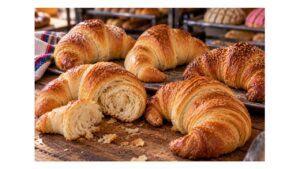
For all the attention we’ve given the dough, the most practical reason for the cuernito’s staying power may be what happens after it leaves the bakery tray. It can simply be eaten as pan dulce. A fresh cuernito beside coffee, café con leche or Mexican hot chocolate doesn’t require much explanation or decoration. Its mild sweetness and richness are enough, particularly in the morning when the goal isn’t necessarily an elaborate breakfast but something warm, familiar and satisfying.
The same restraint that makes the cuernito comfortable beside coffee also gives it another advantage: it can cross into savory territory without fighting the filling. Split a substantial cuernito through the middle and suddenly the little horn becomes useful bread for ham and cheese. Larousse notes that cuernos, although eaten as pan de dulce, can also be filled with ham and cheese or salad, while smaller cuernitos are commonly eaten as snacks. That seemingly small detail tells us a great deal about why the bread belongs so comfortably in everyday Mexican eating.
A heavily sugared pastry has already decided what role it wants to play. The cuernito can leave the decision open. At breakfast, that might mean eating one plain while drinking coffee. Later, it might mean a small filled cuernito eaten as a tentempié—something to hold you over between larger meals. A larger, softer version can accommodate savory ingredients without losing the richness that made the bread appealing in the first place.
That versatility is where the title of this article begins to make sense. The cuernito doesn’t make breakfast better because it is Mexico’s answer to the croissant. It makes breakfast better because it doesn’t insist on being only one thing. It can be buttery without being excessively sweet, familiar without being standardized, and substantial enough to move from the bread basket into the center of the meal. The bakery tray introduced us to the shape; breakfast shows us what Mexico learned to do with it.
A GOOD CUERNITO DOESN’T HAVE TO CHOOSE BETWEEN PAN DULCE AND BREAKFAST BREAD. ITS GREATEST STRENGTH MAY BE THAT IT CAN COMFORTABLY BE BOTH.
Why Cuernitos Feel So at Home at the Mexican Breakfast Table
Morning in a Mexican panadería has its own rhythm. The racks are fuller than they will be later in the day, trays move between the bakery and the sales floor, and customers make choices that don’t necessarily resemble what an American restaurant menu would call breakfast. A concha may leave with someone headed to work. A bolillo may be destined for something savory. Pan dulce disappears into paper bags while coffee waits somewhere nearby.
The cuernito fits easily into that routine because it asks very little of the person eating it. Plain, it is already rich enough to accompany coffee. Split and filled, it can become considerably more substantial. Smaller versions can serve as a quick bite when a larger meal isn’t necessary. That flexibility makes more sense when we stop thinking of breakfast exclusively as a composed plate and start thinking about the foods people can actually pick up, carry, share and eat as the morning unfolds.
That is part of the broader world explored in Mexican Street Food Breakfast Favorites Worth Waking Up Early For. Mexican morning food can include substantial dishes such as chilaquiles and regional specialties, but it also includes the quieter daily relationship between neighborhood bakeries, fresh bread and hot drinks. Not every memorable breakfast arrives covered in salsa. Sometimes it comes in a paper bag.
The cuernito is particularly suited to that kind of morning because its sweetness generally doesn’t dominate the experience. Beside café de olla, café con leche or hot chocolate, the bread brings richness while the drink supplies warmth and contrast. Dip the end into coffee and the firmer exterior begins to soften; tear through the thicker center and there is enough crumb to make a relatively simple piece of bread feel satisfying.
Fill it, and the experience changes again.
Ham and cheese are an especially natural combination because they take advantage of the cuernito’s mild richness rather than competing with it. The bread contributes softness and fat, the ham brings salt and savoriness, and the cheese turns a bakery item into something closer to a small meal. Other fillings can work, but the important point isn’t assembling a catalog of cuernito sandwiches. It is recognizing that a bread capable of moving this easily between sweet and savory has more opportunities to become part of everyday eating.
A neighborhood bakery doesn’t succeed by producing only spectacular breads for special occasions. Its racks also need the dependable pieces people return for—the breads that work with coffee, travel easily, satisfy without ceremony and can be eaten differently depending on what the morning requires.
The cuernito can do all of those things without losing its identity.
SOMETIMES THE MOST IMPORTANT BREAD IN THE BAKERY ISN’T THE ONE THAT DEMANDS THE MOST ATTENTION. IT’S THE ONE THAT FITS SO NATURALLY INTO EVERYDAY LIFE THAT PEOPLE KEEP FINDING NEW REASONS TO PUT IT ON THE BREAKFAST TABLE.

The Cuernito Is Also a Reminder That Pan Dulce Is Bigger Than the Concha
Ask someone outside Mexico to picture pan dulce and there is a good chance the first image in their head will be a concha. That’s understandable. With its shell-patterned topping and bright variations, the concha has become one of the most recognizable symbols of Mexican baking.
But walk along the racks of a good panadería and the limitation of that picture becomes obvious.
Mexican bakery culture is filled with breads whose identities come from different things. Some are recognized by toppings, others by fillings, twists, braids, layers, shapes or the way a particular dough is handled. Names such as orejas, moños, puerquitos and cuernos turn the bakery case into a vocabulary of forms as much as flavors. Understanding those breads one at a time is one of the best ways to appreciate how much diversity is hiding beneath the broad label pan dulce.
The cuernito contributes something particularly useful to that larger picture because it doesn’t depend on an elaborate topping or brightly colored decoration to announce itself. Its identity is built primarily into its silhouette. Remove the icing, sugar patterns and fillings entirely and the curved little horn can still tell you what family of bread you’re looking at.
That makes the cuernito almost the opposite of a concha visually. A concha announces itself from the surface. A cuernito tells its story through the dough and the way the baker shapes it.
Neither approach is more authentically Mexican than the other. Together, they demonstrate how many different ideas Mexican bakers have turned into recognizable breads.
🌶️ Professor Pepper Says…
When you visit a Mexican panadería, don’t choose every bread by its topping. Look at the shapes too. Bakers often use twists, horns, ears, shells and other recognizable forms as part of the bread’s identity.
Once you begin looking at the bakery that way, the rack becomes more interesting. The cuernito isn’t merely the pastry that resembles something you’ve seen in France. It becomes one member of a much larger Mexican visual language of bread—one where a shape can survive for generations even as individual bakers continue changing what goes into it.
THE CONCHA MAY BE MEXICO’S MOST FAMOUS PAN DULCE, BUT THE CUERNITO HELPS EXPLAIN WHY THE PANADERÍA CAN NEVER BE UNDERSTOOD THROUGH ONE BREAD ALONE.
How to Choose a Good Cuernito at a Panadería
Standing in front of a full bakery rack, the best cuernito isn’t necessarily the one with the most dramatic layers or the deepest shine. By now, we know why: those characteristics could tell us more about the particular style than about whether the bread was made well.
Start instead with freshness. A good cuernito should feel appropriate to the dough the bakery has chosen. A softer version should have a tender crumb rather than seeming dry or stale. A more layered version should retain some definition and lightness without needing to reproduce the exaggerated honeycomb of a textbook French croissant. The exterior should look properly baked, and the bread should smell invitingly of wheat, fat and the particular richness of the recipe.
Then consider what you want it to do.
If the cuernito is headed straight toward a cup of coffee, a smaller, mildly sweet version may be exactly right. If you plan to split it for ham and cheese, a plumper bread with enough structure to hold the filling makes more sense. If the bakery offers several styles, choosing more than one can be considerably more educational than trying to identify which version is supposedly the “real” cuernito.
That may sound suspiciously like permission to put another pastry on the tray.
It is.
Because after spending this much time learning that Mexican cuernitos can vary from one bakery tradition to another, ordering only one would leave the research unfinished.
DON’T LOOK FOR THE CUERNITO THAT MOST PERFECTLY IMITATES A CROISSANT. LOOK FOR THE ONE THAT SHOWS YOU WHAT THIS PARTICULAR MEXICAN BAKERY DOES BEST.
Bringing Cuernitos Home Without Losing What Made Them Good
The problem with buying cuernitos at a panadería is rarely deciding whether to bring one home. The problem is deciding how many will still seem like a reasonable number once the tray reaches the register.
That generosity is useful because cuernitos are easy breads to share. A mixed breakfast table can leave some plain for coffee, split others for jam or something sweet, and turn the more substantial ones into small ham-and-cheese sandwiches. But like most bakery breads, cuernitos are at their best when freshness is still doing part of the work. The tender crumb, lightly crisp exterior and aroma that made the bread appealing on the bakery rack gradually fade as moisture moves through the bread and the cuernito begins to stale.
If you’re eating them the same day, they generally need very little interference. Keep them protected from excessive air rather than leaving them exposed on the counter, and resist the temptation to refrigerate them simply because refrigeration feels like preservation. For many breads, refrigerator temperatures can actually accelerate the firming associated with staling. If several cuernitos need to survive substantially longer, freezing them well wrapped is usually a better strategy than asking the refrigerator to preserve the bakery experience.
Reheating can restore some of what time has taken away, but the method should match the bread. A brief warming in an oven or toaster oven can revive the exterior while gently warming the crumb. Softer cuernitos need enough heat to become pleasant again without being baked a second time until dry. More layered versions may benefit from a little crispness returning to the surface.
The microwave is faster, but speed comes with a tradeoff. A few seconds can soften a cuernito, particularly when you’re going to eat it immediately, while too much time can make the crumb tough or rubbery as it cools. The goal isn’t to make yesterday’s bread scorching hot.
It’s to make it feel like bread again.
If you’re planning to fill the cuernito, warming becomes even more useful. Slice a substantial one through the middle, add ham and cheese, and give it just enough heat for the cheese to soften while the bread remains tender. A mildly sweet cuernito against salty ham and melted cheese demonstrates the versatility we’ve been talking about throughout the article far better than another technical definition ever could.
The bakery gave you the little horn. What happens at breakfast is still up to you.
A CUERNITO DOESN’T NEED MUCH HELP AFTER IT LEAVES THE PANADERÍA. PROTECT ITS FRESHNESS, WARM IT GENTLY AND LET THE BREAD’S FLEXIBILITY DECIDE WHAT BREAKFAST BECOMES.
What to Serve with Mexican Cuernitos
The simplest answer may still be the best one: coffee.
Cuernitos don’t require a complicated spread to make sense. Their mild richness is particularly comfortable beside a hot drink, whether that’s straightforward coffee, café con leche, café de olla or Mexican hot chocolate. The contrast does much of the work. Warm bread supplies fat, wheat and gentle sweetness while the drink refreshes the palate between bites.
Sweet accompaniments can take the breakfast in another direction. Jam or fruit preserves add acidity and concentrated fruit without overwhelming a relatively restrained bread. Cajeta brings deeper caramelized dairy richness, making the combination more indulgent, while a little butter on a warm, bread-like cuernito proves that sometimes the correct response to buttery bread is apparently more butter.
Savory versions open a different set of possibilities. Ham and cheese remain an obvious pairing because neither asks the cuernito to become something it isn’t. Egg can make the bread more substantial at breakfast, while mild cheeses and other simple fillings allow the richness of the cuernito to remain noticeable. The guiding principle is restraint: once enough ingredients have been piled inside to hide the bread completely, there wasn’t much point in choosing a cuernito in the first place.
That same principle applies when pairing cuernitos with sauces. The bread’s mild sweetness and richness create opportunities for fruit, gentle chile heat and sweet-savory contrast, but the goal shouldn’t be to bury a Mexican bakery bread beneath something dramatically hotter or sweeter.
The best accompaniment should make you notice something about the cuernito you were already eating.
🌶️ Professor Pepper Says…
Start with the cuernito before reaching for a topping. A sweeter, softer bread may want something different from a sturdier version filled with ham and cheese. Pair with the bread that’s actually on your plate, not the one you expected to find in the bakery case.
That gives us the right question as we move from Mexican bakery tradition into Peppers of Key West pairings.
Not Which hot sauce belongs on every cuernito?
What does this particular cuernito need?
🌶️ Recommended Peppers of Key West Products for Mexican Cuernitos
Cuernitos create an interesting pairing challenge because they can move between sweet and savory more easily than many pieces of pan dulce. A plain buttery cuernito beside coffee needs a completely different accent from one spread with fruit preserves, and both are different again from a warm ham-and-cheese-filled cuernito.
That means we shouldn’t choose sauces simply because they’re sweet enough to accompany a bakery article. We should choose them according to what is actually happening inside or beside the bread.
For a plain or lightly sweet cuernito, fruit-forward sauces can echo the role of jam or preserves while adding another layer of acidity, spice or tropical character. A savory breakfast cuernito gives us more room for chile heat because ham, cheese and egg provide enough salt, fat and richness to stand beside it. The cuernito hasn’t changed identities.
The pairing has.
Product Pairing Quick Guide
- Plain Buttery Cuernitos → Peppers of Key West Cherry Pomegranate Grilling Sauce
- Cuernitos with Jam or Fruit Preserves → Fischer & Wieser’s Roasted Raspberry Chipotle Sauce
- Ham & Cheese Cuernitos → Peppers of Key West Jalapeño Garlic Hot Sauce
- Egg & Cheese Breakfast Cuernitos → Peppers of Key West Serrano Pepper Hot Sauce
- Tropical-Fruit Cuernitos → Peppers of Key West Tropical Rum, Pineapple & Raisin Hot Sauce
The important distinction is that none of these sauces is necessary for an authentic Mexican cuernito. They are optional Peppers of Key West finishing pairings for the ways someone might actually serve the bread. The traditional cuernito comes first; the sauce is there only when it has something useful to contribute.
THE BEST PAIRING DOESN’T TRY TO TURN A CUERNITO INTO SOMETHING ELSE. IT FINDS THE BUTTER, FRUIT, HAM, CHEESE OR EGG ALREADY AT THE TABLE AND ADDS A CONTRAST THAT MAKES THE NEXT BITE MORE INTERESTING.
Best Peppers of Key West Pairings for Sweet and Savory Cuernitos
A cuernito’s flexibility is exactly what makes pairing it interesting. There isn’t one sauce that belongs on every little horn, because a plain buttery cuernito, one served with fruit and one filled with ham and cheese are doing completely different jobs.
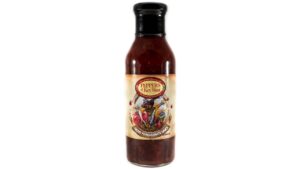
Peppers of Key West Cherry Pomegranate Grilling Sauce
A plain cuernito gives us the clearest opportunity to borrow an idea from fruit preserves. Peppers of Key West Cherry Pomegranate Grilling Sauce brings dark cherry sweetness and tart pomegranate contrast that can cut through the bread’s richness without overwhelming its relatively delicate flavor.
Best for: Plain or lightly warmed cuernitos, especially when you want a fruit-forward accent rather than substantial chile heat.

Fischer & Wieser’s Roasted Raspberry Chipotle Sauce
Once fruit is already part of breakfast, raspberry and chipotle can push the pairing in a more interesting direction. The raspberry continues the sweet-tart fruit character while chipotle introduces smoke and gentle chile complexity against the buttery bread.
Best for: Cuernitos served with berry preserves, cream cheese or other sweet breakfast spreads.
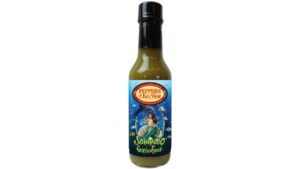
Peppers of Key West Jalapeño Garlic Hot Sauce
This is where the cuernito’s savory personality gives us considerably more freedom. Ham supplies salt, melted cheese brings fat and richness, and the bread contributes mild sweetness, giving jalapeño and garlic something substantial to work against. The result feels less like putting hot sauce on pan dulce and more like seasoning a very good breakfast sandwich.
Best for: Warm cuernitos filled with ham and cheese or other mild savory breakfast fillings.
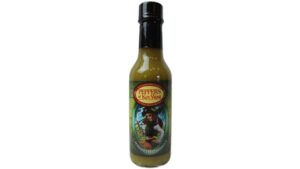
Peppers of Key West Serrano Pepper Hot Sauce
Egg and cheese can handle a brighter chile profile, making serrano a natural direction when the cuernito becomes a fuller breakfast. The fresh chile character cuts through egg and melted cheese while allowing the bread’s buttery richness to remain part of the experience.
Best for: Cuernitos filled with scrambled egg, fried egg, cheese or combinations of egg, ham and cheese.
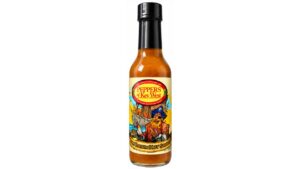
Peppers of Key West Tropical Rum, Pineapple & Raisin Hot Sauce
When pineapple, guava or another tropical fruit is already on the plate, this pairing follows the fruit rather than fighting it. Pineapple and raisin deepen the sweet side of the breakfast while the rum character adds another layer of richness.
Best for: Cuernitos served with pineapple, guava or tropical-fruit preserves.
None of these pairings is part of the traditional definition of a Mexican cuernito, and that’s an important distinction. The cuernito doesn’t need a sauce to become complete. These are optional finishing ideas for a bread whose mild sweetness and savory flexibility happen to give us plenty of room to experiment.
THE BEST PAIRING DOESN’T TRY TO TURN A CUERNITO INTO SOMETHING ELSE. IT FINDS THE BUTTER, FRUIT, HAM, CHEESE OR EGG ALREADY AT THE TABLE AND ADDS A CONTRAST THAT MAKES THE NEXT BITE MORE INTERESTING.
Conclusion: The Little Horn Became Something Much Bigger
We began in the panadería with a bread that looked suspiciously familiar.
Golden. Curved. Buttery.
A croissant?
Close—but by now we know why that answer doesn’t tell us nearly enough.
The European crescent helps explain part of the cuernito’s ancestry, but it doesn’t define everything Mexican bakers eventually did with the form. Some cuernitos became softer and more bread-like, while others retained more obvious layering. Different fats, doughs and regional bakery traditions produced different textures, yet the recognizable horn continued tying those variations together.
The cuernito gives us the horn. The baker decides what kind of horn it will be.
That may be the most useful lesson this little bread can teach us about Mexican panadería culture. Mexican baking has never depended on preserving every imported technique exactly as it arrived. Bakers absorbed ideas, changed ingredients, adjusted doughs, developed regional versions and made breads fit the way people around them actually ate.
The cuernito eventually became comfortable almost everywhere breakfast might take it. It can sit quietly beside coffee or hot chocolate, carry jam or something sweet, or be split and filled with ham and cheese. Smaller versions can become a snack later in the day. Through all those possibilities, the bread remains recognizable because the little horn continues to connect one interpretation to another.
Perhaps that’s why the cuernito deserves more attention than its resemblance to the croissant sometimes allows. The comparison helps us recognize where part of the story began, but it doesn’t tell us what Mexican bakers ultimately made from it.
The shape may invite the comparison.
The first bite tells you to keep exploring Mexico.
Frequently Asked Questions About Mexican Cuernitos
What is a Mexican cuernito?
A cuernito is a Mexican horn- or crescent-shaped bakery bread or pastry. Versions vary from softer, bread-like styles to more layered and flaky pastries.
What does cuernito mean in English?
Cuernito means “little horn,” referring to the bread’s recognizable curved shape.
Is a cuernito a Mexican croissant?
Not exactly. Cuernitos share European crescent-pastry ancestry with croissants, but Mexican bakers produce versions using different doughs, fats, textures and techniques.
Are cuernitos flaky?
Some are. Others are considerably softer, denser or more bread-like, so flakiness isn’t the only standard for judging a Mexican cuernito.
Are Mexican cuernitos made with butter?
Many versions use butter or have a buttery character, but Mexican baking traditions also include cuernos de manteca and other versions made with different fats.
Are cuernitos considered pan dulce?
Cuernos and cuernitos can be eaten as part of Mexico’s broad pan dulce tradition, although their relatively mild sweetness also allows them to work well with savory fillings.
What do you eat with cuernitos?
They can be eaten plain with coffee, café con leche or hot chocolate, served with jam or other sweet accompaniments, or filled with savory ingredients.
Can you put ham and cheese in a cuernito?
Yes. More substantial cuernitos can be split and filled with ham and cheese, making them useful as a savory breakfast or snack.
When are cuernitos eaten in Mexico?
They are particularly comfortable at breakfast with coffee or another hot drink, although smaller cuernitos can also be eaten as snacks during the day.
What’s the difference between a cuerno and a cuernito?
Cuerno means “horn,” while cuernito is the diminutive “little horn.” In bakery usage, size and naming can vary, and cuerno also encompasses several related Mexican bakery forms.
How should you reheat a cuernito?
Gentle warming in an oven or toaster oven can refresh the exterior while warming the crumb. Avoid overheating, which can dry the bread.
How should you choose a cuernito at a Mexican panadería?
Look for freshness and judge the bread according to the style the bakery is making rather than expecting every cuernito to reproduce a French croissant’s texture.
🌮 Continue Your Mexican Street Food Journey
🌯 More Mexican Street Foods Worth Trying
- Pan Dulce Explained: Mexico’s Sweet Bread Tradition Beyond the Famous Concha
- Mexican Panaderías Explained: Why Every Neighborhood Bakery Is the Heart of Mexican Morning Culture
- Mexican Street Food Breakfast Favorites Worth Waking Up Early For
- Sweet Mexican Empanadas Explained: The Bakery Pastries Filled with Fruit, Cajeta & Pumpkin
- Bolillos Explained: The Crispy Bread That Built Mexico’s Favorite Sandwiches
- Molletes Explained: Mexico’s Open-Faced Bean & Cheese Sandwich That Makes Breakfast Better
- Chilaquiles Explained: Mexico’s Crispy Tortilla Breakfast Covered in Salsa, Crema & Cheese
- Flautas Explained: Mexico’s Crispy Rolled Tortillas Loaded with Flavor
- Northern Mexico Breakfast Traditions: Machacado, Burritos & Ranch Cooking
🌶️ Expand Your Mexican Food Journey
- Mexican Tortillas, Masa & Breads Explained: The Complete Guide to How Mexican Street Food Is Built
- Best Hot Sauce for Breakfast Tacos: Wake Up Your Eggs with Heat
- Jalapeño Pepper Explained: Flavor, Heat, Uses & Why It’s America’s Favorite Chile
- Serrano Pepper Explained: Flavor, Heat, Uses & Why It Gives Mexican Salsa Its Signature Bite
See More Keywords
Mexican bakery, panadería mexicana, Mexican baking traditions, Mexican breakfast, Mexican breads, Mexican sweet bread, pan dulce mexicano, Mexican bakery pastries, Mexican breakfast pastries, Mexican bread with coffee, café con leche and pan dulce, Mexican hot chocolate and bread, cuernos Mexican bread, cuernos de manteca, buttery Mexican bread, crescent-shaped Mexican bread, Mexican croissant, Mexican pastry traditions, traditional panadería, Mexican morning food, ham and cheese breakfast sandwich, Mexican bakery culture
