Mexican Tortillas, Masa & Breads Explained: The Complete Guide to How Mexican Street Food Is Built
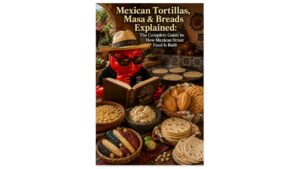
Mexican street food has a structural engineering department, and it has been quietly working with corn, masa, tortillas, and bread for centuries. A taco that folds without falling apart, a gordita sturdy enough to be stuffed, a bolillo capable of carrying a ridiculous torta, and Guadalajara’s birote salado surviving an actual bath in sauce are not happy accidents. This guide goes beneath the fillings to uncover how Mexico builds its food—from nixtamalized corn and handmade masa to comal-cooked tortillas, flour tortillas, bolillos, teleras, and regional breads. Because sometimes the most important ingredient isn’t what’s inside your food. It’s the thing keeping lunch off your shirt.
Watch a taquero work for a few minutes and it’s easy to become distracted by the obvious things.
Carne asada crackles against a hot cooking surface. Carnitas tumble onto a cutting board. Salsa flashes red and green across finished tacos. Cilantro, onion, lime, cheese, crema, and chiles provide the colors that make Mexican street food almost impossible to walk past without suddenly reconsidering whatever you had planned for lunch.
But underneath all that flavor is something quieter.
Structure.
The tortilla bending beneath the carne asada.
The masa shell holding a gordita together.
The thick corn foundation beneath a sope.
The elongated masa supporting a huarache.
The flour tortilla wrapping a northern Mexican burrito.
The crisp bolillo surrounding a loaded torta.
The soft telera compressing around generous sandwich fillings.
And in Guadalajara, the famously sturdy birote salado refusing to surrender even after a torta ahogada has been absolutely drowned in sauce.
These aren’t interchangeable wrappers.
They’re part of the food.
Understanding Mexican street food therefore requires looking beneath the meat, salsa, cheese, and toppings to understand the corn, masa, tortillas, breads, cooking surfaces, and construction traditions that make those dishes possible.
That story begins thousands of years before the modern taco stand.
Indigenous peoples of Mesoamerica transformed corn through nixtamalization, an ingenious process that fundamentally changed what maize could become. Nixtamalized corn could be ground into masa and shaped into tortillas, tamales, tlacoyos, gorditas, sopes, and countless other foods that remain central to Mexican cooking.
Centuries later, wheat introduced another branch to the story.
Flour tortillas became deeply embedded in the cuisines of northern Mexico. European breadmaking traditions were transformed by Mexican bakers into everyday breads such as bolillos and teleras. Regional specialties developed their own identities, including Guadalajara’s extraordinary birote salado.
Today these traditions coexist.
Walk through Mexico and you can encounter a corn tortilla warming on a comal, a flour tortilla wrapped around carne asada, fresh masa being pressed by hand, bolillos leaving a neighborhood panadería, and tortas assembled with breads chosen specifically because of the job they’re expected to perform.
Our broader Mexican Street Food Beyond Tacos: Elote, Tortas, Tamales & More journey introduces many of the finished dishes. This guide goes underneath them.
Here, we’re asking a different question:
How is Mexican street food actually built?
We’ll follow corn from kernel to nixtamal to masa. We’ll see why masa harina isn’t exactly the same thing as fresh masa. We’ll compare corn and flour tortillas, explore the importance of the comal, understand why taco size and construction matter, and discover why Mexico developed multiple breads for sandwiches that might look similar until you actually ask them to do their jobs.
Because a tortilla isn’t disposable packaging.
Masa isn’t simply dough.
And bread isn’t just something keeping your torta fillings together.
They determine texture, aroma, moisture, proportion, durability, and ultimately how every bite tastes.
TO UNDERSTAND HOW MEXICAN STREET FOOD TASTES, FIRST UNDERSTAND HOW MEXICO BUILDS IT.
🌽 Mexican Tortillas, Masa & Breads Quick Guide
What is masa?
Masa is dough traditionally made from corn that has undergone nixtamalization before being ground. It forms the foundation of tortillas, tamales, gorditas, sopes, tlacoyos, huaraches, and numerous other Mexican foods.
What is nixtamalization?
Nixtamalization is the traditional process of cooking and soaking dried corn in an alkaline solution, historically made using substances such as slaked lime. The process changes the corn’s flavor, texture, nutritional properties, and ability to become workable masa.
Are corn tortillas more traditional than flour tortillas?
Corn tortillas have ancient Indigenous roots in Mesoamerica, while wheat arrived after Spanish colonization. Flour tortillas nevertheless developed a long and authentic Mexican tradition of their own, particularly across northern Mexico.
Why are Mexican street tacos usually served on small tortillas?
Smaller tortillas help create the proportions associated with many street tacos, balancing tortilla, meat, salsa, onion, cilantro, and other garnishes while keeping the taco practical to fold and eat.
What’s the difference between bolillos and teleras?
Bolillos are generally elongated and crustier, with tapered ends and a scored top. Teleras are typically broader, flatter, and softer, making them particularly well suited to generous torta fillings.
Why does Mexico have different breads for different sandwiches?
Bread structure changes how a sandwich behaves. Crust, crumb, width, softness, and moisture resistance influence how well bread handles fillings and sauces—which is why an everyday bolillo, soft telera, and Guadalajara’s sturdy birote salado don’t create the same eating experience.
🌽 Corn Before the Tortilla: The Ancient Foundation of Mexican Food
Before the tortilla, there is corn. In Mexico, that story begins not at the taco stand but much farther back—in fields of maize, baskets of dried kernels, neighborhood mills, home kitchens, and tortillerías where corn is still transformed into one of the country’s most important foods.
Watch that transformation closely and a tortilla begins to look much less simple. Hard dried kernels must first become something softer, more aromatic, more nutritious, and capable of being ground into dough. That transformation happens through one of the most consequential food technologies developed in the ancient Americas: nixtamalization.
Traditional nixtamalization involves cooking and soaking dried corn in an alkaline solution, commonly using calcium hydroxide, often called cal or slaked lime. After soaking, the softened corn is rinsed and ground into masa. In a working tortillería or molino, that journey can happen with remarkable everyday efficiency: corn enters as recognizable kernels and emerges as moist, fragrant dough ready for the tortilla press, the cook’s hands, and eventually the comal.
The process may look straightforward, but profound changes are taking place. Nixtamalization helps loosen the corn’s outer hull, changes its texture and flavor, improves the availability of nutrients such as niacin, adds calcium when lime is used, and gives the resulting dough properties that make foods such as tortillas possible.
Without that transformation, the story of masa as we know it changes dramatically.
To understand what that transformation changes—and why it matters far beyond tortilla making—What Is Nixtamalization? The Ancient Process Behind Authentic Mexican Flavor explores the Indigenous knowledge, nutrition, food chemistry, history, and culinary traditions behind the process.
The variety of corn matters too.
Mexico is home to extraordinary maize diversity, with kernels appearing in whites, yellows, blues, reds, and other colors and with different varieties adapted to different environments and culinary purposes.
That means the phrase “corn tortilla” conceals tremendous diversity.
Different corn can produce different aromas, colors, textures, and flavors. Regional growing traditions influence what reaches the mill. Local techniques influence what happens next.
And once the nixtamal is ground, another foundational ingredient emerges: masa.
Masa isn’t merely ground corn mixed with water. What Is Masa? The Ancient Corn Dough Behind Authentic Mexican Street Food guide explores this foundational dough in depth—from how nixtamalized corn becomes fresh masa to the way Mexican cooks transform it into tortillas, sopes, gorditas, tlacoyos, huaraches, tamales, and other regional foods.
Traditional fresh masa carries the consequences of everything that came before it—the corn variety, the nixtamalization process, the grinding, the moisture, and the hands that eventually shape it.
That dough can become astonishingly different foods.
Press it thin and cook it on a comal, and you have a tortilla.
Shape it thicker and give it raised edges, and you’re entering the world of sopes.
Stuff a thicker masa pocket and you’re moving toward gorditas.
Stretch it into an elongated foundation and the architecture begins resembling a huarache.
Form and fill it differently and you can arrive at tlacoyos.
The ingredient may begin in the same culinary family.
The construction determines what happens next.
This is why readers who encounter Sopes Explained: Thick Corn Cakes Loaded with Street Food Flavor, Gorditas Explained: Mexico’s Stuffed Corn Pockets Deserve More Love, Tlacoyos Explained: Mexico City’s Ancient Stuffed Corn Street Food, and Huaraches Explained: Mexico’s Giant Oval Street Food Loaded with Flavor are really encountering different expressions of the same much older technological story.
Corn becomes nixtamal.
Nixtamal becomes masa.
Masa becomes structure.
And structure becomes food.
🌽 Explore Corn, Nixtamal & Masa
- What Is Nixtamalization? The Ancient Process Behind Authentic Mexican Flavor
- What Is Masa? The Ancient Corn Dough Behind Authentic Mexican Street Food
- Masa vs. Masa Harina: What’s the Difference and Which One Do You Need?
- Mexican Corn Explained: Blue, White, Yellow & Red Maize and How They’re Used
 🌶️ Professor Pepper Says…
Nixtamalization isn’t simply an old-fashioned way of softening corn. It fundamentally changes how maize behaves as food, helping create the aroma, nutrition, texture, and workable dough behind traditional masa. When you taste a great corn tortilla, you’re tasting the result of a food technology developed thousands of years ago.
BEFORE MEXICO BUILT TACOS, TAMALES, SOPES, GORDITAS, AND TLACOYOS, IT LEARNED HOW TO TRANSFORM CORN.
🌶️ Bring a Little Heat to the Table
Once those tortillas, tacos, gorditas, and other masa-based favorites reach the table, the foundation is only the beginning. Explore our hot sauces for everything from bright, approachable chile flavor to serious heat for your next Mexican-inspired meal.
From Nixtamal to Masa: Why the Dough Changes Everything
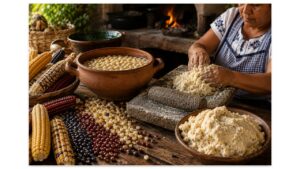
Calling masa simply “corn dough” may be technically useful, but culturally it doesn’t begin to capture what this ingredient can do. What Is Masa? The Ancient Corn Dough Behind Authentic Mexican Street Food explores that story in depth; here, the important thing is understanding masa’s role in the larger architecture of Mexican food.
Masa is closer to a culinary language, a foundational material that can be pressed, patted, stuffed, pinched, folded, wrapped, steamed, griddled, fried, toasted, or shaped into dramatically different forms. Change its thickness by a few millimeters and the eating experience changes. Create a pocket and it can hold a filling; raise the edges and it can contain toppings; elongate the shape and the balance among crisp surface, tender interior, and toppings changes again. This extraordinary adaptability is why Mexican masa-based foods shouldn’t be understood simply as variations of “a tortilla with stuff on it.” Their construction is part of their identity.
Watch masa being worked by experienced hands and its versatility becomes immediately visible. A portion can be shaped into a thick elongated tlacoyo, enclosing filling within the masa itself. Another can become a sope, its thicker base pinched around the edges to create a shallow border capable of holding beans, meat, salsa, crema, and cheese. Make the masa thick enough to split or stuff and you’re entering the world of the gordita; stretch it into an elongated platform and it begins to resemble a huarache. In Oaxaca, the enormous tlayuda pushes tortilla size, texture, and cooking in yet another direction.
These differences aren’t decorative. They change the way the food cooks and the way it eats. Thickness determines tenderness and chew, surface area influences browning, and shape determines how toppings are distributed. Enclosing a filling changes how moisture and fat interact with the masa, while cooking technique determines whether the finished food remains soft, develops toasted spots, becomes crisp, or combines several textures at once.
Mexican Street Food Flatbreads Compared: Gorditas vs Sopes vs Tlacoyos vs Memelas vs Huaraches becomes especially useful once you understand masa as the shared foundation. The dishes stop looking like a confusing collection of vaguely similar corn foods and start revealing themselves as different solutions to the same culinary question:
What can we make this masa do?
The answer, after thousands of years of Mexican cooking, is quite a lot.
Yet even within this foundational ingredient, an important distinction remains. Freshly ground nixtamalized masa and commercially produced masa harina are closely related, but they aren’t identical. Masa is the prepared dough; masa harina is the dry flour produced from processed nixtamalized corn that can later be rehydrated with water to make masa. Traditional fresh masa reaches the work surface by grinding moist nixtamalized corn, while masa harina takes an additional journey through drying and milling before being reconstructed with water. That innovation has made masa-based cooking far more accessible in places where fresh masa isn’t readily available, but the difference still matters because fresh masa carries its moisture and texture directly from the nixtamalization and grinding process. Both can make excellent food; they simply arrive at the work surface through different paths.
Our Masa vs. Masa Harina: What’s the Difference and Which One Do You Need? will take that comparison much deeper.
For now, remember the larger lesson:
Masa is not merely the thing underneath Mexican food.
In many dishes, masa is the food.
THE SHAPE MAY CHANGE FROM TORTILLA TO SOPE TO GORDITA TO TLACOYO, BUT MASA IS THE FOUNDATION THAT MAKES THE ENTIRE FAMILY POSSIBLE.
🌽 Corn Tortillas: The Foundation Beneath the Taco
If masa is the language, the corn tortilla may be its most widely spoken sentence.
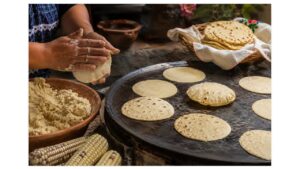
Step into a busy tortillería and that sentence is being written over and over again. Fresh masa becomes thin rounds, tortillas move rapidly toward the heat, finished stacks disappear beneath cloth to stay warm, and customers carry them away while they’re still soft, aromatic, and very much alive with the smell of toasted corn.
At its simplest, a traditional corn tortilla is remarkably spare: nixtamalized corn transformed into masa, shaped into a thin round, and cooked on a hot surface such as a comal. Yet that simplicity makes technique more important, not less. The masa needs enough moisture to remain pliable without becoming sticky. The tortilla must be thick enough to hold food without becoming heavy, while the cooking surface has to be hot enough to cook it quickly and develop toasted aromas without drying it into a cracker.
Then comes one of tortilla making’s most satisfying moments:
The puff.
As a tortilla cooks, trapped steam can cause its layers to separate and inflate. That puff isn’t merely theatrical. It reflects the interaction among properly prepared masa, shaping, moisture, heat, and cooking technique.
Once cooked, tortillas are commonly stacked and kept warm, allowing residual steam to soften them and preserve flexibility.
That’s important because a tortilla has real work to do. It must remain flexible enough to bend, strong enough to carry moisture and support meat, salsa, onion, cilantro, cheese, or whatever the dish demands, and flavorful enough to contribute something of its own. A great tortilla doesn’t behave like edible packaging; its toasted corn aroma, texture, warmth, and structure become part of the finished dish.
How Authentic Mexican Tortillas Are Made: From Masa to Comal follows that transformation in detail, while How a Comal Gives Mexican Street Food Its Signature Flavor explores why this deceptively simple cooking surface matters to tortillas, roasted chiles, salsa ingredients, and generations of Mexican cooking.
Even within the category of corn tortillas, there is no single universal model. Thickness, diameter, corn variety, color, texture, and preparation all change across Mexico, reflecting regional ingredients, cooking traditions, and the foods those tortillas are expected to support. Some are small enough to disappear beneath a few bites of carne asada, while others are substantial enough to become the foundation of much larger dishes. Oaxaca’s famous tlayudas stretch the concept to enormous proportions.
Blue, white, yellow, red, and other maize varieties can produce tortillas with distinctive appearances and flavor characteristics.
Handmade tortillas may retain slight irregularities that reveal the hands behind them, while mechanized tortillerías can produce enormous quantities with remarkable consistency.
Neither changes the central lesson:
The tortilla contributes flavor and structure to the finished food.
This becomes especially obvious with tacos.
A tortilla that’s too dry can crack.
One that’s too thin for a juicy filling may tear.
One that’s excessively thick can dominate a delicate taco.
A cold tortilla can become stiff and lifeless.
A properly heated tortilla becomes pliable, aromatic, and ready to cooperate with the filling.
That’s why Street Taco Size Explained: Why Smaller Tacos Usually Taste Better and Double Tortilla Street Tacos Explained: Why Taquerias Do It Better aren’t just answers to taco trivia. Together, they explain how tortilla size, strength, moisture, portion, and structural reinforcement shape the street-taco experience.
A taco begins long before the meat touches the tortilla.
🌮 Go Deeper Into Mexican Tortillas
- How Authentic Mexican Tortillas Are Made: From Masa to Comal
- Street Taco Size Explained: Why Smaller Tacos Usually Taste Better
- Double Tortilla Street Tacos Explained: Why Taquerias Do It Better
- Corn vs. Flour Tortillas: Which One Actually Makes Better Street Tacos?
THE BEST TORTILLA DOESN’T JUST HOLD THE TACO TOGETHER—IT MAKES THE TACO TASTE MORE COMPLETE.
🌶️ Professor Pepper Says…
When a corn tortilla tastes distinctly of toasted maize, bends without immediately breaking, and supports its filling without overpowering it, you’re experiencing construction and flavor working together. A tortilla is an ingredient, not a plate.
🌾 Corn vs. Flour Tortillas: Two Authentic Mexican Traditions
One of the easiest mistakes to make when discussing Mexican tortillas is turning corn versus flour into a contest for authenticity.
Corn tortillas unquestionably carry the older story, with roots reaching deep into Indigenous Mesoamerican civilization, where maize and nixtamalization existed long before Europeans arrived in the Americas. Wheat entered Mexico later, following Spanish colonization, but “later” does not mean “inauthentic.” Flour tortillas developed centuries of Mexican history of their own and became especially important within the cuisines of northern Mexico.
Today, northern Mexican cuisines demonstrate exactly why Mexican tortilla culture can’t be reduced to one universal rule. Travel north through Mexico and the tortilla itself begins telling you that the food landscape has changed.
A flour tortilla can be thin, flexible, chewy, delicate, substantial, or remarkably large depending on regional style and intended use. Some are made with lard or another fat, which changes tenderness, aroma, and flexibility.
They perform differently from corn tortillas.
Corn tortillas bring pronounced maize flavor and the character of nixtamalized corn. They are deeply connected to tacos, enchiladas, tostadas, chilaquiles, and an enormous range of other foods.
Flour tortillas bring wheat flavor, elasticity, and a different kind of flexibility that works particularly well with foods associated with northern Mexico.
The answer isn’t that one is Mexican and the other isn’t.
The better question is:
Where are you in Mexico, what are you eating, and what tortilla tradition developed there?
A carne asada meal in Sonora doesn’t need to imitate a taco tradition from central Mexico to be authentic.
A corn tortilla in Oaxaca doesn’t need to behave like a northern flour tortilla.
Regional cuisine is not a competition to find one national template.
It is the accumulation of local ingredients, agriculture, history, migration, climate, technique, and preference.
That regional story becomes even clearer in Mexican Flour Tortillas Explained: Why Northern Mexico Chose Wheat Over Corn, which explores how wheat, geography, technique, and northern Mexican food traditions created a tortilla culture with an identity entirely its own.
Flour tortillas aren’t an exception we need to apologize for.
They’re part of the story.
🌶️ Professor Pepper Says…
Corn tortillas carry Mexico’s ancient maize tradition, while flour tortillas tell a later but genuinely Mexican regional story. When deciding which tortilla “belongs,” look first at the place, dish, and culinary tradition—not a universal rule.
AUTHENTIC MEXICAN FOOD DOESN’T ASK CORN AND FLOUR TO COMPETE; IT GIVES EACH ONE A PLACE TO BELONG.
🔥 The Comal: Where Dough Becomes Food
Step into a Mexican kitchen or tortillería while tortillas are being made and the comal quickly becomes the center of gravity. Freshly shaped tortillas land on the hot surface in succession. Pale masa begins to set, toasted spots appear, and an occasional tortilla suddenly balloons as trapped steam separates its layers. Nearby, a chile may blister, a tomato may soften, or an onion may darken at its edges.
The equipment responsible for all of this can look almost ridiculously simple.
At its most basic, a comal is a flat or gently curved cooking surface traditionally used for tortillas and for roasting or toasting ingredients including chiles, tomatoes, tomatillos, seeds, and spices. Historic comales were made from clay, while modern versions may be constructed from metal and other materials.
The material may change, but the culinary principle remains recognizable: direct contact with a hot surface transforms the food.
For tortillas, that means setting the masa rapidly enough to create structure while developing toasted corn aromas and browned spots without unnecessarily drying the tortilla. For other ingredients, the same surface performs entirely different transformations. Dried chiles become more aromatic. Tomatoes and tomatillos blister and soften. Onions and garlic develop roasted character. Seeds and spices release aromas that can eventually become part of salsa, mole, and countless other preparations.
And that’s why How a Comal Gives Mexican Street Food Its Signature Flavor isn’t really a story about a piece of cookware. It’s a story about what generations of Mexican cooks have learned to accomplish with direct heat.
The comal gives the cook very little machinery to hide behind. Judgment matters. Too little heat and a tortilla can dry before cooking properly. Too much and the exterior may scorch before the interior is ready. Leave a chile too long and desirable toasting can become bitterness.
The tool is simple.
Using it well isn’t.
THE COMAL MAY LOOK SIMPLE, BUT GENERATIONS OF MEXICAN COOKING HAVE TURNED THAT HOT SURFACE INTO ONE OF THE CUISINE’S MOST IMPORTANT TOOLS.
🌮 Why Taco Construction Matters More Than It Looks
Now we can finally put something on the tortilla.
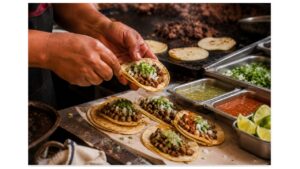
Watch an experienced taquero do it and almost nothing appears to be measured. A warm tortilla lands in one hand, chopped meat follows, then onion, cilantro, salsa, and perhaps a squeeze of lime—all in movements repeated so many thousands of times that proportion begins to look instinctive.
But that speed hides an extraordinary amount of accumulated knowledge.
How large should the tortilla be, and how much filling can it comfortably support? Will juicy carnitas or another fatty filling weaken it enough to justify a second tortilla? How finely should the meat be chopped? How much salsa can be added before flavor becomes structural failure? Even the expected speed of eating affects how well that small tortilla needs to perform.
These decisions may never appear on a menu, but they affect every bite.
Consider the familiar small street taco.
Its relatively compact tortilla naturally limits the amount of filling. That encourages a balanced ratio among tortilla, meat, salsa, onion, cilantro, and garnishes while making the taco practical to fold and eat quickly.
Now add a particularly juicy or fatty filling.
One tortilla may absorb moisture rapidly.
A second tortilla can provide reinforcement while catching juices and pieces of filling that escape the first.
The same principle applies to heating.
A tortilla that has been properly warmed becomes more flexible and aromatic. That improves both flavor and structural performance.
How to Heat Tortillas Properly So Your Tacos Stop Tasting Sad goes deeper into that deceptively important step.
Then there’s layering.
Most great tacos aren’t improved by stacking every possible topping on top of them.
The filling should remain identifiable.
Salsa should contribute moisture, chile, acidity, and flavor without flooding the tortilla unnecessarily.
Onion and cilantro can provide freshness and contrast.
Lime introduces acidity at the moment of eating.
Other tacos may rely on different garnishes entirely.
The construction follows the dish.
Getting those proportions right is part of what separates a well-built taco from one that collapses under its own ambition. How to Build the Perfect Street Taco Without Everything Falling Apart takes that idea further, showing how tortilla size, filling quantity, salsa, toppings, and layering work together to create a taco that’s balanced, flavorful, and actually manageable to eat.
Ultimately, good taco construction is about understanding the relationship between the foundation and everything placed on top of it.
And that relationship changes when the foundation changes.
A tortilla behaves differently from a sope.
A sope behaves differently from a tostada.
A tostada behaves differently from a bolillo.
And a bolillo behaves very differently from a birote salado once someone decides to drown the entire sandwich in tomato sauce.
And that’s where Mexican street food leaves the tortilla behind and enters an entirely different world: bread.
🌮 Build a Better Street Taco
- Street Taco Size Explained: Why Smaller Tacos Usually Taste Better
- Double Tortilla Street Tacos Explained: Why Taquerias Do It Better
- How to Build the Perfect Street Taco Without Everything Falling Apart
THE DIFFERENCE BETWEEN A GREAT TACO AND A PILE OF DELICIOUS INGREDIENTS IS OFTEN CONSTRUCTION.
🥖 When Mexican Street Food Moves From Tortillas to Bread
For all the importance of corn, masa, and tortillas in Mexican cooking, they tell only part of the story of how Mexican street food is built. Walk into a neighborhood panadería, approach a torta stand, or explore the sandwich traditions of Guadalajara, Puebla, Mexico City, and other regions, and wheat bread becomes just as important to understanding the finished food. Mexico did not simply adopt European-style bread and leave it unchanged. Over generations, Mexican bakers and cooks developed breads and sandwich traditions suited to local tastes, ingredients, regional identities, and very specific culinary jobs.
That distinction matters because Mexican sandwich breads are not interchangeable. Their crusts, crumb structures, shapes, widths, and ability to handle moisture determine what happens when meat, beans, cheese, avocado, salsa, crema, pickled vegetables, or sauce enters the equation. A bread that works beautifully for a straightforward torta may behave very differently when completely submerged in sauce. A softer roll can compress comfortably around generous fillings, while a sturdier crust can provide the resistance necessary for a wetter sandwich.
The Mexican Sandwich Bread Explained: Bolillos, Teleras, Cemitas & More guide provides the broader introduction to this family, but three breads are especially useful for understanding how structure shapes the Mexican sandwich: bolillo, telera, and birote salado.
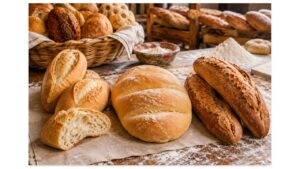
The bolillo is one of Mexico’s essential everyday breads. Typically elongated, with tapered ends, a scored golden crust, and a soft, airy interior, it provides enough exterior structure to hold substantial fillings while remaining pleasant to bite through. As explored in Bolillos Explained: The Crispy Bread That Built Mexico’s Favorite Sandwiches, that combination makes the bolillo useful far beyond a single sandwich. It can become the foundation of tortas and molletes, accompany meals, or simply travel home from the panadería as part of everyday bread culture.
The telera solves the sandwich problem somewhat differently. Broader, flatter, and generally softer than a bolillo, its characteristic shape gives generous fillings more horizontal room while allowing the bread to compress around them. Teleras Explained: Why Mexico’s Soft Sandwich Roll Is Perfect for Tortas will explore why that softer structure works so naturally with the layered construction of Mexican tortas.
Then Guadalajara changes the rules.
The birote salado is closely associated with Jalisco’s capital and possesses the kind of firm, resilient crust and sturdy crumb demanded by one of Mexico’s most structurally outrageous sandwiches: the torta ahogada. A bread that becomes soggy and collapses immediately would fail at the assignment. Birote salado has to absorb sauce while retaining enough integrity for the sandwich to remain recognizable and edible.
That relationship between bread and dish becomes vivid in Tortas Ahogadas Explained: Guadalajara’s Famous Drowned Sandwich That Every Food Lover Should Try. The sandwich is famous for being drowned in sauce, but its regional identity depends just as much on the bread capable of surviving that treatment. Remove the structural properties of birote salado and you change the eating experience fundamentally.
Comparing these breads makes the larger principle clear. Bolillos provide crisp-crusted versatility. Teleras emphasize softness, width, and sandwich-friendly compression. Birote salado brings regional character and unusual resistance to moisture. None is simply “Mexican sandwich bread” in a generic sense, because each changes what can successfully be built around it.
The same principle extends beyond those three examples. Mexico’s bread traditions intersect with finished foods such as cemitas, pambazos, molletes, tortas, and regional sandwiches in ways that demonstrate how strongly the foundation influences the final dish. Once you begin paying attention to the bread rather than looking only at the filling, Mexican sandwich culture becomes much more interesting.
🥖 Explore Mexico’s Sandwich Breads
- Bolillos Explained: The Crispy Bread That Built Mexico’s Favorite Sandwiches
- Teleras Explained: Why Mexico’s Soft Sandwich Roll Is Perfect for Tortas
A GREAT MEXICAN SANDWICH DOESN’T BEGIN WITH THE FILLING—IT BEGINS WITH CHOOSING A BREAD CAPABLE OF DOING THE JOB.
🥪 How the Foundation Changes the Finished Mexican Street Food
Once you begin viewing tortillas, masa, and bread as ingredients rather than interchangeable carriers, foods that initially seem unrelated start revealing their family resemblance. A taco wraps its filling in a thin, flexible tortilla. A sope builds upward from a thicker masa base with raised edges. A gordita creates enough thickness to contain filling within the masa itself. A tostada deliberately trades flexibility for crispness. A torta encloses ingredients between bread sturdy enough to contain them. Each format changes how the diner encounters essentially the same categories of ingredients—meat, beans, cheese, salsa, vegetables, chiles, herbs, and fat.
Consider moisture alone. Salsa placed on a small corn tortilla behaves differently from salsa spooned onto a thick sope. Refried beans spread across a bolillo for molletes interact with the bread differently than beans enclosed within masa. A tostada cannot bend around its toppings, so its crisp platform demands a different eating technique from a taco. Guadalajara’s torta ahogada pushes the moisture problem to an extreme by making sauce saturation part of the dish’s identity.
Thickness matters just as much. Thin tortillas heat quickly, fold easily, and keep the ratio of foundation to filling relatively restrained. Thicker masa foods provide more corn flavor, chew, and structural mass, which allows them to become substantial components of the meal rather than simply wrappers. Bread introduces an entirely different crumb structure capable of absorbing juices, fat, beans, salsa, and sauces while contributing toasted wheat flavors of its own.
Surface area changes the experience again. A compact street taco concentrates ingredients into a few bites, while an elongated huarache distributes toppings across a broad masa base. A large tlayuda creates enough surface area for beans, asiento, cheese, meat, and vegetables to become a shared composition rather than a small handheld taco. A broad telera gives a torta room for layered fillings without forcing the sandwich into an awkwardly tall stack.
This is why How to Build the Perfect Street Taco Without Everything Falling Apart is ultimately about more than keeping lunch off your shirt. Tortilla size, filling quantity, moisture, salsa, toppings, and layering all affect whether the taco remains balanced from its first bite to its last. The lesson follows you from the taco stand to the market stall and the panadería: every foundation changes what the cook can successfully place on top of it, inside it, or between it.
Once you see that relationship, familiar dishes become easier to understand. Sopes aren’t simply thick tortillas covered with toppings. Gorditas aren’t merely tacos with heavier shells. Molletes aren’t just beans and cheese on bread. Tortas ahogadas aren’t ordinary sandwiches with excessive sauce. Their foundations have been selected, shaped, cooked, or baked to create specific eating experiences.
MEXICAN STREET FOOD ISN’T JUST A COLLECTION OF INGREDIENTS—IT’S A COLLECTION OF BRILLIANT WAYS TO BUILD WITH THEM.
Regional Mexico Changes the Tortilla, Masa & Bread Story
There is no single tortilla, masa preparation, or bread that represents all of Mexico, because Mexican food traditions developed across dramatically different landscapes, agricultural systems, climates, histories, and regional cuisines. The foundation beneath a meal often tells you something about where that meal belongs.
Across much of central and southern Mexico, maize remains deeply embedded in everyday food culture, but even within that broad corn tradition the details change considerably. Corn varieties, tortilla dimensions, masa thickness, grinding traditions, cooking methods, and regional dishes create distinct identities. Oaxaca’s enormous tlayudas, for example, demonstrate just how far tortilla size and texture can move from the compact tortillas associated with many street tacos.
Northern Mexico tells another part of the story. Wheat cultivation and regional cooking traditions helped flour tortillas become deeply established in states where they are not substitutes for an allegedly more “authentic” corn tortilla but expressions of local Mexican cuisine in their own right. Their flexibility and wheat-based structure suit foods and eating traditions that developed within those regions.
Bread introduces still more geographic specificity. Bolillos are encountered widely, but certain breads become strongly tied to place. Guadalajara’s birote salado is inseparable from understanding the city’s torta ahogada tradition. Puebla’s cemita traditions connect bread to another distinctive regional sandwich identity. In each case, geography is not background decoration; it helps explain why a particular structure exists.
Corn itself also carries regional stories. Mexico’s extraordinary maize diversity means white, yellow, blue, red, and other corn varieties are more than visual novelties. Different maize traditions connect agriculture to local cooking, while nixtamalization and grinding transform those crops into foods with regional textures, colors, aromas, and identities. Mexican Corn Explained: Blue, White, Yellow & Red Maize and How They’re Used explores that diversity more closely and helps explain why “corn” is far too broad a word to describe everything happening beneath a tortilla.
Following these foundations across Mexico therefore becomes another way of traveling through the country’s food culture. Instead of asking only which taco or sandwich a region is famous for, ask what supports it. What corn is being grown? How is the masa prepared? What size is the tortilla? Is wheat part of the regional tradition? What bread comes from the local panadería? What cooking surface gives the foundation its final texture?
Those questions frequently reveal as much about regional Mexican cuisine as the filling itself.
🌎 If You Ever Visit Mexico…
When you visit a tortillería, market, taquería, or neighborhood panadería, pay attention to the foundations people buy every day. Notice the color and thickness of local tortillas, watch fresh masa being worked when you have the opportunity, and compare the breads used for different sandwiches. As you travel between regions, those seemingly small differences begin telling a much larger story about local agriculture, history, technique, and taste.
TRAVEL THROUGH MEXICO BY FOLLOWING ITS TORTILLAS, MASA, AND BREADS, AND YOU’LL DISCOVER THAT THE FOUNDATION OF THE MEAL OFTEN REVEALS THE PLACE IT CAME FROM.
🌶️ Recommended Peppers of Key West Products for Mexican Tortillas, Masa & Breads
Tortillas, masa-based foods, and Mexican sandwiches create especially good opportunities for hot sauce because their foundations provide flavor and texture without requiring every bite to have the same heat level. The best pairing depends less on whether the food uses corn or bread and more on what’s actually being served with it—grilled meat, beans, cheese, pork, eggs, seafood, or a loaded torta.
Product Pairing Quick Guide
- Street Tacos, Carne Asada & Grilled Meats → Serrano Pepper Hot Sauce
- Molletes, Breakfast Tortas, Beans & Eggs → Jalapeño Garlic Hot Sauce
- Carnitas, Pork Tortas & Everyday Tacos → Cayenne Pepper Hot Sauce
- Taco Nights, Tortas & Mexican Street Food Tastings → Peppers of Key West 5 Pack
🌶️ Best Peppers of Key West Pairings for Mexican Street Food Lovers
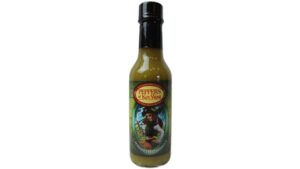
Serrano Pepper Hot Sauce brings a bright, fresh green-chile character that feels naturally at home with Mexican street-food flavors. Its lively heat works especially well with carne asada, grilled meats, tacos, onion, cilantro, and lime, adding another layer of pepper flavor without overwhelming the warm corn tortilla or the ingredients it carries.
Perfect For: Street tacos, carne asada, grilled meats, tortas, salsa, onions, cilantro, lime
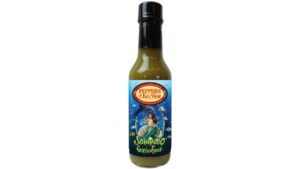
Jalapeño Garlic Hot Sauce is an especially natural match for the richer, more comforting side of Mexican tortilla and bread-based foods. Moderate jalapeño heat and savory garlic complement refried beans, melted cheese, eggs, quesadillas, breakfast tortas, and toasted bolillos, making it an easy addition whenever the meal calls for warmth, richness, and familiar chile flavor.
Perfect For: Molletes, beans, eggs, cheese, breakfast tortas, bolillos, quesadillas
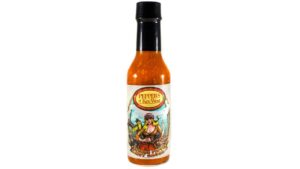
Cayenne Pepper Hot Sauce delivers straightforward, versatile chile heat that works beautifully with rich meats and classic taco flavors. It pairs especially well with carnitas, pork tortas, grilled chicken, tacos, quesadillas, and other everyday Mexican favorites, adding noticeable heat while allowing the tortilla, bread, meat, salsa, and toppings to remain part of the conversation.
Perfect For: Carnitas, pork tortas, tacos, grilled chicken, quesadillas, everyday Mexican meals
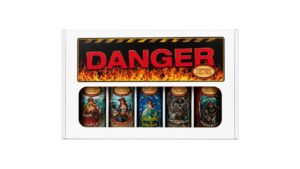
The Peppers of Key West 5 Pack is especially well suited to the variety of foods explored throughout this guide, from street tacos and quesadillas to tortas and other masa-based favorites. With Cayenne, Jalapeño, Habanero, Ghost, and Carolina Reaper sauces spanning dramatically different heat levels, a taco or torta tasting becomes an easy way to discover how changing the sauce can transform the experience while the underlying food stays the same.
Perfect For: Taco nights, torta tastings, Mexican street-food spreads, parties, gifts, heat-level comparisons
Why Tortillas, Masa & Breads Matter to Understanding Mexican Food
Once you begin paying attention to what sits beneath the filling, Mexican street food starts revealing connections that are easy to miss when every dish is considered separately. A tortilla, a thick masa base, a crisp tostada, and a crusty roll may perform different jobs, but each represents a deliberate solution to the same fundamental challenge: creating a foundation that contributes flavor while supporting everything that comes next.
Corn provides the oldest thread running through that story. Nixtamalization transforms maize into something capable of becoming workable masa, and generations of cooks have turned that masa into an extraordinary range of forms. A thin tortilla can bend around grilled meat. A thicker masa base can support the toppings of a sope. A gordita can create space for fillings within the masa itself. A tlacoyo can enclose ingredients before cooking, while a huarache stretches the foundation into an elongated platform that changes the balance between masa and toppings. These foods share ancestry without becoming interchangeable.
Wheat expanded the possibilities rather than replacing what came before it. Flour tortillas developed strong regional identities, particularly in northern Mexico, while Mexican bakers transformed breadmaking traditions into rolls suited to the country’s evolving sandwich culture. Bolillos, teleras, birote salado, and other breads demonstrate that the architecture of Mexican food continued developing as ingredients, people, and techniques moved through the country.
What makes this especially useful for understanding Mexican cuisine is that structure helps explain regional difference. Asking whether a food uses corn or wheat, fresh masa or a tortilla, a soft bread or a sturdy crust can lead directly into questions of geography, agriculture, history, and local preference. The foundation isn’t simply something underneath the interesting ingredients. It is one of the interesting ingredients.
That perspective also makes exploring Mexican street food considerably more rewarding. Instead of seeing dozens of unfamiliar dishes as unrelated names to memorize, you begin recognizing families. You can see how one masa tradition branches into tortillas, sopes, gorditas, tlacoyos, huaraches, and other foods, while Mexican bread traditions branch toward tortas, molletes, cemitas, and regional sandwiches. Once those relationships become visible, the cuisine feels less like an enormous catalog and more like a connected culinary system.
And that may be the most important lesson in this entire guide. Mexican street food isn’t remarkable simply because cooks discovered countless things to put inside tortillas or between pieces of bread. Its diversity also comes from generations of experimentation with the foundations themselves—changing the corn, dough, thickness, shape, cooking method, texture, size, crust, and structure until each foundation performs exactly the job the finished food requires.
THE FOUNDATION ISN’T JUST HOLDING MEXICAN STREET FOOD TOGETHER—IT IS PART OF WHAT MAKES EACH DISH WHAT IT IS.
Frequently Asked Questions:
Is masa the same thing as masa harina?
No. Masa is dough, while masa harina is a shelf-stable flour made from processed nixtamalized corn that can be mixed with water to make masa. Traditional fresh masa is produced by grinding moist nixtamalized corn rather than rehydrating dried flour.
Is masa the same thing as cornmeal?
No. Traditional masa begins with nixtamalized corn, while ordinary cornmeal generally does not undergo the same alkaline processing. That difference affects flavor, texture, nutrition, and how the ground corn behaves when made into dough.
Why does Mexican cooking use nixtamalized corn?
Nixtamalization changes the physical and nutritional properties of dried maize, improves its ability to become workable masa, develops characteristic flavor and aroma, and increases the availability of certain nutrients.
Are flour tortillas authentic Mexican food?
Yes. Corn tortillas have much older Indigenous Mesoamerican origins, but flour tortillas developed a long Mexican history of their own and became particularly important within the cuisines of northern Mexico.
Why do some Mexican street tacos have two tortillas?
A second tortilla can provide additional support for juicy or fatty fillings, particularly when small or relatively thin tortillas are being used. Practices vary among taquerías, regions, taco styles, and individual cooks.
Why are many Mexican street tacos so small?
Smaller tortillas create a practical handheld portion while helping maintain balance among tortilla, meat, salsa, onion, cilantro, and other garnishes. Size also allows diners to sample several tacos or fillings during one meal.
What’s the difference between a bolillo and a telera?
A bolillo is generally elongated with tapered ends and a somewhat crisper scored crust. A telera is usually broader, flatter, and softer, with characteristic impressions across its top that divide the bread visually into sections.
What makes birote salado different from bolillo?
Birote salado is strongly associated with Guadalajara and has a distinctive firm crust and sturdy structure. Those qualities make it particularly suited to tortas ahogadas, where the bread must withstand substantial amounts of sauce.
Are sopes, gorditas, tlacoyos, and huaraches just thick tortillas?
No. Although they belong to the broader family of masa-based foods, differences in shaping, thickness, filling, cooking, and construction give each its own texture, structure, culinary identity, and eating experience.
What is a comal used for in Mexican cooking?
A comal is a traditional cooking surface used for preparing and reheating tortillas and for roasting or toasting ingredients such as chiles, tomatoes, tomatillos, onions, seeds, and spices.
🌽 Continue Exploring How Mexican Food Is Built
Understanding the foundation opens dozens of paths deeper into Mexican cooking. These guides explore the ingredients, techniques, breads, and finished foods that show what happens when corn, masa, tortillas, and bread move from the work surface to the Mexican table.
From Tortillas, Masa & Breads
- What Is Nixtamalization? The Ancient Process Behind Authentic Mexican Flavor
- Masa vs. Masa Harina: What’s the Difference and Which One Do You Need?
- Mexican Corn Explained: Blue, White, Yellow & Red Maize and How They’re Used
- Flour Tortillas Explained: Why Northern Mexico Chose Wheat Over Corn
- How a Comal Gives Mexican Street Food Its Signature Flavor
- Double Tortilla Street Tacos Explained: Why Taquerias Do It Better
- Street Taco Size Explained: Why Smaller Tacos Usually Taste Better
- How to Build the Perfect Street Taco Without Everything Falling Apart
- Bolillos Explained: The Crispy Bread That Built Mexico’s Favorite Sandwiches
- Teleras Explained: Why Mexico’s Soft Sandwich Roll Is Perfect for Tortas
Follow the Foundations Into Finished Mexican Food
- Tortas Ahogadas Explained: Guadalajara’s Famous Drowned Sandwich That Every Food Lover Should Try
- Sopes Explained: Thick Corn Cakes Loaded with Street Food Flavor
- Gorditas Explained: Mexico’s Stuffed Corn Pockets Deserve More Love
- Tlacoyos Explained: Mexico City’s Ancient Stuffed Corn Street Food
- Huaraches Explained: Mexico’s Giant Oval Street Food Loaded with Flavor
🌮 Continue Your Mexican Street Food Journey
For the bigger picture—dishes, ingredients, regional specialties, cooking techniques, and the vocabulary that connects them—continue with The Complete Mexican Street Food Guide: Ingredients, Dishes, Regions & Cooking Terms Explained.
See More Keywords
Mexican corn, Mexican maize, nixtamal, fresh masa, masa harina, tortilla making, handmade tortillas, tortilla press, comal cooking, street taco tortillas, taco construction, doubled tortillas, small street tacos, Mexican flour tortillas, northern Mexican tortillas, blue corn tortillas, white corn tortillas, yellow corn tortillas, Mexican panadería, Mexican torta bread, bolillos, teleras, birote salado, torta ahogada bread, masa foods, sopes, gorditas, tlacoyos, huaraches, tlayudas, Mexican food traditions, Mexican street food culture, traditional Mexican cooking, Mexican culinary techniques, corn to masa, masa to tortilla
