Chilorio Explained: Sinaloa’s Slow-Cooked Pork That’s Packed with Smoky Chile Flavor
Some pork dishes whisper. Chilorio has apparently never seen the point.
This Sinaloan specialty takes pork and cooks it until tender enough to pull apart, then brings the meat together with dried chiles, garlic, oregano, cumin, vinegar, and the richness of pork fat. The result is deeply seasoned, brick-red shredded pork with enough chile character to announce itself across the table—but not necessarily the punishing heat its color might suggest. Chilorio can disappear into a warm tortilla, meet scrambled eggs at breakfast, sit beside beans, or become the kind of filling that makes an ordinary taco suddenly seem underdressed.
But the real story isn’t simply pork plus chiles.
It’s how cooks in Sinaloa turned those ingredients into a regional food distinctive enough that Chilorio de Mocorito now carries protected geographical recognition in Mexico.
The first thing you notice is the color.
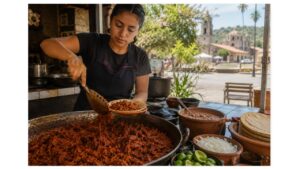
Inside a Sinaloa kitchen, a wide pan holds pork that no longer resembles the neat pieces that originally went into it. Long cooking has softened the meat until the fibers surrender easily beneath a spoon. Then comes the chile mixture—dark red, aromatic, stained with dried peppers and spices—and suddenly everything in the pan begins changing.
The pork gets darker.
The edges begin catching against the hot surface.
Fat glistens between strands of meat while the chile mixture works its way through them. Garlic, oregano, cumin, vinegar, and dried chiles stop behaving like separate ingredients and become the flavor clinging to every shredded piece.
This is chilorio.
And if your first thought is Mexican pulled pork, you’re close enough to recognize what you’re looking at and still far enough away to miss why the dish matters.
Chilorio belongs to Sinaloa, the northwestern Mexican state stretched between the Pacific coast and the Sierra Madre Occidental. The region may be internationally famous for seafood, but move away from the coast and Sinaloa’s food story also becomes one of pork, beef, dried chiles, tortillas, beans, agricultural valleys, ranching country, and dishes built to deliver substantial flavor. Chilorio sits comfortably inside that landscape.
The preparation begins with pork cooked until extremely tender. The meat is then shredded and brought together with a sauce built around dried chiles and aromatics. Traditional formulations vary—as regional foods always do—but dried ancho and pasilla chiles, garlic, oregano, cumin, vinegar, pepper, and pork fat all belong to the dish’s story. The protected Chilorio de Mocorito specification likewise describes tender shredded pork seasoned with dried pasilla and ancho chiles, spices, vinegar, and manteca.
What emerges isn’t simply pork covered in chile sauce.
The meat and seasoning become difficult to separate.
That distinction matters. Chilorio’s character comes from cooking the pork until its fibers can absorb and carry the chile mixture, then allowing fat, heat, spice, acidity, and meat to become one intensely flavored preparation. Depending on how it is served, that pork can become the center of tacos, accompany beans and tortillas, meet eggs at breakfast, or provide the savory foundation for an entirely different meal.
And despite the formidable red-brown color, chilorio isn’t necessarily an especially hot dish. Dried chiles contribute far more than Scoville heat. They bring color, aroma, earthiness, fruitiness, and the concentrated flavors that develop as fresh chiles ripen and lose moisture.
That makes chilorio an especially useful dish for understanding something that appears again and again throughout Mexican cooking:
Chile flavor and chile heat are not the same thing.
And if the dried chiles themselves are what catch your attention, Mexican Chiles Explained: Fresh vs Dried Peppers Used in Street Food is the natural companion lesson, because chilorio demonstrates exactly why Mexican cooks don’t choose a chile based solely on how much it burns.
Here, we’re taking those dried chiles northwest to Sinaloa.
Because in chilorio, they don’t merely make pork hotter.
They help make pork Sinaloan.
CHILORIO ISN’T JUST SHREDDED PORK WITH CHILE SAUCE—IT’S A SINALOAN LESSON IN WHAT HAPPENS WHEN MEAT, FAT, DRIED CHILES, SPICE, ACIDITY, AND SLOW COOKING ARE GIVEN ENOUGH TIME TO BECOME ONE DISH.
Quick Guide to Chilorio
What is chilorio?
Chilorio is a traditional pork dish from Sinaloa, Mexico. Pork is cooked until tender, shredded, and seasoned with a deeply flavored mixture of dried chiles, garlic, spices, vinegar, and traditionally pork fat.
Where does chilorio come from?
Chilorio is strongly associated with Sinaloa in northwestern Mexico, with Mocorito holding a particularly important place in its regional story. In 2026, Mexico granted geographical-indication protection to Chilorio de Mocorito.
Is chilorio spicy?
It can have noticeable chile character, but chilorio isn’t necessarily extremely hot. Dried chiles contribute color, aroma, earthiness, sweetness, and depth as well as heat.
What chiles are used in chilorio?
Recipes vary, but ancho and pasilla are strongly associated with traditional versions, while other preparations may incorporate guajillo or related dried chiles. The protected Mocorito specification identifies dried pasilla and ancho chiles.
How is chilorio traditionally eaten?
Chilorio can be tucked into tortillas for tacos and served with accompaniments such as beans, pickled onions, and lime. It is also eaten with eggs and used in other preparations where intensely seasoned shredded pork makes sense.
Is chilorio the same as carnitas?
No. Both can begin with pork and fat, but their culinary identities are different. Chilorio is defined by tender shredded pork integrated with a seasoned dried-chile preparation, while carnitas develop their characteristic flavor and texture through a different cooking process.
Chilorio Begins in Sinaloa, but Mocorito Gives the Story a Center
The easiest way to misunderstand chilorio is to start with the recipe.
Pork.
Dried chiles.
Garlic.
Spices.
Vinegar.
Manteca.
Put those ingredients on a counter and nothing about them automatically explains why the finished dish belongs so strongly to Sinaloa. Ingredients become regional cuisine only after people repeatedly cook them in particular places, adapt them to local tastes and circumstances, teach the methods to other cooks, and eventually make the resulting food recognizable as part of where they live.
That is the more interesting way to approach chilorio.
Sinaloa occupies a long stretch of Mexico’s northwestern Pacific coast, but reducing its cuisine to seafood would miss enormous parts of the state’s food landscape. Agricultural valleys, inland towns, ranching traditions, mountain country, coastal communities, Indigenous foodways, and the movement of ingredients between them have produced a cuisine far more varied than any single plate can represent.
Chilorio belongs particularly strongly to the inland side of that story.
And within Sinaloa, Mocorito matters.
Located in the state’s Évora region, Mocorito has become so closely associated with the dish that Chilorio de Mocorito received formal protection as a Mexican geographical indication in 2026. The official declaration identifies the protected product as pork cooked with chiles, garlic, oregano, cumin, pepper, vinegar, and manteca, producing tender meat that is shredded and traditionally eaten in tacos or alongside familiar accompaniments.
That recognition gives us something more useful than another food accolade.
It tells us that place matters to the identity of chilorio.
A regional dish can spread far beyond the community most closely associated with it. Recipes travel. Commercial versions appear. Families move. Restaurants reinterpret. Home cooks change chile combinations according to availability and preference.
None of that makes the broader chilorio tradition less interesting.
But Mocorito gives us a geographical center from which to understand it.
The protected designation also connects the dish with a preparation tradition described as extending back more than 300 years. Historical origin stories surrounding regional foods aren’t always perfectly tidy, but the long relationship among pork, dried chile seasoning, fat, acidity, and preservation provides an important clue to why a preparation like chilorio became useful.
Before refrigeration, making meat last was not an abstract culinary challenge.
It was part of feeding people.
Cooking pork thoroughly, reducing moisture, seasoning it strongly, incorporating vinegar, and surrounding the meat with fat all belong to an older world in which preservation and flavor often developed together. What tastes delicious now could also emerge from practical decisions made by cooks who needed food to remain useful longer.
That doesn’t mean every modern plate of chilorio should be treated like a preserved historical specimen.
Quite the opposite.
Chilorio matters because regional food traditions remain alive by continuing to be eaten. Someone warms tortillas. Someone reheats the pork. Someone scrambles it with eggs. Someone puts a bowl on the table with beans and onions. Someone reaches for a convenient prepared version because dinner needs to happen quickly.
Tradition doesn’t require everyone to cook exactly as they did three centuries ago.
It requires the food to remain recognizable enough—and desirable enough—that people keep wanting it.
Mocorito may give chilorio’s story a particularly important address.
Sinaloa keeps giving it a table.
 🌶️ Professor Pepper Says…
Protected geographical indications aren’t simply awards for foods that taste good. They connect a product or preparation to a place whose ingredients, knowledge, reputation, or traditions help give that food its identity. Chilorio de Mocorito now carries that kind of formal recognition.
Before we ask which dried chile creates the best sauce, why vinegar matters, how the pork becomes so tender, or what happens when chilorio meets a tortilla, we first understand where the dish belongs.
CHILORIO MAY BE EATEN THROUGHOUT SINALOA AND FAR BEYOND IT, BUT MOCORITO REMINDS US THAT REGIONAL FOOD BECOMES MEANINGFUL WHEN INGREDIENTS, TECHNIQUE, MEMORY, AND PLACE BEGIN TELLING THE SAME STORY.
What Gives Chilorio Its Deep Red Chile Flavor?
Watch a pan of chilorio long enough and it becomes obvious that the pork is only half the story.
The meat provides richness and substance, but much of the dish’s personality arrives through the dried chiles. They stain the pork brick red, perfume the hot fat, and give chilorio the earthy, concentrated flavor that makes it immediately different from simply braised or shredded pork.
This is also where chilorio teaches an important lesson about Mexican chile cooking.
A dried chile is not simply a fresh chile that has been stored until it becomes wrinkled. Ripening and drying can fundamentally change how a chile behaves in the kitchen. Moisture disappears. Sugars and aromatic compounds become more concentrated. Fresh green flavors can give way to deeper notes of dried fruit, earth, tobacco, herbs, or gentle bitterness depending on the variety.
In traditional Chilorio de Mocorito, ancho and pasilla chiles play particularly important roles. Mexico’s protected geographical indication specifically identifies dried ancho and pasilla among the ingredients used in the preparation, alongside garlic, oregano, cumin, pepper, vinegar, and manteca.
Ancho brings something especially useful to pork. As the dried form of a ripe poblano, it carries relatively modest heat but considerable flavor—earthy, gently sweet, sometimes reminiscent of raisins or other dried fruit. Pasilla contributes its own darker, more savory dried-chile character.
Together, they help explain why a pan of chilorio can look considerably fiercer than it tastes.
The goal isn’t simply to make the pork hot.
It’s to make it taste unmistakably of dried chile.
That distinction becomes clearer when the chiles are prepared. Dried pods are typically softened and blended with aromatics and seasonings into a mixture capable of moving through the shredded meat. Once that mixture meets pork and hot fat, it stops behaving like a sauce poured over something already finished. It cooks with the meat, coating the fibers and concentrating as moisture evaporates.
Eventually, the boundaries blur.
Pork tastes like chile.
Chile tastes like pork.
And the rendered fat carries both.
This is one of the reasons dried chiles are so useful in a preparation like chilorio. Their importance isn’t measured only by how much heat they contribute. Ancho, pasilla, and other dried chiles can bring concentrated fruitiness, earthiness, sweetness, aroma, color, and complexity—qualities that become even more pronounced as they cook with pork and fat.
Chilorio gives us the lesson in a single pan.
THE DRIED CHILES IN CHILORIO AREN’T THERE SIMPLY TO CREATE HEAT—THEY PROVIDE THE COLOR, AROMA, EARTHINESS, SWEETNESS, AND DEPTH THAT TURN SLOW-COOKED PORK INTO SOMETHING DISTINCTLY SINALOAN.
Why Manteca Matters in Traditional Chilorio
There is a moment in good chilorio when the chile-stained pork begins to glisten.
That shine matters.
Traditionally, manteca—rendered pork fat, or lard—is part of the preparation, and reducing its role to “extra richness” misses what fat is actually doing in the pan.
Manteca affects flavor, texture, cooking behavior, and the way the chile seasoning moves through the shredded meat.
Pork fat is particularly comfortable here because it reinforces rather than competes with the flavor of the meat. As the shredded pork cooks with the chile mixture, fat carries chile and spice compounds across its many exposed surfaces. The seasoning doesn’t remain concentrated in isolated pockets of sauce; it becomes distributed through strands and edges of meat.
Manteca also helps create one of chilorio’s most appealing textural contrasts.
The pork has already been cooked until tender enough to separate easily. But chilorio doesn’t necessarily stop at soft shredded meat. As that meat continues cooking with chile seasoning and fat, some exposed strands and edges can begin to fry lightly against the pan.
They darken.
They concentrate.
Some become just a little crisp.
So a forkful can contain tender chile-soaked pork alongside darker, more intensely flavored edges—both created from the same meat.
This is one reason substituting another cooking fat may reproduce the basic mechanics of the dish without producing precisely the same character. Modern cooks can and do adapt recipes, but traditional manteca belongs to chilorio for more than historical nostalgia.
It participates in the cooking.
And in a dish whose name is so closely associated with pork, that relationship makes culinary sense: the meat provides both the substance of the meal and, traditionally, part of the medium through which its seasonings become integrated.
🌶️ Professor Pepper Says…
Manteca is rendered pork fat, commonly called lard in English. In traditional Mexican cooking, it can do much more than add richness: it carries flavor, changes texture, and helps foods brown or fry in ways that become part of the finished dish’s identity.
IN CHILORIO, MANTECA ISN’T SIMPLY FAT ADDED TO PORK—IT HELPS CHILE, SPICE, TEXTURE, AND MEAT BECOME ONE PREPARATION.
Why Does Chilorio Contain Vinegar?
Taste the ingredient list on paper and vinegar might seem like the odd one out.
Pork makes sense.
Dried chiles make sense.
Garlic and spices make sense.
Then comes vinegar.
But put all of those ingredients into the same rich preparation and the reason becomes much clearer.
Pork and manteca bring considerable richness. Dried chiles add concentrated flavor. Garlic, oregano, cumin, and pepper build aromatic depth. Without something sharp to move in the opposite direction, all that richness can become heavy.
Vinegar provides that counterweight.
Its acidity cuts through fat and gives the chile mixture definition, keeping the finished chilorio lively even after long cooking. The goal isn’t usually for the pork to taste obviously sour. In a balanced preparation, vinegar works more quietly, sharpening the flavors around it and preventing richness from flattening everything into one note.
But acidity has another connection to the dish’s history.
Before modern refrigeration, cooks around the world developed overlapping strategies for extending the usefulness of meat: salting, drying, cooking, smoking, storing beneath fat, and using acidic ingredients all belonged to different preservation traditions. Chilorio’s combination of thoroughly cooked pork, fat, chile seasoning, and vinegar fits naturally within that older culinary logic, even though today’s chilorio is eaten primarily because people love how it tastes.
Flavor and preservation aren’t always separate stories.
Sometimes the techniques that helped food last also taught generations of cooks what delicious could taste like.
Vinegar is part of that story here.
It brightens a dish built from pork and fat, complements the fruitier and earthier qualities of dried chiles, and helps explain why chilorio can remain intensely rich without tasting dull.
VINEGAR DOESN’T MAKE CHILORIO A SOUR PORK DISH—IT GIVES ALL THAT PORK, FAT, CHILE, AND SPICE SOMETHING TO PUSH AGAINST.
How Slow Cooking Changes Pork into Chilorio
Chilorio cannot be rushed at the beginning.
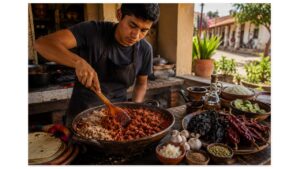
Before dried chiles can stain the meat red, before manteca can help its edges darken, and before vinegar can balance its richness, the pork has to become tender enough to surrender.
That means cooking it.
Traditional methods can vary from kitchen to kitchen, but the essential objective is remarkably consistent: the pork must become tender enough to shred easily while retaining enough structure to survive the cooking that follows. This first stage isn’t where chilorio develops all of its final flavor. It’s where the meat develops the physical structure necessary to carry that flavor.
Think about what shredding does.
A solid piece of pork presents a relatively limited exterior surface. Pull that same piece apart into hundreds of irregular strands and suddenly there are edges, crevices, fibers, and torn surfaces everywhere.
That matters enormously once the chile mixture arrives.
Instead of seasoning only the outside of chunks of meat, the cook can work the chile preparation through an expanded landscape of pork. Seasoning reaches between fibers. Fat coats newly exposed surfaces. Moisture evaporates from thin edges faster than from thick pieces. Some strands remain soft while others spend enough time against the hot pan to darken and concentrate.
The transformation happens gradually.
At first, you can still imagine the cooked pork and chile mixture as separate things.
Then the meat begins taking on color.
The sauce reduces.
Fat becomes more visible as water cooks away.
The aroma of dried chile loses some of its raw sharpness and settles into the pork.
And eventually the pan reaches the point where asking whether you’re tasting meat or sauce no longer makes much sense.
You’re tasting chilorio.
This also explains why describing the dish simply as Mexican pulled pork is useful only as a first visual reference. Pulled pork tells an American reader something about texture, but it doesn’t explain the second stage of cooking that gives chilorio its identity.
The shredding isn’t the finish line.
It’s the beginning of another transformation.
🌶️ Professor Pepper Says…
Shredding increases the amount of meat exposed to seasoning and hot fat. That’s one reason chilorio can taste seasoned all the way through rather than like plain pork wearing a layer of sauce.
And once that chile-seasoned pork spends enough time in the pan, the dish gains another characteristic that’s difficult to appreciate from an ingredient list alone.
Texture.
CHILORIO BECOMES CHILORIO NOT WHEN THE PORK IS SIMPLY TENDER, BUT WHEN THAT TENDER MEAT IS SHREDDED, SEASONED, REDUCED, AND COOKED UNTIL PORK AND CHILE BEGIN SHARING THE SAME FLAVOR.
Chilorio Should Be Tender, Rich—and a Little Crisp at the Edges
Spoon chilorio straight from the center of a pan and you may get soft, juicy strands saturated with chile.
Scrape closer to the bottom or edges and something different can happen.
There, where shredded pork has spent longer in contact with hot fat and metal, the meat can darken and develop slightly crisp or caramelized edges. Those pieces carry more concentrated chile flavor and a different texture from the tender meat surrounding them.
That contrast is one of the pleasures of the dish.
Chilorio shouldn’t become uniformly dry or crunchy. Its identity still depends on tender shredded pork. But neither does the most compelling version have to resemble a completely soft, wet stew. Allowing some moisture to cook away and some strands to meet the hot pan gives the dish dimension.
Soft against crisp.
Rich against acidic.
Pork against dried chile.
Deep flavor against surprisingly restrained heat.
These contrasts help explain why chilorio works so naturally inside a tortilla. A tortilla doesn’t need a bowl of loose sauce poured into it. It needs a filling substantial enough to stay put, juicy enough to remain satisfying, and intensely seasoned enough that a relatively small amount can flavor the entire bite.
Chilorio does all three.
Add beans, onion, lime, salsa, or whatever belongs on that particular table, and the pork can support those additions without disappearing beneath them.
But it doesn’t need much help.
After enough time in the pan, the dish has already built its own layers.
THE BEST BITE OF CHILORIO CAN GIVE YOU TENDER PORK, CHILE-SOAKED FIBERS, RICH FAT, BRIGHT ACIDITY, AND A DARKER CRISP EDGE—ALL FROM THE SAME PAN.
How Chilorio Moves from the Pan to the Sinaloa Table
A pan of chilorio may contain everything that gives the dish its identity, but that is rarely where the story ends.
Once the pork is ready, the question becomes much simpler.
How do you want to eat it?
For many people, the answer begins with a tortilla.
Spoon warm chilorio onto a corn or flour tortilla and very little else is required. The shredded pork already carries dried chile, garlic, spice, acidity, and fat, so the tortilla isn’t being asked to rescue an underseasoned filling. It simply gives the meat somewhere to go.
That simplicity is part of chilorio’s appeal.
A little onion can bring freshness and crunch. Lime can sharpen the richness already balanced by vinegar. Refried beans can turn a few tacos into a more substantial meal. Salsa may add another layer of chile or acidity, although chilorio hardly needs to be buried beneath it.
In Mocorito’s protected geographical-indication documentation, chilorio is specifically associated with serving traditions that include tacos made with corn tortillas, refried beans, and onions pickled with lime. Those accompaniments make culinary sense because each contributes something the pork doesn’t provide on its own: the tortilla brings structure, beans bring earthy softness, and onion and citrus bring contrast.
That’s an important part of understanding regional food. Chilorio doesn’t reach the table alone. The tortillas, beans, onion, and citrus surrounding it help show how the dish actually belongs within a Sinaloan meal.
CHILORIO BELONGS TO SINALOA NOT ONLY BECAUSE OF HOW IT IS COOKED, BUT BECAUSE OF HOW NATURALLY THAT DEEPLY SEASONED PORK FITS THE TORTILLAS, BEANS, ONIONS, AND EVERYDAY TABLE AROUND IT.
Corn or Flour Tortillas? In Sinaloa, Both Make Sense
Ask which tortilla belongs with chilorio and the temptation is to demand a single traditional answer.
Sinaloa makes that difficult.
Corn tortillas have deep roots throughout Mexican cooking and remain a natural partner for chilorio. Their toasted maize flavor stands up beautifully to rich pork, while their relatively modest size encourages the kind of simple taco in which the meat remains unmistakably central.
But Sinaloa also belongs to northern and northwestern Mexico’s flour-tortilla world.
Wheat became increasingly important across northern Mexico after the colonial introduction of the crop, and flour tortillas eventually developed into one of the region’s defining everyday foods. In states such as Sonora and Sinaloa, the tortilla landscape therefore looks different from places where corn overwhelmingly dominates.
That makes chilorio particularly interesting.
Put it in a corn tortilla and the pork meets one of Mexico’s oldest food foundations.
Put it in a flour tortilla and it enters another deeply established northern Mexican tradition.
The experience changes.
Corn contributes its own pronounced flavor and a little more textural resistance. A soft flour tortilla can wrap more completely around the pork, absorbing some of its chile-stained fat while allowing the filling’s richness to dominate.
Neither choice requires us to declare the other incorrect.
Regional food rarely becomes more understandable when we force it into rules that the people eating it don’t necessarily follow.
For a deeper look at why wheat tortillas became so important across northern Mexico, Flour Tortillas Explained: Why Northern Mexico Chose Wheat Over Corn follows that history from wheat cultivation to the flexible tortillas that now define countless northern Mexican meals.
With chilorio, the important thing is what happens when the tortilla meets the pork.
Warm bread or maize.
Chile.
Fat.
Tender meat.
And a meal that requires surprisingly little assembly.
CORN CONNECTS CHILORIO TO MEXICO’S ANCIENT TORTILLA TRADITION; FLOUR CONNECTS IT TO THE DISTINCTIVE FOOD CULTURE OF THE NORTH—AND SINALOA COMFORTABLY LIVES IN BOTH WORLDS.
Why Chilorio Works So Well for Breakfast
Morning changes chilorio without asking it to become something else.
A spoonful of cold leftover pork hits a warm pan. The manteca softens. The chile aroma returns. Darker strands begin sizzling at the edges.
Then eggs enter.
The eggs don’t merely sit beside the chilorio. As they cook, they pick up some of the seasoned fat and brick-red chile mixture already clinging to the pork. Soft curds contrast with the shredded meat, while occasional caramelized edges provide another texture altogether.
Add warm tortillas and breakfast is essentially finished.
That economy matters.
Foods that require long cooking often develop a second life precisely because nobody wants to repeat the entire process every time they’re hungry. Once chilorio exists in the kitchen, its concentrated seasoning means a relatively small amount can transform simpler ingredients.
Eggs are especially good at accepting that flavor.
Potatoes can do the same.
Beans can do it.
A tortilla certainly can.
What began as slow cooking therefore becomes fast cooking the next day.
That ability to turn intensely flavored meats into practical morning meals fits naturally into the broader breakfast culture of northern Mexico. Northern Mexico Breakfast Traditions: Machacado, Burritos & Ranch Cooking explores how meats, eggs, beans, flour tortillas, and ranch-country cooking come together in the substantial breakfasts found across the region.
And that tells us something important about why chilorio endured. The dish isn’t merely delicious when freshly prepared. It is adaptable after it has been prepared, which makes it valuable in the ordinary rhythm of feeding a household.
The long work happens once.
The rewards can keep appearing.
CHILORIO’S BREAKFAST LIFE REVEALS ONE OF ITS GREATEST STRENGTHS: HOURS OF SLOW COOKING CAN CREATE A FOOD THAT MAKES TOMORROW’S MEAL REMARKABLY QUICK.
Chilorio, Carnitas, and Cochinita Pibil Are Not the Same Pork Story
From a distance, Mexican pork dishes can begin to blur together.
Tender pork.
Tortillas.
Onion.
Salsa.
Perhaps citrus.
But ingredients visible on a plate tell only part of the story. Technique, seasoning, regional identity, and the particular transformation a cook is trying to create matter just as much.
Carnitas are most strongly associated with Michoacán and traditionally depend on cooking pork in its own fat until different cuts become exceptionally tender while developing characteristic browned and crisped surfaces. The pork itself remains the central flavor, with accompaniments added when the meat reaches the taco.
Chilorio takes another path.
Its pork is cooked tender and shredded, but the defining transformation continues when the meat becomes thoroughly integrated with a dried-chile preparation containing aromatics, spices, vinegar, and traditionally manteca. The chile seasoning isn’t merely an accompaniment waiting at the taco counter.
It becomes part of the meat.
Cochinita pibil takes us somewhere else entirely—to the Yucatán Peninsula, where pork is associated with achiote, sour orange or other acidic citrus, and the pibil tradition of cooking connected historically with an earth oven. Its brilliant reddish-orange color may make it superficially resemble another chile-colored pork preparation, but achiote gives cochinita a completely different aromatic identity.
Put all three into tortillas and a photograph might suggest relatives.
Taste them and geography reappears.
Michoacán speaks through carnitas.
Yucatán speaks through cochinita pibil.
Sinaloa speaks through chilorio.
That is why comparing regional dishes can be useful when the goal isn’t to decide which is “best.” The comparison reveals what each region chooses to emphasize.
For chilorio, the defining answer is remarkably consistent:
tender shredded pork transformed by dried chile seasoning, acidity, spice, fat, and additional cooking.
🌶️ Professor Pepper Says…
When two Mexican dishes both contain pork and tortillas, don’t assume they’re variations of the same recipe. Ask how the pork is cooked, which seasonings define it, what kind of acidity is used, and where the dish comes from. Technique and place usually tell you more than the protein does.
CHILORIO, CARNITAS, AND COCHINITA PIBIL MAY ALL REACH A TORTILLA, BUT THE JOURNEY EACH PIECE OF PORK TAKES TO GET THERE BELONGS TO A DIFFERENT REGIONAL KITCHEN.
Chilorio Isn’t Just Taco Filling
Tacos may be the easiest way to understand chilorio, but stopping there makes the dish smaller than it really is.
Think instead of chilorio as a prepared pork ingredient.
Once the meat has been cooked tender, shredded, seasoned with dried chiles and spices, balanced with vinegar, and enriched with fat, much of the difficult flavor-building work has already happened. A cook can move that prepared meat into another meal without having to construct those flavors again from the beginning.
Fold it into a Street Quesadillas vs American Quesadillas: Why They’re Not the Same Thing-style quesadilla and melted cheese softens the intensity of the chile-seasoned pork.
Wrap it inside a flour tortilla with beans and it becomes a substantial northern Mexican-style meal that travels remarkably well.
Serve it with potatoes and the starch absorbs some of the seasoned fat and chile flavor.
Cook it with eggs and breakfast appears.
That adaptability also helps explain why commercially prepared chilorio became practical. A food that reheats well and can become several different meals has obvious value beyond the kitchen in which it was originally cooked.
Convenience doesn’t automatically erase tradition.
Sometimes convenience is one of the ways a regional food travels.
A person doesn’t need to spend hours cooking pork every time they want chilorio any more than every tortilla needs to be made from freshly ground maize at the moment it is eaten. Packaged versions, restaurant preparations, family recipes, and freshly cooked batches can coexist because they answer different needs.
That movement from regional specialty to food enjoyed far beyond its original home happens throughout Mexico. Our Regional Mexican Street Food Guide: Famous Dishes from Every Corner of Mexico explores how geography, local ingredients, cooking traditions, and generations of cooks create distinctive foods—and how many of those dishes eventually travel beyond the regions that made them famous.
What matters is whether the essential culinary identity remains recognizable.
Tender pork.
Dried chile.
Acidity.
Spice.
Fat.
Time.
Everything else is where cooks begin deciding what happens next.
CHILORIO IS MORE USEFUL THAN A SINGLE TACO CAN SHOW—ONCE THE PORK HAS BEEN TRANSFORMED, IT BECOMES A READY-MADE FOUNDATION FOR MEALS ACROSS THE DAY.
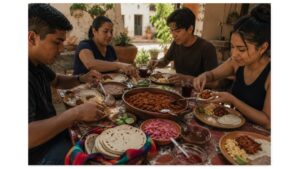
Where Should You Look for Chilorio in Sinaloa?
If chilorio has made you curious enough to want the dish in its own landscape, begin inland.
Mocorito is the obvious center of the story.
The town’s association with chilorio is no longer merely a matter of culinary reputation; Chilorio de Mocorito now carries formal geographical recognition. But the value of visiting isn’t checking a protected food off a list.
It’s seeing how naturally the dish fits into the surrounding food culture.
Look for chilorio in modest restaurants, family-run kitchens, mercados, fondas, breakfast settings, prepared-food counters, and places where the question isn’t whether the dish is sufficiently “authentic” for a visitor but whether it tastes good enough for people to keep ordering it.
Elsewhere in Sinaloa, the context can change.
In larger cities, chilorio may appear alongside a much broader cross-section of the state’s cooking. Along the coast, it shares a culinary landscape with the seafood for which Sinaloa is internationally famous. Inland, pork, beef, beans, dried chiles, and tortillas become more visible reminders that the state’s cuisine extends far beyond shrimp and aguachile.
That contrast is worth paying attention to.
Sinaloa doesn’t have one food identity.
Few places do.
The coast, agricultural valleys, towns, ranching areas, and mountain communities create overlapping food traditions rather than a single representative menu. Chilorio helps us move beyond the easiest image of the state and see another side of northwestern Mexican cooking.
And if you reach Mocorito, don’t approach the dish as though you’re searching for one definitive plate against which every other version should be judged.
Pay attention instead to the recurring ideas.
How finely is the pork shredded?
How deeply has the chile mixture penetrated the meat?
Is the heat gentle or assertive?
Can you taste the acidity?
Are there darker edges?
Corn tortilla or flour?
Beans?
Pickled onion?
Breakfast or lunch?
Those details tell you how a living regional food behaves when it leaves the definition and reaches an actual table.
TO UNDERSTAND CHILORIO IN SINALOA, DON’T LOOK ONLY FOR THE MOST FAMOUS VERSION—WATCH HOW THE DISH MOVES THROUGH ORDINARY KITCHENS, RESTAURANTS, TORTILLAS, BREAKFASTS, AND TABLES.
Can You Make Chilorio at Home?
Chilorio rewards patience, but it doesn’t demand restaurant equipment or an encyclopedic pantry.
At its core, the home cook is trying to reproduce the same transformation we’ve followed throughout this article: cook pork until tender, build a flavorful dried-chile mixture, shred the meat, then bring everything back together until the seasoning becomes part of the pork rather than something sitting on top of it.
The details can vary.
Pork shoulder is an especially practical choice because it contains enough fat and connective tissue to remain flavorful through long cooking. As the meat cooks, collagen softens and the pork becomes tender enough to pull apart without turning dry and stringy.
Then come the dried chiles.
Ancho and pasilla give the dish an excellent traditional foundation. Remove the stems and seeds, soften the dried chiles, and blend them with garlic, oregano, cumin, pepper, vinegar, and enough liquid to create a smooth seasoning mixture. Some recipes shift the proportions, add another dried chile, or adjust the spices according to family preference.
That’s normal.
Regional dishes rarely survive for generations because every household owns an identical measuring spoon.
What matters more is understanding what each ingredient is trying to accomplish.
The pork should become tender.
The dried chiles should contribute depth rather than overwhelming heat.
The vinegar should brighten rather than make the dish taste sour.
The manteca should enrich the pork and help its shredded edges fry and darken.
And the final cooking should continue long enough for those elements to stop tasting separate.
Once the pork is shredded, resist the temptation to simply pour chile sauce over it and serve.
Give it more time.
Return the meat to a broad pan with the chile mixture and fat, turn everything together, and let heat begin concentrating the flavors. As moisture evaporates, the pork should deepen from pale brown toward the characteristic red-brown of chilorio. Some strands will remain tender and juicy; others will spend enough time against the hot surface to develop darker edges.
Taste as it cooks.
If the pork seems heavy, a little more acidity may bring it back into balance. If the chile flavor seems thin, additional reduction may accomplish more than simply adding another spoonful of seasoning. If everything tastes right but the meat remains uniformly soft, a little additional time against the pan can create the textural contrast that makes the finished dish more interesting.
Home chilorio doesn’t need to reproduce one theoretically perfect Mocorito recipe to teach you why the dish works.
It needs to respect the transformation.
THE HOME COOK’S GOAL ISN’T SIMPLY TO MAKE SHREDDED PORK AND ADD CHILE SAUCE—IT’S TO KEEP COOKING UNTIL THE PORK, DRIED CHILES, ACIDITY, SPICES, AND FAT BEGIN TASTING LIKE THEY WERE ALWAYS MEANT TO BE TOGETHER.
What Should You Serve with Chilorio?
Chilorio has already done most of the flavor work before it reaches the plate.
That’s why the best accompaniments tend to provide contrast rather than competition.
Start with tortillas.
Corn tortillas contribute toasted maize flavor and a little firmness against the soft pork. Flour tortillas bring the supple texture so characteristic of northern and northwestern Mexican cooking. Either can become the beginning of an excellent chilorio taco, and larger flour tortillas open the door to burritos and more substantial wrapped preparations.
Refried beans are another natural companion. Their earthy, creamy character softens the intensity of the seasoned pork without erasing it, while beans and tortillas together turn a relatively modest amount of chilorio into a complete and satisfying meal.
Then look for freshness.
Chopped white onion provides crunch and sharpness. Pickled onion brings acidity along with texture. Lime wakes up the richness. Cilantro can contribute a fresh herbal note where appropriate. A restrained salsa can push the meal toward brighter, smokier, or hotter territory depending on what the table needs.
The important word is restrained.
Chilorio isn’t bland meat waiting for salsa to give it personality.
The pork already contains dried chile, garlic, oregano, cumin, vinegar, and fat. Pouring an aggressively flavored sauce over everything can hide precisely the character you’ve spent hours developing.
A better approach is to ask what the pork is missing.
Need brightness?
Add lime or pickled onion.
Need creaminess?
Beans or a little cheese can provide it.
Need more heat?
That’s where a chile sauce can make sense.
Need nothing?
Warm tortilla. Chilorio. Eat.
That may be the best answer of all.
THE BEST CHILORIO ACCOMPANIMENTS DON’T TRY TO OUTSHOUT THE PORK—THEY GIVE ITS RICHNESS, DRIED-CHILE DEPTH, AND ACIDITY SOMETHING FRESH OR SIMPLE TO PLAY AGAINST.
What Hot Sauce Goes Best with Chilorio?
Adding hot sauce to chilorio requires a slightly different mindset than adding hot sauce to unseasoned meat.
Chilorio already has a chile identity.
That means the goal shouldn’t automatically be more chile at any cost. A good hot sauce pairing should either reinforce something already present in the pork or introduce a contrast the dish doesn’t already have.
For a traditional-style chilorio taco, a relatively bright sauce can work beautifully because acidity cuts through the pork’s richness. A jalapeño- or serrano-forward sauce can introduce fresher green-chile character against the darker flavor of ancho and pasilla.
That’s an interesting contrast.
The dried chiles in the pork provide earthiness, concentration, and depth; the fresher chile profile of the sauce can provide lift.
For chilorio with eggs, a moderately hot sauce can make even more sense. Eggs soften both salt and heat, so the combination gives you room to increase chile intensity without losing the pork’s flavor.
If chilorio is wrapped in a flour tortilla with beans and cheese, the equation changes again. The tortilla, beans, and dairy absorb heat and broaden the flavor of each bite, allowing a more assertive sauce to remain balanced.
This is why matching hot sauce to the entire meal rather than merely the protein usually produces better results.
You’re not pairing sauce with pork.
You’re pairing it with chilorio + tortilla + beans + onion + lime + cheese + eggs—or whatever is actually on the plate.
Our The Amazing Guide to Taco Sauce Pairing: Best Hot Sauce for Tacos, Meats, Fish & Street Taco Flavor Hacks takes that same approach across different taco fillings, looking at how heat, acidity, sweetness, smoke, and chile character interact with the food rather than treating one hot sauce as universally best.
Chilorio gives us a particularly good example because the meat already arrives with so much flavor.
The sauce should contribute.
Not cover.
THE BEST HOT SAUCE FOR CHILORIO ISN’T NECESSARILY THE HOTTEST ONE—IT’S THE ONE THAT ADDS SOMETHING THE DRIED-CHILE PORK DOESN’T ALREADY HAVE.
🌶️ Recommended Peppers of Key West Products for Chilorio
Chilorio doesn’t need hot sauce to become flavorful. That’s exactly what makes pairing sauces with it interesting.
The pork already brings dried-chile depth, richness, garlic, spice, and acidity. So rather than trying to overpower those flavors, the best Peppers of Key West pairings can take the meal in different directions: fresher green-chile brightness for tacos, additional heat for eggs, or a sharper chile accent for a rich flour-tortilla burrito.
Product Pairing Quick Guide
- Chilorio Tacos with Onion & Lime → Peppers of Key West Serrano Hot Sauce
- Chilorio & Eggs → Peppers of Key West Cayenne Hot Sauce
- Chilorio Quesadillas → Peppers of Key West Jalapeno Garlic Hot Sauce
- Chilorio Burritos with Beans & Cheese → Peppers of Key West Habanero Hot Sauce
- Want to Explore Several Chilorio Pairings? → Peppers of Key West 5 Pack
🌶️ Best Peppers of Key West Pairings for Chilorio
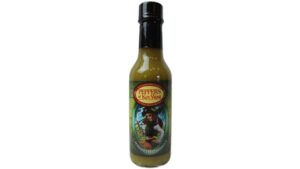
Peppers of Key West Serrano Hot Sauce
Chilorio’s ancho-and-pasilla depth makes a fresh green-chile contrast especially appealing. Peppers of Key West Serrano Hot Sauce brings brighter pepper character that can lift rich shredded pork without hiding the dried-chile flavors underneath.
It’s particularly well suited to simple chilorio tacos with warm tortillas, chopped onion, and lime, where the sauce becomes one more fresh accent rather than the dominant flavor.
Best with: Chilorio tacos, flour-tortilla tacos, beans, eggs, quesadillas
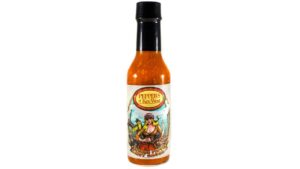
Peppers of Key West Cayenne Hot Sauce
Breakfast is where Peppers of Key West Cayenne Hot Sauce becomes particularly useful. Its straightforward chile heat can wake up chilorio and eggs while allowing the pork’s deeper dried-chile seasoning to remain recognizable.
Try it when leftover chilorio hits the skillet in the morning, especially with scrambled eggs, potatoes, beans, and warm tortillas.
Best with: Chilorio and eggs, breakfast tacos, potatoes, beans, breakfast burritos
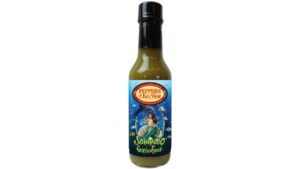
Peppers of Key West Jalapeno Garlic Hot Sauce
Garlic already belongs naturally to chilorio, which gives Peppers of Key West Jalapeno Garlic Hot Sauce an easy bridge into the dish. The fresher jalapeño profile moves in a different direction from the pork’s darker dried chiles while the garlic connects the two.
That makes it especially natural with chilorio quesadillas, tacos, and other preparations where cheese introduces additional richness.
Best with: Chilorio quesadillas, tacos, melted cheese, beans, flour tortillas

Peppers of Key West 5 Pack
Chilorio can move from tacos to eggs to quesadillas to burritos, and each preparation changes what you might want from a hot sauce. The Peppers of Key West 5 Pack turns that versatility into an opportunity to experiment.
Try brighter sauces with simple tacos, additional heat with eggs, and richer or more assertive combinations when beans, cheese, and flour tortillas join the meal.
Best with: Chilorio tasting nights, taco spreads, breakfast, burritos, quesadillas, sharing several heat levels
Why Chilorio Deserves a Place in the Mexican Street Food Story
Chilorio complicates the phrase street food in a useful way.
It isn’t defined by a vendor standing on a sidewalk.
It isn’t a food that exists only in markets.
And its identity doesn’t depend on being handed to you wrapped in paper while you’re walking through a plaza.
Its roots reach into regional kitchens.
But put chilorio inside a tortilla and the boundaries become less important.
This is one of the reasons Mexican street food becomes much more interesting once we stop treating it as a rigid category and begin seeing it as part of a larger food ecosystem. Home kitchens feed markets. Regional preparations become taco fillings. Bakery breads become tortas. Celebration foods appear at stalls. Ingredients move between household cooking and commercial food stands.
The street doesn’t invent everything it serves.
Often, it reveals regional cooking in portable form.
Chilorio demonstrates that beautifully.
The pork can begin with the slow rhythms of a kitchen: long cooking, dried chiles softened and blended, meat shredded by hand, seasoning worked through the fibers, fat and moisture slowly reducing.
Then somebody warms a tortilla.
Suddenly the preparation becomes portable.
That doesn’t mean every chilorio taco should automatically be classified as street food, nor does it require us to squeeze a regional dish into a category simply because this article belongs within a Mexican Street Food library.
The more useful lesson is that Mexican street food constantly borrows from the deeper regional cuisines surrounding it.
Our Mexican Street Food Beyond Tacos: Elote, Tortas, Tamales & More guide follows that larger idea across foods that resist the assumption that Mexican street eating begins and ends with tacos.
Chilorio adds another layer.
It reminds us that sometimes the most important part of a taco existed long before anyone folded a tortilla around it.
CHILORIO EARNS ITS PLACE IN THE MEXICAN STREET FOOD STORY NOT BECAUSE THE STREET OWNS IT, BUT BECAUSE REGIONAL COOKING AND STREET EATING HAVE NEVER LIVED IN COMPLETELY SEPARATE WORLDS.
Conclusion: Chilorio Tastes Like Sinaloa Because Sinaloa Made It Useful
Return to the pan where we started.
The pork has changed completely.
What began as solid pieces of meat has become hundreds of tender strands stained deep red by dried chiles. Garlic and spices have disappeared into the mixture. Vinegar no longer announces itself as vinegar; it simply keeps the richness awake. Manteca glistens between fibers and has helped darken some edges more than others.
There are soft pieces.
Crisp pieces.
Earthy chile.
Pork.
Acidity.
Fat.
And time holding all of it together.
That alone would make chilorio worth eating.
But regional foods become more interesting when we understand why the preparation kept making sense after the first person cooked it.
Chilorio is flavorful, but it’s also practical.
It turns pork into something intensely seasoned and useful across multiple meals. It reheats. It travels. It can become breakfast. It can sit beside beans. It can disappear into a flour tortilla or a corn tortilla. It can become a taco with little more than onion and lime.
And now, through the protected identity of Chilorio de Mocorito, we have another reminder that foods this adaptable don’t have to lose their geographical roots as they spread.
Mocorito gives the dish a particularly important center.
Sinaloa gives it a larger regional identity.
Generations of cooks give it continuity.
And every warm tortilla gives it somewhere else to go.
That may be the most useful way to understand chilorio.
Not as Mexican pulled pork.
Not as another spicy taco filling.
Not as a relic whose value depends on being prepared exactly one way.
But as a regional cooking idea refined until pork, dried chiles, fat, acidity, spice, preservation, convenience, and pleasure all began pointing in the same direction.
Toward Sinaloa.
CHILORIO ENDURES BECAUSE IT DOES SOMETHING GREAT REGIONAL FOODS OFTEN DO: IT TURNS THE INGREDIENTS AND PRACTICAL NEEDS OF A PLACE INTO SOMETHING PEOPLE KEEP WANTING TO EAT.
Frequently Asked Questions About Chilorio
What is chilorio made from?
Chilorio is made from pork cooked until tender, shredded, and seasoned with dried chiles, garlic, spices, vinegar, and traditionally manteca. Ancho and pasilla chiles are especially associated with Chilorio de Mocorito.
Where did chilorio originate?
Chilorio comes from Sinaloa in northwestern Mexico and is particularly associated with Mocorito. Chilorio de Mocorito received geographical-indication protection in Mexico in 2026, formally recognizing the dish’s connection to the region.
What does chilorio taste like?
Chilorio is rich, savory, earthy, and slightly tangy, with deep dried-chile flavor. Ancho and pasilla can contribute gentle sweetness and darker earthy notes without making the pork overwhelmingly hot.
Is chilorio very spicy?
Usually not. Despite its deep red color, traditional chilorio is more about dried-chile flavor than extreme heat, with the chiles contributing earthiness, fruitiness, aroma, and color as well as mild heat.
What chiles are traditionally used in chilorio?
Ancho and pasilla are strongly associated with traditional Chilorio de Mocorito. Recipes can vary, however, and some versions use guajillo or other dried Mexican chiles to adjust the color, flavor, or heat.
What is the difference between chilorio and carnitas?
Carnitas are associated with Michoacán and develop their character by cooking pork in fat until tender with browned or crisp surfaces. Chilorio is associated with Sinaloa and combines tender shredded pork with dried chiles, spices, vinegar, and traditionally manteca.
What is the difference between chilorio and cochinita pibil?
Chilorio gets its characteristic flavor from dried chiles, spices, vinegar, pork, and fat. Yucatecan cochinita pibil follows a different tradition built around achiote, acidic citrus, and pibil cooking, giving it a distinctly different flavor despite the two dishes’ reddish appearance.
Can you eat chilorio for breakfast?
Absolutely. Chilorio pairs naturally with eggs, potatoes, beans, and tortillas because its intensely seasoned pork brings plenty of flavor to simple breakfast ingredients. It also makes an excellent filling for breakfast burritos.
Do you eat chilorio with corn or flour tortillas?
Both. Corn tortillas bring toasted maize flavor, while flour tortillas reflect the strong wheat-tortilla traditions of northern and northwestern Mexico. Either makes an excellent partner for chilorio.
What is manteca, and why is it used in chilorio?
Manteca is rendered pork fat, commonly called lard in English. It adds richness, helps distribute chile and spice flavors through the shredded pork, and encourages some strands to develop darker, lightly crisped edges.
Why does chilorio contain vinegar?
Vinegar provides acidity that balances the richness of pork and manteca while sharpening the dried-chile and spice flavors. It should brighten the finished chilorio rather than make it taste noticeably sour.
Can you make chilorio ahead of time?
Yes. Chilorio reheats particularly well and can be prepared ahead for tacos, eggs, quesadillas, burritos, or meals with beans and tortillas. Reheating it in a skillet can also restore some of its desirable caramelized edges.
What is the best way to eat chilorio?
One of the simplest ways is inside a warm corn or flour tortilla with onion and lime. Chilorio is also excellent with beans, eggs, potatoes, in quesadillas, or wrapped into burritos.
🌮 Continue Your Mexican Street Food Journey
Chilorio is a reminder that Mexico’s street-food world extends far beyond foods invented specifically for the street. Regional preparations move between home kitchens, mercados, restaurants, tortillas, and everyday meals, creating the enormous culinary landscape explored in our main Beyond Tacos guide.
🌯 More Mexican Street Foods Worth Trying
- Regional Mexican Street Food Guide: Famous Dishes from Every Corner of Mexico
- Carne Asada Explained: Northern Mexico’s Legendary Grilled Beef Tradition
- Burros Explained: Northern Mexico’s Oversized Flour Tortilla Classic
- Sonoran Hot Dogs Explained: Why Mexico’s Most Loaded Hot Dog Became a Street Food Legend
- Cabrito Explained: Northern Mexico’s Legendary Fire-Roasted Goat That Defines Monterrey Cuisine
- Birria Explained: Jalisco’s Legendary Slow-Cooked Stew Before It Became a Taco Sensation
- Carne en su Jugo Explained: Guadalajara’s Beef Dish That Comfort Food Lovers Need to Try
- Tortas Ahogadas Explained: Guadalajara’s Famous Drowned Sandwich That Every Food Lover Should Try
Expand Your Mexican Food Journey
- The Complete Mexican Street Food Guide: Ingredients, Dishes, Regions & Cooking Terms Explained
- The History of Mexican Street Food: How Markets, Vendors and Family Recipes Built a Culinary Empire
- Mexican Street Food Markets Explained: How to Order Like a Local and Find the Best Food Fast
- Mexican Chiles Explained: Fresh vs Dried Peppers Used in Street Food
See More Keywords
Sinaloa food, Sinaloa cuisine, Mocorito Sinaloa food, traditional Mexican pork, slow-cooked Mexican pork, shredded pork tacos, Mexican dried chiles, ancho chile pork, pasilla chile pork, pork cooked with dried chiles, Mexican pork and chile, manteca Mexican cooking, Mexican lard cooking, chilorio tacos, chilorio burritos, chilorio quesadillas, chilorio breakfast, chilorio with eggs, chilorio with beans, chilorio with flour tortillas, chilorio with corn tortillas, northern Mexican food, northwestern Mexican cuisine, traditional food of Sinaloa, famous Sinaloa dishes, regional Mexican pork dishes, Mexican preserved pork, chile-seasoned pork, smoky Mexican pork, Mocorito food traditions
