
Capsicum annuum Explained: The Species Behind Jalapeños, Poblanos, Cayenne & More

A Jalapeño does not look much like a Poblano. A Poblano does not taste much like a Cayenne. And a sweet Bell Pepper seems almost impossible to place in the same family as a fiery Chile de Árbol.
Yet all of them belong to the same species: Capsicum annuum.
That extraordinary diversity makes Capsicum annuum one of the most useful species for understanding the chile pepper world. Within a single species are peppers that can be sweet or hot, tiny or enormous, thin-walled or thick-fleshed, eaten fresh or dried, harvested green or allowed to ripen completely. Some are everyday grocery-store staples. Others form the foundation of regional cuisines and traditional chile preparations around the world.
The species includes familiar peppers such as Jalapeño, Serrano, Poblano, Cayenne, Anaheim and Chile de Árbol, along with numerous sweet peppers and countless cultivated varieties. Even Chipotle belongs here—not because it is a separate pepper species, but because a Chipotle begins as a ripe Jalapeño that has been dried and smoked.
That variety also reveals something important about pepper classification. A species name does not tell you exactly what a pepper will look like, how hot it will be or how it should be used. Centuries of cultivation and selection have produced tremendous diversity within Capsicum annuum, which is why peppers belonging to the same species can behave so differently in the kitchen.
Understanding Capsicum annuum therefore gives us something bigger than a list of peppers. It provides a window into how chile peppers are related—and how human cultivation transformed members of the same species into remarkably different ingredients.
CAPSICUM ANNUUM PROVES THAT PEPPERS DON’T HAVE TO LOOK, TASTE OR BURN ALIKE TO BELONG TO THE SAME SPECIES.
New to the larger chile pepper family? Start with our Chile Pepper Basics Explained: Heat, Capsaicin, Scoville & How Peppers Work guide to understand the science and structure behind the peppers we eat.
Capsicum annuum Quick Guide
What is Capsicum annuum?
Capsicum annuum is one of the major domesticated Capsicum species and includes many of the world’s most familiar sweet and hot peppers.
Which peppers are Capsicum annuum?
Jalapeño, Serrano, Poblano, Cayenne, Anaheim, Chile de Árbol and Bell Peppers are all examples of Capsicum annuum.
Is Capsicum annuum always hot?
No. The species includes everything from sweet peppers with essentially no pungency to varieties capable of producing substantial chile heat.
Are Jalapeños and Poblanos really the same species?
Yes. Despite their differences in size, shape, flavor and heat, both are cultivated varieties of Capsicum annuum.
Is Chipotle a Capsicum annuum pepper?
Yes. Chipotle is made from ripe Jalapeño peppers, so it remains Capsicum annuum even after smoking and drying.
Why are Capsicum annuum peppers so different from one another?
Generations of cultivation and selection emphasized different characteristics—including fruit size, shape, color, flavor, pungency and culinary purpose—creating enormous diversity within the species.
What Is Capsicum annuum?
Capsicum annuum is one of the major domesticated species within the genus Capsicum, the group of plants we commonly call chile peppers. It is also the species behind many of the peppers people encounter most often—from sweet Bell Peppers and mild Poblanos to Jalapeños, Serranos, Cayenne and Chile de Árbol.
The name can be slightly misleading. The Latin word annuum suggests an annual plant, but Capsicum annuum is not necessarily limited to a single growing season. In warm climates where frost does not kill the plant, it can survive and continue producing for more than one year. The name is a botanical label rather than a rule about how long every plant lives.
What really defines Capsicum annuum is its biological relationship. Peppers within the species share a common genetic lineage even though generations of natural variation, domestication and selective cultivation have produced an enormous range of fruits. Humans repeatedly saved and propagated plants with desirable characteristics—larger fruits, different shapes, thicker walls, particular flavors, greater or reduced pungency and other useful traits.
The result is a species in which outward appearance alone can be deceptive. A thick, broad Poblano and a slender Chile de Árbol may look as though they belong to entirely different branches of the pepper family. A sweet Bell Pepper and a hot Serrano may seem even farther apart. Botanically, however, all four are members of Capsicum annuum.
That distinction is important because species does not mean variety. Capsicum annuum is the larger biological species; Jalapeño, Poblano, Serrano and the many other peppers within it represent different cultivated forms. Understanding that relationship makes the seemingly chaotic variety of chile peppers much easier to organize.
CAPSICUM ANNUUM ISN’T A SINGLE KIND OF PEPPER—IT’S A SPECIES CAPABLE OF PRODUCING AN EXTRAORDINARY RANGE OF PEPPERS.
 🌶️ Professor Pepper Says:
“Think of Capsicum annuum as a branch of the pepper family tree, not as one particular pepper. Jalapeño, Poblano and Cayenne can look completely different while still growing on that same botanical branch.”
🌶️ Taste the Diversity of Capsicum annuum
Want to experience how different peppers from the same species can taste? Explore our Hot Sauce by Pepper Type collection, where Jalapeño, Serrano, Cayenne, Chipotle and other peppers show just how much flavor and heat can vary across the chile pepper world.
Why Are Capsicum annuum Peppers So Different From One Another?
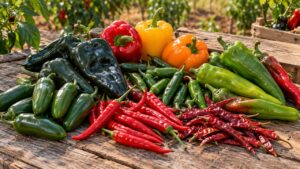
Few pepper species demonstrate the effects of domestication as clearly as Capsicum annuum. A Bell Pepper can be large, thick-walled and completely sweet. A Serrano is considerably smaller, thinner and distinctly hot. Cayenne peppers are long and slender, while Poblanos are broad, dark and substantial enough to roast and stuff. Despite those differences, they all belong to the same species.
Much of that diversity developed because people cultivated peppers for different purposes over many generations. Growers repeatedly selected plants that produced desirable characteristics and saved their seeds. In one place, larger and thicker fruits might have been favored. Somewhere else, hotter peppers, earlier ripening, particular colors, thinner walls or fruits that dried easily might have been more useful.
Over time, those choices helped produce the enormous assortment of Capsicum annuum peppers we recognize today. The differences extend beyond appearance. Varieties can differ in sweetness, bitterness, aroma, pungency, flesh thickness, moisture content and how they respond to roasting, drying, smoking, pickling or eating fresh.
That helps explain why knowing the species alone cannot tell you how a pepper will behave in the kitchen. Capsicum annuum establishes a biological relationship, but the individual variety tells us much more about the ingredient sitting on the cutting board.
CENTURIES OF CULTIVATION TURNED ONE PEPPER SPECIES INTO AN EXTRAORDINARY COLLECTION OF DISTINCT CULINARY INGREDIENTS.
How Hot Are Capsicum annuum Peppers?
There is no single heat level for Capsicum annuum. In fact, the species provides one of the clearest demonstrations that botanical classification and chile pepper heat are two very different things.
At one end are sweet Bell Peppers, which contain little to no capsaicin and register essentially no pungency. Mild varieties such as Anaheim and Poblano move gradually upward from there. Jalapeños introduce a more noticeable burn, Serranos typically push the heat considerably higher, and peppers such as Cayenne and Chile de Árbol can deliver a much sharper experience.
The reason for those differences is capsaicin and the related capsaicinoids responsible for chile pepper pungency. Different Capsicum annuum varieties can produce very different concentrations of these compounds. Genetics establish much of that potential, while growing conditions, fruit development and natural variation can influence the heat of individual peppers.
This is why the species name should never be treated as a heat rating. Two peppers can both be Capsicum annuum while occupying completely different places on the Scoville scale.
It also works in the opposite direction: extreme heat does not define Capsicum annuum. Many of the famous superhot peppers belong to Capsicum chinense, while C. annuum spans a particularly broad culinary spectrum from completely sweet peppers through genuinely hot varieties.
SPECIES TELLS YOU HOW PEPPERS ARE RELATED; THE SCOVILLE SCALE TELLS YOU SOMETHING ENTIRELY DIFFERENT—HOW MUCH PUNGENCY THEY CAN PRODUCE.
What Do Capsicum annuum Peppers Taste Like?
There is no single Capsicum annuum flavor any more than there is a single Capsicum annuum heat level. The species contains peppers with dramatically different culinary personalities.
A Poblano can bring an earthy, vegetal character that becomes deeper and richer when roasted. Jalapeños and Serranos are often valued for their fresh, bright chile character, particularly in salsas and other preparations where the pepper is used raw or lightly cooked. Cayenne and Chile de Árbol offer different combinations of pepper flavor and sharper heat, while sweet peppers emphasize crispness, sweetness and ripe fruit character without the burn.
Preparation creates even more variation. A fresh green Jalapeño and a fully ripened red Jalapeño already offer different experiences, but smoking and drying the ripe fruit transforms it into Chipotle, introducing deep smoky qualities while retaining its identity as Capsicum annuum. Drying other varieties can similarly concentrate flavors and create ingredients that seem remarkably different from the fresh peppers that produced them.
That versatility is one reason Capsicum annuum has become so important in kitchens around the world. Its members can provide sweetness, freshness, roasted depth, dried-chile complexity, smoke or substantial heat depending on the variety and how it is prepared.
The useful question, therefore, is rarely “What does Capsicum annuum taste like?” It is which Capsicum annuum pepper—and what has been done to it?
CAPSICUM ANNUUM DOESN’T HAVE ONE SIGNATURE FLAVOR; ITS CULINARY IDENTITY IS DIVERSITY ITSELF.
Where Did Capsicum annuum Come From?
The story of Capsicum annuum begins in the Americas, where wild Capsicum plants were growing thousands of years before chile peppers reached kitchens elsewhere in the world. The species was domesticated in Mexico, where people gradually transformed wild peppers into increasingly diverse cultivated forms.
Those early peppers were not the Jalapeños, Poblanos, Bell Peppers or Cayenne varieties we recognize today. Domestication is a long process. As peppers were cultivated generation after generation, people selected plants for characteristics they valued—fruit size, shape, flavor, heat, productivity and suitability for particular foods or preservation methods.
Mexico remains especially important to the story because the diversity created through that long relationship between people and peppers is still visible in Mexican cuisine. Poblanos, Jalapeños, Serranos and Chile de Árbol may serve very different culinary purposes, but each represents a different expression of the same domesticated species.
After Europeans arrived in the Americas, Capsicum annuum peppers began traveling far beyond their original range. They spread through European and global trade networks and were eventually adopted into cuisines across Europe, Asia, Africa and other parts of the world. Growers in those regions continued selecting peppers for local climates, tastes and culinary traditions, expanding the species’ diversity even further.
That history helps explain an apparent contradiction: many peppers strongly associated with cuisines outside the Americas still belong to a species that originated and was domesticated in the Americas. Once chile peppers began traveling, different cultures made them their own.
CAPSICUM ANNUUM BEGAN IN THE AMERICAS, BUT CENTURIES OF CULTIVATION TURNED IT INTO A TRULY GLOBAL FOOD CROP.
From Jalapeño to Poblano: Familiar Capsicum annuum Peppers
The easiest way to understand the diversity of Capsicum annuum is to look at peppers we already know. Instead of behaving like variations on a single theme, members of the species can occupy remarkably different places in the kitchen.
The Jalapeño is one of the clearest examples. Its moderate heat, thick flesh and fresh vegetal flavor make it useful raw, pickled, roasted, stuffed and cooked into countless dishes. Allow that same type of pepper to ripen, then smoke and dry it, and it becomes Chipotle—a familiar ingredient whose dark, smoky character can seem worlds away from a fresh green Jalapeño even though both represent the same pepper at different stages and preparations.
The Poblano shows another side of the species. Larger, broader and generally milder than a Jalapeño, it is particularly suited to roasting and stuffing. When ripe Poblanos are dried, they become Ancho chiles, demonstrating again how maturity and preservation can give a familiar Capsicum annuum pepper an entirely different culinary identity.
Then there are smaller, hotter members of the species. Serranos bring crisp, assertive heat to fresh salsas and sauces, while Chile de Árbol provides a sharper punch in a much thinner fruit. Cayenne varieties demonstrate yet another form—long, slender peppers particularly well suited to drying and grinding into the familiar spice known as cayenne pepper.
Anaheim peppers, sweet Bell Peppers and many other varieties expand the range still further. Together, these peppers demonstrate why Capsicum annuum cannot be understood by choosing one representative fruit. The species is better understood as a remarkably diverse collection of cultivated peppers connected by biology but shaped for very different culinary jobs.
FROM SWEET BELL PEPPERS TO FIERY CHILE DE ÁRBOL, CAPSICUM ANNUUM CONTAINS SOME OF THE MOST DIVERSE PEPPERS IN THE KITCHEN.
How One Capsicum annuum Pepper Can Become Several Ingredients
Pepper names become particularly interesting when harvest timing and preservation enter the picture. In several important culinary traditions, a fresh pepper and its dried form have different names—even though they come from the same type of plant.
Jalapeño provides perhaps the most familiar example. Jalapeños are commonly harvested while green, but the fruits can continue ripening until they become red. Those mature red peppers can then be smoked and dried to produce Chipotle. Smoking removes moisture, extends storage life and transforms the pepper’s flavor, replacing much of the fresh green character with concentrated chile flavor and pronounced smokiness.
Poblano undergoes a similarly dramatic transformation. Fresh Poblanos are usually associated with roasting, stuffing and dishes such as chiles rellenos. When the fruit is allowed to ripen and is then dried, it becomes the Ancho chile—darker, sweeter and more concentrated, with a culinary role quite different from the fresh pepper.
Cayenne demonstrates the same principle without necessarily receiving an entirely new name. Fresh Cayenne peppers can be used directly, but their thin walls make them particularly suitable for drying. Once dried and ground, they become the familiar cayenne powder found in spice cabinets around the world.
These transformations are useful because they reveal another source of apparent diversity within Capsicum annuum. Genetics create different pepper varieties, but harvest stage and processing can further change color, texture, aroma, flavor and culinary use. Sometimes two ingredients that appear completely different are actually different expressions of the same pepper.
A PEPPER’S SPECIES DOESN’T CHANGE WHEN IT IS RIPENED, DRIED OR SMOKED—BUT ITS CULINARY IDENTITY CAN CHANGE DRAMATICALLY.
🌶️ Professor Pepper Says:
“Changing a pepper’s name in the kitchen doesn’t change its species. A Jalapeño can become Chipotle and a Poblano can become Ancho, but botanically they’re still Capsicum annuum.”
Why Capsicum annuum Is So Important in Mexican Cooking
Few cuisines demonstrate the range of Capsicum annuum as clearly as Mexican cooking. The species appears everywhere from fresh salsas and roasted chiles to dried-chile sauces, marinades and table condiments, but its importance becomes even easier to see when you look at the foods themselves. The chile accompanying an order of street tacos does not necessarily serve the same purpose as the chile blended into a salsa for chilaquiles, added to a torta or used to bring heat to elote and esquites. Mexican cooking takes advantage of the different flavors, textures and heat levels available within the species rather than treating every chile as a different version of the same ingredient.
Jalapeños and Serranos are especially useful when fresh chile character matters. Their bright flavor and relatively crisp flesh work naturally in fresh salsas and toppings served with Mexican Street Tacos, Tortas, Tostadas and countless other foods. They can also contribute fresh heat to the sauces and toppings surrounding Elote and Esquites, where chile is balanced against corn, citrus, cheese and creamy ingredients. Although Jalapeños and Serranos can sometimes fill similar roles, their differences in size, flesh thickness and typical heat make them distinct ingredients rather than interchangeable versions of the same pepper.
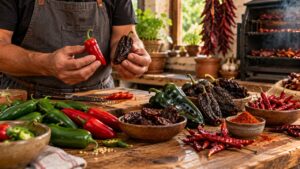
Poblanos occupy another part of the Mexican kitchen entirely. Their broad shape, substantial flesh and relatively mild heat make them particularly well suited to roasting, peeling and stuffing. Roasting softens the fruit while developing deeper flavor, allowing the pepper itself to become a substantial ingredient rather than simply a source of heat. When ripe Poblanos are dried into Ancho chiles, their culinary role changes again. The fresh green character gives way to a darker, sweeter dried-chile profile that can contribute depth to sauces, marinades, stews and slow-cooked foods such as Birria and Pozole.
Chile de Árbol demonstrates yet another direction Capsicum annuum can take. Its slender fruit, sharper heat and suitability for drying make it particularly useful when cooks want chile flavor accompanied by a more immediate burn. Dried Chile de Árbol can be toasted and blended into salsas, chile oils and sauces that accompany everything from Taquitos and Flautas to tacos, tortas and late-night street snacks. Here the pepper does not need to dominate the food; even a relatively small amount can change the character of the sauce surrounding it.
The same pattern appears throughout Mexican cooking. Fresh chiles can provide brightness and crunch. Roasted peppers can contribute softer texture and deeper flavor. Fully ripened peppers introduce additional sweetness, while drying can concentrate flavors and create entirely new culinary possibilities. One species therefore helps supply the fresh toppings, roasted ingredients, dried chiles and sauces found across an enormous range of Mexican foods.
What connects these peppers is not that they taste alike. It is that generations of cultivation produced different expressions of the same species for remarkably different culinary jobs. Mexican cooking makes that diversity especially visible because fresh, ripe, roasted and dried Capsicum annuum peppers can all appear within the same culinary tradition—and sometimes within different components of the same meal.
MEXICAN COOKING DOESN’T TREAT CAPSICUM ANNUUM AS ONE PEPPER—IT USES ITS DIVERSITY AS AN ENTIRE CULINARY TOOLKIT.
How Capsicum annuum Differs From Other Chile Pepper Species
Capsicum annuum may contain many of the world’s most familiar peppers, but it represents only one branch of the cultivated chile pepper family. Other domesticated Capsicum species developed their own remarkable collections of peppers, flavors and culinary traditions.
Capsicum chinense includes Habaneros, Scotch Bonnets, Datils and many of the peppers associated with extreme heat, including the Carolina Reaper and Trinidad Moruga Scorpion. These peppers often have intensely aromatic, fruity characteristics in addition to their pungency. That does not mean C. chinense is simply the “hot species”—heat varies within species—but it contains many of the varieties that became famous during the modern superhot era.
Capsicum baccatum includes many peppers associated with the South American ají tradition. Varieties such as Aji Crystal and Mad Hatter demonstrate another range of fruit shapes and flavors, often with bright, distinctive aromatic qualities.
Capsicum frutescens includes peppers associated with varieties such as Piri Piri and Tabasco, while Capsicum pubescens represents another distinctly different domesticated branch, best known for peppers such as Rocoto.
These species names are useful because they help organize an enormous pepper family, but they should not be treated as simple flavor or heat categories. Just as Capsicum annuum contains both Bell Peppers and Cayenne, considerable diversity exists within the other species as well.
Together they reveal a much larger idea: Jalapeños, Habaneros, ají peppers and other familiar chiles are not simply hotter or milder versions of one basic plant. They belong to different branches of a diverse genus whose members have been cultivated into thousands of forms.
CAPSICUM ANNUUM IS ONE MAJOR BRANCH OF THE CHILE PEPPER FAMILY—NOT THE FAMILY ITSELF.
How Capsicum annuum Peppers Are Grown
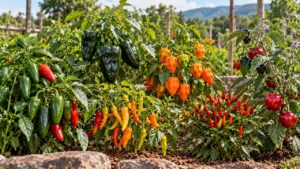
Despite the extraordinary differences among the peppers within Capsicum annuum, they share many of the same basic growing requirements. These are warm-season plants that generally perform best with abundant sunlight, warm soil, adequate moisture and enough time for their fruits to develop and ripen.
The familiar green color of many Capsicum annuum peppers can also create a misconception about maturity. A green Jalapeño, Serrano, Poblano or Anaheim is usually an immature fruit that has already reached a useful culinary stage. Leave it on the plant and it can continue ripening, often changing to red or another mature color while developing additional sweetness and changes in flavor.
That means growers and cooks are not always waiting for the same definition of “ripe.” A farmer may deliberately harvest Poblanos while they are green because that is the form desired for roasting and cooking. Other fruits may remain on the plant until fully mature because the ripe pepper is destined for drying, smoking or another preparation. Red Jalapeños intended for Chipotle are a good example: the additional ripening is part of what makes the eventual smoked chile different from the green Jalapeño most shoppers recognize.
Growing conditions can also affect the peppers produced by an individual plant. Temperature, sunlight, water availability, soil conditions and other environmental factors can influence fruit development and may contribute to variation in size, flavor and pungency. This is one reason two Jalapeños from different plants—or even peppers harvested from the same plant—do not necessarily deliver identical heat.
Once again, Capsicum annuum refuses to fit neatly into a single description. The same species can produce peppers harvested green for fresh salsa, allowed to ripen for greater sweetness, roasted for deeper flavor or left to mature before being dried or smoked.
GROWING THE PEPPER IS ONLY PART OF THE STORY—WHEN IT IS HARVESTED CAN HELP DETERMINE WHAT KIND OF INGREDIENT IT BECOMES.
Is Capsicum annuum an Annual or a Perennial?
The name Capsicum annuum creates one of the species’ most persistent points of confusion. Because annuum resembles “annual,” it is easy to assume that these pepper plants naturally live for only one growing season.
In many gardens, that is exactly what appears to happen. Jalapeño, Poblano, Serrano and other Capsicum annuum plants are commonly planted in spring, produce peppers through the warm months and die when freezing temperatures arrive. Gardeners therefore usually grow them as annual crops.
But frost is often what ends the plant’s life—not an internal biological clock requiring it to die after one year. In climates without killing freezes, or when plants are protected from cold conditions, Capsicum annuum plants can survive beyond a single season and continue growing and producing peppers.
That distinction is useful because botanical names can sometimes be misleading when interpreted too literally. Annuum is the established species name; it should not be read as a guarantee that every member of the species completes its natural life cycle within one year.
For most home gardeners in temperate climates, treating these peppers as annuals remains the practical approach. Biologically, however, Capsicum annuum is capable of being considerably longer-lived under suitable conditions.
CAPSICUM ANNUUM IS OFTEN GROWN AS AN ANNUAL, BUT THE PLANT DOESN’T NECESSARILY HAVE TO LIVE LIKE ONE.
How Capsicum annuum Helps Explain the Chile Pepper Family
Once peppers are viewed through species rather than heat level or appearance, relationships that initially seem confusing begin to make much more sense. Jalapeño, Serrano, Poblano, Cayenne and Chile de Árbol may perform very different jobs in the kitchen, but they are all variations within the same species. Their differences show just how much diversity can develop within a single branch of the Capsicum family.
The same idea helps explain why pepper names do not always represent separate botanical identities. A Chipotle begins as a Jalapeño. An Ancho begins as a ripe Poblano. Ripening, drying and smoking can change a pepper so dramatically that the resulting ingredient receives a different name, yet its species remains Capsicum annuum.
Understanding that distinction becomes even more useful as we move beyond C. annuum. A Habanero and a Jalapeño are both chile peppers, but they belong to different Capsicum species. The same is true when we compare Capsicum annuum peppers with the South American ají peppers associated with Capsicum baccatum, the small fiery peppers found within Capsicum frutescens, or the distinctive Rocotos of Capsicum pubescens.
Species therefore gives us another layer of the pepper story. Heat tells us about pungency. Variety helps identify a particular cultivated pepper. Preparation tells us what happened to that pepper after harvest. Species helps reveal the deeper botanical relationships connecting those individual peppers.
UNDERSTANDING THE SPECIES DOESN’T REPLACE LEARNING ABOUT INDIVIDUAL PEPPERS—IT SHOWS US HOW THOSE PEPPERS FIT TOGETHER.
🌶️ Recommended Peppers of Key West Products for Exploring Capsicum annuum
One of the easiest ways to experience the diversity of Capsicum annuum is through sauces built around different members of the species. Jalapeño can provide fresh green chile character, Cayenne can deliver a more direct pepper heat, and smoked Jalapeño can become the deeper, richer flavor of Chipotle.
Product Pairing Quick Guide
- Tacos, eggs, grilled chicken, burgers and guacamole: Peppers of Key West Jalapeño Garlic Hot Sauce
- Tacos, fresh salsa, grilled meats, eggs and Mexican-inspired dishes: Peppers of Key West Serrano Hot Sauce
- Wings, pizza, sandwiches, grilled chicken and everyday meals: Peppers of Key West Cayenne Hot Sauce
- Burgers, barbecue, grilled meats, tacos and sandwiches: Handyman Chipotle Hot Sauce

Peppers of Key West Jalapeño Garlic Hot Sauce
Jalapeño Garlic showcases one of the most familiar members of Capsicum annuum. Jalapeño brings recognizable green chile character and approachable heat, making this a useful example of the milder side of the species and an easy sauce to use across a wide range of foods.
Best for: Tacos, eggs, grilled chicken, burgers, sandwiches, guacamole and everyday meals that benefit from Jalapeño flavor without extreme heat.

Peppers of Key West Serrano Hot Sauce
Serrano demonstrates what happens as we move farther up the heat range while remaining within Capsicum annuum. Compared with Jalapeño, Serrano peppers typically deliver a sharper, more assertive heat while retaining the fresh chile character that makes them especially important in Mexican cooking.
Best for: Tacos, fresh salsa, grilled meats, eggs and dishes where you want a brighter chile flavor with more heat than Jalapeño.

Peppers of Key West Cayenne Hot Sauce
Cayenne represents another distinctly different expression of Capsicum annuum. Its slender fruits and stronger heat have made Cayenne an important pepper for sauces, dried chile preparations and ground pepper, demonstrating how far the species can move from the thick-fleshed Jalapeño or broad Poblano.
Best for: Wings, pizza, sandwiches, grilled foods and everyday dishes where a straightforward chile-pepper kick works better than smoke or heavy sweetness.

Handyman Chipotle Hot Sauce
Chipotle provides perhaps the clearest example of how processing can transform a Capsicum annuum pepper. A Chipotle begins as a ripe Jalapeño, but smoking and drying dramatically change its flavor, creating the deep smoky character associated with one of Mexico’s best-known dried chiles.
Best for: Burgers, grilled meats, tacos, barbecue, sandwiches and foods where smoky chile flavor is as important as heat.
ONE SPECIES CAN GIVE US JALAPEÑO, SERRANO, CAYENNE AND SMOKY CHIPOTLE—FOUR DISTINCT CULINARY EXPRESSIONS OF CAPSICUM ANNUUM.
Capsicum annuum: One Species, Extraordinary Diversity
It is easy to think of Jalapeños, Poblanos, Serranos, Cayenne peppers and Chile de Árbol as completely separate ingredients. In the kitchen, they often are. Each has its own flavor, heat, shape, texture and culinary strengths.
Botanically, however, they tell a different story.
All belong to Capsicum annuum, a species whose extraordinary diversity reflects thousands of years of domestication, cultivation and human preference. People selected peppers for sweetness and heat, large fruits and small ones, thick walls and thin ones, fresh eating and drying, roasting and stuffing. Those choices helped turn one species into an enormous collection of peppers adapted to very different foods and traditions.
The species also demonstrates why chile peppers cannot be understood through Scoville ratings alone. A Bell Pepper and a Chile de Árbol can share a species despite occupying opposite ends of the heat spectrum. A fresh Jalapeño can become a smoky Chipotle without changing its botanical identity. A green Poblano can become a dried Ancho while remaining part of the same lineage.
That is what makes Capsicum annuum such a useful starting point for understanding Capsicum species. It teaches us that the pepper family is not organized simply by what looks alike, tastes alike or burns alike.
Sometimes the peppers that appear most different are much more closely related than they seem.
CAPSICUM ANNUUM ISN’T DEFINED BY ONE SHAPE, ONE FLAVOR OR ONE LEVEL OF HEAT—ITS DEFINING CHARACTERISTIC IS ITS REMARKABLE DIVERSITY.
Capsicum annuum FAQ
What is Capsicum annuum?
Capsicum annuum is a species within the genus Capsicum and one of the major domesticated chile pepper species. It includes many familiar peppers, including Jalapeños, Serranos, Poblanos, Cayenne, Chile de Árbol, Anaheim and Bell Peppers. These peppers can look, taste and behave very differently while still belonging to the same biological species.
Which peppers are Capsicum annuum?
The species includes Jalapeños, Serranos, Poblanos, Cayenne peppers, Chile de Árbol, Anaheim peppers, Bell Peppers and many other cultivated varieties. It is remarkably diverse, containing peppers that differ dramatically in size, shape, color, flavor and heat.
Are Jalapeños Capsicum annuum?
Yes. Jalapeños are Capsicum annuum. They are one of the species’ best-known varieties and can be harvested green, allowed to ripen red or smoked and dried to become Chipotle peppers.
Are Poblanos and Jalapeños the same species?
Yes. Poblanos and Jalapeños are both Capsicum annuum, despite their obvious differences in appearance, flavor and typical heat. They are different cultivated peppers within the same species, not different species.
Are Serrano peppers Capsicum annuum?
Yes. Serranos belong to Capsicum annuum. Their relatively small size and greater heat distinguish them from peppers such as Jalapeños and Poblanos, but all three share the same species.
Are Cayenne peppers Capsicum annuum?
Yes. Cayenne peppers are Capsicum annuum. Their long, relatively thin fruits are particularly well suited to drying, which is why Cayenne is so closely associated with dried flakes, powders and pepper sauces.
Are Chipotle peppers Capsicum annuum?
Yes. Chipotle is not a separate species or even a completely different pepper from Jalapeño. A Chipotle is a ripe Jalapeño that has been smoked and dried, so it remains Capsicum annuum throughout the transformation.
Are Ancho and Poblano the same pepper?
Ancho is the dried form of a ripe Poblano pepper. Fresh Poblanos and dried Anchos can taste and look remarkably different because ripening and drying alter the fruit, but both are Capsicum annuum.
What common peppers are not Capsicum annuum?
Many familiar chile peppers belong to other Capsicum species. Habanero, Scotch Bonnet, Datil, Carolina Reaper and Trinidad Moruga Scorpion belong to Capsicum chinense. Many South American ají peppers belong to Capsicum baccatum, while peppers such as Tabasco and Piri Piri are associated with Capsicum frutescens. Rocoto belongs to Capsicum pubescens.
Is Capsicum annuum always hot?
No. Capsicum annuum includes completely sweet peppers as well as hot varieties. Bell Peppers demonstrate the non-pungent end of the species, while Jalapeños, Serranos, Cayenne and Chile de Árbol provide progressively different expressions of chile heat.
Why is it called Capsicum annuum if the plant can live for several years?
The species name can be misleading because these plants are often grown as annuals in climates where freezing weather kills them. Under sufficiently warm conditions, however, Capsicum annuum plants can survive beyond a single growing season.
What is the difference between Capsicum annuum and Capsicum chinense?
They are separate species within the Capsicum genus. Capsicum annuum includes peppers such as Jalapeño, Poblano, Serrano and Cayenne, while Capsicum chinense includes Habanero, Scotch Bonnet, Datil and many famous superhot peppers.
What makes Capsicum annuum different from other pepper species?
Its extraordinary cultivated diversity is one of its most noticeable characteristics. Capsicum annuum encompasses sweet peppers, mild roasting peppers, fresh hot chiles and varieties especially suited to drying and smoking, making it one of the broadest culinary branches of the chile pepper family.
🌶️ Continue Your Pepper Journey
🌶️ Explore Capsicum annuum Peppers
- Jalapeño Pepper Explained: Flavor, Heat, Uses & Why It’s America’s Favorite Chile
- Poblano Pepper Explained: Flavor, Heat, Uses & Why It’s the Chile Behind Chiles Rellenos
- Serrano Pepper Explained: Flavor, Heat, Uses & Why It Gives Mexican Salsa Its Signature Bite
- Cayenne Pepper Explained: Flavor, Heat, Uses & How It Becomes Cayenne Powder
- Chile de Árbol Explained: Flavor, Heat, Uses & Why This Mexican Chile Packs a Fiery Punch
- Chipotle Pepper Explained: Flavor, Heat, Uses & How Smoked Jalapeños Become Chipotle
See More Keywords: Capsicum genus, chile pepper species, chili pepper species, domesticated pepper species, Capsicum annuum origin, Capsicum annuum history, Capsicum annuum heat, Capsicum annuum flavor, Capsicum annuum uses, Capsicum annuum cultivation, growing Capsicum annuum, Jalapeño species, Serrano species, Poblano species, Cayenne species, Bell Pepper species, Chile de Árbol species, Chipotle pepper species, Ancho pepper species, Mexican chile peppers, pepper taxonomy, Capsicum classification, pepper varieties, sweet Capsicum annuum peppers, hot Capsicum annuum peppers