
Uchepos Explained: Michoacán’s Sweet Corn Tamales That Taste Like Summer
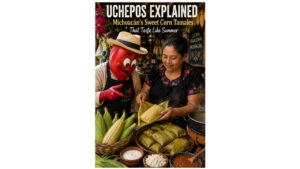
Most tamales begin with dried corn. Uchepos begin with corn that barely had time to grow up.
These tender, naturally sweet tamales from Michoacán are made with fresh young corn, giving them a soft texture and delicate flavor that feels completely different from the masa-based tamales many Americans know best. Wrapped in fresh corn husks and steamed until fragrant, uchepos can arrive simply with crema and cheese, alongside salsa, or as part of a meal that balances their sweetness with something savory or spicy.
They’re also deeply connected to Michoacán’s corn-growing traditions and Purépecha culinary heritage.
This is the story of a tamal that tastes less like preserved corn and more like the field it came from.
Imagine standing beside a cornfield in Michoacán when the ears are still young.
The husks are green. The kernels underneath are pale, plump, and filled with moisture. Bite into one and the corn doesn’t taste like the dried grain that will eventually become masa. It tastes milky, grassy, tender, and naturally sweet—the flavor of corn caught at a particular moment in its life.
For most tamales, that corn isn’t ready yet.
For an uchepo, it is exactly what you’re waiting for.
Uchepos are traditional fresh-corn tamales from the Mexican state of Michoacán, prepared by grinding or grating tender young corn and steaming the resulting mixture inside the corn’s own fresh husks. The result is softer, sweeter, and more delicate than the masa-based tamales familiar across much of Mexico.
They are also a perfect example of just how far Mexican street food extends beyond tacos. In our Mexican Street Food Beyond Tacos: Elote, Tortas, Tamales & More guide, we explore the tamales, corn dishes, sandwiches, snacks, sweets, and regional specialties that make Mexico’s street-food culture so extraordinarily diverse. Uchepos belong in that larger story—but their relationship with fresh corn makes them distinctly Michoacán.
That difference may sound small.
It changes almost everything.
A conventional tamal often begins with mature corn that has been dried, nixtamalized, ground into masa, seasoned, filled, wrapped, and steamed. An uchepo captures corn before that transformation. Its identity comes from elote—fresh corn—rather than dried masa, which means the sweetness, moisture, aroma, and texture of the young kernels remain at the center of the food.
That is why describing an uchepo simply as a “sweet corn tamale” doesn’t quite do it justice.
It’s also a lesson in timing.
Fresh corn changes as it matures. Sugars become starchier, kernels become firmer, and the tender qualities that make an ear wonderful for eating fresh gradually give way to characteristics better suited to drying and grinding. Uchepos depend on catching the corn while those fresh qualities are still dominant.
In Michoacán, that seasonal relationship between corn and cook has been understood for generations.
And once the uchepos emerge from the steamer, the sweetness doesn’t necessarily send them toward dessert. They may be served with Mexican crema, crumbled or grated cheese, and salsa, creating a combination that moves between sweet, tangy, salty, creamy, and spicy in the same bite.
That’s when the uchepo becomes particularly interesting.
It tastes like summer corn.
But it eats like Michoacán.
AN UCHEPO ISN’T JUST A SWEETER TAMAL—IT’S FRESH CORN CAPTURED AT EXACTLY THE RIGHT MOMENT.
🌽 Uchepos Quick Guide
What are uchepos?
Uchepos are traditional Michoacán tamales made primarily from fresh, tender young corn rather than the dried-corn masa used for many other Mexican tamales.
Where do uchepos come from?
They are strongly associated with Michoacán in western Mexico and with the region’s longstanding Purépecha food traditions.
Are uchepos sweet?
Yes, but much of their characteristic sweetness comes naturally from the fresh young corn itself. Some preparations may add sugar, while others allow the corn’s own sweetness to dominate.
How are uchepos different from regular tamales?
Most familiar tamales use masa produced from mature dried corn. Uchepos are made from fresh corn kernels, producing a softer, moister, sweeter tamal with a distinctly fresh-corn flavor.
What are uchepos served with?
Depending on the preparation and setting, they may be served with crema, cheese, salsa, or other savory accompaniments that contrast with the corn’s natural sweetness.
Are uchepos the same as corundas?
No. Both are strongly associated with Michoacán and Purépecha cooking, but they are distinctly different foods. Corundas are traditionally made from masa and recognized for their angular or triangular wrapping, while uchepos showcase fresh young corn.
🌽 To Understand Uchepos, Start with the Corn
There is a temptation when explaining Mexican tamales to begin with the wrapper.
Banana leaf or corn husk? Large or small? Rectangular or triangular? Filled or unfilled?
With uchepos, begin somewhere else.
Look at the corn.
A mature ear destined for masa and a young ear destined for uchepos represent different stages of the same plant, but they behave almost like different ingredients. As corn matures, its kernels accumulate starch and lose some of the tenderness and pronounced sweetness associated with fresh elote. That maturation is enormously useful: mature corn can be dried, stored, nixtamalized, ground, and transformed into the masa that supports an astonishing range of Mexican foods.
Uchepos interrupt that journey.
The corn is harvested while the kernels are still tender and juicy. Those kernels are removed from the cob and traditionally ground or grated into a moist mixture. Depending on the cook, additional ingredients may be incorporated to adjust richness, sweetness, or texture, but fresh corn remains unmistakably in charge.
That creates a tamal with a personality very different from one built around prepared masa.
Instead of a firm dough surrounding a distinct filling, an uchepo can feel almost custardy or pudding-like when especially tender, though texture varies according to the corn, recipe, and cook. The flavor is immediate and recognizable: fresh corn first, followed by whatever richness or seasoning accompanies it.
Even the wrapper reinforces the relationship.
Because the cook is working with fresh ears, the green corn husks removed during preparation can become the wrappers used for steaming. The ingredient provides both the food and, quite literally, its package.
There is an appealing economy to that.
But there is also an important culinary lesson. Uchepos remind us that “corn” isn’t a single ingredient with a single flavor. Its age, variety, processing, moisture, and preparation determine what it can become.
In one stage, it becomes elote.
Later, it might become masa.
Catch it at the right moment in Michoacán, and it becomes an uchepo.
THE SECRET TO AN UCHEPO ISN’T WHAT YOU ADD TO THE CORN—IT’S KNOWING WHEN THE CORN IS READY.
 🌶️ Professor Pepper Says…
Think of fresh corn and dried corn as different culinary tools rather than interchangeable versions of the same ingredient. Uchepos depend on the moisture and natural sugars of young kernels, while masa-based tamales depend on mature corn and an entirely different transformation. The age of the corn helps determine the food it can become.
🪶 Uchepos and the Purépecha Food Traditions of Michoacán
To understand why uchepos matter, it helps to stop treating Michoacán merely as a point on a map.
The state is one of Mexico’s great corn landscapes, and its food traditions are inseparable from the Indigenous Purépecha people whose communities have lived in the region for centuries. Long before European wheat, livestock, dairy products, and other ingredients entered Mexican cooking, maize was already central to food, agriculture, trade, ceremony, and everyday life.
Uchepos belong to that much older relationship with corn.
Their precise history cannot be reduced responsibly to a single inventor or neat origin date. Foods built from maize often develop through generations of agricultural and household knowledge rather than appearing at one documented moment. What matters more is the technique they preserve: understanding that corn can be harvested and cooked at different stages of maturity, with each stage offering different possibilities.
That knowledge appears elsewhere in Michoacán’s tamal traditions as well.
Corundas, another food strongly associated with Purépecha cooking, take corn in a different direction. Their masa is wrapped into distinctive angular forms and steamed, producing a tamal whose identity comes partly from processing and technique. Uchepos, by contrast, preserve the tenderness and sweetness of fresh corn.
Put them beside one another and the comparison becomes remarkably instructive.
Same broad culinary landscape.
Same foundational crop.
Two very different expressions of what maize can do.
That is one reason the comparison between Corundas vs Uchepos deserves its own lesson. The interesting question isn’t simply which tamal tastes better. It’s how cooks working within the same regional food culture learned to turn corn at different stages and through different techniques into foods with completely different textures, flavors, and identities.
And those traditions are not museum pieces.
Uchepos remain food to be cooked, sold, shared, topped, eaten, and argued about. They connect agricultural knowledge to everyday pleasure—the field to the kitchen and the steamer to the table.
That continuity may be more important than any tidy origin story.
IN MICHOACÁN, CORN ISN’T ONE FOOD—IT’S A CULINARY LANGUAGE, AND UCHEPOS ARE ONE OF ITS SWEETEST EXPRESSIONS.
🌽 How Are Traditional Uchepos Made?
Walk into a kitchen preparing uchepos and one of the first things you notice is what is missing.
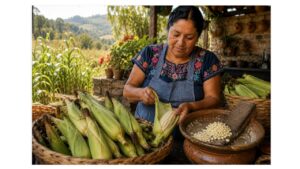
There may be ears of corn piled on a work surface, green husks being carefully separated and saved, kernels being cut from cobs, and a steamer waiting nearby. But there is no bowl of the familiar prepared masa that many people associate with tamales.
The corn itself has to become the tamal.
Fresh young ears are husked carefully because the tender green wrappers can be saved for steaming. The kernels are then removed from the cob and ground or processed into a thick, moist mixture. Unlike dough made from dried, nixtamalized corn, this fresh-corn mixture already carries considerable moisture and natural sugar, so the cook is working with something softer and more delicate from the beginning.
Recipes vary from household to household. Some cooks keep the mixture remarkably simple, allowing the fresh corn to dominate. Others incorporate ingredients such as butter or another fat, milk or cream, salt, and sometimes sugar, depending on the sweetness of the corn and the style of uchepo they want to make.
That variation matters because fresh corn isn’t standardized.
An ear harvested at precisely the right stage can be remarkably sweet and juicy. Another may be slightly starchier. Experienced cooks compensate for what the corn gives them rather than expecting every batch to behave identically.
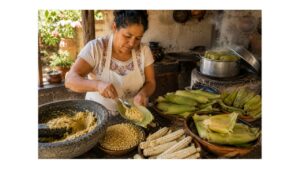
Once the mixture reaches the right consistency, portions are spooned into the reserved fresh husks. The husks are folded around the corn mixture and arranged in a steamer, where heat begins one of the most important transformations in the entire process.
Inside the steamer, the loose, moist corn mixture gradually firms as its fresh aroma intensifies and the husk softens around it. The sugars and starches of the young kernels settle into the tender texture that defines an uchepo.
There doesn’t need to be a chile-stuffed center or elaborate filling competing for attention. In many traditional preparations, the corn is both the structure and the star.
Open the husk while the uchepo is still warm and that becomes obvious immediately. Instead of the denser, more structured crumb of many masa-based tamales, a good uchepo should be tender and moist, with the unmistakable flavor of freshly cooked corn running through every bite.
The technique is relatively straightforward.
Getting the corn right is not.
AN UCHEPO DOESN’T HIDE FRESH CORN INSIDE A TAMAL—IT TURNS FRESH CORN INTO THE TAMAL ITSELF.
🫔 Why Uchepos Don’t Taste Like the Tamales Most Americans Know
The easiest way to understand an unfamiliar food is often through something familiar, and uchepos invite comparison with the tamales many Americans already know.
But the comparison can also be misleading.
A familiar tamal might have a substantial layer of masa surrounding shredded pork, chicken, cheese, chiles, beans, or another filling. The masa provides structure while the filling often supplies much of the flavor contrast. Bite through the wrapper and you can usually identify those components separately.
With an uchepo, those boundaries largely disappear.
Because ground fresh corn forms the body of the tamal, sweetness and corn flavor are distributed throughout it. There isn’t necessarily an exterior dough and interior filling to distinguish from one another. The food can feel more unified, almost as though someone captured the flavor of fresh corn and gave it enough structure to hold together inside a husk.
Texture may be the bigger surprise.
Fresh kernels contain far more moisture than dried corn destined for masa, helping give uchepos their characteristically soft, tender consistency. Depending on the corn and preparation, that can range from gently cakey to exceptionally soft and almost custard-like.
That doesn’t make one form of tamal more authentic than another.
It demonstrates just how broad the category really is.
Across Mexico, the word tamal encompasses an extraordinary range of foods shaped by local corn, regional ingredients, wrappers, fillings, cooking techniques, celebrations, and Indigenous traditions. Treating all tamales as variations of the same masa-and-meat formula misses much of what makes them interesting.
Uchepos make that lesson particularly easy to taste.
They take something Americans recognize—a tamal—and change its most fundamental ingredient just enough to reveal an entirely different expression of corn.
IF YOUR IDEA OF A TAMAL BEGINS WITH MASA AND A FILLING, AN UCHEPO EXPANDS THE DEFINITION.
🧀 How Are Uchepos Traditionally Served?
This is where the sweetness becomes much more interesting.
If someone tells you that uchepos are sweet corn tamales, it is reasonable to imagine them moving toward dessert. Put a warm uchepo on a plate in Michoacán, however, and the foods surrounding it can push the experience firmly back toward the savory side of the table.
A spoonful of Mexican crema contributes coolness, richness, and gentle acidity. Crumbled or grated cheese adds saltiness and dairy richness. Salsa introduces chile, acidity, roasted flavor, or all three. Against those accompaniments, the natural sweetness of the corn becomes contrast rather than dessert.
The combination works because no single component needs to dominate.
Sweet corn meets salty cheese. Rich crema meets chile. The soft uchepo meets the brighter, sharper flavors spooned over it.
Depending on the household, restaurant, market, or region, preparations and accompaniments can vary, and that flexibility is worth preserving rather than pretending there is one mandatory plate. Uchepos are a living regional food, not a standardized recipe.
What remains consistent is the usefulness of contrast.
The sweeter and more delicate the corn, the more dramatically a savory topping can change the bite. Salsa doesn’t erase the uchepo’s sweetness; it makes you notice it. Cheese doesn’t turn the food into something heavy; used thoughtfully, its saltiness makes the corn taste even more like corn.
This is also why the Mexican Street Food Sauces Beyond Salsa: Crema, Chili Oils, Citrus Heat & More article is such a natural next lesson here. Crema isn’t merely decoration added to Mexican food. In dishes like uchepos, it performs a specific culinary job, bringing richness and acidity to an ingredient whose defining characteristic is natural sweetness.
And sometimes the simplest plate explains the food best.
Warm uchepo.
Crema.
Cheese.
Salsa.
Nothing about that combination is particularly complicated. Yet together those ingredients turn young corn into a dish that can move effortlessly between sweet and savory without fully belonging to either one.
THE BEST UCHEPO TOPPINGS DON’T COVER THE SWEETNESS OF THE CORN—THEY GIVE IT SOMETHING TO PUSH AGAINST.
🌶️ Professor Pepper Says…
Don’t let the word “sweet” convince you that an uchepo belongs on the dessert table. Fresh corn provides the sweetness, while crema, cheese, and salsa create contrast. That’s why a traditional serving can taste sweet, salty, tangy, creamy, and spicy without feeling confused.
🌽 Uchepos vs. Corundas: Two Michoacán Tamales, Two Different Ideas About Corn
Few comparisons reveal Michoacán’s relationship with corn better than putting an uchepo beside a corunda.
Both are closely associated with the state. Both have important connections to Purépecha culinary traditions. Both are steamed foods wrapped before cooking.
Yet visually and texturally, confusing one for the other becomes difficult once you’ve met them.
A corunda begins with masa and is famous for its distinctive angular form, traditionally created through careful wrapping. Its structure tells part of its story before the wrapper is even opened.
An uchepo announces itself differently. Fresh green husks and the softer tamal inside point back toward young corn. Its defining characteristic isn’t an elaborate shape but the stage of the crop from which it was made.
That makes the pair almost perfect teaching companions.
Corundas show what Michoacán’s cooks can do with corn after it has traveled farther along the path toward masa. Uchepos show what happens when they stop that journey early and preserve the tenderness and sugar of fresh kernels.
Neither is simply a regional variation of the other.
They are two different decisions about corn.
Our dedicated Corundas Explained: Michoacán’s Triangular Tamales with Ancient Purépecha Roots guide is the natural place to explore the corunda itself, while the Corundas vs Uchepos comparison can examine these differences side by side without forcing either food to serve merely as an explanation of the other.
For now, remembering one distinction gets you remarkably far:
Corunda → masa.
Uchepo → fresh young corn.
Behind that simple distinction lies generations of knowledge about what maize can become.
MICHOACÁN DIDN’T CREATE ONE GREAT TAMAL FROM CORN—it CREATED DIFFERENT TRADITIONS BY LEARNING TO USE CORN AT DIFFERENT MOMENTS.
🗺️ Where Uchepos Belong in Michoacán
An uchepo makes sense on a plate.
It makes even more sense when you see the landscape behind it.
Travel through Michoacán and corn is not merely something encountered after it has been ground into masa. Depending on the place and season, it appears in fields beside the road, piled fresh in markets, roasting over heat, simmering in pots, drying for later use, and moving through kitchens in forms that reflect both the stage of the crop and the traditions of the cook.
Uchepos belong to that larger corn culture.
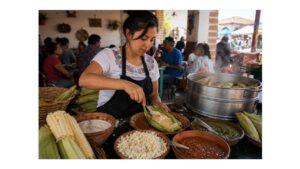
They are found in different parts of Michoacán, including communities in and around the state’s central highlands and Purépecha cultural region. You may encounter them in markets, traditional restaurants, small food businesses, roadside establishments, and kitchens where the recipe is simply part of what the family knows how to make.
That last setting is important.
Foods such as uchepos can become flattened when we describe them only as “regional specialties,” as though people spend their lives consciously preserving culinary heritage every time they turn on a steamer. Sometimes tradition survives in a much less ceremonial way.
Someone learned from someone else.
The corn came in.
The uchepos got made.
And everybody knew what belonged on the table beside them.
That ordinariness is part of their cultural importance. A food does not have to be reserved for a festival or special occasion to carry history. Sometimes the strongest traditions are the ones repeated so routinely that nobody needs to announce them as traditions at all.
For a visitor, that also changes how to approach uchepos. Don’t look only for a restaurant advertising an elaborate “authentic Michoacán experience.” Markets, neighborhood eateries, traditional food stalls, and places with strong local turnover can tell you far more about how a regional dish actually fits into everyday life.
The goal isn’t simply to find an uchepo.
It’s to find one somewhere that uchepos make sense.
THE BEST REGIONAL FOODS DON’T JUST TELL YOU WHAT PEOPLE COOK—THEY SHOW YOU HOW A PLACE EATS.
☀️ Why Uchepos Taste Like Summer
Calling uchepos “tamales that taste like summer” isn’t just a colorful title.
There is something unusually immediate about the flavor of young corn. Anyone who has eaten a truly good ear at the height of its season knows the difference. The kernels release moisture when bitten. Sweetness arrives before starchiness. There is a green, almost grassy freshness underneath the familiar corn flavor.
An uchepo preserves much of that character after the ear has disappeared.
That’s important because most corn foods teach us about transformation. Nixtamalization transforms dried corn. Grinding transforms it again. Tortillas, tamales, tostadas, gorditas, sopes, and countless other foods demonstrate how extraordinarily useful maize becomes after processing.
Uchepos celebrate a much shorter journey.
Corn comes from the field while young. The kernels are removed. They’re ground or processed, wrapped in the husks that surrounded them, and steamed.
The distance between crop and finished food remains unusually short.
Seasonality historically mattered for an obvious reason: uchepos require fresh corn at the appropriate stage of maturity. Modern agriculture and distribution can make fresh corn available across longer stretches of the year, but that doesn’t erase the agricultural logic underneath the dish. The quality of the corn still has enormous influence over the quality of the uchepo.
A cook can season an ordinary ear.
A cook cannot season it into exceptional young corn.
That is why a particularly good uchepo can feel almost startlingly simple. There may be crema on top, cheese scattered across it, and salsa running into the folds of the opened husk, but underneath everything is a flavor that was largely determined before the cook ever touched it.
The field had to get there first.
UCHEPOS TASTE LIKE SUMMER BECAUSE THEIR MOST IMPORTANT FLAVOR IS CREATED BEFORE THE KITCHEN EVER GETS INVOLVED.
👃 What Does a Really Good Uchepo Taste Like?
The first thing a really good uchepo should remind you of is fresh corn. Not simply sweetness, and certainly not sugar added for the sake of making the tamal taste like dessert, but the flavor of young kernels while they are still tender, juicy, and naturally sweet. Depending on the recipe and the corn itself, some cooks may reinforce that sweetness with additional sugar, but the defining flavor should still be recognizable as corn.
Texture is just as revealing. Because young kernels contain considerable natural moisture, the interior of an uchepo should feel tender and moist rather than dry, crumbly, or rubbery. There is no single ideal consistency—different corn, recipes, and cooks produce different results—but especially tender versions can approach an almost custard-like softness while still holding together as a tamal. The important thing is that the texture feels consistent with the fresh ingredient from which it was made.
The aroma tends to be gentler than that of a chile-filled or heavily seasoned tamal, and that subtlety is part of the appeal. Opening the warm green husk releases the scent of steamed corn, followed by whatever accompanies it on the plate. Crema contributes dairy richness and a slight tang, cheese brings saltiness, and salsa introduces chile, acidity, roasted flavors, or some combination of the three. Rather than competing with the uchepo, those accompaniments create contrasts that make the corn easier to appreciate.
That is when the dish becomes particularly interesting. Taste the uchepo by itself and its fresh-corn character is easiest to recognize; bring crema into the next bite and the richness changes the balance. Salty cheese makes the natural sweetness seem more pronounced, while salsa can give an otherwise gentle food enough heat and acidity to create tension without overwhelming it. A well-served uchepo can therefore move through sweet, creamy, salty, tangy, and spicy flavors while keeping corn at the center of the experience.
Judging an uchepo simply by how sweet it is misses what the cook is trying to preserve. The better question is whether, after grinding, wrapping, steaming, and dressing it with everything else on the plate, you can still taste the young corn that made an uchepo possible in the first place.
A GREAT UCHEPO SHOULDN’T MAKE YOU THINK ABOUT SUGAR FIRST—IT SHOULD MAKE YOU THINK ABOUT CORN.
🌶️ Professor Pepper Says…
When you’re looking for a regional food while traveling, don’t assume the most polished restaurant serves the most revealing version. Markets, neighborhood eateries, and places with steady local turnover often let you see how the food actually fits into everyday life. With uchepos, watch for what is coming warm from the steamer.
🍽️ Experiencing Uchepos for Yourself in Michoacán
By the time an uchepo reaches the table, most of the story we’ve been following is no longer visible. The young ear has been husked, the kernels removed and ground, the mixture wrapped and steamed, and the agricultural decision that started everything has disappeared inside a folded green husk. For a traveler encountering uchepos in Michoacán, opening that husk is where all of those pieces finally come back together.
This is also an experience that doesn’t require access to a private family kitchen or participation in a community tradition. Uchepos are regional foods that visitors can realistically encounter in markets, traditional restaurants, neighborhood eateries, and other places serving Michoacán cooking. That makes them particularly well suited to the kind of food travel where the goal isn’t simply to photograph something unfamiliar, but to understand it by eating it in the environment where it belongs.
A freshly steamed uchepo is worth tasting first without doing much to it. Pull back the husk and notice the softer structure and fresh-corn aroma before adding everything available on the table. The first bite establishes the baseline: tender corn, gentle sweetness, and a texture quite different from the masa-based tamales many travelers already know. Crema, cheese, and salsa can follow, each changing the balance without needing to replace the flavor underneath.
There is something useful about experiencing the dish this way because it turns an abstract lesson about corn into a sensory one. Earlier in the article, the distinction between young corn and mature corn may have sounded agricultural or technical. At the table, it becomes obvious. The sweetness, moisture, and tenderness that distinguish an uchepo are the same qualities the cook was trying to preserve when the corn was selected in the first place.
And that may be the best reason to seek out regional foods when traveling through Mexico. A dish like an uchepo doesn’t merely provide another name to remember. It gives you a way to understand the place through an ingredient that local cooks have understood for generations.
EATING AN UCHEPO IN MICHOACÁN TURNS A LESSON ABOUT CORN INTO SOMETHING YOU CAN ACTUALLY TASTE.

🌽 What Uchepos Teach Us About Mexican Corn
For such a simple food, an uchepo reveals something surprisingly profound about Mexican cooking. We often describe the importance of corn in Mexico by listing everything made from it—tortillas, tamales, tostadas, gorditas, sopes, tlacoyos, elote, esquites, and countless regional dishes. The size of that list is impressive, but it only begins to explain the depth of Mexico’s relationship with maize.
Uchepos reveal another part of the story because they depend not simply on corn, but on understanding corn at a particular moment in its life. Young kernels can be eaten fresh while they are still juicy and naturally sweet. Allow those kernels to mature and dry, and they become suitable for storage and processes such as nixtamalization. Nixtamal can then be ground into masa, opening an entirely different culinary world. The same plant offers cooks different possibilities depending on when it is harvested and what happens to it afterward.
Uchepos deliberately take an earlier path. The corn is harvested while its kernels are still tender, moist, and sweet, then ground and steamed before those fresh qualities disappear. Much of what makes an uchepo distinctive therefore happens before anyone begins cooking. The farmer’s timing and the cook’s understanding of the ingredient are inseparable from the finished food.
That helps explain why uchepos and corundas can belong to the same broad Michoacán corn culture while tasting and behaving so differently. A corunda demonstrates what cooks can accomplish with masa; an uchepo preserves qualities associated with young fresh corn. They are not competing interpretations of the same tamal. They represent different decisions about what maize can become, and together they reveal how much culinary knowledge can exist within a single crop.
Seen from that perspective, seeking out an uchepo in Michoacán becomes more interesting than simply checking an unfamiliar regional dish off a travel list. What arrives inside the opened green husk is the result of agricultural knowledge carried into the kitchen: recognizing the crop’s stages, understanding how its flavor and texture change as it matures, and choosing a preparation suited to that particular moment.
That may ultimately be the most important lesson uchepos have to teach. Mexico’s extraordinary corn culture isn’t defined only by the enormous number of foods made from maize. It is also defined by generations of cooks learning to recognize that corn harvested fresh, corn allowed to mature, corn dried for storage, and corn transformed through nixtamalization offer different culinary possibilities.
After eating an uchepo, corn itself becomes a little more complicated than it was before.
THE GENIUS OF MEXICAN CORN COOKING ISN’T SIMPLY THAT ONE INGREDIENT MAKES SO MANY FOODS—IT’S THAT GENERATIONS OF COOKS LEARNED HOW MANY DIFFERENT FOODS ONE PLANT COULD BECOME.
🌶️ Recommended Peppers of Key West Products for Uchepos
Uchepos don’t need much help. Their appeal comes from the natural sweetness and tenderness of young corn, usually balanced by crema, cheese, and salsa, so the best sauce pairing should add another dimension without burying the ingredient that makes the dish distinctive.
For that reason, I would favor Peppers of Key West sauces that bring bright chile flavor, acidity, or a measured touch of fruit and sweetness rather than simply reaching for the hottest bottle on the shelf. Think of the sauce as another accompaniment alongside the crema and cheese: enough to create contrast, but restrained enough that the fresh corn still tastes like fresh corn.
Product Pairing Quick Guide
- Warm uchepos with crema and cheese → Peppers of Key West Jalapeno Garlic Hot Sauce
- Naturally sweeter uchepos → Peppers of Key West is Goin Bananas
- Uchepos served with richer cheese or crema → Peppers of Key West Serrano Hot Sauce
🌶️ Best Peppers of Key West Sauces for Uchepos
Uchepos are delicate enough that the sauce should change the experience without covering up the fresh corn. These three pairings approach that balance differently: Jalapeño Garlic complements a classic crema-and-cheese preparation, Goin’ Bananas plays into the corn’s natural sweetness, and Serrano provides a brighter chile contrast when the plate becomes richer.
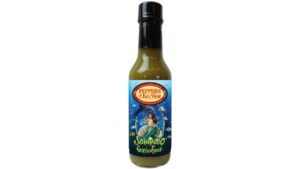
🌶️ Peppers of Key West Jalapeño Garlic Hot Sauce
Best With: Warm uchepos topped with Mexican crema and cheese
Jalapeño Garlic adds approachable green-chile heat and savory garlic that balances the natural sweetness of fresh corn. With cool crema and salty cheese already on the plate, it adds flavor and gentle heat without overwhelming the delicate character of the uchepo.
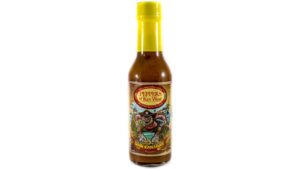
🍌 Peppers of Key West is Goin’ Bananas
Best With: Naturally sweeter uchepos and lightly dressed preparations
Goin’ Bananas plays directly into the natural sweetness of young corn, adding a fruity tropical dimension and gentle chile contrast. Use it sparingly on a warm uchepo so the banana complements the sweet corn rather than taking over, especially when the tamal is served simply.
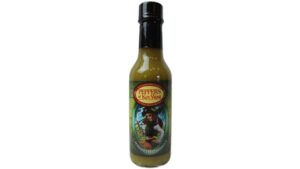
🌶️ Peppers of Key West Serrano Hot Sauce
Best With: Uchepos served with richer cheese or plenty of Mexican crema
Serrano provides the brightest chile contrast of the three, bringing fresh pepper character and enough heat to cut through rich crema and cheese. The sharper chile flavor works particularly well against naturally sweet corn while allowing the uchepo’s delicate flavor to remain recognizable.
🌽 Michoacán’s Tamal That Waits for the Right Corn
There are Mexican foods whose identities come from elaborate sauces, hours of slow cooking, difficult techniques, or long lists of ingredients. The identity of an uchepo begins with something quieter: recognizing when an ear of corn is ready.
Harvest it young enough and its kernels are still moist, tender, and naturally sweet. Grind them, return that fresh corn mixture to its own green husks, and steam it, and Michoacán turns that fleeting stage of the crop into a food with an identity entirely its own.
Understanding uchepos also makes the larger world of Mexican tamales harder to reduce to a single definition. A tamal does not have to mean masa surrounding a savory filling, just as corn does not have to mean one standardized ingredient. Michoacán’s uchepos and corundas alone demonstrate how dramatically the possibilities change according to the stage of the corn and the decisions made by the people cooking it.
Then there is the simplest lesson of all.
Open a warm uchepo, taste it before adding anything, and the first thing you should recognize is the ingredient that started the entire journey.
Fresh corn.
That is why uchepos taste like summer—and why one of Michoacán’s seemingly simplest tamales can teach us so much about Mexican food.
SOMETIMES THE MOST IMPORTANT PART OF A RECIPE IS KNOWING WHEN THE INGREDIENT IS READY.
❓ Uchepos FAQ
Are uchepos the same as sweet tamales?
Not exactly. Uchepos are naturally sweet tamales made from tender young corn rather than the nixtamalized masa used for many other tamales. Some recipes add sugar, but fresh corn provides their defining sweetness.
Why are uchepos associated with Michoacán?
Uchepos are a traditional Michoacán food with strong ties to Purépecha culinary heritage. Their use of fresh young corn reflects the region’s deep agricultural and culinary relationship with maize.
What kind of corn is used to make uchepos?
Uchepos are made with fresh young corn harvested while the kernels are still tender, juicy, and naturally sweet. That stage of maturity gives them their characteristic sweetness, moisture, and delicate texture.
Are uchepos made with nixtamalized masa?
Traditional uchepos are made primarily from ground fresh corn rather than the nixtamalized masa used for many other Mexican tamales. This difference is fundamental to their softer texture and fresh-corn flavor.
Do uchepos have a filling?
Typically, the fresh-corn mixture itself is the star rather than a separate meat or cheese filling. Uchepos are often served with accompaniments such as Mexican crema, cheese, and salsa.
Why are uchepos wrapped in green corn husks?
Uchepos begin with fresh ears of young corn, so their tender green husks can be saved and used as wrappers. The husks hold the corn mixture together during steaming and contribute to the finished tamal’s aroma.
Are uchepos eaten for breakfast or as a meal?
Uchepos can be eaten at different times of day. Served simply, they can make a lighter meal or snack; topped with crema, cheese, and salsa, they become a more substantial savory-sweet dish.
What cheese is traditionally served with uchepos?
The exact cheese varies by cook and location, but salty Mexican cheeses pair especially well with uchepos. Their saltiness contrasts with the natural sweetness of the young corn while crema adds richness and acidity.
Are uchepos spicy?
Uchepos themselves do not have to be spicy. The heat usually comes from salsa or chile sauce served with them, allowing the naturally sweet fresh-corn flavor to remain at the center of the dish.
What’s the difference between uchepos and corundas?
Uchepos are made from fresh young corn and are typically soft and naturally sweet. Corundas are made from masa and are recognized by their distinctive angular shape. Both are traditional foods associated with Michoacán and Purépecha cuisine.
Can you find uchepos outside Michoacán?
Yes. Uchepos can be found beyond Michoacán, especially where Michoacán cooking traditions have traveled. However, eating them in their home region provides valuable cultural context for understanding the dish.
What should a really good uchepo taste like?
A good uchepo should taste unmistakably of fresh young corn, with gentle natural sweetness and a moist, tender texture. Crema, cheese, and salsa should provide contrast without overwhelming the corn.
🌮 Continue Your Mexican Street Food Journey
🌯 More Mexican Street Foods Worth Trying
- Tamales Explained: The Ancient Mexican Comfort Food That Still Dominates Street Food Culture
- Corundas Explained: Michoacán’s Triangular Tamales with Ancient Purépecha Roots
- Corundas vs Uchepos: Why Michoacán’s Two Most Famous Corn Dishes Aren’t the Same
- Mexican Street Corn (Elote) So Addictive You’ll Forget Tacos Exist
- Esquites Explained: Why Mexico’s Street Corn in a Cup Is Every Bit as Addictive as Elote
- Gorditas Explained: Mexico’s Stuffed Corn Pockets Deserve More Love
- Tlacoyos Explained: Mexico City’s Ancient Stuffed Corn Street Food
- Picadas Explained: Veracruz’s Handmade Corn Cakes Loaded with Authentic Street Food Flavor
🌽 See More Keywords
Michoacán cuisine, Michoacán food traditions, traditional Mexican tamales, regional Mexican tamales, Mexican corn dishes, traditional Mexican corn dishes, fresh young corn, Mexican maize culture, maize in Mexican cuisine, Purépecha cuisine, Purépecha food traditions, indigenous Mexican food, corn husk tamales, green corn husks, fresh corn tamal, sweet tamal, Mexican sweet tamales, tamales with crema, tamales with cheese, tamales with salsa, Mexican crema, corn and chile, Mexican regional food, food of Michoacán, traditional food of Michoacán, Mexican food culture, Mexican corn traditions, tamal de elote, fresh corn masa, Mexican food travel
