
Taquitos Explained: Mexico’s Crispy Rolled Tacos Everyone Loves
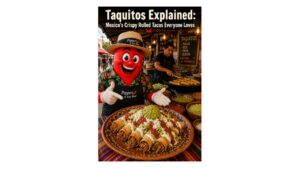
Some tacos are soft, messy, and happiest when eaten leaning over a plate. Taquitos chose violence.
A tortilla is wrapped tightly around seasoned meat, rolled into a narrow cylinder, and fried until the outside turns golden and audibly crisp. Add salsa, crema, cheese, guacamole, or shredded lettuce, and something remarkably simple becomes one of Mexico’s most satisfying ways to eat a tortilla.
But the little rolled taco has a bigger story than its size suggests. Taquitos belong to Mexico’s broad family of fried tacos, where names, tortillas, fillings, and traditions can change from one region to another—and where the difference between a taquito, taco dorado, rolled taco, and flauta isn’t always as tidy as the internet would have you believe.
Here’s why that crunch matters.
Introduction
You usually hear a good taquito before you have time to think very hard about what you’re eating.
The tortilla breaks with a sharp crack, sending a few golden crumbs onto the plate while the shredded meat inside stays tender. Salsa finds its way into the broken edges. Crema cools the chile. Crumbled cheese adds saltiness, lettuce or cabbage brings freshness, and guacamole can turn a narrow fried taco into something considerably richer than its size suggests.
It is an impressive amount of pleasure built from a remarkably simple idea.
Take a tortilla. Add a modest amount of filling. Roll it tightly enough that the tortilla wraps completely around what is inside. Then fry it until something that began soft and flexible becomes crisp, golden, and rigid enough to hold its shape.
That transformation is what makes a taquito interesting.
Mexican cooking asks tortillas to perform far more jobs than simply carrying taco fillings. They can be folded around meat, dipped into sauces, toasted over heat, cut and fried, layered beneath other ingredients, stuffed with cheese, or shaped around masa-based foods before cooking. Taquitos demonstrate another possibility: the tortilla itself can become the crisp shell that gives the finished food much of its character.
That is why thinking of a taquito simply as a miniature taco misses the point.
The filling matters, of course. Shredded beef and chicken are familiar choices, and potato, cheese, or other fillings can appear depending on the cook and place. But the technique depends on restraint. Pack too much inside and the tortilla becomes difficult to roll, more likely to split, and less able to form the narrow cylinder that fries so effectively.
A taquito is not trying to hide an enormous meal inside a tortilla. It is trying to create contrast: the outside should crack while the filling remains tender, giving the salsa, crema, cheese, guacamole, vegetables, and chile something distinctive to work against.
Everything added afterward—salsa, crema, cheese, guacamole, vegetables, chile—has that contrast to work against.
Taquitos belong within the much larger story told in Mexican Street Food Beyond Tacos: Elote, Tortas, Tamales & More, where tortillas, masa, breads, corn, meat, seafood, sauces, and regional cooking techniques produce an extraordinary range of foods that rarely fit neatly into the American idea of “Mexican food.” Rolled fried tacos are one branch of that family, but even within that branch the terminology can become complicated.
You may hear taquitos. You may encounter tacos dorados. Someone may call something very similar a flauta. Cross the border into the United States and rolled tacos becomes another familiar term, particularly in Mexican-American food traditions.
There are real distinctions behind some of those names, but there isn’t one universal rulebook capable of explaining every taquería, household, city, and region. Tortilla type can matter. Length and shape can matter. Local tradition can matter even more.
We’ll sort through those distinctions.
First, though, it helps to forget the vocabulary for a moment and pay attention to what the cook is actually doing.
Because the story of the taquito begins with a tortilla that is about to become something completely different.
A TAQUITO ISN’T JUST A SMALLER TACO—IT’S A LESSON IN WHAT HAPPENS WHEN THE TORTILLA BECOMES PART OF THE TECHNIQUE.
Taquitos Quick Guide
What are taquitos?
Taquitos are tortillas rolled tightly around a relatively small amount of savory filling and cooked until crisp, most commonly by frying. Shredded beef and chicken are familiar fillings, although other preparations exist.
Are taquitos Mexican?
Rolled and fried tacos belong to Mexican culinary traditions, while the word taquito and several styles familiar to American diners also have important histories within Mexican-American cooking.
What does taquito mean?
Taquito literally means “little taco.” In common food usage, however, the name generally refers to a small, tightly rolled taco cooked until crisp rather than simply any taco that happens to be small.
Are taquitos the same as flautas?
Not necessarily. Taquitos and flautas belong to the same broad family of rolled, crisp tacos, but tortilla type, size, preparation, geography, and local vocabulary can influence which name is used. The distinction is not identical everywhere.
Are taquitos made with corn or flour tortillas?
Corn tortillas are strongly associated with many taquito and taco dorado preparations, although flour tortillas can also be used for rolled fried tacos. Regional traditions and the cook’s intended style influence the choice.
What goes inside taquitos?
Shredded or finely prepared beef and chicken are common because they fit easily inside a tight roll, but potato, cheese, and other fillings can also be used. The filling generally needs to be compact enough for the tortilla to close securely around it.
Start with the Tortilla: Why Taquitos Become So Crispy
Watch taquitos being assembled and one detail can seem strange at first: the cook may use far less filling than you expect.
A relatively narrow strip of shredded meat is placed across the tortilla rather than piled high in the center. The tortilla is then rolled snugly around it, creating a compact cylinder with several layers of tortilla surrounding the filling. What might look like stinginess is actually part of the engineering. Too much meat makes the tortilla harder to close, increases the chance that it will split or unravel during cooking, and changes the ratio between crisp exterior and tender interior that makes a taquito so satisfying.
The tortilla has to remain one of the main ingredients.
That becomes particularly important when corn tortillas are used. A tortilla that is cool, dry, or beginning to stale may crack when forced into a tight roll, so cooks often warm or otherwise soften the tortillas enough to restore their flexibility before filling them. Once pliable, they can wrap closely around the meat without breaking, creating the shape needed for even frying.
Then the oil reverses everything the cook just accomplished.
The tortilla went into the roll because it was soft enough to bend. It enters hot oil and begins losing moisture from its surface as the exterior dries, firms, and browns. The flexible tortilla gradually becomes rigid around the filling, developing blistered areas, toasted aromas, and the brittle structure responsible for that first unmistakable crack when someone bites into it.
When the tortilla is made from corn, that transformation also carries the flavor of masa into the finished food. Masa—the dough traditionally made from nixtamalized corn—is one of the foundational building blocks of Mexican cooking, and its importance extends far beyond ordinary tortillas. Our What Is Masa? The Ancient Corn Dough Behind Authentic Mexican Street Food guide explores how corn becomes nixtamal and eventually masa, creating the foundation for tortillas, tamales, sopes, gorditas, tlacoyos, and countless other foods.
A taquito takes one of those familiar soft tortillas and sends it through another transformation.
That is where frying becomes more than a cooking method used to make something crunchy. The cook is balancing two environments at once. The outside of the taquito is exposed directly to intense heat and needs enough time to become crisp and golden, while the filling is insulated inside the tortilla and ideally remains moist and flavorful. Leave the taquito in the oil too long and the tortilla can become hard, dark, or greasy. Pull it too early and the wrapper may remain leathery rather than achieving the brittle crunch the dish depends on.
Shredded meats are particularly well suited to that balance. Strands of beef or chicken can be seasoned before rolling and distributed through a narrow cylinder without forming a thick, dense center. The tortilla can therefore wrap closely around the filling, helping the taquito maintain its shape while giving every bite some of both components.
That relationship becomes obvious once the taquito reaches the plate.
Bite through the fried tortilla and the first sensation is crispness. A fraction of a second later comes the softer filling. Salsa introduces moisture and acidity into the cracks, crema brings richness and cooling contrast, and toppings such as cheese, lettuce, cabbage, or guacamole add still more textures without changing the basic architecture underneath them.
The technique works because the taquito doesn’t ask one ingredient to provide everything. The tortilla provides the crunch while the filling stays tender inside, and the salsa, crema, cheese, vegetables, or guacamole create layers of acidity, richness, freshness, and moisture against them. Each component has a different job, and the pleasure comes from experiencing those differences in the same bite.
THE CRUNCH OF A TAQUITO ISN’T SOMETHING ADDED AT THE END—THE ENTIRE DISH IS BUILT TO CREATE IT.
 🌶️ Professor Pepper Says…
Don’t judge a taquito by how much filling the cook manages to squeeze inside. Using less filling allows the tortilla to wrap tightly and fry more evenly, helping create the crisp exterior and tender center that define the dish. With taquitos, restraint is part of the technique.
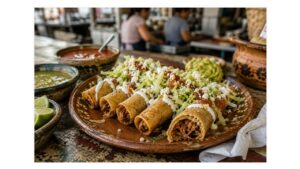
Taquitos Belong to Mexico’s Larger Family of Tacos Dorados
To understand where taquitos fit into Mexican cooking, it helps to pull the camera back from the individual rolled taco and look at a much larger family of foods.
Mexico has a long tradition of frying tortillas and tacos until they become crisp and golden. One useful term for that broader idea is tacos dorados—literally “golden tacos.” Rather than describing one filling or one precisely standardized shape, the name points toward what cooking has done to the tortilla. It has been fried until its exterior becomes dorado: golden, crisp, and dramatically different from the soft tortilla with which the cook began.
Rolled tacos fit naturally into that world.
Depending on the preparation, tortillas may be wrapped tightly around shredded meat, chicken, potato, cheese, or another filling before frying. The resulting tacos can be eaten relatively simply or dressed generously with salsa, crema, cheese, lettuce, cabbage, guacamole, or other accompaniments. What arrives on the plate can therefore range from a handful of crisp rolled tacos meant to be picked up immediately to a fully dressed dish where the toppings become almost as important as the filling inside.
This is also where vocabulary starts becoming slippery.
Taquito literally points toward a small taco, and in the United States the term has become strongly associated with the narrow rolled-and-fried form many diners recognize immediately. But Mexico’s food vocabulary does not always organize itself according to the clean categories outsiders would prefer. Similar rolled tacos may be described as tacos dorados in one context, taquitos in another, and flautas somewhere else.
It is tempting to solve the problem by creating a simple rule: taquitos use corn tortillas while flautas use flour, taquitos are short while flautas are long, or one name belongs primarily in Mexico while another belongs in the United States. Each explanation may describe particular traditions or common patterns, but none works reliably enough to erase regional variation.
Each explanation may describe particular traditions or common patterns, but none works reliably enough to erase regional variation. Mexico’s cooking traditions developed across different states, cities, communities, and households, and those foods continued evolving as Mexican cooks and families carried them elsewhere. Names traveled too, sometimes changing meaning along the way.
That makes the ambiguity useful rather than inconvenient.
When two communities use different names for similar foods, the difference can reveal something about geography, migration, local tortilla traditions, or simply the vocabulary people inherited from the cooks who taught them. Food doesn’t become less authentic because its name refuses to fit neatly into an infographic.
Flautas deserve the same consideration. Our dedicated Flautas Explained: Mexico’s Crispy Rolled Tortillas Loaded with Flavor guide explores that tradition on its own rather than reducing flautas to “the longer version of a taquito.” There is enough overlap to make comparison inevitable, but enough variation that neither food should exist merely as a definition of the other.
For taquitos, the more useful starting point is the technique we can actually see. A tortilla receives a modest amount of filling so it can be rolled tightly, then it is fried until the soft wrapper becomes golden and crisp around the tender center. That basic transformation remains recognizable even when the terminology around it changes. Depending on where you are, who prepared it, and which local food traditions shaped the cook’s vocabulary, the name attached to that rolled fried taco may tell you another part of its story.
WHEN MEXICAN FOOD NAMES CHANGE FROM PLACE TO PLACE, THE ANSWER ISN’T ALWAYS TO FIND THE ONE “CORRECT” NAME—SOMETIMES THE DIFFERENCES ARE PART OF THE HISTORY.
What Goes Inside Traditional Taquitos?
Once you understand why the tortilla needs to be rolled tightly, the fillings commonly used for taquitos begin to make much more sense.
This is not a format that rewards excess. A taquito needs enough filling to make every bite satisfying, but the tortilla still has to close securely around it. Large chunks of meat, overflowing cheese, or a pile of wet ingredients may sound generous, but they work against the structure the cook is trying to create. The best fillings tend to be flavorful, relatively compact, and easy to distribute in a narrow line across the tortilla.
Shredded meat is particularly well suited to the job.
Chicken can be cooked until tender, pulled into fine strands, and seasoned before rolling. Beef can be treated similarly, producing a richer filling that remains soft inside the crisp tortilla. Depending on the cook and region, pork may appear as well. The important characteristic is not a single mandatory meat but a texture that allows the tortilla to wrap closely around the filling without creating bulky pockets.
Potato demonstrates how little a taquito actually needs to work.
Cooked potato can be mashed or crushed, seasoned, and spread thinly enough to create a creamy interior beneath the fried tortilla. Cheese can play a similar role, either alone or combined with another ingredient. These versions make an important point about Mexican antojitos—the broad family of casual foods and “little cravings” that includes many tacos, quesadillas, sopes, tostadas, and other street-food favorites. Meat is not always what gives an antojito its identity. Technique, tortilla, salsa, toppings, and texture can be just as important.
Whatever goes inside also needs to survive frying.
The filling is already cooked or sufficiently prepared before the taquito enters the oil in many preparations, so frying is less about cooking a raw center than transforming the tortilla and reheating everything together. That allows the cook to concentrate on the exterior—getting it crisp and golden without leaving the taquito in the oil so long that the filling dries out.
Moisture matters here. A juicy filling can be delicious, but excess liquid inside a tightly rolled tortilla makes frying more difficult and can soften the shell from within. Experienced cooks are therefore balancing something that rarely appears in a recipe title: the filling needs enough moisture to remain tender without carrying so much that it works against the crunch.
This is one reason yesterday’s leftovers can sometimes seem almost designed for foods like taquitos. Cooked meat that has already developed flavor can be shredded, adjusted with seasoning, rolled into tortillas, and given an entirely different texture through frying. Mexican cooking has countless examples of techniques that turn prepared ingredients into another meal rather than treating them as something merely reheated.
A taquito makes that transformation particularly dramatic because both of its primary components begin soft and tender. The filling stays that way, but the tortilla surrounding it is deliberately transformed until it becomes crisp enough to hear when you bite through it. That contrast is not incidental to the dish; it is the reason a small amount of filling wrapped in an ordinary tortilla can become something completely different.
THE BEST TAQUITO FILLING ISN’T THE ONE YOU CAN PACK IN MOST GENEROUSLY—IT’S THE ONE THAT LETS THE TORTILLA DO ITS JOB.
How Taquitos Are Rolled and Fried
The moment that determines whether a taquito will hold together often happens before it gets anywhere near the oil.
A cook working with corn tortillas needs them pliable enough to roll without splitting. Fresh tortillas may already cooperate; others need to be warmed briefly so they soften and regain flexibility. The goal is not to toast them or make them crisp yet. At this stage, the tortilla needs to do exactly the opposite. It needs to bend.
A modest line of prepared filling is placed toward one side, and the tortilla is rolled tightly around it. The first turn encloses the filling; the remaining tortilla wraps around that center, building the layered cylinder that will eventually become crisp. Some cooks secure the roll temporarily with a toothpick, while others rely on tight rolling and careful placement to keep the seam closed during frying.
There is a practiced rhythm to making several at once. Warm the tortillas, portion the filling, roll, arrange, repeat. What looks almost automatic in the hands of someone who has done it hundreds of times is really a sequence of small decisions about temperature, moisture, filling quantity, and tortilla flexibility.
Then the taquitos meet the oil.
Placed seam-side down or otherwise positioned so the roll remains closed, they begin bubbling almost immediately. Moisture escapes from the tortilla while the surface firms. Pale corn deepens toward gold. Softness gives way to structure, and the taquitos can be turned so the exterior cooks evenly rather than developing one dark side and one soft side.
The sound changes too.
At first there is the aggressive bubbling of moisture meeting hot oil. As the exterior becomes drier and crisper, the frying settles. An experienced cook does not need a stopwatch to understand every stage of that transformation. Color, texture, sound, and feel all provide information.
Once the tortillas have reached the desired crispness, the taquitos are lifted from the oil and allowed to drain. That brief moment matters. The goal is a tortilla that tastes fried, not one that carries a mouthful of excess oil.
Only then are the toppings added.
This order is easy to overlook, but it is fundamental to the experience. Salsa, crema, lettuce, and other moist toppings are wonderful precisely because the tortilla underneath begins so crisp. Dress the taquitos too early and leave them sitting long enough, and moisture inevitably starts softening the shell.
Which means the best moment to eat one is not complicated.
Soon.
A GREAT TAQUITO DEPENDS ON TWO OPPOSITE STATES OF THE SAME TORTILLA: SOFT ENOUGH TO ROLL FIRST, CRISP ENOUGH TO SHATTER LATER.
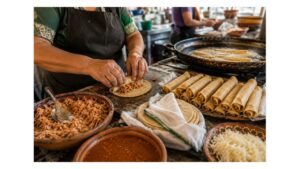
Why Salsa, Crema, Cheese and Lettuce Belong on the Plate
A taquito straight from the fryer is already satisfying. Eat one completely plain and you can understand the technique with unusual clarity: toasted corn on the outside, tender filling inside, salt, fat, and the unmistakable flavor created when a tortilla becomes crisp in hot oil.
Then add salsa and the food changes.
The crisp tortilla now has acidity and chile to push against. A roasted red salsa can contribute deeper chile and tomato flavors, while a bright salsa verde can bring tomatillo acidity and fresh green-chile character. Hotter salsas sharpen the bite even further, which is one reason fried foods and chile sauces find each other so naturally.
Crema performs almost the opposite job. Its cool dairy richness softens the perception of heat and adds moisture to a food whose defining exterior characteristic is dryness and crunch. Crumbled or grated cheese contributes salt and richness, while shredded lettuce or cabbage brings freshness and a lighter, wetter crunch of its own.
Guacamole adds yet another texture: soft, rich avocado against the brittle tortilla.
None of these toppings is particularly mysterious on its own. What matters is what happens when they meet.
A good plate of dressed taquitos becomes an exercise in contrasts, with hot fried tortillas meeting cool crema, crisp corn pushing against softer vegetables and avocado, and rich meat finding balance in acidic salsa and chile.
The toppings also explain why covering every inch of the taquito isn’t necessarily an improvement. If enough crema and salsa are added to completely saturate the tortilla, the cook begins erasing the texture that frying worked so hard to create. A well-dressed plate gives you both experiences: areas where the toppings have begun softening the tortilla and exposed sections that still deliver an audible crunch.
That gradual change can actually be part of the pleasure.
The first taquito may be exceptionally crisp. By the time you reach another one sitting beneath salsa and crema, some of its surface has softened while the interior remains structured. Instead of every bite being identical, the plate evolves as you eat it.
This is also where Mexican salsa culture becomes much more interesting than simply asking whether a sauce is “hot.” Different salsas bring different kinds of acidity, chile flavor, roasting, smokiness, fruitiness, and texture. Our Mexican Street Food Sauces Beyond Salsa: Crema, Chili Oils, Citrus Heat & More guide explores those families in greater depth, but taquitos provide an excellent place to understand the basic principle.
The salsa should do more than make the taco spicy.
It should make the fried tortilla taste better.
TAQUITOS GIVE YOU THE CRUNCH; THE TOPPINGS GIVE THAT CRUNCH SOMETHING TO FIGHT WITH.
🌶️ Professor Pepper Says…
When you’re dressing taquitos, don’t bury every inch of the fried tortilla. Leaving some of the surface exposed preserves the crunch while salsa, crema, cheese, and guacamole create contrast elsewhere. A great plate lets you taste both the fried tortilla and everything added to it.
From Street-Food Snack to a Full Plate
There is something deceptive about the size of a taquito.
One looks like a snack. Put several together beneath lettuce, crema, cheese, salsa, and guacamole and the experience changes quickly. What began as a compact fried taco becomes a substantial plate with enough richness, freshness, chile, acidity, and texture to feel like a complete meal.
That flexibility helps explain why rolled fried tacos work in so many eating situations. They can be served quickly and eaten by hand with relatively little ceremony, particularly when lightly dressed. They can also arrive on a plate under enough toppings that a fork becomes considerably more useful.
The distinction matters because “street food” does not mean food must always be eaten while physically walking down a street. Mexico’s informal food culture includes market stalls, neighborhood stands, small eateries, counters, temporary vendors, and countless other places where the boundary between snack, antojito, and meal can be wonderfully blurry.
Taquitos fit comfortably into that world.
At a working food stand, much of the preparation can happen before the customer orders. Meat can be cooked and shredded. Tortillas can be ready for warming. Rolled tacos can be assembled in batches, allowing the cook to fry them efficiently and dress them quickly as customers arrive. Salsa, crema, cheese, lettuce, and other toppings can then customize the final plate without requiring the underlying food to be rebuilt from scratch for every person.
That practicality should not be mistaken for a lack of craft.
The cook still has to understand the tortilla, filling, oil, and timing. A taquito that splits during frying, absorbs too much oil, arrives with a dry center, or sits beneath wet toppings until completely soft has lost the very contrasts that make the dish appealing.
When it works, however, the experience feels almost effortless. A plate arrives at the table and someone reaches for the first taquito while the tortillas are still hot. The shell cracks beneath the first bite, salsa finds the broken edge, and whatever conversation was happening around the table briefly has to compete with the food.
For a few minutes, nobody needs an explanation of why rolled fried tacos became so easy to love.
TAQUITOS MAY BE SMALL ENOUGH TO EAT WITH YOUR HANDS, BUT A FULLY DRESSED PLATE CAN DELIVER EVERYTHING WE WANT FROM A GREAT MEXICAN ANTOJITO.
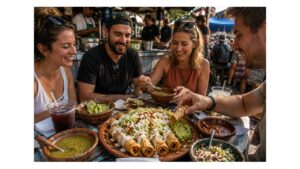
The Mexican and Mexican-American Story of Taquitos
Taquitos become especially interesting when you stop trying to force them into a single birthplace or a perfectly clean national identity. Rolled and fried tacos belong to the much broader Mexican tradition of cooking tortillas until they become golden and crisp, a family of foods connected by technique even when their names, shapes, fillings, and serving styles differ. As we have already seen with tacos dorados, the underlying idea is larger than one particular dish: tortillas can be filled or folded, fried until crisp, and transformed into something whose texture becomes just as important as whatever is placed inside.
The word taquito, however, has developed a particularly strong life on both sides of the Mexico–United States border. That history matters because foods do not stop evolving when people move. Mexican families carried tortillas, fillings, frying techniques, salsa traditions, and food vocabulary into communities throughout the United States, particularly across the Southwest and California. Restaurants and food businesses adapted those traditions to local customers, available ingredients, regional preferences, and the practical demands of serving large numbers of people. Within that movement, rolled fried tacos became increasingly familiar to American diners under names such as taquitos and rolled tacos.
Trying to decide whether that makes taquitos exclusively “Mexican” or “Mexican-American” creates a cleaner distinction than the history deserves. The technique belongs within Mexican cooking traditions, while particular names, restaurant styles, serving customs, and versions of the dish have also been shaped by Mexican-American communities. Those histories can exist together without one invalidating the other.
In fact, taquitos provide a useful example of why authenticity becomes difficult when we treat it as something determined by a border. A family can carry a cooking technique from Mexico into California, Arizona, Texas, or another community and continue preparing it for generations. A restaurant can develop a regional interpretation that becomes locally beloved. The name used for that food can become more common in one place than another, while fillings and accompaniments gradually reflect the community eating it. None of those changes automatically erases the tradition that came before. They become part of its continuing history.
That perspective is especially useful with taquitos because the food has become so familiar in the United States that its origins can disappear beneath its ubiquity. Versions appear in Mexican restaurants and Mexican-American taco shops, but also in bars, stadiums, convenience stores, and frozen-food aisles. Once a food reaches that level of familiarity, it can begin to seem almost generic, as though a taquito were simply a convenient shape for putting meat and cheese inside something crunchy.
Return to the basic technique, however, and the culinary logic reappears. A tortilla is warmed until flexible, wrapped tightly around a modest amount of seasoned filling, and fried until its surface becomes crisp while the food inside remains protected. Salsa and other accompaniments then add acidity, heat, richness, and freshness against that fried shell. The taquito did not become popular simply because someone discovered that fried food tastes good. It became popular because frying makes extraordinarily effective use of a tortilla.
TAQUITOS BELONG TO A FOOD STORY THAT CROSSES BORDERS WITHOUT LEAVING ITS TORTILLA BEHIND.
What Does a Really Good Taquito Taste Like?
The easiest taquito to make is not necessarily the easiest taquito to make well. Frying can hide mistakes remarkably effectively because salt, fat, cheese, crema, guacamole, and salsa provide enough immediate pleasure to make even an ordinary rolled taco enjoyable. Strip away some of those toppings and pay attention to the taquito itself, however, and the differences become much easier to recognize.
Start with the tortilla. A good corn-tortilla taquito should still taste unmistakably of corn beneath the flavors created by frying. Its exterior should be golden and crisp, with toasted aromas and the small bubbles, blisters, and irregularities that develop as moisture leaves the tortilla. When bitten, it should fracture cleanly without becoming so thick or hard that eating it turns into a battle with the shell. Crispness is the goal, but brittleness taken too far is simply overcooking.
Grease provides another clue. Fried food should taste fried, but that does not mean the tortilla should feel saturated with oil. Proper frying removes moisture from the surface while browning and crisping the tortilla. If the oil temperature and timing are working together, the finished taquito feels crisp and rich without becoming heavy. When the tortilla absorbs too much oil, some of the clean contrast between shell and filling disappears.
The filling should be judged with the same restraint. Whether the cook uses chicken, beef, potato, cheese, or another ingredient, it needs enough seasoning and moisture to remain interesting inside the fried tortilla. Shredded meat should stay tender rather than becoming dry strands hidden beneath salsa. Potato should provide a soft, creamy contrast to the shell. Cheese should contribute richness without turning the center into a dense mass that overwhelms the corn around it.
Most importantly, the ratio between tortilla and filling should make sense. A great taquito does not need to bulge at the seams. There should be enough inside to provide flavor and tenderness throughout the roll while leaving the tortilla enough room to wrap closely around the filling and fry evenly. That balance is one reason handmade taquitos can feel so different from oversized versions designed primarily to advertise generosity.
Only after noticing the taquito itself should you consider everything on top of it. Salsa ought to wake up the fried corn with chile and acidity rather than merely make the dish hotter. Crema brings richness and cooling contrast. Cheese contributes saltiness, while lettuce or cabbage provides freshness and a second, completely different kind of crunch. Guacamole adds the soft richness of avocado against a tortilla whose texture has been deliberately pushed in the opposite direction.
A particularly good plate allows all of those ingredients to contribute without losing the rolled taco underneath them. Take the first bite from an exposed end before dragging the next one through salsa or crema. If the tortilla and filling are already worth eating on their own, everything else on the plate has something meaningful to build upon.
A GREAT TAQUITO SHOULD STILL BE GREAT BEFORE THE SALSA, CREMA AND GUACAMOLE COME TO THE RESCUE.
🌶️ Professor Pepper Says…
When judging fried food, pay attention to what happens after the first crunch. A great taquito should give you toasted tortilla, tender filling, and enough corn flavor to remain recognizable beneath the toppings. Crispness gets your attention; balance is what makes you reach for another one.
Experiencing Taquitos for Yourself in Mexico
By the time a plate of taquitos reaches you at a market, neighborhood eatery, or casual food stand in Mexico, most of the work that created it may already be invisible. The meat could have been cooked and shredded hours earlier. Tortillas have been warmed, fillings seasoned, lettuce cut, cheese crumbled, crema readied, and several different salsas prepared for the day’s service. Depending on the establishment, rolled tacos may be assembled in batches before the rush or prepared as needed while oil waits nearby for the next order.
Then the plate arrives looking wonderfully uncomplicated: several golden rolled tacos beneath or beside some combination of salsa, crema, cheese, lettuce, cabbage, avocado, or guacamole. All of the preparation that preceded the order has been compressed into a food that feels casual enough to pick up with your fingers.
This is where traveling through food becomes useful. You do not need to locate “Mexico’s best taquito” or construct an itinerary around a supposedly definitive version to understand the dish. In fact, searching only for famous examples can obscure the larger lesson. Rolled fried tacos belong to the kind of everyday food culture that often reveals itself most clearly in places serving the people who already live there.
Markets are an obvious place to look, and our Mexican Street Food Markets Explained: How to Order Like a Local and Find the Best Food Fast guide goes much deeper into how to read a Mexican market, choose vendors, order confidently, and recognize the places locals actually frequent. But neighborhood fondas, casual eateries, taco stands, and small family-run food businesses can be just as revealing. Rather than judging a place by polish, watch how the food moves through it. Fresh tortillas being handled, salsa prepared for the day’s service, steady local customers, and fried foods moving quickly from oil to plate can tell you considerably more about the experience than an elaborate sign promising authenticity.
Watching before ordering can teach you something too. Notice whether the taquitos are fried in batches or prepared as orders arrive, whether they are dressed immediately after leaving the oil, what fillings customers choose, and how people around you eat them. A lightly dressed rolled taco may disappear by hand in a few bites, while a plate covered with crema, cheese, lettuce, salsa, and avocado practically invites a fork.
Pay attention to the name on the menu as well. After learning how much Mexican rolled-taco vocabulary can vary, encountering that variation in person becomes part of the experience rather than a problem that needs to be solved. One establishment may describe what you recognize as taquitos. Somewhere else, a similar preparation may fall comfortably under tacos dorados. Another place may use terminology shaped by its own regional tradition. Instead of arriving determined to correct the vocabulary according to a rule learned online, listen to what the people cooking and eating the food call it.
What you encounter can also change as you travel, which is why our Mexican Street Food by Region: How Flavor Changes from Baja to the Yucatán guide is a useful next step for understanding how geography, local ingredients, and regional traditions shape what appears on Mexican streets and market tables.
When your order arrives, taste an exposed section before covering everything with additional salsa. Notice the corn in the tortilla, the seasoning of the filling, and whether the shell remains light and crisp rather than heavy with oil. Then start experimenting with whatever salsas are on the table. The point is not to find the hottest one. A roasted salsa roja, bright salsa verde, or another house salsa can change the fried tortilla in completely different ways, and comparing those combinations is part of understanding why Mexican tables often offer more than one salsa in the first place.
The goal is not to return home having decided that Mexican taquitos are automatically “better” than every version you have eaten elsewhere. A more interesting question is what the food taught you about the place where you ate it: what people called it, how it was prepared, which toppings accompanied it, how customers ate it, and what other foods shared the menu.
That is when eating while traveling becomes more than collecting dishes. A plate of taquitos becomes a small window into how a particular place cooks, serves, names, and enjoys food.
THE BEST WAY TO UNDERSTAND A TAQUITO IN MEXICO ISN’T TO ASK WHETHER IT MATCHES THE ONE YOU KNOW—IT’S TO NOTICE WHAT THE PEOPLE AROUND YOU ARE EATING.
Why Taquitos Are More Than Just a Crispy Taco
Calling a taquito a crispy taco is accurate in roughly the same way that calling a tortilla cooked corn is accurate. The description is technically useful, but it leaves out the transformation that makes the food interesting.
What gives a taquito its identity is not the complexity of its ingredient list but the intelligence of its construction. The tortilla must begin soft because it needs enough flexibility to wrap tightly around the filling. The amount placed inside is deliberately restrained because an overfilled tortilla becomes difficult to close and fry evenly. Once rolled, hot oil removes moisture from the exterior and turns that flexible tortilla into a crisp shell while the filling remains protected inside. Salsa, crema, cheese, vegetables, and avocado become particularly effective afterward because the fried tortilla gives those softer, wetter ingredients something firm and toasted to push against.
Every step prepares the food for what comes next, and that is an important lesson about Mexican street food more broadly. We often describe these foods primarily through their ingredients—corn, meat, chiles, cheese, avocado, beans, salsa—but ingredients alone do not explain why one preparation becomes a taco while another becomes a tostada, sope, gordita, tlacoyo, enchilada, or taquito. Technique determines what those ingredients are asked to do.
The tortilla is one of the clearest examples. Leave it soft and it can bend around meat for a taco. Fry it flat and it can become the crisp foundation of a tostada. Roll it around a filling before frying and its function changes again. The same foundational ingredient produces entirely different eating experiences because the cook changes its shape, moisture, structure, and relationship with everything placed around it.
Understanding masa makes the transformation even more remarkable. Before a corn tortilla ever becomes a taquito, the corn itself has already undergone an extraordinary journey. Mature kernels are dried and nixtamalized, then ground into masa, formed into tortillas, and cooked. The taquito begins with that finished tortilla and transforms it yet again, taking something designed to be flexible and making its crispness the defining characteristic of the dish.
That is why the filling alone can never explain a taquito. Chicken does not make it a taquito, nor does beef, potato, or cheese. Salsa, crema, guacamole, and lettuce can complete the plate without defining the food underneath. Much of the taquito’s identity comes from what happens to the tortilla itself.
Seen from that perspective, taquitos deserve their place beside Mexico’s more celebrated antojitos. They demonstrate something that appears again and again throughout Mexican cooking: extraordinary variety does not necessarily require an extraordinary number of ingredients. Sometimes the innovation comes from understanding one familiar ingredient deeply enough to know how many different jobs it can perform.
THE GENIUS OF THE TAQUITO ISN’T WHAT GETS ROLLED INSIDE THE TORTILLA—IT’S WHAT THE COOK TEACHES THE TORTILLA TO BECOME.
🌶️ Recommended Peppers of Key West Products for Taquitos
Taquitos create an unusually friendly canvas for hot sauce because the fried tortilla already provides richness, toasted corn flavor, and crunch. What the plate often needs next is contrast. A bright chile sauce can cut through the oil and crema, a fruitier sauce can play against savory shredded meat, and a deeper roasted sauce can reinforce the browned flavors created during frying.
The best choice depends partly on what is inside the tortilla and what else is already on the plate. Chicken usually welcomes brighter chile flavors, while shredded beef can handle something deeper and more assertive. Potato and cheese taquitos offer an even more neutral foundation, allowing the sauce to become one of the strongest flavors in the bite.
If you want to understand why those sauces can taste so different even when they deliver similar levels of heat, Mexican Chiles Explained: Fresh, Dried & Smoked Peppers Every Food Lover Should Know explores how individual chiles contribute fruitiness, grassiness, earthiness, smokiness, and other flavors beyond simply making food hotter.
Product Pairing Quick Guide
- Chicken Taquitos → Peppers of Key West Cayenne Pepper Hot Sauce
- Shredded Beef Taquitos → Peppers of Key West Habanero Pepper Hot Sauce
- Potato Taquitos → Peppers of Key West Jalapeno Garlic Hot Sauce
- Cheese Taquitos → Peppers of Key West Serrano Pepper Hot Sauce
- Mixed Taquito Platter → Peppers of Key West 5 Pack
🌶️ Best Peppers of Key West Pairings for Taquito Lovers
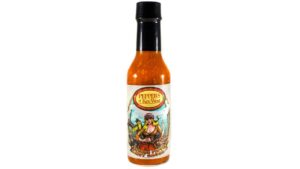
🌶️ Peppers of Key West Cayenne Pepper Hot Sauce
Best for: Chicken Taquitos
Bright cayenne heat and a noticeable garlic character cut through crispy corn tortillas and crema without overpowering the tender shredded chicken inside.
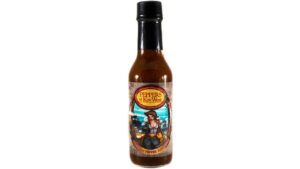
🌶️ Peppers of Key West Habanero Pepper Hot Sauce
Best for: Shredded Beef Taquitos
Habanero heat, garlic, tomato, molasses, and savory depth stand up beautifully to rich shredded beef while adding another layer of flavor to the crispy fried tortilla.
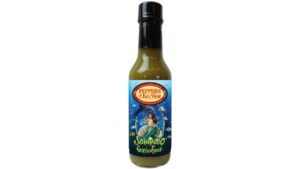
🌶️ Peppers of Key West Jalapeño Garlic Hot Sauce
Best for: Potato Taquitos
Tangy jalapeño, vinegar, and garlic brighten creamy potato filling and rich fried corn tortillas, making this an especially natural match alongside salsa verde and crema.
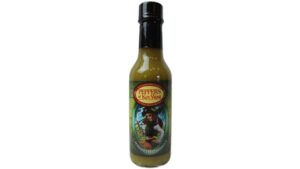
🌶️ Peppers of Key West Serrano Pepper Hot Sauce
Best for: Cheese Taquitos
Serrano pepper heat gives rich cheese taquitos a sharper chile-forward contrast, cutting through the fried tortilla and creamy filling without needing an overly complicated sauce.
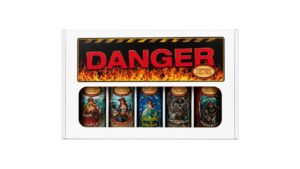
🌶️ Peppers of Key West 5 Pack
Best for: Mixed Taquito Platter
Turn a mixed taquito platter into a hot sauce tasting with Cayenne, Jalapeño Garlic, Habanero, Ghost, and Carolina Reaper—letting everyone explore their own heat level.
What Taquitos Teach Us About Mexican Street Food
A plate of taquitos does not look like something that requires an essay.
That may be exactly why it deserves one.
The dish begins with ingredients so familiar that they are easy to overlook: tortillas, a modest filling, cooking oil, salsa, and whatever toppings happen to accompany them. Yet following those ingredients through the preparation reveals several ideas that appear repeatedly throughout Mexican cooking. Tortillas are not passive wrappers. Texture can define a dish as strongly as filling. Salsa functions as seasoning rather than decoration. And a food does not need an extravagant ingredient list to carry generations of accumulated cooking knowledge.
Taquitos also demonstrate why Mexican street food becomes more interesting when we stop treating every dish as an isolated recipe. The tortilla connects them to masa and the enormous culinary tradition built from nixtamalized corn. Frying connects them to tacos dorados and other preparations where crispness becomes part of the food’s identity. Salsa connects the plate to Mexico’s extraordinary chile culture, while the places where taquitos are eaten connect them to markets, neighborhood eateries, street stands, and the larger social world surrounding everyday Mexican food.
That is one reason the The Complete Mexican Street Food Guide: Ingredients, Dishes, Regions & Cooking Terms Explained guide is useful alongside articles like this one. Words such as masa, antojito, dorado, comal, and molino are not trivia to memorize. They are pieces of a culinary vocabulary that make the rest of Mexican food easier to understand. Learn enough of those ideas and menus begin revealing relationships that were difficult to see before.
The same is true geographically. Mexico does not have one uniform street-food culture reproduced identically across the country. Ingredients, tortillas, terminology, preferred fillings, salsas, and serving traditions shift as you move between regions. Regional Mexican Street Food Guide: Famous Dishes from Every Corner of Mexico provides the wider map, connecting individual foods to the places and culinary traditions that give them context.
Markets provide another layer of that education. A traveler who knows how to observe a busy market can learn surprisingly quickly by watching which stalls attract regular customers, what is being prepared fresh, how people order, which condiments are provided automatically, and what everyone else seems to be eating. The central lesson is simple: good food travel begins with attention.
Taquitos reward exactly that kind of attention.
Eventually you may begin noticing the larger system—the tortilla, technique, vocabulary, and eating culture that made the dish possible. That progression is what this entire Mexican Street Food library is ultimately trying to teach: food becomes more interesting when you understand what you are eating.
TAQUITOS BEGIN WITH A TORTILLA AND A CRAVING FOR SOMETHING CRISP, BUT FOLLOW THAT TORTILLA FAR ENOUGH AND YOU BEGIN TO UNDERSTAND A MUCH BIGGER PIECE OF MEXICAN COOKING.
Conclusion: The Little Taco with a Surprisingly Big Story
Taquitos earn their appeal quickly. A crisp tortilla wrapped around tender filling does not require much persuasion, particularly once salsa, crema, cheese, lettuce, guacamole, and lime join the plate.
Understanding why the dish works takes us considerably further.
We have followed a tortilla from its soft, flexible state through tight rolling and frying, watched how a modest filling helps preserve the structure of the finished taco, and seen why toppings work best when they contrast with rather than overwhelm the crisp shell underneath. We have also placed taquitos within Mexico’s broader tradition of tacos dorados, explored the overlap and differences surrounding names such as taquitos, rolled tacos, and flautas, and followed the food across a border where Mexican-American communities helped give the taquito another chapter.
Perhaps the most useful lesson is that none of those stories needs to cancel the others.
Mexican food has always been regional, adaptive, and deeply connected to movement—of ingredients, techniques, families, and communities. Trying to freeze a dish at one supposedly perfect moment can sometimes teach us less than following the way people have actually cooked and eaten it.
So when a plate of taquitos arrives, enjoy the obvious things first. Listen to the tortilla crack. Taste the filling while it is still hot. Try the salsa before deciding it needs more heat. Notice what the crema, cheese, lettuce, or guacamole contributes to the next bite.
Then remember how much had to happen before something this simple could exist.
Corn became masa. Masa became a tortilla. The tortilla became a taco. And the cook changed the taco again by rolling it tightly and sending it into hot oil.
That’s quite a journey for a little taco.
TAQUITOS ARE PROOF THAT SOME OF MEXICO’S MOST SATISFYING FOOD DOESN’T COME FROM ADDING MORE—IT COMES FROM UNDERSTANDING WHAT A TORTILLA CAN BECOME.
Taquitos FAQ
What are taquitos made from?
Taquitos are generally made by wrapping tortillas tightly around a savory filling and frying them until crisp. Shredded chicken and beef are common, while potato, cheese, and other fillings also work well.
What is the difference between taquitos and tacos dorados?
Tacos dorados is a broader term referring to tacos fried until golden and crisp. Taquitos can fit within that larger tradition, particularly when they are tightly rolled before frying. Our Tacos Dorados Explained: Mexico’s Golden Fried Tacos and the Crispy Tradition Behind Them guide explores the broader category in greater depth.
What is the difference between taquitos and flautas?
Both are rolled tacos cooked until crisp, and the terminology overlaps depending on region and cook. Size, tortilla type, shape, and local tradition can influence the name. Rather than relying on one universal rule, our Flautas Explained: Mexico’s Crispy Rolled Tortillas Loaded with Flavor guide explores flautas as their own food tradition.
Are authentic taquitos made with corn tortillas?
Corn tortillas are strongly associated with many taquito and taco dorado preparations and provide the toasted corn flavor characteristic of the dish. Flour tortillas can also appear in the broader family of rolled fried tacos, particularly as regional practices change.
Why do corn tortillas crack when making taquitos?
Corn tortillas can crack when they are too cool or dry to roll tightly. Warming them restores flexibility, allowing the tortilla to wrap around the filling before frying makes it crisp again.
Do you cook taquito filling before rolling it?
Many traditional preparations use filling that has already been cooked, such as shredded chicken, beef, seasoned potato, or another prepared ingredient. Frying can then focus primarily on crisping the tortilla and heating the assembled taco.
Why shouldn’t taquitos be overfilled?
Too much filling makes a tortilla difficult to roll tightly and increases the chance that it will split or unravel during frying. A restrained filling also preserves the important balance between crisp tortilla and tender interior.
What toppings traditionally go on taquitos?
Serving styles vary, but salsa, Mexican crema, crumbled or grated cheese, lettuce or cabbage, avocado, guacamole, and lime can all accompany rolled fried tacos.
What salsa is best with taquitos?
There is no single correct salsa. Salsa verde can provide bright tomatillo acidity, while salsa roja can bring roasted chile and tomato flavors. The broader families and techniques are explored in Mexican Salsas Explained: Roja, Verde, Macha, Borracha, Taquera & More.
Are taquitos considered antojitos?
Yes. Taquitos fit comfortably within the broad world of Mexican antojitos, the casual foods or “little cravings” that include many tacos, quesadillas, sopes, tostadas, gorditas, and other foods commonly eaten as snacks, street foods, or informal meals.
Are taquitos always deep-fried?
Frying is the traditional technique most closely associated with the characteristic golden, crisp tortilla. Modern home preparations may use ovens or air fryers, but those methods create somewhat different textures and should be understood as adaptations rather than identical cooking techniques.
Where should travelers try taquitos in Mexico?
Look beyond a single supposedly definitive destination. Markets, neighborhood eateries, fondas, taco stands, and small food businesses serving a steady local clientele can all provide excellent opportunities to encounter rolled fried tacos and observe how local cooks name, fill, fry, and serve them.
🌮 Continue Your Mexican Street Food Journey
🌯 More Mexican Street Foods Worth Trying
- Flautas Explained: Mexico’s Crispy Rolled Tortillas Loaded with Flavor
- Tacos Dorados Explained: Mexico’s Golden Fried Tacos and the Crispy Tradition Behind Them
- Tostadas Explained: Mexico’s Crispy Tortilla Classic Loaded with Flavor
- Sopes Explained: Thick Corn Cakes Loaded with Street Food Flavor
- Gorditas Explained: Mexico’s Stuffed Masa Pockets That Eat Like a Meal
- Tlacoyos Explained: Mexico City’s Ancient Stuffed Corn Street Food
- Quesabirria Tacos & Crispy Cheese Street Food Chaos Worth Every Messy Bite
- Mexican Street Food Dishes Explained: Your Complete Guide to Authentic Mexican Favorites
Expand Your Mexican Food Journey
- What Is Masa? The Ancient Corn Dough Behind Authentic Mexican Street Food
- Best Mexican Street Taco Meats: The Ultimate Guide to Authentic Taco Flavor
- Best Taco Toppings for Taco Night: Fresh, Spicy & Crowd-Pleasing Favorites
- Mexican Street Food by Region: How Flavor Changes from Baja to the Yucatán
See More Keywords
Mexican street food, Mexican antojitos, rolled tacos, tacos dorados Mexico, flautas, crispy Mexican tacos, fried corn tortillas, masa tortillas, shredded chicken taquitos, shredded beef taquitos, potato taquitos, cheese taquitos, taquito fillings, taquito toppings, salsa for fried tacos, salsa verde taquitos, salsa roja taquitos, Mexican crema, queso fresco, guacamole taquitos, Mexican tortilla dishes, traditional Mexican food, Mexican market food, Mexican taco stands, Mexican food markets, Mexican-American taquitos, rolled taco history, corn tortilla street food, Mexican fried foods, authentic Mexican antojitos
