The Complete Mexican Street Food Guide: Ingredients, Dishes, Regions & Cooking Terms Explained
Your A–Z Guide to Authentic Mexican Street Food Ingredients, Techniques & Culinary Terms
Ever stand in front of an authentic Mexican street-food menu and wonder if everyone else knows something you don’t?
The vendor asks if you’d like queso fresco or Oaxaca cheese. Someone recommends adding nopales. Another customer talks about masa cooked on a comal before ordering a memela topped with asiento. Suddenly you’re nodding along, smiling politely, and secretly hoping no one asks whether you actually know what any of those words mean.
The good news is you’re not alone.
Traditional Mexican cuisine isn’t complicated because the recipes are difficult. It can feel intimidating simply because many of its ingredients, cooking methods, and traditional names are unfamiliar outside of Mexico. Once you understand a handful of foundational ingredients and cooking terms, you’ll start seeing the same building blocks appear everywhere—from tacos and tamales to tlacoyos, memelas, sopes, gorditas, tlayudas, tortas, and countless other regional specialties.
Think of this guide as your first walk through a bustling Mexican street market. Instead of rushing straight to the food, we’re going to pause at the stalls, meet the ingredients, learn the traditional cooking tools, and discover why these simple staples have created some of the world’s most celebrated street food for generations. By the end, you’ll not only recognize these names—you’ll understand why they matter.
Whether you’re recreating authentic recipes at home or simply trying to understand the dishes you’ve been reading about throughout this series, these traditional ingredients form the foundation of traditional Mexican cuisine, supporting everything from bustling street markets to family recipes passed down for generations. Fresh masa provides the base for dozens of iconic dishes. Comales give tortillas and corn cakes their distinctive texture. Queso fresco, crema, salsa roja, salsa verde, cilantro, onions, and regional meats each add another layer of flavor that has been refined over generations.
As you continue exploring authentic regional dishes, you’ll notice these same ingredients appearing again and again. Understanding them transforms Mexican street food from a collection of unfamiliar names into a connected culinary tradition built on fresh ingredients, simple techniques, and extraordinary flavor.
Many of the ingredients introduced in this guide have been part of Indigenous culinary traditions for thousands of years, demonstrating how ancient techniques continue to shape the regional Mexican cooking enjoyed today.
If you’re ready to discover how these ingredients come together in real dishes, Mexican Street Food Beyond Tacos: Elote, Tortas, Tamales & More introduces many of Mexico’s most iconic street-food classics while showing these essential building blocks in action.
Naturally, authentic ingredients deserve authentic flavor pairings. The handcrafted sauces from Peppers of Key West complement everything from fresh corn and grilled meats to creamy cheeses and roasted vegetables, adding layers of heat that enhance traditional Mexican flavors without overwhelming them.
⚡ Quick Guide: Essential Mexican Street Food Building Blocks
- Foundation: Fresh nixtamalized masa
- Traditional Cooking Surface: Comal
- Essential Fresh Cheese: Queso Fresco
- Classic Mexican Cream: Crema Mexicana
- Traditional Oaxacan Flavor: Asiento
- Fresh Herbs: Cilantro
- Popular Vegetable: Nopales
- Traditional Stone Tool: Molcajete
- You’ll Find These Building Blocks In: Tacos, Tamales, Memelas, Tlacoyos, Sopes, Gorditas, Tlayudas, Tortas, Elote, Esquites, Street Quesadillas, and dozens of regional specialties.
📖 How to Use This Guide
Think of this guide as your reference handbook to authentic Mexican street food.
Rather than reading straight through, you can jump to the topics that interest you most. Each volume explores a different part of Mexico’s culinary traditions—from the regions and iconic dishes to the ingredients, cooking techniques, and tools that bring authentic street food to life.
📖 Volume I — Understanding Mexican Street Food
- Explore the regions, markets, and iconic dishes that define Mexico’s diverse street food culture.
📖 Volume II — The Building Blocks of Mexican Flavor
- Learn the ingredients, meats, cheeses, chiles, herbs, breads, and drinks found throughout authentic Mexican cuisine.
📖 Volume III — Cooking Like a Local
- Discover the traditional cooking techniques, kitchen tools, and shopping tips that bring authentic Mexican recipes to life.
📖 Jump to a Volume
📖 Volume I — Understanding Mexican Street Food
🌎 Mexican Regions & Culinary Destinations
🏪 Street Food Culture & Places to Eat
🍽️ Iconic Mexican Dishes & Foods
📖 Volume II — The Building Blocks of Mexican Flavor
🌽 Essential Ingredients
🥩 Traditional Meats & Proteins
🧀 Mexican Cheeses, Cremas & Toppings
🌶️ Traditional Mexican Chiles
🌿 Traditional Mexican Herbs & Seasonings
🍞 Mexican Breads & Bakery
🥤 Traditional Mexican Drinks
📖 Volume III — Cooking Like a Local
🔥 Cooking Terms & Techniques
🍳 Traditional Cooking Tools
🛒 Markets & Shopping
━━━━━━━━━━━━━━━━━━━━━━━━━━━━━━━━━━━━━━━━━━━━━━━━━━━━━━━━━━━━━━━━━━━━━━━━━━━━━━━━
📖 Volume I — Understanding Mexican Street Food
━━━━━━━━━━━━━━━━━━━━━━━━━━━━━━━━━━━━━━━━━━━━━━━━━━━━━━━━━━━━━━━━━━━━━━━━━━━━━━━━
Every great street food tells the story of the place it comes from. Volume I explores the regions, markets, people, and iconic dishes that shape authentic Mexican street food and the traditions behind it.
🌎 Mexican Regions & Culinary Destinations
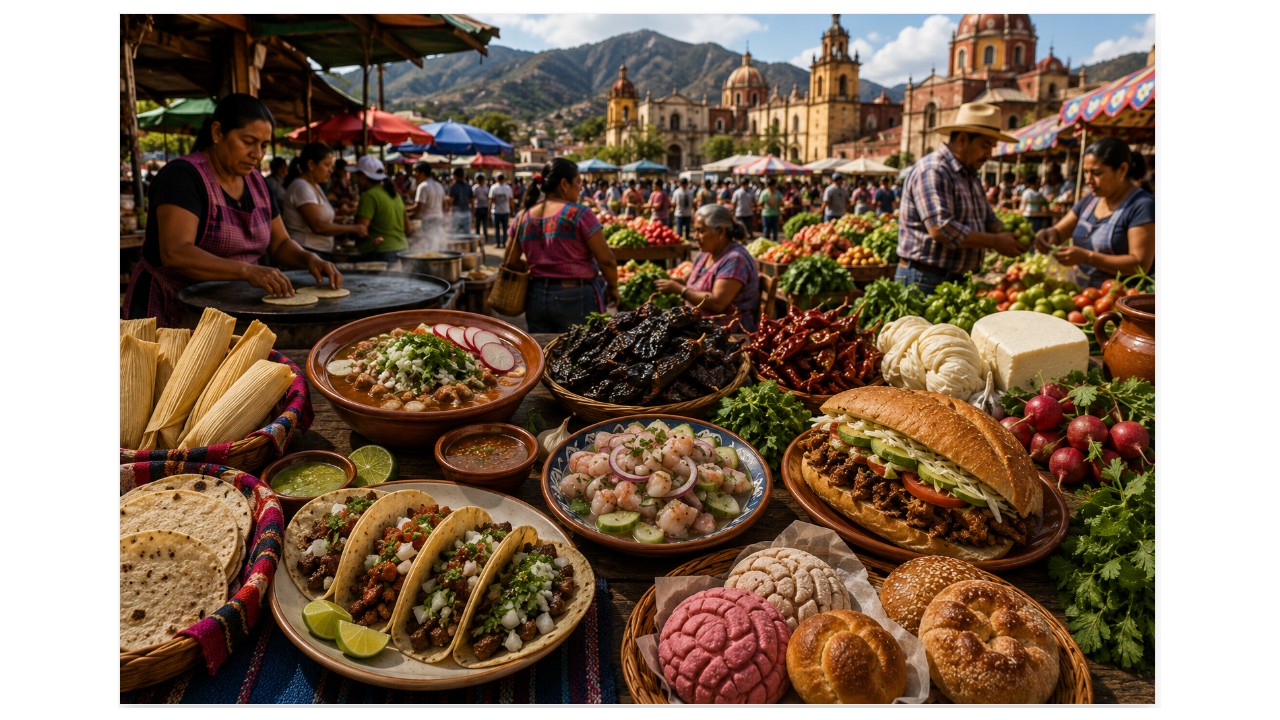
Authentic Mexican cuisine is a story told through places as much as ingredients. Every state, city, and region has developed its own culinary identity shaped by geography, climate, agriculture, Indigenous traditions, and generations of family recipes. Travel from the deserts of Sonora to the mountains of Oaxaca or the coastal communities of Veracruz, and you’ll discover that even familiar ingredients like corn, beans, chiles, and cheese are transformed into completely different dishes.
Some regions are famous for ranching and live-fire cooking, while others are known for seafood, handmade corn specialties, or distinctive breads and cheeses. Guadalajara is celebrated for carne en su jugo and tortas ahogadas, Oaxaca for tlayudas and Indigenous corn traditions, Puebla for cemitas and mole, and the Yucatán Peninsula for citrus-marinated meats and achiote. Together, these regional traditions create one of the world’s most diverse and celebrated culinary landscapes.
As you explore our growing collection of Mexican Street Food articles, you’ll see these places appear again and again. Understanding where a dish comes from helps explain why it tastes the way it does and why local ingredients, history, and culture remain at the heart of authentic Mexican cooking.
EVERY REGION OF MEXICO TELLS ITS OWN STORY THROUGH FOOD.
As you continue through this guide, these places will appear again and again. Understanding where a dish comes from helps explain its ingredients, cooking methods, traditions, and distinctive regional flavor.
🌊 Baja California (BAH-hah kah-lee-FOR-nyah)
- What It Is: A northwestern peninsula and border region known for Pacific seafood, fish tacos, fresh produce, vineyards, multicultural influences, and a modern style of coastal Mexican cooking.
- You’ll Find It In: Northwestern Mexico, including Tijuana, Ensenada, Mexicali, Rosarito, and fishing communities along the Pacific coast and Sea of Cortez.
- Why It Matters: Baja California is famous for battered fish tacos, shrimp tacos, ceviche, seafood tostadas, grilled shellfish, oysters, and lobster. Along the Pacific Ocean and the nutrient-rich Sea of Cortez, the region has developed one of Mexico’s greatest seafood traditions, celebrated for exceptionally fresh ingredients, simple preparations, and vibrant coastal flavors.
🌆 Guadalajara (gwah-dah-lah-HAH-rah)
- What It Is: The capital of Jalisco and Mexico’s second-largest city, celebrated as one of Mexico’s great culinary and cultural destinations.
- You’ll Find It In: Western Mexico, surrounded by fertile valleys, ranchlands, and agave-growing regions.
- Why It Matters: Guadalajara is the birthplace of carne en su jugo and tortas ahogadas and is closely associated with mariachi music, tequila culture, and generations of regional family cooking.
🌄 Jalisco (hah-LEES-koh)
- What It Is: A western Mexican state known for its cattle ranches, agave fields, rich agricultural traditions, and vibrant regional cuisine.
- You’ll Find It In: Western Mexico, including Guadalajara, Lake Chapala, Tequila, and many historic ranching communities.
- Why It Matters: Jalisco has shaped Mexican food culture through iconic specialties including birria, carne en su jugo, tortas ahogadas, tequila, and mariachi traditions.
🥣 Jueves Pozolero (HWEH-behs poh-soh-LEH-roh)
- What It Is: Literally “Pozole Thursday,” the tradition of gathering to eat pozole on Thursdays, particularly associated with Guerrero.
- You’ll Find It In: Pozolerías, restaurants, family gatherings, and communities throughout Guerrero.
- Why It Matters: Jueves Pozolero shows that pozole is more than a celebration food. In Guerrero, the dish has become part of a recurring social tradition that brings people together around the table.
🌊 Lake Pátzcuaro (LAH-keh PAHTS-kwah-roh)
- What It Is: A culturally important lake region in Michoacán surrounded by communities with deep Purépecha history and culinary traditions.
- You’ll Find It In: Central Michoacán, near Pátzcuaro, Tzintzuntzan, and numerous Purépecha communities surrounding the lake.
- Why It Matters: The Lake Pátzcuaro region is one of the important centers of Michoacán’s traditional maize culture, where foods such as corundas reflect generations of Purépecha agricultural and cooking knowledge.
🌆 Mexico City (MEH-hee-koh SEE-tee)
- What It Is: Mexico’s enormous capital and one of the world’s great street-food cities, where regional dishes from across the country meet local market, neighborhood, and late-night food traditions.
- You’ll Find It In: Central Mexico, across mercados, tianguis, neighborhood streets, metro entrances, plazas, taquerías, and late-night food stands throughout the city.
- Why It Matters: Mexico City is famous for street tacos, tlacoyos, quesadillas, tortas, tamales, pambazos, tacos al pastor, and countless regional specialties. Its street-food culture shows how migration from across Mexico creates extraordinary culinary variety in one place.
🦋 Michoacán (mee-choh-ah-KAHN)
- What It Is: A western Mexican state with ancient Purépecha culinary traditions, fertile farmland, celebrated corn dishes, regional cheeses, avocados, and deeply rooted family cooking.
- You’ll Find It In: Western Mexico, including Morelia, Pátzcuaro, the Lake Pátzcuaro region, Uruapan, Cotija, and Purépecha communities throughout the state.
- Why It Matters: Michoacán is famous for carnitas, corundas, uchepos, Cotija cheese, avocados, atole, and traditional corn cookery. Its cuisine preserves important Purépecha traditions while showcasing one of Mexico’s richest agricultural regions.
⛰️ Meseta Purépecha / Purépecha Highlands (meh-SEH-tah poo-REH-peh-chah)
- What It Is: A highland cultural region of Michoacán with a strong concentration of Purépecha communities and deeply rooted Indigenous agricultural and culinary traditions.
- You’ll Find It In: The highlands of central-western Michoacán, extending beyond the Lake Pátzcuaro region into numerous Purépecha towns and villages.
- Why It Matters: The Meseta Purépecha preserves important traditions involving maize, masa, regional tamales, family cooking, and community foodways that help explain dishes such as corundas within their broader cultural landscape.
🌆 Morelia (moh-REH-lee-ah)
- What It Is: The capital of Michoacán and one of the state’s major culinary, market, and cultural centers.
- You’ll Find It In: North-central Michoacán in western Mexico, within reach of the Lake Pátzcuaro region and many important Purépecha communities.
- Why It Matters: Morelia provides an accessible introduction to Michoacán cuisine, including corundas, uchepos, carnitas, regional sweets, markets, and other foods connecting Indigenous, colonial, and contemporary cooking traditions.
🏘️ Mocorito (moh-koh-REE-toh)
- What It Is: A historic town in Sinaloa’s Évora region that is particularly famous for its long association with chilorio.
- You’ll Find It In: Inland Sinaloa in northwestern Mexico, within the state’s agricultural and regional cooking landscape.
- Why It Matters: Mocorito is so closely identified with chilorio that Chilorio de Mocorito received geographical-indication protection in Mexico in 2026, formally connecting the preparation with the town’s culinary heritage and generations of regional cooking.
📖 Full Guide: Chilorio Explained: Sinaloa’s Slow-Cooked Pork That’s Packed with Smoky Chile Flavor
🏜️ Northern Mexico (NOR-thurn MEH-hee-koh)
- What It Is: A broad culinary region encompassing Mexico’s northern states, shaped by cattle ranching, wheat agriculture, desert landscapes, border trade, and generations of outdoor cooking traditions.
- You’ll Find It In: Sonora, Chihuahua, Coahuila, Nuevo León, Durango, and neighboring areas across northern Mexico.
- Why It Matters: Northern Mexico is known for exceptional beef, handmade flour tortillas, carne asada, burros, machaca, carne seca, cabrito, mesquite grilling, and hearty ranch-style breakfasts that differ noticeably from the corn-centered cuisines of central and southern Mexico.
⛰️ Nuevo León (NWEH-voh leh-OHN)
- What It Is: A northeastern Mexican state with a powerful ranching identity and a regional cuisine built around live-fire cooking, goat, beef, flour tortillas, and generous family hospitality.
- You’ll Find It In: Northeastern Mexico, including Monterrey, the Sierra Madre Oriental, ranching communities, and towns near the Texas border.
- Why It Matters: Nuevo León is famous for cabrito al pastor, machito, carne asada, grilled meats, and hearty ranch cooking. Its cuisine reflects the region’s vaquero traditions, dry climate, mountain landscapes, and long history of cooking over wood and charcoal.
🏺 Oaxaca (wah-HAH-kah)
- What It Is: A southern Mexican state celebrated for Indigenous culinary traditions, remarkable corn diversity, complex moles, handcrafted cheeses, regional herbs, and deeply rooted market culture.
- You’ll Find It In: Southern Mexico, including Oaxaca City, the Central Valleys, the Mixteca, the Isthmus of Tehuantepec, and numerous Indigenous communities.
- Why It Matters: Oaxaca is famous for tlayudas, memelas, mole negro, quesillo, asiento, chapulines, tejate, hoja santa, and traditional masa dishes. Its cuisine demonstrates how Indigenous knowledge, local agriculture, and regional techniques continue shaping Mexican food.
🏘️ Pátzcuaro (PAHTS-kwah-roh)
- What It Is: A historic Michoacán city closely connected to the Indigenous communities and food traditions surrounding Lake Pátzcuaro.
- You’ll Find It In: Central Michoacán on the southeastern side of Lake Pátzcuaro, west of Morelia.
- Why It Matters: Pátzcuaro is an important gateway to Purépecha culture and Michoacán’s maize traditions, including corundas, uchepos, regional markets, family cooking, and other foods deeply connected to the surrounding lake region.
🏛️ Puebla (PWEH-blah)
- What It Is: A central Mexican state known for colonial-era cooking, Indigenous ingredients, complex sauces, distinctive breads, and street foods developed through centuries of cultural exchange.
- You’ll Find It In: East-central Mexico, including Puebla City, Cholula, Atlixco, and surrounding agricultural communities.
- Why It Matters: Puebla is the home of mole poblano, cemitas, chalupas, poblano chiles, tacos árabes, and papalo. Its cuisine connects Indigenous food traditions with Spanish, Middle Eastern, and colonial influences.
🪶Purépecha (poo-REH-peh-chah)
- What It Is: An Indigenous people of western Mexico whose historic homeland is centered in present-day Michoacán.
- You’ll Encounter It In: Discussions of Michoacán cuisine, particularly foods and traditions surrounding maize, uchepos, corundas, Lake Pátzcuaro, and the Purépecha highlands.
- Why It Matters: Purépecha communities have preserved and continually developed distinctive corn-growing and cooking traditions that remain central to Michoacán’s regional food identity.
🦐 Sinaloa (see-nah-LOH-ah)
- What It Is: A northwestern Mexican state where Pacific seafood traditions meet fertile agricultural valleys, inland ranching communities, dried-chile cooking, and distinctive regional specialties.
- You’ll Find It In: Mexico’s Pacific northwest, including Culiacán, Mazatlán, Los Mochis, Mocorito, coastal fishing communities, inland towns, mercados, and neighborhood restaurants.
- Why It Matters: Sinaloa is famous for aguachile, shrimp, ceviche, and vibrant chile-and-citrus seafood, but its cuisine extends far beyond the coast. Chilorio—slow-cooked pork seasoned with dried chiles, spices, vinegar, and traditionally manteca—reveals the state’s equally important inland cooking traditions.
🌵 Sonora (soh-NOH-rah)
- What It Is: A northern Mexican state known for cattle ranching, wheat agriculture, desert landscapes, mesquite cooking, and exceptionally large flour tortillas.
- You’ll Find It In: Northwestern Mexico along the United States border and the Gulf of California.
- Why It Matters: Sonora helped shape Northern Mexico’s carne asada culture through its exceptional beef, mesquite-grilling traditions, handmade flour tortillas, burros, carne seca, and chiltepín chile.
🏺 Tzintzuntzan (tseen-TSOON-tsahn)
- What It Is: A historic town on Lake Pátzcuaro and one of the most important cultural centers of the Purépecha people.
- You’ll Find It In: Michoacán, along the eastern shore of Lake Pátzcuaro, northwest of Pátzcuaro.
- Why It Matters: Tzintzuntzan helps connect Michoacán’s regional cuisine with its Purépecha history, maize traditions, markets, family cooking, and foods such as corundas that remain part of the region’s living culinary culture.
⚓ Veracruz (veh-rah-KROOS)
- What It Is: A Gulf Coast state whose cuisine blends Indigenous, Spanish, Afro-Caribbean, and coastal influences with tropical produce, seafood, corn, herbs, and vibrant regional sauces.
- You’ll Find It In: Eastern Mexico along the Gulf of Mexico, including Veracruz City, Xalapa, Papantla, Tlacotalpan, and coastal and mountain communities.
- Why It Matters: Veracruz is famous for picadas, garnachas, pescado a la veracruzana, fresh seafood, vanilla, plantains, and Afro-Caribbean culinary traditions, making it one of Mexico’s most distinctive regional food destinations.
🌴 Yucatán Peninsula (yoo-kah-TAHN peh-NIN-soo-lah)
- What It Is: A southeastern Mexican region with a distinctive cuisine shaped by ancient Maya traditions, tropical ingredients, citrus marinades, achiote, habanero chiles, and underground cooking.
- You’ll Find It In: The states of Yucatán, Campeche, and Quintana Roo, including Mérida, Valladolid, Campeche City, and communities throughout the peninsula.
- Why It Matters: The Yucatán Peninsula is known for cochinita pibil, relleno negro, salbutes, panuchos, sopa de lima, pickled red onions, achiote, and habanero. Its flavors are among the most immediately recognizable and regionally distinct in Mexico.
🏪 Street Food Culture & Places to Eat
Mexican street food is as much about the experience as it is the food itself. From bustling city markets and neighborhood tianguis to family-run fondas and late-night taco stands, every place offers a unique glimpse into Mexico’s rich culinary traditions. These gathering places are where recipes are shared, techniques are preserved, and generations of cooks continue serving authentic regional specialties.
Whether you’re ordering tacos from a busy street cart in Mexico City, choosing pan dulce from a neighborhood bakery, enjoying fresh seafood at a coastal marisquería, or stopping at a roadside stand in Northern Mexico, every destination reflects its community’s history, ingredients, and way of life. Learning where locals eat helps you experience Mexican cuisine the way it was meant to be enjoyed.
As you explore this guide, you’ll encounter many of these markets, restaurants, and street food traditions again and again. Understanding the places where food is prepared and served provides valuable insight into regional customs, authentic dining experiences, and everyday Mexican life.
THE BEST WAY TO UNDERSTAND MEXICAN STREET FOOD IS TO EXPERIENCE WHERE LOCALS GATHER TO EAT.
The places featured throughout this guide introduce the markets, street vendors, family restaurants, bakeries, and neighborhood eateries that continue to preserve Mexico’s remarkable culinary traditions.
Antojitos (ahn-toh-HEE-tohs)
- What It Is: A broad Mexican food category whose name comes from antojo, meaning a craving or desire for something. Antojitos often include tortilla- and masa-based foods, but the term can cover everything from a quick bite to something substantial enough to become a full meal.
- You’ll Find It In: Markets, street-food stands, fondas, neighborhood eateries, festivals, and everyday Mexican food culture.
- Why It Matters: Antojitos helps explain why foods such as sopes, gorditas, tlacoyos, quesadillas, chalupas, and other masa-based favorites are often grouped together even though their shapes, fillings, and cooking methods differ.
🏪 Birriería (beer-ree-ah-REE-ah)
- What It Is: A restaurant or eatery that specializes in birria, serving the traditional slow-cooked stew along with consommé, fresh tortillas, and regional accompaniments.
- You’ll Find It In: Jalisco, Guadalajara, neighborhood markets, family-owned restaurants, roadside eateries, and increasingly throughout Mexico and the United States.
- Why It Matters: Birrierías preserve one of Jalisco’s greatest culinary traditions. Many are family-owned businesses where recipes have been passed down for generations, making each establishment a reflection of regional history and local cooking traditions.
📖 Full Guide: Birria Explained: Jalisco’s Legendary Slow-Cooked Stew Before It Became a Taco Sensation
🌯 Burrito Stand (buh-REE-toh stand)
- What It Is: A small roadside or neighborhood vendor specializing in freshly made burritos prepared with handmade flour tortillas.
- You’ll Find It In: Sonora, Chihuahua, Northern Mexico, bus stations, industrial districts, and morning breakfast stops.
- Why It Matters: Burrito stands reflect Northern Mexico’s emphasis on simple, portable meals built around exceptional flour tortillas.
🌭 Carrito de Hot Dogs (kah-REE-toh deh HOT dogs)
- What It Is: A bacon-wrapped beef hot dog served in a soft bolillo-style bun and loaded with pinto beans, grilled onions, tomatoes, mayonnaise, mustard, jalapeño salsa, and other fresh toppings.
- You’ll Find It In: Hermosillo, Nogales, Sonora, Arizona border cities, neighborhood carts, and late-night street vendors.
- Why It Matters: One of Northern Mexico’s best-known street foods, the Sonoran hot dog reflects the region’s ranching culture, border influences, generous portions, and love of grilled food.
🌅 Desayuno Veracruzano (deh-sah-YOO-noh veh-rah-kroo-SAH-noh)
- What It Is: The traditional breakfast culture of Veracruz, centered on freshly prepared regional dishes, neighborhood fondas, local markets, and leisurely morning meals shared with family and friends.
- You’ll Find It In: Family kitchens, neighborhood fondas, mercados, cafés, and breakfast stalls throughout Veracruz.
- Why It Matters: Breakfast in Veracruz is more than the day’s first meal—it’s an important daily tradition. Freshly made picadas, café de olla, pan dulce, fruit, eggs, and homemade salsas reflect the region’s emphasis on simple ingredients, hospitality, and recipes passed from one generation to the next.
🏪 Fonda (FOHN-dah)
- What It Is: A small, family-owned Mexican restaurant serving traditional home-style meals, often with recipes passed down through generations. Fondas are typically casual, affordable, and popular with locals rather than tourists.
- You’ll Find It In: Cities, neighborhoods, mercados, and small towns throughout Mexico.
- Why It Matters: Many authentic regional dishes—including carne en su jugo, pozole, birria, and daily guisados—are best experienced in a neighborhood fonda. These restaurants preserve regional cooking traditions and offer visitors a glimpse into everyday Mexican food culture.
🥪 Lonchería (lohn-cheh-REE-ah)
- What It Is: A casual Mexican lunch restaurant specializing in tortas, sandwiches, antojitos, simple regional dishes, and affordable homemade meals.
- You’ll Find It In: Cities, neighborhoods, shopping districts, markets, and towns throughout Mexico.
- Why It Matters: Loncherías serve many of Mexico’s favorite everyday meals, offering visitors an authentic introduction to regional comfort food beyond street vendors and formal restaurants.
🌊 Marisquería (mah-ree-seh-keh-REE-ah)
- What It Is: A restaurant specializing in fresh seafood, from casual beachside stands to large family restaurants serving regional coastal specialties.
- You’ll Find It In: Baja California, Sinaloa, Nayarit, Veracruz, the Yucatán Peninsula, fishing villages, seaside towns, and cities throughout Mexico.
- Why It Matters: Marisquerías are where many of Mexico’s most famous seafood dishes—including aguachile, ceviche, seafood cocktails, grilled fish, oysters, octopus, and seafood tostadas—are prepared using the freshest local catch.
🛒 Mercado (Mehr-KAH-doh)
- What It Is: A traditional public market where vendors sell fresh produce, meats, cheeses, spices, tortillas, prepared foods, and regional specialties under one roof.
- You’ll Find It In: Nearly every city and town across Mexico, from small municipal markets to sprawling historic marketplaces.
- Why It Matters: Mercados are among the best places to experience authentic Mexican street food. Many feature food stalls serving tacos, tamales, tortas, aguas frescas, fresh seafood, regional specialties, and seasonal dishes prepared just steps from the ingredients being sold.
☕ Merienda (meh-ree-EN-dah)
- What It Is: A light afternoon or early-evening meal or snack, often centered on coffee, chocolate, bread, pastries, or other simple foods.
- You’ll Find It In: Homes, cafés, panaderías, family gatherings, and everyday eating routines throughout Mexico.
- Why It Matters: Merienda helps explain when foods such as pan dulce and sweet empanadas are eaten. Mexican bakery foods are not limited to breakfast or formal dessert—they are often part of an everyday coffee-and-pastry tradition.
🥖 Panadería (pah-nah-deh-REE-ah)
- What It Is: A traditional Mexican neighborhood bakery where fresh bread, pan dulce, bolillos, teleras, and seasonal specialties are baked daily.
- You’ll Find It In: Cities, towns, neighborhoods, mercados, and village plazas throughout Mexico.
- Why It Matters: Panaderías are among Mexico’s most important everyday food traditions. Families stop in for fresh breakfast breads, afternoon pastries, sandwich rolls, and holiday specialties, making the neighborhood bakery a daily gathering place that connects baking, breakfast, and community life.
📖 Full Guide: Mexican Panaderías Explained: Why Every Neighborhood Bakery Is the Heart of Mexican Morning Culture
🏪 Pulpería (pool-peh-REE-ah)
- What It Is: A type of neighborhood shop historically found throughout Spanish colonial communities, including New Spain, selling everyday provisions and foodstuffs.
- You’ll Find It In: Discussions of colonial Mexican foodways, neighborhood commerce, bread and the early history of foods such as pambazo.
- Why It Matters: Historical records connect early pambazo bread with pulperías serving ordinary consumers in colonial New Spain. The term helps explain that pambazo’s history begins not with today’s famous red sandwich, but with an everyday bread associated with working communities.
🥐 Tentempié (tehn-tehm-PYEH)
- What It Is: A small snack or light bite eaten between larger meals, similar to something eaten to hold you over until the next meal.
- You’ll Find It In: Panaderías, cafés, home kitchens, workplaces, travel stops, and everyday eating throughout Mexico.
- Why It Matters: Tentempié helps explain how foods such as smaller cuernitos and other bakery breads fit into Mexican daily life beyond breakfast. They may be enjoyed simply as a quick bite rather than as part of a formal meal.
🍽️ Iconic Mexican Dishes & Foods
Authentic Mexican cuisine is built on hundreds of regional dishes, breads, sandwiches, seafood specialties, desserts, and street foods passed down through generations. While many share ingredients like corn, chiles, beans, and fresh herbs, every region transforms those ingredients into something uniquely its own.
From the giant tlayudas of Oaxaca to the handmade burros of Northern Mexico and the ancient corn traditions preserved in Michoacán’s corundas and uchepos, every dish reflects the history, agriculture, and local flavors of its region. Understanding these signature foods makes it easier to recognize authentic Mexican menus, appreciate regional differences, and discover why no single dish can represent the incredible diversity of Mexican cuisine.
EVERY ICONIC DISH TELLS THE STORY OF THE PEOPLE, PLACE, AND TRADITIONS THAT CREATED IT.
From Oaxaca’s famous tlayudas to Puebla’s hearty cemitas and Michoacán’s traditional corundas, these iconic regional specialties showcase the remarkable diversity of authentic Mexican street food.
Together, these foods tell the story of Mexico’s extraordinary regional diversity—from the seafood of Sinaloa and the ranch cooking of the north to the Indigenous corn traditions of Oaxaca and Michoacán.
🌊 Aguachile (ah-gwah-CHEE-leh)
- What It Is: Fresh shrimp marinated in lime juice with serrano chiles, cilantro, cucumber, onions, and other bright ingredients.
- You’ll Find It In: Sinaloa, coastal marisquerías, seafood markets, beach towns, and restaurants along Mexico’s Pacific coast.
- Why It Matters: Aguachile has become one of Mexico’s defining seafood dishes, showcasing Sinaloa’s fishing traditions and vibrant chile-and-citrus flavors.
📖 Full Guide: Aguachile Explained: Mexico’s Fiery Seafood Dish That Makes Ceviche Look Tame
🌮 Birria (beer-REE-ah)
- What It Is: A traditional slow-cooked stew from Jalisco made with meat, dried chiles, herbs, spices, and rich consommé. While it is now famous for birria tacos and quesabirria, the original dish is served in a bowl with warm tortillas and traditional garnishes.
- You’ll Find It In: Jalisco, birrierías, markets, family celebrations, and street-food vendors throughout Mexico.
- Why It Matters: Birria has grown from a regional specialty into one of Mexico’s most internationally recognized street foods while remaining deeply rooted in Jalisco’s culinary traditions.
📖 Full Guide: Birria Explained: Jalisco’s Legendary Slow-Cooked Stew Before It Became a Taco Sensation
🌯 Breakfast Burrito (BREK-fuhst boo-REE-toh)
- What It Is: A flour tortilla filled with breakfast ingredients such as machaca, eggs, potatoes, beans, chorizo, cheese, or regional meats.
- You’ll Find It In: Northern Mexico, Sonora, Chihuahua, ranch communities, neighborhood cafés, roadside breakfast stands, and family kitchens.
- Why It Matters: While breakfast burritos became popular internationally, hearty morning burritos have long been part of Northern Mexico’s flour tortilla tradition.
📖 Full Guide: Burritos Explained: Northern Mexico’s Handheld Meal That Conquered the World
🌯 Burritos (boo-REE-tohs)
- What It Is: Flour tortillas wrapped around meats, beans, cheese, vegetables, and other hearty fillings to create a portable meal.
- You’ll Find It In: Northern Mexico, especially Chihuahua and Sonora, family kitchens, roadside cafés, restaurants, and border communities.
- Why It Matters: Burritos evolved from Northern Mexico’s flour tortilla traditions and became one of the world’s most recognizable handheld meals while maintaining deep regional roots.
📖 Full Guide: Burritos Explained: Northern Mexico’s Handheld Meal That Conquered the World
🌯 Burros (BOOR-rohs)
- What It Is: A traditional Northern Mexican meal made by wrapping simple, hearty fillings inside a large handmade flour tortilla.
- You’ll Find It In: Sonora, Chihuahua, Coahuila, Nuevo León, roadside cafés, family kitchens, and neighborhood restaurants.
- Why It Matters: Burros reflect Northern Mexico’s ranching traditions, wheat-growing heritage, and emphasis on handmade flour tortillas with simple, flavorful fillings.
📖 Full Guide: Burros Explained: Northern Mexico’s Oversized Flour Tortilla Classic
🥘 Cabrito (kah-BREE-toh)
- What It Is: Fire-roasted young goat traditionally slow-cooked over mesquite or charcoal until tender with crisp, flavorful skin.
- You’ll Find It In: Monterrey, Nuevo León, Northern Mexico, ranches, traditional cabrito restaurants, family celebrations, and weekend cookouts.
- Why It Matters: Cabrito is one of Northern Mexico’s defining regional specialties, reflecting the area’s ranching heritage, open-fire cooking traditions, and legendary hospitality.
📖 Full Guide: Cabrito Explained: Northern Mexico’s Legendary Fire-Roasted Goat That Defines Monterrey Cuisine
🍲 Caldo de Mariscos (KAHL-doh deh mah-REES-kohs)
- What It Is: A hearty Mexican seafood soup made with fish, shrimp, shellfish, vegetables, herbs, and a richly seasoned broth that varies by region.
- You’ll Find It In: Veracruz, Sinaloa, Baja California, Guerrero, Oaxaca, coastal marisquerías, neighborhood restaurants, and family kitchens throughout coastal Mexico.
- Why It Matters: Caldo de mariscos represents one of Mexico’s great seafood traditions, bringing together the day’s freshest catch in a comforting meal that reflects each coastal region’s local ingredients and fishing heritage.
📖 Full Guide: Mexican Seafood Explained: The Coastal Dishes Every Food Lover Should Know
🥩 Carne Asada (KAR-neh ah-SAH-dah)
- What It Is: Northern Mexico’s celebrated grilled-beef tradition, made with thin, flavorful cuts of beef cooked quickly over charcoal or mesquite.
- You’ll Find It In: Sonora, Chihuahua, Coahuila, Nuevo León, family cookouts, taquerías, tacos, burros, and ranch-style meals.
- Why It Matters: Carne asada represents far more than grilled steak. It reflects Northern Mexico’s cattle-ranching heritage, mesquite cooking traditions, flour tortillas, family hospitality, and weekend gatherings around the fire.
📖 Full Guide: Carne Asada Explained: Northern Mexico’s Legendary Grilled Beef Tradition
🥣 Carne en su Jugo (KAR-neh en soo HOO-goh)
- What It Is: Guadalajara’s signature beef dish made by simmering thin slices of beef in their own flavorful juices with beans, bacon, onions, cilantro, and lime.
- You’ll Find It In: Guadalajara, Jalisco, neighborhood fondas, family restaurants, and regional Mexican eateries.
- Why It Matters: Carne en su jugo reflects Jalisco’s ranching heritage and transforms everyday ingredients into one of Mexico’s most beloved comfort foods.
📖 Full Guide: Carne en su Jugo Explained: Guadalajara’s Beef Dish That Comfort Food Lovers Need to Try
🥙 Cemitas (seh-MEE-tahs)
- What It Is: Large Puebla-style sandwiches served on sesame-topped cemita rolls and filled with meats, cheese, avocado, papalo, and other fresh ingredients.
- You’ll Find It In: Puebla, markets, cemiterías, neighborhood restaurants, and street vendors.
- Why It Matters: Cemitas are one of Puebla’s signature street foods, reflecting the region’s rich baking traditions and bold sandwich culture.
📖 Full Guide: Cemitas Explained: Mexico’s Ultimate Street Food Sandwich Loaded with Flavor
🐟 Ceviche (seh-VEE-cheh)
- What It Is: Fresh seafood cured in citrus juice and combined with vegetables, herbs, and regional seasonings.
- You’ll Find It In: Coastal Mexico, marisquerías, seafood markets, beach towns, and restaurants along both coasts.
- Why It Matters: Ceviche highlights Mexico’s coastal culinary traditions while celebrating the freshness of regional seafood and bright citrus flavors.
📖 Full Guide: Mexican Ceviche Explained: Fresh Coastal Street Food Bursting with Citrus Flavor
🫓 Chalupas (chah-LOO-pahs)
- What It Is: Small fried corn tortillas topped with salsa, shredded meat, onions, and other simple ingredients.
- You’ll Find It In: Puebla, markets, festivals, neighborhood restaurants, and street-food stalls.
- Why It Matters: Chalupas are one of Puebla’s oldest and most recognizable street foods, celebrating simple ingredients and regional culinary traditions.
📖 Full Guide: Chalupas Explained: Puebla’s Traditional Street Food That’s Nothing Like Taco Bell
🌽 Chilaquiles (chee-lah-KEE-lehs)
- What It Is: A traditional Mexican dish made from corn tortillas cut into pieces, fried until crisp, then coated or cooked with salsa and commonly finished with crema, cheese and onion.
- You’ll Find It In: Breakfast cafés, fondas, restaurants and home kitchens throughout Mexico, commonly served with salsa verde or salsa roja and sometimes topped with eggs, chicken, beef or avocado.
- Why It Matters: Chilaquiles show how Mexican cooking can transform leftover tortillas into an entirely new dish, with the contrast between fried tortilla and salsa creating textures that range from crisp-edged to tender and sauce-soaked.
📖 Full Guide: Chilaquiles Explained: Mexico’s Crispy Tortilla Breakfast Covered in Salsa, Crema & Cheese
🍳 Chilaquiles Divorciados (chee-lah-KEE-lehs dee-vohr-see-AH-dohs)
- What It Is: Chilaquiles served with salsa roja on one portion of the plate and salsa verde on another, keeping the two sauces separate rather than combining them.
- You’ll Find It In: Breakfast cafés, fondas and restaurants serving chilaquiles with both red and green salsa options.
- Why It Matters: Chilaquiles divorciados let diners compare two salsa styles on the same plate while showing how much the character of chilaquiles changes when the tortilla absorbs a different sauce.
🌶️ Chilorio (chee-LOH-ree-oh)
- What It Is: A Sinaloan pork dish made by cooking pork until tender, shredding it, then working it together with dried chiles, garlic, spices, vinegar, and traditionally manteca until the meat becomes deeply seasoned and lightly caramelized at the edges.
- You’ll Find It In: Sinaloa, especially Mocorito, family kitchens, mercados, fondas, tacos, burritos, breakfast dishes, and regional restaurants.
- Why It Matters: Chilorio is one of Sinaloa’s defining inland dishes, showing how dried chiles, acidity, pork fat, and slow cooking can transform simple ingredients into a regional specialty that remains useful across many different meals.
📖 Full Guide: Chilorio Explained: Sinaloa’s Slow-Cooked Pork That’s Packed with Smoky Chile Flavor
🍩 Churros (CHOO-rrohs)
- What It Is: Long strips of fried dough coated in cinnamon sugar and often served with chocolate, caramel, or dulce de leche for dipping.
- You’ll Find It In: Plazas, parks, fairs, markets, and street-food vendors throughout Mexico.
- Why It Matters: Churros are one of Mexico’s most beloved sweet street foods and remain a favorite treat for families and visitors alike.
📖 Full Guide: Churros, Sweet Heat & Mexican Street Desserts That Deserve More Respect
🐚 Concha (KOHN-chah)
- What It Is: A soft Mexican sweet bread topped with a scored sugar crust that creates its distinctive shell pattern.
- You’ll Find It In: Panaderías, markets, cafés, breakfast tables, and homes throughout Mexico.
- Why It Matters: The concha is one of Mexico’s most recognizable pan dulce, beloved for its soft bread, crumbly topping, and place in everyday bakery culture.
📖 Full Guide: Conchas Explained: Mexico’s Most Famous Sweet Bread and the Bakery Tradition Behind It
🌽 Corundas (koh-ROON-dahs)
- What It Is: Traditional Michoacán tamales made from corn masa, usually wrapped in long green maize leaves and folded into distinctive triangular or multi-pointed shapes.
- You’ll Find It In: Michoacán, especially Purépecha communities, mercados, family kitchens, regional restaurants, celebrations, and the Lake Pátzcuaro region.
- Why It Matters: Corundas preserve important Purépecha maize traditions and demonstrate how masa, wrapping technique, steaming, and regional knowledge can transform simple ingredients into one of Michoacán’s most recognizable foods.
📖 Full Guide: Corundas Explained: Michoacán’s Triangular Tamales with Ancient Purépecha Roots
🫔 Corundas de Ceniza (koh-ROON-dahs deh seh-NEE-sah)
- What It Is: A traditional Michoacán variation of corundas associated with maize prepared using ceniza, or wood ash, as part of alkaline corn processing.
- You’ll Find It In: Traditional Michoacán and Purépecha cooking, particularly where older maize-processing practices remain part of family and community food traditions.
- Why It Matters: Corundas de ceniza connect a recognizable regional tamal to much older knowledge about transforming dried maize through alkaline processing before it becomes workable dough.
🫔 Corundas de Manteca (koh-ROON-dahs deh mahn-TEH-kah)
- What It Is: A traditional style of corunda made with corn masa enriched with manteca, or rendered pork fat.
- You’ll Find It In: Michoacán, Purépecha communities, family kitchens, mercados, and regional restaurants serving traditional corundas.
- Why It Matters: Rather than depending on a substantial filling for richness, corundas de manteca build much of their flavor and tenderness directly into the masa, creating a moist, satisfying steamed tamal centered on the dough itself.
🥐 Cuernito (kwehr-NEE-toh)
- What It Is: A Mexican horn- or crescent-shaped bakery bread that can range from soft and bread-like to richer, more layered styles depending on the bakery and regional tradition.
- You’ll Find It In: Panaderías, cafés, breakfast tables, bakery assortments, and sometimes filled with savory ingredients such as ham and cheese.
- Why It Matters: Cuernitos show how Mexican bakers adapted the familiar crescent form into a distinctly flexible bakery tradition. The recognizable little-horn shape can stay the same even when the dough, fat, texture, and way the bread is eaten change.
🥐 Cuerno de Manteca (KWEHR-noh deh mahn-TEH-kah)
- What It Is: A Mexican horn-shaped bakery bread traditionally made with manteca, or lard, rather than relying exclusively on butter for its richness.
- You’ll Find It In: Traditional panaderías and regional bakery traditions, particularly in Mexican towns and communities where lard-based breads remain part of local baking.
- Why It Matters: Cuerno de manteca demonstrates why Mexican cuernos cannot be defined simply as Mexican croissants. Changing the fat changes the bread’s flavor and texture while the recognizable horn shape remains.
🌽 Elote (eh-LOH-teh)
- What It Is: Grilled or steamed corn on the cob topped with crema, cheese, chile, lime, and other flavorful seasonings.
- You’ll Find It In: Parks, plazas, markets, festivals, and street-food carts throughout Mexico.
- Why It Matters: Elote is one of Mexico’s most recognizable street foods and celebrates the country’s deep connection to corn.
📖 Full Guide: Mexican Street Corn (Elote) So Addictive You’ll Forget Tacos Exist
🌽 Esquites (es-KEE-tehs)
- What It Is: Corn kernels served warm in a cup with crema, cheese, lime, chile, and seasonings.
- You’ll Find It In: Street carts, markets, parks, festivals, and neighborhoods throughout Mexico.
- Why It Matters: Esquites transform the flavors of elote into a convenient handheld snack enjoyed across Mexico.
📖 Full Guide: Esquites Explained: Why Mexico’s Street Corn in a Cup Is Every Bit as Addictive as Elote
🍮 Flan (FLAHN)
- What It Is: A smooth baked custard topped with rich caramel sauce that has become one of Mexico’s most beloved desserts.
- You’ll Find It In: Restaurants, family celebrations, bakeries, cafés, and holiday meals throughout Mexico.
- Why It Matters: Although introduced during the colonial period, flan has become a classic Mexican dessert enjoyed after everyday meals as well as special celebrations.
🌮 Flautas (FLAH-oo-tahs)
- What It Is: Long rolled tortillas filled with meat, cheese, or potatoes before being fried and topped with crema, lettuce, cheese, and salsa.
- You’ll Find It In: Central and Northern Mexico, markets, fondas, family restaurants, and street-food vendors.
- Why It Matters: Flautas are a beloved comfort food whose crispy texture and generous toppings have made them a staple of Mexican cuisine.
📖 Full Guide: Flautas Explained: Mexico’s Crispy Rolled Tortillas Loaded with Flavor
🌮 Garnachas (gar-NAH-chahs)
- What It Is: Small fried masa snacks topped with meat, cheese, salsa, and vegetables, with recipes that vary dramatically across Mexico.
- You’ll Find It In: Veracruz, Oaxaca, Chiapas, Puebla, markets, festivals, and neighborhood street-food stalls.
- Why It Matters: Garnachas illustrate the incredible regional diversity of Mexican street food, where one name can describe very different local specialties.
📖 Full Guide: Garnachas Explained: Mexico’s Crispy Street Food That Changes from Region to Region
🍮 Gelatina (heh-lah-TEE-nah)
- What It Is: Colorful fruit or milk-based gelatin desserts prepared in countless flavors, shapes, and layered combinations.
- You’ll Find It In: Panaderías, markets, bakeries, family celebrations, birthday parties, and neighborhood dessert shops.
- Why It Matters: Gelatina is an affordable everyday dessert that has become a familiar sight in Mexican bakeries and family celebrations across the country.
🥙 Gorditas (gor-DEE-tahs)
- What It Is: Thick corn cakes split open and filled with meats, beans, cheese, vegetables, and regional specialties.
- You’ll Find It In: Northern and central Mexico, markets, roadside stands, family kitchens, and street vendors.
- Why It Matters: Gorditas showcase the versatility of fresh masa while highlighting the diverse fillings found throughout Mexico.
📖 Full Guide: Gorditas Explained: Mexico’s Stuffed Corn Pockets Deserve More Love
🌽 Huaraches (wah-RAH-chehs)
- What It Is: Large oval-shaped masa cakes topped with beans, meat, cheese, salsa, and fresh garnishes.
- You’ll Find It In: Mexico City, central Mexico, markets, street vendors, and neighborhood restaurants.
- Why It Matters: Named for their sandal-like shape, huaraches are one of Mexico City’s most distinctive masa-based street foods.
📖 Full Guide: Huaraches Explained: Mexico’s Giant Oval Street Food Loaded with Flavor
🌽 Khurhúnda (koo-ROON-dah, approximate)
- What It Is: The Purépecha-language name associated with the traditional Michoacán food known in Spanish as corunda.
- You’ll Find It In: Purépecha communities of Michoacán and discussions of traditional corunda preparation and regional food history.
- Why It Matters: The word preserves the Indigenous linguistic connection behind the dish and reminds readers that corundas belong to a Purépecha culinary tradition that predates their Spanish name.
🌊 Mariscos (mah-REES-kohs)
- What It Is: The Spanish word for seafood and the broad family of dishes prepared from fish, shrimp, oysters, octopus, shellfish, lobster, and other ocean ingredients.
- You’ll Find It In: Coastal Mexico, marisquerías, seafood markets, beach towns, and restaurants across the country.
- Why It Matters: Rather than describing one recipe, mariscos refers to Mexico’s entire seafood tradition, which varies dramatically from one coastline to another.
📖 Full Guide: Mexican Mariscos Explained: Why Coastal Seafood Is Street Food at Its Finest
🌽 Memelas (meh-MEH-lahs)
- What It Is: Thick hand-shaped corn cakes spread with asiento, beans, salsa, cheese, and other traditional toppings.
- You’ll Find It In: Oaxaca, markets, family kitchens, neighborhood restaurants, and street vendors.
- Why It Matters: Memelas celebrate Oaxaca’s Indigenous culinary traditions and showcase the state’s famous corn-based cuisine.
📖 Full Guide: Memelas Explained: Oaxaca’s Thick Corn Street Food Favorite
🍲 Mole (MOH-leh)
- What It Is: A family of traditional Mexican sauces made by blending chiles with herbs, spices, nuts, seeds, fruits, and other ingredients. While some moles contain chocolate, many do not, and every region has developed its own distinctive recipes.
- You’ll Find It In: Regional restaurants, family celebrations, weddings, festivals, holidays, and traditional home cooking throughout Mexico.
- Why It Matters: Mole is one of Mexico’s greatest culinary traditions. Rather than a single recipe, it represents an entire family of complex sauces that reflect regional history, Indigenous ingredients, and generations of family cooking. Two of the most famous are Oaxaca’s Mole Negro and Puebla’s Mole Poblano, but dozens of regional variations exist across the country.
📖 Full Guides:
Mole Negro Explained: Oaxaca’s Most Famous Sauce and Why It Takes Days to Make
Mole Poblano Explained: Puebla’s Legendary Sauce with Chocolate, Chiles & History
⚫ Mole Negro (MOH-leh NEH-groh)
- What It Is: Oaxaca’s darkest and most complex mole, prepared with roasted chiles, chocolate, spices, seeds, herbs, and other carefully layered ingredients.
- You’ll Find It In: Oaxaca, family celebrations, weddings, festivals, traditional restaurants, and special occasions.
- Why It Matters: Mole Negro represents the depth of Oaxacan culinary tradition and is widely considered one of Mexico’s most celebrated regional dishes.
📖 Full Guide: Mole Negro Explained: Oaxaca’s Most Famous Sauce and Why It Takes Days to Make
🍛 Mole Poblano (MOH-leh poh-BLAH-noh)
- What It Is: Puebla’s famous rich mole made with dried chiles, spices, nuts, seeds, chocolate, and dozens of carefully balanced ingredients.
- You’ll Find It In: Puebla, family celebrations, festivals, traditional restaurants, and holiday gatherings.
- Why It Matters: Mole Poblano is one of Mexico’s greatest culinary achievements and has become an international symbol of traditional Mexican cooking.
📖 Full Guide: Mole Poblano Explained: Puebla’s Legendary Sauce with Chocolate, Chiles & History
🥖 Mollete (moh-YEH-teh)
- What It Is: A Mexican open-faced bread dish made by splitting a bolillo, spreading it with refried beans, covering it with melting cheese, and heating it until hot and lightly browned.
- You’ll Find It In: Breakfast cafés, fondas, casual restaurants, and home kitchens, especially in Mexico City and central Mexico.
- Why It Matters: Molletes show how Mexican bread culture extends far beyond tortas. Their open-faced construction turns the bolillo itself into part of the cooking technique, creating a simple breakfast built around toasted bread, creamy beans, melted cheese, and fresh salsa.
📖 Full Guide: Molletes Explained: Mexico’s Open-Faced Bean & Cheese Sandwich That Makes Breakfast Better
🥪 Pambacito / Pambacitos Rellenos (pahm-bah-SEE-toh / pahm-bah-SEE-tohs reh-YEH-nohs)
- What It Is: A smaller regional pambazo preparation associated with Veracruz, commonly made with wheat bread and fillings such as beans, chorizo, lettuce, fresh cheese and tomato.
- You’ll Find It In: Veracruz, especially regional sandwich traditions and discussions of how pambazos vary outside Mexico City.
- Why It Matters: Pambacitos rellenos show why the famous red Mexico City pambazo should not be treated as the only pambazo tradition. The name survives across regions even when the bread treatment, fillings and appearance change.
🥪 Pambazo (pahm-BAH-soh)
- What It Is: A Mexican bread and sandwich tradition with several regional expressions. The best-known Mexico City version coats the bread in red chile sauce, griddles it, and commonly fills it with potato and chorizo, lettuce, crema and cheese.
- You’ll Find It In: Mexico City, Veracruz, street-food stands, markets, neighborhood eateries, and regional Mexican sandwich traditions.
- Why It Matters: Pambazos demonstrate how cooking technique can define a sandwich. In the Mexico City version, the chile sauce isn’t merely added as a condiment—the bread is deliberately coated and griddled, transforming its flavor, color and texture.
📖 Full Guide: Pambazos Explained: Mexico’s Salsa-Soaked Sandwich That Eats Like a Full Meal
🥖 Pan Dulce (pahn DOOL-seh)
- What It Is: Mexico’s beloved collection of sweet breads, pastries, and breakfast treats that includes conchas, cuernos, orejas, and dozens of regional favorites.
- You’ll Find It In: Panaderías, bakeries, cafés, neighborhood markets, and family breakfast tables throughout Mexico.
- Why It Matters: Pan dulce is one of Mexico’s most cherished daily traditions, bringing families together for breakfast, merienda, and celebrations.
📖 Full Guide: Pan Dulce Explained: Mexico’s Sweet Bread Tradition Beyond the Famous Concha
📖 To understand where these breads are baked and how they’re sold every morning, visit Mexican Panaderías Explained: Why Every Neighborhood Bakery Is the Heart of Mexican Morning Culture.
🐟 Pescado Zarandeado (pehs-KAH-doh zah-rahn-deh-AH-doh)
- What It Is: A whole fish butterflied, seasoned, and grilled over a wood or charcoal fire until smoky, tender, and lightly crisp.
- You’ll Find It In: Nayarit, Sinaloa, Baja California, Pacific coast fishing villages, beach restaurants, marisquerías, and seaside cookouts.
- Why It Matters: Pescado zarandeado showcases Mexico’s Pacific coastal fishing traditions, where exceptionally fresh seafood, open-fire cooking, and simple seasonings allow the natural flavor of the fish to shine.
🌽 Picadas (pee-KAH-dahs)
- What It Is: Thick handmade corn cakes pinched around the edges before being topped with salsa, queso fresco, onions, and other traditional ingredients.
- You’ll Find It In: Veracruz, neighborhood markets, family kitchens, fondas, and breakfast stalls.
- Why It Matters: Picadas are one of Veracruz’s signature comfort foods, celebrating handmade masa and simple, authentic regional flavors.
📖 Full Guide: Picadas Explained: Veracruz’s Handmade Corn Cakes Loaded with Authentic Street Food Flavor
🍅 Pico de Gallo (PEE-koh deh GAH-yoh)
- What It Is: A fresh salsa made with diced tomatoes, onions, cilantro, jalapeños, and lime juice.
- You’ll Find It In: Street tacos, grilled meats, tortas, seafood, burritos, and countless table toppings.
- Why It Matters: Pico de gallo is one of Mexico’s freshest and most recognizable salsas, adding brightness without overpowering other ingredients.
🥣 Pozole (poh-SOH-leh)
- What It Is: A traditional Mexican stew built around large kernels of nixtamalized corn simmered with broth and usually pork or chicken, then finished with fresh garnishes.
- You’ll Find It In: Pozolerías, family gatherings, celebrations, Fiestas Patrias, restaurants, and home kitchens throughout Mexico.
- Why It Matters: Pozole connects modern Mexican cooking to ancient Indigenous maize traditions while showing how regional ingredients and generations of cooks continue to transform the same foundational dish.
📖 Full Guide: Pozole Explained: Mexico’s Ancient Hominy Stew Built on Corn, Chiles & Tradition
⚪ Pozole Blanco (poh-SOH-leh BLAHN-koh)
- What It Is: White pozole prepared without the red or green chile mixtures that give other major versions their distinctive colors.
- You’ll Find It In: Several regional pozole traditions, restaurants, family kitchens, and celebrations throughout Mexico.
- Why It Matters: Its relatively restrained broth puts the flavor and texture of the pozolero corn, meat, and table garnishes more clearly at the center of the dish.
🔴 Pozole Rojo (poh-SOH-leh ROH-hoh)
- What It Is: Red pozole made with dried red chiles, commonly including guajillo and sometimes ancho, which give the broth its characteristic color and chile flavor.
- You’ll Find It In: Especially Jalisco and other parts of western and central Mexico, as well as pozolerías and home kitchens throughout the country.
- Why It Matters: Pozole rojo demonstrates how dried chiles can transform the same corn foundation into a distinctly regional version without changing the fundamental identity of pozole.
🟢 Pozole Verde (poh-SOH-leh VEHR-deh)
- What It Is: Green pozole traditionally built with ingredients such as tomatillos, green chiles, herbs, and sometimes pumpkin seeds.
- You’ll Find It In: Especially Guerrero, where green pozole is strongly associated with the state’s regional food traditions and pozolerías.
- Why It Matters: Pozole verde shows how regional ingredients can take the ancient corn foundation of pozole in a completely different direction from the better-known red versions.
🌮 Quesabirria (keh-sah-BEER-ree-ah)
- What It Is: Crispy tacos filled with slow-cooked birria and melted cheese before being served with rich consommé for dipping.
- You’ll Find It In: Jalisco, Baja California, food trucks, taquerías, and street-food vendors throughout Mexico and the United States.
- Why It Matters: Quesabirria transformed traditional birria into one of the most popular modern street foods while introducing millions of people to authentic Mexican flavors.
📖 Full Guide: Quesabirria Tacos & Crispy Cheese Street Food Chaos Worth Every Messy Bite
🔥 Salsa Asada (SAHL-sah ah-SAH-dah)
- What It Is: A Mexican salsa made by roasting or charring ingredients such as tomatoes, tomatillos, fresh or dried chiles, onion, and garlic before grinding or blending them.
- You’ll Find It In: Taquerías, fondas, mercados, grilled-meat stands, home kitchens, tacos, carne asada, and table-salsa service.
- Why It Matters: Roasting changes the character of the ingredients, replacing some of their raw freshness with deeper, sweeter, charred flavors. Salsa asada demonstrates how cooking technique can transform essentially the same salsa ingredients into something dramatically different.
🍅 Salsa Casera (SAHL-sah kah-SEH-rah)
- What It Is: A traditional homemade salsa prepared with fresh tomatoes, chiles, onions, garlic, and regional ingredients.
- You’ll Find It In: Picadas, eggs, tacos, breakfast dishes, and countless family recipes.
- Why It Matters: Veracruz picadas are traditionally finished with simple homemade salsa rather than elaborate toppings, allowing the fresh masa to remain the star.
🌶️Salsa Macha (SAHL-sah MAH-chah)
- What It Is: A rich chile oil-style salsa made from dried chiles, garlic, nuts or seeds, and oil.
- You’ll Find It In: Grilled meats, seafood, eggs, tacos, tortas.
- Why It Matters: Unlike fresh salsas, salsa macha is prized for concentrated flavor, texture, and long shelf life.
🌶️Salsa Roja (SAHL-sah ROH-hah)
- What It Is: Mexico’s classic red table salsa made from roasted tomatoes, dried or fresh chiles, garlic, onions, and seasonings.
- You’ll Find It In: Taquerías, street carts, tortas, tacos, grilled meats.
- Why It Matters: Salsa roja is probably the most common salsa served throughout Mexico and varies from region to region.
🌶️Salsa Verde (SAHL-sah BEHR-deh)
- What It Is: A green salsa made primarily from tomatillos, serranos or jalapeños, garlic, onions, and cilantro.
- You’ll Find It In: Chilaquiles verdes, street tacos, enchiladas verdes, grilled chicken, pork and other Mexican breakfast dishes.
- Why It Matters: Its bright acidity makes it one of Mexico’s signature fresh salsas.
🌭 Sonoran Hot Dog (soh-NOH-rahn HOT dog)
- What It Is: A bacon-wrapped beef hot dog served in a soft bolillo-style bun and loaded with pinto beans, tomatoes, onions, mayonnaise, mustard, jalapeño salsa, and other fresh toppings.
- You’ll Find It In: Hermosillo, Nogales, Sonora, Arizona border cities, neighborhood carts, and late-night street-food vendors.
- Why It Matters: The Sonoran hot dog has become one of Northern Mexico’s most recognizable street foods, blending ranching traditions, border influences, and generous Sonoran flavors into one iconic meal.
📖 Full Guide: Sonoran Hot Dogs Explained: Why Mexico’s Most Loaded Hot Dog Became a Street Food Legend
🌽 Sopes (SOH-pehs)
- What It Is: Thick handmade corn cakes with raised edges that hold beans, meat, cheese, salsa, crema, and fresh toppings.
- You’ll Find It In: Central Mexico, markets, fondas, festivals, and neighborhood food stalls.
- Why It Matters: Sopes demonstrate how fresh masa forms the foundation of countless regional Mexican street foods.
📖 Full Guide: Sopes Explained: Thick Corn Cakes Loaded with Street Food Flavor
🫓 Street Quesadillas (keh-sah-DEE-yahs)
- What It Is: Fresh tortillas folded around cheese and other fillings before being cooked on a hot comal or plancha.
- You’ll Find It In: Mexico City, central Mexico, neighborhood markets, street vendors, and food stalls.
- Why It Matters: Street quesadillas demonstrate how simple ingredients like fresh masa and regional fillings become one of Mexico’s most beloved everyday meals.
📖 Full Guide: Street Quesadillas vs American Quesadillas: Why They’re Not the Same Thing
🌮 Street Tacos (STREET TAH-kohs)
- What It Is: Small, traditionally made tacos served on soft corn tortillas with simple toppings that highlight the flavor of the filling.
- You’ll Find It In: Street carts, taquerías, mercados, neighborhoods, and cities throughout Mexico.
- Why It Matters: Street tacos are the foundation of Mexico’s street-food culture, showcasing regional meats, fresh tortillas, and generations of authentic cooking traditions.
📖 Full Guide: Mexican Street Tacos Explained: The Authentic Street Food That Started It All
🌮 Tacos Árabes (TAH-kohs AH-rah-behs)
- What It Is: Thick flour-flatbread tacos filled with spit-roasted pork inspired by Middle Eastern immigrants who settled in Puebla.
- You’ll Find It In: Puebla, taquerías, neighborhood restaurants, markets, and traditional street-food stands.
- Why It Matters: Tacos Árabes represent one of Mexico’s greatest culinary fusion stories and directly inspired today’s famous tacos al pastor.
📖 Full Guide: Tacos Árabes Explained: The Puebla Street Food That Inspired Al Pastor
🌮 Tacos Dorados (TAH-kohs doh-RAH-dohs)
- What It Is: Mexican tacos made by filling tortillas, folding or rolling them, and frying them until the tortillas become golden and crisp.
- You’ll Find It In: Fonda kitchens, market stalls, antojito stands, neighborhood eateries, and home kitchens throughout Mexico, with fillings and serving styles varying by region.
- Why It Matters: Dorado means “golden,” making tacos dorados a broader fried-taco tradition defined more by cooking technique than by one particular filling or shape. Potato, chicken, beef, beans, and cheese are common fillings, while salsa, crema, cheese, lettuce, and avocado provide the classic contrast to the crisp tortilla.
📖 Full Guide: Tacos Dorados Explained: Mexico’s Golden Fried Tacos and the Crispy Tradition Behind Them
🌽 Tamales (tah-MAH-lehs)
- What It Is: Steamed masa filled with meats, vegetables, cheeses, or sweet fillings and wrapped in corn husks or banana leaves.
- You’ll Find It In: Markets, street vendors, family celebrations, and neighborhoods throughout Mexico.
- Why It Matters: Tamales have been part of Indigenous culinary traditions for thousands of years and remain one of Mexico’s most beloved comfort foods.
📖 Full Guide: Tamales Explained: The Ancient Mexican Comfort Food That Still Dominates Street Food Culture
🌮 Taquitos (tie-KEE-tohs)
- What It Is: Small tortillas—most commonly corn—tightly rolled around savory fillings before being fried until golden and crispy.
- You’ll Find It In: Street-food stands, markets, family kitchens, festivals, and restaurants across Mexico.
- Why It Matters: Taquitos are one of Mexico’s most popular crispy street foods and demonstrate how simple ingredients create unforgettable flavor.
📖 Full Guide: Taquitos Explained: Mexico’s Crispy Rolled Tacos Everyone Loves
🌽 Tlacoyos (tlah-COH-yohs)
- What It Is: Oval masa cakes stuffed with beans, cheese, or fava beans before being cooked and topped with fresh ingredients.
- You’ll Find It In: Mexico City, central Mexico, traditional markets, and street-food vendors.
- Why It Matters: Tlacoyos preserve Indigenous corn-cooking traditions that have remained part of Mexican cuisine for centuries.
📖 Full Guide: Tlacoyos Explained: Mexico City’s Ancient Stuffed Corn Street Food
🌽 Tlayudas (tlah-YOO-dahs)
- What It Is: Large crisp tortillas layered with asiento, beans, cheese, meat, vegetables, and fresh garnishes.
- You’ll Find It In: Oaxaca, markets, evening food stalls, family gatherings, and restaurants.
- Why It Matters: Tlayudas are one of Oaxaca’s best-known regional specialties and one of Mexico’s most iconic street foods.
📖 Full Guide: Tlayudas Explained: Oaxaca’s Giant Street Food Masterpiece
🥪 Torta Ahogada (TOR-tah ah-OH-gah-dah)
- What It Is: Guadalajara’s famous “drowned sandwich,” made with sturdy birote salado, traditionally filled with carnitas, then soaked in tomato sauce and fiery chile de árbol sauce.
- You’ll Find It In: Guadalajara and throughout Jalisco, especially at street-food stands, markets, neighborhood torta shops, and traditional restaurants.
- Why It Matters: Torta ahogada is one of Guadalajara’s defining foods. Its distinctive salty birote bread is sturdy enough to survive being drenched in sauce, creating a regional specialty unlike almost any other Mexican sandwich.
📖 Full Guide: Tortas Ahogadas Explained: Guadalajara’s Famous Drowned Sandwich That Every Food Lover Should Try
🥪 Tortas (TOR-tahs)
- What It Is: Hearty Mexican sandwiches served on crusty rolls and filled with meats, beans, cheese, avocado, vegetables, and regional ingredients.
- You’ll Find It In: Bakeries, markets, lunch counters, street vendors, and neighborhoods throughout Mexico.
- Why It Matters: Tortas showcase Mexico’s baking traditions while demonstrating how regional ingredients create countless unique sandwich variations.
📖 Full Guide: Tortas Loaded with Meat, Melted Cheese & Street Food Flavor That Hits Hard
🥪 Tortas Ahogadas (TOR-tahs ah-oh-GAH-dahs)
- What It Is: Crusty birote rolls stuffed with pork and “drowned” in a spicy tomato-and-chile sauce before being served with onions and lime.
- You’ll Find It In: Guadalajara, Jalisco, neighborhood loncherías, markets, and traditional torta shops.
- Why It Matters: Tortas ahogadas are Guadalajara’s signature sandwich and one of Mexico’s most famous regional street foods.
📖 Full Guide: Tortas Ahogadas Explained: Guadalajara’s Famous Drowned Sandwich That Every Food Lover Should Try
🫓 Tortilla de Harina (tor-TEE-yah deh ah-REE-nah)
- What It Is: The Spanish term for a wheat flour tortilla traditionally made with flour, fat, water, and salt.
- You’ll Find It In: Burritos, burros, breakfast dishes, quesadillas, carne asada meals, tortillerías, restaurants, and family kitchens throughout Northern Mexico.
- Why It Matters: Ordering a tortilla de harina instead of a tortilla de maíz tells the cook you want a flour tortilla. The distinction is especially important in Northern Mexico, where wheat agriculture, ranching traditions, and generations of tortilla making created a flour-tortilla culture distinctly different from the corn-centered traditions of central and southern Mexico.
🫓 Tortilla Sobaquera (tor-TEE-yah soh-bah-KEH-rah)
- What It Is: An exceptionally large, paper-thin handmade flour tortilla traditionally associated with Sonora.
- You’ll Find It In: Sonora, burros, carne asada meals, family kitchens, roadside cafés, and traditional tortillerías.
- Why It Matters: Tortillas sobaqueras have become one of Northern Mexico’s defining culinary traditions and demonstrate the remarkable craftsmanship involved in making authentic Sonoran flour tortillas.
🫓 Tostadas (tohs-TAH-dahs)
- What It Is: Crispy fried or toasted corn tortillas piled high with seafood, meats, beans, vegetables, cheese, and fresh garnishes.
- You’ll Find It In: Markets, marisquerías, fondas, street-food stalls, and restaurants throughout Mexico.
- Why It Matters: Tostadas showcase Mexico’s incredible variety of regional toppings while transforming a simple tortilla into a satisfying meal.
📖 Full Guide: Tostadas Loaded with Crispy Crunch, Seafood, Meat & Bold Mexican Flavor
🌽 Uchepos (oo-CHEH-pohs)
- What It Is: Soft sweet-corn tamales made with freshly ground young corn and steamed in green corn husks.
- You’ll Find It In: Michoacán, regional markets, family kitchens, and seasonal celebrations.
- Why It Matters: Uchepos celebrate Michoacán’s agricultural heritage by showcasing the natural sweetness of fresh corn.
📖 Full Guide: Uchepos Explained: Michoacán’s Sweet Corn Tamales That Taste Like Summer
You’ve explored the regions, markets, and iconic dishes that make Mexican street food one of the world’s most diverse culinary traditions. Now it’s time to look beneath the surface and discover the ingredients that connect these regional favorites.
In the next volume, you’ll learn how fresh masa, traditional cheeses, regional chiles, herbs, breads, meats, and other essential ingredients become the foundation of hundreds of authentic Mexican street food dishes.
➡ Continue to Volume II — The Building Blocks of Mexican Flavor
━━━━━━━━━━━━━━━━━━━━━━━━━━━━━━━━━━━━━━━━━━━━━━━━━━━━━━━━━━━━━━━━━━━━━━━━━━━━━━━━
Volume II — The Building Blocks of Mexican Flavor
━━━━━━━━━━━━━━━━━━━━━━━━━━━━━━━━━━━━━━━━━━━━━━━━━━━━━━━━━━━━━━━━━━━━━━━━━━━━━━━━
Behind every taco, tamal, torta, or tlayuda are the ingredients that have shaped Mexican cooking for centuries. This section introduces the meats, cheeses, chiles, herbs, breads, and drinks you’ll encounter throughout the country.
Every Great Mexican Street Food Starts with the Same Foundations
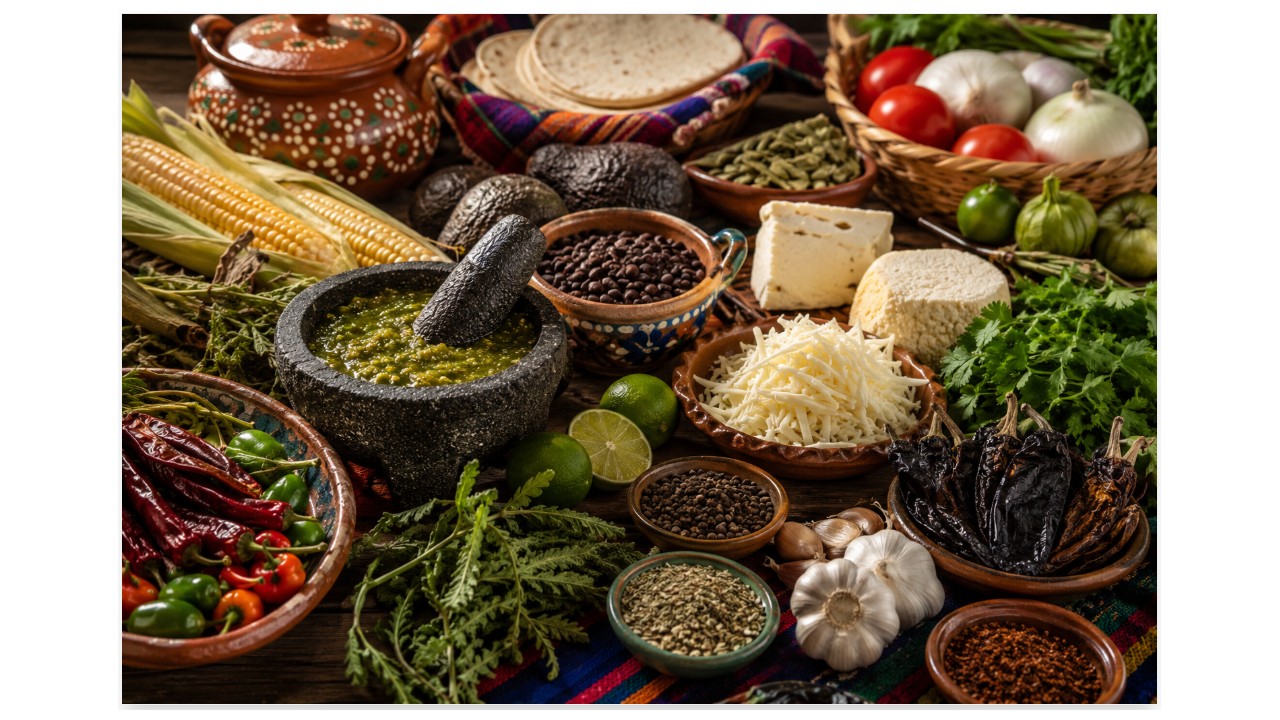
Walk through almost any authentic Mexican market and you’ll notice something surprising. Although every vendor specializes in different regional dishes, many rely on the same traditional ingredients.
Fresh masa becomes tortillas, tlacoyos, memelas, gorditas, sopes, huaraches, tamales, and countless other specialties. Fresh cheeses, roasted chiles, salsa, onions, cilantro, avocado, and lime appear again and again—not because Mexican food lacks variety, but because generations of cooks have learned to transform a familiar collection of ingredients into hundreds of completely different regional dishes.
THE SECRET TO AUTHENTIC MEXICAN STREET FOOD ISN’T MORE INGREDIENTS—IT’S KNOWING HOW TO USE THE RIGHT ONES.
🌽 Fresh Masa: The Heart of Mexican Street Food
If there’s one ingredient that explains more of Mexican street food than almost any other, it’s fresh masa.
Made from nixtamalized corn that’s been soaked, cooked, and ground into a smooth dough, fresh masa has been at the heart of Indigenous culinary traditions for thousands of years. Long before modern cities existed, communities throughout Mesoamerica transformed corn into the versatile dough that still forms the foundation of authentic Mexican cooking today.
Depending on the region, cooks shape fresh masa into tortillas, tlacoyos, memelas, sopes, gorditas, huaraches, tamales, corundas, and dozens of other specialties before cooking them on a hot comal. Although every dish looks different, they’re all connected by the same remarkable ingredient.
Understanding masa also reveals something remarkable about Mexican street food: dishes that appear completely different are often expressions of the same ancient foundation. A thin tortilla beneath a taco, the thick base of a sope, the stuffed center of a tlacoyo, an elongated huarache, and the masa surrounding a tamal all begin with essentially the same culinary idea. Our What Is Masa? The Ancient Corn Dough Behind Authentic Mexican Street Food guide explores how that one foundational dough became an entire family of Mexican foods.
Outside Mexico, home cooks often rely on masa harina, flour produced from nixtamalized corn that has been dried and ground so it can later be rehydrated into masa. It’s an extraordinarily useful pantry staple, but it shouldn’t be confused with fresh masa produced from moist, freshly ground nixtamal.
MASA IS THE ANCIENT FOUNDATION OF MEXICAN STREET FOOD—BUT MEXICO’S REGIONAL STORY DOESN’T END WITH CORN.
🌽 Essential Ingredients
Authentic Mexican street food doesn’t rely on long ingredient lists or complicated recipes. Instead, it begins with a handful of traditional ingredients that have been used for generations. Fresh masa becomes tortillas, tamales, memelas, and tlacoyos. Tomatillos add bright acidity to salsa verde, while nopales showcase how native plants have remained part of everyday cooking for centuries. Ingredients like achiote and piloncillo tell stories of regional traditions that stretch from the Yucatán Peninsula to central Mexico.
Many of these ingredients have roots in Indigenous culinary traditions that long predate modern Mexico. Staples like corn, nixtamalized masa, nopales, beans, and native herbs have nourished communities for centuries, while later influences introduced new cheeses, meats, and cooking styles that blended into the rich regional cuisines enjoyed today.
Understanding these ingredients makes every taco stand, market, and authentic regional specialty easier to appreciate. Once you recognize the building blocks, you’ll start seeing how the same core ingredients are combined in different ways to create hundreds of unique dishes throughout Mexico.
Learn how these ingredients come together in authentic recipes: Mexican Street Food Ingredients & Cooking Terms Explained…
SIMPLE INGREDIENTS ARE THE FOUNDATION OF EXTRAORDINARY MEXICAN STREET FOOD.
As you read through this guide, you’ll notice many of these ingredients appearing throughout our articles on tacos, tamales, tlayudas, tortas, and other regional specialties.
🧡 Achiote (ah-chee-OH-teh)
- What It Is: A bright red seasoning made from ground annatto seeds, often blended with garlic, citrus, and spices.
- You’ll Find It In: Cochinita pibil, Yucatán-style pork, marinades, and roasted meats.
- Why It Matters: Achiote gives Yucatán’s famous cochinita pibil its signature color and earthy flavor, making it one of the defining ingredients of the region’s culinary identity.
🥑 Aguacate (ah-gwah-KAH-teh)
- What It Is: The Spanish word for avocado, valued for its rich, buttery texture.
- You’ll Find It In: Tacos, tortas, tostadas, cemitas, and fresh salsas.
- Why It Matters: Avocado cools spicy flavors while adding richness without overpowering the fresh ingredients that define authentic street food.
🥩 Asiento (ah-see-EN-toh)
- What It Is: Rendered pork fat traditionally spread onto masa before cooking.
- You’ll Find It In: Memelas, tlayudas, and other Oaxacan specialties.
- Why It Matters: Asiento is one of the signature flavors of Oaxaca and gives many traditional masa-based dishes their unmistakable savory depth.
🫘 Black Beans (Frijoles Negros) (free-HOH-lays NEH-grohs)
- What It Is: Slow-cooked black beans seasoned with herbs and spices.
- You’ll Find It In: Sopes, memelas, tortas, breakfasts, and countless regional dishes.
- Why It Matters: Black beans are especially common in southern Mexico, where they provide creamy texture, protein, and earthy flavor.
🐐 Cabrito (kah-BREE-toh)
- What It Is: Young goat, traditionally prepared in Northern Mexico using live-fire roasting, slow cooking, or regional stewing methods.
- You’ll Find It In: Cabrito al pastor, cabrito al horno, fritada, and traditional Monterrey restaurants.
- Why It Matters: Cabrito is one of the defining foods of Nuevo León and reflects Northern Mexico’s ranching heritage, open-fire cooking traditions, and strong regional identity.
🌽 Cacahuazintle (kah-kah-wah-SEENT-leh)
- What It Is: A traditional Mexican maize variety known for its unusually large, pale kernels that swell and often open like flowers when cooked.
- You’ll Find It In: Pozole and other preparations centered on large-kernel Mexican maize.
- Why It Matters: Cacahuazintle is one of the maize varieties most closely associated with traditional pozole and helps give the dish its distinctive large, tender kernels.
🍯 Cajeta (kah-HEH-tah)
- What It Is: A traditional Mexican confection made primarily by slowly cooking goat’s milk with sugar until it becomes thick, sweet, and deeply caramelized.
- You’ll Find It In: Empanadas, crepes, cakes, candies, ice cream, churros, pan dulce, and other Mexican desserts.
- Why It Matters: Cajeta is one of Mexico’s distinctive sweet flavors. Its rich dairy character and concentrated caramel notes make it both a filling and topping across Mexican baking and dessert traditions.
🎃 Calabaza (kah-lah-BAH-sah)
- What It Is: The Spanish word for squash or pumpkin, covering several varieties used in Mexican savory and sweet cooking.
- You’ll Find It In: Empanadas de calabaza, soups, stews, vegetable dishes, sweets, markets, and seasonal home cooking.
- Why It Matters: Squash has deep roots in Indigenous Mexican agriculture and remains important in both savory dishes and traditional sweets, including pumpkin-filled empanadas.
🔥 Ceniza (seh-NEE-sah)
- What It Is: The Spanish word for ash; wood ash has traditionally been used in some Indigenous maize-processing methods because of its alkaline properties.
- You’ll Find It In: Traditional corn processing and regional foods such as some corundas de ceniza from Michoacán.
- Why It Matters: Ceniza shows that alkaline processing of maize was not historically limited to one material or method. Different communities used locally available alkaline substances to help transform dried corn before grinding it into dough.
🌽 Corn (Maíz) (mah-EES)
- What It Is: The ancient grain that forms the foundation of authentic Mexican cuisine.
- You’ll Find It In: Tortillas, tamales, masa, atole, elote, esquites, and hundreds of regional specialties.
- Why It Matters: Corn has been central to Mexican cooking for thousands of years and remains the ingredient that connects nearly every regional cuisine. Depending on the variety and stage of harvest, corn becomes nixtamalized masa for tortillas and corundas or freshly ground sweet corn for regional specialties like uchepos.
🌽 Elote (eh-LOH-teh)
- What It Is: Fresh corn on the cob that’s grilled or steamed and often served with crema, cheese, chile, and lime.
- You’ll Find It In: Street food carts, markets, festivals, parks, and neighborhood food stands throughout Mexico.
- Why It Matters: Elote is one of Mexico’s most iconic street foods and showcases how simple ingredients become unforgettable regional favorites.
🌽 Elote Tierno (eh-LOH-teh TYEHR-noh)
- What It Is: Young, tender corn harvested while the kernels are still moist, milky, and naturally sweet.
- You’ll Find It In: Uchepos, fresh-corn preparations, seasonal dishes, markets, and home kitchens in corn-growing regions of Mexico.
- Why It Matters: Unlike mature corn that may be dried and nixtamalized into masa, elote tierno is used fresh. Its moisture and natural sweetness give uchepos their unusually soft texture and delicate corn flavor.
🌿 Epazote (eh-pah-SOH-teh)
- What It Is: A traditional Mexican herb with an earthy, slightly citrus flavor.
- You’ll Find It In: Black beans, quesadillas, soups, and regional stews.
- Why It Matters: Especially common in central and southern Mexico, epazote contributes a distinctive flavor that has been part of Mexican cooking for centuries.
🫓 Flour Tortilla (Tortilla de Harina) (tor-TEE-yah deh ah-REE-nah)
- What It Is: A soft wheat flour tortilla traditionally made with flour, fat, water, and salt.
- You’ll Find It In: Sonora, Chihuahua, Coahuila, Nuevo León, burritos, burros, breakfast dishes, quesadillas, and everyday Northern Mexican cooking.
- Why It Matters: Handmade flour tortillas define Northern Mexican cuisine and distinguish it from the corn tortilla traditions found across much of central and southern Mexico.
📖 Full Guide: Flour Tortillas Explained: Why Northern Mexico Chose Wheat Over Corn
🫘 Frijoles Refritos (free-HOH-lays reh-FREE-tohs)
- What It Is: Cooked beans that are mashed and reheated with fat or oil until creamy and spreadable; despite the English name “refried beans,” they are not necessarily fried twice.
- You’ll Find It In: Molletes, burritos, tortas, tostadas, breakfast plates, tacos, and countless everyday Mexican meals.
- Why It Matters: Frijoles refritos are one of Mexican cooking’s most versatile foundations. Their creamy texture allows them to work as a filling, side dish, topping, or binding layer—as they do in molletes, where the beans connect toasted bread with melted cheese.
🍈 Guayaba (gwah-YAH-bah)
- What It Is: Guava, a fragrant tropical fruit with sweet-tart flavor that is commonly cooked into preserves, pastes, and dessert fillings.
- You’ll Find It In: Empanadas, pan dulce, pastries, candies, preserves, beverages, and regional desserts.
- Why It Matters: Guayaba is one of the recurring fruit flavors in Mexican sweets and baking, where its concentrated aroma and natural acidity work especially well in pastry fillings.
🌾 Harina de Trigo (ah-REE-nah deh TREE-goh)
- What It Is: The Spanish term for wheat flour, the primary ingredient used to make Northern Mexico’s traditional flour tortillas.
- You’ll Find It In: Flour tortillas, burritos, burros, breakfast dishes, bakeries, and recipes throughout Sonora, Chihuahua, Coahuila, Nuevo León, and other northern states.
- Why It Matters: Harina de trigo became one of the defining ingredients of Northern Mexican cuisine after wheat was introduced during the colonial period. Today it remains the foundation of the region’s famous handmade flour tortillas.
🌽 Hoja de Elote (OH-hah deh eh-LOH-teh)
- What It Is: A corn husk—the leafy outer covering of an ear of corn—used as a traditional wrapper for many Mexican tamales.
- You’ll Find It In: Tamales, uchepos, markets, home kitchens, and tamal stands throughout Mexico.
- Why It Matters: Corn husks do more than hold a tamal together. They protect the mixture during steaming and can contribute aroma while allowing the tamal to cook gently inside its wrapper.
🌽 Hominy (Pozole Corn) (POH-zoh-lay corn)
- What It Is: Dried corn kernels that have been nixtamalized until they become large, tender, and chewy.
- You’ll Find It In: Pozole and other traditional soups and stews.
- Why It Matters: Hominy demonstrates the remarkable transformation created by nixtamalization, turning ordinary corn into one of Mexico’s most iconic ingredients.
🌿 Hoja de Maíz Verde (OH-hah deh mah-EES VEHR-deh)
- What It Is: A long, flexible green leaf from the maize plant used as a traditional wrapper for certain Mexican tamales.
- You’ll Find It In: Most notably in traditional Michoacán corundas, where the leaf is repeatedly folded around the masa before steaming.
- Why It Matters: The length and flexibility of the green maize leaf help create the triangular and multi-pointed geometry that distinguishes corundas from many tamales wrapped in dried corn husks.
🍄 Huitlacoche (wee-tlah-KOH-cheh)
- What It Is: A naturally occurring corn fungus that transforms kernels into soft, dark, mushroom-like growths with a rich, earthy flavor.
- You’ll Find It In: Quesadillas, tacos, tamales, soups, and seasonal specialties.
- Why It Matters: Often called “Mexican truffle,” huitlacoche is considered a delicacy that demonstrates how Indigenous culinary traditions turned an unusual natural ingredient into one of Mexico’s most celebrated foods.
🥛 Leche Condensada (LEH-cheh kohn-den-SAH-dah)
- What It Is: Sweetened condensed milk used in desserts, pastries, candies, beverages, and bakery fillings.
- You’ll Find It In: Flan, tres leches cake, pastries, desserts, coffee drinks, and bakery specialties.
- Why It Matters: Leche condensada adds sweetness and creaminess to many of Mexico’s most beloved desserts while reflecting European influences on Mexican baking traditions.
🌽 Maize (MAYZ)
- What It Is: The grain commonly called corn in the United States and one of the foundational ingredients of Mexican cuisine, grown in many traditional colors and varieties.
- You’ll Find It In: Tortillas, tamales, masa, pozole, atole, elote, esquites, sopes, gorditas, tlacoyos, and countless regional dishes.
- Why It Matters: Maize has shaped Mexican cooking for thousands of years. Through nixtamalization and grinding, it becomes fresh masa—the foundation for tortillas, tamales, antojitos, and many regional foods.
🌽 Maíz Pozolero (mah-EES poh-soh-LEH-roh)
- What It Is: Large-kernel maize prepared specifically for making pozole, typically processed so the kernels become tender, swollen, and ready to absorb the surrounding broth.
- You’ll Find It In: Pozole rojo, pozole blanco, pozole verde, home kitchens, markets, and restaurants specializing in pozole.
- Why It Matters: Maíz pozolero is not simply corn added to a stew. It is the defining ingredient around which pozole is built.
🧈 Manteca (mahn-TEH-kah)
- What It Is: Rendered pork fat, commonly called lard in English, traditionally used for frying, masa preparation, tamales, beans, breads, pastries, and slow-cooked regional dishes.
- You’ll Find It In: Chilorio, corundas, tamales, refried beans, tortillas, cuernos de manteca, pan dulce, pastries, and numerous traditional Mexican preparations.
- Why It Matters: Manteca does more than add richness. It carries chile and spice flavors, contributes tenderness, encourages browning and crisping, and can become an important part of a dish’s characteristic texture and flavor.
🌽 Masa (MAH-sah)
- What It Is: Fresh dough made from nixtamalized corn.
- You’ll Find It In: Tortillas, tamales, picadas, gorditas, sopes, tlacoyos, memelas, huaraches, and tlayudas.
- Why It Matters: Masa is the backbone of authentic Mexican street food, transforming simple corn into dozens of iconic regional dishes. Fresh masa doesn’t create just tortillas and tamales. Regional specialties such as corundas, tlacoyos, memelas, sopes, gorditas, huaraches, and tlayudas all begin with different expressions of this same remarkable ingredient. Fresh young corn, by contrast, becomes specialties like Michoacán’s uchepos, showing how one crop can produce remarkably different regional traditions.
🌽 Masa Harina (MAH-sah ah-REE-nah)
- What It Is: Dried masa flour that is mixed with water to recreate fresh masa.
- You’ll Find It In: Homemade tortillas, tamales, and traditional Mexican cooking around the world.
- Why It Matters: Masa harina makes authentic corn-based cooking accessible outside Mexico while preserving the flavor created through nixtamalization.
🌽 Masa Preparada (MAH-sah preh-pah-RAH-dah)
- What It Is: Prepared masa that has already been mixed with some or all of the ingredients needed for a particular dish, especially tamales.
- You’ll Find It In: Tortillerías, mercados, Mexican grocery stores, home kitchens, and particularly tamal preparation.
- Why It Matters: Asking whether masa is plain or preparada helps cooks understand what has already been added and whether the dough is ready for its intended use.
🌽 Nixtamal (nees-tah-MAHL)
- What It Is: Corn that has been soaked and cooked in an alkaline solution, preparing it to become fresh masa.
- You’ll Find It In: Tortillas, tamales, tlacoyos, memelas, sopes, gorditas, huaraches, and other traditional corn dishes.
- Why It Matters: Nixtamal is the essential step between whole corn and fresh masa, making authentic tortillas and many of Mexico’s most iconic street foods possible.
🌵 Nopales (noh-PAH-les)
- What It Is: Edible cactus paddles with a slightly tart, green flavor.
- You’ll Find It In: Breakfast tacos, salads, grilled dishes, quesadillas, and vegetarian street foods.
- Why It Matters: Nopales showcase how native Mexican ingredients continue to play an important role in traditional cooking throughout the country.
🍬 Piloncillo (pee-lohn-SEE-yoh)
- What It Is: Unrefined cane sugar traditionally formed into solid cones or blocks.
- You’ll Find It In: Café de olla, champurrado, tamales, baked goods, syrups, and traditional desserts.
- Why It Matters: Piloncillo provides a deep, caramel-like sweetness that refined sugar cannot replicate and is widely used in traditional Mexican cooking.
🫘 Pinto Beans (Frijoles Pintos) (free-HOH-lays PEEN-tohs)
- What It Is: Creamy, speckled beans that become soft and flavorful when slowly cooked.
- You’ll Find It In: Sonoran hot dogs, burritos, breakfasts, refried beans, Northern Mexican dishes, and Tex-Mex favorites.
- Why It Matters: Pinto beans are a staple throughout Northern Mexico, where they complement flour tortillas, grilled meats, and hearty ranch-style cooking.
🍅Tomate Rojo (Red Tomato)(toh-MAH-teh ROH-hoh)
- What It Is: The ripe red tomato used as the base for many cooked Mexican salsas.
- You’ll Find It In: Salsa roja, salsa borracha, table salsa, tacos, huevos rancheros, tortas.
- Why It Matters: Roasted tomatoes provide sweetness and body that balance dried chiles in many of Mexico’s most recognizable salsas.
🍅 Tomatillo (toh-mah-TEE-yoh)
- What It Is: A small green fruit covered by a papery husk with a bright, tangy flavor.
- You’ll Find It In: Salsa verde, enchiladas verdes, tacos, and grilled meats.
- Why It Matters: Tomatillos provide the fresh acidity that defines many green Mexican sauces and balances rich meats beautifully.
🌽 Tortillas (tor-TEE-yahs)
- What It Is: Thin flatbreads made from either nixtamalized corn masa or wheat flour that serve as the foundation of countless Mexican dishes.
- You’ll Find It In: Tacos, quesadillas, burritos, burros, tostadas, enchiladas, flautas, chilaquiles, wraps and everyday meals throughout Mexico.
- Why It Matters: Tortillas are one of the defining foods of Mexican cuisine. They can remain soft for tacos, be fried whole for tostadas, rolled for flautas or cut and fried before being transformed with salsa in chilaquiles.
🌽 Totopos (toh-TOH-pohs)
- What It Is: Pieces of corn tortilla that are toasted or fried until crisp and used in numerous Mexican dishes and snacks.
- You’ll Find It In: Chilaquiles, nachos, botanas, alongside salsas and guacamole, and as crisp accompaniments to Mexican meals.
- Why It Matters: Totopos demonstrate another way tortillas are transformed through cooking, creating crisp pieces that can be eaten on their own or used as the structural foundation for dishes such as chilaquiles.
🌾 Wheat (Trigo) (TREE-goh)
- What It Is: A cereal grain introduced by the Spanish that became the foundation of Northern Mexico’s handmade flour tortilla tradition.
- You’ll Find It In: Flour tortillas, burritos, burros, breakfast dishes, quesadillas, and everyday cooking throughout Sonora, Chihuahua, Coahuila, Nuevo León, and other northern states.
- Why It Matters: Wheat transformed the cuisine of Northern Mexico. Combined with the region’s dry climate, ranching culture, and agricultural traditions, it gave rise to the large handmade flour tortillas that distinguish northern cooking from the corn-based cuisines found across much of central and southern Mexico.
⚪ White Corn (Maíz Blanco) (mah-EES BLAHN-koh)
- What It Is: The most common corn variety used to produce traditional masa.
- You’ll Find It In: Fresh tortillas, tamales, sopes, tlacoyos, and many everyday street foods.
- Why It Matters: White corn creates the soft texture and clean corn flavor that define many authentic tortillas throughout central and southern Mexico.
🥩 Traditional Meats & Proteins
Authentic Mexican street food is known for far more than tacos and tortillas. Across Mexico, traditional meats like barbacoa, carnitas, carne asada, machaca, carne seca, cecina, and cabrito reflect centuries of regional ranching, farming, and slow-cooking traditions. Each preparation tells a story about the landscape, local ingredients, and communities that created it.
Whether beef is grilled over mesquite in Sonora, lamb is slow-cooked underground in Hidalgo, or pork is simmered for hours in Michoacán, these meats form the foundation of many of Mexico’s most iconic street foods. Understanding these terms makes it easier to appreciate regional specialties, recognize authentic menu descriptions, and see why the same ingredient can taste completely different from one state to the next.
EVERY TRADITIONAL MEAT TELLS THE STORY OF THE REGION THAT PERFECTED IT.
From Sonoran carne asada and Northern Mexican machaca to Hidalgo barbacoa and Michoacán carnitas, these regional meat traditions reveal how local landscapes and cooking methods shape Mexican street food.
🥩 Arrachera (ah-rrah-CHEH-rah)
- What It Is: A Mexican term commonly used for skirt steak or a closely related thin, flavorful beef cut prepared for grilling.
- You’ll Find It In: Carne asada, tacos, fajita-style preparations, taquerías, butcher shops, family cookouts, and grilled-beef meals throughout Mexico.
- Why It Matters: Arrachera is prized for strong beef flavor and its ability to develop excellent char over high heat. Because the meat has pronounced muscle fibers, proper cooking and slicing across the grain are especially important to tenderness.
🥩 Carne Asada (KAR-neh ah-SAH-dah)
- What It Is: Northern Mexico’s celebrated grilled-beef tradition, made with thin, flavorful cuts of beef cooked quickly over charcoal or mesquite.
- You’ll Find It In: Sonora, Chihuahua, Coahuila, Nuevo León, family cookouts, taquerías, tacos, burros, and ranch-style meals.
- Why It Matters: Carne asada represents far more than grilled steak. It reflects Northern Mexico’s cattle-ranching heritage, mesquite cooking traditions, flour tortillas, family hospitality, and weekend gatherings around the fire.
🥩 Carne Seca (KAHR-neh SEH-kah)
- What It Is: Air-dried or sun-dried beef traditionally prepared throughout Northern Mexico.
- You’ll Find It In: Machaca, burros, breakfasts, and ranch-style meals.
- Why It Matters: Carne seca preserves beef while creating the distinctive flavor that has defined Northern Mexican ranch cooking for generations.
🥩 Cecina (seh-SEE-nah)
- What It Is: Thinly sliced beef or pork that is lightly salted and air-dried before cooking.
- You’ll Find It In: Tacos, cemitas, tortas, markets, and regional specialties throughout central Mexico.
- Why It Matters: Cecina preserves meat while concentrating its flavor, making it one of Mexico’s classic regional proteins, especially in states like Morelos and Oaxaca.
🌭 Chorizo (choh-REE-soh)
- What It Is: A highly seasoned fresh pork sausage flavored with dried chiles, garlic, vinegar, and spices.
- You’ll Find It In: Breakfast tacos, burritos, quesadillas, potatoes, and countless street foods.
- Why It Matters: Chorizo adds bold smoky flavor to many traditional dishes and varies considerably from region to region.
🥩 Diezmillo (dees-MEE-yoh)
- What It Is: A flavorful beef cut taken from the chuck or shoulder area, often sliced thin for fast grilling.
- You’ll Find It In: Carne asada, grilled-beef tacos, taquerías, butcher shops, and family cookouts throughout Northern Mexico.
- Why It Matters: Diezmillo offers strong beef flavor at a more approachable price than premium steaks, making it a popular everyday choice for carne asada gatherings.
🥩 Faja (FAH-hah)
- What It Is: A Spanish word meaning a strip, band or belt. The term is closely connected to the name fajita and the long, narrow character of the beef cut historically associated with the dish.
- You’ll Find It In: Discussions of fajitas, skirt steak, beef butchery and Texas-Mexico border cooking.
- Why It Matters: Understanding faja helps explain why the original meaning of fajita points toward the beef rather than the sizzling skillet, onions and peppers that later became associated with restaurant fajitas.
🌭 Longaniza (lohn-gah-NEE-sah)
- What It Is: A traditional Mexican sausage similar to chorizo but often coarser and more heavily seasoned.
- You’ll Find It In: Tacos, tortas, breakfast dishes, and regional street foods.
- Why It Matters: Longaniza is one of Mexico’s classic regional sausages and appears throughout central and southern Mexico.
🥩 Skirt Steak
- What It Is: A long, thin, intensely beefy cut from the diaphragm area of the animal, known for its prominent muscle fibers and pronounced grain.
- You’ll Find It In: Fajitas, carne asada, grilled beef dishes, tacos and northern Mexican or Texas-Mexico border cooking.
- Why It Matters: Skirt steak is historically central to fajitas. Its strong flavor works beautifully over intense heat, but the cut becomes much easier to eat when rested and sliced across the grain.
🧀 Mexican Cheeses, Cremas & Toppings
One of the biggest misconceptions about authentic Mexican street food is that it’s loaded with cheese and heavy toppings. In reality, traditional street vendors take the opposite approach. Most dishes are finished with just a few carefully chosen ingredients that complement the meat, masa, or vegetables rather than covering their flavor.
Fresh Mexican cheeses tend to be lighter and milder than the cheddar blends commonly found in American-style Mexican food. Instead of melting into every dish, many are crumbled over tacos, tostadas, elote, and sopes to add a touch of saltiness and creaminess without overwhelming the other ingredients. Crema Mexicana provides richness while balancing spicy chiles, and everyday toppings like cilantro, onions, radishes, and fresh lime contribute brightness, crunch, and acidity.
These finishing touches may seem simple, but they’re one of the defining characteristics of traditional Mexican cuisine, where balance is valued over excess. A perfectly grilled taco often needs nothing more than diced onion, fresh cilantro, a squeeze of lime, and a spoonful of salsa. The goal isn’t to hide the flavor of the filling—it’s to let every ingredient work together in perfect balance.
As you travel through Mexico, you’ll also notice that toppings often reflect regional traditions. Oaxaca is famous for its stringy Oaxaca cheese, Michoacán is known for salty Cotija cheese, while the Yucatán Peninsula frequently pairs slow-roasted pork with vibrant pickled red onions. These small regional differences are part of what makes Mexican street food such a rewarding culinary journey.
THE BEST MEXICAN STREET FOOD USES TOPPINGS TO ENHANCE FLAVOR—NOT TO COVER IT.
Many of the ingredients below appear throughout our guides on tacos, tortas, elote, esquites, sopes, memelas, tlayudas, and other regional Mexican street food favorites.
🧀 Asadero (ah-sah-DEH-roh)
- What It Is: A smooth, semi-soft Mexican cheese known for its excellent melting qualities.
- You’ll Find It In: Quesadillas, tacos, burritos, grilled cheese fillings, and northern Mexican cuisine.
- Why It Matters: Popular throughout northern Mexico, Asadero creates a creamy, stretchy texture that melts beautifully without becoming greasy.
🧀 Chihuahua (chee-wah-WAH)
- What It Is: A mild cow’s milk cheese originally produced by Mennonite communities in Chihuahua.
- You’ll Find It In: Quesadillas, burritos, chile rellenos, and baked dishes.
- Why It Matters: Chihuahua cheese is one of Mexico’s best-known melting cheeses and reflects the country’s regional dairy traditions.
🧀 Cotija (koh-TEE-hah)
- What It Is: A firm, salty aged cheese that’s crumbled over finished dishes.
- You’ll Find It In: Elote, esquites, tacos, beans, roasted vegetables, and salads.
- Why It Matters: Named after the town of Cotija in Michoacán, this cheese delivers a bold salty finish while celebrating one of western Mexico’s best-known dairy traditions.
🥛 Crema Mexicana (KREH-ma meh-hee-KAH-nah)
- What It Is: A rich, slightly tangy Mexican-style cream that’s thinner and smoother than sour cream.
- You’ll Find It In: Tacos, sopes, tostadas, enchiladas, elote, and spicy street foods.
- Why It Matters: Crema softens spicy flavors while adding richness and balance without overpowering the other ingredients.
🥬 Cabbage (Repollo) (reh-POH-yoh)
- What It Is: Fresh shredded cabbage used as a crisp topping for many Mexican street foods.
- You’ll Find It In: Fish tacos, tostadas, seafood dishes, tacos dorados, and Baja California specialties.
- Why It Matters: Cabbage adds freshness and crunch while balancing rich fillings, especially in coastal and seafood-focused regional cuisines.
🌶️ Jalapeño Salsa (hah-lah-PEHN-yoh SAHL-sah)
- What It Is: A fresh or roasted green salsa made primarily with jalapeños, onions, garlic, and herbs.
- You’ll Find It In: Sonoran hot dogs, tacos, tortas, grilled meats, and table salsa bars.
- Why It Matters: Jalapeño salsa adds bright heat that complements grilled meats without overpowering them.
🍋 Lime (lahy-m)
- What It Is: Fresh lime wedges served alongside many Mexican street foods.
- You’ll Find It In: Street tacos, seafood, tortas, elote, grilled meats, and fresh salsa.
- Why It Matters: A simple squeeze of lime brightens rich meats and fresh toppings, creating the fresh, vibrant flavor that’s characteristic of authentic Mexican cuisine.
🧀 Panela Cheese (pah-NEH-lah)
- What It Is: A fresh, mild white cow’s milk cheese that holds its shape when heated rather than melting completely.
- You’ll Find It In: Salads, grilled dishes, tacos, enchiladas, and breakfast plates.
- Why It Matters: Panela adds a light, creamy flavor without overpowering other ingredients, making it a popular cheese throughout central Mexico.
🌸 Pickled Red Onions (Cebollas Encurtidas) (seh-boh-YAHS en-koor-TEE-dahs)
- What It Is: Thinly sliced red onions lightly pickled with vinegar and citrus.
- You’ll Find It In: Cochinita pibil, tacos, tortas, seafood, and Yucatán specialties.
- Why It Matters: A defining topping of the Yucatán Peninsula, pickled onions add bright acidity that perfectly complements slow-roasted pork and tropical flavors.
🍅 Pico de Gallo (PEE-koh deh GAH-yoh)
- What It Is: A fresh, uncooked Mexican salsa typically made with chopped tomato, onion, fresh chile, cilantro, lime juice, and salt.
- You’ll Find It In: Molletes, tacos, quesadillas, grilled meats, breakfast dishes, tortas, and as a fresh table salsa.
- Why It Matters: Pico de gallo adds acidity, freshness, chile flavor, and texture without covering the food underneath. On rich dishes such as molletes, its fresh tomato, lime, onion, and chile provide an important contrast to creamy beans and melted cheese.
🧀 Queso Fresco (KAY-soh FRES-koh)
- What It Is: A mild, crumbly fresh cheese with a clean, milky flavor.
- You’ll Find It In: Tacos, tostadas, sopes, enchiladas, beans, and elote.
- Why It Matters: Because it doesn’t melt like cheddar, queso fresco adds creamy texture and gentle saltiness while allowing the main ingredients to remain the star of the dish.
🧀 Quesillo (keh-SEE-yoh)
- What It Is: The traditional Oaxacan name for the string cheese widely known as Oaxaca cheese.
- You’ll Find It In: Tlayudas, quesadillas, memelas, stuffed peppers, baked dishes, and regional Oaxacan specialties.
- Why It Matters: Knowing the name “quesillo” helps travelers recognize authentic menus throughout Oaxaca, where this famous cheese originated.
🧀 Queso Oaxaca (KAY-soh wah-HAH-kah)
- What It Is: A semi-soft string cheese made by stretching curds into long ribbons before forming them into a ball.
- You’ll Find It In: Quesadillas, tlayudas, memelas, stuffed peppers, and baked dishes.
- Why It Matters: Named after the state of Oaxaca, this cheese is famous for its exceptional melt and is one of the defining ingredients of Oaxacan street food.
🌶️ Radishes (Rábanos) (RAH-bah-nohs)
- What It Is: Crisp, peppery root vegetables commonly served raw alongside tacos and other street foods.
- You’ll Find It In: Street tacos, pozole, tostadas, seafood dishes, and market food stalls.
- Why It Matters: Radishes provide refreshing crunch and a mild peppery bite that balances rich meats and spicy salsas.
🧀 Requesón (reh-keh-SOHN)
- What It Is: A soft, creamy fresh cheese similar to ricotta, traditionally made from leftover whey.
- You’ll Find It In: Quesadillas, empanadas, tamales, enchiladas, and stuffed vegetables.
- Why It Matters: Requesón provides a delicate, creamy filling that has been part of traditional Mexican home cooking for generations.
🍅 Salsa Mexicana (SAHL-sah meh-hee-KAH-nah)
- What It Is: A fresh Mexican salsa typically made with chopped tomato, onion, fresh chile, cilantro, lime juice, and salt; the term is often used for a preparation very similar to pico de gallo.
- You’ll Find It In: Molletes, tacos, grilled meats, breakfast dishes, tortas, quesadillas, and table-salsa service.
- Why It Matters: Salsa mexicana provides freshness, acidity, chile flavor, and texture without overwhelming the food underneath. Recognizing the term also helps travelers understand menus where a fresh chopped salsa may be called salsa mexicana rather than pico de gallo.
🧅 White Onion (CEH-boh-yah BLAHN-kah)
- What It Is: Finely diced white onion used as one of Mexico’s most traditional taco toppings.
- You’ll Find It In: Street tacos, grilled meats, tortas, salsas, soups, and countless regional specialties.
- Why It Matters: Combined with fresh cilantro and lime, white onion forms one of the classic finishing combinations that defines authentic street tacos throughout Mexico.
🌶️ Traditional Mexican Chiles
If there’s one ingredient that defines the incredible diversity of regional Mexican cooking, it’s the chile. While many people assume Mexican food is simply “spicy,” authentic Mexican cuisine tells a much richer story. Fresh and dried chiles contribute sweetness, smokiness, fruitiness, earthiness, color, and aroma—not just heat. Their unique flavor profiles are one of the main reasons a taco in Oaxaca tastes completely different from one in Baja California, Puebla, or the Yucatán Peninsula.
Heat Isn’t Everything: In authentic Mexican cooking, chiles are chosen as much for their flavor, aroma, color, and texture as for their heat. Many traditional recipes combine several different varieties to build layers of sweetness, smokiness, fruitiness, and earthiness rather than simply making a dish hotter.
A single recipe may use multiple chiles because each contributes something unique. Mild ancho chiles add sweetness, guajillos bring bright fruitiness, pasillas contribute earthy richness, chipotles introduce smoky depth, and chile de árbol delivers clean, vibrant heat. Together, these peppers create the balanced flavors that define traditional Mexican sauces, salsas, stews, and marinades.
From the fiery habaneros of the Yucatán Peninsula to the smoky dried chiles of central Mexico and the fresh serranos commonly found in table salsas, every region has developed its own signature combinations over generations. Learning to recognize these chiles is one of the easiest ways to understand why Mexican cuisine is so incredibly diverse.
AUTHENTIC MEXICAN FLAVOR IS BUILT IN LAYERS—NOT JUST HEAT.
🌶️ Capsicum (KAP-sih-kum)
- What It Is: The botanical genus that includes chile peppers and sweet peppers, from jalapeños and poblanos to habaneros, serranos, and bell peppers.
- You’ll Find It In: Discussions of chile pepper species, pepper varieties, fresh and dried chiles, and the broader botanical family behind Mexican peppers.
- Why It Matters: Understanding Capsicum helps explain how dramatically different peppers can still belong to the same larger botanical family while developing very different flavors, heat levels, shapes, colors, and culinary uses.
🔥 Capsaicin (kap-SAY-uh-sin)
- What It Is: The best-known natural compound responsible for the burning sensation produced by hot chile peppers.
- You’ll Find It In: Jalapeños, serranos, habaneros, chile de árbol, chiltepín, hot salsas, chile sauces, and other spicy Mexican foods.
- Why It Matters: Capsaicin explains why some chiles create far more heat than others, but it does not determine flavor. Mexican cooks choose peppers for aroma, fruitiness, smokiness, color, texture, and culinary purpose as well as pungency.
🌶️ Chile vs. Chili
- Many people search for “Mexican chili peppers,” but authentic Mexican cooking traditionally uses the spelling “chile.”
- What It Is: Chile is the traditional Spanish word for the peppers used throughout authentic Mexican cooking. In the United States, chili usually refers to the hearty stew made with meat, beans, and spices.
- Why It Matters: When reading authentic Mexican recipes, guides, or restaurant menus, you’ll almost always see the spelling chile because it refers to the pepper itself rather than the American dish.
🌶️ Placenta / Placental Tissue (plah-SEN-tah)
- What It Is: The pale internal tissue inside a chile pepper where the seeds attach and where much of the pepper’s capsaicin is produced.
- You’ll Find It In: Fresh jalapeños, serranos, habaneros, poblanos, and other whole chiles when they are cut open for cooking.
- Why It Matters: The seeds are often blamed for chile heat, but much of the capsaicin originates in the placental tissue surrounding them. Removing this tissue can reduce some heat, although the effect varies by pepper and preparation.
🌡️ Scoville Scale / Scoville Heat Units (SHU) (SKOH-vil)
- What It Is: The system commonly used to describe chile pepper heat, expressed in Scoville Heat Units, or SHU.
- You’ll Find It In: Pepper guides, chile comparisons, hot sauce descriptions, and discussions comparing mild peppers such as poblanos with hotter varieties such as serranos, habaneros, and chiltepín.
- Why It Matters: The Scoville scale helps compare pungency, but it does not measure flavor, aroma, sweetness, smokiness, fruitiness, or culinary usefulness. In Mexican cooking, heat is only one part of what makes a chile valuable.
The chiles below appear throughout our regional street food guides and traditional recipes. As you become familiar with them, you’ll start recognizing how each one contributes its own distinctive flavor, aroma, color, and level of heat to authentic Mexican cooking.
Some are sold fresh, while others are dried or smoked to concentrate their flavors. Many of Mexico’s most famous sauces rely on dried chiles because drying transforms both their sweetness and complexity.
 🌶️ Professor Pepper Says…
Fresh doesn’t always mean hotter. Drying changes a chile’s flavor even more than its heat, which is why recipes often call for dried peppers when they want richness and complexity instead of simply more spice.
🌶️ Fresh vs. Dried Chiles
- What It Is: The two primary ways chiles are used in Mexican cooking. Fresh chiles provide bright, crisp, and grassy flavors, while dried chiles develop sweeter, smokier, earthier, and more concentrated characteristics.
- You’ll Find It In: Nearly every regional Mexican cuisine.
- Why It Matters: Understanding the difference between fresh and dried chiles is one of the easiest ways to understand why authentic Mexican food builds flavor rather than simply adding heat.
📖 Full Guide: Mexican Chiles Explained: Fresh vs Dried Peppers Used in Street Food
🔥 Roasted Chiles
- What It Is: Fresh chiles charred over an open flame or hot comal until their skins blister, then peeled before cooking.
- You’ll Find It In: Salsa roja, rajas, chiles rellenos, soups, tacos, and roasted salsas.
- Why It Matters: Roasting adds smoky sweetness, softens the pepper’s texture, and creates the deeper flavors that define many traditional Mexican dishes.
🌶️ Professor Pepper Says…
Remember: a pepper with a higher SHU isn’t necessarily “better.” Many of Mexico’s most famous sauces rely on mild chiles because they contribute sweetness, smokiness, fruitiness, and color rather than intense heat.
🌶️ Mexican Chile Pepper Heat Guide
🟢 Very Mild — 1,000–2,000 SHU (Poblano, Ancho, Pasilla, Mulato)
🟡 Mild to Medium — 2,500–8,000 SHU (Jalapeño, Chipotle, Guajillo, Morita, Cascabel, Chipotle Meco, Puya)
🟠 Hot — 10,000–30,000 SHU (Serrano, Chile de Árbol)
🔴 Very Hot — 100,000–350,000 SHU (Chiltepín, Habanero)
Very Mild (1,000–2,000 SHU): Ideal for adding sweetness, color, and depth without significant heat.
🟢 Ancho Chile (AHN-choh CHEE-lay)
- What It Is: A dried poblano pepper with mild heat and rich notes of raisins, chocolate, and dried fruit.
- Heat Level: Mild (1,000–2,000 SHU)
- You’ll Find It In: Mole sauces, adobos, enchilada sauces, marinades, and braised meats.
- Why It Matters: Ancho chiles create depth and richness without overwhelming heat, making them one of the cornerstones of traditional Mexican sauces.
🟢 Mulato Chile (moo-LAH-toh CHEE-lay)
- What It Is: A dried chile closely related to the ancho, prized for its sweet, smoky flavor with notes of chocolate, coffee, and dried cherries.
- Heat Level: Very Mild (1,000–2,500 SHU)
- You’ll Find It In: Mole poblano, adobo sauces, marinades, braised meats, and traditional holiday dishes.
- Why It Matters: Mulato chiles contribute rich color and subtle sweetness to many of Mexico’s most celebrated sauces, especially complex moles that rely on layered flavors rather than intense heat.
🟢 Pasilla Chile (pah-SEE-yah CHEE-lay)
- What It Is: A dried chile with mild heat and flavors of cocoa, raisins, and dried fruit.
- Heat Level: Very Mild to Mild (1,000–2,500 SHU)
- You’ll Find It In: Mole sauces, enchilada sauces, soups, braised meats, and rich salsas.
- Why It Matters: Pasilla contributes complexity and depth that help create Mexico’s famous layered sauces
🟢 Poblano (poh-BLAH-noh)
- What It Is: A large, broad-shouldered Mexican chile with mild heat and an earthy, green flavor that becomes sweeter, softer, and richer when roasted.
- Heat Level: Mild (1,000–2,000 SHU)
- You’ll Find It In: Chiles rellenos, rajas con crema, chiles en nogada, roasted salsas, tacos, quesadillas, soups, and other roasted or stuffed chile dishes.
- Why It Matters: Named for Puebla, the poblano is one of Mexico’s most versatile fresh chiles. Its thick flesh and substantial shape make it especially suited to roasting and stuffing, while mature poblanos can ripen red and be dried to become ancho chiles—giving the same pepper an entirely different culinary identity.
📖 Full Guide: Poblano Pepper Explained: Flavor, Heat, Uses & Why It’s the Chile Behind Chiles Rellenos
Mild to Medium (2,500–10,000 SHU): Balanced chiles that contribute both flavor and approachable heat.
🟡 Chipotle (chee-POHT-lay)
- What It Is: A ripe jalapeño pepper that has been smoked and dried.
- Heat Level: Mild to Medium (2,500–8,000 SHU)
- You’ll Find It In: Adobos, smoky salsas, marinades, tacos, tortas, and barbecue.
- Why It Matters: Chipotle adds a rich smoky flavor that’s become one of the signature tastes of Mexican cuisine.
🟡 Chipotle Meco (chee-POHT-lay MEH-koh)
- What It Is: A larger, tan-colored smoked jalapeño with a deeper, smokier flavor than the darker morita chile.
- Heat Level: Mild to Medium (5,000–10,000 SHU)
- You’ll Find It In: Traditional adobos, braised meats, barbecue sauces, soups, and rustic salsas.
- Why It Matters: Chipotle meco delivers an intense smoky character that’s especially popular in traditional central Mexican cooking.
🟡 Cascabel Chile (kahs-kah-BEHL CHEE-lay)
- What It Is: A small, round dried chile named for the rattling sound its loose seeds make inside the pod.
- Heat Level: Mild to Medium (1,500–8,000 SHU)
- You’ll Find It In: Table salsas, roasted salsas, soups, stews, and grilled meats.
- Why It Matters: Cascabel chiles provide a nutty, earthy flavor with gentle heat, making them a popular choice for rustic table salsas and roasted salsa blends that emphasize depth rather than intense spice.
🟡 Guajillo Chile (gwah-HEE-yoh CHEE-lay)
- What It Is: A dried chile with mild to medium heat and a bright, fruity flavor.
- Heat Level: Mild (2,500–5,000 SHU)
- You’ll Find It In: Birria, adobos, pozole, enchilada sauces, and marinades.
- Why It Matters: Guajillo is one of Mexico’s most widely used dried chiles because it builds flavor, color, and aroma without excessive heat.
🟡 Jalapeño (hah-lah-PEHN-yoh)
- What It Is: A medium-heat fresh green chile with a crisp, bright flavor.
- Heat Level: Mild to Medium (2,500–8,000 SHU)
- You’ll Find It In: Fresh salsas, pico de gallo, escabeche, tacos, and tortas.
- Why It Matters: Jalapeños are one of Mexico’s most recognizable peppers, offering approachable heat that’s become popular around the world.
📖 Full Guide: Jalapeño Pepper Explained: Flavor, Heat, Uses & Why It’s America’s Favorite Chile
🟡 Morita Chile (moh-REE-tah CHEE-lay)
- What It Is: A smaller variety of smoked and dried jalapeño with a rich smoky flavor and slightly fruitier character than the larger chipotle meco.
- Heat Level: Mild to Medium (5,000–10,000 SHU)
- You’ll Find It In: Chipotle-style salsas, adobos, marinades, taco fillings, grilled meats, and smoky sauces.
- Why It Matters: Morita chiles are one of the key ingredients behind many smoky chipotle-style salsas, adding balanced smoke, fruitiness, and moderate heat without overpowering other flavors.
🟡 Puya (POO-yah)
- What It Is: A slender dried red chile that’s closely related to the guajillo but smaller, hotter, and fruitier in flavor.
- Heat Level: Hot (5,000–8,000 SHU)
- You’ll Find It In: Table salsas, adobo sauces, marinades, soups, stews, and braised meat dishes.
- Why It Matters: Puya chiles add brighter heat and a more pronounced fruitiness than guajillos, making them a favorite for cooks who want extra flavor without overwhelming a dish.
Hot — 10,000–30,000 SHU: Bold, vibrant chiles that add noticeable heat while preserving the authentic flavors of a dish.
🟠 Chile de Árbol (CHEE-lay day AR-bohl)
- What It Is: A small, slender dried chile known for its bright, sharp heat.
- Heat Level: Hot (15,000–30,000 SHU)
- You’ll Find It In: Salsa roja, salsa macha, table salsas, chile oils, and hot sauces.
- Why It Matters: Frequently used throughout central Mexico, chile de árbol delivers clean, lingering heat while allowing other flavors to shine.
🟠 Chile Verde (CHEE-lay BEHR-deh)
- What It Is: Literally “green chile,” a general Mexican cooking term for fresh green chiles rather than one single pepper variety. Depending on the region, recipe, or market, it may refer to serrano, jalapeño, or another green chile.
- You’ll Find It In: Salsas, tacos, guacamole, eggs, beans, soups, stews, market stalls, and traditional Mexican recipes that call simply for chile verde.
- Why It Matters: Understanding the term prevents readers from assuming chile verde always names a specific pepper. In some Mexican culinary contexts, particularly traditional recipes, the intended green chile may be serrano.
🟠 Chile Yahualica (CHEE-lay yah-wah-LEE-kah)
- What It Is: A distinctive regional chile de árbol protected by a Mexican Denomination of Origin and closely associated with Yahualica and Los Altos de Jalisco.
- Heat Level: Hot (typically around 15,000–30,000 SHU)
- You’ll Find It In: Tortas ahogadas, birria, fiery salsas, chile sauces, marinades, and traditional cooking throughout Jalisco.
- Why It Matters: Chile Yahualica connects Jalisco’s cuisine directly to its agricultural landscape, bringing distinctive chile heat and regional identity to iconic dishes such as Guadalajara’s tortas ahogadas.
🟠 Serrano (seh-RAH-noh)
- What It Is: A small green chile that’s noticeably hotter than a jalapeño while maintaining a fresh, bright flavor.
- Heat Level: Hot (10,000–23,000 SHU)
- You’ll Find It In: Salsa verde, fresh salsas, pico de gallo, tacos, and grilled meats.
- Why It Matters: Serranos are widely used in fresh Mexican salsas because they provide vibrant heat without masking the natural flavors of the other ingredients.
Very Hot (50,000–350,000 SHU): Intensely flavorful chiles that should be used thoughtfully to complement—not overwhelm.
🔴 Chiltepín (cheel-teh-PEEN)
- What It Is: A tiny, wild chile often called the “mother of all peppers” because it’s considered one of the oldest ancestors of many cultivated chile varieties.
- Heat Level: Hot (50,000–100,000 SHU)
- You’ll Find It In: Fresh salsas, table sauces, regional Sonoran cuisine, dried chile blends, and traditional Mexican cooking.
- Why It Matters: Native to northern Mexico and the American Southwest, chiltepín has been harvested for centuries and remains one of the most historically significant peppers in Mexican culinary tradition.
🔴 Habanero (ah-bah-NEH-roh)
- What It Is: A small, intensely hot pepper with bright tropical fruit notes.
- Heat Level: Very Hot (100,000–350,000 SHU)
- You’ll Find It In: Yucatán salsas, cochinita pibil, seafood dishes, ceviche, and marinades.
- Why It Matters: The habanero is one of the defining ingredients of the Yucatán Peninsula, where its fruity heat pairs perfectly with citrus and achiote.
If you’d like to learn more, our Habanero Pepper Explained: Flavor, Scoville Heat, Uses & What Makes It So Hot guide explores its fruity flavor, intense Scoville heat, culinary uses, and importance in Yucatán cooking in greater depth.
In authentic Mexican cooking, chiles are chosen as much for their flavor, aroma, color, and texture as for their heat. Many of Mexico’s most celebrated dishes combine several varieties to create balanced, layered flavors rather than simply making food spicier.
🌿 Traditional Mexican Herbs & Seasonings
Walk through a traditional Mexican market and you’ll notice that the aromas arrive before the food does. Fresh cilantro, epazote, hoja santa, toasted cumin, cinnamon, and achiote fill the air long before the first taco reaches your plate. These herbs and seasonings give every region of Mexico its own unmistakable identity.
Flavor Goes Beyond Heat: Authentic Mexican cooking relies on carefully balanced herbs and seasonings to complement the natural flavors of fresh chiles, meats, vegetables, and handmade tortillas. Many recipes have been passed down for generations, using just a handful of carefully chosen ingredients to create flavors that are instantly recognizable throughout Mexico.
Each herb and seasoning contributes something unique. Epazote adds an earthy, almost mint-like flavor to beans and quesadillas. Hoja santa brings subtle notes of anise and black pepper to traditional Oaxacan dishes. Mexican oregano offers brighter, more citrus-forward flavors than Mediterranean oregano, while achiote gives marinades and slow-cooked meats their distinctive red color and mild earthy taste.
From the fragrant herbs of Oaxaca to the achiote-based marinades of the Yucatán Peninsula and the spice blends used throughout central Mexico, every region has developed its own signature combinations over centuries. Learning to recognize these ingredients helps explain why authentic Mexican cooking is celebrated as much for its aroma and depth of flavor as for its vibrant chiles.
AUTHENTIC MEXICAN CUISINE IS SEASONED WITH TRADITION AS MUCH AS INGREDIENTS.
The herbs and seasonings below appear throughout our regional street food guides and traditional recipes. As you become familiar with them, you’ll begin recognizing the distinctive aromas, flavors, and regional traditions that make Mexican cuisine one of the world’s most celebrated culinary traditions.
Unlike chiles, most herbs are used fresh while spices are typically dried. Together they create the balanced flavors that define authentic Mexican cuisine.
🌿 Achiote (ah-chee-OH-teh)
- What It Is: A traditional Mexican seasoning made from ground annatto seeds, prized for its earthy flavor and vibrant red-orange color.
- You’ll Find It In: Cochinita pibil, pollo pibil, marinades, slow-cooked pork, chicken, seafood, and Yucatán cuisine.
- Why It Matters: Achiote is one of the defining seasonings of the Yucatán Peninsula, adding rich color, mild earthy flavor, and distinctive regional character to many of Mexico’s most celebrated dishes.
🌿 Allspice (AWL-spyss)
- What It Is: A fragrant spice with flavors reminiscent of cinnamon, cloves, and nutmeg, despite coming from a single dried berry.
- You’ll Find It In: Yucatán marinades, adobos, cochinita pibil, spice blends, braised meats, and traditional stews.
- Why It Matters: Popular throughout southern Mexico and the Yucatán Peninsula, allspice adds warm, aromatic complexity that pairs beautifully with achiote, citrus, and slow-roasted meats.
🌿 Canela (Mexican Cinnamon)(kah-NEH-lah)
- What It Is: A softer, more delicate variety of cinnamon with floral, sweet, and slightly citrusy flavors.
- You’ll Find It In: Mole sauces, café de olla, arroz con leche, Mexican hot chocolate, desserts, and baked goods.
- Why It Matters: Mexican canela provides gentle sweetness and aromatic warmth, making it an essential ingredient in both savory sauces and traditional desserts.
🌿 Cilantro (see-LAHN-troh)
- What It Is: A fresh herb with bright citrus and herbal notes.
- You’ll Find It In: Street tacos, tortas, salsas, grilled meats, soups, and beans.
- Why It Matters: Cilantro provides freshness that balances rich meats and spicy chiles, making it one of the signature finishing ingredients found at taco stands across Mexico.
🌿 Cloves (KLOHVZ)
- What It Is: An intensely aromatic spice with warm, sweet, and slightly peppery flavors used in small amounts.
- You’ll Find It In: Mole sauces, adobos, marinades, braised meats, holiday dishes, and spice blends.
- Why It Matters: Just a few cloves add remarkable depth and complexity, helping create the layered flavors that distinguish many classic Mexican sauces and slow-cooked recipes.
🌿 Cumin (KYOO-min)
- What It Is: A warm, earthy spice with slightly nutty and peppery notes used to build depth in countless savory recipes.
- You’ll Find It In: Taco meat, adobo sauces, chili, beans, stews, marinades, and spice blends.
- Why It Matters: Although used more sparingly than in some other cuisines, cumin adds warmth and complexity that complements dried chiles and slow-cooked meats throughout traditional Mexican cooking.
🎃 Flor de Calabaza (flohr deh kah-lah-BAH-sah)
- What It Is: The edible blossoms of squash plants, prized for their delicate texture and subtle floral flavor.
- You’ll Find It In: Quesadillas, soups, tamales, tacos, and seasonal market dishes.
- Why It Matters: Flor de calabaza highlights Mexico’s tradition of using every part of the squash plant, adding both beauty and flavor to many classic recipes.
🧄 Garlic (Ajo) (AH-hoh)
- What It Is: A fragrant bulb used as one of the foundational seasonings in Mexican cooking.
- You’ll Find It In: Salsas, adobos, marinades, soups, stews, beans, and grilled meats.
- Why It Matters: Garlic provides savory depth that supports chiles, herbs, and spices throughout countless traditional recipes.
🌿 Hoja de Aguacate (OH-hah deh ah-gwah-KAH-teh)
- What It Is: Dried or fresh avocado leaves used as an aromatic seasoning in traditional Mexican cooking.
- You’ll Find It In: Black bean dishes, barbacoa, moles, tamales, and Oaxacan specialties.
- Why It Matters: Hoja de aguacate contributes a subtle anise-like aroma that cannot be replicated with avocado fruit, making it an important seasoning in several regional cuisines.
🌿 Hoja Santa (OH-hah SAHN-tah)
- What It Is: A large aromatic leaf with herbal, peppery, and lightly anise-like flavors.
- You’ll Find It In: Tamales, seafood, moles, and traditional Oaxacan dishes.
- Why It Matters: Closely associated with Oaxaca and southern Mexico, hoja santa gives many regional specialties their unmistakable aroma.
🌿 Mexican Oregano (meh-hee-KAHN oh-REG-ah-noh)
- What It Is: A fragrant herb with citrusy, earthy notes that’s different from Mediterranean oregano.
- You’ll Find It In: Pozole, beans, marinades, soups, taco meat, and slow-cooked stews.
- Why It Matters: Mexican oregano complements chiles and cumin beautifully, making it one of the defining herbs of traditional Mexican cooking.
🌿 Papalo (PAH-pah-loh)
- What It Is: A bold, aromatic Mexican herb with peppery, citrusy flavors often compared to cilantro and arugula.
- You’ll Find It In: Cemitas, sandwiches, tacos, and traditional Puebla cuisine.
- Why It Matters: Papalo is one of Puebla’s signature herbs, adding a distinctive freshness that balances rich meats, creamy cheeses, and smoky chiles.
🌿 Pitiona (pee-tee-OH-nah)
- What It Is: A fragrant herb native to Oaxaca with an earthy, slightly minty flavor similar to oregano.
- You’ll Find It In: Oaxacan moles, bean dishes, soups, and traditional stews.
- Why It Matters: Pitiona is one of Oaxaca’s distinctive regional herbs and contributes to the complex flavors that define many of the state’s traditional recipes.
🌿 Quelites (keh-LEE-tehs)
- What It Is: A collective name for a wide variety of edible wild greens and tender leafy plants traditionally gathered throughout Mexico.
- You’ll Find It In: Quesadillas, soups, tamales, tacos, and seasonal market dishes.
- Why It Matters: Quelites have been part of Indigenous Mexican diets for thousands of years and continue to showcase the country’s remarkable botanical diversity.
🍞 Mexican Breads & Bakery
Mexico’s rich baking traditions are an essential part of everyday life, blending Indigenous ingredients with centuries of European influence. From neighborhood panaderías filled with fresh pan dulce each morning to regional specialties enjoyed during holidays and celebrations, Mexican breads reflect the country’s remarkable culinary diversity.
While many visitors associate Mexican cuisine primarily with tortillas, bakeries produce hundreds of traditional breads ranging from sweet conchas and cuernos to festive Rosca de Reyes and Pan de Muerto. Every region contributes its own recipes, flavors, and family traditions, making bakeries an important part of Mexico’s food culture.
As you continue through this guide, you’ll discover how traditional breads complement breakfasts, afternoon coffee, street snacks, and family gatherings. Understanding Mexico’s bakery traditions offers a deeper appreciation for one of the country’s most beloved culinary customs.
EVERY MEXICAN BAKERY TELLS A STORY OF TRADITION, FAMILY, AND DAILY LIFE.
The breads featured throughout this guide showcase the remarkable variety of pan dulce, regional specialties, and traditional baked goods that have become an enduring part of authentic Mexican cuisine. While individual breads like conchas, bolillos, cuernos, and teleras each have their own history, they’re best understood through the neighborhood panadería, where dozens of varieties are baked fresh every morning and families gather as part of their daily routine.
📖 Learn More: Mexican Panaderías Explained: Why Every Neighborhood Bakery Is the Heart of Mexican Morning Culture
🍰 Beso (BEH-soh)
- What It Is: A Mexican pan dulce whose name means “kiss,” typically made from two soft, cake-like halves joined with jam or another sweet filling and finished with sugar.
- You’ll Find It In: Panaderías, bakery assortments and pan dulce trays throughout Mexico.
- Why It Matters: Besos demonstrate how shape, assembly and filling can give a relatively simple bakery preparation its recognizable identity.
🥖 Birote (bee-ROH-teh)
- What It Is: Guadalajara’s famous crusty sourdough-style bread roll, traditionally used for tortas ahogadas.
- You’ll Find It In: Guadalajara, Jalisco, torta shops, bakeries.
- Why It Matters: Birote’s firm crust allows it to absorb sauce without falling apart, making it essential to authentic tortas ahogadas.
🥖 Birote Salado (bee-ROH-teh sah-LAH-doh)
- What It Is: A crusty, sturdy Mexican bread closely associated with Guadalajara, with a firm exterior and substantial structure that can absorb sauce without immediately falling apart.
- You’ll Find It In: Guadalajara and surrounding areas of Jalisco, most famously as the traditional bread used for tortas ahogadas.
- Why It Matters: Birote salado is what makes the torta ahogada possible. Its resilient structure can withstand being drenched in sauce while softer Mexican sandwich breads would quickly become soggy and collapse.
🥐 Bolillo (boh-LEE-yoh)
- What It Is: A crusty white bread roll with a soft interior that’s commonly used for sandwiches.
- You’ll Find It In: Tortas, Sonoran hot dogs, bakeries, breakfasts, markets, and family meals.
- Why It Matters: The bolillo is the traditional bread used for many of Mexico’s famous tortas and the signature bun for authentic Sonoran hot dogs.
📖 Full Guide: Bolillos Explained: The Crispy Bread That Built Mexico’s Favorite Sandwiches
📖 See also: Mexican Panaderías Explained: Why Every Neighborhood Bakery Is the Heart of Mexican Morning Culture
🥐 Campechana (kahm-peh-CHAH-nah)
- What It Is: A crisp, layered Mexican pastry baked with sugar until its surface becomes deeply browned and caramelized.
- You’ll Find It In: Panaderías, cafés and traditional bakery assortments in Mexico.
- Why It Matters: Campechanas demonstrate how layers, sugar and intense oven heat can create a dramatically different texture from the soft breads commonly associated with pan dulce.
🧺 Charola (chah-ROH-lah)
- What It Is: A round metal tray customers carry while selecting fresh breads and pastries inside a traditional Mexican panadería.
- You’ll Find It In: Panaderías, neighborhood bakeries, and traditional Mexican bakeries throughout the country.
- Why It Matters: Choosing bread with a charola is one of the defining experiences of visiting a Mexican panadería, allowing customers to browse dozens of fresh baked goods at their own pace.
🥐 Concha (KOHN-chah)
- What It Is: Mexico’s most famous sweet bread, recognized by its shell-shaped sugar topping.
- You’ll Find It In: Panaderías, breakfasts, coffee breaks, and family gatherings.
- Why It Matters: Conchas are among the most recognizable symbols of Mexican baking traditions and are enjoyed throughout the country.
📖 Full Guide: Conchas Explained: Mexico’s Most Famous Sweet Bread and the Bakery Tradition Behind It
🥐 Cuerno (KWEHR-noh)
- What It Is: The Spanish word for “horn” and a bakery name used for a family of horn- or crescent-shaped Mexican breads and pastries that can vary in dough, fat, texture, and size.
- You’ll Find It In: Panaderías, bakery cases, breakfast tables, cafés, and discussions of Mexican pan dulce throughout the country.
- Why It Matters: Cuerno helps explain why similarly shaped Mexican bakery breads are not always made from one standardized dough. The recognizable horn can remain while individual bakers change the texture, richness, layering, and preparation.
🥐 Cuernito (kwehr-NEE-toh)
- What It Is: A Mexican horn- or crescent-shaped bakery bread whose name means “little horn,” with versions ranging from soft and bread-like to richer and more layered.
- You’ll Find It In: Panaderías, cafés, breakfast tables, bakery assortments, and sometimes filled with savory ingredients such as ham and cheese.
- Why It Matters: Cuernitos show how Mexican bakers can preserve a recognizable shape while adapting the dough, fat, texture, and way the bread is eaten. A cuernito may resemble a croissant without following exactly the same rules.
📖 Full Guide: Cuernitos Explained: Mexico’s Buttery Bakery Favorite That Makes Every Breakfast Better
🥟 Empanada (ehm-pah-NAH-dah)
- What It Is: A pastry made by folding dough around a sweet or savory filling and sealing the edges before baking or frying.
- You’ll Find It In: Panaderías, markets, home kitchens, cafés, and regional bakeries throughout Mexico.
- Why It Matters: Empanada describes a flexible pastry form rather than one fixed recipe. Mexican versions vary widely in dough, preparation, and filling, making the empanada an excellent example of how regional and family traditions reshape a familiar food.
.🍯 Empanada de Cajeta (ehm-pah-NAH-dah deh kah-HEH-tah)
- What It Is: A sweet Mexican empanada filled with cajeta, the thick caramelized goat’s-milk confection used throughout Mexican desserts.
- You’ll Find It In: Panaderías, bakeries, cafés, home kitchens, and dessert assortments.
- Why It Matters: Empanadas de cajeta show how the same folded pastry can shift completely in character when fruit filling is replaced by a rich dairy-based sweet.
🎃 Empanada de Calabaza (ehm-pah-NAH-dah deh kah-lah-BAH-sah)
- What It Is: A sweet Mexican empanada filled with cooked pumpkin or squash, often sweetened and flavored with warming spices.
- You’ll Find It In: Panaderías, home kitchens, regional bakeries, and Mexican and Mexican-American communities, particularly in northern Mexico and the U.S. Southwest.
- Why It Matters: Pumpkin empanadas show how the adaptable empanada form can reflect regional ingredients, seasonal traditions, and family baking customs rather than following one national recipe.
🍍 Empanada de Piña (ehm-pah-NAH-dah deh PEEN-yah)
- What It Is: A sweet Mexican empanada filled with a thick pineapple preserve or cooked pineapple filling.
- You’ll Find It In: Panaderías, bakeries, cafés, markets, and bakery assortments throughout Mexico.
- Why It Matters: Pineapple’s combination of sweetness and acidity works especially well inside rich pastry dough, making empanadas de piña one of the recognizable fruit-filled expressions of the Mexican empanada tradition.
🍰 Garibaldi (gah-ree-BAHL-dee)
- What It Is: A small Mexican bakery cake traditionally coated with apricot glaze and covered with white sugar sprinkles.
- You’ll Find It In: Panaderías and pastry shops, particularly in Mexico City and central Mexico.
- Why It Matters: Garibaldi shows how Mexico’s pan dulce tradition extends beyond breads and pastries into distinctive small cakes developed within Mexican bakery culture.
🥐 Hojaldre (oh-HAHL-dreh)
- What It Is: A layered wheat-flour dough or pastry tradition used in Mexican baking, often associated with flaky textures but made in different regional styles and with different fats.
- You’ll Find It In: Cuernos, pastries, bakery breads, savory baked foods, panaderías, and regional Mexican baking traditions.
- Why It Matters: Hojaldre helps explain why some Mexican bakery breads develop visible layers while others remain softer or more bread-like. Mexican versions do not always follow one rigid European-style puff-pastry formula.
🧁 Mantecada (mahn-teh-KAH-dah)
- What It Is: A small, tender Mexican bakery cake commonly baked and served in a paper liner.
- You’ll Find It In: Panaderías, breakfast tables, coffee breaks and everyday pan dulce assortments.
- Why It Matters: Mantecadas show that the Mexican bakery case includes simple everyday cakes alongside breads, cookies and layered pastries.
🥐 Oreja (oh-REH-hah)
- What It Is: A crisp, layered Mexican bakery pastry made by folding sugar-coated pastry dough into a broad double curl before baking. Its name means “ear” in Spanish, referring to its distinctive shape.
- You’ll Find It In: Mexican panaderías, pan dulce assortments, breakfast tables, cafés, merienda, and bakery trays served with coffee, café con leche, or Mexican hot chocolate.
- Why It Matters: Orejas show how Mexican bakery tradition can transform a remarkably simple combination of dough, fat, sugar and heat into something distinctive. Their crisp layers and caramelized surface also demonstrate why pan dulce includes far more than soft sweet breads.
🥖 Pan de Manteca (pahn deh mahn-TEH-kah)
- What It Is: A broad Mexican bread tradition made with dough enriched with manteca, or lard, and formed into numerous bakery shapes, including some styles of cuernos.
- You’ll Find It In: Traditional Mexican panaderías and regional bakeries, where lard-enriched doughs are used for different breads and pastries.
- Why It Matters: Pan de manteca shows that lard has a longstanding role in Mexican baking rather than serving merely as a substitute for butter. It can contribute its own tenderness, richness, flavor, and texture to traditional breads.
💀 Pan de Muerto (pahn deh MWEHR-toh)
- What It Is: A traditional Mexican sweet bread associated with Día de Muertos, produced in numerous regional styles throughout Mexico.
- You’ll Find It In: Panaderías, homes, markets and Día de Muertos celebrations, particularly during October and early November.
- Why It Matters: Pan de muerto shows how Mexican breads can carry cultural and seasonal meaning far beyond their ingredients or baking technique.
🍞 Pan de Yema (pahn deh YEH-mah)
- What It Is: A rich, egg-enriched Mexican bread whose name literally means “yolk bread,” especially associated with Oaxaca.
- You’ll Find It In: Oaxacan bakeries, breakfast tables and traditional servings alongside hot chocolate.
- Why It Matters: Pan de yema demonstrates how regional baking traditions give Mexican pan dulce distinct local identities and customary pairings.
.🥐 Pan Dulce (pahn DOOL-seh)
- What It Is: The broad family of Mexican sweet breads, pastries, cookies, and other bakery treats.
- You’ll Find It In: Panaderías, markets, breakfast tables, cafés, family gatherings, and homes throughout Mexico.
- Why It Matters: Pan dulce is a cornerstone of Mexican bakery culture, encompassing conchas, orejas, cuernitos, puerquitos, and dozens of regional and seasonal favorites.
📖 Full Guide: Pan Dulce Explained: Mexico’s Sweet Bread Tradition Beyond the Famous Concha
🥄 Pinzas (PEEN-sahs)
- What It Is: Metal tongs provided by Mexican bakeries for selecting fresh breads and pastries.
- You’ll Find It In: Panaderías, neighborhood bakeries, and self-service bakery displays.
- Why It Matters: Pinzas allow customers to choose breads hygienically while reinforcing the self-service tradition that makes visiting a Mexican panadería such a memorable experience.
🍪 Polvorón (pohl-boh-ROHN)
- What It Is: A crumbly Mexican bakery cookie known for its delicate, sandy texture and tendency to break apart easily.
- You’ll Find It In: Panaderías, pan dulce assortments and bakery trays served with coffee, milk or hot chocolate.
- Why It Matters: Polvorones demonstrate how broadly Mexican panaderías define pan dulce, which can include cookies as well as breads and pastries.
🐷 Puerquito / Marranito (pwehr-KEE-toh / mah-rah-NEE-toh)
- What It Is: A pig-shaped Mexican pan dulce typically made with a darker, denser dough sweetened with piloncillo. It may also be called a cochinito.
- You’ll Find It In: Mexican panaderías, pan dulce assortments, breakfast tables and merienda.
- Why It Matters: Puerquitos show that pan dulce extends beyond soft yeast breads and flaky pastries into denser, cake- and cookie-like bakery traditions.
👑 Rosca de Reyes (ROHS-kah deh REH-yehs)
- What It Is: A ring-shaped Mexican celebratory sweet bread traditionally decorated with colorful preserved or candied fruit.
- You’ll Find It In: Homes, panaderías and gatherings for Día de Reyes, celebrated on January 6.
- Why It Matters: Rosca de Reyes demonstrates how bread, family gatherings and the religious calendar intersect within Mexican food traditions.
🥐 Telera (teh-LEH-rah)
- What It Is: A soft oval sandwich roll with three distinctive sections across the top.
- You’ll Find It In: Cemitas, tortas, bakeries, and sandwich shops.
- Why It Matters: Telera rolls are especially popular for preparing traditional Mexican tortas because they’re soft enough to absorb flavorful fillings without falling apart.
📖 Full Guide: Teleras Explained: Why Mexico’s Soft Sandwich Roll Is Perfect for Tortas
📖 See also: Mexican Panaderías Explained: Why Every Neighborhood Bakery Is the Heart of Mexican Morning Culture
🥤 Traditional Mexican Drinks
Traditional Mexican drinks are crafted to complement the country’s bold flavors, regional ingredients, and changing seasons. From refreshing aguas frescas sold by street vendors to rich hot chocolate prepared with a molinillo, these beverages reflect centuries of Indigenous traditions, colonial influences, and local agricultural abundance.
Many of Mexico’s most beloved drinks begin with surprisingly simple ingredients such as fresh fruit, hibiscus flowers, tamarind, rice, cinnamon, cacao, or corn. Yet each region has developed its own specialties, creating beverages that pair naturally with local foods and regional cooking styles.
As you explore this guide, you’ll discover how traditional drinks accompany street food, family meals, celebrations, and everyday life throughout Mexico. Understanding these beverages helps complete the culinary story behind authentic Mexican cuisine.
EVERY TRADITIONAL MEXICAN DRINK REFLECTS THE FLAVORS, INGREDIENTS, AND CULTURE OF ITS REGION.
The beverages featured throughout this guide introduce the refreshing aguas frescas, traditional hot drinks, regional specialties, and time-honored recipes that have accompanied Mexican meals for generations.
🌺 Agua de Jamaica (AH-gwah deh hah-MY-kah)
- What It Is: A refreshing drink made by steeping dried hibiscus flowers in water with sugar.
- You’ll Find It In: Street food stalls, markets, restaurants, and family meals.
- Why It Matters: Its tart, refreshing flavor pairs beautifully with spicy street food and makes it one of Mexico’s most popular aguas frescas.
🍍 Agua de Tamarindo (AH-gwah deh tah-mah-reen-DOH)
- What It Is: A sweet-and-tangy agua fresca made from tamarind pods.
- You’ll Find It In: Markets, taco stands, restaurants, and family gatherings.
- Why It Matters: Tamarind’s unique sweet-sour flavor makes this one of Mexico’s most beloved traditional beverages.
☕ Café de Olla (kah-FEH deh OH-yah)
- What It Is: Traditional Mexican coffee commonly prepared with piloncillo and warming spices such as cinnamon.
- You’ll Find It In: Homes, markets, cafés, breakfast spots, traditional restaurants, and alongside pan dulce.
- Why It Matters: Café de olla combines coffee, caramel-like piloncillo, and warming spices into one of Mexico’s most distinctive traditional coffee preparations.
🍫 Champurrado (cham-poo-RAH-doh)
- What It Is: A thick, warm chocolate drink made with masa, milk, canela, and piloncillo.
- You’ll Find It In: Tamale stands, bakeries, breakfasts, and holiday celebrations.
- Why It Matters: Champurrado demonstrates how masa extends beyond tortillas, becoming one of Mexico’s most comforting traditional beverages.
🍚 Horchata (or-CHAH-tah)
- What It Is: A creamy rice-based drink flavored with cinnamon, vanilla, and sometimes almonds.
- You’ll Find It In: Taquerias, markets, restaurants, and street food vendors.
- Why It Matters: Horchata’s cool, creamy sweetness provides the perfect balance to spicy Mexican dishes.
🍫 Chocolate Caliente (choh-koh-LAH-teh kah-lee-EN-teh)
- What It Is: Traditional Mexican hot chocolate prepared with chocolate, milk or water, cinnamon, and often frothed using a wooden molinillo.
- You’ll Find It In: Panaderías, cafés, breakfast tables, family kitchens, holidays, and traditional restaurants.
- Why It Matters: Chocolate caliente has been paired with fresh pan dulce for generations and remains one of Mexico’s most comforting breakfast and evening traditions.
📖 End of Volume II
Now that you’ve met the ingredients behind authentic Mexican street food, the next step is learning how they’re transformed into unforgettable meals. Traditional cooking methods, specialized tools, and generations of practical knowledge are what turn simple ingredients into tacos, tamales, memelas, tlayudas, and countless regional specialties.
The final volume explores the techniques, equipment, and culinary traditions that bring authentic Mexican cooking to life.
➡ Continue to Volume III — Cooking Like a Local
━━━━━━━━━━━━━━━━━━━━━━━━━━━━━━━━━━━━━━━━━━━━━━━━━━━━━━━━━━━━━━━━━━━━━━━━━━━━━━━━
Volume III — Cooking Like a Local
━━━━━━━━━━━━━━━━━━━━━━━━━━━━━━━━━━━━━━━━━━━━━━━━━━━━━━━━━━━━━━━━━━━━━━━━━━━━━━━━
From mastering a comal to understanding nixtamalization, these cooking terms, traditional tools, and shopping tips help explain how authentic Mexican street food comes together.
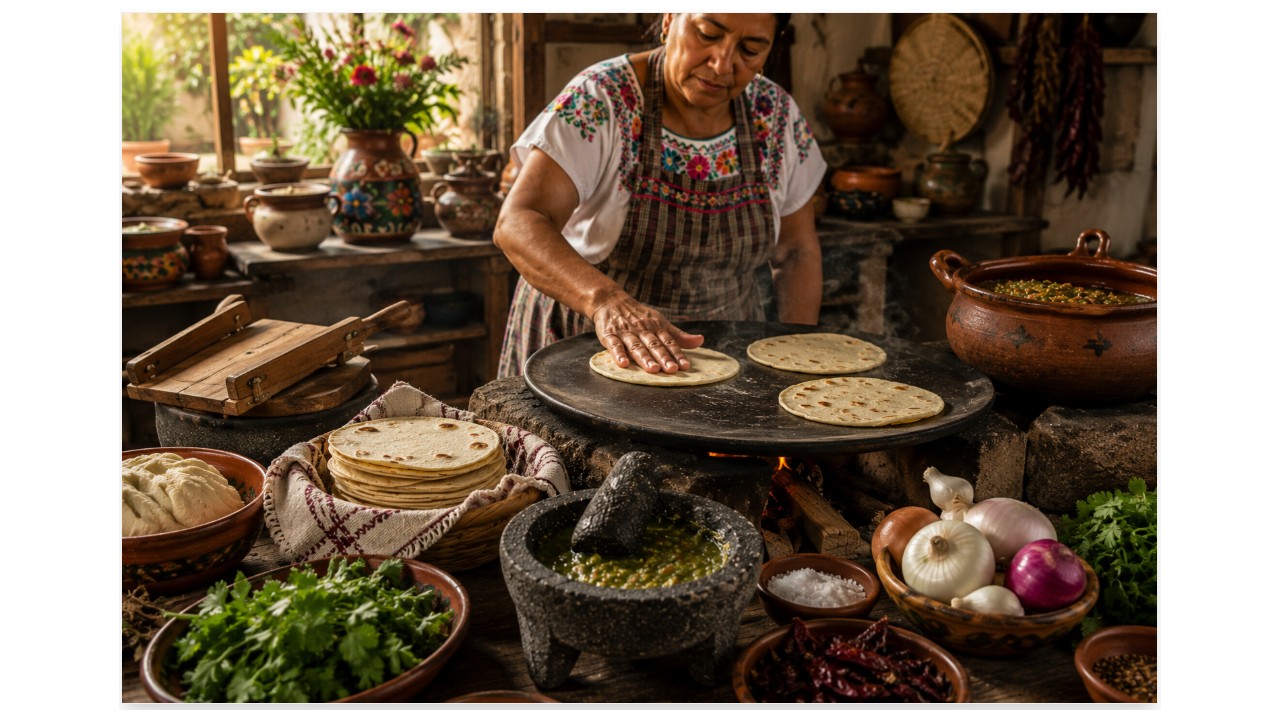
🔥 Cooking Terms & Techniques
Authentic Mexican street food comes with its own vocabulary. Cooking methods like nixtamalization, tatemado, adobo, and traditional techniques used to prepare dishes such as barbacoa and al pastor have shaped Mexican cuisine for centuries. Understanding these terms makes menus, recipes, and conversations about Mexican culinary traditions much easier to follow.
Many of these techniques have been passed from one generation to the next, preserving regional identities while producing the distinctive flavors that make Mexican street food famous around the world. Once you know what these terms mean, you’ll begin to recognize how preparation methods influence the final flavor just as much as the ingredients themselves.
EVERY TRADITIONAL COOKING TERM TELLS A STORY ABOUT MEXICO’S CULINARY HERITAGE.
These techniques appear repeatedly throughout our Mexican Street Food collection because they’re the foundation of countless authentic dishes.
🔪 Across the Grain
- What It Is: A cutting technique in which cooked meat is sliced perpendicular to the direction of its visible muscle fibers rather than parallel to them.
- You’ll Find It In: Fajitas, carne asada, grilled skirt steak and other Mexican beef preparations using strongly grained cuts.
- Why It Matters: Cutting across the grain shortens long muscle fibers, making the same piece of meat noticeably easier to chew. It is one of the most important techniques for properly preparing skirt steak.
🔥 Adobo (ah-DOH-boh)
- What It Is: A seasoned marinade or sauce made with dried chiles, garlic, vinegar, herbs, and spices.
- You’ll Find It In: Marinated pork, chicken, tacos, enchiladas, and braised meats.
- Why It Matters: Every region has its own version of adobo, making it one of Mexico’s most versatile and recognizable flavor foundations.
🌊 Ahogada / Ahogado (ah-oh-GAH-dah / ah-oh-GAH-doh)
- What It Is: Spanish for “drowned,” describing a preparation in which food is generously covered or submerged in sauce.
- You’ll Find It In: Most famously in Guadalajara’s torta ahogada, where a birote salado sandwich filled with carnitas is deliberately drenched in sauce before serving.
- Why It Matters: The word describes more than a garnish or finishing sauce—the drowning is fundamental to the dish. In a torta ahogada, the sauce becomes part of the sandwich’s structure and eating experience.
🌮 Al Pastor (ahl pahs-TOR)
- What It Is: Thin slices of pork marinated with chiles and spices, then cooked on a vertical spit called a trompo.
- You’ll Find It In: Street tacos throughout central Mexico.
- Why It Matters: Inspired by Lebanese immigrants, al pastor has become one of Mexico’s most iconic street foods, especially in Mexico City.
- ➡️ Learn More: Al Pastor Tacos Loaded with Pineapple Heat, Smoky Pork & Street Taco Flavor
♨️ Al Vapor (ahl vah-POHR)
- What It Means: “Steamed” or “cooked with steam.”
- You’ll Encounter It In: Tamales, uchepos, vegetables, seafood, and other preparations cooked gently with steam.
- Why It Matters: Steaming cooks food through moist heat without submerging it in water and is fundamental to traditional tamal preparation.
🌮 Antojito / Antojitos (ahn-toh-HEE-toh / ahn-toh-HEE-tohs)
- What It Is: Literally “little craving,” a broad Mexican food term for casual dishes commonly eaten as snacks, light meals, market foods, or street foods rather than one specific recipe.
- You’ll Find It In: Tacos, quesadillas, sopes, gorditas, tostadas, tlacoyos, flautas, taquitos, tamales, and many other everyday Mexican foods.
- Why It Matters: Antojito is one of the most useful words for understanding Mexican street food because it describes an entire style of eating rather than a single dish. Many foods Americans simply call “street food” belong to Mexico’s much broader antojito tradition.
🔥 Asado (ah-SAH-doh)
- What It Is: Meat that is grilled or roasted over direct heat.
- You’ll Find It In: Carne asada, grilled chicken, vegetables, and regional barbecue.
- Why It Matters: Grilling over open flames creates the smoky flavors that define many northern Mexican dishes.
🥩 Barbacoa (bar-bah-KOH-ah)
- What It Is: Meat traditionally slow-cooked in underground pits or covered steam ovens until exceptionally tender.
- You’ll Find It In: Beef, lamb, goat, and tacos.
- Why It Matters: Barbacoa reflects centuries-old cooking traditions and remains one of Mexico’s most celebrated weekend street foods.
- ➡️ Learn More: Barbacoa Tacos Packed with Smoky Beef, Rich Heat & Street Taco Flavor
🍲 Birria (beer-REE-ah)
- What It Is: A slow-braised meat stew seasoned with dried chiles, herbs, and spices.
- You’ll Find It In: Birria tacos, quesabirria, consommé, and regional specialties.
- Why It Matters: Originating in Jalisco, birria has become one of Mexico’s most internationally recognized street foods.
- ➡️ Learn More: Birria Tacos Recipe That Delivers Juicy, Slow-Cooked Meat, Crispy Tortillas, and Bold, Dripping Flavor in Every Bite
🔥 Cabrito al Pastor (kah-BREE-toh ahl pahs-TOR)
- What It Is: Young goat opened flat and slowly roasted beside an open wood or charcoal fire, rather than directly over the flames.
- You’ll Find It In: Traditional cabrito restaurants and family celebrations throughout Monterrey and Nuevo León.
- Why It Matters: Cabrito al pastor is one of Northern Mexico’s most recognizable live-fire cooking traditions, producing crisp edges, tender meat, and deeply roasted flavor.
🌶️ Chiles en Escabeche (CHEE-lehs en ehs-kah-BEH-cheh)
- What It Is: Chiles preserved in a seasoned vinegar mixture, commonly with sliced carrots, onions, garlic, herbs, and spices. Jalapeños are especially common, although other fresh chiles can be prepared this way.
- You’ll Find It In: Taquerías, torterías, fondas, home kitchens, tacos, tortas, grilled meats, sandwiches, and Mexican table condiments.
- Why It Matters: Escabeche does more than preserve fresh chiles. Vinegar adds acidity while vegetables and seasonings create a tangy, spicy condiment that cuts through rich meats, beans, cheese, and fried foods.
🔥 Comal (koh-MAHL)
- What It Is: A flat, traditionally clay or metal cooking surface used throughout Mexico for cooking tortillas, toasting chiles, and preparing other everyday foods.
- You’ll Find It In: Tortillerías, mercados, street-food stalls, home kitchens, and anywhere tortillas, sopes, gorditas, tlacoyos, or other masa foods are cooked.
- Why It Matters: The comal does more than provide heat. Its hot surface cooks masa quickly while developing the toasted aromas, browned spots, and textures that define many Mexican foods.
🍽️ Comida Corrida (koh-MEE-dah koh-REE-dah)
- What It Is: A traditional fixed-price meal served in many family-owned restaurants, usually including soup, a main course, tortillas, and a drink.
- You’ll Find It In: Fondas, neighborhood restaurants, markets, and small towns throughout Mexico.
- Why It Matters: Comida corrida offers one of the most authentic ways to experience everyday Mexican home cooking at an affordable price.
🔥 Crujiente (kroo-HYEHN-teh)
- What It Means: “Crispy” or “crunchy,” used to describe foods with a firm, crisp texture created through frying, toasting, roasting, or other cooking techniques.
- You’ll See It In: Taquitos, flautas, tacos dorados, tostadas, chicharrón, fried tortillas, potatoes, and many other Mexican street foods.
- Why It Matters: Texture is fundamental to Mexican street food, and crujiente helps describe one of its most important contrasts. Crisp tortillas and fried foods are often paired with tender fillings, creamy toppings, fresh vegetables, and salsa to create multiple textures in a single bite.
🏅 Denomination of Origin (Denominación de Origen) (deh-noh-mee-nah-see-OHN deh oh-REE-hen)
- What It Is: A legal designation that protects products whose distinctive identity, characteristics, or traditional production are closely connected to a defined geographic region.
- You’ll Find It In: Mexican regional food and agricultural traditions where geography and traditional production are essential to a product’s identity, including the protected Chile Yahualica growing region.
- Why It Matters: Denomination of Origin protections help preserve the connection between distinctive Mexican ingredients and the places that created them, preventing important regional food identities from becoming disconnected from their geographic roots.
🌮 Doblar / Doblado (doh-BLAHR / doh-BLAH-doh)
- What It Is: Doblar means “to fold,” while doblado means “folded.” In Mexican cooking, the terms can describe tortillas folded around fillings before cooking or serving.
- You’ll Find It In: Folded tacos dorados, quesadillas, tacos, and other tortilla-based preparations where the tortilla is bent or folded rather than tightly rolled.
- Why It Matters: The distinction between folded and rolled helps explain the diversity of tacos dorados. Some are folded into half-moon shapes while others are rolled into cylinders, demonstrating why tacos dorados are defined more by their golden, crisp preparation than by one required shape.
🔥 Dorado / Dorada (doh-RAH-doh / doh-RAH-dah)
- What It Means: Literally “golden,” a cooking description used for food that has been browned or fried until it develops a golden exterior.
- You’ll See It In: Tacos dorados, fried tortillas, potatoes, meats, and other foods cooked until browned and crisp.
- Why It Matters: On a Mexican menu, dorado often tells you something about texture as well as color. In tacos dorados, frying transforms a soft tortilla into the crisp, golden shell that defines the dish.
🥟 Empanar (ehm-pah-NAR)
- What It Is: A Spanish culinary verb associated with enclosing, covering, or coating food with bread or a bread-like layer; it is the linguistic root of the word empanada.
- You’ll Find It In: Discussions of empanadas and other Spanish-language cooking terminology involving breading, coating, or enclosing foods.
- Why It Matters: Understanding empanar helps explain the name empanada and the basic culinary idea behind the pastry: food enclosed within dough.
🔄 Enrollar / Enrollado (ehn-roh-YAHR / ehn-roh-YAH-doh)
- What It Means: Enrollar means “to roll” or “to roll up,” while enrollado describes something that has been rolled. In Mexican cooking, the terms can describe tortillas wrapped tightly around a filling before cooking or serving.
- You’ll See It In: Taquitos, flautas, rolled tacos, enchiladas, and other tortilla preparations shaped around meat, cheese, potatoes, or other fillings.
- Why It Matters: Rolling changes more than a dish’s appearance. With taquitos and flautas, a tight roll helps contain the filling while allowing the tortilla to fry evenly and develop the crisp exterior that defines the finished food.
🔥 Escurrir / Escurrido (ehs-koo-REER / ehs-koo-REE-doh)
- What It Is: Escurrir means “to drain,” while escurrido means “drained.” In cooking, it describes allowing excess liquid, oil, or moisture to run off food after preparation.
- You’ll Find It In: Tacos dorados, taquitos, flautas, fried tortillas, chiles, and other Mexican foods that are drained after frying or cooking.
- Why It Matters: Proper draining is an important final step when preparing fried foods. Allowing excess oil to escape helps tacos dorados and other fried antojitos stay crisp before salsa, crema, cheese, and other toppings are added.
🌾 Fermentación (fehr-mehn-tah-see-OHN)
- What It Is: The process in which yeast causes dough to rise before baking, creating light texture and developing flavor.
- You’ll Find It In: Bolillos, teleras, pan dulce, conchas, pastries, and traditional breads.
- Why It Matters: Fermentación is one of the key techniques behind Mexico’s rich baking traditions, producing the texture and flavor that distinguish authentic breads from quick breads.
🍲 Fritada de Cabrito (free-TAH-dah deh kah-BREE-toh)
- What It Is: A traditional Northern Mexican goat stew made with tender pieces of cabrito and a deeply seasoned sauce, with recipes varying among families and regions.
- You’ll Find It In: Nuevo León, Coahuila, family kitchens, and restaurants specializing in northern ranch cuisine.
- Why It Matters: Fritada shows that cabrito is not limited to fire-roasting; Northern Mexican cooks also transform the meat into rich, slow-cooked regional dishes.
🔥 Freír / Frito (freh-EER / FREE-toh)
- What It Means: Freír means “to fry,” while frito describes food that has been fried in oil or fat.
- You’ll See It In: Taquitos, flautas, tacos dorados, tostadas, garnachas, fried quesadillas, seafood, potatoes, and numerous regional street foods.
- Why It Matters: Frying is an important Mexican street-food technique that changes both flavor and structure. A soft tortilla can become a crisp tostada, taquito, flauta, or taco dorado depending on how it is shaped, filled, and fried.
📍 Geographical Indication (jee-oh-GRAF-ih-kuhl in-dih-KAY-shun)
- What It Is: A legal designation that connects a food or product to a specific place whose reputation, traditions, ingredients, or production methods help define its identity.
- You’ll Find It In: Protected regional foods such as Chilorio de Mocorito and other Mexican products whose names are formally tied to their place of origin.
- Why It Matters: Geographical indications help preserve the connection between food and place, recognizing that regional knowledge, ingredients, and traditions can be essential parts of what makes a product distinctive.
🔪 Grain
- What It Is: The visible direction in which the muscle fibers run through a piece of meat.
- You’ll Find It In: Skirt steak, carne asada, fajitas and other grilled Mexican beef dishes where slicing technique affects tenderness.
- Why It Matters: The direction of the grain tells the cook how the meat should be sliced. Cutting across those fibers shortens them and produces a more tender bite.
🔥 Gratinar / Gratinado (grah-tee-NAHR / grah-tee-NAH-doh)
- What It Is: To cook a dish with direct or intense upper heat until cheese or another topping melts, bubbles, and often develops lightly browned areas.
- You’ll Find It In: Molletes, baked cheese dishes, casseroles, stuffed chiles, and other preparations finished under strong oven heat.
- Why It Matters: Gratinar explains the final transformation that makes dishes such as molletes more than bread with toppings. Direct heat melts the cheese into the ingredients beneath it while adding browned flavor and texture to the surface.
🌽 Green Corn Husks (Hojas de Elote)
- What It Is: Fresh green corn leaves used to wrap dishes like corundas and uchepos before steaming.
- You’ll Find It In: Traditional Michoacán corn dishes.
- Why It Matters: Green husks add aroma and help create the distinctive texture of several regional specialties.
🥑 Guarnición / Guarniciones (gwahr-nee-SYOHN / gwahr-nee-SYOH-nehs)
- What It Is: A garnish, side, or accompaniment served alongside or added to a dish to complement its flavor, texture, or presentation.
- You’ll Find It In: Mexican restaurants, fondas, market kitchens, and home cooking, where dishes may be accompanied by ingredients such as rice, beans, lettuce, crema, cheese, avocado, onion, or other finishing elements.
- Why It Matters: Mexican dishes are often shaped by what accompanies them as much as by the main preparation. With tacos dorados, fresh and creamy guarniciones create contrast with the hot, crisp tortilla and help turn a simple fried taco into a complete plate.
🔥 Leña (LEHN-yah)
- What It Is: Firewood used for traditional wood-fired cooking throughout Mexico.
- You’ll Find It In: Barbacoa, cabrito, rustic bakeries, outdoor grills, and traditional family kitchens.
- Why It Matters: Wood-fired cooking contributes the smoky aromas and regional character found in many of Mexico’s oldest cooking traditions.
🍞 Levadura (leh-vah-DOO-rah)
- What It Is: Yeast used to make breads, rolls, pastries, and other baked goods rise during fermentation.
- You’ll Find It In: Bolillos, teleras, conchas, pan dulce, pastries, and traditional bakery recipes.
- Why It Matters: Levadura transformed Mexican baking by allowing bakers to create the soft breads and pastries that became central to neighborhood panaderías throughout the country.
🥩 Machito (mah-CHEE-toh)
- What It Is: A traditional Northern Mexican preparation made from seasoned goat organs and intestines bundled together and roasted until crisp outside and tender within.
- You’ll Find It In: Cabrito restaurants, family gatherings, and regional meals in Nuevo León and surrounding northern states.
- Why It Matters: Machito demonstrates the ranch-cooking tradition of using the whole animal and preserving techniques developed through generations of rural cooking.
🌳 Mesquite (meh-SKEET)
- What It Is: A hardwood from mesquite trees traditionally used as fuel for grilling and live-fire cooking, especially in Northern Mexico and the borderlands.
- You’ll Find It In: Carne asada, cabrito, grilled beef, ranch cookouts, Sonoran cooking, and other Northern Mexican preparations cooked over wood or charcoal.
- Why It Matters: Mesquite burns hot and contributes a distinctive smoky aroma that has become closely associated with Northern Mexico’s ranching and grilling traditions. It helps explain why live-fire cooking in the region tastes different from food prepared over a neutral heat source.
🔥 Mesquite Grilling (meh-SKEET GRILL-ing)
- What It Is: Cooking meat over mesquite wood or charcoal, which burns hot and produces a bold, earthy smoke.
- You’ll Find It In: Carne asada, grilled beef, cabrito, roasted vegetables, ranch cookouts, and traditional Northern Mexican outdoor cooking.
- Why It Matters: Mesquite is closely tied to the dry landscapes and ranching culture of Northern Mexico. Its distinctive smoke is one of the flavors most strongly associated with authentic Sonoran carne asada.
🪨 Metate (meh-TAH-teh)
- What It Is: A traditional flat or slightly curved grinding stone used with a handheld stone called a mano to grind maize, chiles, spices, cacao, and other ingredients.
- You’ll Find It In: Traditional home kitchens, molinos, markets, and regional cooking traditions where corn, chiles, spices, or cacao are ground by hand.
- Why It Matters: The metate was essential to Mexican cooking long before mechanical grinders arrived, transforming nixtamal into masa and helping generations of cooks prepare sauces, spices, and other foundational foods.
🪨 Molcajete Salsa (mohl-kah-HEH-teh SAHL-sah)
- What It Is: A rustic Mexican salsa traditionally prepared by grinding roasted ingredients in a volcanic stone molcajete rather than blending them.
- You’ll Find It In: Taquerías, family restaurants, carne asada cookouts, table salsa service, grilled meats, tacos, and tortilla chips.
- Why It Matters: Grinding ingredients in a molcajete creates a chunky texture and blends flavors differently than a blender, producing one of the most authentic and recognizable styles of Mexican salsa.
⚙️ Molino (moh-LEE-noh)
- What It Is: A mill used to grind maize, chiles, spices, and other ingredients. A molino de nixtamal specializes in grinding nixtamalized corn into fresh masa.
- You’ll Find It In: Mexican neighborhoods, mercados, tortillerías, and communities where fresh masa is prepared for tortillas, tamales, and other traditional corn foods.
- Why It Matters: Molinos transformed the labor of grinding nixtamal by hand and remain an important link between maize and fresh masa, helping supply homes, tortillerías, and food businesses with one of Mexican cooking’s foundational ingredients.
🌽 Nixtamalization (nees-tah-mahl-ee-zah-SEE-own)
- What It Is: The ancient process of soaking and cooking corn in an alkaline solution before grinding it into masa.
- You’ll Find It In: Tortillas, tamales, sopes, gorditas, tlacoyos, memelas, and many other corn-based dishes.
- Why It Matters: Developed by Indigenous peoples thousands of years ago, nixtamalization remains one of the most important techniques in Mexican cooking, improving both the flavor and nutritional value of corn while making authentic masa possible.
🤲 Palmear (pahl-meh-AR)
- What It Is: The traditional technique of stretching, patting, and shaping dough by hand before cooking.
- You’ll Find It In: Handmade flour tortillas throughout Northern Mexico.
- Why It Matters: Skilled tortilla makers rely on palmear rather than presses to create the thin, flexible flour tortillas that distinguish Sonoran cooking.
🌽 Pellizcar (peh-yee-SKAHR)
- What It Is: The traditional technique of pinching the outer edge of a fresh masa cake to create a raised rim.
- You’ll Find It In: Picadas, sopes, and other handmade masa dishes.
- Why It Matters: That raised edge isn’t decorative—it helps hold salsa, beans, cheese, and other toppings while giving each regional specialty its distinctive shape.
🔥 Plancha (PLAHN-chah)
- What It Is: A large flat cooking surface used to grill meats, vegetables, tortillas, and seafood.
- You’ll Find It In: Street tacos, Sonoran hot dogs, grilled onions, vegetables, seafood, tortas, and countless street foods.
- Why It Matters: The plancha allows cooks to prepare large quantities of food quickly while creating the caramelized flavors that define many street foods.
🌽 Pozolli (poh-SOH-lee)
- What It Is: A Nahuatl word associated with pozole and commonly connected with the foamy or frothy appearance of the corn as it cooks.
- You’ll Find It In: Discussions of pozole’s name, Indigenous origins, pre-Hispanic Mexican food traditions, and the history of maize cooking.
- Why It Matters: Pozolli helps connect the modern name pozole to the dish’s much older Indigenous and maize-based culinary history.
🌶️ Rajas (RAH-hahs)
- What It Is: Thin strips of roasted poblano peppers, often cooked with onions and cream.
- You’ll Find It In: Molletes, tacos, quesadillas, tortas, soups, and stuffed dishes.
- Why It Matters: Rajas showcase how roasted poblano peppers can add sweetness, smokiness, and gentle chile flavor without overpowering a dish, making them especially useful alongside rich ingredients such as beans and melted cheese.
🫔 Relleno / Rellena (reh-YEH-noh / reh-YEH-nah)
- What It Means: “Filled” or “stuffed,” describing a food containing another ingredient or mixture inside it. Relleno is the masculine form and rellena the feminine form; the wording changes according to the food being described.
- You’ll See It In: Chiles rellenos, gorditas rellenas, taquitos, flautas, empanadas, tamales, stuffed tortillas, and numerous regional Mexican dishes.
- Why It Matters: Filling or stuffing is one of the recurring techniques connecting many otherwise different Mexican foods. Meat, cheese, beans, potatoes, vegetables, and other ingredients can be enclosed inside tortillas, masa, chiles, or dough before the food is cooked, fried, steamed, or served.
💧 Remojar / Remojado (reh-moh-HAHR / reh-moh-HAH-doh)
- What It Means: Remojar means to soak or moisten, while remojado describes something that has been soaked or softened with liquid.
- You’ll See It In: Discussions of breads, tortillas, dried ingredients, chile preparations and foods whose texture changes through contact with liquid.
- Why It Matters: Pambazos provide a perfect example of why moisture can be an intentional cooking technique rather than a mistake. The bread absorbs chile sauce before heat changes its texture again.
🔥 Tatemado (tah-teh-MAH-doh)
- What It Is: A cooking technique that chars vegetables, chiles, or meats over an open flame or hot comal.
- You’ll Find It In: Salsa roja, roasted tomato sauces, grilled vegetables, and many regional recipes.
- Why It Matters: Tatemado creates the smoky, slightly charred flavors that distinguish many authentic Mexican salsas and street foods. Tatemado is one of the defining techniques behind authentic salsa roja because charring tomatoes, onions, garlic, and chiles develops the smoky flavors impossible to achieve with raw ingredients alone.
🫓 Tortilla Press (tor-TEE-yah press)
- What It Is: A simple hinged tool, traditionally made from wood or metal, used to flatten balls of corn masa into thin, evenly shaped tortillas before cooking.
- You’ll Find It In: Home kitchens, tortillerías, mercados, street-food stalls, and anywhere handmade corn tortillas or other pressed masa foods are prepared.
- Why It Matters: A tortilla press quickly creates consistent thickness without overworking the masa, helping tortillas cook evenly on the comal while remaining soft, flexible, and strong enough to hold fillings.
🌮 Trompo (TROHM-poh)
- What It Is: A vertical rotating spit used to cook stacked layers of marinated meat.
- You’ll Find It In: Al pastor tacos.
- Why It Matters: The trompo gives al pastor its signature caramelized edges while continuously basting the meat as it cooks, creating one of Mexico City’s most famous street food traditions.
🤠 Vaquero (vah-KEH-roh)
- What It Is: The Spanish word for cowboy, referring historically to the skilled cattle workers whose traditions helped shape ranching culture across Mexico and the American Southwest.
- You’ll Find It In: Discussions of Northern Mexico, Sonora, Chihuahua, Nuevo León, cattle ranching, carne asada, cabrito, flour tortillas, and Texas-Mexico border food traditions.
- Why It Matters: Vaquero culture influenced far more than cattle work. Ranch life helped shape Northern Mexico’s emphasis on beef, wheat, flour tortillas, practical meals, and live-fire cooking, making the vaquero tradition an important part of the region’s culinary history.
🍳 Traditional Cooking Tools
Traditional Mexican cuisine is shaped as much by its tools as its ingredients. Long before modern kitchens, cooks relied on handcrafted clay, volcanic stone, cast iron, and simple wooden utensils to prepare tortillas, grind spices, roast vegetables, and build the deep, balanced flavors that still define Mexican cuisine today.
The comal is perhaps the most recognizable of these tools, gently toasting tortillas and roasting vegetables over steady heat. Nearby, the molcajete crushes roasted chiles and tomatoes into rustic salsa, while the metate reminds us of a time when fresh masa was ground entirely by hand. Although modern equipment has made many tasks faster, these traditional tools remain symbols of craftsmanship and culinary heritage.
SOMETIMES THE OLDEST TOOLS STILL PRODUCE THE MOST AUTHENTIC FLAVORS.
🔥 Comal (koh-MAHL)
- What It Is: A flat griddle traditionally made from clay and now commonly made from cast iron or steel.
- You’ll Find It Used For: Warming tortillas, picadas, roasting chiles, charring tomatoes, cooking quesadillas, and toasting spices.
- Why It Matters: The comal is one of the most important tools in Mexican cooking, creating the lightly toasted flavor and aroma found in countless street foods.
🪨 Molcajete (mohl-kah-HEH-teh)
- What It Is: A traditional volcanic stone mortar and pestle used for grinding fresh ingredients by hand.
- You’ll Find It Used For: Salsa, guacamole, spice blends, garlic, herbs, and roasted chiles.
- Why It Matters: Crushing ingredients instead of blending them creates a rustic texture and deeper flavor that’s difficult to reproduce with modern appliances. Although it can prepare guacamole and spice blends, the molcajete is most closely associated with authentic Mexican salsa, producing a coarse texture that many cooks prefer over electric blenders.
🪵 Molinillo (moh-lee-NEE-yoh)
- What It Is: A carved wooden whisk traditionally spun between the hands to froth hot beverages.
- You’ll Find It Used For: Mexican hot chocolate, champurrado, and atole.
- Why It Matters: The molinillo creates the light foam that has become a hallmark of traditional Mexican hot drinks for centuries.
🏺 Olla de Barro (OH-yah deh BAH-rroh)
- What It Is: A traditional clay cooking pot used for slow simmering.
- You’ll Find It Used For: Beans, soups, stews, moles, and braised meats.
- Why It Matters: Clay cookware distributes heat gently and contributes subtle earthy notes that many traditional cooks believe enhance flavor.
🔥 Parrilla (pah-REE-yah)
- What It Is: A grill or metal cooking grate used to cook meats, vegetables, chiles, and other foods over charcoal, wood, or gas.
- You’ll Find It Used For: Carne asada, grilled onions, nopales, chiles, sausages, steaks, and family cookouts.
- Why It Matters: The parrilla is central to Northern Mexico’s outdoor cooking culture, allowing beef and vegetables to cook quickly over intense heat while developing a smoky exterior.
🫓 Tortilla Press (Prensa para Tortillas) (PREHN-sah PAH-rah tor-TEE-yahs)
- What It Is: A hinged press used to flatten balls of masa into evenly shaped tortillas.
- You’ll Find It Used For: Corn tortillas, sopes, gorditas, and other masa-based foods.
- Why It Matters: A tortilla press helps create consistently thin tortillas while preserving the delicate texture of fresh masa.
🫓 Tortillería (tor-tee-yeh-REE-ah)
- What It Is: A neighborhood tortilla shop where fresh corn and flour tortillas are made throughout the day.
- You’ll Find It In: Cities, towns, neighborhoods, and markets across Mexico.
- Why It Matters: Fresh tortillas are central to everyday Mexican cooking, and visiting a tortillería offers one of the most authentic culinary experiences in the country. Many tortillerías in Northern Mexico produce fresh flour tortillas alongside traditional corn tortillas, especially in Sonora and Chihuahua.
🔥 Trompo (TROHM-poh)
- What It Is: A vertical rotating spit that slowly cooks stacked layers of marinated meat.
- You’ll Find It Used For: Al pastor tacos.
- Why It Matters: The trompo continuously bastes the meat as it cooks, creating the caramelized edges and juicy texture that define authentic al pastor.
🌽 Metate (meh-TAH-teh)
- What It Is: A flat volcanic stone grinding surface used with a hand stone to process corn and spices.
- You’ll Find It Used For: Grinding nixtamalized corn into masa, preparing spices, and making traditional sauces.
- Why It Matters: Long before electric mills existed, the metate was essential to Indigenous culinary traditions, allowing generations of cooks to grind fresh nixtamal into masa using techniques that continue to influence authentic Mexican cuisine today.
🧺 Tortillero (tor-tee-YEH-roh)
- What It Is: An insulated basket or container designed to keep freshly made tortillas warm and soft.
- You’ll Find It Used For: Serving tortillas at family meals, taquerias, and street food stalls.
- Why It Matters: Warm tortillas stay flexible and flavorful, making them far less likely to crack or tear when filled.
🛒 Markets & Shopping
Finding authentic Mexican ingredients has never been easier. While specialty Mexican markets remain the best places to discover regional cheeses, dried chiles, masa products, and traditional herbs, many mainstream grocery stores now carry a growing selection of authentic ingredients. Online retailers have also made it possible to recreate traditional recipes almost anywhere.
Don’t worry if you can’t find every ingredient on your first shopping trip. Authentic Mexican cooking has always been about making the most of fresh, local ingredients, and you can gradually build your pantry over time.
The key isn’t buying everything at once. Start with a few quality staples like masa harina, dried chiles, Mexican oregano, crema, queso fresco, and fresh cilantro. As you become more familiar with authentic Mexican cooking, you’ll naturally expand your pantry while discovering how each ingredient contributes to the incredible diversity of regional street food.
A FEW AUTHENTIC INGREDIENTS CAN COMPLETELY TRANSFORM YOUR HOME COOKING.
As you continue exploring our guides to regional Mexican cooking, you’ll discover exactly how these ingredients come together in tacos, tortas, tamales, elote, tlayudas, birria, and dozens of other regional favorites.
🌶️ Mercado de Abastos (mehr-KAH-doh deh ah-bahs-TOHS)
- What It Is: A large wholesale produce and food distribution market where restaurants, street vendors, grocery stores, and local businesses purchase fresh ingredients in bulk.
- You’ll Find It In: Major Mexican cities such as Guadalajara, Mexico City, Monterrey, Puebla, and other regional distribution centers.
- Why It Matters: Mercado de Abastos markets are the backbone of Mexico’s food supply. Every morning, countless taquerías, fondas, marisquerías, and street vendors source the fresh meats, vegetables, chiles, herbs, and fruits that become the dishes enjoyed across the country.
🐟 Pescadería (pehs-kah-deh-REE-ah)
- What It Is: A fish market or seafood shop specializing in fresh local catches, shellfish, and other seafood products.
- You’ll Find It In: Coastal cities, neighborhood markets, fishing villages, and marisquerías throughout Mexico.
- Why It Matters: Pescaderías connect local fishermen with restaurants, street vendors, and home cooks, supplying the exceptionally fresh seafood that defines regional specialties like aguachile, ceviche, seafood cocktails, grilled fish, and caldo de mariscos.
🏪Puesto (PWEHS-toh)
- What It Is: A stall, stand, or small vendor setup; in Mexican food culture, puesto commonly refers to the individual stand where a vendor prepares and sells food.
- You’ll Find It In: Street markets, sidewalks, plazas, neighborhoods, festivals, transportation areas, and nighttime food scenes throughout Mexico.
- Why It Matters: Understanding puesto helps travelers recognize one of the most common words associated with Mexico’s street-food environment—the individual vendor stand where many iconic dishes are prepared and eaten.
🧺 Tianguis (tee-AHN-gees)
- What It Is: A traditional open-air market that appears on designated days of the week, where vendors sell fresh produce, meats, cheeses, spices, handmade tortillas, cooked foods, clothing, crafts, and household goods.
- You’ll Find It In: Cities, neighborhoods, and villages throughout Mexico, often set up along streets or public plazas.
- Why It Matters: Tianguis have been part of Mexican commerce since pre-Hispanic times and remain one of the best places to experience authentic local food culture. Visitors can shop for seasonal ingredients, regional specialties, and freshly prepared street food while supporting local farmers and small businesses.
Your First Authentic Mexican Market Shopping List
If you’re ready to start cooking authentic Mexican street food at home, you don’t need dozens of specialty ingredients. Begin with a handful of essentials that appear throughout traditional recipes.
Pantry Essentials
- Masa Harina
- Dried Guajillo Chiles
- Dried Ancho Chiles
- Mexican Oregano
- Canned Refried Beans
- Refrigerated Essentials
- Queso Fresco
- Crema Mexicana
- Oaxaca Cheese
- Fresh Produce
- White Onions
- Cilantro
- Tomatoes
- Tomatillos
- Avocados
- Fresh Jalapeños
- Fresh Serranos
- Limes
These simple ingredients will allow you to prepare dozens of authentic Mexican dishes while giving you a deeper appreciation for the flavors found throughout Mexico’s street markets.
Regional Spotlight: The Ingredients That Define Mexico’s Street Food
Although many ingredients appear throughout the country, every region has developed its own specialties.
- Oaxaca: Known for memelas, tlayudas, asiento, Oaxaca cheese, and deeply rooted Indigenous cooking traditions.
- Mexico City: Famous for tlacoyos, street tacos, bustling food markets, and an endless variety of fresh salsas.
- Puebla: Home to chalupas, cemitas, rich mole sauces, and generations of regional street-food traditions.
- Yucatán: Celebrated for cochinita pibil, citrus marinades, achiote seasoning, and bold tropical flavors.
While every region has developed its own specialties, many still rely on ingredients and preparation methods rooted in Indigenous culinary traditions, demonstrating how ancient techniques continue to shape modern Mexican street food.
Learning where ingredients come from helps explain why Mexico’s street food is incredibly diverse while still sharing many of the same traditional foundations.
Adding the Perfect Heat Without Covering Up Authentic Flavor
Authentic Mexican street food already delivers incredible flavor before hot sauce ever reaches the table. Fresh salsa, roasted chiles, herbs, and carefully balanced ingredients do most of the work.
The best hot sauces don’t replace those flavors—they complement them.
Bright green pepper sauces pair beautifully with fresh vegetables, queso fresco, and grilled chicken. Garlic-forward sauces enhance creamy beans, roasted corn, and handmade masa dishes. Fruity habanero sauces work especially well alongside grilled beef, pork, and richer regional specialties, while hotter sauces allow adventurous eaters to customize the heat without changing the recipe itself.
Like the vendors you’ll find throughout Mexico, think of hot sauce as the finishing touch rather than the main attraction. A few carefully chosen drops should make every ingredient taste more vibrant—not hide the work that went into preparing it.
THE BEST HOT SAUCE SHOULD MAKE AUTHENTIC MEXICAN FLAVORS SHINE EVEN BRIGHTER.
If you’re wondering which sauces pair best with authentic dishes, The Amazing Guide to Taco Sauce Pairing: Best Hot Sauce for Tacos, Meats, Fish & Street Taco Flavor Hacks explains how different peppers complement different foods.
🌶️ Product Pairing Quick Guide
- Everyday Mexican Meals → Cayenne Pepper Sauce
- Fresh Masa Dishes → Serrano Pepper Hot Sauce
- Versatile Family Cooking → Jalapeño Garlic Hot Sauce
- Regional Meat Specialties → Habanero Pepper Hot Sauce
- Finding Your Perfect Heat → Peppers of Key West 5 Pack
🌶️ Recommended Hot Sauces for Authentic Mexican Cooking
After exploring Mexico’s regions, ingredients, iconic dishes, and traditional cooking techniques, you may be wondering which hot sauces pair best with authentic Mexican flavors. The goal isn’t to overpower handmade tortillas, slow-cooked meats, or fresh salsas—it’s to complement the ingredients that have defined Mexican cooking for generations. These four handcrafted Peppers of Key West favorites are versatile choices that pair naturally with many of the regional specialties featured throughout this guide.
Cayenne Pepper Hot Sauce
A classic everyday hot sauce with balanced heat that complements tacos, burritos, enchiladas, grilled meats, eggs, beans, rice, and roasted vegetables without overpowering authentic Mexican flavors.
Best With: Street Tacos • Burritos • Enchiladas • Eggs • Rice • Beans
Serrano Pepper Hot Sauce
Bright, crisp serrano peppers complement fresh masa dishes, salsa verde, queso fresco, grilled vegetables, and everyday street food favorites without overwhelming their natural flavor.
Best With: Memelas • Sopes • Tlacoyos • Gorditas • Elote • Fresh Salsa Verde
Jalapeño Garlic Hot Sauce
Smooth jalapeño peppers and roasted garlic make this an excellent everyday finishing sauce for beans, grilled chicken, tortas, quesadillas, roasted vegetables, and handmade tortillas.
Best With: Chicken • Beans • Tortas • Quesadillas • Roasted Vegetables • Handmade Tortillas
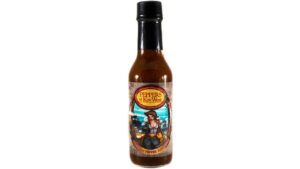
Habanero Pepper Hot Sauce
The fruity heat of habanero peppers pairs beautifully with regional meat specialties like carne asada, carnitas, birria, barbacoa, cochinita pibil, and cabrito while allowing the meat’s rich flavors to remain the focus.
Best With: Carne Asada • Carnitas • Barbacoa • Birria • Cochinita Pibil • Cabrito

Peppers of Key West 5 Pack
Featuring Cayenne, Jalapeño Garlic, Serrano, Habanero, Ghost Pepper, and Carolina Reaper hot sauces, this collection lets you explore everything from mild everyday flavor to bold heat while finding the perfect match for your favorite Mexican dishes.
Best For: Taco Nights • Regional Mexican Cooking • Family Gatherings • Flavor Exploration
Frequently Asked Questions:
What is masa?
Masa is fresh dough made from nixtamalized corn and serves as the foundation for tortillas, tamales, tlacoyos, memelas, sopes, gorditas, and many other traditional Mexican dishes.
What’s the difference between masa and masa harina?
Fresh masa is ready-to-use corn dough, while masa harina is dehydrated masa that’s mixed with water to recreate fresh masa for tortillas, tamales, and other corn-based dishes.
What is nixtamalization?
Nixtamalization is the ancient process of soaking and cooking corn in an alkaline solution before grinding it into masa. This process improves flavor, texture, and nutrition while making authentic corn tortillas possible.
What is a comal?
A comal is a flat clay or cast-iron cooking surface traditionally used to cook tortillas, roast vegetables, toast chiles, and prepare many authentic Mexican dishes.
What is a molcajete?
A molcajete is a volcanic stone mortar and pestle used to grind fresh chiles, tomatoes, herbs, garlic, and spices into rustic salsas and sauces.
What is queso fresco?
Queso fresco is a mild, crumbly fresh cheese commonly sprinkled over tacos, memelas, sopes, elote, tostadas, and many other street food favorites.
What is crema Mexicana?
Crema Mexicana is a rich cultured cream that’s thinner and tangier than sour cream, adding richness while balancing spicy dishes.
What are nopales?
Nopales are edible cactus paddles with a fresh, slightly tangy flavor that are commonly grilled or sautéed for tacos, salads, quesadillas, and other traditional Mexican dishes.
Can I find authentic Mexican ingredients in the United States?
Yes. Many grocery stores now carry masa harina, queso fresco, crema Mexicana, dried chiles, cilantro, tomatillos, and other authentic ingredients, while Hispanic markets often offer an even wider selection.
Why do the same ingredients appear in so many Mexican street foods?
Authentic Mexican cuisine relies on a relatively small group of exceptional ingredients that are combined in different ways to create hundreds of unique regional dishes. Local traditions, cooking techniques, and regional specialties transform the same building blocks into completely different flavors across Mexico.
Why are so many Mexican cooking terms in Spanish?
Many traditional ingredients, tools, and cooking techniques originated centuries ago and are still known by their original Spanish or Indigenous names. Learning these terms helps you better understand authentic Mexican recipes, restaurant menus, and regional street food traditions.
Continue Your Mexican Street Food Journey
🌮 See These Ingredients in Action
- Tlacoyos Explained: Mexico City’s Ancient Stuffed Corn Street Food
- Memelas Explained: Oaxaca’s Thick Corn Street Food Favorite
- Sopes Explained: Thick Corn Cakes Loaded with Street Food Flavor
- Gorditas Explained: Mexico’s Stuffed Corn Pockets Deserve More Love
- Tlayudas Explained: Oaxaca’s Giant Street Food Masterpiece
- Huaraches Explained: Mexico’s Giant Oval Street Food Loaded with Flavor
- Chalupas Explained: Puebla’s Traditional Street Food That’s Nothing Like Taco Bell
- Mexican Street Food Markets Explained: How to Order Like a Local and Find the Best Food Fast
🌶️ Expand Your Flavor Journey
- Best Mexican Street Taco Meats: The Ultimate Guide to Authentic Taco Flavor
- How to Build the Ultimate Taco Night Spread
- The Amazing Guide to Taco Sauce Pairing: Best Hot Sauce for Tacos, Meats, Fish & Street Taco Flavor Hacks
- Best Drinks for Taco Night: Margaritas, Mexican Beer & Sweet Pairings
🌶️Bookmark these companion guides as you continue exploring authentic Mexican cuisine.
- The Ultimate Guide to Mexican Street Food: The Flavor, Meat & Hot Sauce Breakdown
- Regional Mexican Street Food Guide: Famous Dishes from Every Corner of Mexico
- Mexican Street Tacos Explained: The Authentic Street Food That Started It All
- The History of Mexican Street Food: How Markets, Vendors and Family Recipes Built a Culinary Empire
- Mexican Street Food Markets Explained: How to Order Like a Local and Find the Best Food Fast
The ingredients, cooking terms, tools, and techniques you’ve learned throughout this guide reflect centuries of Indigenous knowledge, regional innovation, and family traditions that continue to shape authentic Mexican street food today.
Explore More Keywords: Mexican street food ingredients, authentic Mexican street food, authentic Mexican cuisine, traditional Mexican ingredients, Mexican cooking terms, Mexican culinary terms, Mexican food glossary, masa, fresh masa, masa harina, corn masa, nixtamal, nixtamalization, handmade tortillas, tortilla press, comal, molcajete, metate, queso fresco, Cotija cheese, Oaxaca cheese, crema Mexicana, asiento, nopales, cilantro, epazote, hoja santa, Mexican oregano, achiote, piloncillo, white onion, aguacate, lime, salsa roja, salsa verde, dried chiles, tomatillos, al pastor, trompo, regional Mexican food, Oaxaca ingredients, traditional Mexican cookware, authentic cooking techniques, Mexican market ingredients, Peppers of Key West hot sauce
