
Ultimate Thanksgiving Food Guide: Turkey, Side Dishes, Recipes & Holiday Planning

Thanksgiving is one of the few meals of the year when almost everyone arrives at the table with expectations. Someone wants the turkey carved exactly the way they remember it. Someone else is already looking for the stuffing. There may be a favorite sweet potato casserole that hasn’t changed in twenty years, a cranberry sauce that divides the family, and at least one person who believes Thanksgiving dinner isn’t complete without mashed potatoes and gravy.
Those traditions are part of what makes the holiday special. They also make Thanksgiving a surprisingly complicated meal to prepare. Unlike an ordinary dinner, where the main course usually receives most of the attention, Thanksgiving is a meal in which nearly every dish has its own history, expectations, and devoted fans.
A beautifully roasted turkey is important, but it doesn’t make a complete Thanksgiving dinner. The stuffing needs to be flavorful without becoming soggy. The mashed potatoes should be creamy and warm. The gravy needs enough depth to bring everything together, while the vegetables, cranberry sauce, and other accompaniments provide the contrasts that keep a rich holiday meal enjoyable from the first bite to the last.
And then there is the challenge of getting everything onto the table at roughly the same time.
Fortunately, preparing a memorable Thanksgiving dinner doesn’t require an enormous menu, expensive ingredients, or professional cooking equipment. It requires an understanding of how the different parts of the meal work together, a realistic plan for preparing them, and enough flexibility to accommodate the people gathered around your table.
There is also room for creativity within those familiar traditions. A little roasted chile can deepen the flavor of a savory seasoning blend. Pepper jelly can add a sweet and tangy finish to an appetizer or glaze. A touch of jalapeño can bring unexpected brightness to cranberry sauce. None of these additions needs to make the food particularly hot. Used thoughtfully, they simply create another layer of flavor.
The goal isn’t to reinvent Thanksgiving or turn every traditional recipe into something spicy. It’s to understand what makes these foods so satisfying, preserve the traditions people love, and discover a few ways to make the holiday meal even better.
Throughout this guide, we’ll explore the complete Thanksgiving table, from selecting and preparing the turkey to choosing side dishes, sauces, appetizers, desserts, and creative ways to use leftovers. Along the way, we’ll highlight recipes worth bringing to your own table, explain how to adapt familiar dishes, and share practical techniques that make holiday cooking more manageable.
We’ll also address the entertaining side of Thanksgiving: how much food to prepare, which dishes can be made ahead, how to manage cooking times, and how to build a menu that feels generous without becoming overwhelming.
Whether you’re hosting Thanksgiving for the first time or have been preparing the holiday meal for decades, the principles remain the same. Good planning creates room for good cooking, and good cooking creates more time to enjoy the people who came to share it.
Thanksgiving is just one of the occasions that brings people together around good food. For more seasonal recipes, holiday menus, entertaining inspiration, and ideas for celebrations throughout the year, explore our Holidays & Entertaining guide, where we bring together food traditions and practical ideas for making every gathering memorable.
Quick Guide: Planning a Better Thanksgiving Dinner
A successful Thanksgiving meal begins with a few essential decisions.
- Choose the centerpiece first. For a traditional dinner, that usually means turkey. Determine the size you need, allow sufficient thawing time, and plan the cooking schedule around it.
- Build a balanced menu. Include familiar favorites while combining savory, sweet, tangy, creamy, and crisp elements.
- Select sides with different textures. Mashed potatoes and stuffing are wonderful together, but roasted vegetables or a fresh salad provide welcome contrast.
- Use seasonings thoughtfully. Herbs, garlic, pepper, and carefully chosen sauces should complement the natural flavors of the food.
- Keep spicy additions flexible. Offer hot sauces, pepper jellies, or seasoned condiments separately when serving guests with different heat preferences.
- Prepare dishes ahead whenever possible. Cranberry sauce, desserts, certain casseroles, and many appetizer components can be made before Thanksgiving Day.
- Plan around oven space. A turkey occupies the oven for hours, so consider which dishes can be cooked earlier, reheated, or prepared on the stovetop.
- Make food safety part of the plan. Thaw poultry safely, verify doneness with a food thermometer, and refrigerate perishable leftovers promptly.
- Leave time for entertaining. A successful Thanksgiving isn’t measured by how many dishes you prepare, but by how well the meal comes together.
The most important principle is simple: you don’t need more food to create a better Thanksgiving dinner. You need the right combination of foods, prepared with care.
The Art of a Great Thanksgiving Dinner
A memorable Thanksgiving dinner is more than a collection of successful recipes. It’s a meal in which individual dishes complement one another, creating something more satisfying than any single item on the table.
Consider the foods that traditionally appear together: roasted turkey, buttery mashed potatoes, herb-filled stuffing, savory gravy, sweet potatoes, cranberry sauce, and green bean casserole. Each has a distinctive place in the holiday meal, and each brings something different to the plate. Yet many share similar characteristics. Turkey, potatoes, stuffing, and gravy lean toward savory richness. Casseroles are often creamy or soft. Sweet potatoes and glazed vegetables introduce sweetness, sometimes in generous amounts.
When these foods are prepared without considering the meal as a whole, the result can feel surprisingly repetitive. Everything may taste good individually, but the plate lacks contrast.
The solution isn’t to eliminate traditional favorites. It’s to understand what each dish contributes and make thoughtful choices about the flavors and textures surrounding it.
Cranberry sauce is one of the clearest examples. Its tartness cuts through the richness of roasted turkey, gravy, and stuffing, refreshing the palate between bites. A cranberry-orange relish can provide even more brightness, while a gently sweetened cooked cranberry sauce offers a softer contrast. Both have a place at Thanksgiving, but their value extends beyond being another colorful dish on the table. They help balance the meal.
The same principle applies to vegetables. A rich sweet potato casserole topped with brown sugar and pecans may be a beloved family tradition, but pairing it with fruit glazed carrots and another sweetened vegetable can make the meal unnecessarily sugary. Roasted Brussels sprouts, green beans with lemon, or winter squash seasoned with herbs provide a different experience. Their savory notes and, in the case of roasted vegetables, caramelized edges help offset the softer, sweeter elements.
This is one reason our Balsamic Roasted Delicata Squash recipe deserves a place in a Thanksgiving menu. Delicata squash develops a tender interior and lightly caramelized edges when roasted, while balsamic vinegar provides a sweet-tart contrast to its natural flavor. The result is a vegetable side that feels appropriate for autumn without relying on marshmallows, heavy cream, or excessive added sugar.
It also pairs particularly well with turkey and traditional stuffing. The squash contributes color and seasonal character, while its tangy finish helps balance the richer foods surrounding it.
Texture deserves just as much consideration as flavor when building a Thanksgiving menu. Mashed potatoes, stuffing, casseroles, and gravy are comforting partly because of their soft, rich consistency, but when nearly everything on the plate has a similar texture, even a beautifully prepared dinner can feel heavy. Crisp roasted vegetables, toasted nuts, fresh herbs, or a simple salad provide welcome variety. A small amount of crunch can make a remarkable difference. Toasted pecans add contrast to roasted squash, crispy onions brighten green beans, and a fresh apple slaw brings acidity and texture to a plate dominated by warm, cooked foods. None of these additions needs to be elaborate or unfamiliar. They simply give the meal more dimension.
Seasoning is another area where Thanksgiving rewards a thoughtful approach. Traditional holiday flavors rely heavily on sage, thyme, rosemary, parsley, garlic, onion, and black pepper. These ingredients work particularly well with poultry, potatoes, mushrooms, root vegetables, and savory bread-based dishes, and their familiarity is part of what makes Thanksgiving taste like Thanksgiving. But familiar doesn’t have to mean predictable. A little smoked paprika can deepen the flavor of roasted vegetables, garlic and black pepper can bring character to mashed potatoes, and a mild chile powder can add warmth to a turkey rub. Even a small amount of pepper jelly can introduce sweetness and gentle heat to a glaze without changing the character of the dish.
The key is making sure those additions support the primary ingredients rather than compete with them. A turkey seasoned with rosemary, thyme, garlic, and black pepper already has a strong savory foundation. Adding a little chile powder may give the seasoning more depth, but covering the bird in an aggressively spicy rub could overwhelm the delicate flavor of the meat and make it less appealing to guests who prefer traditional Thanksgiving food. The same restraint applies to sauces. A tangy hot sauce can be excellent with roasted turkey, especially when its acidity cuts through rich gravy or dark meat, but that doesn’t mean the entire turkey needs to be coated in it. Sometimes the better choice is to offer the sauce at the table, allowing guests to decide how much they want.
For a closer look at which sauces work best with traditional holiday foods, explore our Best Hot Sauces for Thanksgiving Dinner: What Pairs with Turkey & Sides guide. It covers flavorful pairings for roasted turkey, stuffing, mashed potatoes, gravy, and seasonal vegetables, with recommendations ranging from approachable cayenne and jalapeño garlic to fruit-forward sauces and hotter options.
Thanksgiving is particularly well suited to this approach because holiday gatherings often bring together people with very different tastes. Rather than preparing separate versions of every dish, a host can build the menu around well-seasoned, approachable flavors and offer a few complementary sauces and condiments. A classic cranberry sauce might sit alongside a jalapeño variation, traditional mashed potatoes can be served with a small dish of garlic-herb butter, and roasted turkey can be accompanied by gravy and a fruit-based glaze. These choices give guests room to personalize their plates while keeping the shared meal familiar and welcoming.

🌶️ Professor Pepper Says:
Thanksgiving isn’t a Scoville competition. The best seasoning makes the turkey taste more like turkey, the vegetables more like vegetables, and the entire meal more enjoyable. Heat is just one ingredient in that equation.
Building a Thanksgiving Menu That Works
Once you understand how the different parts of Thanksgiving dinner complement one another, the next challenge is turning those ideas into a menu that makes sense for your gathering. With so many appealing holiday recipes available, it’s easy to become overly ambitious. A new stuffing variation catches your attention, someone recommends a sweet potato casserole with a different topping, and an interesting cranberry relish or roasted vegetable dish seems too good to pass up. Before long, a dinner intended for eight people includes enough food to feed twenty, with several dishes requiring the oven at precisely the same time.
A more practical approach begins with the people you’re feeding rather than the recipes you’re considering. Think about how many guests will attend, whether anyone has dietary restrictions, which dishes are important family traditions, and how much help you’ll have in the kitchen. Consider whether guests are contributing food and whether dinner will be served in the early afternoon or evening. These details influence everything from the size of the turkey to the number of side dishes you’ll need, and they help prevent a generous holiday menu from becoming unnecessarily complicated.
For most gatherings, a traditional Thanksgiving dinner can be built around one main protein, a potato dish, stuffing or dressing, two or three vegetables, cranberry sauce, gravy, bread, and dessert. This provides a satisfying variety without requiring an overwhelming number of recipes. Additional dishes can certainly be included, particularly when they are part of a longstanding family tradition, but each should contribute something meaningful to the meal.
For a gathering of eight to ten guests, consider beginning with a modest cheese board featuring several cheeses, crackers, sliced apples, and a small bowl of pepper jelly. It gives guests something to enjoy while visiting without spoiling their appetites. A fruit-based pepper jelly is especially appealing alongside cream cheese, aged cheddar, or soft goat cheese, where its sweetness and gentle warmth complement the richness of the cheese.
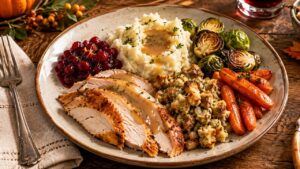
The main meal might feature an herb-roasted turkey accompanied by creamy garlic mashed potatoes, traditional sage-and-onion dressing, and homemade turkey gravy. Cranberry-orange sauce provides a bright, tart contrast, while roasted Brussels sprouts bring crisp edges and a slightly nutty flavor. Our Balsamic Roasted Delicata Squash would make an excellent addition, contributing seasonal color, tender roasted squash, and a tangy finish that balances the richer dishes. A traditional green bean casserole could complete the vegetable selection for guests who consider it an essential part of Thanksgiving. Warm dinner rolls round out the meal, followed by pumpkin pie and apple crisp for dessert.
This menu succeeds because it offers familiar favorites without requiring every dish to be elaborate. Just as importantly, it can be prepared in stages, allowing the cook to concentrate on the turkey and final preparations rather than attempting to make everything at once.
Practicality matters just as much as flavor when selecting recipes. A vegetable dish that requires only a few ingredients and can be prepared in advance may be more valuable on Thanksgiving Day than an elaborate casserole demanding constant attention. This is particularly important when working in a home kitchen, where oven space, stovetop burners, refrigerator capacity, and serving dishes are all limited resources. Planning around those limitations makes it easier to prepare food properly and serve everything at its best.
The oven deserves particular attention because a large turkey may occupy it for several hours. Casseroles, roasted vegetables, dinner rolls, and desserts may all require different temperatures and cooking times, making it difficult to prepare everything simultaneously. An effective Thanksgiving schedule separates dishes that must be cooked shortly before serving from those that can be prepared earlier. Cranberry sauce and many desserts are natural make-ahead choices, while certain casseroles can be assembled in advance and refrigerated until baking. Vegetables can be cleaned and trimmed, ingredients measured, and serving dishes organized well before guests arrive.
Mashed potatoes can also be prepared ahead and gently reheated with additional milk, cream, or butter to restore their consistency. Gravy can begin with a flavorful stock and be finished with turkey drippings once the bird is cooked. The turkey’s resting period provides another useful opportunity: while the roasted bird rests before carving, the oven becomes available for reheating casseroles, finishing vegetables, and warming dinner rolls. Using this time deliberately can make the final stages of Thanksgiving dinner considerably less stressful.
Serving order is another consideration that becomes easier with a little advance planning. Cold appetizers and cranberry sauce can be ready well before dinner, while covered mashed potatoes and certain casseroles can be kept warm for a limited period without sacrificing much quality. Crispy roasted vegetables are generally best finished closer to serving so they retain their texture. Gravy should be hot and ready when the turkey is carved, and bread can be warmed during the final minutes before everyone sits down.
Food safety should be incorporated into the schedule rather than treated as an afterthought. Turkey must be thawed safely and cooked to the appropriate internal temperature, verified with a food thermometer rather than appearance alone. Perishable foods should not remain at room temperature for more than two hours, and dishes prepared in advance must be refrigerated and reheated appropriately. These precautions are easier to manage when the cooking schedule is realistic and the host isn’t trying to finish every dish at the last minute.
Whether you’re hosting a crowded family gathering or an intimate Thanksgiving dinner, the most successful menu is one that fits your kitchen, your schedule, and the people you’re feeding. A little flexibility in the planning allows more attention to go toward the food itself—and more time to enjoy the company around your table.
A thoughtfully planned Thanksgiving menu creates the foundation for a memorable holiday, but the centerpiece still deserves special attention. For most families, that means a beautifully roasted turkey—properly selected, safely thawed, generously seasoned, and cooked with enough care to produce flavorful meat and golden skin. Getting those fundamentals right makes everything else on the Thanksgiving table easier to bring together.
The Thanksgiving Turkey: Choosing, Preparing & Roasting the Centerpiece
For many families, the Thanksgiving turkey is both the most anticipated dish and the greatest source of cooking anxiety. Roasting a whole bird is different from preparing an ordinary weeknight dinner, particularly when the turkey needs to feed a large gathering and arrive at the table alongside several hot side dishes. Fortunately, producing a flavorful, juicy turkey with golden-brown skin doesn’t require complicated techniques or an elaborate collection of ingredients. Success comes from choosing the right bird, allowing enough time for preparation, seasoning it thoughtfully, and knowing when it has reached a safe internal temperature.
The first decision is how much turkey to purchase. A useful guideline is approximately 1 to 1½ pounds of whole turkey per person, depending on the number of side dishes and how many leftovers you’d like. For eight guests, a 10- to 12-pound turkey may be sufficient, while a larger bird provides more meat for sandwiches, soups, and other meals after Thanksgiving. Remember that a whole turkey’s weight includes bones and other portions that won’t become carved servings, so the amount of usable meat is considerably less than the weight printed on the package.
Fresh and frozen turkeys can both produce excellent results. Fresh birds eliminate the lengthy thawing process but require careful attention to purchase dates and refrigeration. Frozen turkeys are convenient for advance shopping and often offer more choices in size. Neither is automatically superior; proper handling, seasoning, and cooking have a greater influence on the finished meal. If you’re buying a frozen turkey, however, thawing time must be part of your Thanksgiving schedule.
The safest and most convenient thawing method is in the refrigerator, allowing approximately 24 hours for every 4 to 5 pounds of turkey. A 12-pound bird generally requires about three days, while a larger turkey may need four or five days or longer. Keep the turkey in its wrapping on a rimmed tray or in a suitable container on the lowest refrigerator shelf to prevent juices from dripping onto other foods. If time is limited, a turkey can also be thawed in cold water while sealed in leakproof packaging, allowing approximately 30 minutes per pound and changing the water every 30 minutes. A turkey thawed by this method must be cooked immediately. Never thaw raw poultry on the kitchen counter, where the outer portions can reach unsafe temperatures while the center remains frozen.
Once thawed, remove the neck and giblets from the cavities, check for any remaining packaging, and pat the skin dry with paper towels. There is no need to rinse the turkey, since washing raw poultry can spread bacteria around the sink and surrounding work surfaces. Drying the skin helps encourage browning, while preparing the roasting pan, thermometer, and seasonings before handling the bird makes the process easier and more organized.
Traditional Thanksgiving seasonings provide an excellent foundation for roasted turkey. Sage, rosemary, thyme, garlic, onion, black pepper, and butter or olive oil complement the meat without overwhelming its natural flavor. Softened herb butter can be spread over the skin or carefully beneath it, while onion, lemon, and fresh herbs placed loosely in the cavity contribute aroma during roasting. Salt is particularly important because it enhances flavor throughout the meat, but the amount needed depends on the turkey itself.
Some commercially packaged turkeys are labeled as enhanced, self-basting, or containing an added salt solution. These birds may already be seasoned, so read the label before applying a heavy dry brine or salty rub. For an untreated turkey, seasoning with salt a day or two before roasting can improve flavor and encourage better browning. The important consideration is matching the seasoning method to the bird rather than assuming every turkey needs the same preparation.
There is also room to introduce a little personality into traditional Thanksgiving flavors. Smoked paprika can add color and gentle depth to an herb rub, while a small amount of mild chile powder contributes warmth without making the turkey particularly spicy. A fruit-based pepper jelly glaze can create a sweet-tangy finish, especially when balanced with a little vinegar or citrus. Glazes containing sugar are best applied toward the end of roasting to reduce the risk of burning. These variations can be delicious, but the turkey should remain the centerpiece rather than becoming overwhelmed by the seasoning.
For roasting, a sturdy pan fitted with a rack allows hot air to circulate around the bird while collecting flavorful drippings for gravy. An oven temperature of 325°F is a reliable choice for a traditional whole turkey. Cooking times depend on the bird’s weight, starting temperature, oven performance, and whether it is stuffed, so time estimates should be treated as planning guidelines rather than precise instructions.
As an example, an unstuffed 12- to 14-pound turkey may take approximately 3 to 3¾ hours at 325°F. Begin checking the temperature before the estimated cooking time has elapsed, particularly if your oven tends to run hot. The appearance of the skin and the color of the juices are not reliable indicators of doneness, and the small plastic pop-up timers included with some turkeys should not replace a properly used food thermometer.
According to USDA food-safety guidance, turkey must reach an internal temperature of 165°F, measured in the thickest part of the breast, the innermost part of the thigh, and the innermost part of the wing, without touching bone. If the turkey contains stuffing, the center of the stuffing must also reach 165°F. Preparing stuffing or dressing separately often makes it easier to cook both the turkey and the bread-based dish properly, while also simplifying the Thanksgiving oven schedule.
Because turkey breast and dark meat cook differently, checking more than one location is especially important. Breast meat is relatively lean and can dry out when overcooked, while the thighs and drumsticks contain more connective tissue and often benefit from additional cooking. If the skin begins to brown too quickly, loosely covering the affected area with aluminum foil can prevent excessive darkening while the meat finishes cooking.
Basting with pan juices or melted butter can add surface flavor and help develop an attractive appearance, but it isn’t essential for a moist turkey. Opening the oven repeatedly releases heat and can extend the cooking time. Proper seasoning, careful temperature monitoring, and avoiding unnecessary overcooking are more important than following a complicated basting routine.
🌶️ Professor Pepper Says:
The secret to a great Thanksgiving turkey isn’t an expensive roasting pan or a complicated seasoning blend. It’s knowing when the bird is actually done. A good meat thermometer will do more for your Thanksgiving dinner than guessing, poking, or relying on the little plastic pop-up timer.
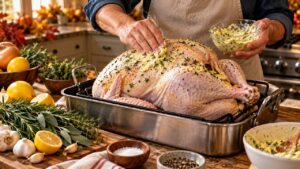
Once the turkey has reached its safe internal temperature, remove it from the oven and allow it to rest before carving. For many whole turkeys, approximately 20 to 30 minutes is a useful resting period, while especially large birds may benefit from a little longer. Resting makes the meat easier to carve and helps reduce the amount of juice lost when the turkey is sliced. It also provides an opportunity to finish the gravy, warm serving dishes, and complete any last-minute preparations.
Carving becomes easier when the turkey is moved to a stable cutting board and approached in sections. Begin by removing the legs, separating the drumsticks from the thighs at their natural joints, and then removing the wings. The breast meat can be sliced directly from the bird, although removing each breast half before cutting it across the grain often produces neater, more evenly sized slices. Arrange the white and dark meat together on a warm platter, keeping the skin intact where possible, and add a simple garnish of fresh herbs or citrus if desired.
Gravy is the traditional accompaniment, but a complementary sauce can provide an additional layer of flavor. A tart cranberry sauce, a lightly sweetened fruit glaze, or a carefully selected hot sauce can work particularly well with roasted turkey, especially the richer dark meat. Offering these separately allows guests to enjoy familiar Thanksgiving flavors while choosing their own finishing touches.
Ultimately, the best Thanksgiving turkey is one that has been prepared with care rather than unnecessary complexity. A properly sized bird, safe thawing, balanced seasoning, accurate temperature monitoring, and a little patience before carving are the fundamentals that matter most. When those elements come together, the turkey becomes a satisfying centerpiece that complements the rest of the holiday meal rather than demanding all of the cook’s attention.
And while the turkey may occupy the center of the table, the dishes surrounding it are what turn roasted poultry into Thanksgiving dinner. Savory stuffing, creamy potatoes, colorful vegetables, and sweet-tart cranberry sauce bring much of the variety and tradition that make the meal memorable.
Thanksgiving Side Dishes: The Traditions That Complete the Meal
A beautifully roasted turkey may occupy the center of the Thanksgiving table, but the dishes surrounding it are often the ones people feel most strongly about. Families have been known to debate the proper consistency of mashed potatoes, whether stuffing should be baked inside the turkey or served separately, and whether cranberry sauce belongs in a homemade serving bowl or should retain the unmistakable shape of its can. These preferences are part of Thanksgiving’s character. Side dishes connect the meal to family traditions, regional cooking styles, and recipes passed down through generations, sometimes with very little change.
The challenge is bringing those familiar dishes together in a way that creates an enjoyable meal without overwhelming the cook. Thanksgiving sides vary considerably in richness, texture, sweetness, and preparation time. Some, such as mashed potatoes and stuffing, provide the comforting foundation people expect. Others, including cranberry sauce, roasted vegetables, and fresh salads, offer welcome contrast. A successful selection doesn’t require reinventing traditional recipes, but it does benefit from understanding what each dish contributes to the table.
Thanksgiving Stuffing & Dressing: A Holiday Essential
Stuffing is among the most recognizable Thanksgiving traditions, and its appeal comes from the way ordinary ingredients develop extraordinary flavor when combined. Bread absorbs broth, butter, herbs, and the savory juices of sautéed onions and celery, producing a dish that can be soft and tender in the center with a lightly crisp surface. Sage and thyme remain classic choices, while additions such as mushrooms, sausage, apples, chestnuts, or dried cranberries reflect different family traditions.
The type of bread matters more than many cooks realize. Sturdy, slightly dried bread holds its shape and absorbs broth more predictably than fresh, soft sandwich bread, which can become pasty. French bread, sourdough, cornbread, and traditional white bread all produce slightly different results. A combination of varieties can introduce interesting texture while preserving the familiar character of the dish.
Although the words stuffing and dressing are sometimes used interchangeably, dressing generally refers to a bread mixture baked separately from the turkey. For a large Thanksgiving meal, baking it in its own dish offers several advantages. The cook can control moisture and browning more easily, prepare components in advance, and avoid the additional food-safety considerations involved in cooking stuffing inside a whole bird.
The key to good stuffing is adding enough broth to hydrate the bread without turning it into a heavy, uniform paste. Add liquid gradually, allowing the bread to absorb it before deciding whether more is needed. The mixture should feel moist and hold together loosely when pressed, but liquid should not pool at the bottom of the bowl.
For a traditional preparation, sauté onions and celery in butter until softened, combine them with dried bread cubes and herbs, and moisten the mixture with flavorful stock. Baking covered initially helps retain moisture, while removing the cover toward the end allows the top to develop the golden edges that many people consider the best part.
Whether your family prefers a soft, spoonable stuffing or a firmer dressing with a crisp surface, careful moisture control makes a greater difference than adding an unusually long list of ingredients.
Our Classic Herb Stuffing with Sage, Thyme & Sweet Hot Jalapeños builds on those familiar flavors with traditional holiday herbs and a little added pepper character. It’s a satisfying option for anyone who wants the comforting taste of homemade Thanksgiving stuffing with a subtle twist.
Thanksgiving Mashed Potatoes: Creamy, Buttery & Comforting
Mashed potatoes are another Thanksgiving essential precisely because they don’t need to be elaborate. Their purpose is to provide a soft, buttery accompaniment to roasted turkey, gravy, and the more assertively seasoned dishes on the table.
Russet potatoes produce a fluffy texture, while Yukon Gold potatoes offer a naturally creamy consistency and rich flavor. Some cooks combine the two for a result that falls somewhere in between. Whichever variety you choose, the preparation method is just as important as the potato itself.
Cut potatoes into reasonably uniform pieces and begin cooking them in cold, salted water. This helps the pieces cook evenly rather than leaving the centers firm while the outsides become excessively soft. Once the potatoes are completely tender, drain them thoroughly and allow excess moisture to evaporate before mashing.
A traditional hand masher or potato ricer produces a pleasant texture without excessively working the starch. By contrast, a blender or food processor can quickly turn potatoes gluey. Adding warm butter and milk or cream makes the mixture easier to combine while preserving its comforting consistency.
Traditional mashed potatoes are also remarkably adaptable. Roasted garlic can add depth without dominating the meal, while sour cream, cream cheese, or a little buttermilk can introduce a pleasant tang. Fresh chives or parsley provide color and a delicate finishing flavor.
These variations are worth considering, but there is no need to transform every familiar Thanksgiving dish into something unexpected. Sometimes the best mashed potatoes are simply well-seasoned potatoes, prepared carefully and served hot with good gravy.
For a version that stays true to those comforting traditions while introducing a little extra flavor, try our Classic Creamy Mashed Potatoes with Butter, Garlic & Sweet Hot Jalapeños. Butter and garlic provide the familiar richness, while Sweet Hot Jalapeños add another dimension without taking the dish too far from its traditional roots.
Thanksgiving Turkey Gravy: Bringing the Meal Together
Gravy ties Thanksgiving dinner together, connecting roasted turkey, mashed potatoes, stuffing, and other savory dishes with the rich flavor of the holiday’s centerpiece. A good turkey gravy deserves more attention than it sometimes receives, particularly because its texture and seasoning can influence how the entire plate tastes.
The most flavorful versions often begin with pan drippings, but the amount collected beneath a roasting turkey can vary considerably depending on the bird, roasting pan, and preparation method. Having turkey or chicken stock available ensures that the gravy does not depend entirely on what remains in the pan.
After separating excess fat from the drippings, prepare a roux using butter or reserved turkey fat and flour. Cook the mixture briefly, then gradually whisk in the drippings and additional stock until smooth. Gentle simmering gives the flour time to cook and allows the gravy to develop its final consistency.
A common mistake is seasoning gravy too aggressively before it has finished reducing. Pan drippings may already contain considerable salt, particularly if the turkey was dry-brined or purchased with an added seasoning solution. Begin with the natural flavors of the roasted bird, taste as the gravy develops, and adjust near the end.
Freshly ground black pepper, thyme, or sage can provide additional character, but the gravy should complement the turkey rather than compete with it. If the mixture becomes too thick, whisk in additional warm stock. If it seems thin, allow it to simmer a little longer. Straining produces a smoother finish, while leaving some of the browned pan solids can create a more rustic gravy with deeper roasted flavor.
Gravy can also be prepared partially ahead of time using stock, with the final turkey drippings added on Thanksgiving Day. This approach reduces last-minute pressure and provides a reliable backup if the roasting pan yields less liquid than expected.
Sweet Potato Casserole: A Thanksgiving Tradition with Many Variations
Sweet potatoes occupy an interesting place on the Thanksgiving table because they can move comfortably between savory and sweet preparations. Their natural sweetness complements roasted poultry, while their creamy texture makes them well suited to casseroles, mashed dishes, and roasted vegetable combinations.
Traditional sweet potato casserole often includes butter, brown sugar, cinnamon, and a topping of marshmallows or pecans. Some families prefer the nostalgic sweetness of toasted marshmallows, while others favor a crunchy pecan topping that introduces a welcome contrast to the soft potatoes underneath.
Neither approach is inherently better. The important consideration is how the casserole fits into the rest of the meal. If the menu already includes several sweet vegetables and a rich dessert selection, a less sugary sweet potato preparation may provide better balance. If marshmallow-topped sweet potatoes are an essential family tradition, there is no reason to abandon them simply to make the meal seem more sophisticated.
Our Sweet Potato Casserole with Pecan Streusel & Jalapeño Honey offers a flavorful variation on this Thanksgiving favorite. The pecan streusel adds a satisfying crunch, while jalapeño honey brings a gentle sweet heat that complements the natural richness of the potatoes.
Green Bean Casserole: Creamy Comfort & Crispy Contrast
Green bean casserole has become one of the most recognizable American Thanksgiving side dishes. Its combination of tender green beans, a creamy mushroom-based sauce, and crisp fried onions provides several textures in a single serving.
The familiar version made with canned soup and packaged fried onions remains popular because it is convenient, predictable, and closely associated with family gatherings. Homemade variations may use fresh green beans, sautéed mushrooms, cream, and a sauce prepared from scratch. Both approaches can produce a satisfying holiday dish.
The most important consideration is avoiding a casserole that becomes excessively soft or watery. Fresh green beans should be cooked until just tender before being combined with the sauce, while canned or frozen beans may require different preparation. Excess moisture can thin the sauce and reduce the contrast between the vegetables and the topping.
For the best texture, reserve at least some of the crispy onions until the final stage of baking. Adding them too early can cause them to absorb moisture and lose the crunch that makes the dish distinctive.
A little garlic, black pepper, or fresh thyme can deepen the savory flavor without changing its traditional character. If the rest of the Thanksgiving menu is especially rich, serving a smaller portion of green bean casserole alongside a lighter roasted vegetable can create a more balanced plate.
Roasted Thanksgiving Vegetables: Color, Texture & Seasonal Flavor
Roasted vegetables provide something especially valuable at Thanksgiving: contrast. When turkey, gravy, stuffing, and mashed potatoes dominate the plate, vegetables with caramelized edges, fresh herbs, and a little acidity help prevent the meal from feeling uniformly heavy.
Brussels sprouts, carrots, parsnips, winter squash, cauliflower, and other seasonal vegetables are excellent candidates for roasting. High oven heat encourages browning and develops the vegetables’ natural sweetness, while a modest amount of oil helps create appealing texture.
The key is giving the vegetables enough space on the baking sheet. When pieces are crowded together, they release moisture and steam rather than roast. Cutting them into reasonably uniform sizes also helps prevent some pieces from burning while others remain undercooked.
Seasoning can be as simple as olive oil, salt, and black pepper. Rosemary, thyme, garlic, smoked paprika, or a little balsamic vinegar can introduce additional character, depending on the vegetable and the surrounding menu.
Our Balsamic Roasted Delicata Squash is a particularly useful example of this approach. Delicata squash develops a tender interior and lightly caramelized edges when roasted, while balsamic vinegar contributes a sweet-tart contrast to its natural flavor.
The result is a seasonal vegetable side that feels appropriate for autumn without relying on marshmallows, heavy cream, or excessive added sugar. It pairs especially well with turkey and traditional stuffing, contributing color and a tangy finish that balances the richer dishes.
Cranberry Sauce: The Bright Flavor Thanksgiving Needs
Cranberry sauce is one of the smallest dishes on the Thanksgiving table, yet it plays an unusually important role. Cranberries are naturally tart, and their acidity provides a refreshing contrast to turkey, gravy, butter-rich potatoes, and savory stuffing.
The traditional preparation requires little more than fresh cranberries, sugar, and water, although orange juice, citrus zest, cinnamon, or other aromatics can add complexity. As the berries simmer, they burst and release natural pectin, allowing the sauce to thicken as it cools. The result can range from a loose, spoonable relish to a firmer, jam-like accompaniment, depending on the amount of liquid and cooking time.
For cooks who enjoy a slightly different cranberry sauce, the fruit is particularly well suited to subtle savory additions. A small amount of pepper sauce can introduce depth and gentle warmth without turning the dish into an aggressively spicy condiment.
The key is restraint. Cranberry should remain the dominant flavor, supported by sweetness and acidity, with any chile character appearing as a background note. This is especially effective when the sauce is served alongside roasted turkey or used later in leftover sandwiches.
Our Not Your Grandma’s Cranberry Sauce takes that approach by pairing traditional cranberries with a pepper sauce for a different interpretation of the familiar holiday condiment.
🌶️ Professor Pepper Says:
A few drops of the right hot sauce can transform ordinary cranberry sauce into something special. Start small, taste as you go, and let the cranberries remain the star. The goal is a little extra flavor and warmth—not a cranberry-flavored fire alarm.
Cranberry sauce is also one of the easiest Thanksgiving dishes to prepare ahead. Its flavor often develops nicely after refrigeration, and having it finished a day or two before the holiday frees up valuable time on Thanksgiving morning.
Thanksgiving Dinner Rolls, Biscuits & Traditional Breads
Cornbread, biscuits, and dinner rolls round out the traditional selection, providing something to enjoy with butter, gravy, or the last spoonful of cranberry sauce.
Soft yeast rolls are especially popular because they work with almost every dish on the table, while cornbread introduces a slightly different texture and flavor. In some households, biscuits are as essential as mashed potatoes; in others, a basket of warm rolls is all that’s needed.
Bread is also one of the easiest parts of the meal to overproduce. When guests are already enjoying turkey, stuffing, potatoes, vegetables, and casseroles, they may have less room for bread than expected. A modest basket of fresh, warm rolls often provides everything the table needs.
If baking bread from scratch, consider preparing the dough ahead when the recipe permits. Otherwise, good-quality purchased rolls can be warmed shortly before serving. Thanksgiving is not the day when every component must be homemade to make the meal meaningful.
Regional Thanksgiving Side Dishes & Family Traditions
Thanksgiving side dishes vary considerably across the United States, reflecting regional ingredients, cultural influences, and family histories.
Southern Thanksgiving tables may feature macaroni and cheese, collard greens, cornbread dressing, or candied yams. In parts of the Northeast, oyster stuffing and squash dishes have long histories, while wild rice, roasted root vegetables, and creamed corn preparations appear in other regions.
Family heritage may introduce entirely different favorites, from tamales and rice dishes to distinctive breads, vegetable casseroles, and seasoned legumes. These foods are not departures from Thanksgiving so much as reminders that the holiday has never belonged to a single menu.
The most meaningful side dishes are often those that connect the people around the table to a particular place, generation, or memory. A recipe doesn’t need to be complicated to earn its place, and it certainly doesn’t need to be replaced simply because something more fashionable appears online.
At the same time, adding one thoughtfully chosen vegetable or updating a preparation technique can make the meal more enjoyable without disturbing the traditions that matter.
Bringing Balance to Your Thanksgiving Side Dishes
With so many appealing choices, it’s easy to prepare more Thanksgiving sides than the meal really needs. A successful menu benefits from variety, but variety doesn’t necessarily mean quantity.
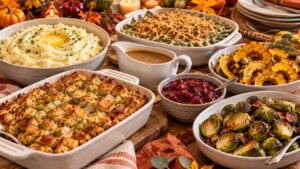
Consider how the dishes work together. Mashed potatoes, stuffing, gravy, and creamy casseroles provide richness and comfort. Cranberry sauce contributes acidity. Roasted vegetables offer caramelized flavor and firmer texture. A simple green salad or lightly dressed vegetable dish can add freshness when the rest of the menu is particularly heavy.
For most gatherings, selecting four to six complementary side dishes provides a satisfying range of flavors without creating unnecessary work. Family traditions may call for more, particularly when guests contribute their favorite recipes, but every addition should serve a purpose.
It’s also worth considering which dishes require the oven at the same time. Stuffing, casseroles, roasted vegetables, and dinner rolls can all compete for space while the turkey is cooking. Preparing certain components ahead, reheating dishes in stages, and reserving the final oven time for foods that benefit most from fresh baking can make Thanksgiving considerably easier.
Above all, remember that the goal isn’t to make every dish unusual or spicy. Familiar Thanksgiving flavors deserve to remain familiar. Herbs, garlic, thoughtful seasoning, and carefully chosen condiments can enhance them, while hot sauces and other stronger flavors can be offered separately for guests who want something different.
The best Thanksgiving side dishes don’t compete for attention. They complement one another, support the turkey, and create the combination of familiar tastes and textures that makes the holiday meal memorable.
Traditional Thanksgiving sides don’t have to be reinvented to bring something new to the table. A little jalapeño in mashed potatoes, gentle chile warmth in stuffing, or a sweet-and-spicy finish on roasted vegetables can add flavor without overshadowing the holiday favorites everyone expects. For more ideas, explore our Spicy Thanksgiving Side Dishes: Easy Recipes with a Little Heat guide, featuring practical pepper pairings, recipe suggestions, and ways to accommodate different tastes.
🌶️ Bring Thanksgiving Flavor to the Table: Peppers of Key West Favorites
Thanksgiving is built around familiar traditions, from golden roasted turkey and savory stuffing to creamy mashed potatoes, roasted vegetables, and homemade cranberry sauce. Those classic flavors deserve their place at the table, but the right sauces and seasonings can introduce something new without changing the dishes everyone looks forward to each year.
At Peppers of Key West, we believe great Thanksgiving cooking is about balancing flavors rather than simply adding heat. A savory seasoning can bring extra depth to roasted potatoes, a jalapeño garlic sauce can complement turkey and vegetables, and a touch of tropical sweetness can create an unexpected pairing with holiday leftovers. Offering a few sauces separately also lets guests personalize their plates without changing the traditional meal for everyone.
Whether you’re preparing Thanksgiving dinner, welcoming guests for appetizers, or finding creative ways to enjoy the leftovers, these Peppers of Key West favorites offer plenty of ways to bring a little more flavor to the holiday.
Thanksgiving Food & Product Pairing Quick Guide
- Roasted Turkey, Stuffing & Savory Gravy → Peppers of Key West Cayenne Pepper Hot Sauce
- Roasted Vegetables, Turkey Sandwiches & Holiday Appetizers → Peppers of Key West Jalapeño Garlic Sauce
- Turkey Sliders, Sweet-and-Savory Leftovers & Holiday Sandwiches → Peppers of Key West Goin’ Bananas Hot Sauce
- Roasted Potatoes, Savory Vegetable Dishes & Holiday Seasoning → Peppers of Key West Macho Beefy Steak Seasoning
- Thanksgiving Guests, Holiday Hosts & Hot Sauce Lovers → Peppers of Key West 5 Sauce Heat Collection
Best Peppers of Key West Products for Thanksgiving Cooking & Entertaining
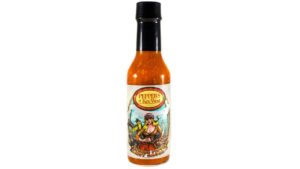
Peppers of Key West Cayenne Pepper Hot Sauce
🌶️🌶️ Approachable Heat
Turkey and gravy are a natural combination, but a little cayenne pepper sauce can bring another dimension to the meal. Our Cayenne Pepper Hot Sauce offers familiar chile pepper flavor that works well with roasted turkey, savory stuffing, mashed potatoes, and the hearty sandwiches that follow Thanksgiving dinner.
Rather than seasoning the entire turkey or gravy with hot sauce, offer a bottle at the table so guests can experiment with their own portions. It’s a simple way to introduce a little warmth while preserving the traditional flavors of the holiday.
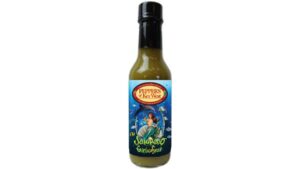
Peppers of Key West Jalapeño Garlic Sauce
🌶️🌶️ Mild Heat
Garlic and jalapeño are particularly versatile flavors for Thanksgiving because they complement both the main meal and the dishes served before it. Our Jalapeño Garlic Sauce brings savory garlic character and fresh pepper flavor to roasted vegetables, turkey, party dips, and leftover sandwiches.
Try a small amount mixed into a creamy appetizer dip or served alongside roasted Brussels sprouts and potatoes. Its approachable character makes it a useful option for guests who enjoy flavorful food but aren’t necessarily looking for extreme heat.
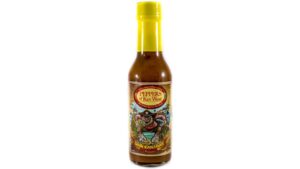
Peppers of Key West Goin’ Bananas Hot Sauce
🌶️ Sweet & Spicy
Thanksgiving may be rooted in traditional flavors, but sweet-and-savory combinations are already part of the meal. Cranberry sauce, roasted sweet potatoes, and glazed vegetables all demonstrate how fruit and natural sweetness can complement turkey and other savory dishes.
Our Goin’ Bananas Hot Sauce introduces a tropical variation on that idea, combining banana sweetness with chile pepper character. It can make an interesting finishing sauce for turkey sliders, leftover roasted poultry, or a sweet-and-savory sandwich assembled from Thanksgiving leftovers. For guests who enjoy experimenting with unexpected flavor combinations, it offers something different from a traditional cayenne or jalapeño sauce.
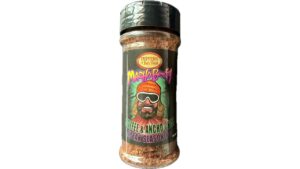
Peppers of Key West Macho Beefy Steak Seasoning
🌶️ Savory Seasoning
Not every Thanksgiving flavor enhancement needs to come from a bottle of hot sauce. A well-chosen dry seasoning can build savory depth during cooking, particularly in roasted vegetables and hearty side dishes.
Our Macho Beefy Steak Seasoning combines savory ingredients with coffee and ancho chile character, making it an interesting option for roasted potatoes, mushrooms, and other robust vegetable preparations. Its deeper flavor profile is best used thoughtfully, especially when a dish already contains sage, thyme, or other traditional Thanksgiving seasonings.
Start with a modest amount, taste, and adjust so the seasoning complements the vegetables rather than overpowering them.

Peppers of Key West 5 Sauce Heat Collection
🌶️ → 🌶️🌶️🌶️🌶️🌶️ Approachable to Extreme Heat
Thanksgiving is a wonderful opportunity to share familiar foods, but it can also be a chance to introduce family and friends to new flavors. Our Peppers of Key West 5 Sauce Heat Collection includes Cayenne, Jalapeño Garlic, Habanero, Ghost Pepper, and Carolina Reaper hot sauces, offering a progression from approachable everyday heat to serious chile pepper intensity.
Arrange the sauces separately from the main serving dishes and let guests explore at their own pace. Mild sauces can complement turkey, potatoes, and vegetables, while the hotter selections are best reserved for experienced pepper enthusiasts who understand their intensity.
The collection also makes a distinctive holiday gift for hosts, home cooks, and hot sauce lovers who enjoy experimenting with different peppers and heat levels.
GREAT THANKSGIVING FLAVOR ISN’T ABOUT MAKING EVERY DISH SPICY. IT’S ABOUT GIVING EVERYONE AT THE TABLE THE FREEDOM TO ENJOY THEIR FAVORITE HOLIDAY FOODS THEIR OWN WAY.
Thanksgiving Appetizers, Snacks & What to Serve Before Dinner
Thanksgiving dinner may be the main event, but the hours leading up to it are an important part of the holiday experience. Guests arrive at different times, conversations begin in the kitchen, football games play in the background, and someone inevitably asks when the turkey will be ready. A few thoughtfully chosen appetizers give everyone something to enjoy while the final preparations come together, helping create a welcoming atmosphere without turning the afternoon into an entirely separate meal.
The challenge is finding the right balance. Thanksgiving already includes a substantial collection of foods, often followed by several desserts, so a large assortment of rich appetizers can leave guests feeling full before dinner begins. Cheese-heavy dips, fried snacks, stuffed pastries, and elaborate charcuterie boards may all be delicious, but serving too many of them together can overwhelm the menu. The most successful Thanksgiving appetizers offer variety, are easy to enjoy while standing or socializing, and require little attention during the busiest period of cooking.
For a gathering of eight to ten people, two or three appetizers are generally sufficient when dinner will be served within a couple of hours of everyone’s arrival. One cold option, one warm option, and a simple snack such as seasoned nuts or olives provide enough choice without creating unnecessary work. If guests will be arriving throughout the afternoon or dinner is scheduled unusually late, a more generous selection may be appropriate. The important consideration is how long people will be waiting, not simply how many appetizer recipes look appealing.
Building a Thanksgiving Appetizer Spread That Makes Sense
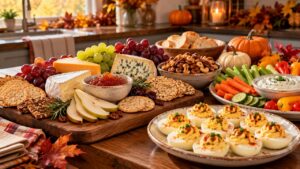
A good appetizer spread includes contrasting textures and flavors. Something crisp and fresh balances something warm and savory, while a mildly sweet or tangy element adds interest without duplicating the flavors of the main meal. Raw vegetables with a flavorful dip, a small cheese board, stuffed mushrooms, deviled eggs, and roasted nuts are all familiar choices that can fit comfortably into a Thanksgiving menu.
Cheese boards are especially convenient because they can be assembled largely in advance and adapted to the number of guests. A combination of one soft cheese, one firm cheese, and one more assertive variety provides a useful range without requiring an enormous assortment. Add crisp crackers, sliced apples or pears, grapes, and a small bowl of nuts for texture and seasonal character. Fig jam, pepper jelly, or another fruit-based condiment can provide a sweet contrast to salty cheese, but there is no need to include every possible accompaniment.
A modest amount of pepper jelly is particularly effective with cream cheese, goat cheese, or aged cheddar. The combination of sweetness, acidity, and gentle chile warmth creates a more interesting bite without requiring complicated preparation. For Thanksgiving, a fruity pepper jelly often feels more appropriate than an intensely hot sauce because it complements the autumn ingredients already on the table. Guests who enjoy more heat can always add it themselves.
Vegetable platters may seem ordinary, but they serve an important purpose when the main meal includes turkey, stuffing, potatoes, gravy, and casseroles. Crisp carrots, celery, cucumbers, sweet peppers, and radishes offer freshness and crunch that many traditional Thanksgiving foods lack. The difference between a forgettable vegetable tray and an appealing one often comes down to presentation and the quality of the dip. A homemade herb dip, whipped feta, hummus, or yogurt-based dressing can make familiar vegetables more inviting.
Deviled eggs are another dependable choice because they are easy to portion, familiar to most guests, and suitable for preparing ahead. Their creamy filling typically combines egg yolks, mayonnaise, mustard, and a little acidity from vinegar or pickle juice. Paprika remains a traditional garnish, although chopped chives, finely diced pickles, or a restrained amount of hot sauce can introduce additional flavor. The key is keeping the filling balanced so the eggs remain recognizable rather than becoming a vehicle for excessive seasoning.
Stuffed mushrooms offer a warmer alternative with a distinctly autumn character. Cremini or white button mushrooms can be filled with seasoned breadcrumbs, herbs, garlic, Parmesan, or sausage, then baked until tender and golden. Their earthy flavor pairs naturally with the sage, thyme, and roasted ingredients associated with Thanksgiving. They also have the advantage of being substantial enough to satisfy hungry guests without requiring large portions. The filling can often be prepared ahead, leaving only assembly or baking for the day of the gathering.
For another warm appetizer that fits naturally into a Thanksgiving menu, our Spicy Cranberry Meatballs with a Sweet & Fiery Holiday Glaze combine savory meatballs with the sweet-tart character of cranberries and a touch of chile warmth. They’re particularly appealing for holiday entertaining because they’re easy to serve while guests gather before dinner.
Seasonal Flavors That Belong Before Thanksgiving Dinner
Autumn ingredients can make even simple appetizers feel connected to the holiday. Apples, pears, cranberries, winter squash, pecans, walnuts, maple syrup, rosemary, and sage all bring familiar seasonal flavors to small bites. They can be incorporated into cheese boards, spreads, dips, or warm appetizers without requiring an entirely new menu.
For example, crostini topped with whipped goat cheese, thinly sliced pear, and toasted walnuts offers a balance of creamy, crisp, and slightly sweet flavors. A small amount of honey or pepper jelly can finish the appetizer without making it overly sweet. For something a little more elaborate, our Baked Brie with Bourbon Apples, Cherry-Pomegranate Glaze & Toasted Walnuts creates an inviting centerpiece for a small appetizer table. Serve it with sturdy crackers or sliced baguette, keeping portions modest so guests still have room for Thanksgiving dinner. Serve it with sturdy crackers or sliced baguette, and keep portions modest so guests still have an appetite for dinner.
Roasted nuts are among the easiest Thanksgiving snacks to prepare in advance. Pecans, almonds, walnuts, and cashews can be lightly coated with oil or butter and seasoned with rosemary, smoked paprika, cinnamon, black pepper, or a small amount of brown sugar. The most interesting combinations balance sweetness with savory seasoning rather than relying entirely on sugar. A little cayenne can add warmth, but it should support the toasted nut flavor instead of overwhelming it.
Spiced nuts also solve a practical entertaining problem: they can be prepared several days ahead, stored in an airtight container once fully cooled, and served without occupying valuable refrigerator or oven space on Thanksgiving Day. Small bowls placed in the living room or near the beverage station give early arrivals something to enjoy without requiring the host to stop cooking.
Cranberries can contribute to appetizers as well as the main meal. A cranberry-based spread served with cream cheese or goat cheese offers a colorful, tangy addition to crackers, while a cranberry salsa can provide a brighter alternative to heavier dips. The natural tartness of cranberries pairs well with orange zest, fresh herbs, and carefully measured sweetness. For guests who appreciate spicy foods, finely chopped jalapeño can add a fresh pepper flavor without making the appetizer excessively hot.
These kinds of appetizers provide an opportunity to introduce a little Peppers of Key West personality to the Thanksgiving table. A fruit-forward pepper jelly, a mild hot sauce blended into a dip, or a carefully seasoned bowl of nuts can add interest while remaining accessible to guests with different heat preferences. The goal is not to make every appetizer spicy. It is to use peppers and seasonings where they genuinely improve the flavor.
🌶️ Professor Pepper Says:
Thanksgiving appetizers should wake up your appetite, not wear it out. A little crunch, something tangy, and just enough heat to keep things interesting will do the job.
Planning Appetizers Around the Thanksgiving Cooking Schedule
The best Thanksgiving appetizers are not necessarily the most impressive recipes. They are the ones that fit comfortably into the day’s cooking schedule. A dish that requires constant stirring, last-minute frying, or precise oven timing may be delicious, but it can become an unnecessary complication when the turkey, stuffing, vegetables, and gravy all need attention.
Cold appetizers offer the greatest flexibility. Cheese can be portioned, vegetables washed and cut, dips prepared, and garnishes organized well before guests arrive. Many spreads and dips benefit from a little time in the refrigerator because their flavors have an opportunity to develop. However, items such as crackers, toasted bread, and delicate garnishes should generally be kept separate until serving to preserve their texture.
Warm appetizers require a little more planning. Stuffed mushrooms, baked cheese, or small savory pastries can work well if they are scheduled around the main meal rather than competing with it for oven space. One practical approach is to finish warm appetizers before the turkey enters its final cooking period, or to use an air fryer or toaster oven when appropriate. Another is to choose a recipe that can be prepared ahead and served at room temperature, provided it is handled and held safely.
Food safety becomes particularly important when appetizers are left out for guests to enjoy over several hours. Perishable foods such as cheese, deviled eggs, creamy dips, cooked meats, and seafood should not remain at room temperature for more than two hours, or one hour when temperatures exceed 90°F. Instead of placing an enormous platter on the table and leaving it there all afternoon, serve smaller portions and replenish them from the refrigerator as needed. Cold foods should be kept at 40°F or below, while foods intended to be held hot should remain at 140°F or above.
This smaller-batch approach also helps keep appetizers looking fresh. Vegetables stay crisp, cheese does not become overly soft, and dips are less likely to develop an unattractive surface. When guests arrive over an extended period, replenishing a modest spread is often more appealing than presenting everything at once.
The timing of the appetizers should also reflect when Thanksgiving dinner will be served. If the meal begins at one or two in the afternoon, a light selection of snacks may be all that is necessary. For a late-afternoon or evening dinner, guests may appreciate a more substantial appetizer spread, especially if they have traveled or skipped lunch. Even then, consider choosing foods with different textures and flavors rather than simply adding more rich dishes.
Thanksgiving Drinks and a Welcoming Beverage Station
Beverages are another part of Thanksgiving entertaining that benefit from advance planning. A self-service station with water, sparkling water, apple cider, and a few other choices allows guests to help themselves without repeatedly interrupting the cook. Glasses, napkins, ice, and any garnishes should be arranged nearby so the station is easy to use.
Apple cider is a particularly natural Thanksgiving beverage because its flavor fits the season and it can be served chilled or warm. Warm cider infused with cinnamon sticks, cloves, and orange slices creates an inviting aroma, while chilled sparkling cider provides a festive nonalcoholic option. Cranberry spritzers made with cranberry juice, sparkling water, and citrus offer another colorful choice that complements the holiday menu.
For gatherings that include wine, beer, or cocktails, providing equally appealing nonalcoholic beverages ensures that everyone has something enjoyable to drink. There is no need to build an elaborate drink menu. A few reliable choices, plenty of water, and a well-organized serving area are usually more useful than complicated cocktails requiring individual preparation.
One often-overlooked detail is the location of the beverage station. Placing drinks away from the primary cooking area encourages guests to gather somewhere other than directly in front of the stove, refrigerator, or kitchen sink. This small decision can make a surprisingly large difference in how smoothly the final hour of Thanksgiving preparation unfolds.
Ultimately, appetizers and beverages should help guests settle in and enjoy one another’s company while allowing the host to concentrate on the main meal. A welcoming Thanksgiving gathering does not require an overflowing appetizer table or a complicated cocktail program. A handful of well-chosen foods, something refreshing to drink, and enough advance preparation to avoid last-minute stress create the atmosphere most people remember.
With the turkey, side dishes, and pre-dinner menu planned, the next step is bringing everything together. Thanksgiving success depends on more than choosing good recipes; it requires deciding what can be prepared days ahead, which dishes need oven space, and how to coordinate the final hours so the entire meal reaches the table without unnecessary chaos.
Thanksgiving Make-Ahead Planning: Your Cooking Timeline for a Stress-Free Holiday
The difference between a relaxed Thanksgiving dinner and a stressful one often has very little to do with cooking ability. Even experienced home cooks can become overwhelmed when a turkey needs to come out of the oven, potatoes need mashing, gravy needs attention, and three casseroles are waiting for the same oven space. Thanksgiving brings together more dishes, ingredients, equipment, and competing cooking times than most families manage during an ordinary meal. Without a plan, even familiar recipes can become surprisingly difficult to coordinate.
Fortunately, Thanksgiving is also one of the easiest major holiday meals to prepare in stages. Cranberry sauce improves with time in the refrigerator, pie crusts can be made ahead, vegetables can be washed and trimmed, and many casseroles can be assembled before the holiday. The turkey itself requires attention to thawing, seasoning, and roasting, but much of the remaining work can be distributed across several days. The objective is not to cook everything early. It is to identify which preparations benefit from advance work and reserve Thanksgiving Day for the tasks that genuinely need to happen close to serving time.
A practical Thanksgiving cooking schedule begins with one decision: what time will dinner be served? Everything else should be planned backward from that target. A family serving Thanksgiving dinner at 2 p.m. will need a very different morning than a household gathering at 6 p.m. The size of the turkey, the number of oven-dependent sides, and whether guests are bringing dishes also influence the schedule. Once those details are established, the menu becomes a series of manageable tasks rather than a collection of recipes competing for attention.
One Week Before Thanksgiving: Finalize the Menu and Check Your Kitchen
About a week before Thanksgiving, the most valuable task is finalizing the menu. Decide which dishes are essential, which can be prepared ahead, and which family members or guests will contribute something. This is also the time to estimate quantities, review ingredient lists, and identify anything that requires advance ordering or a special trip to the grocery store. A written shopping list organized by produce, dairy, pantry ingredients, meat, and frozen foods can prevent the frustrating discovery that a critical ingredient was overlooked.
Pay particular attention to the turkey. A frozen turkey requires approximately 24 hours of refrigerator thawing for every four to five pounds, meaning a 16-pound bird may need four full days in the refrigerator. Larger birds can require nearly a week. The refrigerator should remain at 40°F or below, and the turkey should sit in a rimmed pan or tray on the lowest shelf to contain any leaking juices. Once fully thawed in the refrigerator, it can generally remain refrigerated for an additional one to two days before cooking. A turkey thawed using cold water or a microwave should be cooked immediately after thawing.
This is also a good time to check the kitchen equipment. Make sure the roasting pan is large enough for the turkey, the rack is available, the meat thermometer works, and there are enough casserole dishes, serving bowls, and utensils for the planned menu. A reliable food thermometer is especially important because turkey doneness should be determined by internal temperature rather than cooking time alone. The thickest part of the breast, the innermost thigh, and the innermost wing area should reach 165°F, avoiding contact between the thermometer probe and bone.
If the menu includes unfamiliar recipes, consider whether they deserve a test run before the holiday. Thanksgiving morning is rarely the ideal time to experiment with a new cooking technique, complicated pastry, or unfamiliar ingredient. A dish that looks simple in a photograph may require more preparation, refrigeration, or equipment than expected. Testing it ahead of time can reveal those details before they become problems.
Three to Four Days Before Thanksgiving: Start the Preparations That Hold Well
Several days before Thanksgiving, begin with foods that store well and do not depend on being freshly prepared. Cranberry sauce is one of the best examples. Its flavor has time to develop as it chills, and its naturally thick consistency makes it easy to store in a covered container. Prepare it according to the recipe, cool it promptly, and refrigerate it until serving. A homemade cranberry sauce prepared this far ahead removes one more saucepan from the Thanksgiving Day schedule.
Pie dough can also be made ahead and refrigerated or frozen according to the recipe. If the menu includes pumpkin pie, pecan pie, or apple pie, review their storage requirements and decide when each will be baked. Many pies can be prepared a day or two before Thanksgiving, although their ideal storage conditions vary. Pumpkin and other custard-based pies require refrigeration, while some fruit pies may be held differently depending on their ingredients and preparation.
Bread intended for stuffing can be cut into cubes and dried ahead of time. This is an especially useful task because properly dried bread absorbs broth and seasonings more evenly than fresh bread. Spread the cubes on baking sheets and dry them using a low oven, or follow the method specified in the stuffing recipe. Once completely cooled, store the dried bread in a clean, airtight container until it is time to assemble the dish.
Vegetables can also be prepared in stages. Wash and trim green beans, peel and cut carrots where appropriate, clean Brussels sprouts, and organize herbs. Some vegetables hold their texture better than others, so avoid cutting everything indiscriminately several days ahead. Potatoes, for example, are generally better peeled closer to cooking unless they will be properly submerged in cold water and refrigerated for a limited period. Delicate greens and freshly sliced fruit should usually wait until closer to serving.
This is also a convenient time to prepare seasoning blends, measure dry ingredients, and organize pantry items for individual recipes. If roasted vegetables require a mixture of herbs, pepper, salt, and other seasonings, combine the dry ingredients in advance and label the container. Having a dependable selection of Peppers of Key West seasonings available makes it easier to build flavor into roasted vegetables, savory sides, and other holiday dishes without searching through the spice cabinet during the final cooking rush.
Two Days Before Thanksgiving: Prepare Casseroles and Organize the Refrigerator
Two days before Thanksgiving is an excellent time to evaluate which casseroles can be prepared in advance. Some dishes can be fully baked, refrigerated, and reheated successfully, while others are better assembled ahead and baked on the holiday. Sweet potato casserole, for example, often lends itself to advance preparation, but a crunchy pecan topping or marshmallow finish may be best added shortly before the final bake. Green bean casserole can frequently be prepared in stages, with the crispy onion topping reserved until the end.
The most important consideration is how the recipe behaves after refrigeration. A casserole containing a creamy sauce may thicken as it chills, while a vegetable dish may release additional moisture. A topping that is crisp immediately after baking can become soft when stored overnight. Understanding those changes helps determine whether a dish should be fully cooked, partially prepared, or assembled just before baking.
Food safety matters when preparing dishes ahead. Cooked foods should be cooled promptly and refrigerated within two hours, using shallow containers when necessary to help them cool efficiently. Keep the refrigerator at 40°F or below and avoid filling it so tightly that cold air cannot circulate. When reheating previously cooked casseroles and other leftovers, bring them to an internal temperature of 165°F. For dishes assembled ahead but not yet cooked, follow the recipe’s cooking instructions and applicable safe internal temperatures.
If refrigerator space is limited, prioritize foods that genuinely need chilling. Shelf-stable ingredients, unopened pantry products, serving dishes, and dry seasonings should not occupy valuable refrigerator shelves. A refrigerator that is carefully organized two days before Thanksgiving is far easier to work with when the turkey, casseroles, desserts, and leftovers all need space.
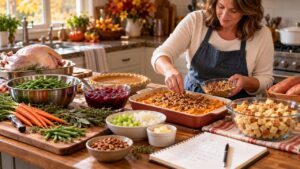
The Day Before Thanksgiving: Set Yourself Up for an Easier Morning
The day before Thanksgiving is when the benefits of planning become especially noticeable. By this point, most shopping should be finished, the turkey should be thawed or nearly thawed, and the menu should be settled. Focus on preparing dishes that will hold well overnight and completing the small organizational tasks that otherwise consume valuable time on Thanksgiving morning.
If the turkey will be dry-brined, follow the recipe’s timing and salt quantities, taking care to account for any salt already added to a commercially prepared bird. Some turkeys are sold pre-brined, enhanced, or injected with a seasoning solution, and adding a full dry brine to one of these birds may produce an overly salty result. For an unenhanced turkey, seasoning ahead can help distribute salt more evenly and promote flavorful meat. Keep the bird refrigerated throughout the process.
Prepare stuffing components such as sautéed onions, celery, herbs, and any cooked sausage, but store them safely and separately as appropriate until final assembly. This approach preserves control over moisture and texture while reducing the amount of chopping and stovetop cooking required the next day. If the stuffing recipe calls for eggs, broth, or other perishable ingredients, follow its specific make-ahead instructions rather than assuming the assembled mixture can sit overnight.
Desserts are another priority. Baking pies the day before Thanksgiving frees the oven for turkey and casseroles while allowing certain fillings time to set. Pumpkin pie, in particular, benefits from cooling and chilling before slicing. Cakes, cookies, and other desserts can often be prepared even earlier, depending on the recipe.
The dining area deserves attention as well. Set the table, arrange chairs, locate serving utensils, and decide where beverages and appetizers will be placed. Put out trivets or heat-resistant pads for hot dishes, check that there are enough glasses and napkins, and identify the serving bowls that correspond to each recipe. Small labels placed inside empty serving dishes can prevent confusion later, particularly when several people are helping in the kitchen.
Finally, write out the next day’s schedule. Include the turkey’s estimated roasting window, the time it should begin resting, when the oven will become available for side dishes, and which foods need last-minute attention. Keep the schedule somewhere visible rather than relying on memory. Even a simple handwritten list can be enormously helpful when multiple tasks begin overlapping.
A Sample Thanksgiving Day Cooking Timeline
For a Thanksgiving dinner planned around 4 p.m., the following schedule provides a practical starting point. This example assumes a 12- to 14-pound unstuffed turkey, several make-ahead side dishes, and one conventional oven. Adjust the timing based on your turkey’s size, your recipes, and the equipment available.
8:00 a.m. — Get Organized
Review the cooking schedule, prepare ingredients, arrange serving dishes, and confirm that the turkey is ready for roasting.
10:30 a.m. — Prepare the Turkey
Season the turkey, prepare the roasting pan, and preheat the oven to 325°F.
11:00 a.m. — Start Roasting the Turkey
Place the turkey in the oven and monitor its progress. Use a food thermometer to determine doneness rather than relying exclusively on the clock.
12:00 p.m. — Prepare Appetizers and Beverages
Arrange cold appetizers, organize the beverage station, and complete preparations that don’t require the oven.
1:00 p.m. — Prepare the Side Dishes
Begin stovetop preparations, organize casseroles for reheating, and finish any remaining vegetable preparation.
2:00–3:00 p.m. — Check the Turkey and Finish Roasting
Begin checking the turkey’s internal temperature as its estimated cooking window approaches. Remove it only when the breast, innermost thigh, and innermost wing reach 165°F.
3:00–3:30 p.m. — Rest the Turkey and Finish the Sides
Allow the turkey to rest while reheating prepared casseroles, finishing gravy, warming rolls, and completing the remaining side dishes.
3:30–4:00 p.m. — Carve, Serve, and Enjoy
Carve the turkey, transfer the finished dishes to serving bowls, and bring everything to the table.
This is an illustrative schedule, not a promise that every turkey will finish at a particular hour. A 12- to 14-pound unstuffed turkey roasted at 325°F often requires approximately three to three and three-quarter hours, but its internal temperature determines when it is done. If the bird finishes earlier than expected, the resting period provides some flexibility. If it needs more time, side dishes and appetizers can help accommodate the delay.
The turkey’s resting period is one of the most valuable opportunities in the entire Thanksgiving cooking schedule. Resting allows the meat to settle before carving and temporarily frees oven space for dishes that need reheating or finishing. The appropriate resting time depends on the turkey’s size and how it will be held, but roughly 20 to 30 minutes is a common starting point for many birds. Larger turkeys may benefit from a longer rest. Avoid leaving cooked turkey at room temperature for an extended period, and follow safe hot-holding practices if dinner is delayed.
During this window, casseroles can finish baking, vegetables can be roasted or reheated, gravy can be completed, and rolls can be warmed. Mashed potatoes are often best prepared close to serving, although they can be held warm carefully for a short period without sacrificing too much quality. Stirring in a little warm milk or butter just before serving can help restore their texture if they have thickened.
Managing Oven Space Without Sacrificing the Meal
Oven space is one of the most common Thanksgiving bottlenecks. A large roasting pan may occupy most of the available room for several hours, leaving little opportunity to bake stuffing, sweet potato casserole, green bean casserole, and roasted vegetables at their preferred temperatures. This is why the menu should be evaluated as a complete cooking plan rather than a series of independent recipes.
Start by identifying which dishes genuinely require the oven. Mashed potatoes and gravy can be prepared on the stovetop. Cranberry sauce is typically served chilled or at room temperature. Some vegetables can be sautéed, steamed, or cooked in an air fryer. Slow cookers may be useful for holding certain fully cooked foods at safe temperatures, provided the equipment is designed for that purpose and the food has already been heated appropriately. They should not be relied upon to slowly reheat refrigerated leftovers.
When multiple casseroles require similar oven temperatures, consider whether they can bake together without overcrowding the oven. Air needs room to circulate, and tightly packed dishes may cook unevenly or require additional time. Rotate pans if necessary and verify that foods reach their appropriate temperatures. Avoid assuming that a casserole is ready simply because its surface looks browned.
Another effective strategy is to roast vegetables ahead and reheat them briefly at a higher temperature after the turkey comes out. This works particularly well with sturdy vegetables such as carrots, Brussels sprouts, and winter squash. For the best texture, avoid fully overcooking them during the initial roasting. A short final heating period can restore warmth and encourage browning without turning the vegetables soft.
The key is to give the oven a clear schedule. Instead of hoping that every dish will somehow fit, decide which foods go in first, which can share space, and which should wait until the turkey is resting. That simple organization prevents many of the last-minute problems associated with holiday cooking.
Keeping Thanksgiving Dinner Warm and Ready to Serve
Even with a carefully planned schedule, not every Thanksgiving dish will finish at precisely the same moment. Some foods tolerate holding better than others. Gravy can often be kept warm over very low heat with occasional stirring, while mashed potatoes may be held in an appropriate covered vessel for a limited period. Casseroles generally retain heat well, but their toppings may soften if tightly covered for too long. Roasted vegetables are more sensitive because their crisp edges can disappear as they sit.
For safety, hot foods being held for service should remain at 140°F or above. A warm-looking dish is not necessarily being held at a safe temperature, so a food thermometer is useful for more than checking the turkey. If foods cannot be held hot or cold safely, serve them promptly and refrigerate leftovers within two hours.
Avoid the temptation to keep every dish in a hot oven indefinitely. Extended heating can dry out turkey, overcook vegetables, and change the texture of casseroles. Instead, prioritize the dishes that benefit most from being freshly finished and use covered serving containers or appropriate warming equipment for those that tolerate holding.
Serving family-style can also simplify the final minutes. Arrange the turkey, sides, gravy, and bread so guests can move through the meal comfortably without crowding the kitchen. If the dining table is too small to accommodate every serving dish, a nearby buffet or sideboard may work better. There is no rule that says all Thanksgiving food must fit on one table.
🌶️ Professor Pepper Says:
The secret to Thanksgiving isn’t cooking faster. It’s knowing what doesn’t need to be cooked at the last minute. Give yourself a schedule, leave room for surprises, and let the turkey rest while you finish the sides.
When Thanksgiving Plans Change
No matter how carefully the meal is organized, something may take longer than expected. A turkey may roast more slowly than the chart suggests, guests may arrive early, or a casserole may need another fifteen minutes in the oven. These situations are normal, and a flexible schedule is far more useful than one that assumes everything will happen at an exact minute.
If the turkey is taking longer than expected, continue cooking until it reaches a safe internal temperature rather than raising the oven temperature dramatically or removing it prematurely. Use the additional time to finish cold dishes, organize serving utensils, and offer guests another small appetizer if necessary. If the turkey finishes early, manage the resting and holding period safely while completing the remaining dishes.
When a side dish falls behind, consider whether it truly needs to be served at the same moment as everything else. Warm rolls can arrive a few minutes after dinner begins, and an additional vegetable dish may be less important than getting the turkey, potatoes, stuffing, and gravy onto the table. A successful Thanksgiving meal does not depend on every serving bowl appearing simultaneously.
It is also worth remembering that guests are generally far more interested in enjoying the holiday than evaluating the precision of the cooking schedule. A meal served fifteen minutes later than planned is rarely a disaster. A host who has enough time to sit down, enjoy the food, and participate in the conversation has accomplished something far more valuable than perfect timing.
With the cooking schedule under control, Thanksgiving becomes easier to enjoy as a complete gathering rather than simply a complicated meal. The remaining details—serving arrangements, accommodating different guests, storing leftovers, and making the most of the food in the days that follow—are where thoughtful holiday planning continues to pay off.
Thanksgiving Hosting, Serving & Entertaining: Making Everyone Feel Welcome
A memorable Thanksgiving gathering is about more than a perfectly roasted turkey or an impressive collection of side dishes. It is the experience of arriving somewhere welcoming, sharing familiar foods, reconnecting with family and friends, and enjoying a meal without feeling rushed. The cooking may demand most of the preparation, but thoughtful hosting is what brings the entire celebration together.
For many households, Thanksgiving includes a mixture of generations, personalities, traditions, and expectations. Some guests look forward to watching football, others want to help in the kitchen, and a few may be visiting for the first time. Children may have different appetites and attention spans than adults, while relatives traveling long distances may arrive tired or hungry. A comfortable gathering makes room for these differences rather than expecting everyone to celebrate in exactly the same way.
The best hosts understand that hospitality does not require perfection. A beautiful table is enjoyable, but it matters less than making sure guests have somewhere comfortable to sit. An elaborate menu can be impressive, but familiar dishes prepared with care are often more meaningful. Even small gestures, such as remembering a guest’s dietary needs, providing appealing nonalcoholic beverages, or making introductions between people who have never met, can contribute more to the holiday than expensive decorations or complicated entertaining plans.
Family-Style Thanksgiving Dinner or a Holiday Buffet?
One of the first decisions is how the meal will be served. Family-style dining, with platters and serving bowls passed around the table, creates a traditional, communal experience. Everyone remains seated, conversations continue naturally, and guests can choose their preferred portions as dishes circulate. This arrangement works particularly well for smaller gatherings when the table has enough space for the food and everyone can comfortably reach the serving dishes.
The limitation is space. A Thanksgiving meal with turkey, stuffing, mashed potatoes, gravy, sweet potatoes, vegetables, cranberry sauce, and rolls can require an enormous amount of table surface. Large serving bowls may crowd place settings, and passing heavy casseroles around a full table can become awkward. If the table is small or the gathering includes guests with limited mobility, a buffet may be more practical.
Buffet-style service allows the food to be arranged on a kitchen island, sideboard, or separate serving table. Guests can select their preferred dishes and portion sizes before returning to their seats, leaving the dining table open for conversation, decorations, and beverages. This approach is particularly useful when serving a larger group or when the menu includes more dishes than can comfortably fit on the table.
A well-organized buffet should follow the natural order in which guests build their plates. Begin with dinner plates and utensils, followed by turkey and the most substantial sides. Place gravy near the turkey and potatoes, with cranberry sauce, vegetables, and rolls farther along the serving area. Keep beverages at a separate station when possible so guests are not trying to pour drinks while others are reaching for food.
Neither serving style is inherently better. The right choice depends on the number of guests, available space, and the atmosphere you want to create. Some families even combine the two approaches, serving the turkey and major sides from a buffet while keeping bread, cranberry sauce, and condiments on the dining table. The most important consideration is making it easy for guests to enjoy their food without crowding, confusion, or unnecessary interruptions.
Setting a Thanksgiving Table That Feels Inviting
A welcoming Thanksgiving table does not need to resemble a formal holiday magazine photograph. Seasonal colors, comfortable place settings, and a few thoughtful decorative elements can create an attractive atmosphere without competing with the food. Autumn leaves, small pumpkins, simple greenery, and warm-toned linens are all appropriate, but decorations should remain low enough that guests can see and speak to one another across the table.
Start with the practical essentials: enough seating, clean dinnerware, glasses, napkins, and appropriate utensils. If children will be attending, consider whether they need smaller plates, spill-resistant cups, or seating arrangements that make the meal easier for them. Guests with mobility limitations may benefit from chairs with supportive backs, clear walking paths, and seating that does not require squeezing around furniture.
Lighting also influences the atmosphere. Natural daylight is ideal for an early Thanksgiving dinner, while warm, comfortable lighting works well for evening gatherings. Candles can add a traditional touch, but they should be positioned safely away from decorations, children, and serving dishes. Battery-operated candles provide a practical alternative when open flames would be inconvenient.
If the meal includes numerous dishes, consider using small, clearly written labels to identify foods, especially when guests may be unfamiliar with certain preparations. This can be helpful for distinguishing a spicy side dish from a mild one or identifying dishes containing nuts, dairy, or other common allergens. A label is not a substitute for accurate ingredient information, but it can make guests more comfortable asking questions and choosing what to eat.

Accommodating Dietary Needs Without Preparing Three Different Dinners
Thanksgiving menus can become complicated when guests have different dietary preferences, allergies, or food restrictions. One person may avoid gluten, another may be vegetarian, and someone else may need to limit dairy or sodium. These considerations can feel intimidating when preparing a traditional meal, but accommodating guests does not necessarily require cooking entirely separate versions of every dish.
The simplest approach is to ask about dietary needs before finalizing the menu. Knowing that a guest is vegetarian or has a serious food allergy several days in advance is far easier to manage than discovering it when everyone is sitting down. It also allows the host to determine which traditional dishes are already suitable, which can be adjusted, and whether an additional main dish would be appropriate.
Many Thanksgiving sides can be adapted without losing their familiar character. Roasted vegetables can be prepared with olive oil instead of butter, while mashed potatoes may be made with an appropriate nondairy alternative. Stuffing can be prepared with vegetable broth, and gluten-free bread may work when the recipe is designed or tested for it. However, ingredient substitutions should be made thoughtfully, since changing the type of bread, fat, or liquid can affect moisture and texture.
For vegetarian guests, a plate containing only potatoes, cranberry sauce, and vegetables may not feel like a complete holiday dinner. A substantial vegetable-centered main dish, such as stuffed squash, a lentil-based preparation, or a savory mushroom dish, can make the meal more satisfying. It also demonstrates that the guest’s needs were considered as part of the menu rather than treated as an inconvenience.
Food allergies require particular care. Nuts, dairy, eggs, wheat, and other allergens can appear in unexpected places, including casserole toppings, gravies, dressings, and prepared sauces. Read ingredient labels, use clean utensils, and avoid cross-contact during preparation and serving. For guests with serious allergies, communicate directly about ingredients and preparation methods rather than making assumptions about what is safe.
Heat preference is another consideration, especially when serving guests who enjoy different levels of spice. A Thanksgiving table does not need to be uniformly mild or spicy. Keeping traditional dishes approachable while offering hot sauces, pepper jellies, and seasonings separately allows guests to customize their own plates without changing the meal for everyone.
Making Thanksgiving Comfortable for Children and Older Guests
A multigenerational Thanksgiving gathering often works best when the host considers how different guests will experience the day. Young children may not want to sit through a long formal meal, while older relatives may appreciate a quieter place to talk away from the busiest part of the house. These needs do not require elaborate arrangements, but they are worth considering before everyone arrives.
For children, familiar foods and manageable portions can make Thanksgiving dinner more enjoyable. A small serving of turkey, mashed potatoes, rolls, and a favorite vegetable may be more appealing than an enormous plate containing every dish on the table. Allowing children to try unfamiliar foods without pressure can also help make the holiday meal a positive experience.
Simple activities can provide entertainment during the hours before dinner. Coloring pages, puzzles, board games, or a designated space for age-appropriate activities may help children remain occupied while adults finish preparing the meal. Older children can sometimes participate by folding napkins, arranging place settings, or helping with safe, age-appropriate kitchen tasks.
Older guests may appreciate comfortable seating, accessible bathrooms, and a dining arrangement that does not require carrying heavy plates across a crowded room. If a buffet is being used, offering to prepare a plate for someone with limited mobility is a thoughtful gesture. Keeping walking areas clear of bags, cords, and decorations also makes the gathering safer and more comfortable for everyone.
These details rarely become the centerpiece of Thanksgiving memories, but they contribute to an atmosphere in which guests feel genuinely welcome.
Thanksgiving Traditions That Bring People Together
Food may be the reason everyone gathers around the table, but Thanksgiving traditions often provide the moments people remember years later. Some families begin the meal by sharing something they are grateful for. Others have a tradition of watching a parade, playing football, taking a walk after dinner, or preparing a particular recipe together.
For millions of Americans, Thanksgiving also means football. Watching the Dallas Cowboys play on Thanksgiving Day has been a holiday tradition since 1966, bringing generations of fans together around the television before or after the family meal. The Detroit Lions have an even longer Thanksgiving football history, dating back to 1934. Whether everyone is cheering for the same team, arguing over a questionable call, or simply enjoying the game in the background, Thanksgiving football has become part of the holiday atmosphere in countless households. For some families, planning dinner around kickoff is almost as important as deciding when the turkey goes into the oven.
There is no need to manufacture elaborate activities simply because it is a holiday. The most meaningful traditions are often the ones that develop naturally and reflect the people participating. A familiar family recipe, a favorite serving platter, or a story about Thanksgivings from years past can carry more emotional significance than an elaborate new activity.
Inviting guests to contribute can also make the gathering more personal. Someone might bring a dessert associated with their childhood, share a regional Thanksgiving dish, or help prepare a recipe passed down through the family. These contributions introduce variety while giving guests a sense of connection to the meal.
For families with changing circumstances, Thanksgiving traditions can evolve. New relatives join the gathering, children grow older, and the people responsible for cooking may change from one generation to the next. Preserving meaningful traditions while making room for new ones allows the holiday to remain familiar without becoming rigid.
The same flexibility applies to the menu. A traditional turkey dinner can comfortably share the table with dishes influenced by different cultures, regions, and family histories. Thanksgiving food has never been entirely uniform, and some of the most memorable meals combine familiar holiday favorites with recipes that reflect the people gathered to enjoy them.
Creating a Relaxed Atmosphere Without Doing Everything Yourself
One of the most common hosting mistakes is assuming that the person preparing Thanksgiving dinner must also manage every other detail of the gathering. Cooking the turkey, finishing the sides, answering the door, preparing drinks, setting the table, and cleaning the kitchen are all manageable tasks individually. Attempting to handle them simultaneously can make the holiday unnecessarily exhausting.
Delegating responsibilities is not a sign of poor hosting. It is often what allows the gathering to run smoothly. Guests who offer to help can be asked to fill water glasses, arrange appetizers, carry serving dishes, or assist with cleanup. Assigning clear, simple tasks is generally more effective than having several people standing in the kitchen asking what they should do.
It is also helpful to establish a comfortable area where guests can gather without interrupting cooking. A living room, dining area, or covered outdoor space may provide a natural location for conversation and appetizers. Keeping the kitchen relatively clear during the final hour allows the cook to move safely between hot pans, appliances, and countertops.
Music, lighting, and room temperature can contribute to the atmosphere, but they should remain secondary to the people and the meal. A comfortable Thanksgiving gathering does not need constant entertainment or an elaborate schedule. In many cases, the best moments occur when guests have enough time and space to enjoy one another’s company.
Finally, remember that the host deserves to participate in Thanksgiving, too. The purpose of preparing a holiday meal is not to spend the entire gathering isolated in the kitchen. A thoughtful menu, realistic cooking timeline, and willingness to accept help can create enough flexibility for everyone—including the person who cooked—to sit down and enjoy the celebration.
When the meal is finished and guests begin thinking about dessert, another important part of Thanksgiving begins. Leftovers are almost as closely associated with the holiday as the original dinner, and knowing how to store, reheat, and transform them safely can extend the enjoyment of the meal well beyond Thursday afternoon.
Thanksgiving Leftovers: Safe Storage, Reheating & Delicious Ways to Use Everything
For many families, Thanksgiving dinner is only the beginning. The following day brings turkey sandwiches, reheated stuffing, leftover mashed potatoes, and the satisfying discovery that some holiday dishes taste even better after their flavors have had time to develop. A well-stocked refrigerator can provide several days of easy meals, and with a little creativity, those familiar Thanksgiving ingredients can become entirely different dishes.
The challenge is knowing how to store everything safely, preserve the best possible texture, and avoid serving the same plate of leftovers repeatedly. Roasted turkey can become dry when reheated, mashed potatoes may stiffen in the refrigerator, and crispy stuffing can lose its texture. Fortunately, a few practical techniques can help leftovers remain enjoyable long after the original holiday meal.
Leftovers also offer an opportunity to experiment with flavors that might not have belonged in the traditional Thanksgiving dinner. A classic turkey sandwich can take on a different personality with jalapeño garlic sauce, while cranberry sauce can become a tangy sandwich spread or a glaze for roasted meats. The familiar ingredients remain, but the combinations can be entirely new.
How to Store Thanksgiving Leftovers Safely
Proper storage begins before the Thanksgiving meal is completely finished. Cooked turkey, stuffing, gravy, casseroles, and other perishable foods should be refrigerated within two hours of cooking or removal from safe hot holding. If the surrounding temperature is above 90°F, that window decreases to one hour. Food should not be left on the table for an entire afternoon simply because guests are still visiting.
Large portions of hot food cool more efficiently when divided into smaller, shallow containers. Instead of placing an entire turkey carcass or a deep casserole dish in the refrigerator, remove the remaining turkey meat from the bones and portion it into manageable amounts. Store stuffing, potatoes, vegetables, and gravy separately when possible. This not only helps foods cool safely but also makes reheating individual dishes easier.
Refrigerated Thanksgiving leftovers should generally be eaten within three to four days. If you don’t expect to use them within that period, freezing is a practical alternative. Turkey meat, stuffing, gravy, and many cooked casseroles can be frozen successfully, although their texture may change somewhat after thawing. Label containers with the contents and date so there is no confusion later.
Keep the refrigerator at 40°F or below and the freezer at 0°F or below. Avoid packing containers so tightly that cold air cannot circulate. If a dish has remained at room temperature beyond the recommended safety window, reheating it later does not necessarily make it safe. When in doubt about how long a perishable food has been left out, discarding it is the safer choice.
Reheating Turkey Without Drying It Out
Turkey is often the most abundant Thanksgiving leftover, but it is also one of the easiest foods to dry out during reheating. The breast meat is particularly sensitive because it contains less fat than the darker portions. Reheating sliced turkey in a hot, uncovered oven can quickly remove moisture, leaving meat that tastes very different from the freshly roasted bird.
For the best results, place sliced turkey in a shallow baking dish with a small amount of turkey stock, chicken broth, or reserved cooking juices. Cover the dish and heat gently until the meat reaches an internal temperature of 165°F. The added moisture and covered environment help reduce drying, while the thermometer ensures the turkey is thoroughly reheated.
Dark meat is often more forgiving and works particularly well in soups, stews, tacos, and casseroles. Shredded turkey can be incorporated into dishes that include broth, sauce, or other moisture-rich ingredients. This makes it especially useful when the remaining meat is no longer ideal for serving in traditional slices.
The microwave is convenient for individual portions, but uneven heating can create hot and cold spots. Arrange turkey in a relatively even layer, add a little moisture, cover appropriately, and stir or rearrange the food when possible. Allow it to stand briefly after heating, then check that the thickest portions have reached 165°F.
The Thanksgiving Turkey Sandwich: A Holiday Tradition of Its Own
Few Thanksgiving leftovers are as beloved as the turkey sandwich. It requires little preparation, offers endless opportunities for customization, and brings several holiday flavors together in a form that can be enjoyed without setting the entire dinner table again.
The classic version begins with sliced roasted turkey on sturdy bread, often accompanied by mayonnaise, cranberry sauce, and perhaps a little leftover stuffing. Some families prefer soft white sandwich bread, while others reach for sourdough, toasted rye, or leftover dinner rolls. The bread matters because it needs to support the moist ingredients without falling apart.
Cranberry sauce provides a particularly effective contrast to savory turkey. Its tartness cuts through the richness of mayonnaise, gravy, and stuffing, while its natural sweetness complements the roasted meat. A thin layer is usually sufficient; adding too much can overwhelm the sandwich and make the bread soggy.
For a more flavorful variation, mix a small amount of Peppers of Key West Jalapeño Garlic Sauce into mayonnaise before spreading it on the bread. The garlic adds savory depth, while the jalapeño provides a gentle pepper character that works well with turkey. Guests who prefer a more traditional sandwich can simply leave the sauce out.
A toasted turkey sandwich with melted cheese is another excellent option. Swiss, provolone, cheddar, or Monterey Jack can complement the meat, depending on the other ingredients. Add cranberry sauce after heating if you want to preserve its brighter fruit flavor, or include it during toasting for a warmer, sweeter result.
For an especially hearty sandwich, a modest layer of stuffing can turn the leftovers into something resembling Thanksgiving dinner between two slices of bread. The key is restraint. Too much stuffing, gravy, and cranberry sauce can create a sandwich that is difficult to eat. A balance of turkey, bread, moisture, and contrasting flavors produces a more satisfying result.
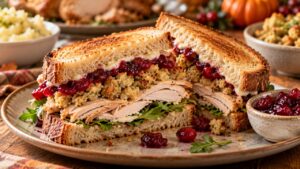
Creative Ways to Turn Leftover Turkey Into New Meals
Turkey is remarkably versatile because its relatively mild flavor adapts to many different cuisines. Once removed from the bones and stored properly, it can replace cooked chicken in numerous recipes, particularly soups, casseroles, tacos, salads, and sandwiches. The best results generally come from adding turkey near the end of cooking, allowing it to heat thoroughly without spending unnecessary time in a hot pan or simmering liquid.
Turkey soup is one of the most practical uses for leftover meat. A broth made with vegetables, herbs, and noodles or rice creates a comforting meal that feels different from the original Thanksgiving dinner. Carrots, celery, onions, and garlic provide a familiar foundation, while thyme and parsley complement the roasted turkey. If using the turkey carcass to prepare stock, handle and refrigerate it safely, and strain the finished broth before adding the remaining ingredients.
Turkey chili provides a more substantial departure from traditional holiday flavors. Shredded turkey can be combined with beans, tomatoes, onions, and chile seasonings for a hearty meal. Because the meat is already cooked, it generally needs only enough simmering time to absorb the flavors and reach a safe serving temperature. A little cayenne or another appropriate pepper sauce can add warmth without overwhelming the other ingredients. For a complete recipe that puts leftover holiday turkey to work, try our Thanksgiving Leftover Turkey Chili.
Turkey tacos and quesadillas are equally useful when the family is ready for something completely different. Warm shredded turkey with cumin, garlic, and a little chile seasoning, then serve it in tortillas with cabbage, cheese, salsa, or other favorite toppings. The meat can also be folded into a quesadilla with melted cheese and vegetables. These preparations are particularly effective because the seasonings and toppings introduce flavors that are distinct from the original holiday meal.
Leftovers can even become an entirely different kind of comfort food. Our Thanksgiving Leftover Pizza brings together turkey, stuffing, mashed potatoes, cranberry relish, and gravy in a creative way to enjoy several holiday favorites at once.
For a quick lunch, turkey salad can be prepared with chopped turkey, celery, mayonnaise or yogurt, mustard, and seasonings. Dried cranberries or chopped apples provide sweetness and texture, while toasted nuts can add crunch when appropriate for the people being served. A small amount of Peppers of Key West Cayenne Pepper Hot Sauce can give the dressing a little extra character without making the entire salad aggressively spicy.
These dishes demonstrate why leftover turkey should be treated as a useful cooked ingredient rather than simply as another portion of Thanksgiving dinner. By changing the seasonings, textures, and accompaniments, the same turkey can become several satisfying meals with very little additional effort.
What to Do With Leftover Stuffing, Mashed Potatoes & Vegetables
Turkey may receive most of the attention, but Thanksgiving side dishes can be just as versatile. Leftover stuffing, for example, can be reheated in a baking dish with a little broth to restore moisture, then uncovered briefly to develop a crisp surface. It can also be formed into small patties and browned in a skillet, provided the mixture holds together well. These savory stuffing cakes pair naturally with turkey, eggs, or a little leftover gravy.
For another way to use leftover stuffing, our Thanksgiving Turkey & Spinach Stuffing Casserole with Cheddar & Cranberry Sauce brings together cooked turkey, savory stuffing, spinach, melted cheddar, and cranberry sauce in a satisfying second meal.
Mashed potatoes offer even more possibilities. Cold mashed potatoes can be combined with an egg, a little flour or another appropriate binder, and seasonings to create potato cakes that develop a golden crust in a skillet. The exact amount of binder depends on how much butter, milk, and moisture the original potatoes contain. Start with a small amount and adjust until the mixture holds together without becoming dense.
Leftover mashed potatoes can also be incorporated into shepherd’s pie-style casseroles, where they form a comforting topping over a mixture of cooked meat, vegetables, and gravy. Using turkey instead of the more traditional meats creates a convenient post-Thanksgiving variation. A brief bake allows the filling to heat through and the potato topping to develop lightly browned edges.
Roasted vegetables can become the foundation of grain bowls, omelets, frittatas, soups, or warm salads. Brussels sprouts, carrots, and winter squash work especially well when paired with cooked grains, leafy greens, or eggs. If the vegetables were originally prepared with a sweet glaze, consider how that sweetness will interact with the new dish before adding additional sauces or seasonings.
Sweet potato casserole is a little less flexible because its preparation may include sugar, marshmallows, or a sweet pecan topping. A less sweet version can sometimes be repurposed in savory dishes, while a traditional dessert-like casserole may be better enjoyed as originally prepared. Not every leftover needs to become a new recipe; sometimes the best approach is simply to reheat a favorite dish carefully and enjoy it again.
Gravy can be used to moisten reheated turkey, enrich a casserole filling, or accompany stuffing cakes and mashed potato patties. Because gravy is perishable, store it promptly, reheat it thoroughly, and avoid repeatedly warming the entire batch when only a small amount is needed.
Using Leftover Cranberry Sauce Beyond Thanksgiving Dinner
Cranberry sauce may be one of the smallest dishes on the Thanksgiving table, but it offers some of the most interesting possibilities for leftovers. Its combination of tartness, sweetness, and fruit flavor works well in both savory and sweet preparations, making it useful long after the turkey has been carved.
One of the easiest applications is a sandwich spread. Cranberry sauce can be combined with mayonnaise or mustard for turkey sandwiches, or paired with soft cheese on toasted bread. It also works as a topping for Brie, goat cheese, or cream cheese, making it useful for casual entertaining over the holiday weekend.
For breakfast, a spoonful of cranberry sauce can be stirred into yogurt, served over oatmeal, or added to pancakes and waffles. Whole-berry versions provide more texture, while smoother sauces blend easily into other ingredients. If the sauce is particularly sweet, use a smaller amount and balance it with plain yogurt or other less sweet components.
Cranberry sauce can also be used as the starting point for a glaze. Combine it with a little vinegar, mustard, or citrus juice to create a tangy sauce for roasted poultry or pork. Adjust the consistency with water or stock as needed, and simmer until the ingredients come together. The final flavor will depend on how sweet and heavily seasoned the original cranberry sauce was.
For cooks who enjoy sweet heat, cranberry sauce provides an interesting base for a pepper-infused condiment. A small amount of hot sauce can add warmth and acidity, while the cranberries retain their distinctive tart fruit character. Start with a few drops, taste, and adjust gradually. The goal is to create balance rather than overpower the fruit.
Freezing Thanksgiving Leftovers for Later
Freezing is especially useful when a large Thanksgiving gathering produces more food than the household can reasonably eat within several days. Rather than waiting until the leftovers are nearing the end of their refrigerated storage period, decide early which portions are likely to be used immediately and which should be frozen.
Turkey freezes best when divided into meal-sized portions. Remove the meat from the bones, separate white and dark meat if desired, and package it with as little excess air as practical. A small amount of broth or cooking juices can help preserve moisture. Label each package with the contents and date.
Stuffing, gravy, and many casseroles can also be frozen, although the texture of some ingredients may change. Cream-based sauces can separate, vegetables may soften, and crispy toppings generally lose their original texture. Freezing dishes without delicate toppings, then adding fresh toppings after thawing, can sometimes produce better results.
For best quality, frozen cooked turkey and many other Thanksgiving leftovers are generally worth using within two to six months, depending on the dish and packaging. Food kept continuously frozen at 0°F remains safe indefinitely, but flavor and texture gradually decline. Proper wrapping helps reduce freezer burn and moisture loss.
Thaw frozen leftovers in the refrigerator rather than on the countertop. When reheating, bring them to 165°F throughout. Some soups, casseroles, and other prepared dishes can be reheated directly from frozen when the method allows for thorough, even heating, but they will require additional time.
A freezer containing clearly labeled portions of turkey, gravy, and stuffing can turn Thanksgiving leftovers into convenient meals throughout the winter. The value is not simply avoiding waste; it is having ingredients and prepared dishes available on days when cooking from scratch is less appealing.
Making the Most of Thanksgiving Without Creating Food Waste
One of the easiest ways to reduce Thanksgiving food waste is to plan realistic quantities before the holiday. Preparing an enormous amount of every side dish may seem generous, but it can leave a household with more perishable food than it can safely store or enjoy. Consider the number of guests, how many dishes are being served, and whether people are likely to take leftovers home.
Providing clean, food-safe containers for guests who want to take leftovers can help distribute the extra food, provided it is packed and refrigerated promptly. Divide foods into manageable portions rather than allowing large serving dishes to remain at room temperature while everyone decides what to take.
It also helps to plan one or two specific leftover meals before Thanksgiving. If turkey sandwiches are a family favorite, make sure bread and the preferred condiments are available. If turkey soup is planned, set aside appropriate vegetables and stock ingredients. Having a clear use for the leftovers makes it more likely that they will be enjoyed rather than forgotten at the back of the refrigerator.
A thoughtful Thanksgiving meal can provide pleasure well beyond the holiday itself. The roasted turkey becomes sandwiches, soups, and tacos. Mashed potatoes become crisp potato cakes. Cranberry sauce adds brightness to breakfast or a savory glaze. And a few carefully chosen sauces and seasonings can make familiar ingredients feel new again.
The result is a holiday that feels generous without being wasteful, traditional without becoming repetitive, and enjoyable long after the original Thanksgiving table has been cleared.
Thanksgiving Desserts: Pumpkin Pie, Pecan Pie & Sweet Holiday Favorites
Thanksgiving dinner may revolve around roasted turkey and traditional side dishes, but dessert is often the part of the meal everyone manages to find room for. The arrival of pumpkin pie, pecan pie, and apple pie signals a change in pace. The cooking is finished, the main dishes have been cleared, and guests can settle in for coffee, conversation, and something sweet.
A memorable Thanksgiving dessert table doesn’t require a dozen different recipes. Two or three thoughtfully chosen desserts can provide enough variety for most gatherings, especially when they offer contrasting flavors and textures. A creamy pumpkin pie, a rich pecan pie, and a fruit-filled apple dessert create a familiar combination that appeals to a wide range of preferences.
The most practical approach is to choose desserts that can be prepared ahead of time. Thanksgiving already places significant demands on the oven, refrigerator, and cook. Having dessert ready before the turkey goes into the oven makes the entire day easier.
Pumpkin Pie: The Classic Thanksgiving Dessert
Few foods are more closely associated with Thanksgiving than pumpkin pie. Its smooth, gently spiced filling and tender pastry crust capture the familiar flavors of autumn, with cinnamon, ginger, nutmeg, and cloves providing warmth without overwhelming the pumpkin.
A traditional pumpkin pie is made with pumpkin purée, eggs, milk or cream, sugar, and spices, baked in a pastry shell until the filling is set. The key is avoiding overbaking. The center should retain a slight wobble when the pie is removed from the oven; residual heat helps it finish setting as it cools.
Pumpkin pie is also an excellent make-ahead dessert. Bake it the day before Thanksgiving, allow it to cool appropriately, and refrigerate it until serving. Because traditional pumpkin pie contains eggs and dairy, it should not be left at room temperature for extended periods.
Serve chilled or allow individual slices a brief period out of the refrigerator before serving. A modest spoonful of whipped cream is a classic finishing touch, although the pie is equally enjoyable on its own.
Our Classic Homemade Pumpkin Pie with Warm Fall Spices & a Flaky Crust brings those familiar flavors together in a traditional holiday dessert. It’s a natural choice for Thanksgiving entertaining, especially when prepared ahead so dessert is ready long before the turkey comes out of the oven.
Pecan Pie: Rich, Sweet & Perfect for Sharing
Where pumpkin pie is smooth and delicately spiced, pecan pie offers a completely different experience. Its rich filling, toasted nuts, and buttery crust make it one of the most indulgent desserts on the Thanksgiving table.
Traditional pecan pie combines pecans with eggs, sugar or syrup, butter, and flavorings such as vanilla. As the pie bakes, the filling sets beneath a layer of toasted pecans, creating a contrast between the tender interior and the nutty surface.
Because pecan pie is naturally rich, smaller slices are often more satisfying than oversized portions. Serving it alongside pumpkin pie allows guests to choose between two distinctly different desserts without requiring a large selection of additional sweets.
Pecan pie can also be prepared ahead of time, making it a practical choice for a busy Thanksgiving kitchen. Follow the recipe’s storage guidance, particularly when the filling contains eggs.
Apple Pie & Other Autumn Fruit Desserts
Apple pie provides a welcome contrast to the creamy and nutty desserts traditionally associated with Thanksgiving. Tender apples, cinnamon, and a golden pastry crust create a familiar dessert that can be served warm or at room temperature.
The choice of apples matters. Varieties that retain some structure during baking, such as Granny Smith, Honeycrisp, or Braeburn, can help prevent a filling that becomes overly soft. Combining tart and sweet varieties often produces a more balanced flavor.
For a simpler alternative, apple crisp delivers many of the same flavors without requiring a pastry crust. Sliced apples are baked beneath a topping of oats, flour, butter, and sugar until the fruit becomes tender and the topping develops a golden finish.
Pear crisps, cranberry-apple desserts, and baked apples are other possibilities for households that want something seasonal but different from the traditional pies. A cranberry-apple crisp is particularly appropriate for Thanksgiving because the cranberries add tartness that balances the sweetness of the apples and topping.
How Many Thanksgiving Desserts Do You Really Need?
Dessert planning should reflect the number of guests and the size of the meal. After a generous Thanksgiving dinner, most people prefer a modest serving rather than a large dessert course.
For a small gathering, one pie may be sufficient, particularly if guests share similar preferences. For a larger group, pumpkin and pecan pie provide a familiar two-dessert combination. Adding apple pie or a fruit crisp creates more variety without making the dessert table unnecessarily complicated.
A standard nine-inch pie generally yields six to eight servings, depending on how generously it is sliced. When several desserts are available, smaller portions allow guests to sample more than one.
Coffee, tea, and whipped cream are often all the accompaniments needed. Vanilla ice cream is especially appealing with warm apple pie or fruit crisp, but there is no need to offer elaborate toppings for every dessert.
Make-Ahead Thanksgiving Desserts That Save Time
The day before Thanksgiving is an ideal time to prepare pies, crisps, and other desserts that store well. Pumpkin pie should be refrigerated after cooling, while other desserts should be stored according to their ingredients and recipe instructions.
Pie dough can often be prepared several days ahead and refrigerated or frozen. Apples can be measured and dry ingredients assembled in advance, although cut fruit is generally best prepared closer to baking unless the recipe includes an appropriate method for preventing browning.
Whipped cream is best prepared relatively close to serving unless stabilized for longer storage. Store-bought whipped cream or another convenient topping is perfectly reasonable when the rest of the meal has required hours of preparation.
The most important dessert-planning principle is simple: Thanksgiving dessert should be something everyone looks forward to, not another source of last-minute work. Preparing it ahead of time leaves more room to enjoy the meal, the guests, and the traditions that make the holiday special.

Thanksgiving Frequently Asked Questions
How much turkey should I buy per person for Thanksgiving?
Plan on approximately 1 to 1½ pounds of whole turkey per person, including bones. If you want generous leftovers, aim toward the higher end of that range. For eight guests, a 12-pound turkey is generally a practical choice, especially when plenty of side dishes are served.
How long does it take to thaw a frozen Thanksgiving turkey?
Allow approximately 24 hours of refrigerator thawing time for every 4–5 pounds of turkey. A 12–16-pound bird typically requires three to four days in the refrigerator. For cold-water thawing, allow approximately 30 minutes per pound, change the water every 30 minutes, and cook the turkey immediately after thawing.
What temperature should Thanksgiving turkey reach?
Turkey must reach a safe minimum internal temperature of 165°F, measured with a food thermometer in the thickest part of the breast, the innermost thigh, and the innermost wing. Avoid touching bone with the thermometer. If the turkey contains stuffing, the center of the stuffing must also reach 165°F.
Should I stuff the turkey or cook the stuffing separately?
Cooking stuffing separately is generally easier and offers more control over texture and food safety. Stuffing inside a turkey must reach 165°F, which can complicate cooking because the surrounding meat may finish before the stuffing reaches a safe temperature. Baking stuffing in a casserole dish also makes it easier to develop a crisp, golden top.
What are the most traditional Thanksgiving side dishes?
Popular Thanksgiving side dishes include mashed potatoes, turkey gravy, herb stuffing or dressing, sweet potato casserole, green bean casserole, cranberry sauce, roasted vegetables, and dinner rolls. The best menu balances creamy, savory, sweet, and fresh flavors rather than relying entirely on rich casseroles.
How many side dishes should I serve for Thanksgiving?
For a gathering of six to eight people, four to six thoughtfully chosen side dishes are usually sufficient, especially when turkey, bread, appetizers, and dessert are also served. A balanced selection might include mashed potatoes, stuffing, a green vegetable, a sweet potato dish, and cranberry sauce.
What Thanksgiving dishes can I make the day before?
Cranberry sauce, many casseroles, pie crusts, pumpkin pie, and several appetizer components can be prepared ahead. Vegetables can often be washed and trimmed, while stuffing ingredients can be measured and prepared separately. Refrigerate perishable ingredients promptly and follow individual recipes for safe storage and final cooking.
What time should I start cooking Thanksgiving dinner?
Start with your intended serving time and work backward. A 12–14-pound unstuffed turkey generally takes about three to four hours to roast at 325°F, but the thermometer—not the clock—determines when it is done. Allow additional time for preparation, resting, carving, reheating side dishes, and unexpected delays.
How do I keep Thanksgiving side dishes warm without drying them out?
Use covered oven-safe dishes, a warming drawer, or other equipment that can safely maintain hot foods at 140°F or above. Add a little moisture to mashed potatoes or stuffing when appropriate, and keep crispy toppings separate until close to serving. Avoid leaving perishable foods at room temperature for extended periods.
How long can Thanksgiving leftovers stay in the refrigerator?
Most cooked Thanksgiving leftovers, including turkey, stuffing, gravy, and casseroles, should be refrigerated within two hours and eaten within three to four days. Keep the refrigerator at 40°F or below. Freeze portions you won’t use within that period, and reheat leftovers to 165°F.
What can I make with leftover Thanksgiving turkey?
Leftover turkey works well in sandwiches, soups, chili, tacos, quesadillas, salads, casseroles, and pot pies. Turkey sandwiches with cranberry sauce and stuffing are a holiday favorite. For a different flavor, try mixing Peppers of Key West Jalapeño Garlic Sauce into a sandwich spread or adding a little Cayenne Pepper Hot Sauce to turkey chili.
How can I make Thanksgiving dinner more flavorful without making it too spicy?
Build flavor with herbs, garlic, roasted vegetables, good stock, and properly seasoned dishes. Then offer hot sauces and specialty condiments separately so guests can customize their portions. A mild jalapeño garlic sauce or classic cayenne sauce can complement turkey and vegetables without requiring the entire meal to be spicy.
Bringing Thanksgiving Together: Great Food, Good Company & Lasting Traditions
A memorable Thanksgiving dinner doesn’t depend on preparing the largest turkey, offering the most side dishes, or creating a picture-perfect holiday table. It comes from thoughtful planning, familiar flavors, and the experience of sharing a meal with people who matter.
From selecting and roasting the turkey to preparing traditional sides, organizing a practical cooking timeline, welcoming guests, and making the most of leftovers, every part of the holiday becomes easier with a little preparation. Make the dishes your family loves, introduce something new when it feels right, and remember that enjoying the celebration is just as important as cooking the meal.
At Peppers of Key West, we believe food is one of the best ways to bring people together. Whether you’re adding a little extra flavor to roasted vegetables, discovering a new favorite sauce for turkey sandwiches, or sharing a collection of hot sauces with family and friends, there’s always room for something delicious at the table.
From our table to yours, we wish you a wonderful Thanksgiving filled with great food, good company, and traditions worth sharing.
