
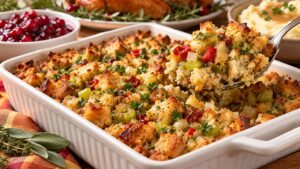
Classic Herb Stuffing with Sage, Thyme & Sweet Hot Jalapeños
There’s something about homemade Thanksgiving stuffing that makes the whole kitchen feel like the holidays. The aroma of buttery bread, sautéed onions, celery, sage, and thyme is unmistakable, and a good stuffing deserves just as much attention as the turkey. This Classic Herb Stuffing with Sage, Thyme & Sweet Hot Jalapeños starts with everything you love about traditional Thanksgiving stuffing, then adds a little unexpected flavor that makes it worth remembering.
The secret is our Texas Sweet & Hot Jalapeños. Finely chopped and folded into the stuffing, these sweet, tangy jalapeños add small bursts of pepper flavor that complement the savory herbs and rich butter. They aren’t intended to make the stuffing overwhelmingly spicy. Instead, their sweetness and gentle heat create a contrast that works beautifully with roasted turkey, mashed potatoes, cranberry sauce, and gravy.
This recipe is baked in a casserole dish rather than inside the turkey, giving the bread a chance to develop a lightly golden top while remaining tender and moist underneath. It’s easy to prepare ahead, simple to adjust for different tastes, and equally welcome at Thanksgiving dinner or alongside a Sunday roast. Whether you’re a lifelong stuffing traditionalist or someone who likes a little heat with your holiday meal, this is a delicious way to bring both worlds together.
Quick Recipe Guide
Prep Time: 25 minutes, plus bread-drying time if needed
Cook Time: 40–45 minutes
Total Time: Approximately 1 hour 10 minutes with prepared dry bread
Servings: 10–12
Difficulty: Easy to moderate
Heat Level: Mild to medium, depending on the amount of jalapeños used
What makes it special: Traditional buttery herb stuffing with finely chopped Texas Sweet & Hot Jalapeños for a balanced sweet-and-spicy finish.
Ingredients
- 12 cups day-old or oven-dried bread cubes, approximately 1-inch pieces
- ¾ cup (1½ sticks) unsalted butter
- 1 large yellow onion, finely diced
- 3 celery stalks, finely diced
- ½ cup Texas Sweet & Hot Jalapeños, drained and finely chopped
- 3 garlic cloves, minced
- 2 tablespoons fresh flat-leaf parsley, chopped
- 1 tablespoon fresh sage, finely chopped
- 2 teaspoons fresh thyme leaves
- 1 teaspoon fresh rosemary, finely chopped
- ½ teaspoon freshly ground black pepper
- ½ teaspoon kosher salt, plus more to taste
- 2–3 cups low-sodium chicken or turkey stock, added gradually
- 2 large eggs, lightly beaten
Optional Finishing Touches
- 1–2 tablespoons melted butter for brushing the top
- Additional chopped fresh parsley
- A few finely chopped Texas Sweet & Hot Jalapeños for garnish
Instructions
- Prepare the bread. If your bread is already dry and slightly stale, place the cubes in a large mixing bowl. If using fresh bread, spread the cubes across two baking sheets and dry them in a 275°F oven for approximately 25–35 minutes, stirring occasionally. The bread should feel dry but not deeply browned. Remove it from the oven and let it cool.
- Preheat the oven. Increase the oven temperature to 350°F. Lightly butter a 9 × 13-inch baking dish.
- Cook the vegetables. Melt the ¾ cup butter in a large skillet over medium heat. Add the diced onion and celery and cook for approximately 8–10 minutes, stirring occasionally, until softened but not browned.
- Add the garlic and jalapeños. Stir in the minced garlic and finely chopped Texas Sweet & Hot Jalapeños. Cook for another 1–2 minutes, allowing the flavors to combine with the butter and vegetables.
- Add the herbs. Stir in the parsley, sage, thyme, rosemary, black pepper, and salt. Cook for approximately 30 seconds, just until the herbs become fragrant. Remove the skillet from the heat.
- Combine with the bread. Pour the buttery vegetable and herb mixture over the dried bread cubes. Toss gently until the bread is evenly coated and the jalapeños are distributed throughout.
- Moisten the stuffing. Begin by pouring 2 cups of stock over the bread mixture, tossing gently. Let it stand for a few minutes so the bread absorbs the liquid. Add more stock, a little at a time, until the bread is evenly moist but not swimming in liquid. The exact amount will depend on the type and dryness of the bread.
- Add the eggs. Allow the mixture to cool until warm rather than hot. Add the lightly beaten eggs and fold gently until evenly incorporated.
- Transfer to the baking dish. Spoon the stuffing into the prepared 9 × 13-inch baking dish, spreading it into an even layer without packing it down too tightly. For a richer, more golden top, brush lightly with the optional melted butter.
- Bake covered. Cover the dish with aluminum foil and bake for approximately 25 minutes.
- Finish uncovered. Remove the foil and continue baking for another 15–20 minutes, until the top is lightly golden, the edges are beginning to crisp, and the center reaches 165°F.
- Rest and serve. Let the stuffing rest for approximately 5–10 minutes before serving. Garnish with additional parsley or a few finely chopped sweet hot jalapeños if desired.
Why This Herb Stuffing Works
The foundation of great stuffing is bread that can absorb flavorful liquid without falling apart. Drying the bread before mixing it with butter, vegetables, and stock allows the cubes to soak up moisture while maintaining enough structure to create a satisfying texture. The finished stuffing should be tender and moist inside, with a lightly crisp surface that provides contrast in every serving.
Sage, thyme, and rosemary are classic Thanksgiving herbs for good reason. Sage contributes an earthy, savory character that pairs naturally with turkey. Thyme adds a subtle freshness, while rosemary provides a fragrant, slightly piney note. Combined with onion, celery, garlic, and butter, they create the familiar flavor that makes traditional stuffing so comforting.
The Texas Sweet & Hot Jalapeños introduce something different without replacing those classic flavors. Their sweet-tangy character balances the richness of the butter and stock, while the jalapeño heat adds a gentle warmth. Finely chopping the peppers is important because it distributes their flavor throughout the stuffing rather than leaving large, concentrated pieces in individual bites.
 Professor Pepper Says 🌶️
Thanksgiving stuffing doesn’t have to be a Scoville competition. The goal is to make the sage, thyme, rosemary, and buttery bread taste even better. Start with a modest amount of sweet hot jalapeños, chop them finely, and let their flavor complement the traditional herbs. A little contrast can make a familiar holiday favorite much more interesting.
Tips for Making the Best Thanksgiving Stuffing
Choose bread with enough structure. A combination of French bread and sourdough works especially well because it offers a balance of tender interiors and sturdy crusts. Italian bread is another good option. Very soft sandwich bread can work, but it may produce a denser, more uniform stuffing. Whatever bread you choose, drying it thoroughly is more important than using a particular variety.
Add the stock gradually. One of the most common stuffing mistakes is adding too much liquid at once. Different breads absorb different amounts, and a very dry sourdough may need considerably more stock than a softer white bread. Start with 2 cups and add more only as needed. The cubes should feel moist throughout, but you shouldn’t see liquid collecting at the bottom of the bowl.
Adjust the jalapeños to your guests. The suggested ½ cup gives the stuffing a noticeable sweet-and-peppery character. For a more traditional crowd, begin with ¼ cup. If your family enjoys sweet heat, you can increase the amount to ¾ cup, provided the jalapeños are well drained. Taste the cooked vegetable mixture before combining everything to get a sense of the flavor balance.
Use fresh herbs when possible. Fresh sage, thyme, rosemary, and parsley provide a bright, aromatic flavor that works especially well in holiday stuffing. Dried herbs can be substituted, but they are more concentrated. As a general starting point, use about one-third as much dried herb as fresh, then adjust to taste.
Don’t pack the baking dish tightly. A loosely arranged stuffing mixture allows heat to circulate and creates a lighter texture. Pressing everything firmly into the pan can produce a dense casserole. Spread the mixture evenly, but resist the urge to compress it.
For a crispier top, uncover the dish toward the end. Baking covered initially helps the stuffing heat evenly without drying out. Removing the foil for the final portion of baking allows the exposed bread cubes to develop lightly browned, buttery edges. If you prefer softer stuffing, leave the foil on a little longer.
Make-Ahead, Storage & Reheating
Thanksgiving is easier when a few dishes can be prepared before the big day. To get ahead, cube and dry the bread a day or two in advance and store it in an airtight container once completely cooled. You can also chop the onion, celery, garlic, herbs, and jalapeños ahead of time, keeping the perishable ingredients refrigerated until needed.
For food safety and the best texture, keep the dry bread and cooked vegetable mixture separate from the stock-and-egg mixture until you’re ready to assemble and bake. If you want to prepare the entire stuffing in advance, bake it fully, cool it promptly, and refrigerate it rather than storing an unbaked mixture of moist bread and raw eggs overnight.
Refrigerate cooked stuffing within two hours in shallow, covered containers. Properly stored leftovers generally keep for three to four days. Reheat to 165°F before serving, adding a small splash of stock if the stuffing seems dry. Cooked stuffing can also be frozen for longer storage.
What to Serve with Classic Herb Stuffing
This stuffing belongs alongside the familiar Thanksgiving favorites: roasted turkey, creamy mashed potatoes, turkey gravy, cranberry sauce, green beans, and roasted vegetables. The sweet hot jalapeños make it especially good with rich, savory dishes because their tangy sweetness helps balance heavier flavors.
For a bright contrast, serve it with our Not Your Grandma’s Cranberry Sauce. The cranberry sauce brings a tart, fruity element that complements the stuffing’s buttery herbs and peppery warmth.
And if you’re planning the entire holiday meal, visit our Ultimate Thanksgiving Food Guide: Turkey, Side Dishes, Recipes & Holiday Planning for more Thanksgiving recipes, side dishes, cooking ideas, and entertaining tips.
Frequently Asked Questions
What is the best bread for homemade Thanksgiving stuffing?
French bread, sourdough, and Italian bread are excellent choices because they absorb stock while maintaining some texture. A combination of breads can provide an especially good balance of tender and crisp pieces.
Do I need to dry the bread before making stuffing?
Yes. Drying the bread helps it absorb butter and stock without becoming overly mushy. You can use day-old bread or dry fresh bread cubes in a low-temperature oven.
Are Texas Sweet & Hot Jalapeños too spicy for Thanksgiving stuffing?
They add sweetness, tang, and pepper heat, but the overall spice level depends on how much you use. Start with ¼ cup for a milder version or use the recommended ½ cup for a more noticeable sweet-heat flavor.
Can I make this stuffing without jalapeños?
Absolutely. Omit the Texas Sweet & Hot Jalapeños for a more traditional herb stuffing. The sage, thyme, rosemary, onion, celery, and butter will still provide plenty of flavor.
Can I use dried herbs instead of fresh herbs?
Yes. Dried herbs are more concentrated, so begin with approximately one-third of the amount called for when using fresh herbs. Adjust the seasonings to taste.
Why are eggs added to stuffing?
Eggs help bind the bread and other ingredients together, giving the finished stuffing a slightly more cohesive texture. They are especially useful when baking stuffing in a casserole dish.
Can I prepare Thanksgiving stuffing the day before?
You can prepare the dry bread and vegetables ahead of time. For a fully assembled make-ahead version, bake the stuffing, cool it promptly, refrigerate it, and reheat thoroughly before serving.
Should stuffing be baked covered or uncovered?
Both. Baking covered first helps the stuffing heat evenly and retain moisture. Removing the foil near the end allows the top to become golden and slightly crisp.
How do I keep stuffing from becoming soggy?
Start with thoroughly dried bread and add stock gradually. The bread should be evenly moist without excess liquid pooling in the bowl. Avoid packing the mixture too tightly into the baking dish.
What temperature should Thanksgiving stuffing reach?
The center should reach 165°F. Use a food thermometer to check before serving, particularly when the stuffing contains eggs.
Can I freeze leftover stuffing?
Yes. Cool the cooked stuffing promptly and freeze it in airtight containers. Thaw safely in the refrigerator and reheat to 165°F before serving.
