
Chilaquiles Explained: Mexico’s Crispy Tortilla Breakfast Covered in Salsa, Crema & Cheese
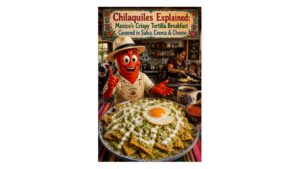
Chilaquiles begin with a culinary decision that sounds questionable until Mexico proves otherwise.
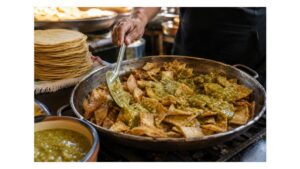
Take yesterday’s tortillas. Cut them up. Fry them until crisp.
Then pour salsa all over them.
Yes, salsa. Over the crispy part.
This would seem to defeat the entire purpose of frying the tortillas, except that the tension between crisp tortilla and hot salsa is precisely where chilaquiles become interesting. The edges soften first while thicker pieces hold onto some crunch. Salsa works into the cracks and surfaces, crema cools things down, cheese adds richness, onion brings a fresh bite, and suddenly yesterday’s tortillas have become one of Mexico’s great breakfasts.
Then somebody puts an egg on top.
Breakfast has officially stopped being subtle.
Introduction: The Breakfast Where Crispy Isn’t Supposed to Stay Crispy
Walk into a busy Mexican breakfast café and chilaquiles rarely need much explanation. You can often identify the plate before it reaches the table.
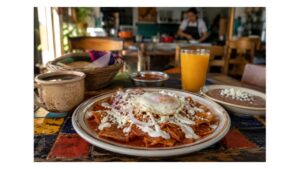
There is the unmistakable field of tortilla pieces underneath. Salsa verde may cover them in a bright, tangy green; salsa roja can push the plate toward deeper chile and tomato flavors. White crema runs across the top. Crumbled or grated cheese catches in the folds. Sliced onion adds crunch, and depending on the kitchen—or the appetite ordering breakfast—there may be fried eggs, scrambled eggs, shredded chicken, beef, avocado or beans somewhere nearby. It looks abundant because it is.
But beneath all those possible additions is an extraordinarily economical idea: corn tortillas transformed by frying and then deliberately brought back into contact with moisture through salsa. That relationship matters more than the toppings.
Chilaquiles are generally made from corn tortillas cut into pieces, fried and cooked or coated with salsa, then commonly finished with ingredients such as onion, cheese and crema. Green and red are the two most familiar versions, although Mexico’s regional variations go considerably further. The Diccionario enciclopédico de la Gastronomía Mexicana, Larousse Cocina’s extensive reference to Mexican food, documents chilaquiles across the country with different chiles, cheeses, herbs, proteins and preparation styles.
They also belong to an older and much larger Mexican cooking habit: finding another use for tortillas rather than wasting them. Larousse describes the dish’s humble roots as a way of using tortillas left from previous days. Frying gives those tortillas another texture and another purpose before salsa transforms them yet again.
That makes chilaquiles an especially useful dish for understanding the larger world explored in Mexican Street Food Beyond Tacos: Elote, Tortas, Tamales & More. A tortilla doesn’t stop being useful when taco night ends. Mexican cooking can fry it, toast it, cut it, soak it, layer it and turn it into an entirely different meal.
Chilaquiles may now arrive beautifully plated in restaurants and hotel breakfasts, but the intelligence underneath them remains wonderfully practical: yesterday’s tortillas become today’s breakfast because Mexican cooking understands that changing an ingredient’s texture can give it an entirely new purpose.
CHILAQUILES DON’T RESCUE OLD TORTILLAS BY HIDING THEM. THEY GIVE THOSE TORTILLAS AN ENTIRELY NEW JOB.
⚡ Quick Guide to Mexican Chilaquiles
What are chilaquiles?
Chilaquiles are a Mexican dish made from pieces of corn tortilla that are typically fried until crisp, combined with salsa and finished with toppings such as crema, cheese and onion. They are particularly associated with breakfast, although they can also be eaten at other times of day.
Are chilaquiles supposed to be crispy or soft?
They can be both—and that tension is part of the dish. Texture depends on how crisp the tortillas begin, how much salsa is used and how long they remain together before serving. Some preparations preserve noticeable crunch while others allow the tortillas to become considerably softer.
What’s the difference between chilaquiles verdes and chilaquiles rojos?
The primary difference is the salsa. Green chilaquiles commonly use tomatillos and fresh green chiles, while red versions can use tomatoes and dried or red chiles. Those choices change acidity, chile character, sweetness and heat rather than merely changing the plate’s color. Larousse identifies green and red as the two most common broad styles while documenting substantial regional variation within them.
What goes on top of chilaquiles?
Crema, cheese and onion are among the classic finishes. Eggs and shredded chicken are extremely common additions today, while beef, beans, avocado and other accompaniments can turn chilaquiles into an even more substantial meal.
Are chilaquiles spicy?
They can be, but they don’t have to be. The heat depends largely on the salsa and the chiles used to make it. A bright tomatillo salsa can be relatively gentle or quite hot, just as a red salsa can range from mild and earthy to considerably more assertive.
Are chilaquiles the same as nachos?
No. Nachos are generally built by topping tortilla chips and preserving much of their crispness. In chilaquiles, the relationship between tortilla and salsa is fundamental: the tortilla pieces are coated, simmered or otherwise brought into enough contact with salsa that their texture begins to change.
What Makes Chilaquiles Chilaquiles? It Starts with the Tortilla
The easiest mistake to make with chilaquiles is to look at the finished plate and assume salsa is the star. It isn’t—at least not by itself.
The tortilla establishes the structure that makes everything else possible. Traditional corn tortillas are particularly well suited to the job because frying changes them in several useful ways at once. Moisture leaves the tortilla, the surface becomes firmer, toasted corn flavors become more pronounced, and the tortilla becomes sturdy enough to encounter salsa without immediately disappearing into it. This is why the story of chilaquiles begins before the salsa ever arrives.
Corn tortillas themselves are one of the foundational foods of Mexican cuisine, made from nixtamalized corn masa and used not only for tacos but as the starting point for foods including totopos and chilaquiles. Understanding that transformation is part of the larger story in Mexican Tortillas, Masa & Breads Explained: The Complete Guide to How Mexican Street Food Is Built and What Is Masa? The Ancient Corn Dough Behind Authentic Mexican Street Food. Chilaquiles simply take that familiar tortilla and ask it to perform differently.
Older tortillas are especially useful because some of the moisture that made them wonderfully pliable when fresh has already left. Rather than throwing them away, cooks can cut them into pieces and fry them. The result isn’t merely a substitute for a fresh tortilla; it is an ingredient with an entirely different texture. Larousse’s gastronomic dictionary describes this practical reuse as part of the humble roots of chilaquiles, a way of putting tortillas saved from previous days back to work rather than wasting them.
Calling that “leftover food” can make the idea sound like a compromise, but Mexican cooking repeatedly demonstrates the opposite. Changing an ingredient’s form can change its usefulness. Corn becomes masa. Masa becomes tortillas. Fresh tortillas can become tacos, while older tortillas can be fried into crisp pieces sturdy enough to become the foundation of chilaquiles. One ingredient moves through several stages, and each stage creates different possibilities.
Then comes the apparent contradiction at the center of the dish: after making those tortilla pieces crisp, you add salsa.
A freshly fried tortilla piece wants to stay crisp; salsa wants to soak into it. Chilaquiles deliberately bring those two forces together and serve the result somewhere along the journey between them. That is why arguments about whether “real” chilaquiles should be crunchy or soft tend to miss something more interesting. There isn’t one universal endpoint. Regional practices differ, restaurants differ, families differ, and timing itself changes the plate. Larousse documents preparations in which tortillas are immersed in salsa as well as regional versions where the salsa finishes cooking directly over the fried tortillas.
Serve the chilaquiles quickly and more crunch survives. Let the tortillas spend longer in the salsa and they soften further. Sturdier fried pieces resist moisture longer, while more salsa accelerates the transformation. None of those variables automatically makes one plate more authentic than another. What matters is that the tortilla has enough structure to interact with the salsa rather than simply collapsing beneath it.
That interaction also explains why chilaquiles aren’t simply Mexican nachos with breakfast toppings. Nachos generally celebrate the chip as a crisp platform. Chilaquiles ask the tortilla to absorb. Salsa isn’t merely sitting on top; it is changing the tortilla itself. The best bite can therefore contain several textures at once—a softened center carrying salsa, a firmer edge with some remaining crunch, cool crema and crumbly cheese above it.
This is a dish built around controlled surrender.
The tortilla is supposed to lose some of the crispness you worked to create. The cook’s decision is how far to let that transformation go.
 🌶️ Professor Pepper Says…
Don’t judge chilaquiles by whether every tortilla piece crunches. The more useful question is whether the tortillas still have enough structure to carry the salsa. Chilaquiles live in the delicious territory between crisp and soaked—and different cooks intentionally stop that transformation at different points.
THE TORTILLA DOESN’T JUST HOLD THE SALSA IN CHILAQUILES. THE WAY IT ABSORBS THAT SALSA IS ONE OF THE THINGS THAT DEFINES THE DISH.
🌶️ Bring Your Own Heat to Breakfast
Chilaquiles already demonstrate one of the smartest principles in Mexican cooking: salsa can change the personality of an entire dish. If you like controlling the heat at the table, a few drops of Peppers of Key West hot sauce can push a finished plate hotter without requiring everyone eating breakfast to commit to the same level of chile.
Start with the chilaquiles themselves. Then decide how much farther you want the heat to go.
Salsa Roja or Salsa Verde? The Great Chilaquiles Decision
Once the tortillas are ready, chilaquiles arrive at the decision that can change nearly everything about the plate.
Red or green?
Walk into a Mexican breakfast café and chilaquiles rojos and chilaquiles verdes are often presented as parallel choices, but treating them as the same breakfast in different colors misses the point. Salsa doesn’t simply coat the tortillas. It provides much of the acidity, chile character, aroma and moisture that the tortillas absorb, which means changing the salsa changes the personality of the entire dish.
Salsa verde commonly begins with tomatillos, whose naturally tart, bright flavor gives green chilaquiles their characteristic freshness. Fresh green chiles such as serrano or jalapeño can provide anything from a gentle chile presence to a considerably sharper heat, while onion, garlic and cilantro may build additional layers around them. The result can be lively and acidic, with enough freshness to cut through fried tortilla, crema, cheese and an egg without making breakfast feel unnecessarily heavy.
Salsa roja moves in another direction. Tomatoes may provide the body, while the chile component can vary considerably depending on the cook and region. Dried red chiles can bring earthy, fruity, smoky or more concentrated chile flavors that aren’t simply hotter versions of what appears in salsa verde. A red salsa built around guajillo, for example, behaves differently from one driven by árbol chile, just as a roasted tomato salsa tastes different from a brighter preparation built around fresher ingredients.
That distinction matters because Mexican chile peppers aren’t interchangeable units of heat. They bring different flavors as well as different levels of capsaicin, something explored more deeply in Mexican Chiles Explained: Fresh vs Dried Peppers Used in Street Food. Chilaquiles make that lesson particularly easy to taste because the salsa touches nearly every tortilla on the plate. Change the chile and you haven’t merely adjusted the heat—you’ve changed the breakfast.
There is also no useful rule that says green chilaquiles are mild while red chilaquiles are hot, or vice versa. Either salsa can be gentle or assertive depending on the chiles and quantities used. Color tells you something about the salsa’s ingredients and style, but it is not a dependable heat meter.
The cooking of the salsa matters, too. Tomatillos, tomatoes, chiles, onion and garlic can be boiled, roasted, charred or otherwise cooked before being blended or ground, and those decisions alter the finished flavor. Roasting can deepen sweetness and introduce browned or smoky notes. Boiling tends to preserve a different kind of brightness. A salsa that tastes sharp and lively from a spoon may become rounder once it meets warm fried tortillas, while a deeply roasted salsa can push the entire plate toward richer territory.
This is why the salsa deserves more attention than simply asking whether it is red or green. As we explore in Mexican Salsas Explained: Roja, Verde, Macha, Borracha, Taquera & More, Mexican salsa is not one condiment with endless variations in heat. It is a broad family of preparations in which ingredient choice and technique determine what the salsa contributes to the food.
Chilaquiles provide an unusually clear demonstration because salsa isn’t sitting politely on the side waiting to be added. It becomes part of the structure of the dish. The tortillas absorb it. Their toasted corn flavor meets its acidity, their fried richness meets its chiles, and their crisp texture begins to change because of its moisture. Then crema and cheese arrive and create another set of contrasts.
So when someone asks whether red or green chilaquiles are better, there isn’t a universal answer. It depends on what you want breakfast to taste like.
GREEN AND RED DON’T JUST CHANGE THE COLOR OF CHILAQUILES. THEY CHANGE WHAT THE TORTILLAS ABSORB.
Crema, Cheese and Onion Aren’t Just Decoration
A plate of salsa-coated tortillas is already recognizable as chilaquiles, but the familiar finishes across the top aren’t there simply because somebody decided breakfast needed garnish.
They help balance what happened in the pan.
Consider what the tortillas have just experienced. They were fried, which added richness and toasted flavor, and then introduced to salsa, which added moisture, acidity and chile. Depending on the salsa, the resulting bite can be tangy, earthy, smoky, hot or some combination of all four. The ingredients added at the end give the cook additional ways to balance those characteristics without changing the foundation underneath.
Mexican crema provides one of the most obvious contrasts. Its cool, cultured richness softens the sharper edges of chile and acidity while adding enough moisture to mingle with the salsa. That balancing role is part of the larger story explored in Mexican Street Food Sauces Beyond Salsa: Crema, Chili Oils, Citrus Heat & More, where crema becomes one of several ways Mexican cooks adjust richness, acidity and heat without simply adding another salsa. A drizzle across chilaquiles verdes doesn’t erase the tomatillo’s tang; it rounds it. Against a deeper salsa roja, crema can provide a similarly cooling counterweight to dried-chile flavor and heat.
Cheese performs a different job. Depending on the preparation, chilaquiles may be finished with a fresh crumbly cheese or another regional choice rather than the blanket of melted cheese that Americans sometimes expect when they see tortilla chips. Fresh Mexican cheeses can contribute saltiness, dairy richness and texture while allowing the salsa-coated tortillas to remain the center of the dish. This is one of the places where understanding Oaxaca Cheese Explained: The Stringy Mexican Cheese That Makes Everything Better also helps illustrate a broader lesson: Mexican cheeses are chosen for what they do in a dish, and the ideal cheese isn’t always the one that melts the most.
Then there is onion. Raw sliced or chopped onion can seem almost too simple to deserve analysis, but take it away and a rich plate of chilaquiles can immediately feel less lively. Onion contributes fresh crunch, sharpness and aroma at precisely the moment when the tortillas underneath are becoming softer. Like the salsa itself, it helps prevent fried corn, crema and cheese from becoming one uninterrupted stretch of richness.
Other finishes can extend the same balancing act. Cilantro adds herbal freshness. Avocado contributes cool creaminess without the tang of crema. A little more salsa at the table can sharpen the plate again. None of these ingredients needs to dominate because the underlying tortilla-and-salsa relationship has already established the dish.
That is the important distinction. The toppings should finish the chilaquiles, not bury them.
Pile enough cheese, crema, avocado, eggs and meat onto the plate and it is easy to lose sight of what made the breakfast interesting in the first place. The best additions give the eater contrast—cool against hot, fresh against fried, creamy against acidic, crisp against soft—while allowing the flavor of corn and salsa to remain recognizable underneath.
🌶️ Professor Pepper Says…
Before adding more toppings to chilaquiles, ask what the plate actually needs. Crema can cool the chile, onion can restore crunch, cheese can add salt and richness, and cilantro can bring freshness. When every topping has a job, breakfast tastes balanced instead of merely crowded.
THE TOPPINGS DON’T MAKE CHILAQUILES INTERESTING BY COVERING THE TORTILLAS. THEY MAKE THE TORTILLAS AND SALSA TASTE MORE COMPLETE.
From Humble Tortillas to One of Mexico’s Great Breakfasts
Chilaquiles feel so natural on the Mexican breakfast table that it would be easy to imagine them arriving there fully formed centuries ago: fried tortilla pieces, salsa, crema, cheese, onion and perhaps an egg waiting on top.
Their history is more complicated than that.
The basic ingredients behind chilaquiles reach deep into Mexican food history. Corn tortillas long predate European contact, and Indigenous cooks had countless ways of preparing maize and chile. The arrival of Spanish livestock and dairy products introduced ingredients such as cheese and crema much later, while today’s familiar restaurant-style chilaquiles developed through generations of Mexican cooking rather than appearing from one documented recipe or inventor.
Even the name has generated debate. One commonly repeated explanation connects chilaquiles to Nahuatl, the language spoken by the Mexica and still spoken in several forms in Mexico today. But neat translations of old food names can become more certain in popular retellings than the historical evidence allows. For our purposes, the more useful story isn’t finding one person or one morning when somebody “invented” chilaquiles. It’s understanding how naturally the dish fits into a cuisine built around corn tortillas, chile sauces and resourceful cooking.
That resourcefulness matters.
A tortilla is at its most flexible and aromatic when fresh from the comal, but Mexican cooking doesn’t treat the end of that first stage as the end of the ingredient. Tortillas that have begun to dry can be toasted, fried, cut into strips or pieces, simmered in other preparations and given entirely different textures. Chilaquiles are one particularly delicious expression of that larger tradition.
The dish was documented in nineteenth-century Mexican cooking. Recipes and descriptions from that period show that chilaquiles were already recognizable as a preparation involving tortilla pieces and chile-based sauces, even though historical versions shouldn’t be expected to look exactly like the plate served in a modern café. Foods evolve as ingredients, kitchens, regions and eating habits change.
Chilaquiles eventually became deeply associated with breakfast and the morning table, where their practicality makes almost suspiciously good sense. Tortillas are already part of everyday cooking. Salsa may already be in the kitchen. Add crema, cheese, onion or whatever accompaniments are appropriate and available, and yesterday’s staple becomes today’s substantial meal.
That places chilaquiles naturally within the larger story of Mexican Street Food Breakfast Favorites Worth Waking Up Early For. Mexican breakfast isn’t simply an American-style morning meal with different ingredients. It has its own collection of dishes designed around tortillas, eggs, beans, breads, salsas and regional cooking traditions, and chilaquiles occupy an especially recognizable place within that world.
Their rise from practical tortilla cookery to restaurant breakfast favorite also explains something important about Mexican food culture: humble origins and modern popularity aren’t opposites. A dish can begin with economy and resourcefulness and still become something people deliberately seek out.
Today chilaquiles appear everywhere from home kitchens and neighborhood fondas to hotel breakfast rooms and polished restaurants. The toppings may become more elaborate, proteins may turn them into a larger meal, and chefs may play with different salsas, but the basic logic remains remarkably recognizable. Start with tortillas, change their texture, introduce salsa and build from there.
CHILAQUILES DIDN’T NEED A SINGLE INVENTOR TO BECOME A MEXICAN CLASSIC. THEY NEEDED TORTILLAS, CHILE AND GENERATIONS OF COOKS WHO KNEW HOW TO MAKE YESTERDAY’S FOOD MATTER TODAY.
Eggs, Chicken and the Point Where Breakfast Becomes a Full Meal
Once tortillas and salsa establish the foundation, chilaquiles become remarkably accommodating.
A fried egg is perhaps the most immediately recognizable addition. Break the yolk and it runs into the salsa, crema and softened tortillas, adding another layer of richness without fundamentally changing the dish underneath. Scrambled eggs accomplish something similar in a different texture, making chilaquiles feel unmistakably like breakfast while allowing the tortilla and salsa to remain central.
Chicken moves the plate further toward a complete meal. Shredded chicken can settle naturally among the tortilla pieces, picking up salsa without competing with it. Beef and other proteins appear as well, and regional kitchens and individual restaurants can take the basic structure considerably further.
Beans frequently complete the picture from the side rather than demanding the center. Their earthy, creamy richness makes sense alongside fried corn and chile sauce, particularly when the salsa has enough acidity to keep the entire plate lively. Avocado can contribute another cool, creamy element, while eggs and meat increase substance for diners who want breakfast to carry them well beyond morning.
The danger is assuming that more automatically means better.
Chilaquiles can support an impressive number of additions precisely because their foundation is so strong, but there is a point where toppings begin obscuring the relationship we’ve spent this article trying to understand. If every tortilla disappears beneath meat, eggs, avocado, crema, cheese and several additional garnishes, the plate may still be delicious, but the defining tortilla-and-salsa interaction becomes harder to experience.
A useful way to think about additions is to ask what each one contributes. Eggs bring richness and unmistakable breakfast character. Chicken adds protein without introducing an especially aggressive competing flavor. Beans provide earthy substance. Avocado cools and softens. Onion restores sharpness and crunch. Crema moderates acidity and heat.
Each has a job.
That same principle is why chilaquiles can move comfortably between a relatively simple breakfast and something much more substantial without losing their identity. The dish isn’t defined by whether an egg is present or whether chicken has been added. It is defined by the salsa-coated tortilla foundation underneath them.
🌶️ Professor Pepper Says…
If you’re ordering chilaquiles for the first time, don’t feel obligated to add everything available. Start with a version where you can still taste the tortillas and salsa clearly. Eggs or chicken can make breakfast more substantial, but they should be joining the chilaquiles—not replacing them.
AN EGG CAN MAKE CHILAQUILES BREAKFAST AND CHICKEN CAN MAKE THEM A MEAL, BUT THE TORTILLAS AND SALSA ARE WHAT MAKE THEM CHILAQUILES.
Chilaquiles Across Mexico: One Idea, Many Regional Breakfasts
Trying to identify one definitive plate of chilaquiles becomes difficult as soon as you start traveling. That’s part of the much larger regional story explored in Regional Mexican Street Food Guide: Famous Dishes from Every Corner of Mexico, where geography, local ingredients and cooking traditions continually reshape familiar foods.
The underlying idea behind chilaquiles travels well: tortillas meet chile sauce and are finished with ingredients that provide richness, freshness and substance. But Mexico’s regional food traditions give cooks different chiles, cheeses, herbs, proteins and preferences to work with. The result is better understood as a family of related preparations than a recipe frozen into one national formula.
Central Mexico offers many of the red and green versions travelers are most likely to recognize, but even there the details can change from one café, fonda or household to another. Salsa can be brighter or more roasted, tortillas firmer or softer, cheese crumbled or grated, and the decision to add eggs or chicken can completely alter the weight of the meal.
Elsewhere, local chile traditions can push chilaquiles in different directions. A region with strong dried-chile cooking has a different pantry available from one where fresh green chiles dominate. Local cheeses can change the dairy component, while regional meats can turn a relatively simple tortilla breakfast into something considerably more substantial.
This is one reason understanding Mexican Chiles Explained: Fresh vs Dried Peppers Used in Street Food matters beyond learning pepper names. Geography affects the ingredients cooks reach for, and those ingredients affect what familiar dishes taste like from one part of Mexico to another. Chilaquiles are flexible enough to absorb those regional differences without ceasing to be recognizable.
The same is true of texture. There is no national stopwatch determining precisely how many seconds fried tortillas may remain in salsa. Some cooks preserve more crunch; others prefer tortillas thoroughly softened by the sauce. What seems “correct” to someone who grew up eating one family or regional style may look noticeably different somewhere else.
That variation isn’t a problem requiring a winner. It’s the story.
A dish built from such fundamental Mexican ingredients was almost destined to become local wherever people cooked it. Tortillas, salsa, chile, cheese and crema provide the vocabulary; regional cooks decide how the sentence sounds.
THERE ISN’T ONE PLATE OF CHILAQUILES THAT SPEAKS FOR ALL OF MEXICO. THE DISH STAYS RECOGNIZABLE PRECISELY BECAUSE MEXICAN COOKS HAVE NEVER NEEDED TO MAKE IT EXACTLY THE SAME WAY EVERYWHERE.
How to Order Chilaquiles in Mexico Without Overthinking Breakfast
By the time chilaquiles reach a café table, the dish may look complicated. There is salsa to choose, toppings to consider, eggs prepared different ways, proteins that can be added, and sometimes a decision about whether you want the tortillas softer or with more crunch.
Fortunately, ordering them is usually much simpler than analyzing them.
The first decision is often rojos or verdes. If both are available, this is less a test of authenticity than a choice about flavor. Salsa verde can bring the tart brightness of tomatillo and fresh green chile, while salsa roja may lean toward tomato, dried chiles, roasted flavors or a deeper chile profile. Neither color guarantees a particular heat level, so if you’re concerned about spice, asking which salsa is hotter is more useful than trying to predict it from appearance.
Some restaurants make the decision even easier—or more difficult—by offering chilaquiles divorciados, essentially serving red and green salsa on different portions of the same plate. The name plays on the idea that the two sauces have been “divorced” and kept apart rather than mixed together. For a traveler who wants to understand the difference between the restaurant’s two salsas, it is also a particularly efficient piece of breakfast research.
Then come the additions. Eggs are common enough that ordering chilaquiles with huevo may feel almost inseparable from the breakfast experience, but they aren’t required for the dish to be chilaquiles. Chicken is another familiar addition, while beans, avocado and other accompaniments depend on the restaurant. The useful distinction is the one we’ve already established: tortillas and salsa define the dish; everything else builds on them.
This is also where a little menu vocabulary becomes useful. Con huevo means with egg, con pollo means with chicken, and con crema means with crema. If a menu offers rojos, verdes or divorciados, you already understand the most important decision before the server reaches the table.
That doesn’t mean you need to turn breakfast into a language exam. In neighborhood cafés, fondas and market restaurants, pointing to a menu item and asking a simple question about the salsa can accomplish considerably more than trying to construct a perfect sentence. The broader habits covered in Mexican Street Food Markets Explained: How to Order Like a Local and Find the Best Food Fast apply here as well: pay attention to what the kitchen specializes in, notice what other diners are ordering, and don’t be afraid to ask how something is served.
Once the plate arrives, taste it before reaching automatically for more salsa or hot sauce. That first bite tells you how acidic the salsa is, how much chile it carries, how soft the tortillas have become and how the crema and cheese are balancing everything underneath. From there, adding more heat becomes an informed decision rather than a reflex.
Chilaquiles reward that approach because they change while you eat them. Tortilla pieces that retained crisp edges when the plate arrived continue absorbing salsa as breakfast progresses. The first bite and the last may therefore have noticeably different textures.
That isn’t necessarily a flaw. It is the dish continuing to happen in front of you.
ORDER THE SALSA YOU WANT, ADD THE BREAKFAST YOU’RE HUNGRY FOR AND THEN PAY ATTENTION—CHILAQUILES DON’T STOP CHANGING JUST BECAUSE THEY REACHED THE TABLE.
Chilaquiles vs. Migas, Nachos and Enchiladas: Similar Ingredients, Different Ideas
Chilaquiles become easier to understand when you compare them with foods that appear, at first glance, to be close relatives.
The similarities can be substantial. Tortillas appear again and again. Salsa, cheese, chile, eggs and other familiar ingredients cross from one dish into another. Yet Mexican cooking isn’t defined simply by ingredient inventories. What the cook does with those ingredients matters just as much as what is present.
Nachos provide the clearest example. Both nachos and chilaquiles can begin with fried pieces of corn tortilla, and both can carry cheese, chile and other toppings. Nachos themselves originated in Piedras Negras, Coahuila, on the Mexican side of the U.S.–Mexico border, before developing into the enormous range of Mexican-American and American versions familiar today. The meaningful difference for our purposes is therefore not “Mexican breakfast versus American snack.” It is technique.
Nachos generally depend on the tortilla chip remaining a crisp platform beneath its toppings. Chilaquiles deliberately introduce enough salsa to begin changing the tortilla’s texture. One celebrates the chip’s ability to support; the other explores the fried tortilla’s ability to absorb.
Migas create a different comparison because the name describes more than one regional tradition. In Mexican and especially Tex-Mex breakfast cooking, migas commonly bring tortilla pieces or strips together with scrambled eggs. Here the egg becomes central to the construction in a way it doesn’t have to be with chilaquiles. Put a fried egg on chilaquiles and you still have chilaquiles underneath. Remove the egg from an egg-centered plate of migas and you’ve changed something much more fundamental.
Enchiladas bring us back to salsa-coated tortillas, but their construction makes the distinction clear. An enchilada generally keeps the tortilla intact enough to wrap or enclose a filling before sauce and other finishes complete the dish. Chilaquiles break the tortillas into pieces first and make those pieces themselves the foundation. The ingredients may overlap considerably while the eating experience remains different.
The comparison becomes even more useful when we include tostadas. A tostada asks a fried tortilla to remain whole and crisp enough to carry toppings. Chilaquiles take that same broad family of corn-tortilla transformations in another direction: break the tortilla into pieces, introduce moisture and allow texture to evolve.
This is part of the larger lesson behind Mexican Tortillas, Masa & Breads Explained: The Complete Guide to How Mexican Street Food Is Built. Tortillas aren’t interchangeable wrappers waiting for different fillings. Their shape, moisture, cooking method and construction help determine what a dish becomes.
The same corn tortilla can be kept soft and folded around taco fillings, fried whole for a tostada, cut and fried for chilaquiles, rolled around a filling for a crispy taco preparation or softened and wrapped for enchiladas. The ingredient may remain familiar while technique creates an entirely different food.
🌶️ Professor Pepper Says…
When two Mexican dishes seem to contain almost the same ingredients, look at what happened to the tortilla. Was it folded, rolled, fried whole, broken into pieces, covered with salsa or mixed with eggs? The tortilla’s job often tells you which dish you’re actually eating.
CHILAQUILES AREN’T DEFINED BY HAVING TORTILLAS, SALSA AND CHEESE. THEY’RE DEFINED BY WHAT HAPPENS WHEN FRIED TORTILLA PIECES ARE ALLOWED TO MEET THE SALSA.
Making Chilaquiles at Home: Control the Salsa, Control the Texture
Chilaquiles are wonderfully forgiving home cooking, but they become much easier to understand once you stop thinking of them as a recipe that must be assembled identically every time.
Think about timing instead.
Start with corn tortillas sturdy enough to fry well. Slightly older tortillas are useful because they contain less moisture, but the important goal is a fried piece with enough structure to survive its encounter with salsa. Cut the tortillas into manageable pieces and fry them until crisp and lightly golden, then allow excess oil to drain.
The salsa should be ready before those tortillas need it. Whether you’re making salsa verde from tomatillos and green chiles or salsa roja from tomatoes and red chiles, taste it on its own first. Adjust salt, acidity and chile before it reaches the tortillas because once the two come together, the clock begins.
For chilaquiles with more remaining crunch, bring the warm salsa and fried tortilla pieces together briefly and serve them promptly. For a softer style, allow the tortillas more time in the sauce. Neither approach requires drowning the tortillas indiscriminately; the goal is to create the texture you actually want.
Then finish the plate.
Crema, cheese and onion can provide the classic balance we’ve already discussed. Add an egg if breakfast wants more richness, chicken if the meal needs more substance, avocado if you want another cooling element, or beans alongside the plate if that’s how breakfast is taking shape.
The important part is the order. Fry first. Salsa second. Fresh and creamy finishes afterward.
That sequence protects the contrasts that make chilaquiles interesting. Put fresh onion into the pan too early and you lose much of its crunch. Add crema while the salsa is aggressively cooking and you change what it contributes. Let finished chilaquiles sit too long before serving and the tortillas continue softening whether you intended them to or not.
Home cooks therefore have an advantage that restaurants don’t always enjoy: you can decide exactly when breakfast reaches the table.
Taste the finished chilaquiles before adding extra heat as well. If the salsa already has the chile intensity you want, nothing more is required. If you want a hotter finish without changing the entire batch, Peppers of Key West hot sauce can be added at the table, allowing each person to control the final heat independently.
That’s particularly useful when one pan is feeding several people. The salsa establishes the character of the chilaquiles; finishing heat can remain personal.
And once you understand that distinction, chilaquiles stop looking like a complicated breakfast assembled from a dozen toppings. They become something considerably simpler: a lesson in managing the moment when crisp tortillas meet salsa.
YOU DON’T NEED TO MASTER TWENTY TOPPINGS TO MAKE BETTER CHILAQUILES. MASTER THE TORTILLA, THE SALSA AND THE TIMING BETWEEN THEM.
Why Chilaquiles Belong to the Mexican Morning
Chilaquiles can be eaten beyond breakfast, but morning is where the dish seems to make the most sense.
Part of that is practical. A Mexican kitchen may already have tortillas from the previous day and salsa prepared from another meal. Eggs are close at hand. Crema, cheese, onion and beans can turn those ingredients into something substantial without requiring breakfast to begin from scratch. What looks elaborate when it arrives at the table can actually be built from foods that were already part of the household kitchen.
Mexican mornings can include everything from tamales and atole to eggs, beans, sweet breads and regional specialties, but chilaquiles occupy a particularly useful middle ground. They can be quick and relatively simple, or substantial enough to carry someone well into the afternoon.
They are also excellent at accommodating appetite. Want something straightforward? Tortillas, salsa, crema, cheese and onion can be enough. Add eggs and breakfast becomes richer. Add chicken and beans and the plate begins behaving more like lunch. Restaurants can therefore offer chilaquiles as a foundation and allow diners to decide how much meal they want built around it.
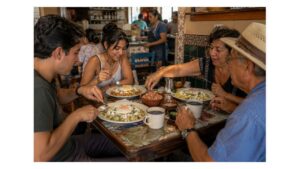
The café setting reinforces that flexibility. Chilaquiles work as everyday food because they don’t require ceremonial presentation or a special occasion. They belong comfortably on the same morning table as coffee, eggs and beans, whether that table is in a home, a neighborhood fonda or a busy restaurant.
And they have another characteristic particularly suited to breakfast: they wake up your palate.
Salsa brings acidity and chile. Onion adds sharpness. Fried corn contributes toasted flavor. Crema and cheese soften the edges without eliminating them. Instead of easing quietly into the day, chilaquiles arrive with contrast already built into the plate.
That doesn’t mean they need to be painfully hot. One of the recurring lessons throughout Mexican cooking is that chile flavor and chile heat are related but not identical. A well-made salsa can be lively, aromatic and deeply flavored without turning breakfast into an endurance test.
For diners who do want more heat, the table is where that decision can remain personal.
CHILAQUILES DON’T JUST USE YESTERDAY’S TORTILLAS FOR BREAKFAST. THEY TURN THEM INTO A REASON TO GET UP.
The Chilaquiles Mistakes That Matter More Than Following a Perfect Recipe
Because chilaquiles are fundamentally simple, small mistakes become surprisingly visible.
The first is starting with tortillas that aren’t sturdy enough for the job. Thin chips can collapse almost immediately when they encounter warm salsa, while inadequately fried tortilla pieces may become heavy rather than developing the toasted corn flavor and structure the dish needs. The goal isn’t maximum hardness; it’s enough structure to survive the transformation that follows.
The second mistake is treating salsa like a topping added without thought to quantity or timing. Too little and you essentially have dressed tortilla chips. Too much, too early, and every piece may soften before the plate reaches the table. Chilaquiles need enough salsa to change the tortillas, but the cook still controls how far that change goes.
Temperature matters for the same reason. Warm salsa meeting warm tortillas behaves differently from cold salsa poured over chips. The dish should feel cooked and integrated rather than assembled from unrelated components at the last moment.
Then there is the temptation to solve every problem with toppings.
If the salsa lacks salt, another handful of cheese isn’t really the answer. If the tortillas have become completely soggy when you wanted some texture, sliced onion can’t restore what has already been lost. If the salsa itself is flat, avocado and crema may make the plate richer without making it more interesting.
Fix the foundation before decorating it.
That means tasting the salsa, frying the tortillas properly and deciding what texture you want before the two meet. Once those pieces are working, crema, cheese, onion, eggs, chicken and avocado become useful additions rather than camouflage.
Home cooks sometimes make the opposite mistake and become too concerned with authenticity to use what they have. Freshly fried tortilla pieces provide excellent control, but a sturdy prepared tortilla chip can still produce an enjoyable quick version at home. The important thing is understanding what changes: commercial chips may be thinner, saltier or engineered to retain crunch differently, so salsa quantity and contact time may need adjustment.
Technique matters more than pretending every kitchen has identical ingredients.
That principle extends to the salsa. If you have a good homemade salsa verde, use it. If you have a salsa roja you love, breakfast doesn’t become less legitimate because somebody else’s family makes chilaquiles differently. Mexican regional and household cooking traditions already demonstrate that there is considerable room inside the basic idea.
What shouldn’t disappear is the idea itself: fried corn tortilla, salsa and a deliberate change in texture. Everything else has room to move.
🌶️ Professor Pepper Says…
If your first batch of chilaquiles becomes softer than you wanted, don’t immediately change the tortillas. Try shortening the time they spend in the salsa. Texture is partly an ingredient problem, but with chilaquiles it is also a clock problem.
BETTER CHILAQUILES DON’T COME FROM ADDING MORE THINGS TO THE PLATE. THEY COME FROM GETTING THE TORTILLA, SALSA AND TIMING RIGHT BEFORE EVERYTHING ELSE ARRIVES.
🌶️ Recommended Peppers of Key West Products for Chilaquiles
By this point, the distinction between salsa and finishing heat should be clear.
The salsa is part of the construction of chilaquiles. It determines moisture, acidity, chile character and much of the flavor the tortillas absorb. Hot sauce has a different job. Added at the table, it can increase heat or introduce another pepper flavor without requiring the entire pan of chilaquiles to change.
That makes chilaquiles particularly well suited to a small hot sauce lineup at breakfast. One person may want the gentle green-chile character of jalapeño with chilaquiles verdes, another may prefer serrano, and someone else may decide that breakfast isn’t properly underway until habanero appears.
The salsa builds the dish; the hot sauce lets the diner finish it.
Product Pairing Quick Guide
- Chilaquiles Verdes → Peppers of Key West Jalapeño Garlic Sauce
- Chilaquiles Rojos → Peppers of Key West Serrano Pepper Hot Sauce
- Chilaquiles with Eggs → Peppers of Key West Cayenne Pepper Hot Sauce
- Chilaquiles with Avocado → Peppers of Key West Habanero Pepper Hot Sauce
- Chilaquiles Breakfast for a Crowd → Peppers of Key West 5 Sauce Heat Collection
Best Peppers of Key West Hot Sauces for Chilaquiles
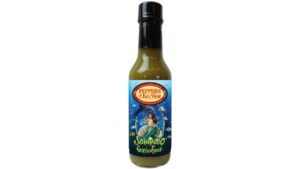
Peppers of Key West Jalapeño Garlic Sauce
Chilaquiles verdes already live in the world of bright green chile, making Jalapeño Garlic a particularly natural continuation. Jalapeño reinforces that fresh chile character while garlic adds savory depth against tangy tomatillo, crema and cheese without turning the finishing sauce into the dominant flavor.
Best With: Chilaquiles verdes, fried eggs, crema, avocado
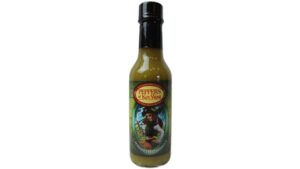
Peppers of Key West Serrano Pepper Hot Sauce
Serrano brings a clean, lively chile presence that works especially well when a deeper salsa roja needs a brighter finishing edge. A few drops can increase chile intensity while leaving the roasted tomato or dried-chile character of the salsa underneath intact.
Best With: Chilaquiles rojos, chicken, queso fresco, beans
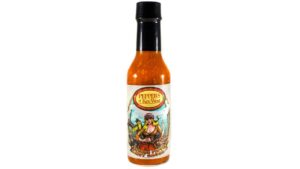
Peppers of Key West Cayenne Pepper Hot Sauce
Eggs, crema and cheese create plenty of richness, which gives cayenne heat something substantial to cut through. This is the straightforward breakfast pairing: enough pepper character to wake up a yolk-covered bite without introducing so many additional flavors that the chilaquiles disappear.
Best With: Chilaquiles with eggs, breakfast potatoes, beans, crema
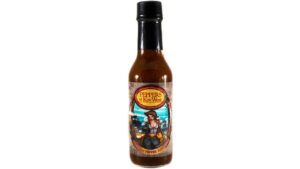
Peppers of Key West Habanero Pepper Hot Sauce
Avocado changes the heat equation. Its cool, creamy texture provides a natural counterpoint to habanero, while crema and cheese add another layer of richness underneath. Start with a few drops and allow the hotter pepper to build around the salsa rather than overpowering it.
Best With: Avocado chilaquiles, eggs, chicken, salsa verde

Peppers of Key West 5 Sauce Heat Collection
Chilaquiles are ideal for a shared hot sauce tasting because the salsa can remain consistent while every diner controls the finishing heat. Moving through Cayenne, Jalapeño, Habanero, Ghost and Carolina Reaper turns one breakfast into several very different chile experiences without changing the pan itself.
Best With: Chilaquiles brunch, family-style breakfast, mixed toppings, hot sauce tasting
What Chilaquiles Teach Us About Mexican Cooking
By now, chilaquiles have taken us considerably further than breakfast.
They have shown us what happens when a staple ingredient is allowed to change roles. A fresh corn tortilla can wrap a taco while it is soft and pliable. Give that tortilla time to dry, cut it into pieces and fry it, and the same ingredient develops enough structure to absorb salsa while retaining some of its toasted corn character. Add crema, cheese and onion, and the contrasts continue: hot against cool, crisp against soft, acidic against rich.
That progression helps explain why understanding individual Mexican dishes often requires looking beyond their ingredient lists. Chilaquiles aren’t distinctive because tortillas, salsa, cheese and crema are unusual ingredients. Those foods appear throughout Mexican cooking. What distinguishes chilaquiles is the sequence in which those ingredients meet and what happens to them when they do.
The tortilla is fried before it encounters moisture. The salsa is given enough contact to begin changing the tortilla’s texture. Fresh and creamy ingredients arrive afterward to provide contrast. Eggs, chicken, beans or avocado can make the meal larger, but none is required to establish its identity.
Technique creates the dish.
That lesson reaches far beyond chilaquiles. A corn tortilla can remain soft for a taco, fry whole and flat for a tostada, roll around a filling before frying, soften around an enchilada filling or become the salsa-coated pieces underneath breakfast. Understanding those transformations is one reason The Complete Mexican Street Food Guide: Ingredients, Dishes, Regions & Cooking Terms Explained is useful as a reference: Mexican foods that appear to share the same handful of foundational ingredients can become remarkably different once technique enters the story.
Chilaquiles also demonstrate why “authentic” Mexican cooking can be difficult to reduce to one rigid recipe. Regional ingredients vary. Household preferences vary. Salsa recipes vary. Some diners want considerable crunch while others grew up with much softer chilaquiles. One cook reaches for salsa verde, another for roja, and another may use a regional preparation that doesn’t fit neatly into either version a traveler expected to find.
The structure is recognizable even when the details move.
That is a much more useful definition of tradition than insisting every plate must look identical.
CHILAQUILES SHOW HOW MEXICAN COOKING CAN PRESERVE A TRADITION WITHOUT FREEZING IT IN PLACE: KEEP THE IDEA STRONG ENOUGH, AND THE DETAILS HAVE ROOM TO CHANGE.
Conclusion: Yesterday’s Tortillas, Tomorrow Morning’s Breakfast
Chilaquiles begin with something extraordinarily ordinary: a tortilla.
Not necessarily one made moments ago. In fact, the tortilla that has already spent a day in the kitchen may be better prepared for what comes next. Frying gives it another texture, salsa begins changing that texture again, and a handful of carefully chosen finishes turns the result into breakfast.
That cycle is part of what makes chilaquiles so satisfying to understand. The dish doesn’t depend on hiding an ingredient that has passed its perfect moment. It recognizes that the ingredient can still become something else—and what it becomes can be remarkably expressive.
Salsa verde can make breakfast bright and tangy. Salsa roja can take it somewhere deeper. Crema can soften the chile, onion can restore crunch, cheese can add salt and richness, and an egg can turn the whole thing into the kind of breakfast that makes lunch seem unnecessarily ambitious.
Yet remove all of those optional decisions and the central idea remains wonderfully clear: fried corn tortilla pieces meet salsa, absorb some of it and become something neither crisp tortilla nor salsa could have become alone.
That’s why the argument over whether chilaquiles should be crunchy or soft doesn’t need a winner. The transformation is the point. Different cooks simply decide where along that transformation they want to serve breakfast.
The same flexibility explains why chilaquiles have moved so comfortably from practical home cooking into fondas, cafés, hotel breakfast rooms and restaurant menus. A humble idea doesn’t stop being humble because somebody plates it beautifully. Underneath the crema, eggs and carefully arranged avocado is still one of Mexican cooking’s smartest habits: make good use of what the kitchen already has.
Yesterday’s tortilla hasn’t reached the end of its story.
It just needed salsa.
CHILAQUILES TURN ONE OF THE SIMPLEST ACTS OF KITCHEN RESOURCEFULNESS INTO A BREAKFAST WORTH ORDERING ON PURPOSE.
Frequently Asked Questions About Chilaquiles
What are chilaquiles?
Chilaquiles are a Mexican dish made from pieces of corn tortilla that are typically fried until crisp and then combined with salsa. They are commonly finished with crema, cheese and onion, while eggs, chicken, beans, avocado and other additions can make the plate more substantial.
Are chilaquiles traditionally eaten for breakfast?
Yes. Chilaquiles are strongly associated with breakfast in Mexico, although they aren’t restricted to the morning. Their combination of tortillas, salsa and optional eggs or protein makes them particularly well suited to a substantial breakfast.
Are chilaquiles supposed to be crispy or soft?
They can be both. Freshly fried tortilla pieces begin crisp, but contact with salsa deliberately softens them. How much texture remains depends on the tortillas, the amount of salsa and how long they spend together before serving. There isn’t one universally correct endpoint.
What’s the difference between chilaquiles verdes and chilaquiles rojos?
The primary difference is the salsa. Chilaquiles verdes generally use a green salsa commonly built around tomatillos and green chiles, while chilaquiles rojos use a red salsa that may incorporate tomatoes and red or dried chiles. Recipes vary considerably across Mexico.
Which are hotter, red or green chilaquiles?
Neither color is automatically hotter. Heat depends on the particular chiles used and how the salsa is prepared. A green salsa made with plenty of serrano can be considerably hotter than some red salsas, while another salsa verde may be quite mild.
What are chilaquiles divorciados?
Chilaquiles divorciados serve red and green chilaquiles separately on the same plate, keeping the two salsas apart rather than combining them. The playful name refers to the red and green sides being “divorced” from one another.
What kind of tortillas are best for chilaquiles?
Corn tortillas are the traditional foundation. Slightly older tortillas can work particularly well because some of their moisture has already disappeared, helping them fry into sturdy pieces that can absorb salsa without immediately falling apart.
Can you make chilaquiles with store-bought tortilla chips?
Yes. Sturdy store-bought tortilla chips can make a convenient home version, although their thickness, salt level and ability to withstand moisture vary. Tortillas fried specifically for chilaquiles give the cook greater control over texture and seasoning.
Are chilaquiles the same as nachos?
No. Both can involve fried corn tortilla pieces, but the tortilla performs a different job. Nachos generally use chips as crisp platforms for toppings, while chilaquiles deliberately bring fried tortilla pieces into contact with salsa so they begin absorbing it and changing texture.
What’s the difference between chilaquiles and migas?
In Mexican and Tex-Mex breakfast traditions, migas commonly bring tortilla pieces or strips together with scrambled eggs, making the eggs central to the preparation. Eggs are optional with chilaquiles; fried tortilla pieces combined with salsa form the essential foundation.
What’s the difference between chilaquiles and enchiladas?
Enchiladas generally keep tortillas intact enough to wrap or enclose a filling before they are sauced. Chilaquiles use tortillas cut or broken into pieces, and those pieces become the salsa-coated foundation of the dish.
What cheese goes on chilaquiles?
Fresh, crumbly Mexican cheeses are common, although the specific cheese varies by region and household. The cheese typically contributes saltiness, richness and texture rather than forming the heavy melted layer someone might expect from nachos.
Can chilaquiles be a full meal?
Absolutely. Eggs, shredded chicken, beef, beans or avocado can turn a relatively simple plate of tortillas and salsa into a substantial meal. The important thing is that those additions support rather than overwhelm the tortilla-and-salsa foundation.
What is the best hot sauce for chilaquiles?
Match the finishing sauce to the chilaquiles already on the plate. Jalapeño or serrano sauces can continue fresh green-chile flavors, cayenne works particularly well with eggs and creamy toppings, and habanero can provide a fruitier, hotter contrast when avocado or crema is present.
🌮 Continue Your Mexican Street Food Journey
🌯 More Mexican Street Foods Worth Trying
- Mexican Street Food Breakfast Favorites Worth Waking Up Early For
- Molletes Explained: Mexico’s Open-Faced Bean & Cheese Sandwich That Makes Breakfast Better
- Pan Dulce Explained: Mexico’s Sweet Bread Tradition Beyond the Famous Concha
- Mexican Panaderías Explained: Why Every Neighborhood Bakery Is the Heart of Mexican Morning Culture
- Pambazos Explained: Mexico’s Salsa-Soaked Sandwich That Eats Like a Full Meal
- Tortas Ahogadas Explained: Guadalajara’s Famous Drowned Sandwich That Every Food Lover Should Try
- Tamales Explained: The Ancient Mexican Comfort Food That Still Dominates Street Food Culture
- Mexican Salsas Explained: Roja, Verde, Macha, Borracha, Taquera & More
🌶️ Expand Your Mexican Food Journey
- Hot Sauce Heat Level Guide So You Stop Guessing and Start Handling Real Heat Like a Pro
- The Amazing Guide to Taco Sauce Pairing: Best Hot Sauce for Tacos, Meats, Fish & Street Taco Flavor Hacks
- Best Taco Sauce vs Hot Sauce Guide (Differences, Uses, Heat Levels & Which Is Better?)
- Best Drinks for Taco Night: Margaritas, Mexican Beer & Sweet Pairings
See More Keywords
Mexican tortilla breakfast, Mexican breakfast dishes, crispy tortilla breakfast, fried corn tortillas with salsa, Mexican salsa breakfast, traditional Mexican breakfast foods, chilaquiles toppings, chilaquiles ingredients, green chilaquiles, red chilaquiles, chilaquiles divorciados, homemade chilaquiles, easy chilaquiles, corn tortillas for chilaquiles, leftover tortillas Mexican food, Mexican crema, queso fresco chilaquiles, chicken chilaquiles, egg chilaquiles, avocado chilaquiles, spicy chilaquiles, tomatillo salsa chilaquiles, Mexican salsa verde, Mexican salsa roja, chilaquiles vs nachos, chilaquiles vs migas, chilaquiles vs enchiladas, Mexican brunch food, breakfast in Mexico, authentic Mexican breakfast, Mexican comfort food, hot sauce for Mexican breakfast
