
Fajitas Explained: Why Authentic Fajitas Are About Beef, Not the Sizzling Pan
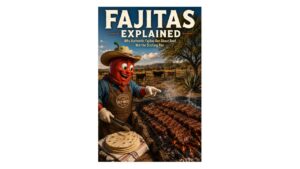
Order fajitas in an American restaurant and everyone knows they’re coming before they reach the table. There is the hiss of the skillet, the cloud of steam, the smell of grilled onions and peppers, and the brief moment when half the dining room wonders whether they should have ordered whatever just went by.
It makes great theater.
It also isn’t what originally made a fajita a fajita.
Long before sizzling cast-iron platters became restaurant showstoppers, fajitas were connected to beef—specifically the tough, intensely flavorful skirt steak associated with cattle butchering and ranch cooking along the Texas-Mexico borderlands. The story eventually grew to include tortillas, grilled onions, peppers, chicken, shrimp and nearly anything else a restaurant could make sizzle. But underneath all of that spectacle is a much simpler story about an overlooked piece of beef, hot fire and cooks who knew exactly what to do with both.
Introduction: You usually hear fajitas before you see them.
Somewhere across the dining room comes the unmistakable hiss of meat hitting a scorching cast-iron platter. Heads turn. Smoke and steam curl above strips of grilled steak, onions and bell peppers while a server carries the whole production toward the table. Warm flour tortillas arrive alongside bowls of salsa, guacamole, sour cream and shredded cheese.
For a few seconds, dinner becomes theater.
That spectacle has become so closely associated with fajitas in the United States that it is easy to assume the sizzling platter defines the dish. Take away the skillet, onions and peppers and something seems to be missing.
Historically, however, we’re looking in the wrong place.
The story of fajitas begins with beef, and more specifically with a cut that spent much of its history far from the center of the butcher’s display: skirt steak. In the cattle country of South Texas and the borderlands, skirt steak was inexpensive, relatively tough and extraordinarily beefy. It rewarded cooks who understood fire, seasoning, slicing and the direction of muscle fibers. Cook it correctly and slice it across the grain, and an unglamorous piece of the animal could become something remarkable.
Even the name points us toward the meat. Fajita developed from the Spanish faja, meaning a strip, band, belt or sash—a description that makes considerably more sense when looking at the long, narrow diaphragm muscles from which skirt steak is cut than when looking at a pile of peppers on a restaurant skillet.
The cultural story is equally important. Fajitas cannot be neatly understood as simply an ancient Mexican dish or simply an American restaurant invention. Their development belongs to the Texas-Mexico borderlands, where Mexican, Tejano, ranching and cattle-working traditions interacted across generations. The dish eventually moved from ranches and backyard cookouts into festivals, restaurants and national chains, changing considerably along the way.
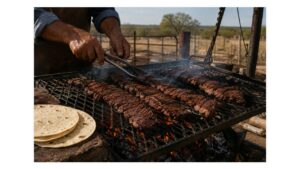
This distinction also explains why modern fajita menus can become confusing. Once fajita began functioning as the name of a complete restaurant dish rather than a reference closely connected to the beef itself, almost anything could occupy the center of that sizzling skillet. Chicken and shrimp obviously don’t have skirt steaks, yet both can become “fajitas” on a modern menu because the meaning of the word expanded. Sliced protein, onions and peppers, tortillas and a sizzling presentation became recognizable enough that the format gradually inherited the name once associated with the beef.
That evolution doesn’t make modern fajitas illegitimate. Food changes as people cook it, sell it, share it, move it and reinterpret it. But understanding what happened requires separating the dish’s original identity from the restaurant presentation that later made it famous.
Because once you stop watching the sizzling pan and start looking at the beef, fajitas tell us something much bigger about border cooking: great food doesn’t always begin with prestigious ingredients. Sometimes it begins with people knowing exactly how to make an overlooked ingredient matter.
Fajitas are only one part of that much larger story. Our Mexican Street Food Beyond Tacos: Elote, Tortas, Tamales & More guide explores the dishes, ingredients, regional traditions and everyday foods that reveal just how far Mexican food extends beyond the taco.
The pan gets the applause. The beef tells the story.
🔥 Fajitas Quick Guide
What are fajitas?
Fajitas originally referred to grilled skirt steak associated with cattle and ranch cooking traditions of the Texas-Mexico borderlands. Today, the term is used much more broadly for sliced grilled meats and vegetables served with tortillas.
What meat were authentic fajitas originally made from?
Skirt steak. Its long, thin shape, pronounced grain and powerful beef flavor are central to the historical identity of fajitas.
Does fajita mean grilled meat?
Not exactly. The word is connected to Spanish faja, meaning a strip, band or belt, referring to the shape of the beef cut rather than a particular grilling technique.
Are chicken fajitas authentic fajitas?
Chicken fajitas are a later adaptation. They are completely established in modern fajita culture, but they aren’t the meat from which the dish originally developed.
Do authentic fajitas have to include onions and bell peppers?
No. Grilled onions and peppers became strongly associated with restaurant-style fajitas, but they don’t define the historical dish.
Do fajitas have to be served on a sizzling skillet?
Definitely not. The dramatic cast-iron presentation helped popularize restaurant fajitas, but the sizzling platter came much later than the beef tradition itself.
What Makes a Fajita a Fajita? Start with the Beef
Imagine a butcher’s table rather than a restaurant table.
There is no smoking skillet surrounded by little bowls of toppings. No tower of warm tortillas wrapped in foil. No colorful pile of red and green bell peppers carefully arranged beside the meat.
There is simply a steer being broken down and a long, narrow piece of muscle that doesn’t look particularly glamorous.
That is a much better place to begin understanding fajitas.
Traditional fajita meat comes from the skirt steak, a thin, elongated cut from the diaphragm area of the animal. Unlike more tender steaks prized for softness, skirt steak has conspicuous muscle fibers running through it. Left whole, overcooked or sliced incorrectly, those fibers can make the meat frustratingly chewy.
But skirt steak possesses something tenderness alone cannot provide: flavor.
It has an unusually deep, mineral-rich, unmistakably beefy character. Put it over intense heat and its irregular surface takes beautifully to smoke and char. Seasoning clings to it. Fat and juices meet the fire. The outside can develop dark, roasted edges while the inside remains juicy.
Then comes the cut. Look closely at cooked skirt steak and you can see the grain—the long muscle fibers running visibly through the meat. Slice parallel to those fibers and you leave them long, forcing your teeth to do the work of breaking them apart. Turn the knife and slice across the grain, however, and the cook does much of that work first. The fibers become shorter, the meat becomes easier to chew, and what seemed like a tough cut suddenly behaves very differently on the plate.
That isn’t a minor cooking trick attached to fajitas. It is part of the dish’s engineering.
The original ingredient and the cooking method make sense together. A strongly flavored but relatively tough cut goes over high heat, develops char, rests and is sliced thinly against its grain. The cook isn’t trying to turn skirt steak into filet mignon. The cook is learning what skirt steak does well and building the meal around those qualities.
Begin with the animal.
 🌶️ Professor Pepper Says…
Skirt steak is a great example of why tenderness and quality aren’t the same thing. Its pronounced muscle grain requires thoughtful cooking and slicing, but that same structure comes with tremendous beef flavor. Learning to cut it across the grain is one of those small kitchen lessons that changes an entire dish.
That also puts fajitas into a much larger Northern Mexican and borderlands conversation. Beef became deeply important to the cooking of cattle country, where grilling wasn’t simply a restaurant technique but part of a broader ranching food culture. Our exploration of Carne Asada Explained: Northern Mexico’s Legendary Grilled Beef Tradition approaches that world from the Mexican side of the border; fajitas show us what happens when cattle culture, Mexican cooking knowledge and South Texas history meet in a particularly influential way.
The result eventually traveled far beyond the ranches that helped shape it.
But the ingredient left us a clue.
The long strip of beef was there before the onions and peppers, before the restaurant chains, and certainly before a waiter carried a smoking cast-iron platter through a dining room.
IF YOU WANT TO UNDERSTAND WHAT MADE FAJITAS FAJITAS, DON’T START WITH WHAT’S SIZZLING UNDER THE MEAT. START WITH THE BEEF ITSELF.
🌶️ Explore the Flavor Side of the Grill
Fajitas are a reminder that great grilling depends on more than heat alone. Smoke, char, acidity, chile flavor and seasoning all help a strongly flavored cut of beef become something greater than the sum of its parts. Explore Peppers of Key West hot sauces when you’re ready to bring those same flavor-building ideas to your own grill.
From Ranch Work to Border Food: Where Fajitas Really Came From
The history becomes more complicated once we ask a seemingly simple question:
Who invented fajitas?
Food history rarely rewards us with a single cook standing beside a grill on a documented afternoon announcing that a new dish has just been created. Fajitas are especially resistant to that kind of origin story because the practices behind them existed before the dish became famous enough for restaurants, newspapers and food writers to document it extensively.
The more useful place to look is the cattle culture of South Texas and the Texas-Mexico borderlands.
For generations, cattle ranching brought Mexican and Mexican American workers into the difficult physical labor of raising, moving, slaughtering and processing cattle. Butchering an animal created its own hierarchy of value. Premium cuts had greater commercial value, while less prestigious portions—including cuts and offal that commanded little money—were more likely to remain within the working food economy surrounding cattle processing. Skirt steak fit naturally into that world.
It wasn’t celebrated because a restaurant menu had declared it premium. Its value emerged from something much more practical: it was available, it tasted good, and people knew how to cook it. It is tempting to tell food stories backward. Once an ingredient becomes expensive or fashionable, we begin imagining that cooks always prized it for the reasons we do now. But many extraordinary food traditions developed through precisely the opposite process. Communities learned to extract tremendous flavor from ingredients that economic systems considered secondary.
Fire helped, too.
A thin skirt steak doesn’t need the slow treatment required by every tough cut. Over sufficiently hot coals or a fierce grill, it can cook quickly while acquiring the smoke and char that suit its powerful flavor. Cut into manageable pieces and eventually sliced against the grain, it becomes ideal for eating alongside tortillas and the fresh, sharp accompaniments that belong naturally around grilled beef.
Nothing about that requires a sizzling platter.
It requires cattle, fire, tortillas and knowledge.
This is also where calling fajitas simply “Mexican food” or simply “Tex-Mex” can flatten a more interesting story. The border between Texas and Mexico is a political boundary, but food cultures don’t stop neatly at checkpoints. Ranching practices, cattle traditions, Spanish language, Mexican cooking techniques, family networks and ingredients moved through a region whose culinary identity developed through constant contact. Fajitas belong to that borderland history, and for a long time, they remained relatively local.
The transformation from ranch food into something recognizable as a named commercial dish accelerated during the twentieth century. Fajitas began appearing more visibly at festivals, concession stands and restaurants, where cooks and restaurateurs helped introduce grilled skirt steak to audiences beyond the communities that already knew it. As popularity increased, presentation became part of the product, and restaurants discovered that fajitas possessed something few dishes could offer: they could advertise themselves from across the room.
A hot platter didn’t merely keep the food warm. It made noise. It released aroma. It created movement and anticipation. One table ordering fajitas could cause another table to ask the server what had just passed them. The dish was becoming theater.
And as that theater became standardized, the supporting cast grew increasingly familiar: sautéed onions, strips of bell pepper, flour tortillas, salsa, guacamole, cheese, sour cream and an assortment of toppings that allowed diners to construct each bite themselves. Eventually, those visual signals became so powerful that they began replacing the older definition.
Grilled chicken served with onions and peppers could become chicken fajitas. Shrimp could receive the same treatment. Even vegetables could inherit the name. Language had followed the restaurant experience.
That doesn’t mean those dishes should be dismissed as fake. It means fajitas underwent a culinary transformation. A term closely associated with a particular piece of beef expanded until it described a preparation, a presentation and eventually an entire category of meals. Understanding that evolution allows us to appreciate both versions without confusing them.
The ranch tradition tells us where fajitas came from. The restaurant skillet tells us what happened next.
And between those two points lies a much larger American food story: how a relatively humble cut of beef associated with Mexican American cattle culture traveled from regional cooking into mainstream restaurants and eventually became one of the loudest dinners in America.
THE SIZZLING PLATTER MADE FAJITAS FAMOUS. THE BORDERLANDS, THE CATTLE AND THE COOKS WHO UNDERSTOOD SKIRT STEAK MADE FAJITAS POSSIBLE.
Why Skirt Steak Works: Fire, Marinade and the Cut Against the Grain
Once you understand where fajitas began, the cooking method stops looking accidental.
Skirt steak is intensely beefy, relatively thin and built from long, obvious muscle fibers. Those characteristics create both the challenge and the opportunity. Cook it carelessly and the meat can become tough. Treat those same characteristics intelligently and skirt steak delivers exactly what fajitas need: deep beef flavor, browned edges, smoke and enough structure to stand up to tortillas, salsa and other accompaniments.
High heat is central to that transformation. A hot grill allows the exterior of the steak to brown and char quickly without requiring the prolonged cooking that can push a thin cut toward dryness. Over charcoal or wood, dripping fat and juices meet the heat below, smoke rises around the beef, and the surface develops flavors that a gentler cooking method cannot reproduce in quite the same way.
That doesn’t mean the goal is simply to burn the outside as quickly as possible. Good fajita cooking depends on control. The fire should be hot enough to create aggressive browning while the cook pays attention to the relatively narrow window between properly cooked skirt steak and overcooked skirt steak.
Marinades can help, but they are sometimes given more responsibility than they deserve. Lime juice, garlic, chiles, oil and seasonings all make sense around grilled beef, and countless fajita traditions and recipes use some combination of them. A marinade can season the surface, introduce acidity and complement skirt steak’s assertive flavor. What it cannot do is rescue poor technique. No amount of lime juice can compensate for badly overcooked meat or a steak sliced into long, chewy muscle fibers.
The knife may matter almost as much as the fire.
Once the steak has rested, look for the direction of the grain and turn the knife across it. Cutting across those long fibers shortens them before the meat ever reaches your mouth. Slice the same steak with the grain and your teeth are left doing work the cook could have done at the cutting board.
That is why authentic fajita technique is better understood as a sequence rather than a recipe:
Strongly flavored beef meets intense heat, rests, and gets sliced across the grain.
Everything else can build from there, including the tortilla. Flour tortillas make particular sense in this borderlands setting because northern Mexico and the Texas-Mexico border developed strong wheat and flour-tortilla traditions alongside the corn tortilla cultures found throughout Mexico. A soft flour tortilla is flexible enough to fold around strips of beef while providing a mild backdrop for char, salt, chile and acidity.
If you want to understand why flour tortillas became so important in northern Mexican and border cooking, our Flour Tortillas Explained: Why Northern Mexico Chose Wheat Over Corn guide takes that story much further.
🌶️ Professor Pepper Says…
Before slicing skirt steak, stop and look at it. The grain is usually easy to see. Turn your knife across those long fibers rather than following them, and you can dramatically change how tender the exact same piece of beef feels.
FAJITA TECHNIQUE ISN’T ABOUT DISGUISING A TOUGH CUT. IT’S ABOUT UNDERSTANDING THE CUT WELL ENOUGH TO LET ITS BEST QUALITIES WIN.
How the Sizzling Skillet Changed What Americans Thought Fajitas Were
Walk into an American Tex-Mex restaurant today and the definition of fajitas seems obvious.
There is the cast-iron platter, still furiously hot. Strips of beef or chicken sit among sautéed onions and bell peppers. Flour tortillas arrive separately, usually accompanied by enough salsa, guacamole, cheese, sour cream and other toppings to turn dinner into a small assembly project.
It is a wonderfully effective way to serve a meal. It just isn’t where the story began.
As fajitas moved from regional border cooking into restaurants and wider American food culture during the twentieth century, restaurateurs weren’t merely introducing diners to grilled skirt steak. They were developing a restaurant experience around it. Heat, aroma, sound and tableside presentation could make fajitas noticeable in a dining room crowded with competing dishes.
The cast-iron platter solved several problems at once. It kept the food hot, provided a surface for onions and peppers, and—most importantly from a restaurant perspective—turned the arrival of dinner into an event.
You heard fajitas before you ate them.
Then you smelled them.
Then you watched them pass your table.
That sequence is extraordinarily powerful restaurant marketing because the advertisement is another customer’s dinner. A photograph on a menu can make a dish look appealing. A platter hissing its way through a dining room can make everyone nearby wonder whether they ordered the wrong thing.
The sizzle didn’t create fajitas. It helped create the fajita phenomenon.
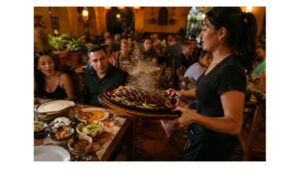
The success of that format also helps explain one of the biggest changes in the meaning of fajita. Once diners associated the word with strips of grilled protein, sautéed vegetables, flour tortillas and a sizzling skillet, skirt steak was no longer necessary for the meal to be recognizable.
Chicken could take its place. So could shrimp. Vegetables could occupy the center of the platter and still be sold as fajitas.
The word had changed jobs.
Instead of identifying something closely connected to a particular cut of beef, fajitas increasingly identified a format: sliced ingredients served hot with peppers and onions, accompanied by tortillas and assembled by the diner.
There is no need to declare one definition legitimate and the other fraudulent. The more interesting lesson is watching culinary language evolve in real time. Restaurant culture took a regional beef tradition, standardized a highly recognizable presentation around it and eventually made that presentation more familiar to millions of diners than the original meaning behind the name.
That distinction also helps when ordering fajitas today. If you want something closer to the dish’s beef-centered roots, ask what cut the restaurant uses. Skirt steak is historically meaningful, while outside skirt and inside skirt can behave somewhat differently depending on trimming and preparation. Other beef cuts can make excellent grilled meals, but changing the cut moves another step away from the particular ingredient that gave fajitas their identity.
And if what you really want is chicken sizzling beside peppers and onions, order it.
Food history should make dinner more interesting, not turn the table into a courtroom.
THE MODERN SKILLET TELLS US HOW FAJITAS BECAME FAMOUS; THE SKIRT STEAK TELLS US WHAT THE WORD MEANT BEFORE THE SIZZLE TOOK OVER.
How to Build Great Fajitas at Home Without Chasing Restaurant Theater
The easiest mistake when making fajitas at home is trying to reproduce the restaurant spectacle rather than the qualities that made the food good in the first place.
You do not need a screaming-hot cast-iron platter carried dramatically through your kitchen.
You need good beef and enough heat to cook it properly.
Start with skirt steak when you can find it. Because the cut is relatively thin, an outdoor charcoal or gas grill is particularly well suited to the job. Cast iron can also produce excellent browning, especially when outdoor grilling isn’t practical, but give the pan enough time to become properly hot before the beef arrives.
Seasoning can remain relatively straightforward. Salt is essential. Black pepper, garlic, chile, cumin or other spices can add depth without burying the beef. If you use a citrus-based marinade, think of it primarily as a flavoring system rather than a magic tenderizer.
Then give the meat room to brown. Crowding a pan with steak, onions and peppers simultaneously can release enough moisture to push the meal toward steaming rather than searing. If you’re cooking indoors, handling the components separately and bringing them together afterward often produces better results.
Once the steak is cooked, let it rest before slicing. Then find the grain and cut across it into strips appropriate for folding into tortillas. Only now do the accompaniments enter the picture.
Grilled or sautéed onions are excellent with the beef. Bell peppers have become inseparable from modern restaurant fajitas and provide sweetness, color and texture. Salsa introduces acidity and chile flavor. Guacamole adds richness. A squeeze of lime can sharpen everything.
But none of them should make you forget what is underneath.
The beef should still taste like beef.
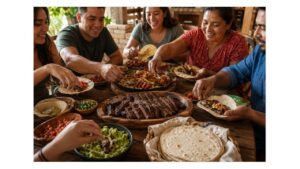
This build-your-own quality is one reason fajitas remain such good food for groups. The cook handles the part that demands technique—the fire and the beef—while everyone at the table decides what happens next.
One person reaches for salsa. Someone else adds guacamole. Another wants little more than steak, tortilla and lime. The meal has structure without demanding uniformity.
That makes fajitas especially useful for backyard grilling, casual entertaining and family meals. Put the beef at the center, surround it with a few good accompaniments and allow everyone else to finish the dish for themselves.
THE BEST HOME FAJITAS DON’T RECREATE THE RESTAURANT PERFORMANCE. THEY RECREATE THE RELATIONSHIP BETWEEN FIRE, BEEF, TORTILLAS AND THE PEOPLE GATHERED AROUND THEM.
🌶️ Recommended Peppers of Key West Products for Fajitas
Once the skirt steak comes off the fire, hot sauce has a very specific job. It shouldn’t erase the char or cover the beef with undifferentiated heat. The best pairing adds chile flavor, acidity and another layer of intensity while allowing the grilled meat to remain recognizable.
That’s where Peppers of Key West hot sauces fit naturally into the meal.
Product Pairing Quick Guide
- Classic skirt steak fajitas → Peppers of Key West Cayenne Pepper Hot Sauce
- Chicken fajitas → Peppers of Key West Jalapeño Pepper Hot Sauce
- Spicy beef fajitas → Peppers of Key West Habanero Pepper Hot Sauce
- Fajita night with different heat preferences → Peppers of Key West 5 Sauce Heat Collection
🌶️ Best Peppers of Key West Sauces for Fajita Night
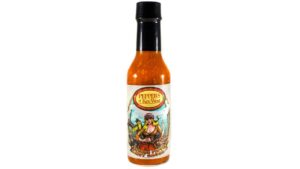
Peppers of Key West Cayenne Pepper Hot Sauce
For traditional beef fajitas, Cayenne is where I would start. Its straightforward chile heat can sharpen smoky skirt steak without turning the sauce into the dominant flavor on the tortilla.
Best with: skirt steak fajitas, grilled onions, charred peppers, salsa and lime.
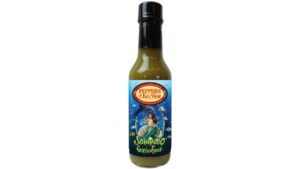
Peppers of Key West Jalapeño Pepper Hot Sauce
Jalapeño makes particular sense with chicken fajitas and vegetable-heavy combinations because its greener chile character complements rather than overwhelms lighter ingredients.
Best with: chicken fajitas, grilled vegetables, guacamole, fresh salsa and lime.
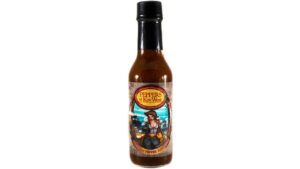
Peppers of Key West Habanero Pepper Hot Sauce
When the beef has serious char and you want the sauce to answer with more intensity, Habanero brings both heat and a fruitier chile character. Use enough to participate in the fajita without drowning the steak.
Best with: heavily charred skirt steak, grilled onions, avocado and bold salsas.

Peppers of Key West 5 Sauce Heat Collection
Fajitas are built at the table, which makes a heat collection especially natural here. Instead of deciding how spicy the entire meal should be before serving it, everyone can season an individual tortilla differently.
Best with: fajita parties, backyard grilling, mixed heat preferences and anyone who believes the second tortilla should be hotter than the first.
GOOD FAJITA HOT SAUCE DOESN’T COMPETE WITH THE FIRE AND CHAR. IT PICKS UP WHERE THE GRILL LEAVES OFF.
Why Authentic Fajitas Still Begin with the Beef
Fajitas became famous because they learned how to make an entrance.
The cast-iron skillet hissed. Steam rose above onions and peppers. Servers carried the platter through crowded dining rooms while nearby tables turned to see what was making all that noise. Eventually, the performance became so recognizable that millions of diners came to understand fajitas through the skillet rather than the ingredient that had given the dish its name.
But remove the theater and the older story is still there.
It begins with cattle and the cooking traditions of the South Texas–Mexico borderlands. It continues with skirt steak—a strongly flavored cut whose long muscle fibers demand that the cook understand heat, resting and the direction of the grain. Fire creates char. The knife creates tenderness. A warm flour tortilla gives the beef somewhere to go.
None of that requires a sizzling platter.
Modern fajitas have expanded far beyond that original relationship. Chicken, shrimp and vegetables now share the name. Bell peppers and onions have become visual signatures. Salsa, guacamole, cheese and sour cream allow diners to construct the meal according to their own tastes.
That evolution is part of the fajita story, too. Understanding where a dish came from doesn’t require freezing it at one moment in history. It simply allows us to recognize what changed—and what was important enough to survive the change.
So the next time fajitas come hissing across a restaurant dining room, enjoy the show. Listen to the skillet. Smell the grilled onions. Build the tortilla exactly the way you want it.
But before you reach for the toppings, look at the beef.
Because underneath one of America’s most theatrical restaurant meals is something considerably simpler: a flavorful cut of meat, a hot fire, a tortilla and generations of people who knew what to do with them.
THE PAN GETS THE APPLAUSE. THE BEEF TELLS THE STORY.
Frequently Asked Questions About Fajitas
What are authentic fajitas?
Authentic fajitas are historically associated with grilled skirt steak from the South Texas–Mexico borderlands. The beef is cooked over high heat, rested, sliced across the grain and commonly eaten with flour tortillas and simple accompaniments.
What cut of meat was originally used for fajitas?
Skirt steak is the cut most closely associated with traditional fajitas. Its strong beef flavor, thin shape and prominent muscle fibers make high-heat grilling and slicing across the grain especially important.
Are fajitas Mexican or Tex-Mex?
Fajitas are best understood through the food culture of the Texas-Mexico borderlands rather than forced neatly into one category. Mexican, Mexican American and South Texas cattle traditions all contributed to the dish’s development.
What does the word fajita mean?
The name is historically connected to faja, Spanish for a strip, band or belt, reflecting the long, narrow character associated with the original beef cut. Over time, fajita expanded to describe the complete restaurant-style meal.
Why is skirt steak good for fajitas?
Skirt steak has pronounced beef flavor and responds particularly well to intense heat. Proper grilling creates smoke and char, while resting and slicing across the grain shorten its long muscle fibers and improve tenderness.
Do authentic fajitas have bell peppers and onions?
Bell peppers and onions are strongly associated with modern restaurant fajitas, but they aren’t what originally defined the dish. Historically, the identity of fajitas was much more closely connected to skirt steak and its preparation.
Why are fajitas served on a sizzling skillet?
The hot skillet keeps the food warm while producing sound, steam and aroma. As fajitas became restaurant favorites, that sensory presentation turned the meal into theater and became one of its most recognizable characteristics.
Are chicken fajitas authentic fajitas?
Chicken fajitas represent the modern expansion of the dish rather than its original beef-centered meaning. As fajita came to describe a preparation and restaurant format, chicken, shrimp and even vegetables inherited the name.
Should you marinate skirt steak for fajitas?
You can. Marinades containing ingredients such as lime, garlic, chiles, oil and seasonings add flavor, but they cannot replace good cooking technique. Proper heat, resting and slicing across the grain remain more important to the finished texture.
Why do you cut fajita meat against the grain?
Skirt steak contains long, visible muscle fibers. Cutting across them shortens those fibers before you eat the meat, making each piece easier to chew than the same steak sliced parallel to the grain.
Are flour or corn tortillas better for fajitas?
Flour tortillas have a particularly strong connection to northern Mexican and Texas-Mexico border cooking and pair naturally with grilled skirt steak. Corn tortillas can certainly be delicious, but flour tortillas fit the dish’s borderlands story especially well.
What toppings are best for fajitas?
Start with the grilled meat and build around it. Salsa, guacamole, lime, grilled onions and peppers all work naturally, while cheese and sour cream reflect the familiar restaurant style. The toppings should complement rather than bury the beef.
🌮 Continue Your Mexican Street Food Journey
🌯 More Mexican Street Foods Worth Trying
- Carne Asada Explained: Northern Mexico’s Legendary Grilled Beef Tradition
- Flour Tortillas Explained: Why Northern Mexico Chose Wheat Over Corn
- Burritos Explained: Northern Mexico’s Handheld Meal That Conquered the World
- Burros Explained: Northern Mexico’s Oversized Flour Tortilla Classic
- Sonoran Hot Dogs Explained: Why Mexico’s Most Loaded Hot Dog Became a Street Food Legend
- Carne en su Jugo Explained: Guadalajara’s Beef Dish That Comfort Food Lovers Need to Try
- Tacos Árabes Explained: The Puebla Street Food That Inspired Al Pastor
- Best Mexican Street Taco Meats: The Ultimate Guide to Authentic Taco Flavor
🌶️ Expand Your Mexican Food Journey
- The Ultimate Guide to Mexican Street Food : The Flavor, Meat & Hot Sauce Breakdown
- Best Hot Sauce for Street Tacos: Authentic Heat That Hits Different
- The Complete Mexican Street Food Guide: Ingredients, Dishes, Regions & Cooking Terms Explained
- Mexican Street Food Markets Explained: How to Order Like a Local and Find the Best Food Fast
See More Keywords
beef fajitas, steak fajitas, grilled fajitas, grilled skirt steak, skirt steak cooking, fajita marinade, fajita seasoning, fajita toppings, flour tortillas, sizzling fajitas, sizzling fajita platter, cast-iron fajitas, chicken fajitas, shrimp fajitas, vegetable fajitas, onions and peppers, grilled beef, borderlands food, Texas-Mexico border food, Mexican American food, South Texas food, ranch cooking, cattle ranch cooking, Tex-Mex history, Mexican American cuisine, fajita platter, fajita dinner, homemade fajitas, fajita night, steak and tortillas
