Conchas Explained: Mexico’s Most Famous Sweet Bread and the Bakery Tradition Behind It
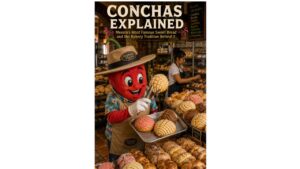
Walk into a Mexican panadería and tell yourself you’re only buying one concha.
That’s adorable.
Conchas are Mexico’s instantly recognizable sweet breads: soft, lightly sweetened buns covered with a crumbly sugar topping scored to resemble a seashell. But understanding the concha means understanding something much bigger than a pretty piece of pan dulce. It means stepping into the neighborhood panadería, grabbing a tray and tongs, navigating cases overflowing with breads and pastries, and discovering why bakery visits remain woven into everyday Mexican life. From vanilla and chocolate shells to coffee, chocolate caliente, breakfast tables, and afternoon merienda, this is the story of the bread—and the bakery tradition—that made it famous.
There is a particular kind of optimism required to walk into a Mexican panadería believing you already know what you’re going to buy.
Maybe you came for a concha.
Then you pick up a tray.
Around you are shelves crowded with breads in shapes that seem to multiply the longer you look: spirals dusted with sugar, flaky pastries, cookies, rolls, empanadas, colorful iced breads, and pastries whose names you may not know yet. Somewhere behind the counter, another batch is coming from the oven. Someone beside you is moving confidently through the selection with a pair of tongs, choosing breads for a family breakfast or an evening table.
And there, among all that abundance, is the bread almost everyone recognizes.
The concha.
Its round bun rises beneath a patterned sugar crust scored into curved lines that resemble a seashell—concha in Spanish. Chocolate and vanilla are the familiar classics, although modern panaderías may offer an expanding spectrum of colors and flavors. Beneath that decorative shell is a soft enriched bread whose restrained sweetness is precisely what makes the sugary topping work.
Yet describing a concha as “Mexican sweet bread” barely begins the story.
To understand why it became perhaps the most recognizable member of Mexico’s enormous pan dulce family, you have to understand the place that keeps putting it into people’s hands: the panadería.
Mexican bakeries aren’t simply places where bread happens to be sold. They are part bakery, part neighborhood ritual, part edible catalog of Mexican history. European baking traditions arrived and evolved alongside Mexican ingredients, tastes, techniques, creativity, and everyday eating habits until Mexico developed a bread culture unmistakably its own.
The concha sits near the center of that world.
And once you understand how people choose it, eat it, dunk it, share it, and return to the bakery for another one, a simple shell-shaped bun begins telling a much larger story about Mexican food.
For an introduction to the wider world surrounding foods like conchas, Mexican Street Food Beyond Tacos: Elote, Tortas, Tamales & More explores how Mexico’s everyday food culture extends far beyond tacos into breads, snacks, sweets, market foods, and regional specialties.
THE CONCHA MAY BE THE BREAD EVERYONE RECOGNIZES, BUT THE PANADERÍA IS THE WORLD THAT GAVE IT MEANING.
🥐 Conchas Quick Guide
What is a concha?
A concha is a Mexican pan dulce made from a soft, lightly sweet enriched bread topped with a crumbly sugar crust scored into a decorative shell pattern.
Why are they called conchas?
Concha means “shell” in Spanish. The name comes from the curved pattern traditionally cut into the topping to resemble a seashell.
What do conchas taste like?
The bread itself is soft, buttery, yeasty, and moderately sweet, while the topping contributes most of the characteristic sweetness and flavor. Vanilla and chocolate are two of the classic varieties.
Are conchas eaten for breakfast?
Yes, but not exclusively. Conchas are commonly enjoyed at breakfast and can also appear with afternoon or evening coffee, chocolate caliente, or as a casual snack.
How do Mexicans eat conchas?
They can simply be eaten by hand, but pairing them with coffee, café de olla, milk, or hot chocolate is part of the pleasure. The bread’s texture makes it particularly suited to accompanying a warm drink.
Where do you buy conchas in Mexico?
Panaderías are their natural home. Conchas are also found in markets, supermarkets, cafés, and other food shops, but the neighborhood Mexican bakery provides the cultural experience surrounding the bread.
🐚 What Exactly Is a Mexican Concha?
Set a concha beside an American doughnut, a French croissant, or a slice of frosted cake and its restraint becomes immediately apparent.
It isn’t usually filled. It doesn’t need icing running down the sides. The bread itself isn’t overwhelmingly sugary. Instead, the concha is built around a contrast between two deliberately different layers.
Below is the bread: soft, airy, enriched, gently sweet, and substantial enough to pull apart with your fingers.
Above it is the shell.
Before baking, a sweet paste-like topping is spread across the rounded dough and scored with a pattern. In the heat of the oven, the bread expands beneath it while the topping sets into the crumbly, slightly crisp cap that gives the concha its unmistakable appearance. The scoring opens as the dough rises, exaggerating the curved divisions that suggest a seashell.
That contrast explains much of the bread’s appeal.
Take a bite and the topping fractures softly before giving way to tender bread underneath. The sugar crust provides concentrated sweetness, while the bun prevents that sweetness from becoming exhausting. Follow it with coffee or hot chocolate and the relationship becomes even clearer: moisture from the drink meets a bread designed to absorb it without instantly disappearing.
Classic conchas are frequently associated with vanilla and chocolate toppings, although the contemporary concha has become an extraordinarily adaptable canvas. Bakeries may tint or flavor the topping with strawberry, coffee, cinnamon, matcha, cookies-and-cream-inspired flavors, or other variations. Some bakers fill them. Others make miniature versions or enormous ones meant to attract attention.
Those variations are part of the concha’s continuing life, but they make more sense once you understand the original architecture.
SOFT BREAD BELOW. CRUMBLY SWEET SHELL ABOVE. THAT SIMPLE CONTRAST IS THE ENGINE BEHIND THE CONCHA.
 🌶️ Professor Pepper Says…
Don’t judge a concha only by how sweet the topping tastes. The bread underneath is intentionally more restrained, creating the balance that lets the sugar crust stand out without turning the entire pastry into dessert-level sweetness. And yes—dunking it in something warm makes that contrast even better.
🥖 The Concha Makes More Sense Inside a Mexican Panadería
The easiest way to misunderstand a concha is to encounter one by itself.
Put it on a plate in a café and it becomes a pastry.
Put it back into a Mexican panadería and it becomes part of a system.
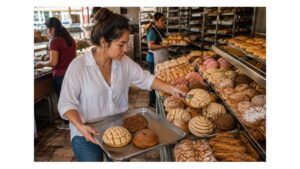
Walk into a traditional bakery and you may find dozens of breads displayed at once. The experience often begins not by pointing through glass and asking an employee for a pastry, but by taking a tray and a pair of tongs and walking through the selection yourself. You choose the breads that look good, place them on your tray, continue browsing, and bring the collection to the counter when you’re finished.
That small ritual changes the way the bakery feels.
You aren’t simply ordering.
You’re exploring.
A concha might land beside an oreja, a cuernito, an empanada, a puerquito, a polvorón, or whatever has just emerged warm from the bakery. Some customers know exactly what they’re collecting before they walk through the door. Others make decisions according to what looks particularly good that day.
And because breads are purchased individually, the tray encourages variety.
One person can prefer chocolate conchas. Another reaches for vanilla. Someone wants a flaky pastry. A child spots something covered in sugar. The resulting bag becomes less like a single dessert and more like a collection assembled for the people who will share it.
That is one reason the panadería matters so much to this story.
The concha didn’t become famous in isolation. It became famous while sitting among an enormous vocabulary of Mexican breads, repeatedly chosen from bakery trays and carried home in paper bags.
Our The Complete Mexican Street Food Guide: Ingredients, Dishes, Regions & Cooking Terms Explained provides a broader reference for the foods, ingredients, places, and culinary vocabulary that help make everyday Mexican food culture easier to understand.
But some vocabulary is best learned with a tray in your hand.
THE PANADERÍA DOESN’T JUST SELL CONCHAS. IT TEACHES YOU WHERE THE CONCHA BELONGS.
The Concha’s Story Begins with Mexico Making European Bread Its Own
The concha feels so thoroughly Mexican that its deeper history can be easy to overlook.
Bread made from wheat was not part of Mexico’s pre-Hispanic food world in the way maize was. Wheat arrived with the Spanish during the colonial period, bringing European bread-making traditions into a country whose foundational grains, cooking techniques, and everyday foods had developed along very different lines.
But imported ingredients don’t remain culturally imported forever.
Over generations, Mexican bakers absorbed European techniques and transformed them according to local tastes, available ingredients, changing economies, regional preferences, and the rhythms of Mexican life. French influence became especially important during the nineteenth century, when European-style breads and pastries gained prestige and became increasingly visible in Mexican baking.
Yet what emerged from that history wasn’t simply French pastry made in Mexico.
Walk through a panadería today and the evidence is everywhere.
The shapes are different. The names are different. The textures, decorations, flavors, and ways people buy and eat the breads have developed their own vocabulary. Some breads retain obvious European relatives; others have traveled so far from those starting points that their Mexican identity now matters much more than their ancestry.
The concha belongs to that transformation.
Its enriched yeast dough reflects the influence of European bread making, while its sweet patterned topping and enormous cultural familiarity belong to the Mexican pan dulce tradition that developed around it. There is no single documented moment when one baker can be confidently credited with inventing the concha exactly as we know it today. Its history is better understood as part of the broader evolution of Mexican baking.
That distinction matters.
Food histories are often made more exciting by attaching an invention to one person, one bakery, or one dramatic date. But everyday foods rarely cooperate so neatly. Bakers borrow techniques. Customers develop preferences. Recipes migrate. Ingredients change. One generation modifies what another generation learned.
Eventually something that began with outside influences becomes inseparable from the culture that transformed it.
The concha is a particularly visible example.
A European baker centuries ago might recognize aspects of the enriched dough.
But the experience of walking into a Mexican panadería, taking a tray, choosing a chocolate concha from a rack of pan dulce, carrying it home in a paper bag, and eating it with café de olla or chocolate caliente?
That story belongs to Mexico.
MEXICO DIDN’T SIMPLY ADOPT EUROPEAN BREAD. GENERATIONS OF MEXICAN BAKERS TURNED THOSE INFLUENCES INTO A BAKERY CULTURE OF THEIR OWN.
🌶️ Professor Pepper Says…
When a food has European roots, that doesn’t make its modern Mexican identity somehow less authentic. Culinary traditions are built through adaptation. The more interesting question is often not “Where did the first technique come from?” but “What did generations of cooks and bakers do with it?”
👩🍳 How Is a Traditional Concha Made?
Before the bakery doors open and customers begin filling trays, the concha exists in a much less glamorous form.
Dough.
And making that dough reveals why a good concha doesn’t eat like an ordinary dinner roll with frosting stuck on top.
Concha dough is generally an enriched yeast dough, meaning ingredients beyond the basic flour, water, yeast, and salt contribute tenderness, richness, flavor, and color. Depending on the baker and recipe, that may include eggs, sugar, milk, butter or another fat, and flavorings such as vanilla.
The enrichment creates a tradeoff.
Sugar and fat make bread deliciously tender, but they also affect how yeast dough develops and ferments. A baker has to create enough structure for the dough to rise while preserving the soft crumb that makes a concha pleasurable to tear apart and dunk into a warm drink.
After mixing and kneading, the dough is allowed to ferment.
Then comes division.
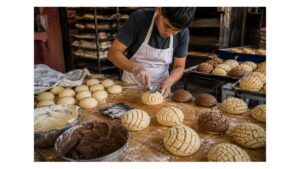
A working panadería may be producing dozens or hundreds of breads rather than six perfect buns for a recipe photograph. Portions are divided, rounded, and arranged on baking sheets with enough space to expand. The goal is a smooth domed surface because that dome will eventually support the feature that turns the bread into a concha.
The sugar topping is prepared separately.
Traditionally, this is not the same thing as cake frosting. It is closer to a soft, workable paste, commonly made from sugar, flour, and fat, with flavor and color added depending on the variety. The baker portions that topping, flattens it over each dough round, and then creates the familiar pattern.
Some bakers score it with a specialized concha cutter or stamp.
Others use a knife or another tool.
The exact pattern can vary. Some resemble curved shells. Others use crossing lines, grids, or individual bakery designs. What matters is that the cuts divide the topping before the bread enters the oven.
Then yeast and heat take over.
As the dough expands, the scored topping separates along those lines. The smooth cap becomes segmented. The pattern grows more dramatic. The bread browns around its edges while the topping remains visually distinct.
A plain round of enriched dough goes into the oven.
A concha comes out.
A CONCHA’S SHELL ISN’T PAINTED ON AFTER BAKING—THE BREAD RISES BENEATH IT AND HELPS CREATE THE PATTERN.
🐚 Why Does the Concha Topping Crack Instead of Melt?
Watch a tray of conchas enter the oven and something interesting happens.
Two layers sharing the same heat behave very differently.
The bread underneath contains yeast and a developed dough structure. As fermentation gases expand and the oven’s heat accelerates the final stages of rising, the dough pushes outward and upward.
The topping cannot stretch in the same way.
Because it contains sugar, flour, and fat but isn’t a yeast dough with the same elastic structure, it behaves more like a crumbly paste. The lines cut into it before baking create weak points. As the bread expands beneath the topping, those divisions widen and separate.
That is why a properly made concha doesn’t merely have a shell drawn across its surface.
The pattern becomes structural.
Look closely at a handmade concha and you can often see this interaction in the irregular edges of the topping. One section may open more dramatically than another. A little golden bread may appear between the pale or chocolate-colored ridges. Pieces near the edge can become slightly crisper than those toward the center.
Those imperfections aren’t defects.
They’re evidence that bread was moving underneath the shell.
The fat in the topping contributes tenderness and richness, while flour gives it enough body to remain on top of the dough instead of simply dissolving into a sugary glaze. Sugar supplies sweetness and helps create the delicate, crumbly texture that contrasts with the softer bread beneath it.
This is also why freshness matters.
A very fresh concha can give you that appealing distinction between tender bread and a topping with enough structure to crumble gently when bitten. As the bread sits, moisture moves and textures change. The concha may still be enjoyable—especially with coffee or hot chocolate—but the experience is no longer exactly the same as one eaten relatively close to the oven.
In a busy panadería, that creates another reason to pay attention to what is emerging from the back.
Sometimes the best concha on the rack is simply the one that arrived five minutes ago.
THE CONCHA’S FAMOUS PATTERN ISN’T JUST A DESIGN—IT IS A RECORD OF WHAT HAPPENED WHEN THE BREAD ROSE IN THE OVEN.
🎨 Vanilla, Chocolate, Pink & Beyond: The Many Faces of the Concha
Look across a tray of conchas and the first decision is usually the simplest one: vanilla or chocolate?
The classic pale concha gets most of its personality from the sweet topping itself. Vanilla may be present, but the flavor is often more broadly buttery, sugary, and bakery-rich than strongly vanilla-forward. Chocolate conchas add cocoa to the topping, giving the shell a darker, slightly more bitter character that contrasts beautifully with the mildly sweet bread underneath.
The difference is noticeable, but it doesn’t fundamentally change what makes a concha a concha. Beneath either shell is the same basic relationship: soft enriched bread underneath, crumbly patterned sugar topping above. That’s why trying one of each is such a useful introduction. You begin to understand how much of the concha’s identity comes from the topping rather than the dough itself.
Then there is pink.
Pink conchas are among the most recognizable variations in the bakery case. Depending on the baker, the topping may carry strawberry or another fruit flavor, although color doesn’t always promise a dramatically different taste. Sometimes the pink is as much a part of the bread’s visual personality as its flavor.
Once you move beyond those familiar bakery standards, the concha becomes a canvas.
Contemporary Mexican and Mexican American bakers have experimented with coffee, cinnamon, matcha, cookies and cream, cajeta, chocolate-hazelnut spreads, seasonal fruits, and naturally colored toppings. Some split conchas and add pastry cream, dulce de leche, or other fillings. Others transform them into ice cream sandwiches, French-toast-style dishes, bread puddings, or oversized versions meant for sharing.
Those experiments work because the original is so recognizable.
Change the flavor. Change the color. Add a filling. Make it enormous. As long as that rounded bread and patterned sugar shell remain recognizable, the connection to the traditional concha is immediately apparent.
But if you’re standing in a Mexican panadería for the first time, don’t begin with the wildest version in the case.
Pick up a vanilla concha.
Then a chocolate one.
Those two classics give you the reference point that makes everything else more interesting.
BEFORE CHASING THE WILDEST CONCHA IN THE BAKERY CASE, LEARN WHY VANILLA AND CHOCOLATE BECAME CLASSICS.
☕ How Mexicans Actually Eat Conchas
A concha rarely needs a special occasion.
That may be one of the most important things to understand about Mexico’s most recognizable sweet bread.
Visitors encountering a colorful bakery case for the first time can easily interpret pan dulce through the language of dessert. The breads are sweet. Some are brightly colored. Others are covered with sugar, filled with cream, glazed, rolled in cinnamon, or shaped into elaborate forms.
But step into the rhythm of everyday Mexican life and the category becomes more complicated.
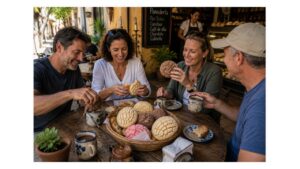
A concha can appear at breakfast beside coffee. It can be eaten during merienda, the light meal or snack that helps bridge the hours between larger meals. Children may eat one with milk or hot chocolate. Adults might tear one apart over coffee during conversation. A bag of pan dulce can arrive at a family table not because anyone planned dessert, but because somebody stopped at the panadería on the way home.
The bread fits into ordinary life precisely because it doesn’t demand ceremony.
There is also no elaborate technique required for eating one. Some people pull a concha apart along its soft crumb. Others bite directly through the sweet shell. And then there are the dunkers.
Dip an edge into café de olla, café con leche, or Mexican hot chocolate and the contrast changes immediately. The warm drink softens the bread and begins dissolving the sugary topping while the part still held above the cup remains intact.
That combination helps explain something photographs can’t.
A concha is not supposed to deliver the concentrated sweetness of a frosted cupcake. Its pleasure comes from the relationship between bread, topping, texture, and whatever accompanies it. The relatively restrained sweetness of the bun leaves room for the sugar shell and the drink beside it.
The result is less “dessert after dinner” than bread woven into the day.
THE CONCHA’S REAL HOME ISN’T A DESSERT PLATE—IT’S A TABLE WITH SOMETHING WARM TO DRINK AND SOMEONE NEARBY TO SHARE THE BAG.
🌶️ Professor Pepper Says…
Pan dulce literally means “sweet bread,” and that distinction is useful. A concha may satisfy a sweet tooth, but culturally it often behaves more like breakfast bread or an everyday snack than a formal dessert. Context tells you as much about the food as sugar does.
🥛 What Should You Drink with a Concha?
If you want to understand why conchas are built the way they are, put down the fork and pick up a mug.
The bread almost seems designed for it.
Coffee is perhaps the easiest pairing to understand. The bitterness and roasted character of coffee balance the sweet topping, while the liquid softens the enriched crumb. Plain coffee works beautifully, but café con leche brings additional richness.
Then there is café de olla, traditionally prepared with coffee, piloncillo—Mexico’s unrefined cane sugar—and warming spices such as cinnamon. Its sweetness might sound excessive beside pan dulce, but the combination works because the flavors overlap rather than simply pile sugar on sugar.
Mexican hot chocolate offers another classic experience.
The chocolate is warm, aromatic, and often cinnamon-forward, making it particularly satisfying with a vanilla concha. Chocolate conchas work too, creating a deeper cocoa-on-cocoa combination.
For children—and plenty of adults—a glass or mug of milk needs no further explanation.
The drink matters because conchas can be relatively dry compared with American pastries loaded with icing, custard, or buttercream. That isn’t necessarily a flaw in the bread. It makes sense within an eating culture in which sweet breads commonly accompany beverages.
Take a bite.
Take a sip.
Or ignore dignity altogether and dunk it.
The last method may teach you the most.
COFFEE, MILK, AND HOT CHOCOLATE DON’T MERELY ACCOMPANY A CONCHA—THEY HELP COMPLETE THE EXPERIENCE OF EATING ONE.
🌅 Conchas at Breakfast, Merienda, and the Family Table
Morning gives the concha one personality.
Late afternoon gives it another.
A breakfast concha can be wonderfully uncomplicated: bread, coffee, perhaps fruit or another small accompaniment, and the beginning of the day. It is portable enough for a hurried morning but equally comfortable at a table where nobody is in much of a hurry.
Later comes merienda.
The exact timing and meaning of merienda varies by household and circumstance, but the idea of a lighter eating occasion between larger meals gives pan dulce another natural place in the day. A concha and a drink provide something satisfying without turning the moment into a full meal.
Then there is the family table.
This is where thinking of pan dulce as a collection of individual pastries becomes especially limiting. Someone comes home from the panadería carrying a bag filled with several different breads, sets it on the table, and suddenly everyone starts looking for a favorite. Someone reaches for the chocolate concha, someone else claims the last vanilla one, and inevitably somebody wants to know who bought the puerquito.
That shared assortment is part of what makes the panadería experience so communal. The tray filled one bread at a time back at the bakery, but the bag arrives home as something everyone can explore together. Different generations may have different favorites, and choosing, splitting, trading, and sharing the breads becomes part of the experience.
Who is cutting something in half because two people want it?
That shared assortment is one reason the tray-and-tongs experience we saw earlier matters. Customers aren’t necessarily shopping for one perfect pastry. They may be assembling a collection for several people with different favorites.
The concha’s popularity gives it an advantage in that environment.
It is familiar.
Even when a bakery case contains dozens of more elaborate breads, the concha remains the one almost everybody recognizes. Its presence provides continuity from bakery to bakery and generation to generation.
That doesn’t make it boring.
It makes it dependable.
THE CONCHA ENDURES NOT BECAUSE MEXICANS SAVE IT FOR SPECIAL OCCASIONS, BUT BECAUSE THEY DON’T HAVE TO.
Why the Concha Became an Icon of Mexican Pan Dulce
There are more elaborate Mexican breads.
There are breads tied more closely to particular holidays. There are pastries with richer fillings, more intricate construction, stronger regional identities, and histories every bit as interesting.
Yet ask someone outside Mexico to picture pan dulce and there is a good chance a concha appears first.
Why?
Part of the answer is visual.
The shell pattern is instantly recognizable. Even without packaging or explanation, a concha announces itself from across a bakery case. Vanilla and chocolate versions create strong visual contrast, while pink and other colored variations make displays even more distinctive.
Part of the answer is accessibility.
A concha doesn’t require the customer to understand an unfamiliar filling or complicated flavor combination. Bread plus a sweet topping is easy to approach. Children understand it. Adults understand it. Someone encountering a Mexican panadería for the first time understands it.
But recognition alone doesn’t create cultural staying power.
The concha has also benefited from repetition.
Generation after generation has encountered it in neighborhood bakeries, at breakfast tables, during coffee breaks, in bags of pan dulce brought home for the family, and in memories of childhood. A food seen that often stops being merely a bakery product and becomes a cultural reference point.
Its shape has escaped the bakery, too.
Conchas appear in illustrations, clothing, stickers, jewelry, toys, ceramics, pillows, and countless playful representations of Mexican and Mexican American food culture. Bakers create giant conchas, miniature conchas, concha ice-cream sandwiches, concha-inspired cakes, and other variations that work precisely because the original shape is already understood.
You can parody an icon only after people recognize it.
The concha has reached that point.
And yet the ordinary version remains remarkably modest.
Flour. Yeast. Sugar. Fat. Flavoring. A patterned topping.
No extravagant filling required.
No holiday necessary.
No explanation needed when it lands on the table.
THE CONCHA BECAME AN ICON NOT BY LEAVING EVERYDAY LIFE BEHIND, BUT BY BECOMING ONE OF ITS MOST RECOGNIZABLE BREADS.
🏪 How to Find a Really Good Concha
The most impressive-looking concha isn’t automatically the best one.
When you walk into a panadería, start by watching the bakery rather than studying individual breads. A busy neighborhood shop with trays moving steadily from production racks to display shelves has one enormous advantage: turnover. Conchas are at their best when the crumb is still tender, the aroma of the enriched bread hasn’t faded, and the patterned topping retains its contrast against the soft bun underneath.
Watch the customers, too. If people repeatedly reach for conchas from one tray, pay attention. If a bakery worker arrives carrying a fresh sheet pan and customers begin making room, pay even closer attention. In a bakery producing throughout the day, the freshest tray may matter more than the fanciest flavor.
Once you have a concha in your hand, texture tells you much of the rest.
A good one should feel light enough for an enriched bread rather than unusually heavy or compact. Pull it apart and the interior should be soft and tender, with enough structure to hold together without becoming tough or immediately crumbling. The bread itself is only moderately sweet; much of the concha’s sweetness and textural personality comes from the topping.
That shell deserves attention of its own. It should remain distinct from the bread while still feeling integrated with it—a slight crumbly resistance when you bite through the patterned topping followed by the softer bread underneath. A concha that has been sitting too long may lose that contrast as the crumb dries and the topping becomes less appealing.
Don’t mistake handmade irregularity for poor quality, either. One concha may be rounder than the next. Another may have opened more dramatically along its scoring. Chocolate topping may crack differently from vanilla, and browning can vary slightly around the edges. Because the pattern is cut before baking and then stretched by expanding dough, some variation is exactly what you would expect from breads shaped and finished by hand.
Nor does the bakery have to look generations old to make an excellent concha. A longstanding neighborhood panadería may produce extraordinary traditional bread, while a younger baker working in a contemporary shop may obsess over fermentation, flour, butter, and freshness. Mexican baking continues to evolve just as it always has.
So when faced with a beautiful case containing dozens of possibilities, there is one wonderfully practical question worth asking:
When was this tray baked?
If the answer is “just now,” you’ve probably found a very good place to begin.
WHEN HUNTING FOR A GREAT CONCHA, FOLLOW THE FRESH TRAYS BEFORE YOU FOLLOW THE FANCY TOPPINGS.
🌶️ Professor Pepper Says…
Don’t judge a handmade concha by perfectly symmetrical scoring. The pattern is cut into the topping before baking, and the expanding dough changes it in the oven. Slightly different cracks and shapes are often part of the character of bakery-made bread.
🌶️ Sweet Peppers of Key West Pairings to Try with Conchas
Let’s establish one thing before we start experimenting.
You do not need sauce on a good concha.
Fresh from the panadería with coffee, milk, or Mexican hot chocolate is the experience to have first.
But once you’ve done that—or when yesterday’s conchas are sitting on the counter—there is room to play.
This is where the sweeter side of the Peppers of Key West pantry becomes much more interesting than simply reaching for hot sauce. Fruit sauces, preserves, rum-forward dessert sauces, and a touch of chile can complement sweet bread particularly well when they’re used intentionally.
These aren’t traditional Mexican concha accompaniments. They’re creative serving ideas inspired by the flavors already present in the bread.
Concha Pairing Quick Guide
- Fresh vanilla concha → Coffee or Mexican hot chocolate
Start with the classic experience before adding anything. - Vanilla concha + Fruity breakfast-style pairing → Raspberry Amaretto Jam
Split the concha and spread a thin layer inside. Raspberry brings acidity while amaretto adds a dessert-like almond note. - Chocolate concha + Fruit, chocolate & gentle chile contrast → Cherry Pomegranate Habanero Sauce
Use the sauce sparingly, preferably alongside a mild creamy element such as cream cheese, so the fruit and chile complement rather than overwhelm the bread. - Warm vanilla concha + Dessert-style concha → Goin’ Bananas with Rum
Warm the bread slightly and use a modest amount of banana-rum sauce for a richer after-dinner treatment.
🍒 Three Ways to Give a Concha a Peppers of Key West Twist
Cherry Pomegranate Habanero Sauce
Chocolate and dark fruit already understand each other.
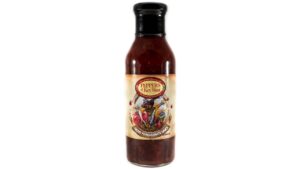
That makes Peppers of Key West Cherry Pomegranate Habanero Sauce especially interesting with a chocolate concha. The cherry and pomegranate bring fruit and acidity while the habanero contributes warmth rather than turning the pairing into a conventional hot-sauce experience.
One of the best ways to try it would be to split a chocolate concha, add a thin layer of cream cheese, and finish with a restrained amount of Cherry Pomegranate Habanero Sauce.
Now you have creamy, fruity, chocolaty, sweet, and gently spicy elements in the same bite.
The key word is restrained. We’re complementing the concha, not hiding it.
Goin’ Bananas with Rum
A vanilla concha gives us a different canvas.
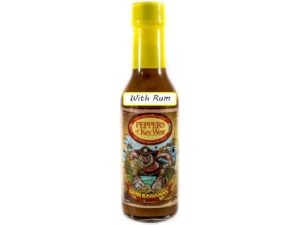
Warm it just enough to soften the crumb and wake up the aroma of the bread. Then add a little Goin’ Bananas with Rum.
Banana, rum, vanilla and sweet bread naturally move the concha toward dessert territory without requiring an elaborate recipe.
This could also be a clever way to revive a concha that’s a day past its prime. Slight warming improves the bread’s texture while the sauce adds moisture and richness.
Add vanilla ice cream and we’ve officially stopped pretending this is breakfast.
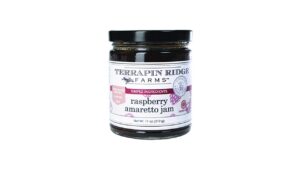
Raspberry Amaretto Jam
Sometimes the simplest pairing may be the most useful.
Split a vanilla concha horizontally and spread a little Raspberry Amaretto Jam inside.
The raspberry cuts through the sweetness with fruit acidity while the almond-like amaretto character works naturally with baked goods. Paired with coffee, it turns a plain concha into something closer to an indulgent breakfast sandwich without fundamentally changing the bread.
No complicated preparation.
No culinary gymnastics.
Just good sweet bread meeting a good preserve.
TRY THE CONCHA TRADITIONALLY FIRST—THEN EARN THE RIGHT TO GET WEIRD WITH IT.
♻️ What Can You Do with Day-Old Conchas?
Don’t throw them away.
Conchas are at their best fresh, but their enriched crumb makes yesterday’s bread surprisingly useful once you stop expecting it to behave like today’s bakery purchase.
The easiest solution is gentle warming. A short visit to a low oven can soften the crumb and restore some of the aroma that disappeared overnight. Avoid overheating it; you’re trying to revive the bread, not bake it a second time.
But day-old conchas also open the door to cooking.
Slice one horizontally and toast the cut surfaces lightly. Add butter, preserves, or a restrained sweet sauce. The crisped edges provide a different texture while the sugar topping becomes especially aromatic as it warms.
Conchas can also be transformed into French-toast-style preparations. Their enriched dough absorbs a custard mixture well, while the sugar topping contributes additional flavor as the bread cooks.
And then there’s bread pudding.
Cube several day-old conchas, combine them with a custard base, and suddenly the slightly stale bread that seemed destined for the trash has become exactly the bread you wanted.
That’s where sauces such as Goin’ Bananas with Rum or Rum Raisin become especially compelling. Rather than pretending they’re traditional toppings for fresh conchas, they can become intentional finishing sauces for a new dessert made from the bread.
The distinction matters.
Respect the original food first.
Then have some fun with the leftovers.
TODAY’S CONCHA BELONGS BESIDE THE COFFEE; YESTERDAY’S CONCHA MAY BE THE BEGINNING OF DESSERT.
❤️ Why the Concha Is Much More Than a Pretty Sweet Bread
It would be easy to remember the concha for its shell.
That’s what photographs notice first.
But spend a morning inside a Mexican panadería and a different story emerges.
The concha begins as dough beneath the hands of a baker. Its patterned topping is applied before the bread reaches the oven. It rises, cracks, browns, cools, and eventually joins dozens of other breads on a rack.
Then somebody walks in.
They pick up a tray and a pair of tongs.
One chocolate concha.
One vanilla.
Maybe another bread for somebody at home.
The tray becomes a bag. The bag reaches a breakfast table, an office, an afternoon merienda, or a café table where coffee is already waiting.
And somewhere along that journey, the shell pattern stops being the most interesting thing about the bread.
The concha matters because it participates in everyday life.
It’s recognizable enough to become an international symbol of Mexican baking, yet ordinary enough to be eaten on a Tuesday morning without anyone treating the occasion as special.
Perhaps that’s the best way to understand why this humble sweet bread has endured.
Don’t begin by asking why the concha became famous.
Walk into the panadería.
Take a tray.
Pick one up with the tongs.
Find some coffee.
Then you’ll begin to understand.
THE CONCHA MAY LOOK LIKE A SHELL, BUT ITS REAL STORY IS THE MEXICAN BAKERY CULTURE BUILT AROUND IT.
❓ Conchas FAQ
Are conchas Mexican?
Yes. Conchas are one of the most recognizable forms of Mexican pan dulce and are deeply associated with Mexico’s panadería tradition.
What does “concha” mean in Spanish?
Concha means “shell.” The bread gets its name from the curved scoring traditionally cut into its sugar topping.
What does a concha taste like?
The bread is mildly sweet, soft, and enriched, while the topping contributes additional sweetness and flavor. Vanilla and chocolate are two of the classic varieties.
Is a concha a pastry or bread?
It is best understood as a type of Mexican sweet bread, or pan dulce. Although sweet enough to resemble a pastry to some American readers, its yeast-raised bread structure distinguishes it from many cakes and pastries.
Why do conchas have a shell pattern?
A sweet topping is placed over the shaped dough and scored before baking. As the bread rises and expands in the oven, the pattern opens and helps create the recognizable shell-like surface.
Are pink conchas strawberry flavored?
Sometimes, but not always. Pink may indicate strawberry or another flavor depending on the bakery, while in other cases color plays a larger role than flavor.
What do Mexicans drink with conchas?
Coffee, café de olla, café con leche, Mexican hot chocolate, and milk are all natural companions to pan dulce.
Do Mexicans eat conchas for breakfast?
Yes, conchas can be eaten at breakfast, but they aren’t restricted to mornings. They can also appear with coffee or another drink during a snack or merienda.
Should you dip a concha in coffee?
You certainly can. Dipping softens the bread and sugary topping and is one of the most satisfying ways to experience conchas with a warm beverage.
Are conchas supposed to be dry?
They shouldn’t be unpleasantly stale or hard, but their texture is different from an icing-covered cake or filled pastry. A good fresh concha should have a tender crumb that works particularly well with a beverage.
How should conchas be stored?
Keep them covered or in an airtight container at room temperature for short-term storage. Like most bakery bread, they’re generally best enjoyed as fresh as possible.
What can you make with leftover conchas?
Try gently warming or toasting them, or use older conchas for French-toast-style preparations or bread pudding. Their enriched bread structure makes them particularly useful for recipes designed around day-old bread.
🌮 Continue Your Mexican Street Food Journey
🥐 More Mexican Bakery Favorites Worth Trying
- Traditional Mexican Pan Dulce Explained: 25 Bakery Favorites Every Food Lover Should Know
- Sweet Mexican Empanadas Explained: The Bakery Pastries Filled with Fruit, Cajeta & Pumpkin
- Cuernitos Explained: Mexico’s Buttery Bakery Favorite That Makes Every Breakfast Better
- Orejas Explained: Mexico’s Crispy Palm Pastry That’s Impossible to Eat Just One
- Pan Dulce Explained: Mexico’s Sweet Bread Tradition Beyond the Famous Concha
🇲🇽 Explore More Mexican Foods & Traditions
- Northern Mexico Breakfast Traditions: Machacado, Burritos & Ranch Cooking
- Mole Poblano Explained: Puebla’s Legendary Sauce with Chocolate, Chiles & History
- The Complete Mexican Street Food Guide: Ingredients, Dishes, Regions & Cooking Terms Explained
See more keywords: pan dulce, panadería, Mexican bakery culture, Mexican breads, Mexican pastries, Mexican breakfast bread, Mexican breakfast foods, traditional Mexican bakery, Mexican bakery traditions, pan dulce bread, sweet bread Mexico, Mexican sweet breads, concha topping, concha sugar topping, concha shell pattern, chocolate concha, vanilla concha, pink concha, fresh conchas, homemade conchas, enriched yeast bread, Mexican coffee and sweet bread, café de olla, conchas and café de olla, Mexican hot chocolate, conchas and hot chocolate, merienda Mexico, Mexican merienda, tray and tongs bakery, Mexican bakery tray and tongs, traditional pan dulce, neighborhood panadería, Mexican food culture, Mexican baking traditions, pan dulce with coffee
