
Pepper Encyclopedia Explained: Flavor, Heat, Uses & the Complete Guide to Chile Peppers
Welcome to the pepper family reunion, where the bell pepper brought no heat, the jalapeño thinks everybody knows its name, the habanero smells suspiciously like tropical fruit, and the Carolina Reaper appears to have arrived specifically to cause problems. Chile peppers range from sweet and grassy to smoky, fruity, earthy, floral, and downright volcanic, which is why judging them by heat alone misses most of the fun. This Pepper Encyclopedia breaks down the enormous world of chile peppers by flavor, Scoville heat, species, color, culinary use, and preparation. Whether you’re choosing a pepper for salsa, trying to understand dried Mexican chiles, comparing jalapeños and habaneros, or wondering how humans ended up voluntarily eating something called Pepper X, this is where your pepper education begins.
Chile peppers have a remarkable ability to make themselves unforgettable.
Sometimes it’s the snap of a fresh green jalapeño scattered across a taco. Sometimes it’s the deep raisin-like aroma of a dried ancho warming in a skillet. In the Caribbean, it might be the tropical fragrance of a Scotch bonnet disappearing into a pot of jerk-seasoned food. In Peru, the unmistakable golden-orange color and fruity warmth of ají amarillo can help define an entire dish.
And sometimes it’s a tiny piece of superhot pepper that makes you question several decisions that led to this exact moment.
Heat may be what gets our attention. But chile peppers have always been about much more than heat.
Across the Americas and eventually the world, peppers became ingredients through which cooks could create freshness, sweetness, bitterness, fruitiness, smokiness, earthiness, aroma, color, texture, and heat. Some are eaten almost like vegetables. Others are dried and ground into powders. Some are roasted until their skins blister. Others are smoked, fermented, pickled, stuffed, fried, blended into salsa, simmered into sauces, or transformed into hot sauce.
That diversity is what this Pepper Encyclopedia is about.
Rather than treating peppers as a simple ladder running from “not spicy” to “call the fire department,” we’re going to look at what actually distinguishes one chile from another: species, flavor, heat, ripeness, preparation, regional identity, and culinary purpose.
A poblano and a jalapeño aren’t simply two different positions on the Scoville scale. Neither are an ancho and a guajillo. A habanero and a ghost pepper may both be extremely hot to an inexperienced eater, yet their flavors, heat levels, histories, and culinary roles are dramatically different.
Even the same pepper can develop another identity entirely.
A green jalapeño can ripen red. Smoke and dry that ripe jalapeño and it becomes a chipotle. Allow a poblano to fully ripen and dry it and you’re entering the world of ancho chiles.
Understanding peppers therefore means understanding transformation as much as variety.
This encyclopedia is designed to become the central reference point for the complete Peppers of Key West Pepper Guide. From here, you’ll be able to dive deeper into individual pepper profiles, compare similar chiles, understand the Scoville scale, discover fresh and dried varieties, and learn why particular peppers became essential ingredients in cuisines around the world.
And because Peppers of Key West has spent plenty of time around chile peppers, hot sauces, seasonings, and people who consider sweating through lunch a perfectly reasonable recreational activity, we’ll occasionally bring that knowledge back to the kitchen.
Because the best pepper isn’t necessarily the hottest pepper. It’s the pepper that does exactly what your food needs.
LEARN THE PEPPER FIRST, AND THE HEAT BECOMES JUST ONE PART OF A MUCH BIGGER FLAVOR STORY.
🌶️ Chile Pepper Quick Guide
Before wandering into dozens of individual peppers, here’s the foundation.
What is a chile pepper?
A chile pepper is the fruit of a plant belonging to the genus Capsicum. Chile peppers originated in the Americas and now include thousands of cultivated varieties ranging from sweet peppers with essentially no heat to extraordinarily hot superhot cultivars.
Are chile peppers actually peppers?
Botanically, Capsicum peppers are unrelated to black pepper, which comes from Piper nigrum. European naming conventions connected the two because early explorers associated the pungency of chiles with the familiar spice called pepper.
What makes chile peppers hot?
Chile heat comes primarily from compounds called capsaicinoids, particularly capsaicin. These compounds interact with receptors involved in sensing heat, which is why eating a hot chile can create a burning sensation even though the pepper isn’t literally raising the temperature of your mouth.
What is the Scoville scale?
The Scoville scale expresses chile pungency in Scoville Heat Units (SHU). Sweet bell peppers sit around zero SHU, jalapeños typically reach a few thousand, habaneros can climb into the hundreds of thousands, and modern superhot peppers can reach into the millions.
Does a higher Scoville rating mean a pepper tastes better?
Absolutely not. Scoville ratings describe heat, not culinary quality. Mild and moderately hot peppers can possess extraordinary flavors, while the usefulness of any chile depends on the dish and what the cook wants it to accomplish.
Where does the heat come from inside a pepper?
Capsaicinoids are concentrated primarily in the pale placental tissue inside the fruit where the seeds attach. The seeds themselves are often blamed for chile heat, but they aren’t the primary structures producing capsaicin.
Are green and red peppers different varieties?
Sometimes—but often they’re simply different stages of ripeness. Many chile peppers begin green and change color as they mature, commonly becoming red, orange, yellow, brown, or another cultivar-specific shade.
What’s the difference between fresh and dried chiles?
Drying removes moisture and transforms flavor. Fresh peppers can taste grassy, crisp, vegetal, fruity, or floral, while dried chiles may develop deeper notes resembling dried fruit, tobacco, earth, cocoa, nuts, or raisins.
What’s the difference between a chile and a chili?
Usage varies by region and publication. In this Pepper Encyclopedia, chile generally refers to the pepper itself, while chili may appear in established names such as Thai chili or in dishes traditionally spelled that way.
How should I choose a pepper for cooking?
Start with the flavor and culinary job you need, then choose an appropriate heat level. A pepper should contribute to the food—not merely make it hotter.
What Is a Chile Pepper?
A chile pepper is the fruit of a plant in the genus Capsicum, a group whose story begins in the Americas.
Long before jalapeño poppers, bottled hot sauce, buffalo wings, peri-peri chicken, or competitive superhot peppers existed, Indigenous peoples of the Americas were cultivating and selecting chile plants for food.
Over generations, those choices helped create extraordinary diversity. Some peppers became larger or sweeter, others became hotter, and still others developed distinctive shapes, colors, aromas, or adaptations to particular environments.
After European contact connected the Americas with trade networks spanning Europe, Africa, and Asia, chile peppers traveled extraordinarily well.
That movement changed global cooking.
Today it can be difficult to imagine Sichuan cuisine without chiles, Thai cooking without fiery peppers, Indian food without chile heat, Hungarian cooking without paprika, or Portuguese and southern African peri-peri traditions without their characteristic peppers.
Yet Capsicum began in the Americas.
That’s one of the most fascinating things about chile peppers: an ingredient with American origins became so deeply integrated into cuisines around the world that many of those traditions now feel inseparable from it.
Botanically, peppers also have a habit of confusing everyday language. We call them vegetables in the kitchen, but the pepper itself is botanically a fruit, developing from a flower and containing seeds. We call them peppers, but they aren’t related to black pepper. And although people frequently associate the word chile exclusively with hot varieties, Capsicum includes everything from sweet bell peppers to superhots.
There are many Capsicum species, but most cultivated chile peppers encountered in food belong to a handful of domesticated species:
Capsicum annuum includes many enormously familiar peppers such as jalapeños, serranos, poblanos, Anaheims, cayennes, and numerous sweet peppers.
Capsicum chinense includes exceptionally aromatic and often intensely hot peppers such as habaneros, Scotch bonnets, ghost peppers, and many modern superhots.
Capsicum frutescens includes peppers associated with varieties such as Tabasco and certain small, upright-fruiting hot chiles.
Capsicum baccatum is particularly important in South American chile traditions and includes peppers such as ají amarillo.
Capsicum pubescens includes the distinctive rocoto family, known for traits such as dark seeds and adaptation to cooler highland environments.
These species aren’t merely botanical trivia. They help explain why certain peppers share recognizable characteristics. Habaneros and Scotch bonnets, for example, can both deliver pronounced fruitiness and powerful heat, while C. annuum peppers occupy an enormous range of culinary roles, from mild roasting peppers to fresh salsa chiles and dried Mexican varieties. Understanding the species gives us one more way to recognize the family resemblance between peppers.
But species alone doesn’t tell you what belongs on tonight’s tacos. For that, we need flavor.
CHILE PEPPERS AREN’T ONE INGREDIENT WITH DIFFERENT HEAT LEVELS—THEY’RE AN ENTIRE FAMILY OF FLAVORS, TEXTURES, AROMAS, AND CULINARY TRADITIONS.
 🌶️ Professor Pepper Says…
If you remember only one botanical fact, make it this: chile peppers originated in the Americas. Their importance in cuisines across Asia, Africa, and Europe shows just how completely an ingredient can become part of a new culinary tradition after traveling around the world.
Why Pepper Flavor Matters More Than Heat
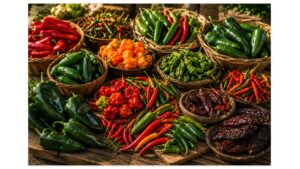
The Scoville scale is useful. It is also responsible for a lot of bad conversations about peppers. Ask people about a chile and they’ll often immediately ask, “How hot is it?” That’s understandable. Heat is dramatic, measurable, and difficult to ignore. But imagine describing every wine only by alcohol percentage, or every cheese only by salt content. You’d miss most of what makes them interesting.
Chile peppers work the same way.
A poblano is prized for its relatively mild, earthy, green flavor and broad flesh that makes it excellent for roasting and stuffing. A fresh jalapeño brings crisp texture, grassy brightness, and manageable heat. A ripe habanero can deliver powerful tropical, citrus, and floral aromas underneath substantially greater heat. An ancho—the dried form of a ripe poblano—can offer deep dried-fruit, earthy, and sometimes cocoa-like qualities that bear surprisingly little resemblance to the fresh green pepper from which it came.
The differences continue across the chile world. Guajillo chiles can bring bright red color and comparatively gentle dried-chile complexity. Chipotles introduce smoke. Ají amarillo contributes distinctive fruitiness and warmth to Peruvian cooking. Scotch bonnets bring an aromatic tropical character fundamental to many Caribbean dishes.
These aren’t interchangeable sources of capsaicin. They’re ingredients.
That distinction changes how you shop and cook. Instead of asking only, “Which pepper is hottest?” a better cook begins by asking, “What flavor does this pepper bring?” Then comes the second question: “How much heat comes with that flavor?”
A fresh salsa may benefit from the grassy brightness of serrano, while a mole or chile sauce may need the deeper character of dried ancho. A tropical fruit salsa can benefit from habanero’s floral fruitiness. A smoky marinade may call for chipotle. A stuffed pepper dish needs a chile with enough size and structure to actually hold the filling. In each case, heat matters—but it isn’t the only reason the pepper is there.
This is why replacing one chile with another based entirely on Scoville rating can produce disappointing food. Two peppers can occupy similar heat ranges and taste completely different. Likewise, peppers with dramatically different heat levels can occasionally perform similar culinary roles if the quantity is adjusted carefully.
This Pepper Encyclopedia therefore treats flavor and culinary function as equal partners with heat. Once you stop seeing peppers merely as numbers on a scale, an enormous world of cooking opens up.
THE SCOVILLE SCALE TELLS YOU HOW HARD A PEPPER CAN HIT. FLAVOR TELLS YOU WHY YOU’D WANT TO EAT IT IN THE FIRST PLACE.
🌶️ Professor Pepper Says…
A Scoville number is best treated as a range and comparison tool, not a promise about exactly how one individual pepper will taste or feel. Natural peppers vary, which is why the jalapeño you barely notice today can occasionally surprise you tomorrow.
Fresh, Ripe, Dried & Smoked Peppers: How One Chile Can Become Something Completely Different
One of the most useful lessons in our entire Pepper Encyclopedia is that a pepper’s identity doesn’t necessarily end when it leaves the plant. Ripening, drying, roasting, smoking, and even fermentation can dramatically change how a chile tastes and how cooks use it.
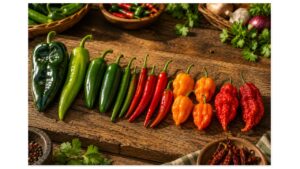
The jalapeño is one of the easiest examples. Most people recognize the familiar green jalapeño, harvested before full maturity. At this stage, it tends to have a crisp texture and bright, grassy, vegetal flavor. Leave that jalapeño on the plant and it can ripen to red. The pepper hasn’t suddenly become a different species or even a different variety; it has simply matured. During that process, its color changes and its flavor can become sweeter and less overtly green.
Then something even more interesting can happen. Take ripe red jalapeños, smoke and dry them, and you get chipotle peppers.
Same underlying pepper. Completely different culinary personality.
The transformation from poblano to ancho tells a similar story. Poblanos are commonly harvested while green, when their broad flesh, mild heat, and earthy flavor make them particularly well suited to roasting, rajas, and stuffed dishes such as chiles rellenos. Allow the fruit to continue ripening toward red, however, and another culinary possibility emerges. Once that mature poblano is dried, it becomes what cooks know as an ancho chile.
Fresh poblano can taste green, earthy, and gently spicy. Dried ancho develops deeper sweetness and concentrated flavors often compared with dried fruit, raisins, earth, and sometimes cocoa. Water disappeared and flavor concentrated, but more importantly, the culinary job of the pepper changed. A fresh poblano can become the structure of a dish. An ancho more often becomes part of its flavor foundation.
This happens throughout the chile world. Drying can concentrate sweetness and aroma while introducing dried-fruit, earthy, leathery, nutty, or tobacco-like characteristics. Smoking adds another dimension by introducing pronounced smoky aromas while simultaneously drying the fruit. Roasting changes peppers differently: direct heat can blister the skin, soften the flesh, reduce some raw vegetal qualities, and develop deeper roasted flavors.
Fermentation goes in yet another direction, allowing microorganisms to transform sugars and create acidity and complex aromas—one reason fermented chile mash has become such an important foundation for many styles of hot sauce.
This means a serious Pepper Encyclopedia can’t organize peppers solely by what they look like fresh. Sometimes the process is part of the pepper’s identity.
A CHILE DOESN’T STOP DEVELOPING FLAVOR WHEN IT LEAVES THE PLANT—SOMETIMES THAT’S WHEN ITS SECOND LIFE BEGINS.
🌶️ Professor Pepper Says…
When a recipe calls for ancho or chipotle, don’t think of the ingredient as simply a “dried pepper.” Drying and smoking create flavors the fresh pepper doesn’t possess in the same way. That’s why substituting a fresh poblano for ancho—or a fresh jalapeño for chipotle—changes much more than texture.
How Chile Peppers Are Used Around the World
Few ingredients demonstrate culinary globalization as dramatically as chile peppers. Their botanical story began in the Americas, but their culinary story eventually became global.
After chile peppers moved through expanding trade networks, cooks across Africa, Asia, Europe, and elsewhere adopted them with remarkable enthusiasm. Over generations, particular peppers became so thoroughly integrated into regional cuisines that today it can feel as though they had always been there.
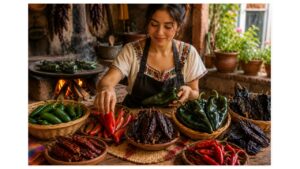
Mexico remains one of the clearest examples of what extraordinary chile diversity can accomplish. Fresh jalapeños, serranos, and poblanos can provide brightness, texture, roasting character, and varying levels of heat, while dried chiles such as ancho, guajillo, pasilla, cascabel, morita, and chile de árbol contribute entirely different flavors to sauces, marinades, soups, stews, salsas, and countless regional preparations.
If you’d like to see how these chiles fit into the larger world of Mexican ingredients, dishes, regions, and cooking traditions, The Complete Mexican Street Food Guide: Ingredients, Dishes, Regions & Cooking Terms Explained provides the broader culinary map.
The Caribbean developed another extraordinary chile tradition. Habaneros and especially Scotch bonnet-type peppers demonstrate why intensely hot chiles don’t have to sacrifice aroma. Their fruity and floral qualities work naturally with citrus, tropical fruit, allspice, grilled meats, seafood, and richly seasoned dishes.
South America provides still more examples. Peruvian cooking would be difficult to discuss seriously without ají amarillo, whose distinctive golden color, fruitiness, and moderate-to-strong heat contribute to numerous dishes and sauces. Tiny peppers such as ají charapita demonstrate another side of South America’s remarkable Capsicum diversity.
Across Asia, chiles became deeply embedded in the cooking of Thailand, India, China, Korea, and many other regions despite arriving only after transoceanic contact connected the Americas with the wider world. Thai cooking uses small, potent chiles as part of the interplay among heat, acidity, sweetness, saltiness, and aroma found in countless dishes. In parts of China, chiles became foundational to regional flavor systems, particularly where chile heat works alongside fermented bean pastes, garlic, aromatics, and Sichuan pepper. India incorporated chiles into an enormous range of regional preparations and eventually became one of the countries most strongly associated with chile-rich food.
In Europe and Africa, peppers followed still more culinary paths. Sweet and moderately pungent Capsicum varieties became central to paprika traditions in parts of Europe, while Portuguese maritime connections helped carry chiles and chile-based preparations between continents, contributing to the development of piri-piri/peri-peri traditions that became particularly important in parts of Africa.
The important lesson isn’t simply that people around the world eat hot peppers. Different cultures learned to use them for different culinary purposes. Some traditions emphasize the brightness of fresh chiles, while others depend heavily on dried peppers. Chiles can be fermented, ground into powders, roasted, smoked, combined with fruit, or used primarily for color and aroma rather than intense pungency. The same botanical family became an extraordinarily different ingredient depending on where it landed and who began cooking with it.
A chile’s importance therefore can’t be understood entirely from its Scoville rating. To understand a pepper, you also need to understand where people cook with it and what they ask it to do.
CHILE PEPPERS TRAVELED THE WORLD, BUT THE WORLD DIDN’T USE THEM THE SAME WAY—EVERY CUISINE TURNED THEM INTO SOMETHING OF ITS OWN.
Choosing the Right Pepper for Cooking
Standing in front of a pile of peppers becomes much easier once you stop asking which one is “best.” There isn’t one. The better question is: What do you need the pepper to accomplish?
If you want a fresh salsa with bright green flavor and noticeable but approachable heat, jalapeño might be perfect. Want more bite? Serrano can push the heat upward while retaining the fresh chile character that works so naturally with tomatoes, tomatillos, onions, cilantro, and lime. Need something broad enough to roast or stuff? Poblano enters the conversation.
The same thinking applies to dried and more intensely flavored peppers. If you want dried-fruit depth for a Mexican chile sauce, ancho may make sense. If you need brighter dried-chile character and vivid red color, guajillo performs a different job. Looking for smoke? Chipotle changes the equation. Want tropical fruitiness and serious heat? Habanero or Scotch bonnet territory may be appropriate. And if you’re trying to create extraordinary heat with very little pepper, ghost peppers, Carolina Reapers, Pepper X, and other superhots become relevant—but they require substantially more caution.
A useful way to make that choice is to work through five questions:
Flavor first. What should the pepper taste like?
Preparation second. Do you need it fresh, roasted, dried, smoked, pickled, fermented, or powdered?
Heat third. How much pungency should the finished food actually have?
Texture fourth. Does the pepper need to remain crisp, blend into a sauce, hold stuffing, or disappear into a seasoning?
Regional authenticity fifth. Is there a traditional pepper associated with the dish you’re making?
That final consideration can matter tremendously. Pepper choice changes dramatically across Mexico, for example, and Regional Mexican Street Food Guide: Famous Dishes from Every Corner of Mexico helps connect those ingredients to the places and food traditions where they’re actually used. Choosing the traditional chile isn’t always mandatory, but understanding why cooks in a particular region use it gives you a much better starting point before deciding to substitute something else.
Substitutions are more successful when you understand what you’re actually replacing. Swapping one pepper for another merely because both are “medium hot” ignores flavor, texture, moisture, size, and preparation. Instead, ask one question: What job was the original pepper doing?
Was it providing heat, fruitiness, smoke, color, bulk, freshness, or dried-chile complexity? A substitute doesn’t necessarily need to imitate every characteristic of the original pepper, but it should preserve the qualities that matter most to the dish. Once you identify those qualities, choosing an alternative becomes much easier.
THE RIGHT PEPPER ISN’T THE ONE WITH THE PERFECT SCOVILLE NUMBER—IT’S THE ONE THAT PERFORMS THE RIGHT JOB IN THE FOOD.
Individual Chile Pepper Guides
Knowing the principles is useful.
Knowing the individual peppers is where the Encyclopedia really begins to come alive.
The Chile Pepper Guide: Flavor, Heat, Uses & Individual Peppers Explained is designed to become the deeper reference library behind this Encyclopedia. Each individual profile examines the pepper’s flavor, Scoville range, origin, culinary uses, important transformations, practical cooking considerations, and the characteristics that distinguish it from similar chiles.
Chile de Árbol
Chile de Árbol Explained: Flavor, Heat, Uses & Why This Mexican Chile Packs a Fiery Punch
The chile de árbol moves the Pepper Encyclopedia into Mexico’s essential dried-chile tradition. Slender, bright red, and considerably hotter than the average jalapeño, it delivers clean, direct heat with grassy, earthy, lightly smoky, and nutty character. Its importance in fiery Mexican salsas—and its regional connection to Chile Yahualica, Jalisco, and Guadalajara’s tortas ahogadas—shows why understanding a chile means understanding not only heat and flavor, but also preparation and place.
Datil Pepper
Datil Pepper Explained: Flavor, Heat, Uses & Why This Pepper Is a Florida Favorite
The datil pepper takes the Encyclopedia somewhere few other chile profiles can: into a distinctly American regional pepper tradition. Closely associated with St. Augustine and Northeast Florida, the datil combines substantial Capsicum chinense heat with fruity sweetness and an aromatic character that has found its way into hot sauces, seafood condiments, mustards, jellies, barbecue sauces, and Minorcan-style clam chowder. Its exact path to Florida remains uncertain, but its generations-deep relationship with St. Augustine demonstrates how completely a chile can become part of a particular place and its food culture.
Habanero Pepper
Habanero Pepper Explained: Flavor, Scoville Heat, Uses & What Makes It So Hot
The habanero moves the conversation into significantly hotter territory while demonstrating why Scoville ratings don’t tell the whole story. Beneath its considerable heat is an intensely aromatic pepper with fruity, citrusy, and floral qualities closely associated with the cooking of Mexico’s Yucatán Peninsula.
Jalapeño Pepper
Jalapeño Pepper Explained: Flavor, Heat, Uses & Why It’s America’s Favorite Chile
The jalapeño is one of the world’s most recognizable culinary peppers, prized for its fresh grassy flavor, crisp texture, manageable heat, and extraordinary versatility. Its story also provides one of the best introductions to chile transformation because ripe red jalapeños can be smoked and dried to become chipotle peppers.
Chipotle Pepper
Chipotle Pepper Explained: Flavor, Heat, Uses & How Smoked Jalapeños Become Chipotle
The chipotle pepper continues the jalapeño story by showing how dramatically ripening and processing can change a chile’s culinary identity. Mature red jalapeños are slowly smoked and dried, transforming their fresh, vegetal character into something smoky, earthy, subtly sweet and deeply chile-forward. Chipotle demonstrates one of the Pepper Encyclopedia’s most important lessons: sometimes understanding a pepper means understanding not only what grows on the plant, but what happens to it after harvest.
Poblano Pepper
Poblano Pepper Explained: Flavor, Heat, Uses & Why It’s the Chile Behind Chiles Rellenos
The poblano demonstrates why a pepper doesn’t need extreme heat to become indispensable. Mild, earthy, broad, and substantial, it is particularly suited to roasting, stuffing, and preparations such as chiles rellenos and rajas. Its story also reveals one of the most important transformations in Mexican chile cooking: allow a poblano to ripen toward red and dry it, and the fresh pepper becomes an ancho chile with an entirely different flavor, texture, and culinary purpose.
These individual guides are only the beginning. The Pepper Encyclopedia will continue expanding across fresh peppers, dried chiles, regional varieties, superhots, and important pepper traditions from around the world, giving each chile enough room to explore the flavor, heat, history, transformation, and culinary role that make it distinctive.
Pepper Comparisons: Understanding the Differences That Matter
Learning peppers individually answers one question: What is this pepper? Comparison articles answer another: Which pepper should I use?
That’s the purpose of Pepper Comparisons: Heat, Flavor, Uses & Key Differences Explained. Rather than turning individual pepper profiles into endless “versus” discussions, the comparison library examines peppers side by side when readers genuinely need help distinguishing them.
Jalapeño and serrano make a natural comparison because both are widely used fresh in Mexican cooking, yet their heat, size, flavor, and typical culinary roles aren’t identical. Habanero and Scotch bonnet deserve comparison because they’re closely related aromatic hot peppers with important but distinct regional identities. Ancho and guajillo frequently appear in the same Mexican kitchen, but they contribute different flavors, colors, and culinary possibilities.
Other comparisons answer entirely different questions. Ghost pepper and Carolina Reaper belong together when the question becomes extreme heat, while banana pepper and pepperoncini deserve comparison because they’re commonly confused in everyday cooking. In each case, the useful question isn’t simply which pepper ranks higher on the Scoville scale. It’s what actually changes when you choose one instead of the other.
To see how chile flavor becomes part of Mexico’s larger sauce tradition, Mexican Street Food Sauces Beyond Salsa: Crema, Chili Oils, Citrus Heat & More takes those ingredients from the pepper basket into the kitchen.
Together, individual pepper profiles, side-by-side comparisons, and broader multi-pepper guides create different paths through the Encyclopedia depending on what a reader needs to know. You might begin by learning what a serrano tastes like, move to a jalapeño-versus-serrano comparison when deciding what to buy, and eventually explore how both peppers fit into the larger world of Mexican chile cooking.
The goal isn’t to declare one pepper universally better. It’s to explain which pepper makes more sense for what you’re cooking.
A GOOD PEPPER COMPARISON DOESN’T JUST TELL YOU WHICH CHILE IS HOTTER—IT TELLS YOU WHY, WHEN, AND WHERE YOU’D CHOOSE ONE OVER THE OTHER.
🌎 A World of Peppers Worth Tasting
One of the best ways to understand chile peppers is to encounter them where they’re part of everyday cooking.
In Mexico, that might mean noticing the fresh serranos beside tomatoes and tomatillos at a market, tasting roasted poblanos in a prepared dish, or seeing baskets of dried ancho and guajillo chiles sold by weight. In the Caribbean, pay attention to the aromatic hot peppers behind jerk preparations and chile sauces. In Peru, seek out dishes built around ají amarillo rather than treating it as an optional garnish.
Wherever you travel, ask what the local pepper contributes—not simply how hot it is.
Travel the World Through Chile Peppers
Mexico:
Mexico is one of the great centers of chile pepper diversity, where fresh, dried, smoked, and roasted chiles play dramatically different roles in regional cooking. From the grassy bite of jalapeños and the earthy roasted character of Puebla’s poblanos to the concentrated fire of dried chile de árbol and fruity heat of Yucatán habaneros, Mexican peppers demonstrate why understanding a chile means looking beyond heat to flavor, preparation, transformation, and place.
- Jalapeño Pepper Explained: Flavor, Heat, Uses & Why It’s America’s Favorite Chile
- Chipotle Pepper Explained: Flavor, Heat, Uses & How Smoked Jalapeños Become Chipotle
- Poblano Pepper Explained: Flavor, Heat, Uses & Why It’s the Chile Behind Chiles Rellenos
- Chile de Árbol Explained: Flavor, Heat, Uses & Why This Mexican Chile Packs a Fiery Punch
- Habanero Pepper Explained: Flavor, Scoville Heat, Uses & What Makes It So Hot
Florida, United States
Florida has developed a chile tradition of its own around the datil pepper, particularly in St. Augustine and Northeast Florida. Fruity, aromatic, and considerably hotter than a jalapeño, the datil became part of a regional food culture that includes seafood, hot sauces, mustards, jellies, barbecue sauces, and Minorcan-style clam chowder. Its precise arrival in Florida remains uncertain, but generations of local cooking have given the datil something relatively unusual in American pepper culture: a remarkably strong connection to one particular place.
Frequently Asked Questions
How many kinds of chile peppers are there?
There are thousands of cultivated chile pepper varieties across multiple Capsicum species. New cultivars continue to be developed, while many traditional regional varieties have been grown for generations.
What is the mildest chile pepper?
Sweet peppers such as bell peppers contain essentially no capsaicin heat. Among peppers commonly described as chiles, numerous varieties fall into very mild ranges.
What is the hottest pepper in the world?
Record-holder status can change as new peppers are developed and formally evaluated. Pepper X has been recognized by Guinness World Records as the hottest chile pepper, surpassing the Carolina Reaper.
Are red peppers hotter than green peppers?
Not necessarily. Color often indicates ripeness rather than a completely different pepper variety. Heat depends on genetics, cultivar, growing conditions, maturity, and the individual fruit.
Why are some jalapeños much hotter than others?
Natural variation, genetics, growing conditions, environmental stress, and maturity can all influence pungency, which is why pepper varieties are generally described using Scoville ranges.
Are dried chiles hotter than fresh chiles?
Not automatically. Drying removes water and concentrates flavors and compounds by weight, but the perceived heat depends on the pepper, preparation, amount used, and finished dish.
What’s the difference between chile peppers and chili powder?
A chile pepper is the fruit itself. Ground chile can be made from a single dried pepper variety, while products labeled chili powder may also be seasoning blends containing ingredients such as cumin, garlic, oregano, or other spices.
Can you substitute one chile pepper for another?
Yes, but the best substitute matches more than heat. Consider flavor, texture, size, moisture, preparation, and the pepper’s role in the recipe.
Do pepper seeds contain capsaicin?
Seeds can carry capsaicin on their surfaces, but capsaicinoids are produced primarily in the placental tissue inside the pepper where the seeds attach.
Why do peppers turn different colors as they ripen?
As peppers mature, pigments change and the fruit can transition from green to red, orange, yellow, brown, or other cultivar-specific colors. Flavor and aroma can change during ripening as well.
Continue Your Pepper Journey
🌶️ Start with Individual Pepper Guides
- Jalapeño Pepper Explained: Flavor, Heat, Uses & Why It’s America’s Favorite Chile
- Datil Pepper Explained: Flavor, Heat, Uses & Why This Pepper Is a Florida Favorite
- Poblano Pepper Explained: Flavor, Heat, Uses & Why It’s the Chile Behind Chiles Rellenos
- Chile de Árbol Explained: Flavor, Heat, Uses & Why This Mexican Chile Packs a Fiery Punch
- Habanero Pepper Explained: Flavor, Scoville Heat, Uses & What Makes It So Hot
- Chipotle Pepper Explained: Flavor, Heat, Uses & How Smoked Jalapeños Become Chipotle
🔥 Compare Peppers Side by Side
- Pepper Comparisons: Heat, Flavor, Uses & Key Differences Explained
🌮 See Chile Peppers in Mexican Cooking
Mexican cuisine provides one of the richest opportunities to see fresh, dried, roasted, and smoked chiles functioning as distinct culinary ingredients rather than simply different sources of heat.
- The Complete Mexican Street Food Guide: Ingredients, Dishes, Regions & Cooking Terms Explained
- Mexican Chiles Explained: Fresh vs Dried Peppers Used in Street Food
- Mexican Salsas Explained: Roja, Verde, Macha, Borracha, Taquera & More
- Mexican Street Food Sauces Beyond Salsa: Crema, Chili Oils, Citrus Heat & More
- Regional Mexican Street Food Guide: Famous Dishes from Every Corner of Mexico
- Mexican Street Food Beyond Tacos: Elote, Tortas, Tamales & More
See More Keywords
pepper guide, pepper encyclopedia explained, chile encyclopedia, hot pepper encyclopedia, Capsicum encyclopedia, pepper types, chile types, hot chile peppers, mild chile peppers, medium heat peppers, very hot peppers, superhot peppers, pepper heat levels, Scoville Heat Units, SHU peppers, capsaicin, capsaicinoids, Capsicum annuum, Capsicum chinense, Capsicum frutescens, Capsicum baccatum, Capsicum pubescens, fresh peppers, dried peppers, smoked peppers, roasted peppers, fermented peppers, pepper flavor profiles, cooking with chile peppers, choosing peppers, pepper substitutions, Mexican chiles, Caribbean peppers, South American peppers, Asian chile peppers
