
Tacos Árabes Explained: The Puebla Street Food That Inspired Al Pastor
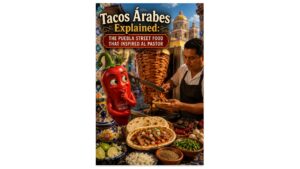
Most people assume tacos al pastor appeared out of nowhere. The truth is much more interesting. Decades before bright red pork, pineapple, and corn tortillas became street-food icons, Puebla was already serving tacos árabes—succulent spit-roasted pork tucked inside soft pan árabe thanks to Lebanese immigrants who brought shawarma-style cooking to Mexico. What followed wasn’t just another taco. It became one of the greatest examples of cultural fusion in Mexican cuisine and quietly laid the foundation for one of the country’s most famous street foods.
When people think of Mexico’s most famous pork taco, tacos al pastor usually come to mind. Thin slices of marinated pork carved from a vertical spit have become one of the country’s greatest culinary icons, appearing everywhere from neighborhood taco stands to world-famous street-food markets.
What many people don’t realize is that tacos al pastor wouldn’t exist in the form we know today without tacos árabes.
Long before bright red pork was paired with pineapple and corn tortillas, immigrants from Lebanon brought the tradition of cooking seasoned meat on a vertical spit to Puebla. Local cooks embraced the technique, adapted it using Mexican ingredients, and created tacos árabes—a unique regional specialty that blended Middle Eastern cooking traditions with Mexican flavors.
Rather than using the familiar corn tortilla, tacos árabes are traditionally served in a soft flour-based pan árabe, resembling pita bread. The pork is seasoned differently than al pastor, often emphasizing cumin, oregano, garlic, and subtle spices instead of the vibrant achiote marinade that later defined al pastor.
Its story begins in Puebla, one of Mexico’s most celebrated culinary regions. Puebla is home to legendary dishes like mole poblano, chalupas, and cemitas, while tacos árabes tell another remarkable story of immigration, cultural exchange, and culinary innovation. Regional Mexican Street Food Guide: Famous Dishes from Every Corner of Mexico explores how every state contributes its own unforgettable specialties to Mexico’s extraordinary food culture.
Today, tacos árabes remain one of Puebla’s signature street foods. Walk through the city’s neighborhoods, markets, and family-owned taquerías, and you’ll still find cooks expertly slicing spit-roasted pork into warm pan árabe just as generations have done before them.
Within Mexican Street Food Beyond Tacos: Elote, Tortas, Tamales & More, tacos árabes remind us that authentic Mexican street food has always evolved by welcoming new ideas while preserving local traditions. Some of Mexico’s greatest dishes were born through cultural exchange.
Rather than simply being “the taco before al pastor,” tacos árabes deserve recognition as one of Mexico’s most fascinating regional specialties—one that forever changed the country’s street-food landscape.
Tacos Árabes Quick Guide
- What Are Tacos Árabes? A traditional Puebla street food featuring spit-roasted pork served in soft pan árabe instead of corn tortillas.
- Where Do They Come From? Puebla, Mexico, where Lebanese immigrants introduced vertical spit-roasting techniques that inspired the dish.
- Why Are They Called “Árabes”? The name reflects the Middle Eastern heritage of the immigrants who brought shawarma-style cooking methods to Puebla.
- What Bread Is Used? Traditional tacos árabes are served in pan árabe, a soft flour-based flatbread similar to pita.
- How Are They Different from Al Pastor? Tacos árabes typically use lighter seasonings without achiote or pineapple and are served on pan árabe instead of corn tortillas.
- What Does the Meat Taste Like? Tender, smoky, and lightly seasoned with garlic, oregano, cumin, and other aromatic spices.
- Are They Still Popular? Absolutely. They’re one of Puebla’s signature street foods and remain a favorite throughout the region.
- Do They Use Pineapple? Traditionally, no. Pineapple became associated with al pastor after the evolution of tacos árabes.
- What Pairs Well with Tacos Árabes? Fresh salsa, onions, lime, roasted chiles, cilantro, and flavorful hot sauces that complement rather than overpower the pork.
Authentic tacos árabes pair beautifully with bold but balanced flavors that enhance the savory pork and warm pan árabe without masking their distinctive seasoning. Throughout this guide, we’ll highlight a few Peppers of Key West hot sauces and seasonings that naturally complement this historic Puebla specialty while letting its unique heritage shine.
How Did Tacos Árabes Inspire Al Pastor?
The story of tacos árabes is one of the greatest examples of cultural fusion in Mexican food history. While tacos al pastor have become internationally famous, their origins can be traced directly back to the streets of Puebla and the arrival of Lebanese immigrants during the late nineteenth and early twentieth centuries.
These immigrants brought with them the tradition of cooking seasoned meat on a vertical spit, much like shawarma. Instead of roasting lamb, however, local cooks gradually adapted the technique to Mexico’s ingredients and tastes by using pork, locally available spices, and fresh bread.
The result was tacos árabes—a regional specialty that would eventually inspire one of Mexico’s most famous tacos.
The vertical spit, pan árabe, and spice blends that define tacos árabes are part of the broader vocabulary of authentic Mexican cooking. Mexican Street Food Ingredients & Cooking Terms Explained: The Building Blocks of Authentic Mexican Flavor explores many of the traditional ingredients and culinary terms that appear throughout Mexico’s regional cuisine.
Over time, Mexican cooks continued experimenting. They introduced achiote, guajillo chiles, vinegar, and other regional seasonings to create a brighter, more intensely flavored marinade. Eventually, corn tortillas replaced the traditional pan árabe in many taquerías, and pineapple became a signature garnish that balanced the rich pork with sweetness and acidity.
That evolution gave birth to what we now know as tacos al pastor.
Although the two dishes share a common ancestor, they remain distinctly different. Tacos árabes celebrate the original Middle Eastern influence with subtler seasoning and soft pan árabe, while al pastor reflects decades of Mexican culinary innovation built upon the same cooking technique.
SOME OF MEXICO’S MOST ICONIC FOODS WEREN’T INVENTED OVERNIGHT—THEY EVOLVED AS CULTURES SHARED THEIR TRADITIONS ACROSS GENERATIONS.
For a deeper look at one of Mexico’s most beloved pork specialties, Al Pastor Explained: Mexico’s Most Famous Spit-Roasted Taco explores how this remarkable evolution transformed Puebla’s inspiration into a worldwide street food icon.
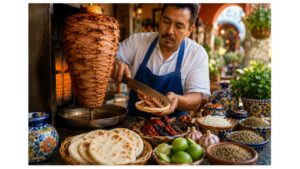
What Makes Tacos Árabes Different from Al Pastor?
Although the two dishes share the same ancestry, eating them side by side quickly reveals that they each have their own personality.
The first difference is the bread. Traditional tacos árabes are wrapped in pan árabe, a soft flour-based flatbread that reflects their Middle Eastern heritage. Al pastor, by contrast, is almost always served on small corn tortillas that have become synonymous with Mexican street tacos.
The seasoning also tells two different stories. Tacos árabes typically rely on garlic, oregano, cumin, black pepper, and other aromatic spices that allow the flavor of the pork to remain front and center. Al pastor embraces a bolder profile built around achiote, dried chiles, vinegar, and spices that create its unmistakable deep-red color.
Perhaps the biggest visual difference is pineapple. While fresh pineapple has become one of al pastor’s defining characteristics, authentic tacos árabes traditionally skip the fruit altogether, allowing the savory pork and warm bread to take center stage.
Neither dish is better than the other—they simply represent different moments in the evolution of one remarkable cooking tradition.
UNDERSTANDING BOTH DISHES MEANS APPRECIATING HOW MEXICO CONTINUALLY REINVENTS GREAT FOOD WITHOUT LOSING SIGHT OF ITS ROOTS.
If you’ve ever wondered why Puebla’s version evolved into today’s famous taco, Mole Poblano Explained: Puebla’s Legendary Sauce with Chocolate, Chiles & History offers another look at how the state’s rich culinary heritage has shaped Mexican cuisine far beyond its borders.
Why Tacos Árabes Are Still One of Puebla’s Greatest Street Foods
Although tacos al pastor eventually became Mexico’s international superstar, tacos árabes never disappeared. In Puebla, they’re not viewed as an old version of al pastor—they’re celebrated as a completely different regional specialty with their own identity, loyal following, and proud history.
Walk through Puebla’s neighborhoods, especially around long-established taquerías, and you’ll still find families lining up for freshly carved tacos árabes throughout the day. Many restaurants have been preparing them for generations, preserving recipes passed from parents to children while continuing to roast pork on traditional vertical spits.
Part of their lasting appeal is their simplicity.
Instead of relying on bold marinades or numerous toppings, tacos árabes allow the quality of the pork to shine. The warm pan árabe provides a soft, slightly chewy texture that complements the juicy meat, while a squeeze of fresh lime and a spoonful of salsa are often all that’s needed to complete the meal.
That simplicity reflects Puebla’s broader culinary philosophy. The region is famous for dishes that balance complex history with carefully prepared ingredients rather than overwhelming the palate with unnecessary additions.
Today, tacos árabes remain one of the clearest examples of how immigration helped shape Mexican cuisine without replacing its traditions. Instead, two cultures blended their techniques to create something entirely new—something that still defines Puebla’s street food scene decades later.
SOME OF MEXICO’S GREATEST STREET FOODS SURVIVE BECAUSE THEY STAY TRUE TO THEIR ROOTS WHILE NEVER STOPPING EVOLVING.
To discover another of Puebla’s legendary contributions to Mexican cuisine, Cemitas Explained: Mexico’s Ultimate Street Food Sandwich Loaded with Flavor explores the city’s famous oversized sandwich and the ingredients that have made it a local icon.
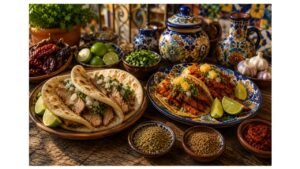
Where to Eat Authentic Tacos Árabes
While tacos árabes can occasionally be found outside Puebla, the city’s family-owned taquerías remain the best place to experience them in their traditional form. Many establishments have specialized in this regional favorite for decades, serving recipes that have changed very little over time.
One of the joys of ordering tacos árabes is watching the taquero work. Fresh pork is shaved directly from the rotating spit, tucked into warm pan árabe, and finished with simple garnishes that allow the meat to remain the star of the meal. The entire process happens in front of you, making the preparation almost as enjoyable as the first bite.
If you’re visiting Puebla, don’t expect every stand to prepare tacos exactly the same way. Some recipes lean more heavily on garlic and oregano, while others incorporate slightly different spice blends passed down through generations. That variation is part of what makes regional Mexican street food so rewarding to explore.
The experience also reminds visitors that Puebla is far more than the birthplace of mole poblano. From cemitas and chalupas to tacos árabes, the city’s street food reflects centuries of cultural exchange and culinary creativity.
🌎 If You Ever Visit Mexico…
If you’re exploring Puebla, order tacos árabes and al pastor from the same taquería and taste them side by side. Comparing the soft pan árabe, subtle seasonings, and traditional preparation of tacos árabes with the vibrant achiote flavors of al pastor offers one of the best lessons in how Mexican street food has evolved through generations of cultural exchange.
THE BEST WAY TO UNDERSTAND MEXICAN STREET FOOD IS TO TASTE THE HISTORY THAT STILL LIVES ON EVERY GRILL.
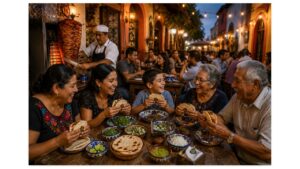
🌶️ Peppers of Key West Products That Pair Perfectly with Tacos Árabes
The beauty of tacos árabes lies in their balance. Tender spit-roasted pork, warm pan árabe, subtle spices, and simple toppings create a street food that’s rich without being overpowering. The best sauces and seasonings should complement that balance, adding brightness, garlic, gentle heat, or smoky depth while allowing the pork to remain the star of every bite.
Product Pairing Quick Guide
- Jalapeño Garlic Hot Sauce – Traditional tacos árabes, pan árabe, grilled pork, roasted vegetables
- Serrano Pepper Hot Sauce – Fresh cilantro, onions, lime, authentic Puebla-style street tacos
- Cherry Pomegranate Habanero Grilling Sauce – Marinating pork, grilled vegetables, sweet-savory pork pairings
- Porky Pig Pork Seasoning – Homemade tacos árabes, pork roasts, grilled pork shoulder, shawarma-inspired cooking
🌶️ Peppers of Key West Products for Tacos Árabes
Authentic tacos árabes rely on well-seasoned pork rather than overpowering marinades. These Peppers of Key West products enhance the natural flavors of the meat while respecting the traditional character of Puebla’s historic street food.
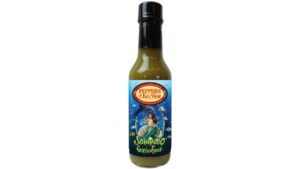
Jalapeño Garlic Hot Sauce
Smooth jalapeño heat and savory garlic pair naturally with the lightly seasoned pork used in tacos árabes. A few dashes brighten every bite without overpowering the delicate blend of cumin, oregano, and garlic that makes this Puebla specialty unique.
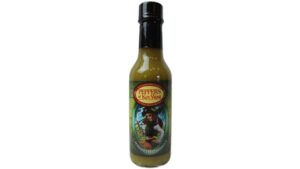
Serrano Pepper Hot Sauce
Fresh serrano peppers provide vibrant green chile flavor that complements fresh cilantro, onions, lime, and warm pan árabe. It’s an excellent finishing sauce for diners who enjoy a clean, bright heat that lets the pork remain the centerpiece.
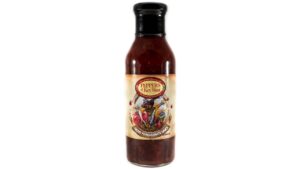
Cherry Pomegranate Habanero Grilling Sauce
This mild grilling sauce brings subtle fruit sweetness that works beautifully when grilling pork for homemade tacos árabes. The cherries, pomegranate, and gentle habanero warmth enhance caramelization while complementing the savory spices traditionally used in the dish.

Porky Pig Pork Seasoning
Designed specifically for pork, this seasoning adds layers of garlic, herbs, and savory spices that work exceptionally well on pork shoulder before roasting or grilling. It’s a natural choice for home cooks recreating the authentic flavors of Puebla’s famous tacos árabes.
Frequently Asked Questions:
What are tacos árabes?
Tacos árabes are a traditional Puebla street food made with spit-roasted pork served in soft pan árabe, a flour-based flatbread inspired by Middle Eastern cuisine.
Why are they called tacos árabes?
The name honors the Lebanese immigrants who introduced shawarma-style vertical spit cooking to Puebla, inspiring the creation of the dish.
Are tacos árabes the same as al pastor?
No. Tacos árabes are the predecessor to al pastor. They use lighter seasonings, pan árabe instead of corn tortillas, and traditionally do not include pineapple.
What is pan árabe?
Pan árabe is a soft flour-based flatbread similar to pita that has traditionally been used to serve tacos árabes in Puebla.
What meat is used for tacos árabes?
Pork is the traditional choice, seasoned with garlic, oregano, cumin, and other aromatic spices before being cooked on a vertical spit.
Where did tacos árabes originate?
They originated in Puebla, Mexico, where Lebanese immigrants adapted their traditional shawarma cooking techniques using local ingredients.
Do authentic tacos árabes include pineapple?
No. Pineapple is associated with al pastor and is not traditionally served with authentic tacos árabes.
What is the difference between tacos árabes and shawarma?
Both use vertical spit-roasting, but tacos árabes feature Mexican seasonings, pork, and local ingredients that distinguish them from traditional Middle Eastern shawarma.
Can I make tacos árabes at home?
Yes. While a vertical spit provides the most authentic preparation, seasoned pork cooked on a grill or in the oven can still produce excellent homemade tacos árabes.
Why are tacos árabes important in Mexican food history?
They represent one of Mexico’s greatest examples of culinary fusion and directly inspired the development of tacos al pastor, now one of the country’s most famous street foods.
Continue Your Mexican Street Food Journey
From This Collection
- Cemitas Explained: Mexico’s Ultimate Street Food Sandwich Loaded with Flavor
- Chalupas Explained: Puebla’s Traditional Street Food That’s Nothing Like Taco Bell
- Mole Poblano Explained: Puebla’s Legendary Sauce with Chocolate, Chiles & History
- Mole Poblano vs. Mole Negro: What’s the Difference Between Mexico’s Two Most Famous Mole Sauces?
- Regional Mexican Street Food Guide: Famous Dishes from Every Corner of Mexico
- Mexican Street Food Markets Explained: How to Order Like a Local and Find the Best Food Fast
- Mexican Street Food Ingredients & Cooking Terms Explained: The Building Blocks of Authentic Mexican Flavor
- Mexican Street Food Sauces Beyond Salsa: Crema, Chili Oils, Citrus Heat & More
Expand Your Flavor Journey
- Al Pastor Tacos Loaded with Pineapple Heat, Smoky Pork & Street Taco Flavor
- Best Hot Sauce for Pork Tacos: Sweet, Smoky & Spicy Pairings That Win
- How to Build a Taco Flight with Multiple Meats, Sauces & Heat Levels
- Taco Night Checklist: Everything You Need for a Stress-Free Taco Bar
Explore More Keywords
tacos árabes, tacos arabes, tacos árabes explained, what are tacos árabes, Puebla street food, Puebla cuisine, authentic Puebla food, Lebanese Mexican food, Lebanese influence on Mexican cuisine, shawarma Mexico, tacos árabes vs al pastor, history of al pastor, history of tacos árabes, pan árabe, Mexican flatbread, spit roasted pork, vertical spit tacos, authentic Mexican pork tacos, Mexican street food history, regional Mexican street food, Puebla regional specialties, colonial Puebla food, cumin pork tacos, oregano pork tacos, garlic pork tacos, traditional Mexican tacos, authentic Mexican street food, Mexican culinary history, Middle Eastern influence in Mexico, Mexican food culture, pork street food, taquería Puebla, tacos from Puebla, authentic taquería, Mexican street food traditions, famous Puebla dishes, Mexican regional cuisine, cultural fusion food, Mexico food history, street food evolution.
