
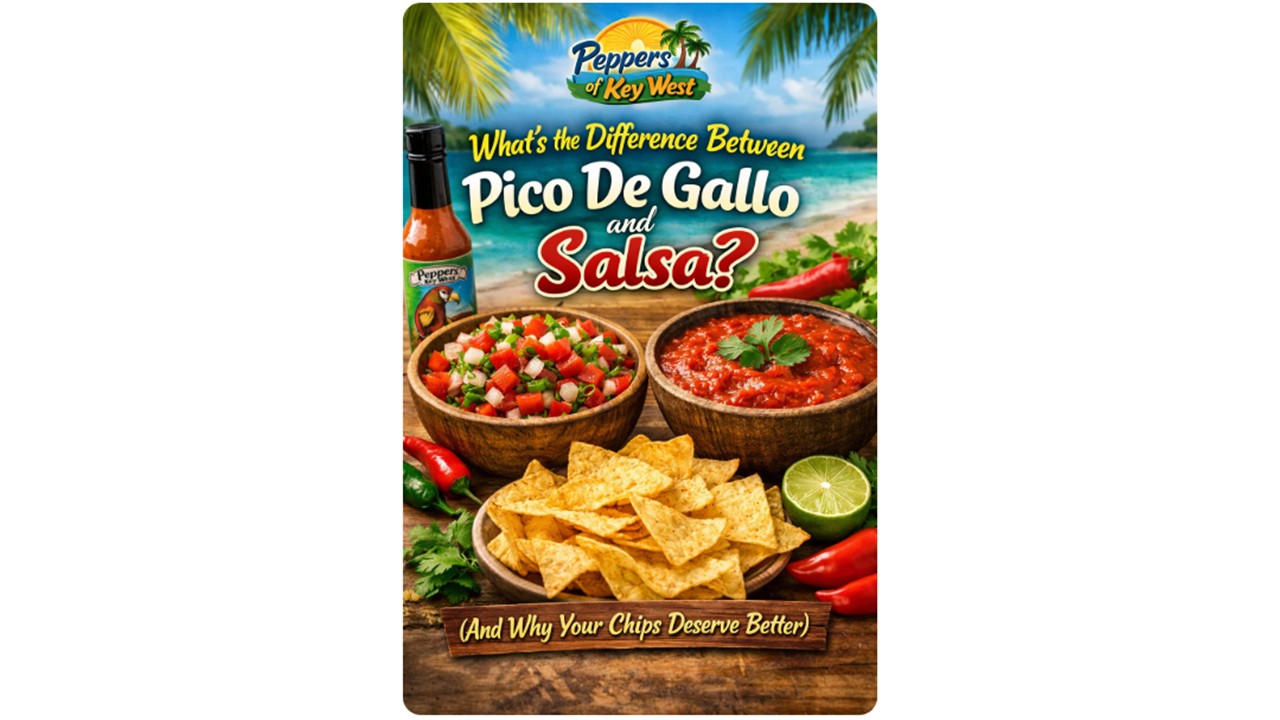
What’s the Difference Between Pico De Gallo and Salsa? (And Why Your Chips Deserve Better)
Let’s be honest—most people treat pico de gallo and salsa like identical twins. And if you’re still treating every dip the same without reaching for a bold premium hot sauce, your snack game might need an upgrade. They look similar, they hang out at the same parties, and they both disappear suspiciously fast when tortilla chips are involved. But under the surface, these two are wildly different personalities. One is fresh, bright, and crunchy. The other can be smoky, smooth, fiery, or downright dangerous depending on what’s lurking inside.
There are few debates in life as quietly chaotic as the difference between pico de gallo and salsa. It’s the kind of confusion that doesn’t seem like a big deal—until you show up with the wrong one and suddenly your tortilla chips are judging you. Hard.
At first glance, pico de gallo and salsa appear nearly identical. They share ingredients, colors, and even the same general purpose: to make everything you eat significantly better. But beneath the surface, these two are completely different experiences. One is fresh, crisp, and unapologetically chunky. The other is versatile, unpredictable, and often dangerously addictive.
Pico de gallo, also known as salsa fresca, is the minimalist of the pair. It’s made with fresh diced tomatoes, onions, cilantro, lime juice, and peppers, all combined without cooking or blending. Every ingredient is visible, every bite is distinct, and nothing is hiding. It’s clean, bright, and refreshing—like the culinary equivalent of opening a window on a perfect day.
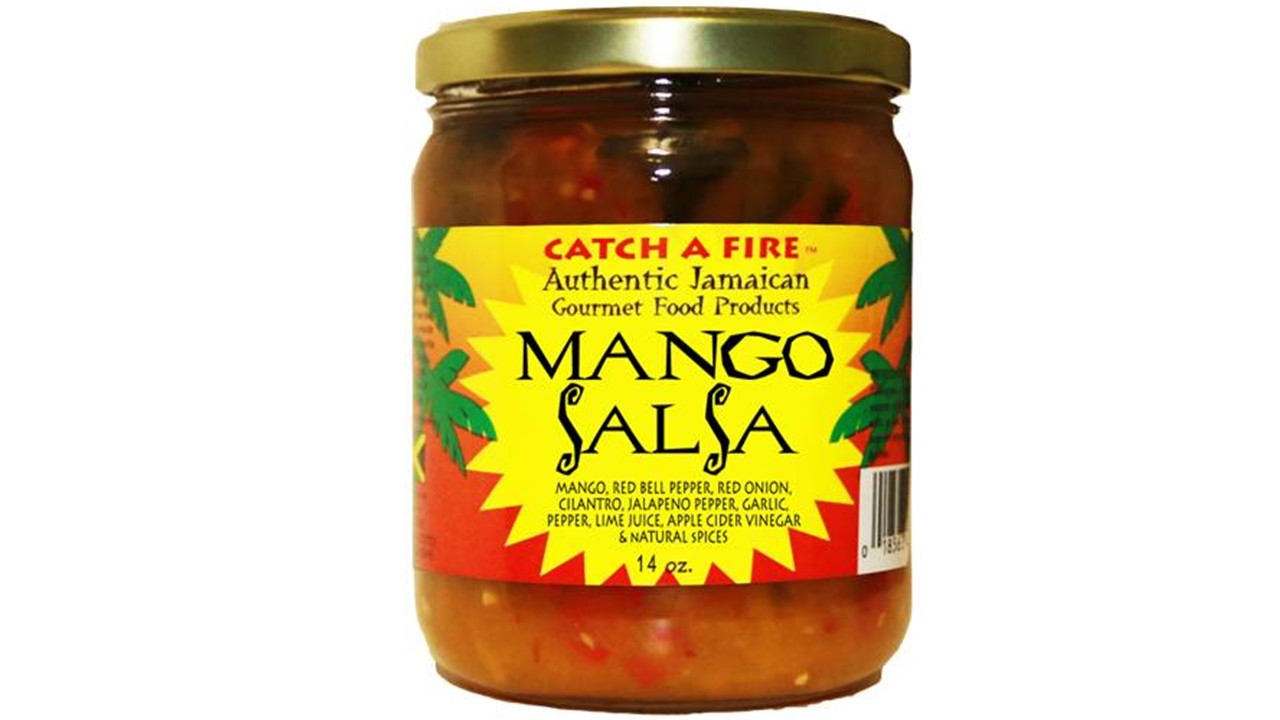
Salsa, on the other hand, is where things get interesting. Salsa doesn’t follow rules. It can be raw, cooked, roasted, blended, smooth, chunky, mild, or explosively hot. It adapts to whatever direction you want to take it. If pico de gallo is a carefully arranged playlist, salsa is a live concert that might get out of control—in the best way possible. Looking for a bold example? Try our Catch a Fire Mango Salsa.
The most important difference comes down to preparation. Pico de gallo is always raw and chopped. Salsa often involves cooking or blending, which changes both the flavor and texture. Cooking deepens flavors, while blending creates a smoother, more unified experience. This is why salsa tends to feel richer and more complex, while pico stays fresh and vibrant. Ready to make your own? This recipe is a great place to start – Harvest Peach & Hatch Rumba Salsa
Texture is another defining factor. Pico de gallo delivers a noticeable crunch. You can taste each ingredient individually, yet they come together in a balanced way. Salsa, especially when blended, creates a cohesive flavor where everything merges into one smooth bite. It’s less about individual ingredients and more about the overall experience.
Now let’s talk about heat, because this is where the gap really widens. Pico de gallo typically keeps things mild to moderate. It might include jalapeños or serranos, but it’s not usually trying to challenge your pain tolerance. Salsa, however, is where spice lovers thrive.
This is where a premium hot sauce becomes a gamechanger. Adding hot sauce to salsa doesn’t just increase heat—it transforms the entire flavor profile. A well-crafted hot sauce introduces layers of flavor that raw ingredients alone can’t achieve, similar to that of Catch a Fire’s Mangolian Sweet Heat Pepper Sauce. Citrus notes, smoky undertones, and complex spice blends turn a simple salsa into something unforgettable.
When that hot sauce comes from Peppers of Key West, things go to another level. These sauces aren’t just about heat—they’re about flavor. Tropical influences, balanced acidity, and bold pepper profiles create a depth that enhances everything they touch. A spoonful of salsa becomes a full sensory experience.
Imagine dipping a chip into a roasted salsa infused with rich tomatoes and garlic, then adding a splash of Peppers of Key West hot sauce. The result isn’t just spicy—it’s dynamic. The heat builds, the flavors evolve, and suddenly you’re reaching for another chip without even thinking about it.
Pico de gallo plays a different role. It’s not trying to overwhelm you—it’s trying to balance everything else on your plate. It cuts through richness, adds brightness, and provides a refreshing contrast to heavier foods. It’s the perfect companion to tacos, grilled meats, and anything that needs a little lift.
That doesn’t mean pico can’t handle heat. Adding a gourmet hot sauce to pico de gallo creates a hybrid experience that blends freshness with intensity. The key is balance. Too much heat, and you lose the clean, crisp character that makes pico special. Just enough, and you create something entirely new.
There’s also a cultural distinction worth noting. Pico de gallo is deeply rooted in traditional Mexican cuisine as a fresh condiment. Salsa, meanwhile, is a broader category with countless variations across regions and styles. From smoky chipotle blends to tangy green salsas, the possibilities are endless.
Convenience also plays a role. Pico de gallo is best when it’s fresh. It doesn’t store well for long periods and is meant to be enjoyed soon after it’s made. Salsa, especially cooked or jarred varieties, has a longer shelf life. It’s more versatile and easier to keep on hand.
But convenience isn’t everything. Flavor is what matters. Experience is what matters. And when it comes to flavor, both pico de gallo and salsa have something valuable to offer.
The real answer to which one is better is simple: you don’t choose. You use both. Pico for freshness. Salsa for depth. Peppers of Key West hot sauce for intensity.
Because at the end of the day, your chips deserve options. They deserve variety. They deserve excitement.
And if that excitement includes a bold kick from Peppers of Key West, then you’re not just eating—you’re doing it right.
If you’re serious about trying a highly flavorful salsa], our Catch a Fire Mango Salsa is where to start.
❓ Frequently Asked Questions
What is the main difference between pico de gallo and salsa?
Pico de gallo is fresh and chunky, while salsa can be cooked, blended, and range from smooth to chunky.
Is pico de gallo considered a salsa?
Yes, pico de gallo is a type of salsa, but it is always fresh and unblended.
Which is spicier, pico de gallo or salsa?
Salsa is usually spicier because it can include hotter peppers, like a Ghost or Habanero pepper and hot sauce.
Can you add a Peppers of Key West hot sauce to pico de gallo?
Yes, adding hot sauce enhances both flavor and heat.
Why is salsa smoother than pico de gallo?
Because salsa is often blended or cooked, which breaks down the ingredients.
)