Corundas Explained: Michoacán’s Triangular Tamales with Ancient Purépecha Roots
Some tamales arrive in tidy little packages. Corundas look like someone decided masa needed geometry.
These distinctive triangular and multi-pointed tamales are one of Michoacán’s great regional foods, made from corn masa, traditionally wrapped in long green maize leaves, and steamed until tender. Their unusual shape immediately gets attention, but the better story lies underneath it. Corundas are deeply connected to Purépecha culinary tradition, generations of maize knowledge, and the kitchens of Michoacán where they remain very much alive today. From the way they’re folded to the salsa, crema, and oaxaca cheese that often arrive alongside them, corundas prove that sometimes the wrapper tells you almost as much about a food as what’s inside.
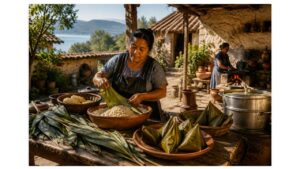
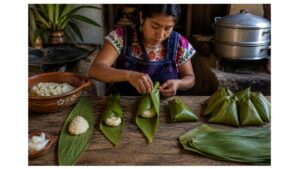
A pair of practiced hands moves across a long green maize leaf in a Michoacán kitchen. A portion of pale corn masa is placed near one end, and then the folding begins. The leaf turns over itself, the cook changes direction, and with each practiced movement the soft mound of dough disappears farther inside a compact geometric bundle. There is no triangular mold waiting on the table and no tool forcing the masa into shape. The geometry emerges entirely from the hands doing the wrapping.
Nearby, finished bundles wait for the steamer. Some resemble simple triangles. Others reveal extra folds and points that make them look almost architectural. Steam escapes from a pot at the edge of the kitchen while another maize leaf is spread across the work surface and the process begins again.
These are corundas, and you are in Michoacán.
Calling them “triangular tamales” is useful if you’ve never encountered one before, but it is a little like describing a tlayuda as a large tortilla. The description isn’t wrong. It simply leaves out most of what makes the food worth understanding.
Corundas belong deeply to the cuisine of Michoacán and to the culinary heritage of the Purépecha people. Traditional versions begin with corn masa, often enriched with manteca, and are wrapped in long green leaves from the maize plant rather than simply the dried corn husks many Americans associate with tamales. The leaf isn’t merely packaging. Its length and flexibility allow the cook to fold the masa repeatedly into the distinctive geometric form that immediately separates a corunda from most other Mexican tamales.
But even that shape is only the visible part of the story.
Corundas connect maize agriculture with Indigenous cooking knowledge, regional identity, family kitchens, celebrations, and generations of cooks who learned the technique not by studying written instructions but by watching someone else’s hands. Understanding them means looking beyond the finished tamal and asking where the masa came from, why it is wrapped this way, and how a particular way of working with maize became part of Michoacán’s culinary identity.
Corundas are also part of Mexico’s much larger world of foods that stretch far beyond the taco. Our Mexican Street Food Beyond Tacos: Elote, Tortas, Tamales & More guide explores that broader landscape, from tamales and regional masa foods to tortas, tostadas, antojitos, seafood, sweets, and other dishes that define Mexican street-food culture.
If you want to understand the ingredient beneath the leaf first, What Is Masa? The Ancient Corn Dough Behind Authentic Mexican Street Food explores how nixtamalized maize becomes the foundational dough behind tortillas, tamales, sopes, gorditas, tlacoyos, huaraches, and countless other Mexican foods.
Here, we’re following that masa west to Michoacán.
Because once it arrives there, generations of Purépecha cooking knowledge give it a shape you won’t forget.
CORUNDAS AREN’T SIMPLY MICHOACÁN’S TRIANGULAR ANSWER TO THE TAMAL—THEY’RE A PIECE OF PURÉPECHA FOOD HISTORY THAT PEOPLE ARE STILL FOLDING, STEAMING, AND EATING TODAY.
🌽 Quick Guide to Corundas
What are corundas?
Corundas are traditional tamales from Michoacán with strong roots in Purépecha cuisine. They’re made from corn masa, traditionally wrapped in long green maize leaves, and steamed into distinctive triangular or multi-pointed shapes.
Why are corundas triangular?
Their geometry comes from the wrapping technique. The cook repeatedly folds a long maize leaf around the masa, changing direction as the bundle forms and creating the characteristic points and faces without using a mold.
Are corundas the same as regular tamales?
They belong to the larger Mexican tamal family, but their shape, wrapping technique, regional identity, and often relatively simple masa-centered construction distinguish them from many filled tamales found elsewhere in Mexico.
Are corundas filled?
Traditional corundas are often primarily about the masa itself rather than a large enclosed filling. Many are served with salsa, crema, cheese, or other accompaniments, although regional and filled variations exist.
How are corundas served?
Corundas are commonly eaten hot with red or green salsa, crema, and cheese, sometimes with rajas or alongside more substantial regional dishes. The relatively simple steamed masa becomes a base for the flavors added around it.
Where do corundas come from?
Corundas are strongly associated with Michoacán and Purépecha culinary traditions, particularly communities in the state’s central, lake, and highland regions.
Corundas Begin with Purépecha Michoacán, Not with Their Shape
The easiest thing to notice about a corunda is the triangle. The more important thing to notice is where you’re eating it.
Travel through Michoacán and maize repeatedly reveals itself as more than an ingredient. The state stretches across agricultural valleys, wooded highlands, lake regions, warmer lowlands, towns, cities, and Indigenous communities whose cuisines developed in response to very different landscapes. Yet maize runs through much of that culinary geography, transformed into tortillas, tamales, drinks, antojitos, ceremonial foods, and regional preparations whose shapes and techniques can tell you something about the communities that make them.
Within that landscape, Purépecha communities developed an extraordinary culinary vocabulary around maize. Generations of cooks learned how different corn behaved, how nixtamal should be prepared, how masa should feel beneath the fingers, which leaves could hold it, and how changing the thickness, shape, wrapper, or cooking method could produce an entirely different food from essentially the same agricultural foundation.
Corundas belong to that vocabulary.
The Purépecha name khurhúnda survives alongside the Spanish corunda, an important reminder that the food’s history didn’t begin when outsiders encountered a strangely shaped tamal. Its roots lie within Indigenous Michoacán, where maize agriculture and the knowledge required to transform corn into nourishing food developed across generations.
That history is important, but describing corundas only as an “ancient Purépecha food” can accidentally make them sound like culinary artifacts preserved from another time. Walk into the right Michoacán kitchen and the distinction disappears. Masa is still being mixed. Leaves are still being folded. Steamers are still being opened. Corundas are still dressed with salsa, crema, and cheese and placed on tables for people who didn’t come for a history lesson. They came because corundas are part of what people eat.
That is one of the most interesting things about traditional food. Survival rarely means remaining unchanged behind glass. It means remaining useful, desirable, teachable, and worth making again.
The history is ancient. The cooking is present tense.
 🌶️ Professor Pepper Says…
When a Mexican food has Indigenous roots, don’t assume “traditional” means frozen in time. Corundas survived because generations of cooks kept making, serving, adapting, and teaching them.
That continuity is what makes a corunda more revealing than its unusual shape initially suggests. The triangle catches your attention. The deeper story is that someone still knows how to make it.
THE MOST IMPORTANT THING ABOUT A CORUNDA ISN’T THAT IT LOOKS DIFFERENT FROM OTHER TAMALES—IT’S THAT THE SHAPE STILL CARRIES A LIVING PURÉPECHA FOOD TRADITION.
Why Corundas Don’t Look Like the Tamales Most Americans Know
Ask many Americans to picture a tamal and a familiar image appears: an elongated portion of masa wrapped inside a dry beige corn husk, perhaps concealing pork, chicken, cheese, or chiles down the center. That form represents an important part of Mexico’s enormous tamal tradition, but it can also create the mistaken impression that a tamal is one particular food with one particular shape.
Then somebody places a corunda on the table.
The family resemblance is obvious—masa, maize, wrapping, steam—but almost everything about the architecture has changed.
Traditional corundas frequently use long green leaves from the maize plant rather than relying exclusively on the dried husks surrounding an ear of corn. That difference matters because the wrapper isn’t passive. Its shape and flexibility influence what the cook can do with the masa inside. A long maize leaf can travel around the dough repeatedly, allowing a skilled cook to build the compact triangular and multi-pointed forms associated with corundas.
Watch someone experienced wrap one and the geometry stops seeming mysterious. The cook places masa near one end of the leaf, folds it over, changes direction, and folds again. The bundle rotates through her hands while the remaining leaf wraps around it, each movement enclosing another surface and tightening the package until the masa has disappeared completely inside.
There is no mold.
The cook creates the geometry through the fold itself.
That is why describing corundas merely as triangular tamales misses something important. Their shape isn’t a decorative flourish added to make the finished food distinctive. It is evidence of technique. You can look at the final bundle and see the movements that produced it.
Traditional preparation also reveals variation within the category itself. Some corundas are relatively simple masa preparations enriched with manteca, while other regional forms may incorporate additional ingredients. Historical and regional traditions also include corundas de ceniza, connecting the dish to another way of using alkaline treatment in the preparation of maize. Even the geometry varies; some finished corundas appear clearly triangular, while others develop additional faces and points through more elaborate folding.
That variation is worth remembering because Mexican regional foods rarely behave as neatly as definitions suggest. There isn’t one cook standing somewhere in Michoacán producing the official corunda against which every other version must be measured. Family knowledge, community traditions, available maize, wrapping materials, occasion, and regional preference all leave fingerprints on the food.
What remains remarkably recognizable is the relationship between masa, leaf, hands, and steam.
The wrapping isn’t decoration.
It is the technique.
A CORUNDA’S GEOMETRY ISN’T A GIMMICK—IT’S THE VISIBLE RECORD OF HOW GENERATIONS OF MICHOACÁN COOKS LEARNED TO TURN MASA AND MAIZE LEAVES INTO SOMETHING DISTINCTLY THEIR OWN.
What Goes Inside a Corunda? Start with the Masa
Once the maize leaf has been unfolded, the first surprise for someone accustomed to meat-filled tamales may be how little a traditional corunda appears to be hiding.
That simplicity is deliberate.
In many traditional preparations, the masa itself is the center of the experience. Rather than functioning primarily as a shell around a generous stripe of pork, chicken, cheese, or chile filling, corunda masa is prepared to have enough richness and character to stand largely on its own. Corn provides the foundation, while manteca—rendered pork fat traditionally used throughout Mexican cooking—is worked into the masa to contribute richness, tenderness, and a softer texture after steaming. It doesn’t simply make the dough richer; the fat helps create the tender, satisfying masa that allows a traditional corunda to taste complete even without a substantial filling. Depending on the cook and preparation, other ingredients may also be incorporated to adjust flavor and texture.
That makes the quality of the masa especially important. There is nowhere for poorly prepared dough to hide.
A good corunda should emerge from the steamer tender and cohesive rather than dry or crumbly, with the richness of the fat supporting rather than burying the flavor of the corn. The texture should feel substantial enough to hold its geometric form when unwrapped, yet soft enough to yield easily beneath a fork. The maize leaf contributes its own subtle aroma during steaming, making the wrapper part of the cooking environment even though it isn’t eaten.
This is one reason understanding masa changes the way you understand corundas. The same foundational dough can become a paper-thin tortilla, a thick sope, a stuffed gordita, an elongated tlacoyo, or a steamed tamal depending on hydration, preparation, shaping, and cooking technique. Corundas demonstrate that principle beautifully: here, masa isn’t pressed against a hot comal at all. It is enriched, enclosed inside a leaf, and cooked slowly in steam.
The result is a tamal whose apparent simplicity puts unusual pressure on technique.
WHEN MASA IS THE STAR RATHER THAN JUST THE WRAPPER AROUND A FILLING, EVERY DECISION ABOUT CORN, FAT, MOISTURE, FOLDING, AND STEAM MATTERS MORE.
Corundas de Manteca and Corundas de Ceniza Tell Two Different Maize Stories
Spend enough time around traditional Mexican corn cooking and a pattern begins to emerge: the closer you look at a dish that initially seems simple, the more variations appear beneath the surface.
Corundas are no exception.
One of the most familiar styles is the corunda de manteca, made with masa enriched with rendered pork fat. Unlike a filled tamal, where much of the flavor may come from meat, chile, or another filling enclosed inside the masa, a corunda de manteca builds much of its richness directly into the dough. Manteca changes more than flavor. Worked properly into the masa, it contributes richness and a softer, more tender texture, helping the corunda remain moist and satisfying after steaming. That matters especially in traditional corundas that contain little or no filling: what may look restrained beside a heavily filled tamal has already been seasoned and enriched from within.
Then there are corundas de ceniza, whose name points toward a different chapter in Mexico’s relationship with maize.
Ceniza means ash. In traditional maize preparation, wood ash can provide the alkaline environment used to process corn, representing one of the older approaches within the much broader family of techniques we now discuss under nixtamalization. The underlying principle is remarkably important: dried maize isn’t simply ground raw and mixed with water. Alkaline processing changes the kernel, helping create the flavor, texture, workability, and nutritional qualities that made nixtamalized corn so fundamental to Mesoamerican foodways.
For a reader encountering these traditions for the first time, it can be tempting to sort them into a simple timeline—ash must be the ancient version, lime the modern one, and packaged masa harina the newest. Real food culture is rarely that tidy. Methods overlap. Families preserve particular practices. Ingredients change with place and availability. Traditional knowledge survives alongside newer conveniences rather than politely disappearing when another technology arrives.
What matters here is what corundas reveal. A triangular bundle that might initially look like a quirky regional tamal can lead all the way back to much larger questions about how Indigenous communities learned to transform maize into usable dough.
That is an extraordinary amount of history hiding inside a leaf.
🌶️ Professor Pepper Says…
Nixtamalization isn’t one rigid recipe that every community has always performed identically. Alkaline processing of maize developed through different materials and local practices, including the use of wood ash. The technique matters because it changes what corn can become.
The distinction also gives us another reason not to reduce corundas to their shape. Their geometry is memorable, but the deeper tradition begins before anyone folds the first leaf—with maize and the knowledge required to transform it.
CORUNDAS DE CENIZA REMIND US THAT THE STORY OF A TAMAL CAN BEGIN LONG BEFORE THE STEAMER—WITH THE WAY A COMMUNITY LEARNED TO TURN DRIED MAIZE INTO FOOD.
From a Green Maize Leaf to the Steamer
Once the corunda is wrapped, the cook’s hands have finished shaping it, but the transformation of the masa is only beginning.
The bundles are arranged inside a steamer so hot vapor can circulate around them. As the temperature rises, moisture and heat move through the leaf and into the dough. The masa firms, the fat disperses through it, and the soft mixture that went into the wrapper gradually develops enough structure to hold the shape created by the folds.
Meanwhile, the leaf changes too.
The vivid green wrapper softens and darkens as it steams. Its aroma mingles with the corn inside, and the sharp creases created during wrapping settle into the compact package. By the time the lid is lifted, the steamer no longer holds raw masa wrapped in fresh leaves. It holds individual portions that can be carried, unwrapped, plated, and dressed without losing the geometry that made them recognizable in the first place.
There is something wonderfully practical about the entire system. The wrapper shapes the food, contains it during cooking, protects the masa from direct heat, helps create a moist steaming environment around each portion, and provides a natural package when the corunda is finished.
But knowing when the masa inside is ready is still a matter of experience.
Recipes can provide steaming times, but traditional cooks also learn to read the food itself: how the wrapper looks, how the package feels, whether the masa has properly set, and how easily the cooked corunda separates from its leaf. These are the small pieces of sensory knowledge that are difficult to capture in a written recipe but easy to recognize after you’ve watched someone make the same food hundreds of times.
That is why so much traditional cooking knowledge resides in hands.
A recipe can tell you to fold.
Someone beside you can show you how tightly.
A recipe can tell you to steam.
Someone who has made corundas for decades can recognize when they’re done before you’ve decided which timer to set.
THE STEAMER COOKS THE MASA, BUT EXPERIENCE TELLS THE COOK WHEN THE CORUNDA IS READY.
When the Leaf Opens, the Corunda Is Only Half Finished
This is where corundas become particularly interesting.
Lift one directly from the steamer, unwrap the softened maize leaf, and what appears on the plate can look almost austere: a warm geometric portion of steamed masa, fragrant with corn and rich from its preparation but lacking the colorful filling many diners expect when they hear the word tamal.
Then the plate starts changing.
A spoonful of salsa moves across the top. Crema follows, cooling and softening the sharper edges of chile and acidity. Crumbled or grated cheese adds salt and richness. Depending on the household, vendor, region, or meal, rajas or other accompaniments may join them.
Suddenly the simplicity makes sense.
Instead of placing every flavor inside the tamal before steaming, many corundas create a relationship between the relatively restrained masa and what is spooned over it afterward. The corunda becomes the warm corn-centered foundation beneath salsa, dairy, chile, and whatever else accompanies the meal.
That arrangement also changes the eating experience. Salsa doesn’t disappear into an enclosed filling; it coats the outside of the steamed masa. Crema settles into folds and edges. Cheese clings to the warm surface. Each forkful can carry a slightly different balance of corn, richness, acidity, chile, and salt.
A TRADITIONAL CORUNDA MAY LEAVE THE STEAMER LOOKING SIMPLE, BUT THE PLATE IS WHERE SALSA, CREMA, CHEESE, AND MASA FINALLY BECOME ONE DISH.
Corundas Can Be a Side Dish, a Meal, or Part of Something Bigger
It would also be a mistake to imagine every corunda being eaten alone from a street-food stand.
Like many traditional Mexican foods, context changes what the dish is doing.
A few corundas dressed generously with salsa, crema, and cheese can become a satisfying meal. In another setting, they may accompany meat or another substantial preparation, using their soft maize richness much the way tortillas or other starches help complete a plate. They also appear in family meals, celebrations, community gatherings, and regional food traditions where the boundary between “street food,” “home cooking,” and “ceremonial food” is far less rigid than an article category might suggest.
That flexibility is worth emphasizing because our larger Mexican Street Food library isn’t really about proving that every food discussed is sold exclusively from a cart.
It is about understanding the foods, ingredients, techniques, markets, vendors, regional traditions, and everyday eating culture that surround Mexican street food.
Corundas belong naturally in that world because the same food can move between kitchen and market, ordinary meal and celebration, individual snack and shared table without losing its identity.
And in Michoacán, that table often includes another maize preparation that can look deceptively similar from a distance: the uchepo.
Unlike corundas, which are built around masa made from mature maize, uchepos begin with fresh, tender sweet corn, giving them a naturally sweeter flavor, softer texture, and distinctly seasonal character. They’re another beloved Michoacán tamal tradition, but they reveal an entirely different way of working with the same crop.
Put a corunda and an uchepo beside each other and you’ve reached one of the most useful lessons in Michoacán’s corn cooking: these aren’t simply two differently shaped tamales. They begin with maize at different moments in its life.
Our Uchepos Explained: Michoacán’s Sweet Corn Tamales That Taste Like Summer guide explores that fresh-corn tradition in depth, while Corundas vs Uchepos: Why Michoacán’s Two Most Famous Corn Dishes Aren’t the Same compares the two side by side.
CORUNDAS DON’T BELONG TO ONE SINGLE EATING OCCASION—THEY BELONG TO A LARGER MICHOACÁN FOOD CULTURE IN WHICH MAIZE MOVES EASILY FROM EVERYDAY KITCHENS TO MARKETS, CELEBRATIONS, AND SHARED TABLES.
Where to Find Corundas in Michoacán
Understanding how corundas are made is one thing. Understanding where they belong means leaving the preparation table and following them into the everyday food landscape of Michoacán.
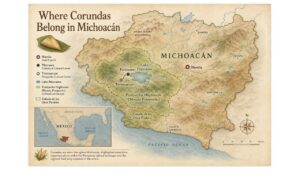
Around places such as Morelia, Pátzcuaro, Tzintzuntzan, the Lake Pátzcuaro region, and Purépecha communities farther into the highlands, corundas can appear in settings that don’t fit neatly into an American idea of a “street-food restaurant.” You may encounter them in mercados and small food stalls, at neighborhood eateries, in home kitchens, during community gatherings, or as part of a larger regional meal. That flexibility is part of their identity.
This is one reason learning Mexican food by restaurant category can be misleading. A dish doesn’t necessarily belong exclusively to a taquería, market stall, formal restaurant, or family kitchen. Foods move between those spaces. A preparation made for an ordinary family meal may also appear at a mercado; something associated with a celebration can become an everyday craving; a food with centuries of Indigenous history can still be ordered casually by someone who simply wants lunch.
Corundas move comfortably through those worlds.
In Morelia, a visitor may encounter them as part of a broader introduction to Michoacán cooking. Travel toward the communities surrounding Lake Pátzcuaro and deeper into Purépecha country, however, and the relationship between food and place becomes harder to separate. Here, maize isn’t merely an ingredient arriving at the kitchen from an anonymous supply chain. Cornfields, markets, mills, home kitchens, vendors, cooks, and regional dishes remain visibly connected parts of the same food system.
That doesn’t mean every corunda encountered in Michoacán is prepared exactly as someone’s great-grandmother made it. Living cuisines don’t work that way. Commercial kitchens adapt. Families have their own methods. Ingredients and equipment change. Some cooks preserve older techniques closely; others incorporate conveniences that make sense for contemporary life.
Authenticity isn’t the absence of change.
What matters more is whether the food still makes sense within the community that makes and eats it.
Corundas clearly do.
TO FIND CORUNDAS IN MICHOACÁN ISN’T TO DISCOVER A FOOD PRESERVED FROM THE PAST—IT’S TO ENCOUNTER AN OLD TRADITION STILL PARTICIPATING IN EVERYDAY LIFE.
How to Order and Eat Corundas Like They Belong on the Table
When a plate of corundas arrives, don’t expect the elaborate presentation to be hiding inside the wrapper.
The transformation often happens after the leaf opens.
A freshly steamed corunda provides a warm, tender foundation of corn and fat. Salsa brings chile, acidity, roasted flavor, or all three. Crema adds cool richness. Cheese contributes salt and another layer of dairy against the maize. Depending on the preparation, rajas or other accompaniments may join the plate, and corundas can also sit beside more substantial foods rather than appearing as an isolated course.
That arrangement tells you something important about the dish. The relatively simple interior isn’t evidence that somebody forgot the filling. It allows the flavor of the masa to remain recognizable while the diner controls what happens around it.
Take a bite with mostly corunda and the corn comes forward. Drag the next piece through salsa and the balance changes. Add crema and cheese and the same masa becomes richer, cooler, saltier, and more complex.
The plate is interactive without trying to be.
If you’re encountering corundas for the first time in Michoacán, don’t bury the first bite beneath every condiment available before tasting it. Open the leaf, try a little of the corunda itself, and notice the texture and corn flavor. Then add whatever salsa, crema, cheese, or accompaniments have been served with it.
That isn’t a ceremonial rule.
It’s simply a better way to understand what you’re eating.
The same principle applies to heat. Traditional salsa should be understood on its own terms before assuming the dish needs additional hot sauce. Later in this article we’ll talk about Peppers of Key West sauces that pair particularly well with corundas, but a good pairing should build on the food rather than replace the flavors that made it worth learning about in the first place.
🌶️ Professor Pepper Says…
Try an unfamiliar regional food before “fixing” it. One bite of a corunda with nothing but its traditional accompaniments tells you what the cook intended—and gives you a much better idea of what additional heat will actually complement.
THE BEST WAY TO UNDERSTAND A CORUNDA IS TO TASTE THE MASA FIRST, THEN WATCH HOW SALSA, CREMA, CHEESE, AND CHILE CHANGE IT ONE BITE AT A TIME.
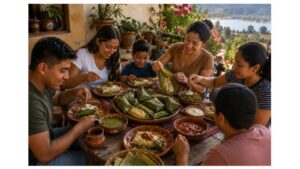
Corundas and Uchepos Begin with Corn at Different Moments
Place a corunda beside an uchepo, and at first the relationship seems obvious. Both belong to Michoacán. Both belong to Mexico’s enormous tamal family. Both transform corn into something wrapped and steamed.
But taste them and the relationship becomes much more interesting.
Corundas are built around masa made from mature maize that has been processed into dough, creating the deeper corn character and substantial texture we’ve been following throughout this article. Uchepos begin instead with fresh, tender corn, traditionally capturing the sweeter, milkier character of the younger kernels.
That difference changes nearly everything that follows.
A corunda tastes grounded in mature maize and masa. An uchepo can taste noticeably sweeter and softer, carrying the flavor of fresh corn much closer to the field. Even when both eventually meet crema, cheese, or salsa on the plate, the foundations underneath those toppings are fundamentally different.
This is why calling them simply “two Michoacán tamales” is accurate but not particularly illuminating. Together, they demonstrate something much bigger about Mexican corn cooking: the same plant can become dramatically different foods depending on when it is harvested and what happens to it afterward.
Fresh corn can become one thing.
Mature maize can become another.
Nixtamalized and ground into masa, that mature maize opens an enormous second world of possibilities.
Our Corundas vs Uchepos: Why Michoacán’s Two Most Famous Corn Dishes Aren’t the Same guide takes that comparison much deeper, including their ingredients, flavor, texture, preparation, wrapping, and place within Michoacán cuisine.
For this article, the important lesson is simpler. Corundas and uchepos aren’t competitors asking us to choose Michoacán’s “best” tamal. They’re two expressions of a regional culture that learned to understand maize at different stages of its life.
CORUNDAS AND UCHEPOS DON’T JUST SHOW TWO WAYS TO MAKE A TAMAL—THEY SHOW HOW MUCH FOOD MICHOACÁN CAN CREATE FROM A SINGLE CROP.
Corundas Are Part of a Much Larger Michoacán Food Story
It is tempting when writing about a distinctive regional dish to make it carry the entire identity of the place it comes from.
Corundas don’t need that burden.
Michoacán has one of Mexico’s richest regional food traditions, and corundas make more sense when seen as one piece of that larger landscape rather than as an isolated curiosity. Uchepos reveal another relationship with corn. Carnitas demonstrate an entirely different mastery of pork and fat. Regional soups, stews, salsas, breads, sweets, fruits, cheeses, and drinks reflect the state’s varied climates, agricultural traditions, Indigenous communities, and histories of exchange.
Even maize itself refuses to become one thing.
It can be young or mature, boiled or ground, wrapped or pressed, steamed or cooked against a hot surface. Change the variety, stage of harvest, processing method, thickness, wrapper, filling, or cooking technique and an ingredient that looks familiar can produce a completely different food.
That is why regional articles matter within our larger Mexican Street Food library. Learning that a corunda comes from Michoacán is useful trivia. Understanding why that food makes sense in Michoacán is cultural knowledge.
The distinction matters because Mexican cuisine is sometimes flattened outside Mexico into a small collection of nationally recognizable dishes. Tacos. Burritos. Quesadillas. Tamales. Salsa.
Travel through Mexico and those categories begin breaking apart almost immediately.
A “tamal” in one region isn’t necessarily the tamal you meet in another. A tortilla can change its grain, thickness, size, and technique. A salsa’s chiles can tell you where you are. A sandwich can change its bread as you cross state lines.
Corundas belong to that larger lesson.
They remind us that Mexican food becomes more interesting as it becomes more specific.
THE CLOSER YOU LOOK AT MEXICAN FOOD REGION BY REGION, THE LESS IT LOOKS LIKE ONE CUISINE AND THE MORE IT LOOKS LIKE HUNDREDS OF LOCAL FOOD TRADITIONS SPEAKING TO ONE ANOTHER.
Can You Make Authentic Corundas at Home?
Yes—but this is one of those foods where the answer deserves a little humility.
The ingredient list can look deceptively manageable. Masa. Fat. Salt. Maize leaves. Steam. Perhaps salsa, crema, and cheese for serving.
The difficult part is in the hands.
If you’ve never wrapped a corunda before, reading “fold the leaf into a triangle” doesn’t transfer generations of muscle memory into your fingers. The first bundle may be loose. The second may resemble a shape not previously recognized by geometry. Masa may escape. Leaves may tear. The finished corundas may not possess the neat points you imagined when you started.
That’s fine.
Traditional foods aren’t made authentic by achieving visual perfection on the first attempt.
If you can obtain good fresh masa and suitable maize leaves, you’ll be much closer to the traditional experience. Where those aren’t available, substitutions may make a home version possible, but substitutions should be acknowledged for what they are rather than presented as though every wrapper and every type of corn dough behaves identically.
The most important lesson from making corundas at home may not be whether your first batch looks exactly like one made in Michoacán. It may be discovering how much knowledge is hidden inside something that looked simple when an experienced cook did it.
Suddenly the folds matter.
The consistency of the masa matters.
The flexibility of the leaf matters.
The arrangement in the steamer matters.
And the triangular bundle sitting on your plate begins to look less like a novelty and more like accumulated technique.
That is exactly what good traditional food should teach us.
YOU CAN FOLLOW A CORUNDA RECIPE AT HOME, BUT THE FIRST BATCH MAY TEACH YOU WHY GENERATIONS OF PRACTICE ARE AN INGREDIENT NO RECIPE CAN LIST.
🌶️ Recommended Peppers of Key West Products for Corundas
Corundas don’t need aggressive heat to become interesting. Their appeal begins with tender corn masa, the richness traditionally provided by manteca, and the salsa, crema, and cheese that turn the steamed tamal into a finished plate. That makes the best hot sauce pairings less about overpowering the corunda and more about deciding which part of that flavor structure you want to emphasize.
A bright green sauce can reinforce the fresh chile character of salsa verde. Garlic can add savory depth without obscuring the corn. A fruitier habanero sauce can provide a sharper contrast against crema and cheese. And for people who want substantially more heat, a hotter chile sauce works especially well when the corunda is heavily dressed and rich enough to stand up to it.
The guiding principle is simple: let the corunda taste like a corunda first.
Product Pairing Quick Guide
- Corundas with salsa verde, crema & cheese → Peppers of Key West Serrano Pepper Hot Sauce
- Corundas with red salsa & crumbled cheese → Peppers of Key West Habanero Pepper Hot Sauce
- Corundas with rajas, crema & cheese → Peppers of Key West Jalapeno Garlic Hot Sauce
- A family table of corundas with different toppings → Peppers of Key West 5 Pack for giving everyone a different way to add heat
🌶️ Best Peppers of Key West Pairings for Corunda Lovers
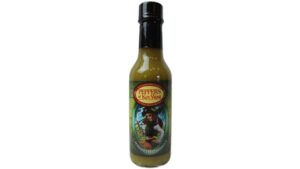
Peppers of Key West Serrano Pepper Hot Sauce
Corundas topped with salsa verde, crema, and cheese are a natural match for Peppers of Key West Serrano Pepper Hot Sauce. Serrano’s bright chile character builds on the fresh green flavors already on the plate, adding heat without overwhelming the tender corn masa underneath.
The contrast works particularly well when cooling crema and salty cheese are involved. Instead of changing the character of the dish, Serrano simply gives the chile side of the plate a little more authority.
Best with: Corundas with salsa verde, crema, queso fresco, tomatillo salsa, and rajas.
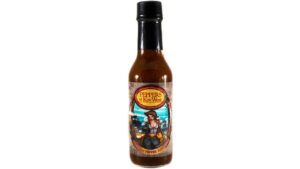
Peppers of Key West Habanero Pepper Hot Sauce
For corundas dressed with red salsa and cheese, Peppers of Key West Habanero Pepper Hot Sauce provides a more assertive contrast. Habanero brings substantial heat along with its naturally fruity chile character, which works particularly well against rich masa, cooling crema, and salty cheese.
This is the bottle for someone who wants the heat to be unmistakable while still leaving enough room for the corunda itself to matter. Start with a few drops and let the masa, salsa, and toppings determine whether you need more.
Best with: Corundas with red salsa, crema, crumbled cheese, roasted tomato salsa, and richer accompaniments.
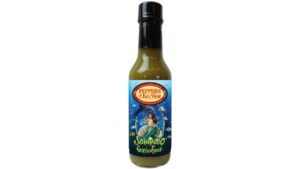
Peppers of Key West Jalapeno Garlic Hot Sauce
When the plate moves in a more savory direction, Peppers of Key West Jalapeno Garlic Hot Sauce may be the most versatile pairing of the group. Jalapeno provides approachable chile heat while garlic adds savory depth that works especially well with rajas, beans, cheese, and richly dressed corundas.
It’s also an excellent choice for someone who wants to add flavor without turning a traditional regional dish into a heat challenge. The goal here isn’t to cover up the corn—it is to give everything surrounding it another savory layer.
Best with: Corundas with rajas, beans, crema, cheese, roasted vegetables, and other savory accompaniments.
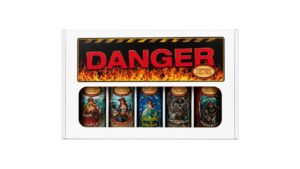
Peppers of Key West 5 Pack
Corundas are particularly well suited to a shared table, and that’s where the Peppers of Key West 5 Pack earns its place. Rather than choosing one heat level or flavor for everyone, put several sauces alongside the salsa, crema, and cheese and let each person build a different plate.
Best with: Family corunda meals, mixed tamales, taco nights, masa-food spreads, and tables where everyone prefers a different level of heat.
Why Corundas Are Worth Seeking Out
By the time a corunda reaches the plate, its ingredient list can still seem remarkably modest.
Maize became masa. The masa was enriched and seasoned. A long green leaf was folded around it. Steam did the cooking. Salsa, crema, and cheese completed the plate.
Yet almost every step contains knowledge that isn’t obvious from looking at the finished food.
Someone had to understand how maize becomes workable dough. Someone learned how rich and hydrated that dough should feel beneath the fingers. Someone discovered how a long maize leaf could be folded repeatedly until a soft mound of masa became a compact geometric package. Someone knew how to arrange those bundles in a steamer and recognize when the dough inside had set.
And then someone taught somebody else.
That may be the most important part of the corunda story.
The food’s Purépecha roots matter because they tell us where this knowledge developed and whose culinary tradition carried it forward. Its continued presence in Michoacán matters because those roots didn’t produce a museum piece. They produced food that people kept making.
Today a corunda can still move from steaming pot to family table, from mercado stall to restaurant plate, from one generation’s hands to another’s.
The triangle catches your eye.
The continuity is what makes it extraordinary.
If Mexican street food is understood only as tacos handed through a window, corundas can seem like an outlier. But once Mexican street food is understood as part of a much larger network of maize, markets, home kitchens, Indigenous knowledge, regional cooking, vendors, family meals, and foods that move naturally among all of those spaces, the corunda fits perfectly.
It also leaves us with a larger lesson.
Corn doesn’t become Mexican food through one recipe.
It becomes food through knowledge.
CORUNDAS HAVE SURVIVED NOT BECAUSE MICHOACÁN PRESERVED A TRIANGULAR TAMALE FROM THE PAST, BUT BECAUSE GENERATIONS OF COOKS KEPT FINDING IT WORTH MAKING FOR THE PRESENT.
Frequently Asked Questions About Corundas
What does corunda mean?
Corunda is the Spanish name used for this traditional Michoacán tamal, with the term connected to its Purépecha linguistic and cultural origins. The food remains particularly associated with Purépecha communities and Michoacán cuisine.
Are corundas always triangular?
Triangular forms are the most recognizable, but traditional folding can produce corundas with additional faces or points. Their geometry results from repeatedly folding the maize leaf around the masa rather than using a mold.
What are corundas made from?
Traditional corundas are made primarily from corn masa. Many familiar versions are enriched with manteca, or rendered pork fat, while recipes and techniques vary among families and communities.
Do corundas have meat inside?
Many traditional corundas contain little or no substantial filling because the seasoned, enriched masa itself is central to the dish. Variations exist, however, and corundas can also be accompanied by meat and other foods.
Why are corundas wrapped in green leaves?
Long green leaves from the maize plant provide the flexibility needed for the distinctive folding technique. The wrapper also contains and protects the masa during steaming and contributes subtly to the cooking environment and aroma.
What are corundas de manteca?
Corundas de manteca are prepared with masa enriched with rendered pork fat. Rather than relying on a substantial enclosed filling for richness, much of their flavor and tenderness is incorporated directly into the masa.
What are corundas de ceniza?
Corundas de ceniza are associated with traditional maize-processing practices involving ceniza, or ash. They reflect older alkaline-processing knowledge within Michoacán’s broader maize traditions.
What is the difference between corundas and regular tamales?
Corundas belong to Mexico’s enormous tamal family, but their distinctive geometric folding, use of long green maize leaves, strong association with Michoacán and Purépecha cuisine, and frequently masa-centered construction distinguish them from many other regional tamales.
What is the difference between corundas and uchepos?
The biggest difference begins with the corn. Corundas generally rely on masa produced from mature maize, while uchepos are made from fresh, tender corn. That creates significant differences in sweetness, texture, flavor, and preparation.
How are corundas traditionally served?
They are commonly served warm with accompaniments such as red or green salsa, crema, and cheese. Depending on the meal and local tradition, they may also accompany rajas, meat, or other regional foods.
Where can you find corundas in Mexico?
Corundas are particularly associated with Michoacán. Travelers may encounter them in Morelia, the Lake Pátzcuaro region, Purépecha communities, mercados, restaurants, food stalls, family kitchens, and community gatherings.
Can you make corundas at home?
Yes. The ingredients can be relatively straightforward, but mastering the traditional folding technique and achieving the proper masa texture take practice. Access to appropriate maize leaves can also be challenging outside Mexico.
🌮 Continue Your Mexican Street Food Journey
🌯 More Mexican Street Foods Worth Trying
- Uchepos Explained: Michoacán’s Sweet Corn Tamales That Taste Like Summer
- Tamales Explained: The Ancient Mexican Comfort Food That Still Dominates Street Food Culture
- Huaraches Explained: Mexico’s Giant Oval Street Food Loaded with Flavor
- Quesabirria Tacos & Crispy Cheese Street Food Chaos Worth Every Messy Bite
- Taquitos, Flautas & Crispy Rolled Street Food That Crunches Like Perfection
- Mexican Street Corn (Elote) So Addictive You’ll Forget Tacos Exist
- Tortas Loaded with Meat, Melted Cheese & Street Food Flavor That Hits Hard
Expand Your Mexican Food Journey
- Mexican Tortillas, Masa & Breads Explained: The Complete Guide to How Mexican Street Food Is Built
- The Complete Mexican Street Food Guide: Ingredients, Dishes, Regions & Cooking Terms Explained
- Best Mexican Street Taco Meats: The Ultimate Guide to Authentic Taco Flavor
- The Ultimate Guide to Mexican Street Food : The Flavor, Meat & Hot Sauce Breakdown
See More Keywords
Michoacán cuisine, Purépecha cuisine, Purépecha food traditions, Michoacán street food, Mexican street food, Mexican tamal varieties, regional Mexican tamales, masa tamales, corn masa, nixtamalized corn, maize leaves, green corn leaves, manteca in tamales, rendered pork fat, nixtamalization, traditional Mexican masa, Mexican maize traditions, Lake Pátzcuaro food, Pátzcuaro cuisine, Morelia food, Tzintzuntzan food, Meseta Purépecha, Purépecha Highlands, uchepos, corundas vs uchepos, salsa for corundas, Mexican crema, Mexican cheese, traditional tamal wrapping, Mexican corn dishes