
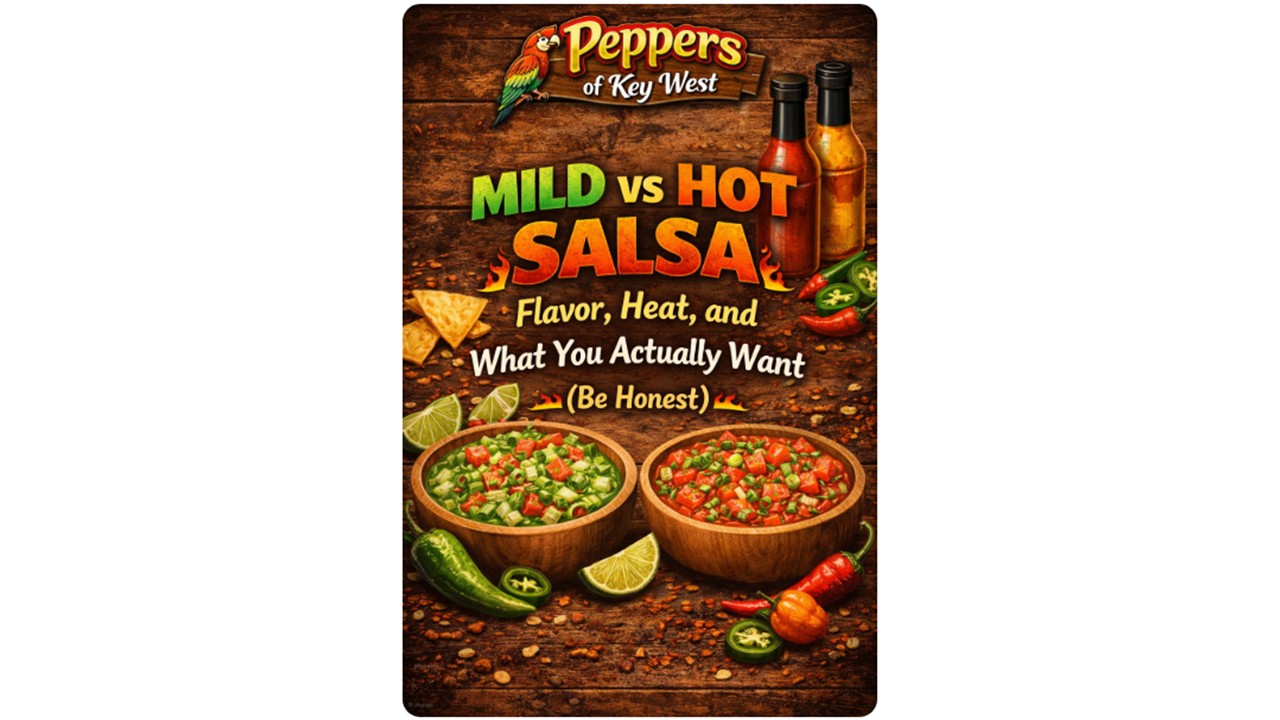
Mild vs Hot Salsa: Flavor, Heat, and What You Actually Want (Be Honest)
Some salsa whispers. Some salsa punches you in the face. The real question is—what are you actually in the mood for?
The difference between mild and hot salsa seems simple on the surface. One is spicy, one is not. Case closed, right? Not even close. The real difference between mild and hot salsa has less to do with heat and more to do with flavor, balance, and what kind of experience you’re actually looking for when you take that first bite.
Most people assume that hot salsa is automatically better because it brings intensity. Others stick to mild because they don’t want to risk turning snack time into a survival situation. But the truth is, both mild and hot salsa have their place. The key is understanding what each one does—and how to use them properly.
Mild salsa is built around balance. It highlights the natural sweetness of tomatoes, the sharpness of onions, the brightness of lime, and just enough spice to keep things interesting without overwhelming your palate. It’s approachable, versatile, and works in almost any situation. It’s the salsa you bring when you don’t want to start arguments.
Hot salsa, on the other hand, is not here to play it safe. It’s designed to make an impression. Stronger peppers, deeper flavors, and a more aggressive heat profile turn it into something that demands attention. But here’s where people get it wrong—hot salsa isn’t just about heat. The best hot salsa still maintains balance. It just pushes the limits further.
If you’ve ever tasted a hot salsa that felt one-dimensional, you’ve experienced bad heat. That’s what happens when spice is added without considering flavor. A great salsa—whether mild or hot—should always prioritize taste first. Heat is an enhancement, not the main event.
This is where a high-quality hot sauce can completely change the game. Instead of relying solely on raw peppers, adding hot sauce introduces complexity. Acidity, sweetness, and layered spice profiles transform salsa into something more dynamic.
For mild salsa, a small amount of hot sauce can elevate flavor without turning it into something overwhelming. Think of it as adding dimension rather than heat. If you’re looking for a balanced upgrade, Peppers of Key West’s Serrano hot sauce is a perfect example of how to do this right. It enhances flavor without overpowering it.
For hot salsa, the role of hot sauce shifts. It’s no longer about subtlety—it’s about building layers. Instead of just increasing spice, it deepens the overall experience. A well-paired sauce creates a progression of heat that evolves as you eat.
If you’re unsure where your preference falls, it helps to understand how salsa itself is built. Fresh vs cooked, chunky vs smooth—these factors influence how heat is perceived. If you haven’t explored it yet, learning the difference between pico de gallo and salsa gives you a better foundation for understanding how heat interacts with texture and freshness.
One of the biggest differences between mild and hot salsa is how they interact with food. Mild salsa complements. Hot salsa competes—or at least, it can if you’re not careful. When pairing with dishes, this matters a lot.
For example, a rich dish like a cheesy quesadilla benefits from contrast. A hot salsa cuts through the heaviness and keeps things from feeling too dense. On the other hand, a lighter dish like grilled chicken tacos might benefit more from a mild or moderately spicy salsa that enhances rather than dominates.
Understanding pairing is critical. If you want to go deeper, learning how to pair flavors properly—especially with hot sauce—can completely change how you approach Mexican food. Choosing the best hot sauce for salsa is not about picking the hottest option. It’s about choosing the right one for the situation.
Another factor to consider is heat tolerance. People often think they need to “build up” to hot salsa, but that’s not entirely accurate. What you really need to build is an appreciation for how heat works. Once you understand that heat is just one part of the flavor profile, it becomes easier to enjoy both mild and hot options.
Texture also plays a role. A smooth salsa delivers heat more evenly, while a chunky salsa creates variation. Some bites hit harder than others. This unpredictability can make hot salsa feel even more intense.
Then there’s the role of peppers. Different peppers bring different flavors, not just different levels of heat. Learning about peppers used in hot sauce can help you understand why some salsas taste bright and fruity while others feel deep and smoky.
One of the most effective ways to bridge the gap between mild and hot salsa is to build heat gradually. Start with a mild base, then add small amounts of hot sauce until you reach the level you want. This approach gives you control and helps you avoid overshooting.
Want to taste the difference? Try a Peppers of Key West hot sauce and see how it transforms both mild and hot salsa into something more balanced and flavorful.
At the end of the day, the choice between mild and hot salsa isn’t about right or wrong. It’s about preference, context, and how you want your food to feel. Some days call for balance. Others call for intensity.
The real pro move is not choosing one over the other—but knowing when to use each.
And if you’re ready to upgrade your salsa experience entirely, Peppers of Key West is where to start.
❓ Frequently Asked Questions
What is the difference between mild and hot salsa?
Mild salsa focuses on balanced flavor with minimal heat, while hot salsa emphasizes stronger peppers and higher spice levels.
Does hot salsa have more flavor than mild salsa?
Not necessarily—both can be flavorful, but hot salsa delivers more intensity.
Can you make mild salsa spicy?
Yes, adding hot sauce or hotter peppers can increase heat gradually.
Is hotter salsa always better?
No, balance matters more than heat for overall flavor.
What makes Peppers of Key West hot sauce different?
It provides layered heat and balanced flavor instead of just intensity.
)