
Why is pH Soil Content Important for Growing Peppers: Because even peppers like their lemonade just right!
Soil pH is important for growing peppers because it controls nutrient availability, affecting plant growth, yield, and overall flavor.
Soil pH is often called the “master variable” because it influences nearly every chemical process affecting plant growth.
For the full breakdown from planting to final flavor, check out our Ultimate Guide to Hot Pepper Growing: From Seed to Sauce (Complete System).
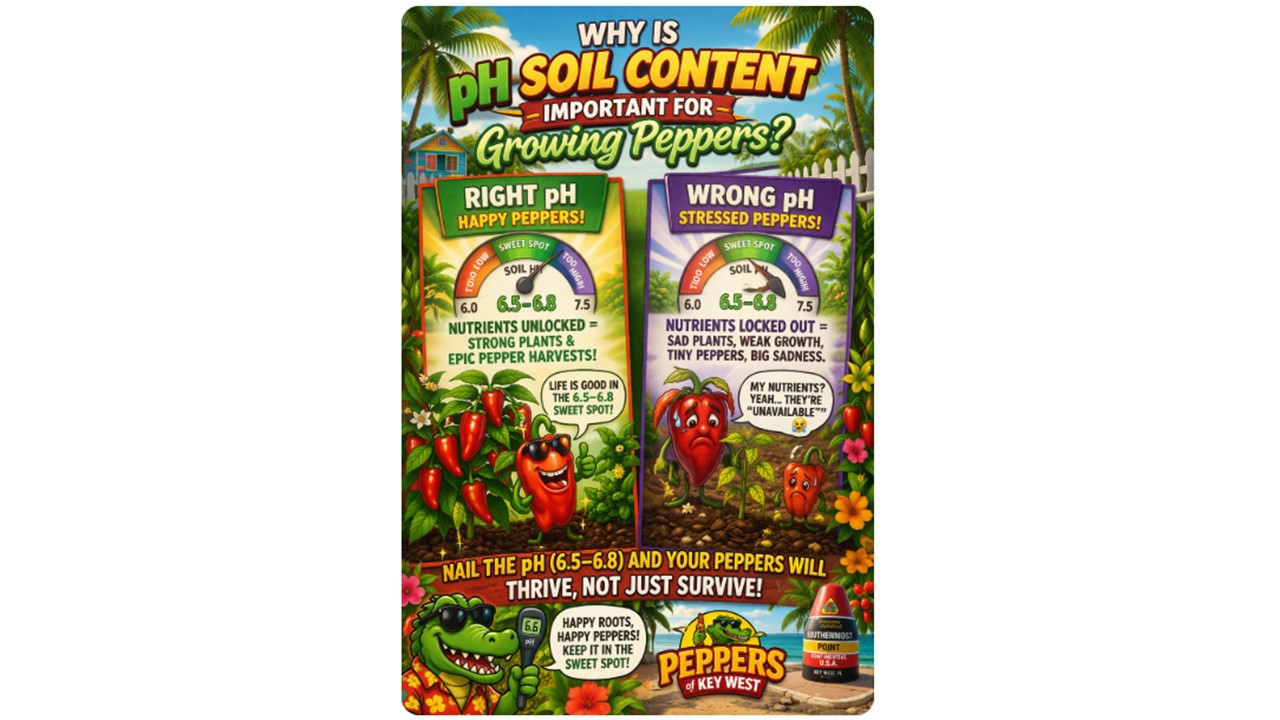
Soil pH is often considered the “master variable” in gardening because it directly influences how nutrients behave in the soil and whether plants can absorb them effectively. If your peppers are underperforming, acting dramatic, or producing flavor that’s… let’s say “forgettable,” your soil pH might be the real problem. This guide breaks down why pH matters, how it affects growth and flavor, and how to fix it—so your peppers can thrive like the bold stars behind Hot Sauce and Peppers of Key West.
For further information, look at how to grow peppers step by step.
🌱 Why Soil pH Is Important for Growing Peppers Successfully
Soil pH is one of the most overlooked factors in pepper gardening, yet it has one of the biggest impacts on your results. You can water perfectly, provide full sunlight, and use high-quality fertilizer, but if your soil pH is off, your peppers will still struggle. That’s because soil pH controls how nutrients behave underground. It determines whether your plants can actually absorb the nutrients they need or whether those nutrients remain locked in the soil.
Soil pH measures how acidic or alkaline your soil is, and this directly affects nutrient availability. When the pH is balanced, your pepper plants can access nitrogen, phosphorus, potassium, and other essential elements efficiently. When it’s not, your plants may show signs of deficiency even when nutrients are present.
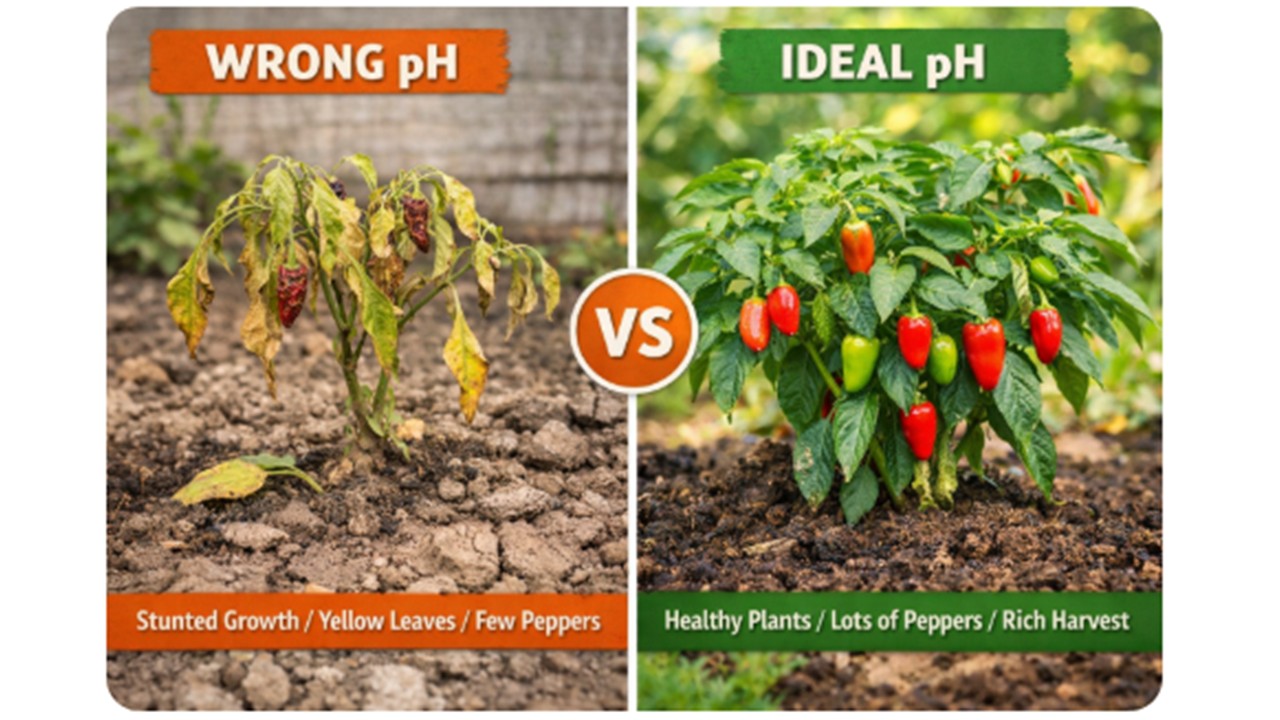
If your soil pH is wrong, your peppers are fighting a battle they can’t win.
⚖️ Best Soil pH for Pepper Plants and Why It Matters
Pepper plants thrive in slightly acidic to neutral soil, typically within a pH range of 6.0 to 7.0. This range allows nutrients to remain available and accessible to the plant. Outside of this range, problems begin to appear. In overly acidic soil, certain nutrients can become too concentrated, while others become unavailable. In alkaline soil, essential nutrients are locked out, preventing plants from absorbing what they need.
Soil pH directly controls nutrient availability, making it one of the most critical factors in plant health, yield, and flavor development.
When pH is balanced, plants grow stronger, produce more peppers, and develop richer flavor. This is especially important if you’re growing peppers for hot sauce, where flavor intensity matters just as much as heat.
🧪 How Soil pH Affects Nutrient Absorption in Peppers
Nutrient absorption is where soil pH truly proves its importance. Even if your soil is rich in nutrients, an incorrect pH can prevent those nutrients from being used by your plants. This leads to weak growth, poor yields, and disappointing flavor.
For example, potassium—one of the most important nutrients for peppers—helps improve fruit quality, flavor, and overall plant strength. Learn more about this in Potassium Power: Making Your Peppers Feel Like Superheroes, where nutrient balance plays a key role.
When pH is correct, nutrient uptake becomes efficient, and plants can grow without unnecessary stress. This creates a stable foundation for strong, productive pepper plants.
🌿 How to Fix Soil pH for Better Pepper Growth
Even when soil contains essential nutrients, an imbalanced pH can prevent pepper plants from accessing them, leading to reduced growth, lower yields, and weaker flavor. Correcting soil pH is not difficult, but it does require patience and consistency. If your soil is too acidic, adding lime can gradually raise the pH. If it’s too alkaline, sulfur or organic matter can help lower it. These adjustments should be made slowly, allowing your soil to stabilize over time. Proper soil pH not only improves plant health but also enhances the flavor, heat, and overall quality of the peppers you harvest.
Testing your soil regularly ensures that your adjustments are working. Small corrections are more effective than drastic changes, which can disrupt soil balance and stress your plants.
To maximize your results, combine proper soil management with proven strategies from
- How to Grow Hot Peppers So Spicy They Make You Question Your Life Choices (In a Good Way)!, along with
- 7 Gardening Tips for a Huge Pepper Harvest This Year and
- How Do You Maintain Pepper Plants to Maximize Pepper Harvests.
🌶️ Soil pH and Hot Sauce Flavor: Why It Matters More Than You Think
The impact of soil pH doesn’t stop at plant growth—it extends all the way to flavor. Peppers grown in balanced soil develop stronger taste profiles, better texture, and more consistent heat. This is crucial when you’re creating hot sauce, where ingredient quality directly affects the final product.
When your peppers are grown under ideal conditions, they bring natural depth and complexity to your sauce. This is what separates average hot sauce from something truly memorable.
That’s the philosophy behind Hot Sauce and Peppers of Key West. When peppers are grown with the right balance of soil, nutrients, and care, the flavor speaks for itself.
❓ Frequently Asked Questions
- What is the best soil pH for pepper plants?
Pepper plants grow best in soil with a pH between 6.0 and 7.0. - Why is soil pH important for peppers?
Soil pH controls nutrient availability, affecting plant growth, yield, and flavor. - How do I test soil pH at home?
Use a soil test kit or digital meter to measure pH quickly and accurately. - What happens if soil pH is too high or low?
Nutrients become unavailable, leading to weak plants and poor production. - Can soil pH affect pepper flavor?
Yes, balanced soil improves nutrient uptake, resulting in better flavor and heat. - Does soil pH impact hot sauce quality?
Absolutely. Better peppers produce stronger, more flavorful hot sauce.
