
If your pepper plants aren’t producing heavily, your system—not your plant—is the problem.
If your pepper plants are producing more disappointment than actual peppers, it’s time to fix that. These 7 gardening tips will turn your struggling plants into overachieving pepper machines—so you can finally stop pretending that “one pepper” was the goal.
Want the whole process dialed in first? Start with our Ultimate Guide to Hot Pepper Growing: From Seed to Sauce (Complete System).
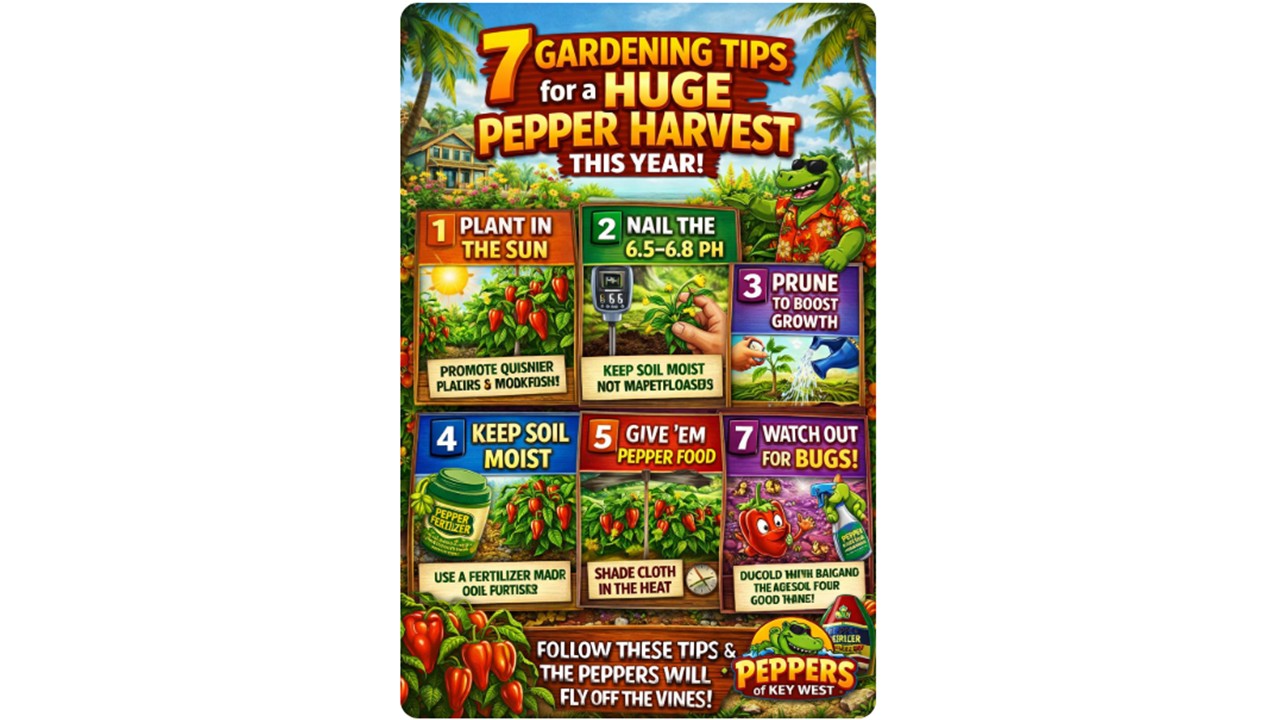
🌶️ 7 Gardening Tips for a Huge Pepper Harvest This Year
Growing peppers should feel rewarding, not like a long season of unmet expectations and tiny yields. If your plants look healthy but aren’t producing much, or if you’re getting a few peppers when you should be getting dozens, the issue isn’t luck—it’s strategy. Pepper plants are incredibly productive when grown correctly, and with the right approach, you can dramatically increase both the quantity and quality of your harvest.
At Peppers of Key West, we’ve spent years growing, testing, and perfecting pepper production techniques that consistently deliver bigger yields and better flavor. Whether you’re growing mild peppers or chasing serious heat for your next batch of hot sauce, these methods will help you maximize your results and turn your garden into a true pepper-producing machine.
For more information, explore our Complete Pepper Growing System

🌞 HOW TO INCREASE PEPPER YIELD NATURALLY WITH FULL SUNLIGHT
If you want a huge harvest, everything starts with understanding how pepper plants produce fruit. Peppers respond directly to environmental conditions, meaning that when you optimize their surroundings, they reward you with more production. Sunlight, soil quality, and consistency all play major roles in how many peppers your plant can produce.
Pepper plants thrive when they receive uninterrupted sunlight for most of the day. Without enough light, the plant simply doesn’t have the energy to produce large amounts of fruit. Positioning your plants in full sun and ensuring they are not shaded by other plants is one of the easiest ways to increase yield naturally.
Consistency is equally important. Plants that experience stress from irregular watering or inconsistent care tend to reduce fruit production. Keeping conditions stable allows the plant to focus on producing peppers instead of recovering from environmental swings.
If you’re serious about improving results, pairing these practices with insights from The Science Behind Spicy Pepper Growth (Grow Hotter Peppers Fast)! will reinforce your overall growing strategy and help you build a more productive garden system.
If your pepper plants aren’t producing heavily, it’s not the plant—it’s the system.
💧 HOW OFTEN TO WATER PEPPER PLANTS FOR MAXIMUM YIELD
Watering is one of the most misunderstood aspects of pepper plant care. Many growers either overwater or underwater, both of which can reduce production. The goal is to maintain consistent moisture without creating soggy soil conditions. How Do You Maintain Pepper Plants to Maximize Pepper Harvests!
Pepper plants prefer deep watering that reaches the root system rather than shallow surface watering. This encourages stronger root growth and improves the plant’s ability to absorb nutrients. The Science Behind Spicy Pepper Growth (Grow Hotter Peppers Fast)! When roots are healthy, the entire plant becomes more productive.
Allowing the soil to dry slightly between watering cycles helps prevent root rot while also encouraging the plant to grow deeper roots. This balance is critical for maximizing yield over the course of the growing season.
Proper watering also plays a role in flavor development. When managed correctly, it can enhance the intensity of peppers, especially in hotter varieties used for making bold hot sauce flavors.
🌿 BEST FERTILIZER FOR PEPPER PLANTS FOR HIGH YIELD
Feeding your pepper plants correctly can make the difference between a weak harvest and an overwhelming one. Fertilizer provides the nutrients necessary for growth, flowering, and fruit production, but timing and balance are key.
During early growth, nitrogen helps the plant develop strong leaves and structure. As the plant transitions into flowering, phosphorus becomes more important because it supports flower development and fruit set. Potassium plays a critical role in overall plant health and fruit quality.
Using too much nitrogen is one of the most common mistakes gardeners make. While it can produce lush green plants, it often reduces fruit production because the plant focuses on foliage instead of peppers.
If you want to align your fertilization strategy with proven methods, reviewing How Do You Maintain Pepper Plants to Maximize Pepper Harvests! will give you additional insight into nutrient timing and plant performance.

✂️ PRUNING PEPPER PLANTS TO INCREASE PRODUCTION
Pruning is one of the most effective but underused techniques for increasing pepper yield. By removing unnecessary growth, you allow the plant to focus its energy on producing fruit instead of maintaining excess foliage.
When you remove early flowers, you encourage the plant to build a stronger structure before fruiting. This results in a more robust plant capable of supporting a larger harvest later in the season. Trimming lower leaves improves airflow and reduces the risk of disease, which can otherwise limit production.
Strategic pruning also helps sunlight reach more parts of the plant, further boosting its ability to produce peppers. When done correctly, pruning can significantly increase both yield and plant health.
Explore bold, handcrafted flavors inspired by real pepper growers: Shop Peppers of Key West Hot Sauces
🌶️ WHEN TO HARVEST PEPPERS FOR MAXIMUM PRODUCTION
Harvesting isn’t just the final step—it’s part of the production process. Pepper plants respond to harvesting by producing more fruit, which means the more you harvest, the more your plant will produce.
Allowing peppers to remain on the plant for too long signals that the plant has completed its reproductive cycle, slowing down further production. Regular harvesting keeps the plant in production mode and encourages continuous fruiting.
Timing also affects flavor and heat. Fully ripened peppers often have deeper flavor and higher heat levels, making them ideal for crafting premium hot sauce. If you’re looking to maximize both quantity and quality, harvesting at the right time is essential.
For deeper insight into how pepper heat develops, see From Garden to Bottle: How to Grow Peppers So Good Your Hot Sauce Gets an Ego! which explains how growing conditions influence capsaicin levels.
🚫 COMMON MISTAKES THAT REDUCE PEPPER HARVEST
Even healthy-looking pepper plants can produce disappointing results if a few key mistakes are happening behind the scenes. Many growers unknowingly limit their harvest by creating conditions that slow down fruit production instead of encouraging it.
One of the most common issues is overwatering. Pepper plants do not thrive in constantly saturated soil, and excess moisture can lead to root problems that reduce the plant’s ability to absorb nutrients. On the other hand, inconsistent watering can stress the plant and cause it to drop flowers before they turn into peppers.
Another major mistake is using too much nitrogen fertilizer. While nitrogen promotes leafy growth, it can actually reduce pepper production if not balanced properly. Plants may look full and green but produce very few peppers because energy is being directed into foliage instead of fruit.
Lack of sunlight is another critical factor. Pepper plants need strong, direct sunlight to fuel production, and even partial shade can significantly reduce yield. Positioning plants in the sunniest available location is essential for maximizing output.
Skipping pruning is also a missed opportunity. Without proper pruning, plants can become overcrowded, limiting airflow and reducing the plant’s efficiency. Strategic pruning helps redirect energy into producing more peppers rather than maintaining excess growth.
Finally, not harvesting often enough can slow production. When ripe peppers remain on the plant too long, the plant assumes its job is done and reduces new fruit development. Regular harvesting encourages continuous production and leads to a much larger overall yield.
Avoiding these common mistakes can dramatically improve your pepper harvest without requiring extra time or effort—just better technique.
At Peppers of Key West, we apply real-world growing techniques used to produce peppers for high-quality hot sauce, not just backyard experiments.
❓ Frequently Asked Quesstions
- How do I increase pepper yield naturally?
Provide full sunlight, consistent watering, proper fertilization, and regular harvesting to maximize pepper production. - What is the best fertilizer for pepper plants?
Use nitrogen early for growth, then phosphorus and potassium during flowering and fruiting stages. - How often should I water pepper plants?
Water deeply 2–3 times per week, keeping soil consistently moist but not waterlogged. - Does pruning increase pepper yield?
Yes, pruning improves airflow and redirects energy into fruit production. - When should I harvest peppers for maximum yield?
Harvest frequently once peppers reach full size to encourage continuous production.
