The Difference Between HPLC Testing and the Scoville Organoleptic Test – Measuring Pepper Heat
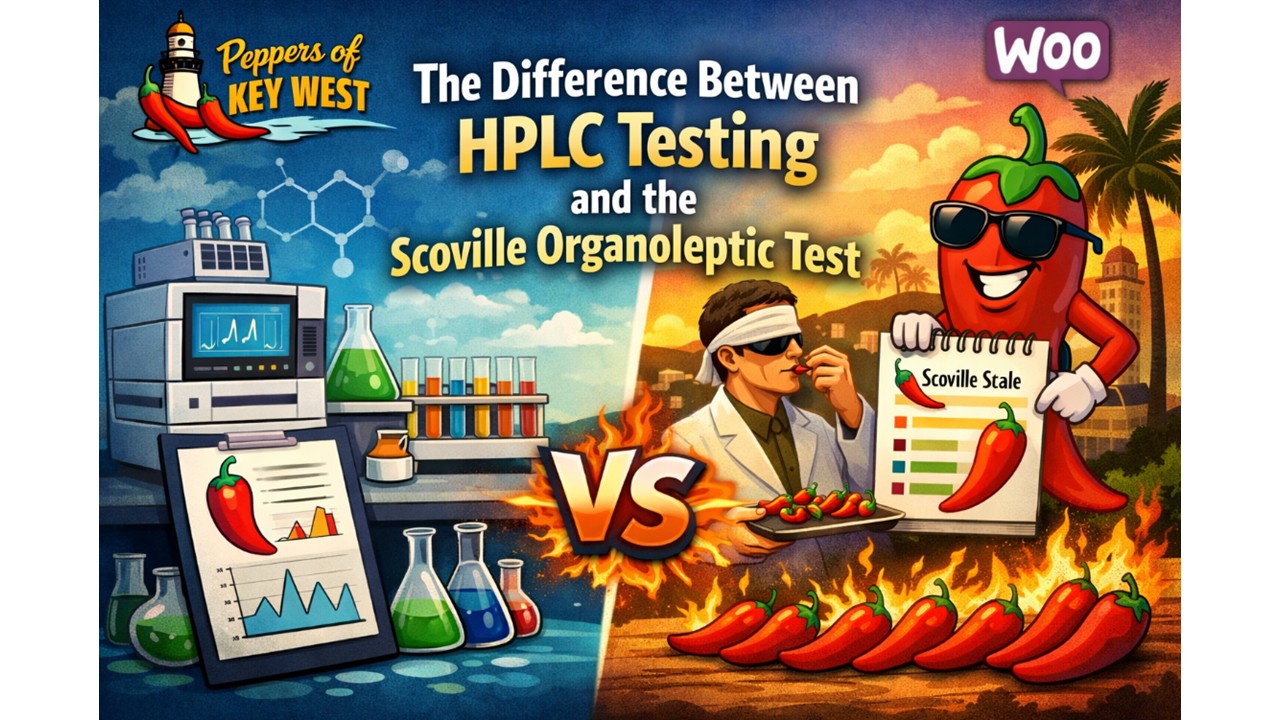
Understanding chili pepper heat requires knowledge of two primary methods used in the hot sauce and chili industry: the Scoville Organoleptic Test and High-Performance Liquid Chromatography (HPLC) testing. Both techniques aim to quantify the heat of peppers, but they approach the task in fundamentally different ways, each with its advantages, limitations, and applications. For enthusiasts of Peppers of Key West hot sauces and extreme pepper lovers, recognizing the differences between these methods is essential for understanding heat levels, product consistency, and the science behind gourmet spicy sauces.
The Scoville Organoleptic Test, developed in 1912 by Wilbur Scoville, is a human sensory-based approach to measuring the heat of chili peppers. In the original procedure, a dried pepper extract was dissolved in sugar water and tasted by a panel of trained individuals. The extract was gradually diluted until the panel could no longer detect the spicy sensation. The amount of dilution required was recorded, and the resulting number became the Scoville Heat Unit (SHU) rating. This method is highly intuitive because it directly relies on the human sensory experience of heat, which is crucial for consumers who perceive spiciness through taste. However, it is inherently subjective, as tolerance and perception of capsaicin vary from person to person. Environmental factors, sample preparation, and even individual tasters’ sensitivity can influence the resulting SHU rating.
In contrast, HPLC testing is a modern, chemical-based approach that provides precise and reproducible measurements of capsaicin and related capsaicinoids in peppers. The HPLC process separates chemical compounds using a chromatography column and high-pressure liquid solvent. A detector measures the concentration of capsaicin, which can then be converted into Scoville Heat Units if desired. Unlike the organoleptic test, HPLC does not rely on human perception and produces objective, quantifiable results. This precision allows hot sauce producers to maintain consistency across batches, verify extreme heat levels, and ensure that products like Peppers of Key West hot sauces meet labeled expectations. HPLC also facilitates research into capsaicin profiles, enabling producers to understand not just how hot a pepper is, but the nature and progression of its heat, which can influence flavor and culinary use.
The difference between these methods is not just technical but also philosophical. The Scoville Organoleptic Test captures the human experience of heat, reflecting how chili peppers feel when consumed. This makes it highly relevant for culinary applications, as it reflects the sensory impact of sauces and peppers. HPLC, on the other hand, measures the chemical reality of capsaicin, providing precision, repeatability, and reliability for product development, quality control, and scientific study. For Peppers of Key West, combining these approaches allows the creation of extreme hot sauces that are both scientifically validated and aligned with consumer expectations of flavor and intensity.
From a historical perspective, the Scoville Organoleptic Test was revolutionary for its time, offering a standardized scale for chili pepper heat. It enabled comparisons across species, varieties, and growing regions, creating a benchmark for pepper enthusiasts and hot sauce makers. However, its reliance on human tasters introduced variability, which modern HPLC testing addresses by providing objective chemical data. By using HPLC, producers can measure exact capsaicin concentrations and predict the SHU with confidence, ensuring consistency even when natural variability occurs in pepper crops.
The applications of these methods also differ. Organoleptic testing is ideal for consumer-facing evaluations, culinary product tasting, and understanding how heat will be experienced in dishes or sauces. HPLC testing is invaluable for research, commercial hot sauce production, pepper breeding, and extreme heat labeling. In extreme sauces, where capsaicin levels can reach hundreds of thousands or millions of SHU, HPLC is crucial to ensure safety, consistency, and accuracy. Peppers of Key West leverages HPLC testing to maintain the integrity of their hot sauces, including Mad Hatter, Ghost Pepper, and Habanero varieties, while the principles of the organoleptic test guide product development from a sensory perspective.
Another key difference lies in the type of data produced. The Scoville Organoleptic Test generates qualitative, perceptual data based on human experience, which varies among individuals. HPLC testing generates quantitative, analytical data, revealing exact capsaicin concentrations, which can then be translated into precise heat metrics. This duality allows producers to understand both the measurable heat and the perceived experience, ensuring that extreme sauces delight chili enthusiasts while maintaining reliable intensity.
In terms of consumer impact, both methods contribute to the hot sauce industry and the enjoyment of extreme peppers. Understanding the difference empowers consumers to make informed choices. For example, a hot sauce labeled with HPLC-verified SHU guarantees a specific level of heat, while awareness of organoleptic testing explains why some sauces feel hotter or milder depending on individual sensitivity. For brands like Peppers of Key West, integrating both approaches enhances credibility, product quality, and customer trust, particularly in a market that values extreme heat, gourmet flavor, and consistent sensory experiences.
Finally, the difference between HPLC and the Scoville Organoleptic Test underscores the intersection of science and culinary art in the hot sauce industry. The organoleptic test honors tradition and human sensory experience, while HPLC testing reflects modern analytical rigor and quality control. Together, they provide a complete picture of pepper heat, enabling producers to craft sauces that are both scientifically validated and experientially thrilling. For Peppers of Key West, this approach ensures that every extreme, gourmet, and flavorful hot sauce lives up to its promise of intense heat and exceptional taste.
Frequently Asked Questions:
❓ What is the Scoville Organoleptic Test?
It is a human taste panel method developed by Wilbur Scoville to measure pepper heat using dilution in sugar water.
❓ What is HPLC testing?
HPLC is a chemical analysis technique that measures capsaicin concentration in peppers for precise, objective results.
❓ How do the two methods differ?
The Scoville Organoleptic Test is subjective and based on human taste perception, while HPLC is objective, chemical-based, and reproducible.
❓ Which method is more accurate?
HPLC is more accurate for precise measurement and consistency, whereas the organoleptic test reflects real-world sensory experience.
❓ How does Peppers of Key West use these methods?
They use HPLC for quality control and heat verification, while organoleptic principles guide product development for flavor and perceived heat.
