
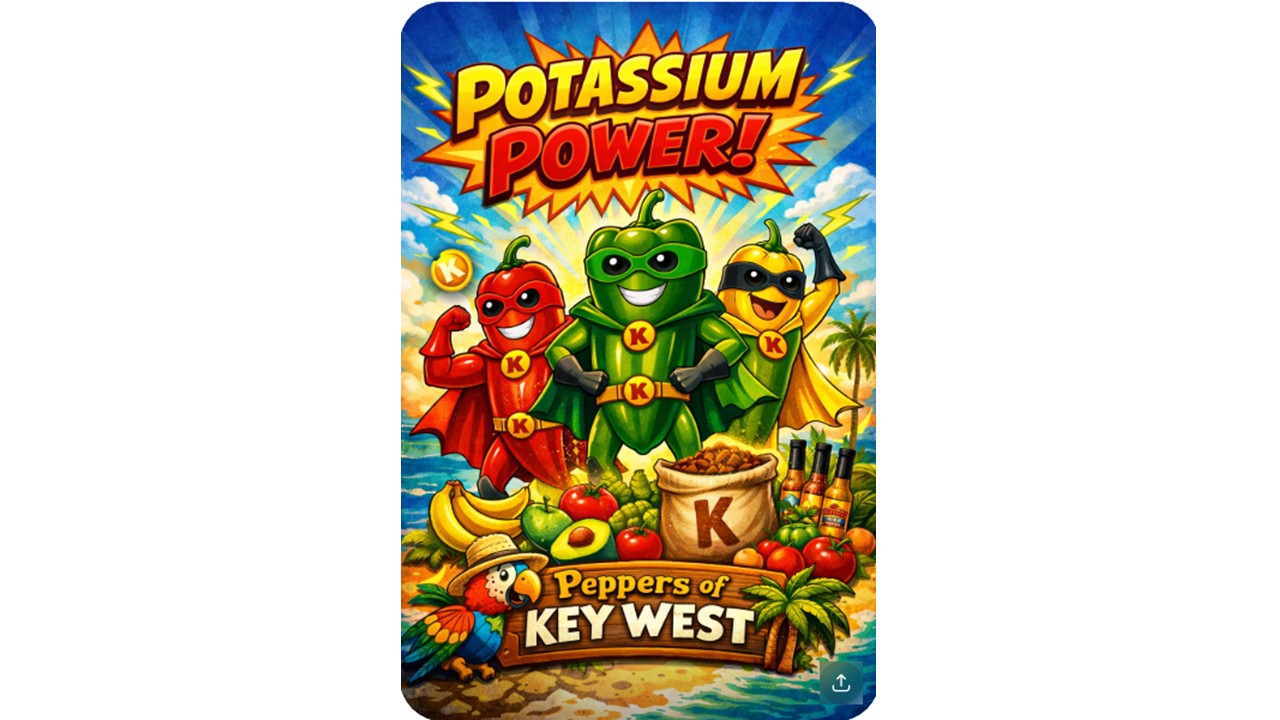
Potassium Power: Making Your Peppers Feel Like Superheroes
Give your peppers the potassium boost they secretly crave—watch them grow hotter, happier, and more ready to spice up your life (and your hot sauce).
Potassium is one of the most essential nutrients for growing healthy, flavorful, and fiery hot peppers. While nitrogen helps plants grow leaves and phosphorus encourages root development, potassium is the unsung hero that boosts fruit development, heat intensity, and overall plant resilience. Without it, your peppers might grow, but they won’t reach their full spicy potential.
Adding potassium to soil helps peppers maximize their capsaicin production, the compound responsible for the heat that makes your taste buds sweat. When peppers have adequate potassium, they develop thicker walls, juicier flesh, and a richer flavor, which translates into hot sauces that deliver more punch per drop. Brands like Peppers of Key West rely on this balance to create tropical-inspired sauces with bold heat and layered fruity notes.
Potassium also improves water regulation and disease resistance in peppers. Plants with healthy potassium levels are better equipped to handle stress from inconsistent watering or pests, ensuring your hot peppers thrive from seedling to harvest. Strong, vibrant plants mean more peppers per plant, bigger harvests, and hotter results—perfect for any home gardener or commercial grower who wants to pack maximum heat into every bottle of sauce.
Gardeners often notice that peppers grown in potassium-rich soil look healthier, bloom more abundantly, and produce fruits with better color and consistency. This translates to a visually appealing and spicy pepper lineup, ideal for tropical hot sauces like those crafted by Peppers of Key West, where heat, sweetness, and tanginess all work in harmony.
For practical application, potassium can be added through fertilizers labeled high in potassium (K), wood ash, or organic sources like kelp meal. Careful balancing ensures your peppers are not only hotter but also more flavorful and resilient against common garden stresses.
When cultivating hot peppers, the goal is to create the perfect environment for capsaicin production. Potassium enhances this process, leading to peppers that deliver intense heat, rich flavor, and overall improved plant health. It’s a gardener’s secret weapon for producing peppers that shine both in the garden and in the bottle.
Potassium is particularly important for fruit-bearing plants like peppers, because it aids in sugar transport and fruit maturation. Sweetness combined with capsaicin intensity produces a more balanced, flavorful pepper, which is exactly what makes Peppers of Key West tropical sauces stand out in the market.
Incorporating potassium into your soil also encourages root health, stronger stems, and better nutrient absorption, which allows peppers to reach their full growth potential. From small home gardens to large-scale pepper cultivation, potassium is essential for producing peppers that are consistently hot, juicy, and flavorful.
Frequently Asked Questions:
Why is potassium important for peppers?
Potassium boosts fruit development, heat intensity, and overall plant health.
Can potassium affect the heat of my peppers?
Yes, proper potassium levels help maximize capsaicin production, leading to hotter peppers.
How do I add potassium to soil?
Use fertilizers high in potassium, wood ash, or organic sources like kelp meal.
Will potassium help prevent plant stress?
Absolutely. It improves water regulation and disease resistance in pepper plants.
Why does Peppers of Key West emphasize potassium in cultivation?
Healthy, potassium-rich plants produce vibrant, flavorful, and spicy peppers perfect for tropical hot sauces.
