
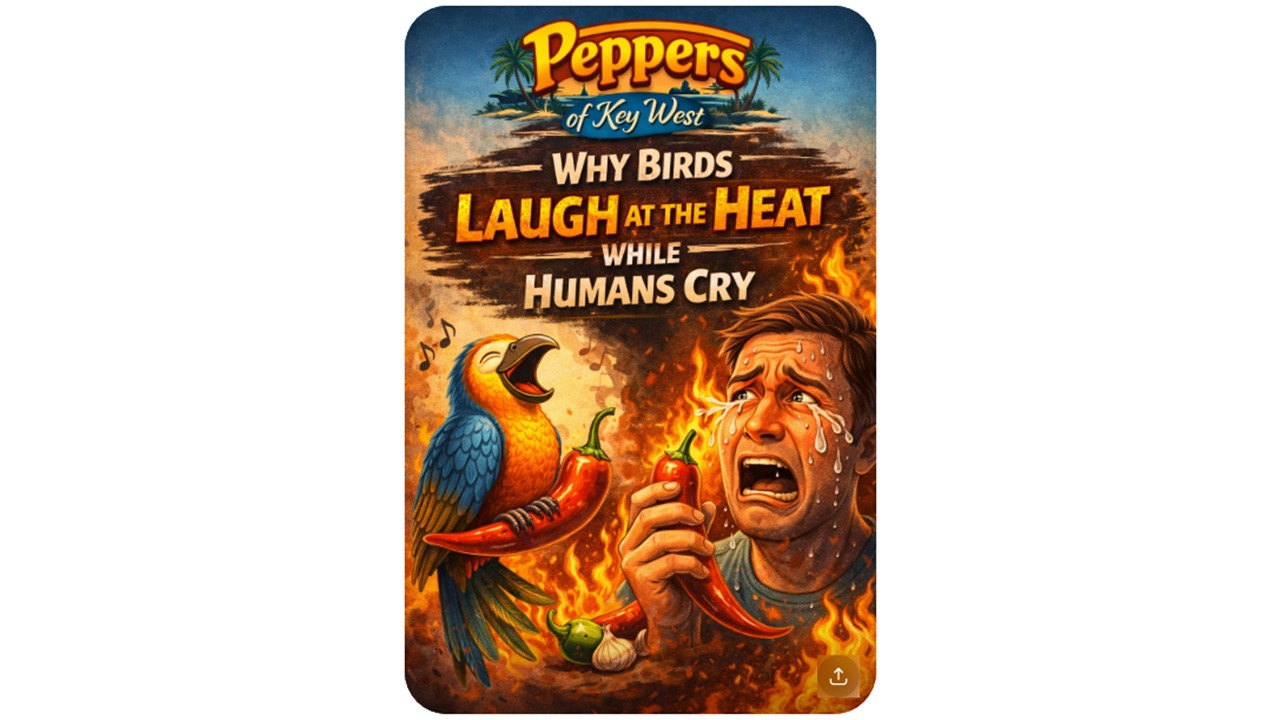
Why Birds Laugh at the Heat While Humans Cry: Hot Peppers burn your mouth, makes you question your life choices, and somehow birds would eat it like popcorn.
You’re sweating, your eyes are watering, and your dignity is gone… meanwhile a bird is eating the same pepper like it’s a light snack before dinner.
Hot peppers have a way of turning confidence into chaos. One moment you’re casually adding a little extra heat to your food, and the next you’re questioning every decision that led you there. Your mouth is on fire, your face is flushing, and you’re desperately searching for relief. Yet, in one of nature’s most entertaining contradictions, birds can eat those exact same peppers without even the slightest reaction. No panic, no discomfort, no regret. Just another bite.
This strange divide between humans and birds comes down to one powerful compound: capsaicin. Capsaicin is the chemical responsible for the heat in hot peppers, and it works by interacting with a receptor in the body known as TRPV1. In humans and most mammals, this receptor is designed to detect heat and physical irritation. When capsaicin binds to it, your brain interprets the signal as burning pain, even though there is no actual heat causing damage. It’s essentially a chemical illusion, but your body reacts as if it’s real.
Birds, however, live in a completely different reality. Their TRPV1 receptors are structured differently, meaning capsaicin cannot activate them in the same way. As a result, birds don’t feel the burn at all. What sends humans into a spiral of spice-induced regret is completely neutral to them. To a bird, a blazing hot pepper is just food.
This isn’t some random evolutionary accident. It’s a highly effective survival strategy developed by pepper plants over millions of years. Plants rely on animals to spread their seeds, but not all animals are equally helpful. Mammals tend to chew their food thoroughly, which destroys seeds and prevents them from growing. Birds, on the other hand, swallow seeds whole and travel long distances before depositing them elsewhere. From the plant’s perspective, birds are the perfect delivery system.
Capsaicin acts as a selective filter. It discourages mammals from eating the fruit while allowing birds to consume it freely. The result is a highly efficient distribution system that helps pepper plants spread far and wide. What humans experience as intense heat is actually a targeted defense mechanism, carefully designed to influence who eats the fruit and who doesn’t.
Despite this built-in deterrent, humans have not only embraced capsaicin but turned it into a global obsession. Instead of avoiding spicy foods, people actively seek them out. There’s something undeniably compelling about the sensation. Part of it comes from the body’s response. When capsaicin triggers pain receptors, the brain releases endorphins to counteract the discomfort. These endorphins create a feeling of pleasure, which is why spicy food can become addictive over time.
This relationship between pain and pleasure is at the heart of hot sauce culture. Turning peppers into hot sauce transforms a raw, intense ingredient into something far more complex. It allows for control, balance, and creativity. Heat can be dialed up or down, flavors can be layered, and entirely new taste experiences can be created.
Hot sauce is where peppers truly come alive. By combining them with ingredients like vinegar, fruit, garlic, and spices, you create something that goes beyond simple heat. A well-crafted hot sauce enhances food rather than overpowering it. It adds depth, brightness, and character.
This is especially true with tropical and island-inspired styles, where heat is balanced with sweetness and acidity. Brands like Peppers of Key West capture this approach perfectly, blending bold peppers with vibrant ingredients that reflect a coastal lifestyle. Mango, pineapple, citrus, and other bright flavors work alongside the heat, creating sauces that feel layered and dynamic rather than one-dimensional.
The beauty of this style is that it invites exploration. Instead of being intimidated by heat, you start to appreciate it. You notice how it interacts with other flavors, how it builds over time, and how it changes the overall experience of a dish. What once felt overwhelming becomes something you look forward to.
Tolerance plays a big role in this transformation. The more often you eat spicy foods, the more your body adapts. The receptors don’t change, but your brain becomes less reactive to the signals. What once felt unbearable becomes manageable, and eventually enjoyable. This is why seasoned hot sauce enthusiasts can handle levels of heat that would overwhelm beginners.
Birds, of course, never go through this process. They don’t need to build tolerance because they never feel the heat in the first place. They exist in a state of permanent immunity, casually consuming peppers that would challenge even the most dedicated spice lovers.
Back in the kitchen, hot peppers offer endless possibilities. They can be used fresh for a bright, immediate kick, dried for a more concentrated flavor, or fermented to develop depth and complexity. Each method brings out different characteristics, allowing for a wide range of culinary applications.
Hot sauce, in particular, stands out as one of the most versatile ways to use peppers. A few drops can transform a dish, adding not just heat but personality. It can elevate simple foods like eggs or rice, add excitement to tacos and grilled meats, or bring balance to rich, heavy dishes.
The key to great hot sauce is balance. Heat alone isn’t enough. The best sauces combine spice with flavor, creating something that enhances rather than overwhelms. This is where thoughtful ingredient choices come into play. Acidity can brighten the flavor, sweetness can soften the heat, and aromatics like garlic can add depth.
Peppers of Key West embodies this philosophy by focusing on bold, balanced profiles that reflect a tropical influence. Their approach highlights the idea that hot sauce should be an experience, not just a challenge. It’s about creating something that people want to use again and again, not just something they try once for the shock factor.
The cultural impact of hot peppers is hard to overstate. They are used in cuisines around the world, each with its own unique approach to heat and flavor. From fiery salsas to rich curries, peppers play a central role in shaping the identity of countless dishes.
At the same time, the science behind them remains just as fascinating. Every time you feel that familiar burn, you’re experiencing the result of an evolutionary strategy that has been refined over millions of years. It’s a reminder that even the simplest ingredients can have incredibly complex stories behind them.
And then there are the birds, quietly ignoring it all. While humans debate heat levels, compare sauces, and build entire culinary traditions around spice, birds continue to do what they’ve always done. They eat the peppers, spread the seeds, and move on without a second thought.
There’s something almost humbling about that. The very thing that defines the human experience of peppers doesn’t exist for them. It’s a completely different world, shaped by different biology and different needs.
So, the next time you find yourself reaching for a bottle of hot sauce, take a moment to appreciate everything that goes into that experience. The heat, the flavor, the history, and the science all come together in a way that’s both intense and enjoyable.
And if it ever feels like too much, just remember somewhere out there, a bird is eating the same pepper like it’s nothing at all.
Frequently Asked Questions:
Why can birds eat hot peppers without feeling pain?
Birds have a different type of receptor that capsaicin cannot activate, so they do not experience the burning sensation.
What is capsaicin?
Capsaicin is the compound in peppers that creates the sensation of heat in mammals.
Do humans build tolerance to spicy food?
Yes, repeated exposure can make spicy foods feel less intense over time.
Why do peppers produce capsaicin?
It helps protect seeds from being destroyed by mammals while allowing birds to spread them.
Is hotter always better in hot sauce?
No, balance between heat and flavor is what makes a great hot sauce.
