
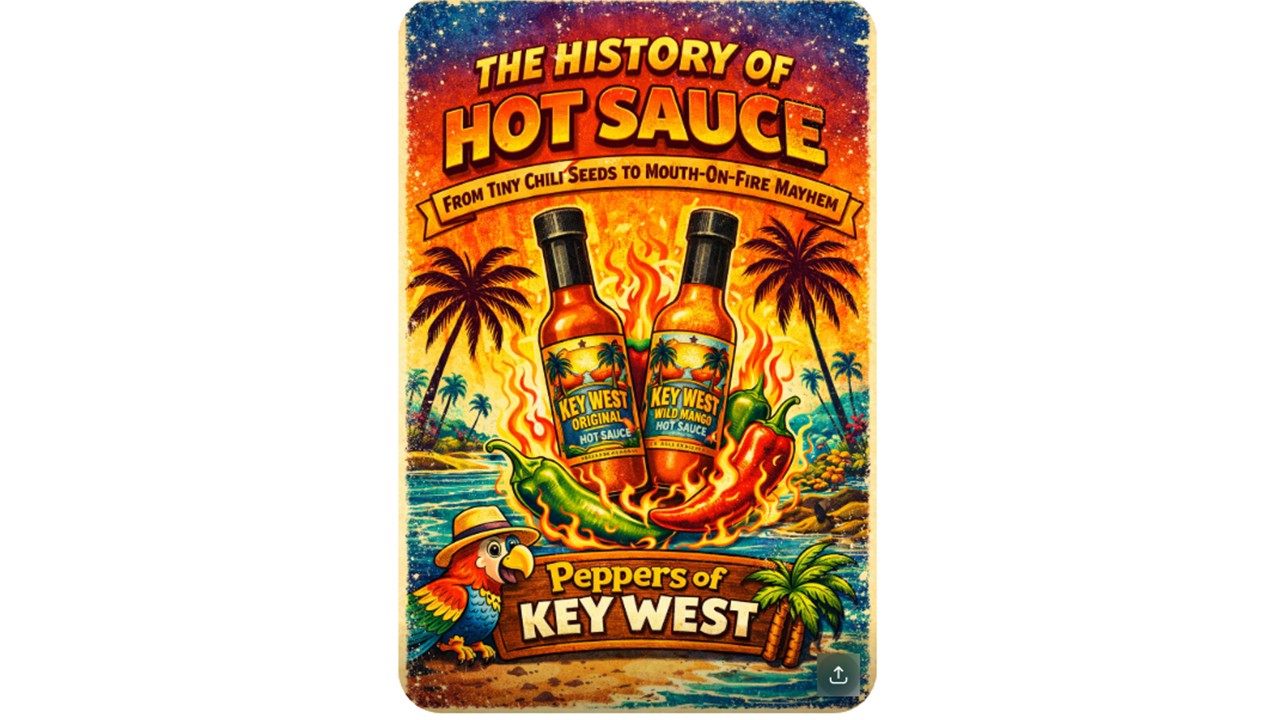
The History of Hot Sauce: From Tiny Chili Seeds to Mouth-On-Fire Mayhem
From fiery wild peppers to bottles that make you question your life choices; hot sauce has been spicing things up for centuries.
Hot sauce is more than just a condiment. It’s a global phenomenon, a culinary adventure, and in some cases, a personal test of bravery. Yet few realize that the journey of hot sauce began thousands of years ago, long before it adorned kitchen tables worldwide. The story of hot sauce starts with the humble chili pepper, a plant that originated in the Americas and evolved to be both fiercely spicy and surprisingly versatile.
Archaeological evidence points to Central and South America as the birthplace of the chili pepper. Early civilizations in these regions consumed wild peppers as early as 6,000 to 7,000 years ago. These peppers were small, fiery, and sometimes unpredictable, far from the cultivated varieties we know today. Despite their modest size, they contained capsaicin—the compound responsible for heat—which would go on to define the pepper’s identity and eventually the allure of hot sauce.
In these ancient societies, peppers were more than food. They were woven into medicine, rituals, and early trade. Indigenous farmers selectively bred the plants over generations, refining flavor, size, and heat level. Some peppers became sweet, some blistering hot, and some developed unique flavors suited to regional cuisines. Peppers quickly became a cultural staple, integrated into daily meals, preservation techniques, and ceremonial practices.
Nature itself contributed to the pepper’s success. Capsaicin evolved as a clever defense mechanism, deterring mammals that might destroy seeds while leaving birds unaffected. Birds would eat the peppers whole and spread the seeds over long distances, giving the plant a natural distribution advantage. This meant that peppers were already spreading across the Americas long before humans took a hand in cultivating them.
Humans, however, accelerated the pepper’s global journey. Trade networks between early civilizations allowed peppers to move between regions, each new environment producing subtle variations in heat, flavor, and size. By the time European explorers arrived in the late 15th and early 16th centuries, peppers were already a well-established crop. Europeans quickly recognized their potential. Black pepper was valuable and expensive, but chili peppers offered a fiery alternative that could be grown in a variety of climates and easily traded.
The Columbian Exchange was pivotal for the global spread of peppers. Explorers and traders carried chili peppers across the Atlantic, introducing them to Europe, Africa, and Asia. In Asia, countries like India, Thailand, and China embraced chili peppers with open arms. Curries, stir-fries, and spicy sauces became central to culinary identity. Africa also integrated chili peppers, transforming stews and sauces into fiery regional classics. Europe, while slower to adopt them, eventually incorporated peppers into Mediterranean and Eastern European cuisines, creating dishes that celebrated their heat.
As peppers spread, the practice of turning them into sauces developed naturally. Hot sauce allowed people to control intensity, preserve flavors, and combine peppers with other ingredients such as vinegar, fruit, and spices. Tropical-style hot sauces emerged as a distinct category, pairing heat with sweetness and acidity to create a balanced flavor experience. Brands like Peppers of Key West epitomize this approach, blending peppers with mango, pineapple, citrus, and other vibrant ingredients to craft sauces that are both flavorful and fiery.
The evolution of hot sauce is also tied to human creativity. Each culture developed its own style, from vinegar-forward Louisiana sauces to Caribbean fruit-infused blends, from fermented Mexican salsas to bold Asian chili pastes. Each bottle tells a story—of adaptation, experimentation, and regional taste preferences. The versatility of hot sauce allows it to enhance nearly any dish, from eggs and tacos to seafood and grilled meats.
Capsaicin, the compound that makes peppers hot, plays a crucial role in human enjoyment of hot sauce. When consumed, it binds to receptors in the mouth that detect heat and pain, triggering the brain to release endorphins. This natural response creates a sensation of pleasure, which is why people keep reaching for hotter and hotter sauces. What was once a defense mechanism has become one of the main reasons humans crave spicy food. Birds, of course, remain unaffected, continuing their role as natural seed dispersers while humans develop a passionate, sometimes obsessive, relationship with heat.
The cultural impact of hot sauce is immense. It has inspired art, festivals, culinary competitions, and even collectible bottles. Chefs and home cooks alike experiment with heat levels, flavor combinations, and regional influences. In tropical regions, hot sauce often incorporates local fruits, herbs, and citrus, producing vibrant, layered flavors. Peppers of Key West specializes in this style, offering sauces that combine island-inspired ingredients with bold peppers, creating a truly unique culinary experience.
Modern hot sauce culture thrives because it blends history, flavor, and adventure. Every bottle represents centuries of cultivation, experimentation, and cultural exchange. The incredible diversity of peppers—ranging from mild and sweet to blisteringly hot—allows for endless creativity. Fermentation, blending, smoking, and infusion techniques further expand the range of flavors available to hot sauce enthusiasts. Tropical, fruity, savory, smoky, or intensely hot, each sauce has a purpose, a story, and a heat level designed to delight and challenge the palate.
The journey of hot sauce is also a story of adaptation. Peppers evolved for survival, humans adopted them for flavor, and hot sauce emerged as a way to harness and enhance their heat. This combination of nature and human ingenuity has made hot sauce an enduring global phenomenon. From its origins in ancient Americas to its place on tables worldwide today, hot sauce connects us to history, culture, and a shared love of spice.
Peppers of Key West captures the essence of this journey by blending bold tropical flavors with carefully selected peppers to create sauces that are not just hot, but flavorful, balanced, and versatile. Whether drizzled over tacos, mixed into marinades, or enjoyed straight from the bottle, their sauces exemplify how hot sauce has evolved from a simple ingredient into a culinary art form.
Today, hot sauce continues to inspire innovation. New pepper varieties are being discovered and cultivated, each with unique heat levels and flavor profiles. Chefs and enthusiasts explore new combinations of heat and taste, creating sauces that push the boundaries of what hot sauce can be. Tropical and fruit-infused sauces remain especially popular, balancing sweetness and acidity against the fire of peppers to create a multi-dimensional tasting experience.
In essence, the history of hot sauce is a story of discovery, adaptation, and creativity. It is a testament to the power of one simple ingredient to influence global cuisine and human culture. Every drop tells a story—from wild peppers in ancient Americas to fiery bottles on tables across the world. Peppers of Key West hot sauces capture that story beautifully, combining history, tropical inspiration, and bold flavor into every bottle.
Whether you are a newcomer to spicy food or a seasoned heat-seeker, hot sauce invites you to explore, experiment, and celebrate the rich history behind every bite. From its humble origins to its global spread, hot sauce has earned its place as one of the most beloved, versatile, and exciting condiments in culinary history.
WooCommerce Frequently Asked Questions
Where did hot sauce originate?
Hot sauce traces its roots to the Americas, where early civilizations used chili peppers in food, medicine, and rituals.
How did hot sauce spread around the world?
European explorers carried chili peppers to Europe, Africa, and Asia during the Columbian Exchange, where cultures incorporated them into local cuisines.
What makes peppers spicy?
Capsaicin is the chemical responsible for heat, stimulating receptors in the mouth to create the signature burn.
Why do humans enjoy spicy hot sauce?
Capsaicin triggers endorphin release, creating a pleasurable sensation that encourages repeated consumption.
What makes Peppers of Key West hot sauces unique?
They combine tropical fruits, bold peppers, and balanced heat to craft sauces that are flavorful, versatile, and inspired by island living.
