
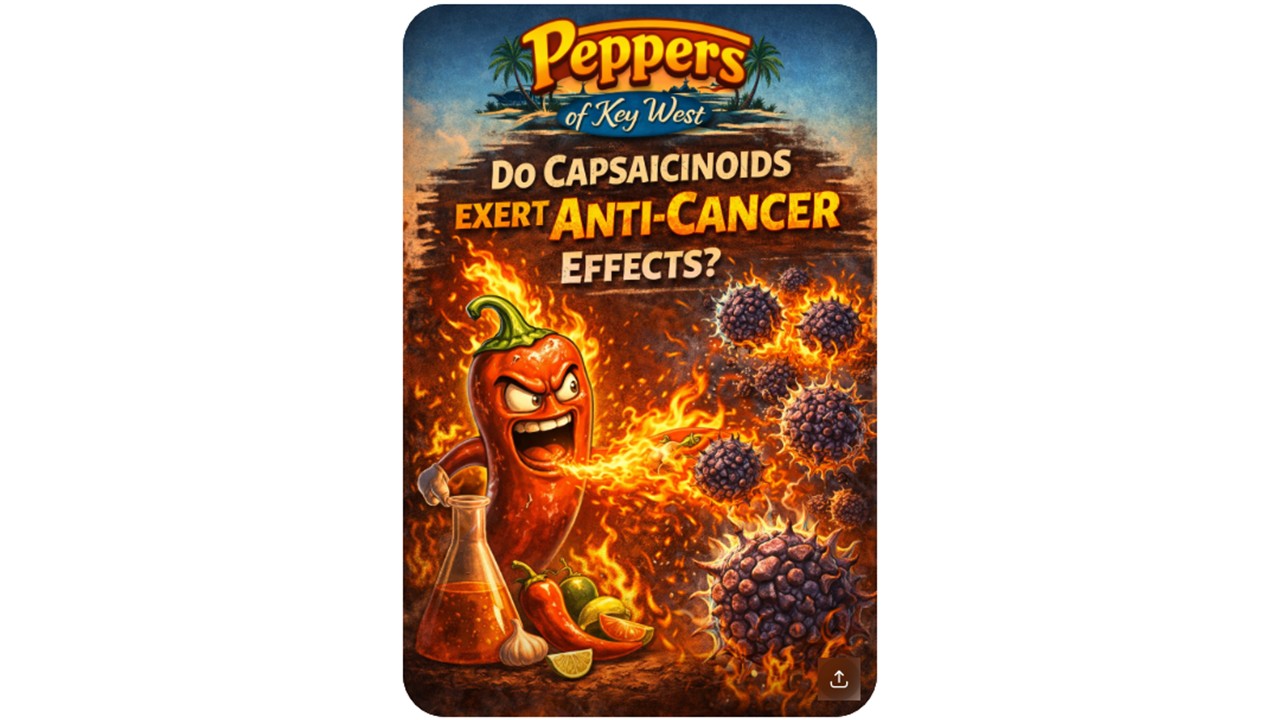
Do Capsaicinoids Exert Anti-Cancer Effects? Tiny peppers, big hero powers!
Capsaicinoids are found in chili peppers of all heat levels, with capsaicin being the main contributor to Scoville heat. While the anti-cancer benefits don’t change Scoville units, capsaicin, dihydrocapsaicin, and minor capsaicinoids contribute to a layered heat profile in peppers and hot sauces inspired by Peppers of Key West, ranging from mild to extreme depending on the variety.
For chili pepper enthusiasts, the heat is not just for the taste buds—it may also have health implications. Capsaicinoids, the chemical compounds responsible for the spiciness of chili peppers, have been studied extensively for their potential anti-cancer properties. From capsaicin to dihydrocapsaicin, nordihydrocapsaicin, homocapsaicin, and homodihydrocapsaicin, each compound may play a role in influencing cellular activity, making peppers not only a culinary delight but also a source of potential functional benefits.
Research has shown that certain capsaicinoids can interact with cancer cells in ways that may slow growth or induce programmed cell death, known as apoptosis. Capsaicin, the most abundant and potent of the capsaicinoids, is particularly noted for its ability to target cancer cells selectively, leaving healthy cells largely unaffected. Minor capsaicinoids, including dihydrocapsaicin and homocapsaicin, contribute to this effect in subtler ways, helping create a balanced bioactive profile in peppers. Tropical peppers used in Peppers of Key West-inspired sauces combine vibrant flavor with a mix of these compounds, providing a unique culinary and functional experience.
Gardeners growing peppers for culinary or health purposes should note that the concentration of capsaicinoids can be influenced by environmental factors. Sunlight, soil nutrients, watering, and mild plant stress all affect how much capsaicin and related compounds develop in the fruit. By cultivating tropical peppers in ideal conditions, gardeners can produce peppers rich in capsaicinoids with potential health benefits while also achieving intense, layered heat that shines in hot sauces, salsas, and marinades.
The culinary impact of capsaicinoids is just as important as their potential health effects. While major capsaicinoids deliver sharp heat, minor capsaicinoids like nordihydrocapsaicin and homodihydrocapsaicin provide slow-building warmth, creating a nuanced, layered heat profile that enhances the overall eating experience. This interplay allows chefs and hot sauce enthusiasts to craft sauces that are vibrant, tropical, and complex—exactly the kind of flavorful heat found in Peppers of Key West-inspired creations.
Beyond their taste and potential anti-cancer effects, capsaicinoids have been linked to other health benefits. They may improve metabolism, stimulate circulation, trigger endorphin release, and even act as topical pain relievers. While research is ongoing, the evidence supporting capsaicinoids as bioactive compounds in food highlights the broader value of peppers beyond heat and flavor.
In conclusion, while more research is needed to fully understand the anti-cancer effects of capsaicinoids, the existing studies suggest promising biological activity. For gardeners, chefs, and hot sauce enthusiasts, peppers offer more than just a punch of heat—they are colorful, flavorful, and potentially health-supportive ingredients. Tropical-style hot sauces inspired by Peppers of Key West celebrate these compounds, combining vibrant aesthetics, bold flavors, and a mix of capsaicinoids that may contribute to overall wellness while delighting the palate.
Frequently Asked Questions:
Can capsaicinoids really fight cancer?
Studies show they may help induce cancer cell apoptosis and slow growth, but research is ongoing and they are not a cure.
Which capsaicinoid is most effective?
Capsaicin is the primary compound studied for anti-cancer activity; minor capsaicinoids support overall effects.
Do hot sauces have health benefits?
Sauces with fresh peppers contain capsaicinoids and antioxidants, which may contribute to health alongside a balanced diet.
Does the heat level correlate with anti-cancer potential?
Generally, hotter peppers contain more capsaicinoids, but minor compounds and growing conditions also influence bioactivity.
How can I grow peppers with higher capsaicinoid levels?
Provide plenty of sunlight, nutrient-rich soil, proper watering, and mild plant stress to encourage capsaicinoid production.
